Understanding the Complexities of Dual Diagnosis Treatment
Substance use disorder treatment for people with co occurring disorders requires a comprehensive, integrated approach that addresses both conditions simultaneously. Here’s what you need to know:
Key Components of Effective Dual Diagnosis Treatment:
- Integrated Care Model – Both the substance use disorder and mental health condition are treated by the same team at the same time.
- Comprehensive Assessment – Thorough screening to identify all co-occurring conditions.
- Evidence-Based Therapies – CBT, DBT, and motivational interviewing custom to dual diagnosis.
- Medication Management – FDA-approved medications combined with counseling when appropriate.
- Multiple Levels of Care – From medical detox to outpatient support, matched to individual needs.
- Family Involvement – Support and education for loved ones throughout recovery.
- Long-Term Aftercare – Ongoing support to prevent relapse and maintain recovery.
The statistics are sobering: a large percentage of people with addictions also have a co-occurring mental health disorder, yet most never receive integrated treatment. This is because the two conditions are deeply connected. For example, someone might use alcohol to cope with depression, which only worsens the depression over time. This creates a vicious cycle where each condition fuels the other.
The good news? Recovery is absolutely possible when both conditions are treated together. Research consistently shows that integrated treatment—where you receive care for both your mental health and substance use at the same time—leads to better outcomes than treating either condition alone. To learn more about how professionals define and understand co-occurring disorders, you can also review the overview of dual diagnosis on the National Institute on Drug Abuse.
Take our confidential self-assessment. If you recognize these patterns in yourself or a loved one, do not wait.
At SoberSteps, we understand the unique challenges of dual diagnosis because we specialize in providing comprehensive substance use disorder treatment for people with co occurring disorders. Our platform connects individuals with evidence-based integrated treatment programs designed to address both addiction and mental health simultaneously.
- Call to action: For immediate support, contact our confidential 24/7 helpline to speak with a specialist.
- Internal links to explore: Learn more about our approach to dual diagnosis treatment, review signs of co-occurring disorders, or explore treatment levels of care.
Substance use disorder treatment for people with co occurring disorders glossary:
- ADHD and substance use
- ADHD stimulant abuse
- For a broader clinical overview of co-occurring disorders, you may also find the entry on Dual diagnosis helpful as a general reference (not a substitute for professional care).
If you are ready to take action, start your journey with SoberSteps today.
Understanding Co-Occurring Disorders: When Addiction and Mental Health Intersect
Co-occurring disorders, or “dual diagnosis,” describe when a person has both a substance use disorder (SUD) and a mental health condition simultaneously. These conditions are deeply intertwined, often creating a cycle where one worsens the other. Statistics show significant overlap: many people with mental health diagnoses also have SUDs, and vice versa.
The term “dual diagnosis” gained prominence in the mid-1990s, highlighting the need for unified treatment. Both conditions are legitimate illnesses requiring professional intervention. This is why integrated care, where both disorders are treated concurrently, has become the gold standard in substance use disorder treatment for people with co occurring disorders.
Find a dual diagnosis treatment center near you. Use the SoberSteps treatment center locator or review our guide to dual diagnosis treatment.
Why Simultaneous Treatment is Crucial
Treating both conditions simultaneously is essential. Historically, separate treatment systems led to fragmented care, where individuals were denied help for one condition until the other was “under control.” This sequential approach often fails because the untreated condition triggers the other.
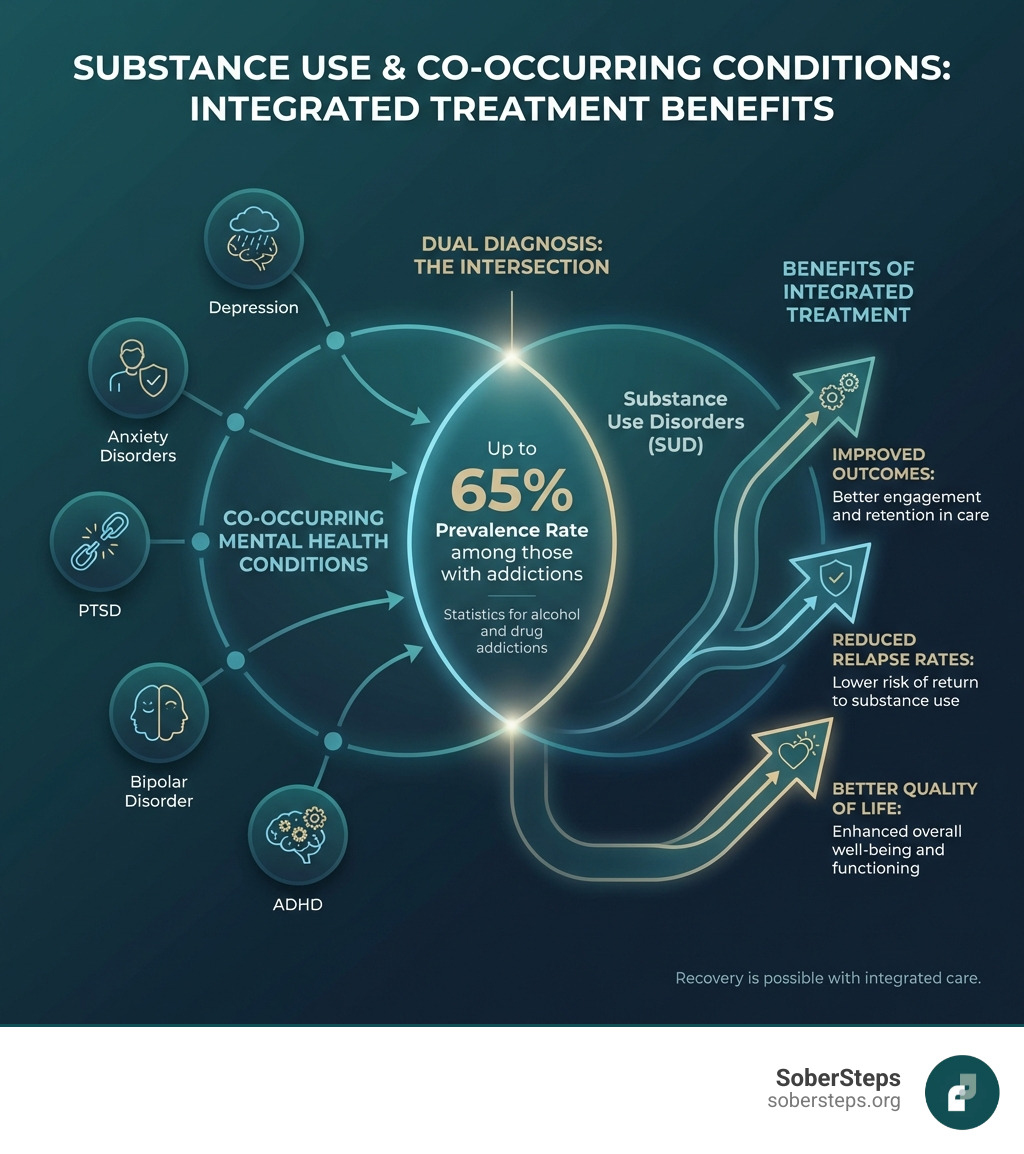
Integrated treatment offers a holistic approach where a single team addresses both conditions, leading to:
- Improved Outcomes: Better long-term recovery rates
- Reduced Relapse Rates: Addressing root causes of both conditions
- Improved Quality of Life: Greater stability and daily functioning
- More Effective Recovery: Seamless, consistent treatment experience
For scientific overview, consult Comorbidity of substance use and mental disorders as an educational resource.
See how integrated care works at SoberSteps and contact our 24/7 helpline if ready to talk.
Common Co-Occurring Mental Health Conditions
While any mental health condition can co-occur with SUDs, some are more frequent:
- Depression: Often cyclical, with depression leading to substance use for coping. Explore dual diagnosis for depression.
- Anxiety Disorders: Many self-medicate anxiety, creating dangerous dependence. Understand dual diagnosis for anxiety.
- PTSD: Strong link between trauma and substance use. Learn about dual diagnosis for PTSD.
- Bipolar Disorder: Mood swings can lead to substance use. Discover dual diagnosis for bipolar disorder.
- ADHD: May use substances to self-medicate symptoms. Read about dual diagnosis for ADHD.
- Schizophrenia: About 25% with severe mental illness have co-occurring SUDs. Find support for dual diagnosis schizophrenia.
- Personality Disorders: Significantly more common in addiction treatment. Understand dual diagnosis for borderline personality disorder.
- Eating Disorders: Often stem from issues of control and coping.
Review signs and symptoms of co-occurring disorders, and reach out for a confidential assessment.

The Vicious Cycle: Why SUDs and Mental Health Issues Often Co-Exist
The connection between substance use disorders and mental health conditions is a complex interplay creating a “vicious cycle”:
- Shared Risk Factors: Similar genetic predispositions and environmental factors like trauma and stress
- Brain Chemistry: Drugs impact reward pathways and neurotransmitter systems involved in mood regulation
- Self-Medication: People use substances to cope with distress, worsening underlying issues
- Substance-Induced Mental Illness: Heavy use can trigger psychiatric symptoms
Understanding these connections is vital for effective substance use disorder treatment for people with co occurring disorders. Learn more about our approach to dual diagnosis and how integrated care interrupts this cycle.
For technical background, see Comorbidity of substance use and mental disorders from NIDA.
How Co-Occurring Disorders Impact Addiction and Recovery
When conditions exist together, they create compounding effects:
- Increased Severity: Mental health symptoms intensify cravings
- Difficult Withdrawal: Amplified anxiety or depression during detox
- Higher Relapse Rates: Untreated mental health acts as constant trigger
- Social Impairment: Struggles with employment, housing, relationships
- Increased Suicide Risk: Combined conditions significantly lift risk
SoberSteps programs mitigate these risks through comprehensive care. Find how SoberSteps supports long-term recovery and learn about relapse prevention and alumni programs.
Contact our confidential helpline 24/7 to discuss treatment options.
Recognizing the Signs of a Co-Occurring Disorder
Common indicators include:
- Using substances to cope with emotions
- Mental health worsens with substance use
- Past treatment failure
- Mood swings and social withdrawal
- Risky behaviors
- Struggling with daily responsibilities
- Family history of mental illness or SUDs
Take our confidential self-assessment and speak with a treatment specialist about results.
Visit our guide on signs and symptoms of co-occurring disorders and explore our trauma and addiction resource.

Effective Substance Use Disorder Treatment for People with Co-Occurring Disorders
The most effective approach to substance use disorder treatment for people with co occurring disorders is integrated care addressing both conditions concurrently.
The journey begins with comprehensive assessment to differentiate substance-induced symptoms from underlying mental health conditions. A multidisciplinary team develops an individualized treatment plan ensuring all health aspects are addressed.
Learn more about our co-occurring disorders treatment programs and how SoberSteps connects you with specialized providers.
For background on diagnostic terms, review Substance use disorder.
Call our 24/7 helpline for confidential assessment through our contact helpline page.
Evidence-Based Therapies for Dual Diagnosis
Integrated treatment relies on therapies addressing both challenges:
- CBT: Changes negative thought patterns and behaviors. Explore Cognitive Behavioral Therapy.
- DBT: Teaches mindfulness, distress tolerance, emotion regulation. Learn about Dialectical Behavior Therapy.
- MI: Helps resolve ambivalence and find internal motivation.
- Relapse Prevention: Identifies high-risk situations and coping strategies. Understand Relapse Prevention.
- TSF Therapy: Facilitates engagement with 12-Step groups.
Discover therapies offered at SoberSteps and talk with specialists about approaches right for you.
For psychological approaches background, see Cognitive behavioral therapy.
The Role of Medication in Treatment
Medication with therapy can stabilize symptoms and prevent relapse:
- MAT: FDA-approved medications for opioid/alcohol disorders
- Antidepressants: Alleviate depression symptoms
- Mood Stabilizers: Essential for bipolar disorder
- Anti-Anxiety Medications: Non-addictive options preferred
- ADHD Stimulants: Carefully prescribed and monitored
Medical supervision is key. Learn about medication management at SoberSteps and call our helpline for programs with comprehensive services.
Levels of Care: From Inpatient to Outpatient Support
Effective treatment requires a continuum of care:
- Medical Detox: Safe, supervised withdrawal management. Explore Medical Detox Programs.
- Inpatient/Residential: 24/7 support in structured environment. Learn about Inpatient Drug Rehab.
- PHP: Structured day treatment. Understand Partial Hospitalization.
- IOP: Structured therapy allowing work/school. Discover Intensive Outpatient.
- Outpatient: Regular therapy sessions. Explore Outpatient care.
- Sober Living: Supportive, substance-free residences.
- Support Groups: Peer groups provide community.
Find the right level of care or visit our levels of care overview.
Start recovery planning today or speak with a specialist now.
Navigating Recovery: Support, Insurance, and Long-Term Success
Long-term recovery from co-occurring disorders requires continuous effort and support. SoberSteps emphasizes comprehensive aftercare planning for sustained success.
Ongoing support through therapy, peer groups, and alumni networks helps apply learned skills. Explore aftercare and alumni support resources.
Start your recovery journey today – contact our 24/7 helpline for confidential guidance.
The Crucial Role of Family in the Recovery Process
Family involvement significantly improves recovery outcomes for substance use disorder treatment for people with co occurring disorders:
- Family Therapy: Improves communication and heals relationships
- Education: Understanding disorders helps constructive responses
- Healthy Boundaries: Prevents enabling behaviors
- Supportive Home Environment: Drug-free stability is protective
- Self-Care: Family members need support through Al-Anon or therapy
SoberSteps offers family resources recognizing healing is collective. Access family support resources and share guides on signs of dual diagnosis and recovery expectations.
For addiction’s family impact, see Drug rehabilitation.
Navigating Insurance for Dual Diagnosis Treatment
The ACA and MHPAEA mandate most health plans cover mental health and substance use services similarly to physical health.
Key considerations:
- In-network vs. out-of-network providers
- Deductibles, co-pays, out-of-pocket maximums
- Coverage for different care levels
- Private pay/financing options
Verify your insurance coverage now or read insurance and payment options.
Our team can walk you through insurance when you call our confidential helpline.
Long-Term Prospects for Individuals Receiving Treatment
Integrated treatment recipients experience:
- Improved Mental Health: Better symptom control
- Sustained Sobriety: Reduced relapse risk
- Better Physical Health: Healthier lifestyle choices
- Improved Relationships: Ability to repair connections
- Increased Employment: Greater stability for goals
- Higher Quality of Life: More fulfilling, productive life
See success stories from SoberSteps alumni demonstrating integrated healing power.
Stay involved in aftercare programs, explore local support groups, and revisit educational guides.
Reach out to SoberSteps for guidance custom to your needs.
Frequently Asked Questions about Dual Diagnosis Treatment
We understand that navigating substance use disorder treatment for people with co occurring disorders can bring up many questions. Here are some of the most common ones we encounter:
Can a co-occurring disorder be cured?
While there is no simple “cure,” co-occurring disorders are treatable, chronic conditions that require ongoing management, much like diabetes or heart disease. The goal of integrated treatment is to achieve symptom management, develop robust coping skills, and foster a lifelong recovery process. With consistent effort, treatment, and lifestyle changes, individuals can live healthy, fulfilling lives and sustain long-term sobriety. What to expect in recovery.
For a general medical perspective on how chronic mental health and substance use conditions are managed over time, you can also review the educational entry on Mental disorder.
If you are wondering what this might look like for you personally, contact our helpline to discuss your situation confidentially.
How long does treatment for co-occurring disorders take?
The duration of treatment varies greatly from person to person, as it is highly individualized. There is no fixed timeline. The length of care depends on the severity of the disorders, individual progress, and the specific level of care required. Initial intensive treatment may last 30 to 90 days, but recovery is a lifelong process. Ongoing aftercare—including therapy and support groups—is crucial for sustained healing. How long does treatment last?.
To understand how different levels of care can be sequenced over time, explore our page on levels of care and aftercare support.
Where can I find integrated treatment for co-occurring disorders?
Finding the right integrated treatment program is a critical step. Look for specialized centers that explicitly offer substance use disorder treatment for people with co occurring disorders. When you inquire, ask key questions about their approach:
- Do they treat both conditions simultaneously with a single, coordinated team?
- Is the team multidisciplinary (including psychiatrists, therapists, and medical doctors)?
- What evidence-based therapies and medication management options do they offer?
- Do they provide a full continuum of care, from detox to outpatient support?
At SoberSteps, we are dedicated to connecting you with reputable, integrated treatment providers that meet these criteria. Our confidential helpline and online resources can help you explore options and find a program that meets your specific needs. Find a SoberSteps treatment center near you or start your journey with SoberSteps to begin the process of getting help.
If you want to better understand how professional treatment programs are structured, you may also find the general overview of Drug rehabilitation helpful as background reading.
Conclusion: Taking the First Step Towards Integrated Healing
Navigating the complexities of co-occurring substance use and mental health disorders can feel overwhelming, but it’s crucial to remember that hope and healing are absolutely possible. As we’ve explored, the most effective path to recovery is through integrated treatment—an approach that addresses both conditions simultaneously, recognizing their profound and interconnected impact.
This comprehensive approach, encompassing thorough assessment, evidence-based therapies, appropriate medication management, a continuum of care, and vital family involvement, empowers individuals to break free from the vicious cycle. By treating the whole person, we lay a strong foundation for sustained sobriety, improved mental well-being, and a significantly improved quality of life.
At SoberSteps, we are committed to helping you or your loved one take that courageous first step towards integrated healing. Our platform is designed to connect you with specialized treatment providers who understand the nuances of dual diagnosis and offer the compassionate, expert care you deserve.
- Learn more about dual diagnosis treatment options.
- Explore our levels of care and aftercare support.
- Hear from others who have walked this path in our success stories.
Call our confidential helpline 24/7 to connect with a treatment provider. You can reach us anytime through our contact helpline page.
If you prefer to start online, you can start your journey with SoberSteps, complete a self-assessment, or use our treatment center finder to explore nearby options.
Taking the first step today can change the course of your life. You do not have to do it alone—SoberSteps is here to walk with you toward integrated healing.