

Why Finding Help for Drug Addiction Matters Now
Knowing where to find help for drug addiction is the first step toward healing. If you need support right now, here are your fastest options:
- Call or Text 988: The Suicide & Crisis Lifeline offers free, confidential support 24/7.
- Text HELP4U (435748): Send your zip code to get immediate local treatment referrals.
- Visit FindTreatment.gov: Search for nearby inpatient, outpatient, or telehealth facilities.
- Contact the SoberSteps confidential helpline: Speak with caring professionals who understand addiction and recovery.
- Find Local Support Groups: Narcotics Anonymous (NA), Alcoholics Anonymous (A.A.), and SMART Recovery provide free peer support.
Drug addiction impacts millions, with nearly half of all Americans having a close friend or family member who has struggled with it. The consequences can be devastating, but recovery is possible. Evidence-based treatment works, and this guide is here to help you understand and steer your options.
Whether you’re worried about yourself or a loved one, this guide will walk you through recognizing the problem, finding emergency help, understanding treatment types, and building lasting support. At SoberSteps, we provide comprehensive addiction treatment resources and personalized support to make finding help clear and accessible.
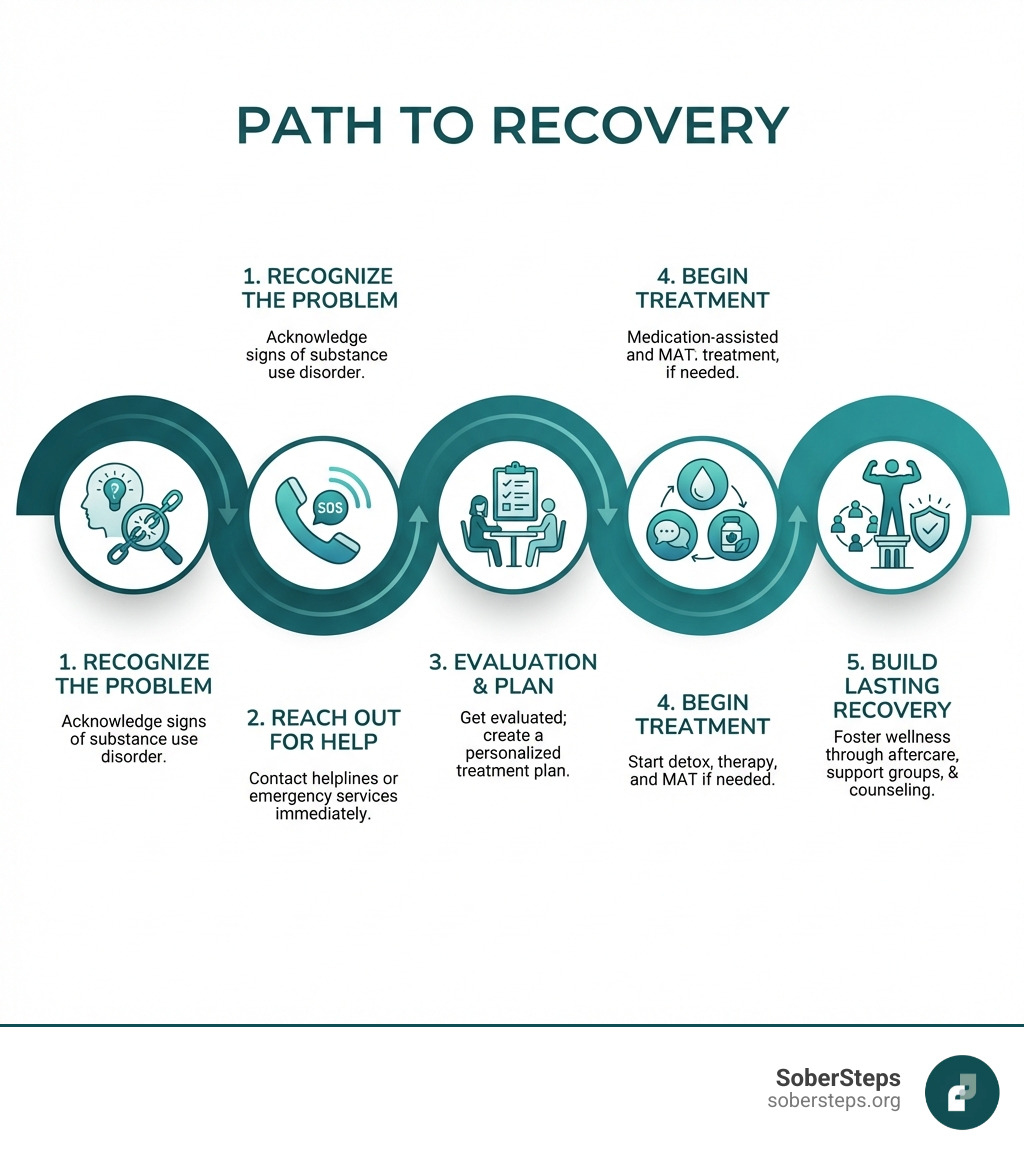
If you are unsure what kind of care you or your loved one needs, you can start with our overview of substance abuse treatment options or explore our in-depth resources on detox, rehab, and recovery planning.
If you or a loved one is struggling, reach out to SoberSteps today for confidential support and guidance. You do not have to face this alone.
Recognizing the Need for Help: Signs of Substance Use Disorder
Recognizing a problem is the first step. Drug addiction, or Substance Use Disorder (SUD), is a chronic disease characterized by compulsive drug use despite harmful consequences. It’s more than just harmful use; it’s a condition requiring professional evaluation and, often, integrated care for both mental health and substance use.
Common indicators of a substance use disorder include:
- Physical Signs: Changes in appearance like weight loss or gain, poor hygiene, dilated pupils, track marks, or new health issues like sleep problems and fatigue.
- Behavioral Changes: Increased secretiveness, lying, stealing, or aggression. A person may withdraw from loved ones, lose interest in hobbies, or engage in risky behaviors like driving under the influence.
- Psychological Symptoms: Mood swings, anxiety, depression, irritability, or paranoia. Often, drugs are used to self-medicate underlying mental health issues, known as co-occurring disorders.
- Neglecting Responsibilities: Missing work or school, declining performance, or failing to meet family or financial obligations.
- Financial Trouble: Unexplained financial problems, constantly asking for money, or selling valuables.
Addiction is a disease, not a moral failing. If you see these signs, it’s time to seek help. Understanding the link between mental health and substance use is key, which is why integrated treatment for a Dual Diagnosis is often so effective.
If you are still unsure whether what you are seeing is addiction, you can review our in-depth overview on drug addiction signs and symptoms or use a confidential self-assessment to better understand your situation.

Learn more about how to recognize addiction and take the first step toward recovery with SoberSteps. If you are ready to talk, contact our team or go directly to our page on getting help for addiction.
Immediate Steps: Where to Find Emergency Help for Drug Addiction
When addiction reaches a crisis point, immediate action can save a life. Whether it’s an overdose, severe withdrawal, or thoughts of self-harm, knowing where to find help for drug addiction is critical.
- For any life-threatening emergency, call 911 immediately.
- For urgent crisis support, call or text the 988 Suicide & Crisis Lifeline. This 24/7 service is free, confidential, and provides immediate help.
- For treatment referrals, contact SAMHSA’s National Helpline at 1-800-662-HELP (4357) or text your zip code to HELP4U (435748).
SoberSteps also provides a Confidential Addiction Helpline for immediate guidance. Our caring professionals can assess your needs and connect you with the right resources without delay. Reaching out is a sign of strength. For more details on what to expect in a crisis, visit our page on Emergency Support: Getting Help for Substance Abuse Today.
If you are not in immediate danger but feel close to a crisis, you can also explore our broader overview of substance abuse treatment to understand next steps after the emergency has passed.
Don’t wait—contact our helpline now for immediate assistance and support, or reach out through our contact page if you prefer to start online.
Understanding Naloxone for Opioid Overdose
For opioid emergencies, Naloxone is a life-saving medication that can rapidly reverse an overdose by restoring normal breathing. It should be used if you suspect an overdose, indicated by unresponsiveness, slow or stopped breathing, pinpoint pupils, or blue lips/fingernails. Always call 911 after administering Naloxone, as its effects are temporary and additional medical care is essential.
Naloxone is available without a prescription in many states. Having it on hand is crucial for anyone at risk of witnessing an overdose. SoberSteps can guide you to resources on accessing and using Naloxone through our dedicated pages on Opioid Rehab and Naloxone overdose reversal information.
Learn about opioid overdose prevention and how SoberSteps can help you or your loved one find appropriate opioid use disorder treatment.
SoberSteps Helpline and Support Resources
Our SoberSteps confidential helpline is a constant source of support, available 24/7. We provide free, confidential referrals to a wide range of treatment options, including our paid advertiser treatment providers. We are an independent platform dedicated to empowering you with choices that lead to lasting recovery.
In addition to the helpline, you can:
- Use our Find Addiction Treatment tool to search for programs.
- Learn about different levels of care so you know which setting might fit your situation.
- Read our Drug Treatment Programs: Complete Guide to understand what happens in treatment.
Don’t carry the burden alone—we’re here to listen and guide you.
Call or message us now for support and information, or explore our full list of addiction resources if you want to read more before reaching out.
Navigating Your Treatment Journey: A Comprehensive Overview
After addressing any immediate crisis, the next step is exploring treatment options. There is no one-size-fits-all solution; an effective plan is individualized based on the person’s needs, substance used, and any co-occurring mental health disorders. Treatment is categorized into different “levels of care” to provide the right intensity of support.
Here’s a quick comparison of common treatment settings:
| Feature | Inpatient Treatment (Residential) | Outpatient Treatment |
|---|---|---|
| Setting | Live at a facility 24/7, structured environment | Live at home, attend sessions during the day/evening |
| Intensity | High-level support, constant supervision, immersive therapy | Flexible, allows for work/school, varying levels of intensity |
| Focus | Comprehensive, removes individual from triggers, intense therapy | Supports recovery while maintaining daily life, focuses on coping |
| Medical Care | On-site medical staff, medically supervised detox often included | Medical support as needed, often coordinated with external providers |
| Duration | Typically 28 days to several months | Weeks to months, depending on program intensity |
| Ideal For | Severe addictions, co-occurring disorders, unstable home life | Mild to moderate addictions, strong support system at home |
For a deeper dive into how these settings work and which might be best for you, explore our Treatment Options Ultimate Guide, our Drug Treatment Programs: Complete Guide, and the detailed overview of Levels of Care.
If you are ready to look at specific providers, you can also search by location and level of care using our Find Addiction Treatment tool.
Explore your treatment options with SoberSteps and find the right path for you, or call our confidential addiction helpline to have someone walk through options with you.
The First Step: Detoxification and Withdrawal Management
Detoxification, or “detox,” is often the first stage of treatment. It’s the process of safely clearing drugs from the body while managing withdrawal symptoms. Medically supervised detox is crucial, as withdrawal can be uncomfortable and even dangerous.
A professional Detox program provides a safe environment with medical monitoring to ensure comfort and prevent complications, setting the stage for long-term recovery. Many people begin in an inpatient detox program and then step down to residential or outpatient care.
You can use our location-based tool to search for programs offering detox on our Detox Near Me page or review our broader guide to substance abuse treatment to see where detox fits in the overall journey.
Find a detox program near you and start your recovery safely, or contact our helpline if you need help deciding whether detox is necessary.
The Role of Therapy and Counseling in Recovery
Therapy is the cornerstone of addiction treatment. It helps individuals develop coping skills, prevent relapse, and address underlying issues such as trauma, anxiety, or depression.
Common approaches include:
- Cognitive-Behavioral Therapy (CBT): Identifies and changes negative thought patterns and behaviors related to substance use.
- Dialectical Behavior Therapy (DBT): Focuses on emotional regulation and distress tolerance, often for co-occurring disorders.
- Individual and Group Counseling: Individual sessions offer personalized planning, while Group Therapy provides peer support and shared experience.
- Family Therapy: Heals family dynamics by improving communication and setting healthy boundaries.
To understand how these therapies work within a full treatment plan, see our guide on the Principles of Drug Addiction Treatment, or explore more therapy-focused resources under our treatment options section.
Discover therapy options that fit your needs and support your recovery, and reach out via our Get Help Addiction page if you want guidance choosing the right type of counseling.
Understanding Medication-Assisted Treatment (MAT)
Medication-Assisted Treatment (MAT) combines FDA-approved medications with therapy to treat substance use disorders, particularly opioid addiction. MAT is a whole-patient approach that is clinically proven to reduce illicit drug use and support sustained recovery.
Medications like Buprenorphine, Methadone, and Naltrexone work by reducing cravings or blocking the euphoric effects of opioids. MAT can also be used in some cases of alcohol use disorder.
To see whether MAT might be a fit for your situation, review our dedicated pages on Medication-Assisted Treatment and Opioid Use Disorder, or combine that information with our broader opioid rehab resources.
Learn more about MAT and how it can support your recovery journey, then use our Find Addiction Treatment tool or call the SoberSteps helpline to locate MAT providers.
Specialized Programs for Adolescents
Teenagers require specialized treatment that addresses their unique developmental needs. Adolescent programs often involve family members, use age-appropriate behavioral therapies like CBT, and treat co-occurring mental health issues like ADHD or depression simultaneously.
For opioid use disorder, buprenorphine is approved for adolescents 16 and older, and many programs integrate school support and family counseling to maintain stability.
Parents and caregivers can learn more about teen-focused services on our Adolescent Addiction Treatment page, and also review our family support resources to understand how to help a young person in crisis.
Get help for your teen today with SoberSteps, or reach out through our contact page or confidential helpline to talk through adolescent treatment options.
How to Find the Right Treatment Facility or Program
Choosing the right treatment program can feel overwhelming, but SoberSteps is here to simplify the process. The key is to find a facility that meets professional standards and aligns with your specific needs, including the appropriate level of care, treatment philosophy, and support services.
When searching, it’s important to verify credentials, ask for referrals from trusted professionals, and consider what’s important to you, such as gender-specific programs, trauma-informed care, or integrated mental health services. Our guides, like Help is Here: Finding the Best Drug Treatment and Rehab Centers for You and Drug Rehab Centers: Everything You Need to Know, can provide comprehensive advice.
If you need a starting point, you can also review our broader overview of substance abuse treatment and our explanations of different levels of care before choosing a specific program.
Start your search for treatment with SoberSteps and get expert guidance, or call our confidential addiction helpline if you’d prefer to talk through options with a person.
Using Online Tools to Find Help for Drug Addiction
Online resources like the government’s FindTreatment.gov and the SoberSteps platform are invaluable for locating Addiction Recovery Centers. When evaluating a facility, look for:
- Evidence-Based Treatments: Use of proven methods like CBT, DBT, and MAT.
- Accreditation and Licensing: Proper credentials from bodies like The Joint Commission or CARF.
- Individualized Plans: Treatment customized to your specific needs, including co-occurring disorders.
- Aftercare Planning: A focus on relapse prevention and ongoing support.
- Qualified Staff: Licensed and experienced medical and clinical professionals.
The SoberSteps Find Addiction Treatment tool allows you to filter programs by state, level of care, and other features. You can pair that with information from our Treatment Options Ultimate Guide to help you compare choices.
Use our online tool to find help now and connect with SoberSteps, or visit our resources hub for more guides on choosing a rehab center.
Preparing for Your First Appointment
Being prepared for your first consultation makes it more effective. Honesty is crucial for an accurate diagnosis and treatment plan.
Here’s a quick checklist:
- Be Honest: Fully disclose your substance use history, including frequency, amounts, and any previous treatment attempts.
- List Medications: Include all prescriptions, over-the-counter drugs, and supplements.
- Bring Support: A trusted friend or family member can offer emotional support and help you remember information.
- Prepare Questions: Write down your concerns about treatment options, length of stay, visitation rules, and aftercare.
- Expect a Thorough Evaluation: This may include physical and psychological assessments, lab work, and a discussion of mental health history.
Preparing for this appointment is a proactive step toward taking control of your health and future. We encourage you to be open and candid with your provider so they can recommend the right level of care and support services for you.
You can find a detailed preparation guide and printable checklist on our Preparing for Treatment page.
Download our checklist to prepare for your first visit and make the most of your appointment, and consider contacting our helpline if you have questions before you go.
Building a Strong Support System for Lasting Recovery
Recovery is a lifelong journey, and a strong support system is essential for long-term success. Ongoing support after initial treatment is crucial for preventing relapse and navigating challenges such as stress, cravings, and life changes.
At SoberSteps, we emphasize comprehensive aftercare, which can include continued therapy, recovery coaching, or transitioning to a Sober Living environment. Our Aftercare resources are designed to help you maintain sobriety and stay connected to recovery communities.
Addiction Recovery Coaches can also provide personalized guidance, accountability, and help you put relapse prevention strategies into practice day-to-day.
If you’re unsure how aftercare fits into your overall plan, review our overview of substance abuse treatment and levels of care to see how people often step down from intensive treatment into ongoing support.
Connect with a recovery coach or find aftercare support with SoberSteps, and remember you can always call our confidential helpline if you feel at risk of relapse.
How to Find Help for Drug Addiction Through Peer Support
Peer support groups create a sense of community and reduce feelings of isolation. They are a powerful, free resource for recovery and can be used alongside formal treatment.
- 12-Step Programs: Narcotics Anonymous (NA) and Alcoholics Anonymous (A.A.) are global fellowships where members share experiences to help each other recover.
- SMART Recovery: This program uses evidence-based tools to teach self-empowerment and self-reliance in overcoming addiction.
Many groups offer local and online meetings. We can help you find Online Addiction Recovery Support Groups that fit your needs, whether you prefer 12-step, SMART, or other peer models.
You can also see how peer support fits into a broader aftercare plan by exploring our Aftercare resources and resources hub.
Join a support group today and connect with others on the same journey, or visit our Get Help Addiction page if you want help choosing a group.
Support for Families and Loved Ones
Addiction affects the entire family. If you’re supporting a loved one, your well-being is just as important as theirs. Support groups like Nar-Anon and Al-Anon provide a safe space for families to share experiences and learn coping strategies.
It’s vital to set healthy boundaries, avoid enabling behaviors, and focus on your own self-care. Express concern without judgment and offer information about help. SoberSteps offers dedicated family support resources and our guide From Crisis to Calm: A Guide to Family Addiction Resources can help you understand what to do next.
You can also use our Find Addiction Treatment tool to explore options for your loved one, or review adolescent addiction treatment if the person you are concerned about is a teen.
Find family support resources and help your loved one recover with SoberSteps, and remember that you can always contact us or call our confidential helpline to talk about what you’re going through.
Overcoming Barriers: Paying for Treatment
The cost of treatment can be a major concern, but numerous options are available to make it affordable. Financial worries should not prevent you from accessing life-saving care, and understanding your options can make the process less overwhelming.
- Insurance Coverage: The Affordable Care Act (ACA) requires most health plans to cover addiction treatment as an essential health benefit. We can help you Verify Insurance with providers like Cigna, Aetna, and UnitedHealth Group.
- State-Funded Programs: Many states offer publicly funded treatment or financial aid for those with limited income. Our guides can help you look for state and county resources as you explore substance abuse treatment options.
- Financing and Other Options: Some centers offer payment plans or sliding scale fees. Non-profits and community health centers may also provide free or low-cost services.
Investing in treatment is an investment in your future. Our guide on How Do I Pay for Addiction Treatment? and the article Show Me the Money: Navigating Insurance and Payment for Rehab provide more detailed information and examples of how people fund care.
You can also pair financial planning with our Find Addiction Treatment tool to focus on programs that work with your insurance or budget.
Check your insurance coverage or explore payment options with SoberSteps, and if money worries are holding you back, call our confidential helpline so we can help you understand your choices.
Frequently Asked Questions about Finding Addiction Help
How do I know if I or a loved one has a drug problem?
A drug problem exists when substance use negatively impacts a person’s life. Key signs include neglecting responsibilities at work or home, new health or relationship problems, an inability to stop using, and continuing use despite negative consequences. If you recognize these patterns, it’s time to seek help.
You can learn more about warning signs and types of substances on our Addiction: Drugs page and explore co-occurring mental health concerns in our sections on co-occurring disorders and dual diagnosis.
Take our self-assessment or contact us for guidance. You can also call the SoberSteps confidential helpline to talk through your concerns.
What is the very first step to getting help?
The first step is acknowledging the problem and reaching out. This act of courage is the true beginning of the recovery journey. You can call a confidential helpline like ours, talk to a doctor, or confide in a trusted friend or family member.
Our Get Help Addiction page is designed to guide you through these early decisions, and our overviews of treatment options and levels of care can help you understand what to expect once you say “yes” to help.
Reach out now—your recovery starts here with SoberSteps. You can also go directly to our Find Addiction Treatment tool or call our confidential addiction helpline to speak with someone today.
How can I help a loved one who doesn’t want help?
You can’t force someone into recovery, but you can influence them and protect your own well-being. Approach them with concern, not judgment. Stop enabling behaviors that shield them from the consequences of their actions. Set firm boundaries to protect your own mental and emotional health.
Finally, seek support for yourself through groups like Nar-Anon or Al-Anon, and by using SoberSteps resources for families. Educating yourself on addiction as a disease is also key.
Our From Crisis to Calm: A Guide to Family Addiction Resources and family support pages are here to support you, and you can use our Find Addiction Treatment tool to be ready with information if your loved one becomes open to help.
Find family support and learn how to help with SoberSteps, or contact us if you would like to speak with someone about your specific situation.
Conclusion
Finding where to find help for drug addiction is the first step on a hopeful path. This guide has shown that recovery is achievable with the right resources, information, and support. From recognizing the signs and navigating treatment options like detox, inpatient and outpatient rehab, therapy, and Medication-Assisted Treatment, to building a strong support system with aftercare and peer groups, help is available every step of the way.
You don’t have to face this journey alone. At SoberSteps, we are committed to connecting you with the care you need. Our confidential 24/7 helpline and comprehensive resources empower you with the knowledge and support to achieve lasting sobriety.
To keep learning, you can:
- Explore our overview of substance abuse treatment.
- Use our Find Addiction Treatment tool to locate programs.
- Review our resources hub for guides on detox, rehab, aftercare, and family support.
Contact SoberSteps today to start your recovery journey or explore our resources for more information and support. If you’re ready to talk now, call our confidential addiction helpline for 24/7 guidance.