
Your Lifeline to Recovery, Anywhere, Anytime
Virtual recovery meetings are online support groups where people recovering from addiction connect via video, phone, or chat to share experiences, offer encouragement, and work toward sobriety together. These meetings provide the same peer support as in-person gatherings but allow you to attend from anywhere with an internet connection.
Quick Answer: How to Find Virtual Recovery Meetings
- Use reputable online meeting directories and helplines that list a wide range of virtual support options
- Download mobile apps from app stores for 24/7 access to recovery communities
- Browse SoberSteps’ virtual meeting calendar for scheduled support groups
- Join through video platforms like Zoom or Microsoft Teams (meeting info typically includes passwords and links)
- Choose your format: 12-step-style programs, non-12-step options, or specialized groups (women-only, LGBTQ+, veterans, family-focused)
- Attend anonymously – most meetings don’t require cameras or real names
When the COVID-19 pandemic forced recovery communities to shut down in-person gatherings, a crucial question emerged: what happens when our communities close to stop the spread of disease? The answer came swiftly. Virtual recovery meetings exploded in availability and attendance, proving that community support – the essential ingredient of recovery – could survive and even thrive online.
Today, virtual meetings aren’t just a pandemic workaround. They’re a permanent, powerful option for anyone seeking recovery support. Whether you live in a rural area with no local meetings, have mobility challenges, work irregular hours, or simply feel more comfortable starting your recovery journey from home, online meetings offer a path forward.
The numbers tell the story. Many organizations have built global recovery communities over the years, and the pandemic accelerated this trend. Meetings now run every single day of the year in multiple time zones and languages. The reality is simple: if you have a smartphone and internet connection, you can access recovery support right now.
But with so many options – from traditional 12-step-style meetings to secular programs, from women-only groups to specialized veteran support – how do you find the right fit? That’s where this guide comes in.
At SoberSteps, we’ve helped countless individuals steer their recovery journey through our comprehensive virtual meeting information and connections. We understand how Virtual recovery meetings can provide the support, accountability, and connection that make lasting sobriety possible. We’re here to walk you through every option so you can find the meeting that feels right for you.
Start your recovery journey with SoberSteps today. Whether you’re taking your first step or looking to strengthen your existing recovery, the perfect virtual meeting is waiting for you. You can also explore addiction treatment options or read our latest recovery tips to stay informed and supported.
Exploring the Landscape of Online Support
The world of Virtual recovery meetings is vast and varied, offering a rich landscape of peer support and mutual aid. The beauty of this digital evolution is that it allows us to find a community that truly resonates with our personal recovery journey. We’re not limited by geography or the schedule of local groups. Instead, we can explore different philosophies, meeting styles, and focuses to find the perfect fit. This exploration is a crucial step in building a sustainable recovery, and we’re here to help you steer it. Learn more about SoberSteps Group Therapy options.
Find all our recovery programs and see how they can complement your virtual meeting schedule.
Understanding Different Types of Virtual Recovery Meetings
When we talk about Virtual recovery meetings, it’s important to recognize that they aren’t a one-size-fits-all solution. They broadly fall into two main categories: 12-step-inspired programs and non-12-step-inspired programs. Each offers a unique philosophy and approach to achieving and maintaining sobriety.
12-Step-Inspired Programs
These programs are rooted in the original 12 steps developed by Alcoholics Anonymous, which has been helping people achieve sobriety since 1935. They emphasize spiritual growth (in a broad sense), admitting powerlessness over addiction, and reliance on a “Higher Power” as each person understands it. While they don’t prescribe a specific religion, they do encourage a spiritual awakening as part of the recovery process.
Common features include:
- Step-based personal work and reflection
- Sponsorship or mentorship from someone with more experience in recovery
- Regular meetings that focus on sharing experience, strength, and hope
- Emphasis on community, service, and long-term support
Non-12-Step-Inspired Programs
These alternatives often focus on self-empowerment, evidence-based strategies, and a secular approach to recovery. Organizations like SMART Recovery offer science-based tools and techniques that appeal to individuals who may not resonate with the spiritual aspects of 12-step programs or prefer a more cognitive-behavioral framework.
Many non-12-step approaches:
- Emphasize cognitive-behavioral tools and motivational strategies
- Focus on building coping skills and emotional resilience
- Welcome people recovering from alcohol, drugs, or behavioral addictions (like gambling or internet use)
- Encourage a stigma-free and self-directed path to change
Here’s a quick comparison to help us understand the core differences:
12-Step-Inspired Programs
- Core Belief: Spiritual awakening, admitting powerlessness, and reliance on a Higher Power.
- Approach to Sobriety: Following step-based guidelines, mentorship, and spiritual growth.
- Meeting Style: Sharing experiences, reading literature, and focusing on personal stories and the steps.
Non-12-Step-Inspired Programs
- Core Belief: Self-empowerment, self-reliance, and personal responsibility.
- Approach to Sobriety: Using evidence-based tools, cognitive-behavioral techniques, and skill-building.
- Meeting Style: Discussion of current issues, problem-solving, and skill application.
To deepen your understanding of these approaches, you can explore our evidence-based therapies and see how professional treatment can work alongside virtual meetings.
Specialized and Focused Groups
Beyond the overarching philosophies, Virtual recovery meetings also cater to specific demographics and needs. This specialization creates a more targeted and often more comfortable environment for participants. At SoberSteps, we recognize the importance of these custom communities.
- Women’s Recovery Groups: These groups provide women-only spaces, acknowledging the unique challenges women face in recovery. Many focus on positivity, empowerment, and building self-worth.
- LGBTQ+ Support: Dedicated meetings for the LGBTQ+ community offer a safe and affirming space to share experiences without fear of judgment, discrimination, or misunderstanding.
- Veteran-Focused Support: Some virtual programs are specifically designed for Veterans and active-duty service members, addressing trauma, transition to civilian life, and co-occurring mental health symptoms.
- Family and Friends Groups: Addiction impacts everyone around us. Family-focused meetings are designed to help those affected by a loved one’s substance use, often incorporating communication and boundary-setting skills.
- Support for Co-Occurring Disorders: Many individuals in recovery also manage mental health conditions. Online recovery groups exist for those with co-occurring substance use and mental health challenges, sometimes offering virtual clubhouses and community-focused spaces.
You can find support for co-occurring disorders and learn about our programs for women to see what combination of services feels right.
See all specialized programs at SoberSteps and consider pairing specialized care with the virtual recovery meetings that best match your needs.
The Benefits and Challenges of Going Virtual

Making the decision to engage with Virtual recovery meetings involves weighing the pros and cons. While they offer incredible accessibility and flexibility, it’s also important to be aware of potential challenges. Our goal at SoberSteps is to help you make an informed choice that best supports your recovery journey. Learn about different levels of care.
For more guidance on the bigger picture of treatment, you can also read our guide to choosing the right recovery path.
Why Many Choose Online Meetings
The advantages of Virtual recovery meetings are numerous, often making them the preferred choice for many individuals seeking support:
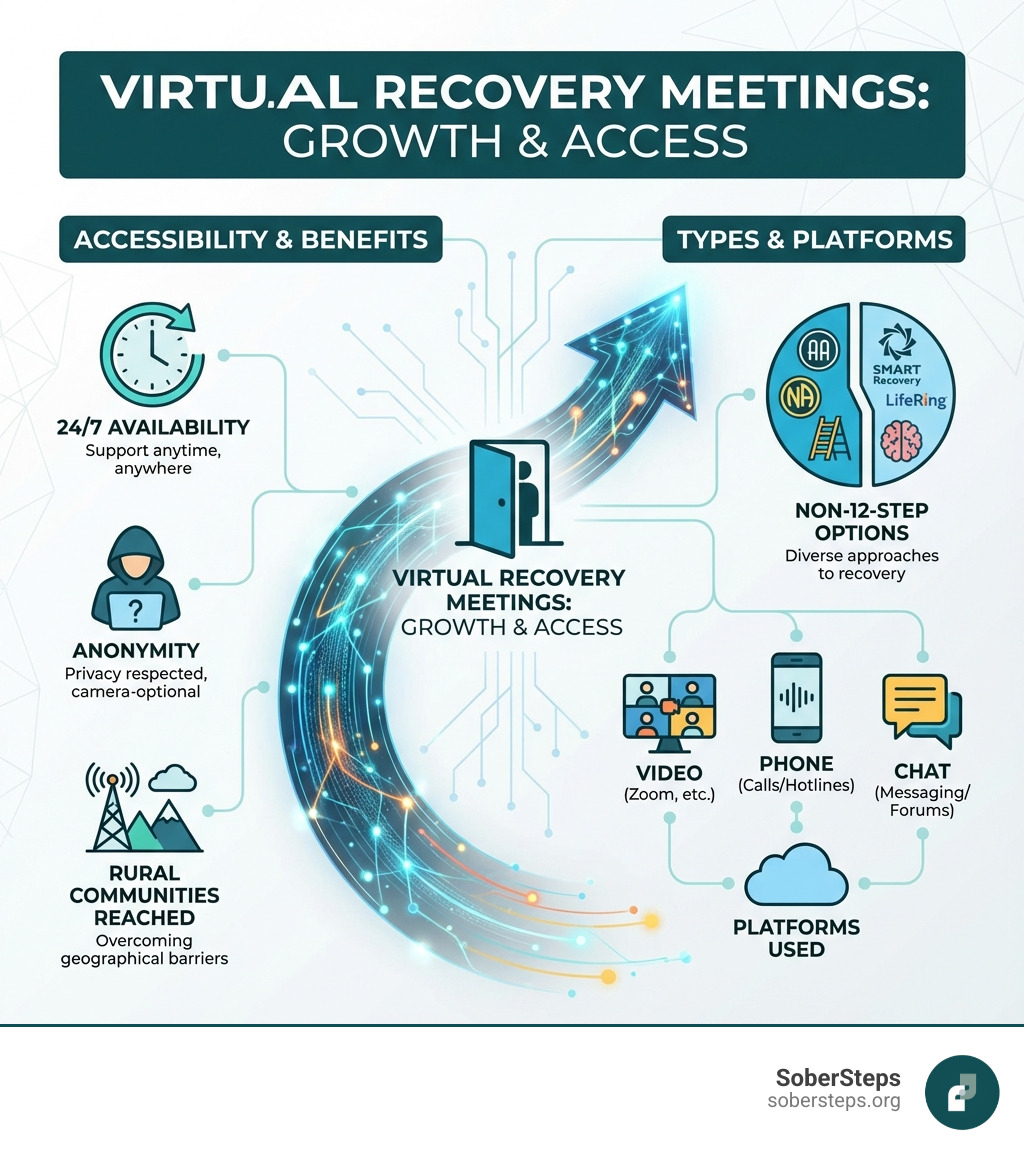
- Unparalleled Accessibility: For individuals in rural areas, those with disabilities, or people who are geographically isolated, virtual meetings are a lifeline. They break down barriers that might prevent attendance at in-person meetings and make it easier to stay connected between appointments or treatment episodes.
- Improved Anonymity and Privacy: Many find the virtual setting less intimidating, especially when starting out. The option to turn off cameras or use a pseudonym can make it easier to participate without feeling exposed. Many online communities also emphasize that you can join quietly and simply listen at first.
- Convenience and Flexible Schedules: With meetings available around the clock, often 365 days a year, we can fit recovery support into even the busiest schedules. This flexibility is invaluable for managing work, family, school, or other commitments.
- Wide Variety of Meeting Types: The online world opens up a vast array of meeting formats and philosophies. We can easily explore 12-step-inspired meetings, skills-focused groups, and specialized meetings to find what truly resonates, without leaving our homes.
- 24/7 Availability: Beyond scheduled meetings, many platforms offer online forums, chat rooms, and discussion boards that provide continuous support. This can be especially helpful during cravings, sleepless nights, or moments of crisis.
- Less Intimidating for Newcomers: The thought of walking into a room full of strangers can be daunting. Virtual meetings can feel less intimidating, allowing new members to observe and listen until they feel comfortable sharing. Reading about expectations ahead of time can also reduce anxiety.
Find a virtual meeting that fits your needs or search for addiction treatment now if you’re looking for a higher level of support alongside meetings.
Potential Drawbacks to Consider
While the benefits are clear, we also acknowledge that Virtual recovery meetings come with their own set of potential challenges:
- Lack of Physical Connection: For some, the absence of in-person hugs, handshakes, or even just sitting in the same room can be a drawback. The subtle cues of body language and shared physical space are simply different online, and that can affect how connected you feel.
- Technology Barriers: Not everyone has reliable internet access, a suitable device, or the technical comfort to steer online platforms like Zoom or Microsoft Teams. Troubleshooting technical issues can be frustrating and disrupt the meeting experience.
- “Zoom Fatigue”: Spending hours on video calls can be mentally draining, leading to a phenomenon known as “Zoom fatigue.” This can sometimes make it harder to focus and engage fully in a meeting, especially if you already spend much of your day online.
- Distractions at Home: Attending from home can mean battling distractions from family, pets, roommates, or other responsibilities, making it challenging to fully immerse ourselves in the meeting.
- Confidentiality Concerns: While meeting organizers strive for secure platforms, there’s always a slight risk with any online activity. Participants also need to be mindful of their surroundings to ensure their privacy and the privacy of others. Using headphones, finding a private space, and being cautious about who can see your screen are all important steps.
At SoberSteps, we strongly advocate for following best practices for online security, such as those provided by many recovery organizations. If you’re concerned about privacy or emotional safety, you can also get confidential mental health support today.
For more practical strategies, check out our tips for overcoming virtual meeting challenges and consider combining online meetings with structured treatment or counseling to build a stronger support system.
How to Find the Right Virtual Recovery Meetings for You
The key to successful engagement with Virtual recovery meetings is finding the right ones for you. Fortunately, technology has made this easier than ever. We have a wealth of resource directories, meeting finders, and mobile apps at our fingertips. Platforms like Zoom, Microsoft Teams, and other video conferencing tools are the backbone of these digital gatherings.
Here are some of the top types of resources we recommend exploring:
- National and local helplines: Confidential hotlines and warm lines can point you toward reputable virtual meeting options and treatment resources.
- Online meeting directories: Many recovery organizations maintain up-to-date lists of virtual meetings, often sortable by time zone, language, and meeting type.
- Mobile apps: Recovery-focused apps can connect you to peer support, daily check-ins, and meeting finders right from your phone.
- Treatment and information platforms like SoberSteps: Independent resources compile and organize options so you can quickly compare levels of care, meeting styles, and specialized programs.
Many of these resources will display meeting times in our local time zone, which is a fantastic feature for global accessibility. If we encounter any display issues (like dark mode not appearing correctly), often a simple browser cookie clear will resolve it. Find addiction treatment now.
If you’d like help sorting through all of this, contact SoberSteps for personalized meeting recommendations. Our confidential 24/7 helpline can also connect you to vetted treatment providers.
SoberSteps Virtual Meeting Directory
At SoberSteps, we’re dedicated to making recovery accessible and custom to your needs. Our own online meeting schedule is designed to connect you with supportive communities. We offer information about a variety of Virtual recovery meetings that align with different philosophies and needs.
When you browse our virtual meeting calendar, you’ll find clear instructions on how to join, what to expect, and any specific guidelines for that particular group. We strive to highlight welcoming and confidential environments so you can focus on your recovery.
Learn about our online support groups, and browse our virtual meeting calendar to find upcoming options.
Specialized and Alternative Meeting Options at SoberSteps
We understand that recovery is a deeply personal journey, and diverse experiences require diverse support. That’s why SoberSteps highlights specialized and alternative Virtual recovery meetings designed to meet specific needs within our community:
- Women’s Groups: Providing a safe space for women to share and support each other.
- LGBTQ+ Groups: Affirming and inclusive environments for the LGBTQ+ community.
- Family Support: Meetings for family members and friends impacted by addiction.
- Veteran Support: Dedicated groups for our service members, addressing their unique challenges.
- Co-Occurring Disorder Support: Meetings that understand and address the complexities of managing both addiction and mental health conditions.
We encourage you to explore all our support options to find the community where you feel most understood and empowered. Explore all SoberSteps support groups and see which ones you might pair with your current virtual meetings.
Join a SoberSteps virtual meeting today or call our helpline for guidance on the next best step.
Comprehensive Resource Hubs
Beyond live meetings, we believe in providing a holistic suite of resources to support your recovery. Our SoberSteps resource library offers a wealth of information, including insightful recovery blogs and downloadable guides. These resources are designed to complement your meeting attendance, offering deeper dives into topics like relapse prevention, coping strategies, and maintaining mental well-being.
You can browse our recovery resources or go straight to our latest recovery tips to stay up to date on strategies for lasting sobriety.
What to Expect and How to Participate
Attending your first Virtual recovery meeting can bring a mix of emotions – excitement, hope, and perhaps a little anxiety. It’s completely normal to feel unsure about what to expect or how to participate. We want to explain the process for you, ensuring you feel prepared and comfortable. Just like in-person meetings, virtual sessions have a structure and unspoken rules of etiquette that help maintain a safe and supportive environment. Anonymity, a cornerstone of many recovery programs, is also paramount in the virtual space. Learn about individual therapy for addiction.
If you’d like step-by-step support, you can sign up for your first SoberSteps meeting or call our helpline for guidance.
Tips for Your First Virtual Recovery Meeting
To help ease any first-time jitters, here are our best tips for attending your initial Virtual recovery meeting:
- Find a Quiet, Private Space: Choose a location where you won’t be interrupted and can speak freely without being overheard. This ensures both your privacy and the confidentiality of others.
- Test Your Tech Beforehand: A few minutes before the meeting, check your internet connection, microphone, and camera (if you plan to use it). Download any necessary apps like Zoom or Microsoft Teams in advance.
- Arrive a Few Minutes Early: This gives you time to settle in, resolve any last-minute technical glitches, and get a feel for the group before the meeting officially starts.
- It’s Okay to Just Listen: There’s no pressure to share immediately. Many newcomers choose to listen to others’ experiences for their first few meetings. This allows you to understand the format and feel of the group.
- You Don’t Have to Share: While sharing is a powerful part of recovery, it’s always voluntary. If you choose to speak, focus on your experiences, strength, and hope, rather than “war stories” or unsolicited advice.
- Keep an Open Mind: Every meeting and every group has a unique dynamic. If the first one doesn’t feel right, try another. The goal is to find a community where you feel comfortable and supported.
For more ideas on preparing for your first session, read our first-timer’s guide to online meetings.
Virtual Meeting Etiquette and Best Practices
Maintaining a respectful and confidential environment in Virtual recovery meetings requires a few key etiquette guidelines:
- Mute Your Microphone When Not Speaking: This prevents background noise from disrupting the meeting and ensures everyone can hear the speaker clearly.
- Use the “Raise Hand” Feature: If you wish to speak, use the virtual “raise hand” function (available on most platforms) rather than interrupting. The facilitator will call on you when it’s your turn.
- Be Mindful of Your Background: If your camera is on, try to have a neutral or appropriate background. This minimizes distractions for other participants.
- Respect Confidentiality (“What You Hear Here, Stays Here”): This is a golden rule in all recovery meetings. What is shared in the meeting is confidential and should not be discussed outside the group. This applies equally to virtual settings.
- Avoid Cross-Talk: Refrain from having side conversations or commenting while someone else is speaking. Give each speaker your full attention.
- Use the Chat Function Respectfully: If a chat feature is available, use it for relevant comments or questions, not for private conversations or disruptive remarks.
You can review our virtual meeting guidelines to feel even more confident before logging on. If you find that you need additional one-on-one help, consider individual therapy for addiction alongside your virtual meetings.
Frequently Asked Questions about Virtual Recovery Meetings
We often hear similar questions from individuals exploring Virtual recovery meetings. Here are some of the most common ones, along with our answers, to help you feel more confident about taking the next step.
Are online recovery meetings free?
Yes, for many Virtual recovery meetings, including most peer-support meetings offered online, there are no mandatory dues or fees. Many groups are run by volunteers and supported through optional contributions. It is also common for groups to pass a virtual “basket” for voluntary donations (sometimes referred to as a tradition of self-support) to help cover operating costs such as website hosting or platform fees.
At SoberSteps, most of our peer-support connections and resources are free to access, though we may highlight some premium treatment options or services for improved support when appropriate. Find free rehab centers near you.
You can also learn about our free and low-cost options if cost is a concern.
Can I get court-ordered attendance verified?
Yes, in many cases, you can. Some virtual recovery meetings are able to provide attendance verification for court, probation, or employer requirements. Policies can vary widely by group and platform.
At SoberSteps, we understand the importance of this for certain situations, and we offer attendance verification for court or employer requirements for appropriate meetings and programs. We always recommend checking the specific meeting’s guidelines in the description or contacting the facilitator beforehand to confirm their verification process.
If you’re facing legal or employment-related consequences, you can also contact us for verification details and to discuss treatment options that may satisfy requirements.
Do I have to use my camera or real name?
No, participation in Virtual recovery meetings is always your choice, and anonymity is a cornerstone of many programs. Most meetings do not require you to be on camera. Using only your first name, a first initial, or a pseudonym is common practice to protect your anonymity and privacy.
You are in control of how much personal information you share. The focus is on your recovery journey, not your identity. For additional ideas on protecting your privacy while still getting support, read our guide on anonymous mental health hotlines.
If you’re unsure where to start or how anonymous you can remain, reach out to SoberSteps and we can walk you through your options.
Conclusion: Take the Next Step on Your Recovery Journey
Virtual recovery meetings have emerged as an indispensable and powerful tool in the journey to sobriety. They’ve broken down geographical barriers, offered a safe haven during times of isolation, and diversified the landscape of support available to countless individuals. The core message remains the same: connection is key to recovery. You are not alone, and there is a community waiting to welcome you, no matter where you are or what your personal journey entails.
At SoberSteps, we are committed to helping you steer these options and find the perfect fit. Our goal is to empower you with the resources and connections you need to stay on track and build a fulfilling life in recovery. If you or a loved one needs support, our confidential helpline is available 24/7. Don’t hesitate to reach out.
Get Help Now to explore virtual recovery meetings and treatment options custom to your situation.
Contact SoberSteps for immediate support if you’re ready to talk to someone today.
You can also explore all our recovery resources and find our addiction treatment programs to continue learning about your next steps.