Group Therapy: A Key Approach to Substance Abuse Recovery
Why Group Therapy Matters in Addiction Recovery
Group Therapy is a powerful form of psychotherapy where one or more trained therapists work with a small group of patients—typically 5 to 15 people—at the same time. Unlike individual therapy, it creates a safe, supportive environment where people share their experiences, learn from one another, and realize they are not alone in their struggles.
Quick Facts About Group Therapy:
What It Is: A structured therapy format where 5-15 people meet regularly with a trained therapist
How It Works: Weekly sessions lasting about 60-120 minutes, focused on shared experiences and recovery strategies
What It Treats: Substance use disorders, depression, anxiety, PTSD, eating disorders, and more
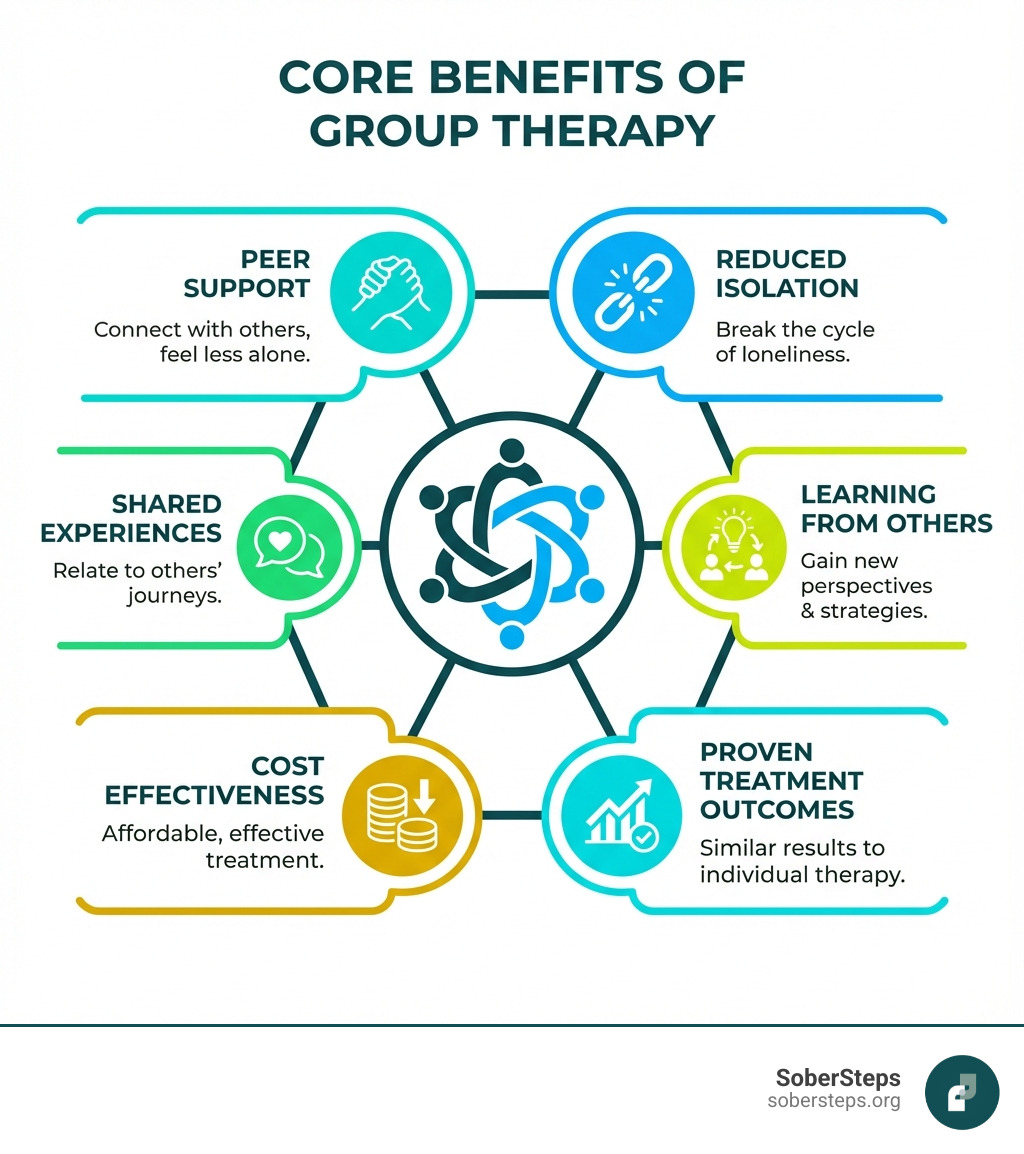
Why It Works: Reduces isolation, provides peer support, costs less than individual therapy, and produces similar outcomes
Who It’s For: People recovering from addiction or mental health challenges who can benefit from peer connection
When you are struggling with addiction or mental health challenges, you might feel completely alone. Group therapy breaks that isolation. It connects you with others who truly understand what you are going through—people who have faced similar struggles, felt the same shame, and are working toward the same goal of recovery.
Research in the United States shows that group therapy is as effective as individual therapy for treating substance use disorders and many mental health conditions. Studies reveal that group therapy produces similar outcomes in treatment engagement, reduced substance use, and improved mental health—often at one-half to one-third the cost of individual sessions.
At Sober-Steps, we understand how difficult it can be to take the first step toward recovery, which is why we provide confidential, anonymous resources to help you find the right Group Therapy program for your unique needs. With years of experience connecting individuals to evidence-based treatment options across the United States, we are here to guide you toward the support that works best for you.
Need help finding a group therapy program right now? Call our 24/7 confidential helpline at (844) 491-5566 to speak with someone who understands what you are going through. You can call (844) 491-5566 anytime, day or night, to explore options privately and anonymously.
Understanding Group Therapy: How It Works and What to Expect
When we talk about Group Therapy, we mean a dynamic, interactive form of mental health treatment. It is more than just a support group; it is a structured therapeutic process guided by a trained professional. This approach leverages the power of shared experience and collective insight to foster healing and personal growth.
What to Expect in a Typical Session
Imagine walking into a comfortable room where chairs are arranged in a circle. This setup allows everyone to see each other, creating a sense of equality and connection. A typical Group Therapy session in the United States might unfold like this:
Introductions and Check-ins: Sessions often begin with members introducing themselves and briefly sharing their experiences or progress since the last meeting.
Sharing Progress and Challenges: Participants are encouraged to discuss current challenges, successes, or insights they have gained.
Therapist as Facilitator: The group therapist actively facilitates discussions, keeps conversations respectful and on topic, and helps members explore their feelings and behaviors.
Session Length and Frequency: Most Group Therapy sessions meet for about 60-120 minutes each week, providing time for meaningful interaction and processing.
Structured Activities vs. Open Dialogue: Depending on the group’s focus and the therapist’s approach, sessions might include structured activities like role-playing or goal setting, or a more open discussion format.
The goal is always to create a safe, non-judgmental space where everyone feels heard and valued. For confidential help finding a group that aligns with your needs anywhere in the United States, call (844) 491-5566 today. You can also reach our anonymous helpline at (844) 491-5566 if you have questions about whether group therapy is right for you.
Group Therapy vs. Individual Therapy
Both Group Therapy and individual therapy are effective mental health treatments, but they offer different advantages. Understanding these differences can help you decide which approach, or combination of approaches, might be best for your recovery.
Feature
Group Therapy
Individual Therapy
Peer Support
Built-in community of people with similar experiences, reducing isolation and offering mutual encouragement.
One-on-one support from a therapist, without peer input.
Cost
Generally more affordable; costs are shared among 5-15 participants, often making it one-half to one-third the price of individual sessions.
Typically higher cost per session because time is dedicated to one person.
Different Perspectives
Multiple viewpoints and coping strategies from other members, plus guidance from the therapist.
Insight comes mainly from the therapist and your own reflections.
Privacy
Personal details are shared in a small group; confidentiality is expected but cannot be absolutely guaranteed.
Highest level of privacy with just you and the therapist.
Focus of Sessions
Focus on both individual growth and group dynamics, including relationships and communication patterns.
Entirely focused on your personal history, symptoms, and goals.
Many people use both formats together during addiction recovery. To learn more about one-on-one care, visit our page on Individual Therapy for Addiction, or call (844) 491-5566 to discuss your options.
Different Group Settings and Formats
Group Therapy comes in several formats to fit different needs and stages of recovery.
Open Groups: New members can join at any time as others leave. This offers flexibility and a steady mix of perspectives.
Closed Groups: A set group of people starts and finishes together over a specific period, which can help build deeper trust and cohesion.
Typical Group Size: Many therapy groups include around 7-12 members, which is small enough for everyone to participate but large enough for diverse viewpoints.
Group Therapy is available in a variety of settings across the United States:
Inpatient Settings: Part of hospital-based units or residential treatment centers, offering intensive support early in recovery.
Outpatient Programs: Provided in clinics, private practices, and intensive outpatient programs, allowing you to receive care while working or going to school.
Community Centers: Local mental health clinics and community organizations often offer lower-cost or sliding-scale groups.
Understanding these options can help you choose a setting that matches your goals and comfort level. To explore our various treatment options and find the one that fits your needs, please visit our Levels of Care page, or call (844) 491-5566 to talk confidentially with a specialist.
The Core Benefits of Group Therapy in Addiction Recovery
When we consider Group Therapy for addiction recovery, we are looking at a treatment model with deep and practical benefits. It is not just about sitting in a room with other people; it is about using the unique dynamics of a group experience for personal healing.
A Built-in Support System
One of the most powerful benefits of Group Therapy is the support system it provides. Addiction often thrives in isolation. Group therapy counters that by showing you that recovery can be a shared journey.
Universality: Hearing others share experiences similar to your own helps you recognize that your struggles and feelings are not unique or shameful.
Instillation of Hope: Seeing others make progress and maintain sobriety can strengthen your belief that recovery is possible for you too.
Altruism: Offering support and encouragement to others in the group can boost your self-esteem and sense of purpose.
Reducing Shame and Stigma: In a safe group setting, honest conversation about addiction reduces secrecy and shame.
Realizing You Are Not Alone: Many people in group therapy say this is the most freeing realization they have early in treatment.
This shared understanding creates a strong foundation for lasting recovery. For more information on how we support your journey to wellness, explore our Behavioral Health Support resources, or call (844) 491-5566 to speak with someone confidentially.
A Place to Practice and Grow
Group Therapy is more than just talking; it is a safe place to try new ways of relating to others.
Developing Social Skills: Group sessions offer opportunities to practice skills like listening, expressing emotions, and setting boundaries.
Learning to Communicate Effectively: You receive direct feedback on how you come across to others, which can improve your communication.
Receiving Honest Feedback: Group members offer diverse perspectives that can help you see blind spots and patterns you may miss on your own.
Role Modeling: Watching how others handle cravings, conflict, or stress can give you practical strategies to use in your own life.
Corrective Recapitulation of Family Dynamics: Group interactions can echo patterns from your family of origin, giving you a chance to work through old wounds in a healthier environment.
If you are ready to grow, learn, and heal in a supportive community, call our 24/7 helpline at (844) 491-5566. You can also text or call (844) 491-5566 to ask questions anonymously about starting group therapy.
An Effective and Affordable Option
Beyond its therapeutic benefits, Group Therapy is also a practical and accessible treatment option in the United States.
Cost-Effectiveness: Group therapy often costs about one-half to one-third less than individual therapy because several people share the cost of the therapist’s time.
Increased Access to Care: Because one therapist can see multiple people at once, more individuals can receive help, which is especially important given the unmet need for mental health and addiction services in the United States.
Proven Treatment Outcomes: Research has shown that Group Therapy can be as effective as individual therapy for many conditions, including substance use disorders, when it comes to reducing substance use and improving overall mental health.
If you want to talk through your options and find an affordable group therapy program near you in the United States, call (844) 491-5566 for confidential, anonymous support.
Types of Groups and Conditions Treated
Group Therapy is a versatile tool in the mental health landscape, adapted to address a wide range of issues and using various therapeutic approaches.
Common Therapeutic Approaches
Just like individual therapy, Group Therapy can be delivered through different theoretical lenses, each offering unique ways to foster healing and growth:
Cognitive Behavioral Therapy (CBT) Groups: Focus on identifying and changing unhelpful thinking patterns and behaviors that contribute to mental health issues or addiction. A CBT group might teach strategies for relapse prevention, managing cravings, or coping with stress.
Interpersonal Groups: Based on the idea that many problems stem from relationship difficulties, these groups explore how members interact with each other in the “here and now” to improve communication and connection.
Psychoeducational Groups: Emphasize education about a specific condition, such as addiction, depression, or anxiety. Members learn about symptoms, triggers, coping strategies, and the recovery process.
Skills Development Groups: Focus on teaching and practicing specific life skills, such as anger management, social skills, stress management, or mindfulness. In addiction recovery, these skills are key to maintaining sobriety.
Psychodynamic Groups: Explore how past experiences and unconscious processes affect current behavior, including patterns linked to substance use.
Conditions Effectively Treated with Group Therapy
The evidence base for Group Therapy in the United States is strong, showing its effectiveness across many mental health conditions and life challenges. It is not just for addiction; it is a powerful intervention for many issues, including:
Substance Use Disorders: A cornerstone of many addiction treatment programs, helping people learn recovery strategies, build interpersonal skills, and develop social support networks.
Depression: In the United States, multiple clinical trials and meta-analyses show group psychotherapy can significantly reduce depressive symptoms.
Anxiety Disorders: Including generalized anxiety, panic disorder, and social anxiety. Group settings are especially useful for practicing social and coping skills.
Post-Traumatic Stress Disorder (PTSD): Groups can provide a safe space for trauma survivors to share experiences, process emotions, and learn coping tools.
Eating Disorders: Support and psychoeducation groups can help people with bulimia nervosa, binge-eating disorder, and other eating-related concerns.
Grief and Loss: Groups offer a compassionate community for processing grief related to death, relationship loss, or other major life changes.
Chronic Pain: Group therapy can help individuals with chronic pain develop coping strategies, manage stress, and feel less alone.
Other Conditions: Evidence supports group therapy for conditions like ADHD, schizophrenia, borderline personality disorder, anger management issues, chronic illness, and low self-esteem.
If you or a loved one are seeking help for addiction, Group Therapy can be a vital part of your recovery. Learn more about our comprehensive Substance Abuse Treatment options, or call (844) 491-5566 to get confidential, anonymous guidance on finding the right group for your situation.
Is Group Therapy Right for You? Finding and Choosing a Program
Deciding to start Group Therapy is a significant step, and finding the right fit is crucial for a positive experience. The process can feel overwhelming, but you do not have to do it alone.
Finding the Right Group for Your Needs
Not every group is right for every person. The goal is to find a group where you feel safe, understood, and challenged to grow.
The Screening Process: Most reputable Group Therapy programs include a screening process, often an individual interview with the therapist. This helps determine whether the group’s focus and dynamics match your needs.
Talking to Your Doctor or Therapist: If you already have an individual therapist or physician, they can be an excellent resource for referrals. They know your history and can suggest groups aligned with your goals.
How to Choose a Group: Consider what you are looking for. Are you seeking help for addiction, anxiety, or another concern? Do you prefer a time-limited closed group or an ongoing open group? Are you drawn to skill-building or deeper emotional processing?
Questions to Ask the Facilitator: You can ask about the group’s rules, typical number of members, focus, and the facilitator’s experience with addiction and mental health.
For confidential, anonymous help finding a group that fits your needs in the United States, call (844) 491-5566. Our specialists can connect you with resources that match your situation. You can reach us at (844) 491-5566 24/7 if you want to talk through your options before committing to a program.
The Importance of Confidentiality and Trust
Confidentiality is a cornerstone of any therapeutic setting, and Group Therapy is no exception.
Establishing Ground Rules: At the start of a group, the therapist will explain ground rules, with confidentiality as a key expectation.
Therapist’s Role in Maintaining Safety: The therapist works to uphold these rules and ensure a respectful, safe environment for all members.
Anonymity and Privacy: Therapists are bound by professional ethics, but other group members are not legally bound in the same way. While members are strongly urged to honor confidentiality, there is no absolute guarantee of privacy.
Limits of Confidentiality: Therapists must break confidentiality if there is a clear risk of harm to you or others, or in cases of child or elder abuse. These limits are explained at the beginning.
Building Group Cohesion: Trust and respect are essential for group cohesion, which is one of the strongest predictors of positive outcomes in group therapy.
Potential Challenges and When to Reconsider
While Group Therapy is helpful for many people, it is not always the best choice in every situation.
Discomfort with Sharing: Some discomfort is normal, but if sharing in a group feels unbearable or unsafe, discuss this with a professional.
Not Suitable for Acute Crisis: Group therapy is usually not recommended if you are in an acute mental health crisis or need immediate, intensive one-on-one support.
Suicidal Ideation: If you are experiencing active suicidal thoughts, it is essential to seek immediate individual support or crisis services.
Severe Social Anxiety: Group therapy can eventually help social anxiety, but those with very severe symptoms may benefit from starting with individual therapy.
If you are having suicidal thoughts, contact the National Suicide Prevention Lifeline by calling or texting 988 for support from a trained counselor. If you or a loved one are in immediate danger, call 911. You can also call SoberSteps at (844) 491-5566 for confidential, anonymous guidance about next steps once the immediate crisis has passed.
The Proven Effectiveness of Group Therapy
The efficacy of Group Therapy is supported by decades of clinical research in the United States, showing its significant impact on mental health and addiction recovery.
What the Research Says
Research comparing different treatment approaches has consistently found that Group Therapy can be highly effective for many conditions.
Effectiveness for Various Conditions: Leading U.S. health organizations, such as the American Psychological Association (APA), have found that group therapy is a highly effective treatment for many conditions, including depression, anxiety, and substance use disorders.
Comparison to Individual Therapy: Research in the United States consistently shows that group therapy produces outcomes comparable to individual therapy. For many conditions, including substance use disorders, it is considered equally effective.
Similar Long-Term Outcomes: For conditions such as depression, anxiety disorders, PTSD, eating disorders, and substance use disorders, group therapy often produces long-term outcomes comparable to individual therapy.
High Clinical Significance: The improvements seen in group therapy are not just statistically significant; they translate into meaningful changes in daily functioning and quality of life.
The Therapist’s Role and Group Dynamics
The success of Group Therapy depends heavily on the therapist’s skill in managing group dynamics and maintaining safety.
Facilitator vs. Leader: A group therapist serves as a facilitator who guides conversation, supports participation, and keeps the focus on therapeutic goals.
Managing Conflict: Conflict is a natural part of group interaction. A skilled therapist helps members express disagreements respectfully and use these moments to learn healthier ways of relating.
Ensuring Safety: The therapist enforces group rules, protects vulnerable members, and intervenes when conversations become unproductive or unsafe.
Fostering Cohesion: Group cohesion—the sense of belonging and mutual support—is a strong predictor of positive outcomes. Therapists nurture this by encouraging empathy and highlighting shared goals.
Stages of Group Development: Many groups move through stages such as forming, storming, norming, and performing. Understanding this process helps both therapists and members stay engaged even when the work feels challenging.
If you are curious about how group therapy might fit into your recovery plan, you can call (844) 491-5566 to discuss your questions confidentially with a SoberSteps specialist.
Frequently Asked Questions about Group Therapy
We understand you might have questions about Group Therapy. Here are answers to some of the most common ones.
How much do I have to share with the group?
Sharing in Group Therapy is always voluntary. You decide what and how much you are comfortable sharing. While honest participation usually leads to better outcomes, there is no requirement to disclose details you are not ready to discuss.
Many people find that as trust builds and they hear others’ stories, they naturally feel more comfortable opening up over time. The therapist’s job is to create a safe environment and support you as you explore your own pace for sharing.
How long does group therapy last?
The length of Group Therapy depends on the design of the group and your individual needs.
Closed groups have a set number of sessions (for example, 8, 12, or 16 weeks) and then end.
Open groups are ongoing, with new members joining as others leave, allowing you to attend as long as you find it helpful.
Some people attend for a few months, while others continue in maintenance or support-oriented groups for much longer as part of sustained recovery.
Is online group therapy effective?
Yes. In the United States, online Group Therapy has become increasingly common and can be effective for many people.
Similar Outcomes: Research, including pre-pandemic studies, has found that video-based group therapy can produce outcomes similar to in-person groups for several conditions.
Increased Accessibility: Online groups remove travel barriers and can be especially helpful if you live in a rural area, have mobility issues, or prefer to start treatment from home.
Ground Rules for Privacy: Effective online groups require clear rules, such as attending from a private space, using headphones when needed, and avoiding multitasking during sessions.
Online Group Therapy may be a good option if you want anonymity, flexibility, or access to specialized groups that are not available locally. To explore in-person or online group options and get confidential support, call (844) 491-5566.
Take the Next Step in Your Recovery
We have explored Group Therapy, from what it is and how sessions work to its core benefits and proven effectiveness. It offers community, shared experience, and evidence-based strategies that can support lasting recovery from addiction and other mental health challenges.
At SoberSteps, we believe you deserve access to compassionate, confidential care. We provide anonymous resources to connect you with the right Group Therapy program for your unique situation anywhere in the United States.
You do not have to face addiction alone. Your path to healing can start today. Call our 24/7 confidential helpline at (844) 491-5566 to speak with someone who understands what you are going through. You can also contact (844) 491-5566 if you prefer to ask questions anonymously before committing to a program.
When you are ready, explore our Online Addiction Recovery Support Groups or reach out at (844) 491-5566 to find in-person options. Whether you call (844) 491-5566 today or bookmark it for later, help is available whenever you are ready to take the next step.
Speak to addiction Specialist 100% Free and Confidential
For anyone seeking help for addiction for themselves or a loved one calls to Sober Steps are completely confidential and available 24/7.
Please note: any treatment center listed on our site that receives calls is a paid advertiser.
Calls to a specific treatment center’s listing will be connected directly to that center.
Calls to our general helpline will be answered by treatment providers, all of whom are paid advertisers.
By calling the helpline, you agree to our terms and conditions. These calls are free of charge and carry no obligation to enter treatment. Neither Sober Steps nor anyone answering your call receives a commission or fee based on your choice of treatment provider.
If you’d like to explore additional treatment options or connect with a specific rehab center, you can browse our top-rated listings, visit our homepage, or call us at (844) 491-5566. You may also contact us for further assistance.