Need Help Now? Your Immediate Guide to Addiction Support
Crisis? Get help now for suicide & addiction. Call 988 or SoberSteps for immediate, confidential support and treatment referrals. You’re not alone.

Experiential Therapy is a type of psychotherapy that uses hands-on activities and real-life experiences—like art, music, drama, adventure, or animal interactions—to help you process emotions, heal from trauma, and develop healthier coping skills. Unlike traditional talk therapy, which relies primarily on verbal communication, experiential therapy invites you to actively engage in the healing process through doing, creating, and experiencing in the present moment.
Quick Overview: What You Need to Know About Experiential Therapy
Imagine standing at the base of a climbing wall, your heart racing—not from fear of the climb, but because for the first time in months, your mind isn’t consumed by painful memories or the urge to use. As you reach for the first handhold, you’re not just climbing a wall. You’re learning to trust yourself again. This is the power of experiential therapy: it brings healing into your body and your actions, not just your thoughts.
This approach recognizes that trauma and emotional pain are often stored in the body, and that talking about them isn’t always enough. By engaging in structured activities guided by a trained therapist, you can access emotions that are difficult to verbalize, rewrite painful memories, and find new ways to cope—all in a safe, supportive environment.
Experiential therapy works on the principle that perception guides behavior. When you re-experience emotional situations through creative expression or physical activity, you can release negative emotions and build positive feelings. Research shows that music therapy can reduce stress, art therapy helps people with PTSD cope better, and drama therapy effectively reduces mental illness across age groups. These aren’t just recreational activities—they’re evidence-based therapeutic interventions that facilitate real change.
Many people who struggle with mental health or substance use challenges feel isolated and overwhelmed, unsure where to turn. If traditional talk therapy hasn’t worked for you, or if you find it hard to put your feelings into words, experiential therapy might offer the breakthrough you need. If you’re ready to explore treatment options that engage your whole self—mind, body, and spirit—call us at (844) 491-5566 for a confidential conversation. Our team understands what you’re going through and can help you find the right path forward.
At Sober Steps, we are dedicated to empowering individuals on their journey to recovery by connecting them with effective, evidence-based treatments like Experiential Therapy that address the whole person. Our mission is to provide confidential support and comprehensive resources to help you reclaim your life, one step at a time.
At its heart, Experiential Therapy operates on a few core principles that set it apart from traditional talk-based approaches. Instead of merely discussing problems, we believe that “doing” leads to deeper understanding and lasting change.
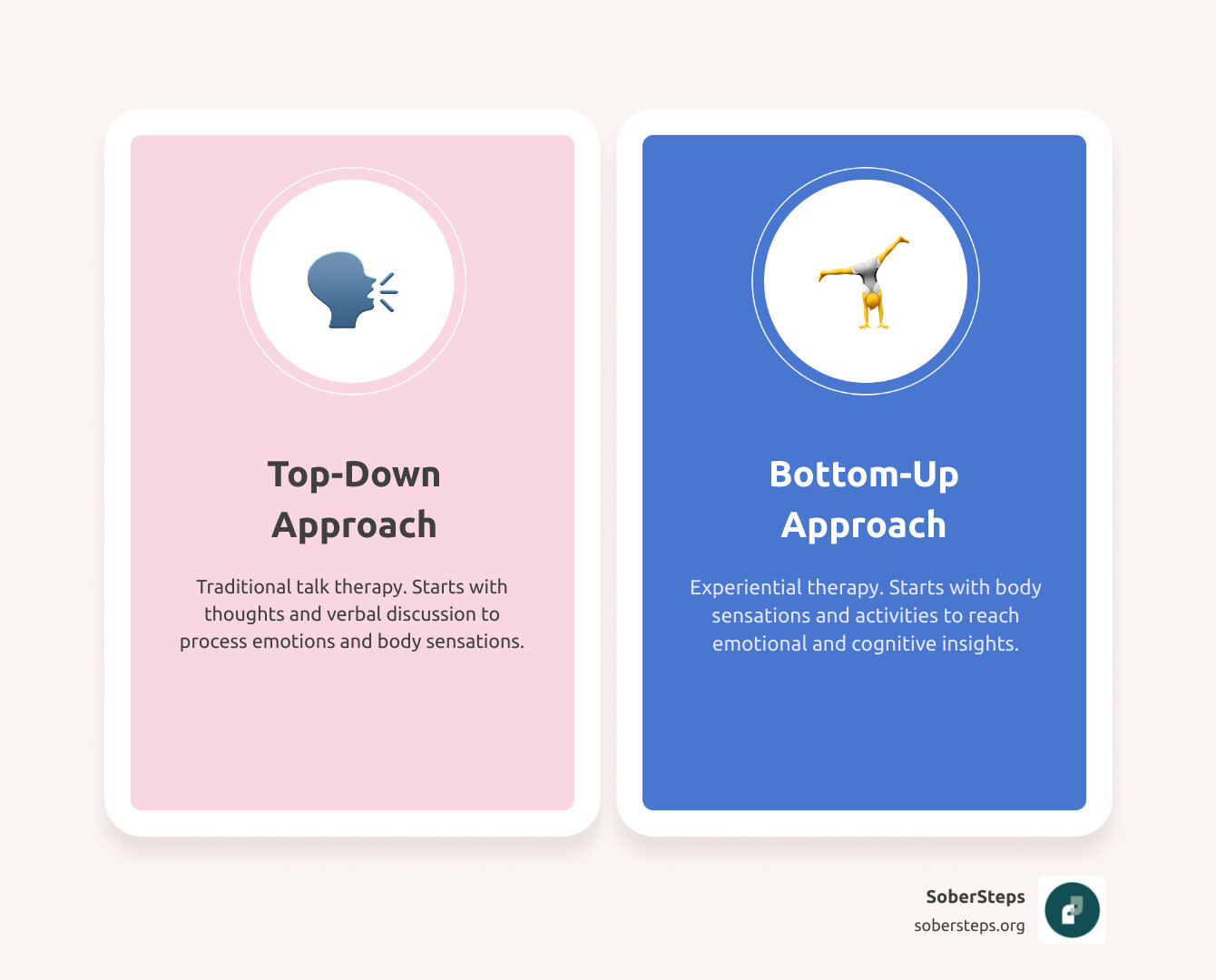
A primary principle is that action serves as a precursor to change. When you are physically and emotionally engaged, you gain access to psychological elements that might be inaccessible through conversation alone. By acting in new ways within a therapeutic setting, you can begin to think and feel in new ways in your daily life. This is often described as a “bottom-up approach,” starting with bodily sensations and experiences to reach emotional and cognitive insights.
This approach often involves re-experiencing emotions and situations from your past or present relationships. This isn’t about dwelling on the past, but rather actively engaging with those emotional states in a safe, controlled environment. The focus is always on the “here and now,” helping you process feelings as they arise during the activity. This present-moment engagement allows for a more immediate and visceral understanding of your internal world.
The therapeutic relationship is paramount in Experiential Therapy, serving as a safe container for this intense work. Our therapists work to build a relationship based on trust, empathy, and authenticity, creating an environment where you feel secure enough to explore vulnerable emotions. As noted in research, the centrality of emotion to psychological change is a key factor, and a strong therapeutic bond facilitates this emotional exploration.
By engaging your senses and body, Experiential Therapy helps to open up sensory memories—memories tied to physical sensations, smells, sounds, or images that can be difficult to access through words. Recalling these memories in a supportive space allows you to process and reframe past traumatic experiences. This process is crucial for facilitating emotional processing and insight, helping you uncover underlying emotional pain and understand its impact on your current behavior. It’s about overcoming defenses that might block emotional expression, allowing for genuine healing and growth.
The overarching goal of Experiential Therapy is to foster profound healing and personal growth by engaging your whole self. We aim to help you:
We want to help you move beyond merely understanding your issues to truly experiencing and integrating new ways of being. For more information on how we support overall well-being, explore our resources on Behavioral Health Support.
In Experiential Therapy, the relationship you build with your therapist is not just important—it’s foundational. We see our therapists not just as observers, but as active guides and collaborators in your healing journey.
Creating safety and trust is the absolute priority. For you to engage in potentially vulnerable and intense activities, you must feel completely secure. Our therapists work diligently to foster this safe space, allowing you to explore difficult emotions without judgment.
The process is highly collaborative, meaning we work with you, not just on you. Your preferences for interventions are always solicited and honored, ensuring that the therapy is client-centered and custom to your unique needs. This collaborative spirit is highlighted in research, emphasizing the importance of collaboration in experiential therapy.
Your therapist acts as a compassionate guide, helping you steer the experiences, process the emotions that arise, and connect these insights to your life outside of therapy. They facilitate the activities, offer insights, and help you make meaning of your experiences. This authentic and empathetic connection allows for deep emotional exploration and lasting change.
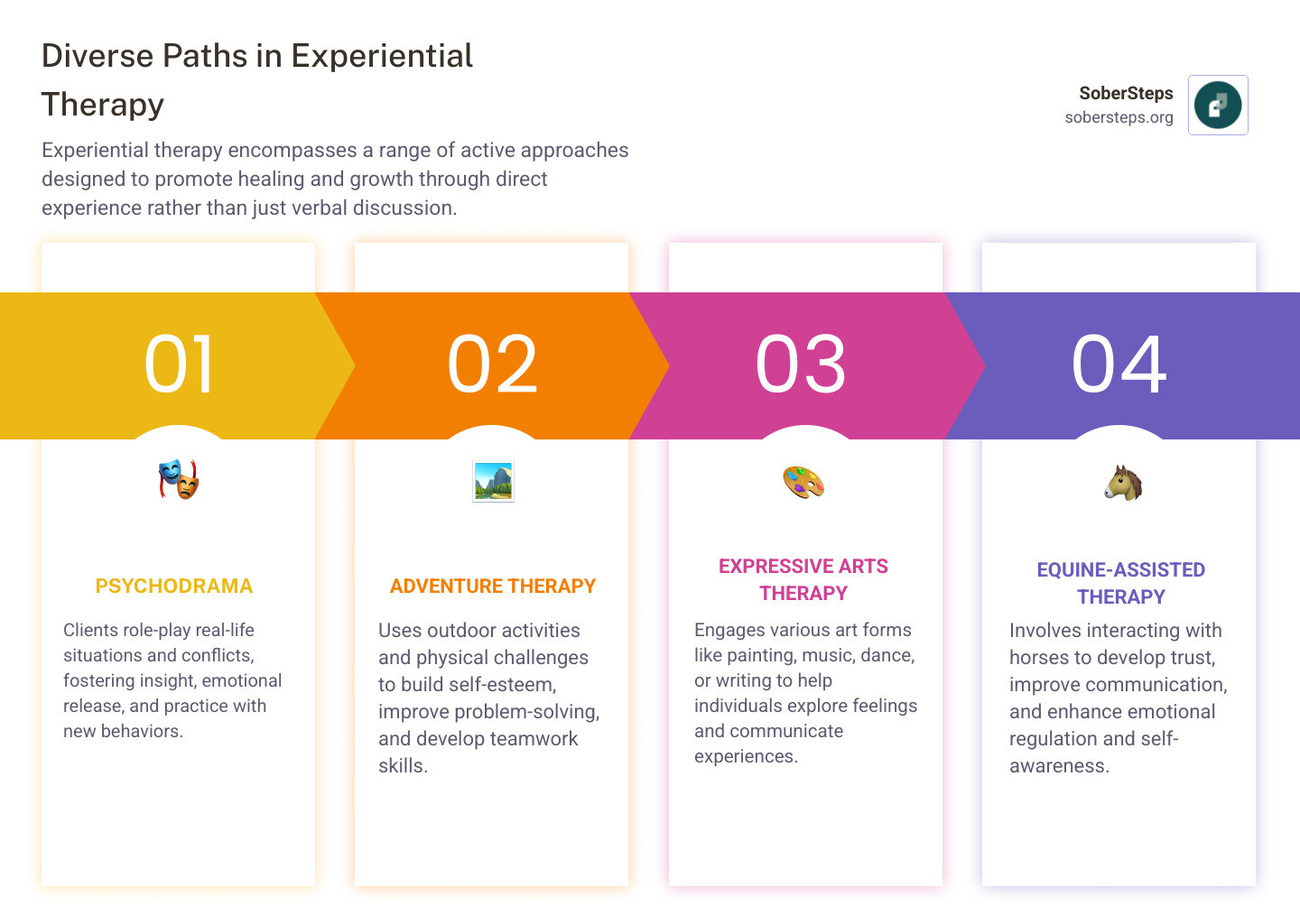
Experiential Therapy is a broad and dynamic category, encompassing a wide array of modalities that use different activities to achieve therapeutic goals. Finding the right fit for your unique needs and preferences is key to success. If you’re feeling overwhelmed by the options, our team can help guide you. For personalized guidance, call us at (844) 491-5566.
Here’s a look at some of the most common types of Experiential Therapy and their techniques:
| Modality | Activity Examples | Primary Goal | Best-Suited Conditions |
|---|---|---|---|
| Creative Arts Therapies | Art (painting, sculpting), Music (singing, playing), Drama (role-playing, psychodrama), Play (sand-tray, games) | Emotional expression, insight, communication, self-esteem | Trauma, depression, anxiety, relationship issues, communication difficulties, eating disorders |
| Adventure/Nature-Based Therapies | Hiking, rock climbing, ropes courses, wilderness expeditions | Confidence, problem-solving, trust, resilience, self-findy | Complex trauma, behavioral issues, substance use, anxiety, depression, adolescents |
| Animal-Assisted Therapies | Equine (grooming, riding), Canine (interaction, training) | Trust, boundaries, communication, empathy, emotional regulation | Substance use, trauma, anxiety, depression, social skills, impulse control |
Creative arts therapies harness the power of artistic expression to facilitate healing. These modalities are particularly effective for individuals who struggle to verbalize their feelings, allowing emotions to be explored and processed through non-verbal channels.
These creative avenues provide a safe distance from overwhelming emotions, allowing you to process them indirectly before integrating them consciously. For those struggling with addiction, exploring these individual therapeutic approaches can be a powerful step in recovery. You can find more information about how these integrate into your journey on our Individual Therapy for Addiction page.
For those who thrive in the outdoors, adventure and nature-based therapies offer a powerful path to healing. These modalities leverage the natural environment and physical challenges to build resilience and self-findy.

These therapies often involve metaphor, where overcoming a physical obstacle (like a rock wall) becomes a symbol for overcoming personal struggles. The sense of accomplishment and connection with nature can be incredibly grounding and empowering.
Animal-assisted therapies involve interactions with trained animals to promote emotional healing and personal growth. The unconditional acceptance and unique dynamics offered by animals can be profoundly therapeutic.
These therapies can be particularly beneficial for individuals who struggle with interpersonal relationships or have experienced trauma, as the non-judgmental nature of animals can create a safe space for connection and healing. They are also incredibly useful in Substance Abuse Treatment, helping individuals rebuild trust and emotional regulation.
Experiential Therapy offers a powerful, hands-on path to healing that goes beyond words, making it a vital tool for addressing a wide range of mental health and life challenges. This approach can be a breakthrough for many, helping individuals achieve significant personal growth. Call (844) 491-5566 to learn if it’s right for you.
Here are some of the primary benefits you can gain:
Experiential Therapy is highly adaptable and can be custom to address a diverse array of conditions and life challenges, often working in conjunction with other therapeutic approaches.
While the field of Experiential Therapy is vast and research on individual modalities varies, studies consistently point to its effectiveness for a range of conditions.
These findings underscore that Experiential Therapy is not just a complementary approach but a powerful, evidence-based intervention that can lead to meaningful change.
Starting on Experiential Therapy is a unique journey that differs from traditional therapy. We want you to feel prepared for what’s ahead. Sessions are often active and immersive, moving beyond conversation into direct experience. This can sometimes feel emotionally intense, as you’ll be encouraged to engage deeply with your feelings in the moment. The focus is on your in-the-moment experience, allowing for raw and authentic processing. After the activity, there will always be time for post-session reflection and processing, helping you integrate insights and connect them to your life. Our team can walk you through the process at (844) 491-5566.
What happens in an Experiential Therapy session can vary widely depending on the modality chosen and your individual treatment plan.
Many comprehensive programs, such as those found in Inpatient Treatment, often include various forms of Experiential Therapy as a core component of their healing approach.
Finding the right therapist is crucial for an effective and safe Experiential Therapy experience. We recommend looking for professionals with specific qualifications:
When considering Experiential Therapy, understanding the financial aspects and potential limitations is important.
This is a great question! While hobbies like art or hiking can certainly be enjoyable and provide mental health benefits, the key difference in Experiential Therapy lies in the presence of a trained, licensed therapist. Our therapists guide the process, facilitate emotional exploration, and help you connect the experience to your specific therapeutic goals. It’s not just recreation; it’s a structured intervention designed to help you gain insights, process emotions, and develop coping mechanisms under expert supervision. The therapist ensures the activity is purposeful and directly contributes to your healing journey.
While some aspects of Experiential Therapy, such as guided imagery, certain art therapy exercises, or even psychodrama with virtual role-playing, can be adapted for telehealth, many modalities require in-person participation. Adventure therapy, equine-assisted therapy, and other hands-on, physical activities depend on direct interaction with the environment or animals. We can discuss which modalities might be suitable for a virtual setting if in-person therapy is not an option for you.
Yes, absolutely! Experiential Therapy is often highly effective for individuals who struggle with verbal communication or find it difficult to articulate their feelings. Because it is action-based, it allows you to express and process emotions through activities, bypassing the need for direct verbal articulation. This can be particularly beneficial for those who have experienced trauma, individuals with language disorders, or even those on the autism spectrum, as it provides an alternative, often less intimidating, pathway to emotional expression and insight.
Experiential Therapy offers a powerful, hands-on path to healing that goes beyond words, making it a vital tool for addressing trauma, addiction, and other mental health challenges. By engaging the mind and body, it helps open up profound insights and lasting change. The team at SoberSteps is here to provide confidential, anonymous help. If you or a loved one are struggling, don’t wait. Call our 24/7 helpline at (844) 491-5566 to explore your options. Your journey to recovery can start today with a single, confidential call. Learn more about our substance abuse treatment programs.

Crisis? Get help now for suicide & addiction. Call 988 or SoberSteps for immediate, confidential support and treatment referrals. You’re not alone.
Connect with anonymous hotline mental health support. Find immediate, confidential help 24/7 for stress, crisis, or simply to talk. Free & private.

Cope with benzodiazepine withdrawal anxiety. Understand symptoms, timeline, and safe tapering for a calmer, benzo-free future. Get support now.