Cognitive Behavioral Therapy (CBT): Benefits and Techniques
Understanding Cognitive Behavioral Therapy: A Path to Recovery
Cognitive Behavioral Therapy (CBT) is a structured, goal-oriented form of talk therapy that helps you identify and change negative thought patterns and behaviors that contribute to mental health and substance use challenges. Here’s what you need to know:
What is CBT?
A time-limited psychotherapy approach (typically 12-20 sessions)
Focuses on the connection between thoughts, feelings, and behaviors
Teaches practical skills to manage problems in daily life
Recommended by the American Psychological Association as a first-line treatment
Proven effective for depression, anxiety, PTSD, substance use disorders, and more
How Does It Work?
Identify unhelpful thinking patterns and behaviors
Challenge negative beliefs with evidence
Replace harmful thoughts with realistic, balanced perspectives
Practice new skills through homework and real-life application
If you’re struggling with mental health or substance use issues and need confidential guidance, call (844) 491-5566 to speak with a compassionate professional who can help you find effective treatment options.
CBT is often called the “gold standard” of psychotherapy because it’s one of the most researched and effective forms of treatment available. Unlike therapies that focus primarily on the past, CBT concentrates on your current problems and teaches you practical strategies you can use right away. It’s a collaborative process where you and your therapist work together to set goals and develop coping skills that last long after treatment ends.
Why CBT Works
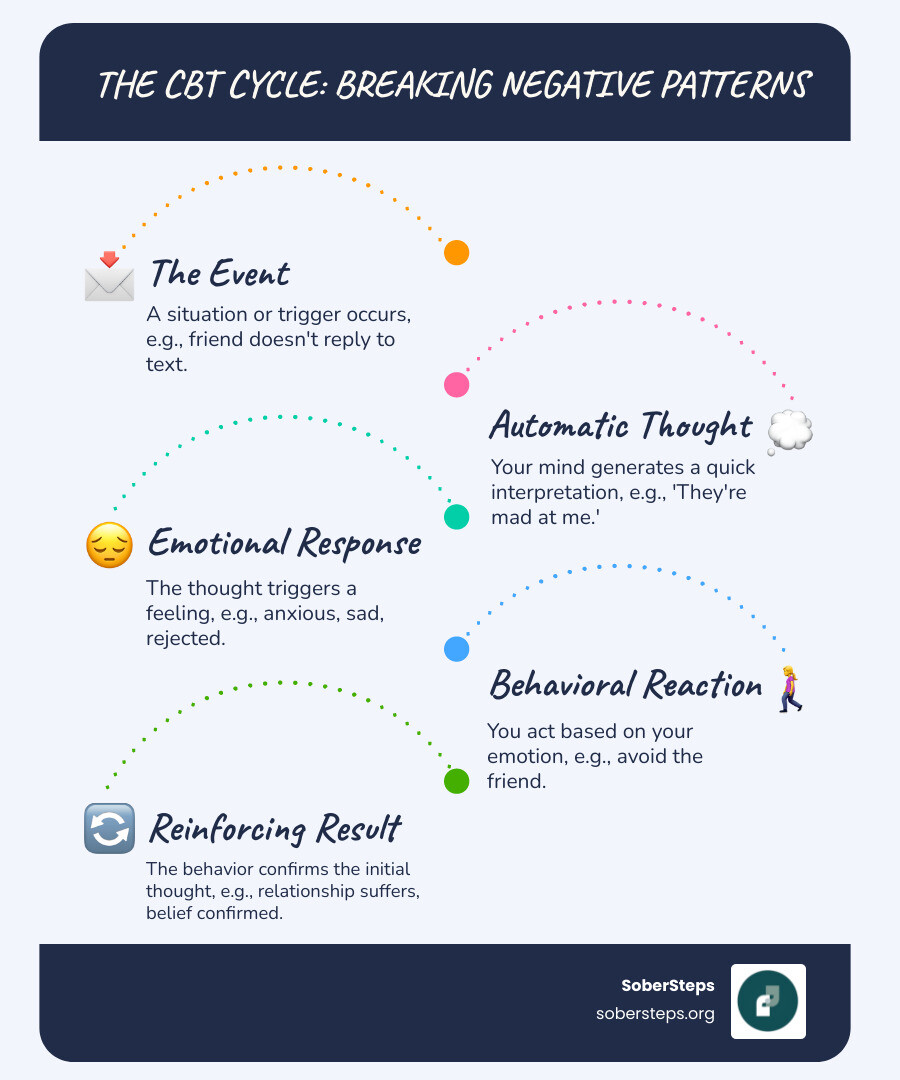
The power of CBT lies in its simple but profound insight: your thoughts influence your emotions, which in turn affect your behaviors. When you’re dealing with depression, anxiety, or addiction, negative thought patterns can create a destructive cycle. For example, if someone doesn’t return your greeting in the hallway, you might automatically think “they hate me” rather than “they’re probably in a rush.” That single thought can trigger feelings of rejection and lead you to avoid that person—reinforcing your negative belief.
Cognitive Behavioral Therapy (CBT) helps you break these cycles by teaching you to recognize distorted thinking, question your assumptions, and respond to challenges in healthier ways. The techniques you learn become tools you can use for the rest of your life, making you your own therapist.
At Sober Steps, we’re dedicated to empowering individuals on their recovery journey by connecting them with evidence-based treatments like Cognitive Behavioral Therapy (CBT). Our team of advocates and professionals understands the challenges you face and is here to guide you toward the resources and support you need to reclaim your life.
For immediate, confidential assistance finding a qualified CBT therapist in your area, call (844) 491-5566 today.
How Cognitive Behavioral Therapy (CBT) Works
At its heart, Cognitive Behavioral Therapy (CBT) operates on a fundamental principle: our thoughts, feelings, and behaviors are deeply interconnected. When we experience psychological problems, they often stem from unhelpful ways of thinking and learned patterns of behavior. The good news is that these patterns are not set in stone; we can learn better ways of coping.
CBT is a problem-focused and action-oriented approach. This means we concentrate on specific issues in your current life rather than dwelling solely on past events. Our goal is to equip you with practical tools to manage your present challenges and prevent future difficulties. We believe that by understanding the cycle of thoughts, feelings, and behaviors, you can actively intervene to create positive change.
The cognitive model in CBT suggests that our interpretations of events, rather than the events themselves, largely determine our emotional and behavioral responses. For instance, if you receive a critical comment at work, an unhelpful thought might be, “I’m a complete failure.” This thought could trigger feelings of sadness and lead to behaviors like withdrawing from colleagues or procrastinating on tasks. CBT helps us identify these unhelpful thinking patterns and replace them with more balanced and realistic interpretations, leading to healthier emotional states and more productive behaviors.
The Theoretical Roots of CBT
The story of Cognitive Behavioral Therapy (CBT) is a fascinating journey through psychology, blending ancient wisdom with modern science. Its philosophical origins can be traced back to Stoicism, an ancient Greek philosophy that emphasized managing emotions by changing one’s perceptions of events. The Stoics understood that it’s not what happens to us, but our interpretation of what happens, that causes distress.
Fast forward to the 20th century, and the formal development of CBT began with two distinct but converging paths: behavioral therapy and cognitive therapy. Behavioral therapy, which emerged in the early 1900s, focused on the idea that behaviors are learned and, therefore, can be unlearned or changed. Pioneers in this field explored how principles of classical and operant conditioning could modify maladaptive behaviors.
The “cognitive revolution” of the 1950s and 60s shifted psychology’s focus to mental processes. It was during this period that psychiatrist Aaron Beck developed what he initially called cognitive therapy. Working with patients experiencing depression, Beck observed that they consistently displayed negative thought patterns, which he termed “cognitive distortions.” He realized that these distorted thoughts were not just symptoms of depression but were actively contributing to and maintaining the condition. Beck’s innovative approach was to help patients identify and challenge these negative thoughts, replacing them with more realistic ones.
The merger of these two powerful approaches—behavioral therapy’s focus on action and cognitive therapy’s focus on thought—gave birth to Cognitive Behavioral Therapy (CBT). This synthesis provided a comprehensive framework for understanding and treating psychological problems by addressing both what we think and what we do. The scientific foundation of CBT is robust, with extensive research supporting its methods. For example, studies on the history of CBT in youth have documented its evolution and effectiveness in treating various conditions in younger populations, providing a strong evidence base for its application across age groups. You can explore more about this history and its application in youth here.
Identifying Cognitive Distortions and Schemas
One of the cornerstones of Cognitive Behavioral Therapy (CBT) is learning to identify and challenge unhelpful thinking patterns. These often manifest as automatic negative thoughts (ANTs)—spontaneous, often fleeting thoughts that pop into our minds and can significantly impact our mood and behavior.
These ANTs frequently contain “cognitive distortions,” which are errors in logic or irrational ways of thinking that lead us to erroneous conclusions. Recognizing these distortions is a powerful step toward changing how we react to situations. Here are some common cognitive distortions we often encounter:
Black-and-White Thinking (Dichotomous Thinking): Viewing everything in extremes; if it’s not perfect, it’s a failure. For example, “If I don’t get an A, I’m a complete idiot.” This is commonly found among people suffering from depression.
Overgeneralization: Drawing a broad, sweeping conclusion based on a single event or limited evidence. “I messed up that presentation, so I’m terrible at my job and will never succeed.”
Catastrophizing (Fortune Telling): Expecting the worst possible outcome in any given situation, no matter how unlikely. “I felt a slight pain in my chest; it must be a heart attack.”
Mind Reading: Assuming you know what others are thinking, usually negatively, without any real evidence. “My boss didn’t smile at me, so she must think I’m incompetent.”
Personalization: Taking things personally, even when they have nothing to do with you. “My friend didn’t call me back because I must have done something wrong.”
“Should” Statements: Holding rigid rules about how you and others “should” or “must” behave, leading to guilt, anger, or frustration. “I should always be happy” or “They shouldn’t act that way.”
Selective Abstraction (Mental Filter): Focusing only on the negative aspects of a situation while ignoring all the positives. “I got three compliments on my work, but one person criticized it, so my work is bad.”
Beyond these surface-level distortions are deeper, more fundamental patterns of thinking known as core beliefs or schemas. These are central ideas about oneself, others, and the world that are often formed early in life and become deeply ingrained. They are the most fundamental beliefs a person holds. Negative core beliefs about oneself often fall into four categories:
Inferiority: “I am inadequate,” “I am not good enough.”
Vulnerability: “I am helpless,” “I am unsafe.”
Unlovability: “I am unlovable,” “No one cares about me.”
Worthlessness: “I am a burden,” “I don’t deserve happiness.”
These schemas can create dysfunctional attitudes that lead to various psychological issues. For example, if someone has a core belief of being “unlovable,” they might develop an intermediate belief like, “To be accepted, I should always please others.” This can then drive behaviors that are self-sacrificing or unhealthy. In CBT, we work to identify these core beliefs and intermediate beliefs, understanding how they influence your automatic thoughts and behaviors, and then collaboratively challenge and reframe them into more balanced and adaptive perspectives.
Key Techniques and Applications of CBT
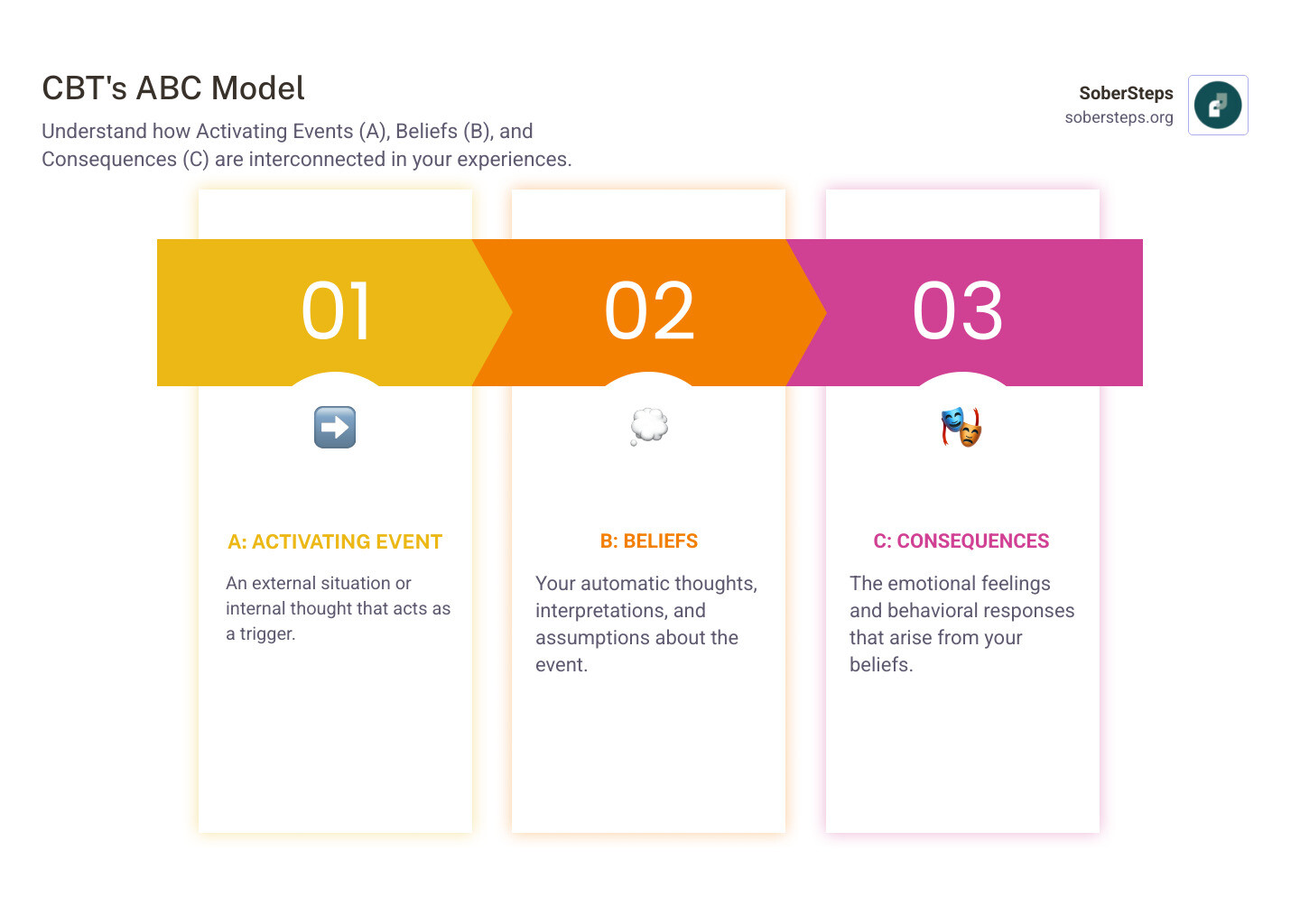
Cognitive Behavioral Therapy (CBT) is not just about understanding your thoughts; it’s about actively applying strategies to create change. We use a range of techniques that are practical, evidence-based, and designed to help you build lasting skills. A key starting point is a functional analysis, where we examine the triggers for your problematic thoughts and behaviors, the thoughts and feelings that follow, and the consequences of those responses. This helps us pinpoint the areas where intervention will be most effective.
Our approach emphasizes skill-building and problem-solving. We don’t just talk about problems; we work together to develop concrete plans and strategies to overcome them. For confidential guidance on using these techniques to steer your challenges, call (844) 491-5566 today.
Techniques to Change Thinking and Behavior
In CBT, we employ various techniques to help you modify both your thinking patterns and your behaviors. These strategies are designed to be practical and can be applied in your daily life.
Cognitive Restructuring: This is a core technique where we learn to identify, challenge, and replace distorted or unhelpful thoughts with more balanced and realistic ones. It involves questioning the evidence for your thoughts, considering alternative explanations, and evaluating the impact of your thinking.
Journaling and Thought Records: A powerful tool for cognitive restructuring is keeping a “thought log” or diary. This involves systematically recording situations that trigger distress, the automatic thoughts that arise, the emotions experienced, and then challenging those thoughts by examining evidence for and against them and generating alternative, more balanced thoughts.
Behavioral Experiments: To challenge beliefs directly, we might design “behavioral experiments.” For instance, if you believe you’re terrible at public speaking, a behavioral experiment might involve practicing a small presentation in front of a supportive group. This helps you test the accuracy of your negative predictions in a real-world setting.
Activity Scheduling: For individuals struggling with depression, activity scheduling can be immensely helpful. This involves planning and engaging in pleasant activities (to boost mood) and mastery activities (to foster a sense of accomplishment), even when motivation is low. This technique helps combat withdrawal and inertia.
Relaxation Techniques: To manage anxiety and stress, we teach various relaxation techniques. These can include deep breathing exercises, progressive muscle relaxation, or mindfulness practices, helping you calm your mind and body when faced with overwhelming emotions.
Role-Playing: For social anxiety or interpersonal difficulties, role-playing can be an effective way to practice new behaviors and communication skills in a safe, controlled environment. This helps you prepare for potentially challenging interactions in real life.
Conditions Treated with Cognitive Behavioral Therapy (CBT)
Cognitive Behavioral Therapy (CBT) is one of the most common and best-studied forms of psychotherapy, and it has been demonstrated to be effective for a wide range of mental health conditions and emotional challenges. It’s often the preferred type of psychotherapy because it can quickly help you learn about and cope with specific challenges, and it’s recommended by major professional organizations like the American Psychiatric Association and the American Psychological Association.
Here are some of the conditions where CBT has shown significant efficacy:
Depression:CBT is a firmly established treatment for depression. It helps individuals challenge negative beliefs about themselves and their life, leading to changes in mood and behavior. Research indicates that CBT for depression can lower relapse rates significantly.
Anxiety Disorders: This includes Generalized Anxiety Disorder (GAD), Panic Disorder, and various Phobias. CBT helps individuals identify and replace negative automatic thoughts associated with anxiety and uses techniques like exposure therapy to gradually confront feared situations. A meta-analysis has shown Cognitive Behavioral Therapy to be effective in treating anxiety disorders.
Post-Traumatic Stress Disorder (PTSD):CBT is a highly effective treatment for PTSD, helping individuals process traumatic memories, challenge unhelpful thoughts related to the trauma, and reduce avoidance behaviors. It helps individuals unpack complex feelings and separate painful memories from their present reality.
Obsessive-Compulsive Disorder (OCD): Exposure and response prevention (ERP), a specific form of CBT, is considered a first-line treatment for OCD, particularly in pediatric cases.
Eating Disorders:CBT is a leading form of treatment for eating disorders, especially bulimia nervosa. It helps individuals challenge negative thought cycles related to body image and eating habits.
Substance Use Disorders:CBT is effective in helping individuals identify triggers, cope with cravings, and develop strategies for relapse prevention. It helps disrupt the thoughts that lead to substance use.
Bipolar Disorder: When combined with medication, CBT can improve depressive symptoms, mania severity, and overall psychosocial functioning.
Schizophrenia:CBT can be an effective adjunctive treatment for schizophrenia, helping individuals manage symptoms and improve daily functioning, particularly when combined with medication.
Attention-Deficit/Hyperactivity Disorder (ADHD): For children under 6, behavioral therapy (a component of CBT) is the initial recommended treatment. For older children and adolescents, CBT can be a part of psychosocial interventions to improve symptoms.
Personality Disorders:CBT has demonstrated effectiveness in treating various personality disorders.
For more information on how CBT can help with anxiety disorders, you can refer to this scientific research.
Broader Uses of CBT
The versatility of Cognitive Behavioral Therapy (CBT) extends far beyond traditional mental health diagnoses. We’ve found it to be incredibly beneficial in managing a variety of non-psychological medical conditions and navigating the everyday challenges of life.
For instance, CBT is a valuable tool for:
Chronic Pain Management: Living with chronic pain can be debilitating, often leading to feelings of helplessness and frustration. CBT helps individuals develop coping strategies, reframe their perception of pain, and improve their functional abilities, even when the pain itself cannot be eliminated.
Tinnitus: The persistent ringing or buzzing in the ears known as tinnitus can significantly impact quality of life. CBT helps individuals manage the distress and emotional reactions associated with tinnitus, making it less intrusive.
Insomnia (CBT-I):Cognitive Behavioral Therapy for Insomnia (CBT-I) is widely regarded as the most effective and long-lasting treatment for chronic insomnia. It addresses the thoughts and behaviors that interfere with sleep, helping individuals establish healthier sleep patterns.
Everyday Stress Management: Life is full of stressors, from relationship issues and divorce to work problems and grief. CBT provides practical skills to cope with these challenges, helping individuals manage their emotional responses, solve problems more effectively, and develop a greater sense of confidence in their own abilities. It can also help with adjusting to new life situations or medical conditions.
In these contexts, CBT doesn’t “cure” the physical condition but equips individuals with powerful psychological tools to better cope with their symptoms and improve their overall well-being. This demonstrates the broad applicability of CBT as an empowering approach to mental wellness.
What to Expect from Your CBT Journey
Starting on Cognitive Behavioral Therapy (CBT) is a journey of self-findy and skill development. It’s a highly collaborative process where you and your therapist work as a team. We emphasize that the therapist-client relationship is a crucial component of successful therapy; finding a therapist you trust and feel comfortable with is paramount.
CBT sessions are typically structured, meaning they follow a clear agenda and focus on specific goals. This structured approach helps ensure that each session is productive and contributes to your progress. It’s also a time-limited treatment, meaning it has a defined beginning and end, rather than being open-ended. This focus helps us concentrate on developing practical skills efficiently.
To learn more about what you can expect and how CBT can support your unique needs, we invite you to call our confidential line at (844) 491-5566.
Your First Session and Treatment Plan
Your first CBT session is primarily an initial assessment. During this meeting, your therapist will gather comprehensive information about your current situation, the nature and causes of your difficulties, and your personal history. This helps us understand your unique challenges and how the CBT model can be best applied to your specific problems.
We will then work together to discuss problems and goals, collaboratively setting clear, measurable objectives for your therapy. What do you want to achieve? How will you know when you’ve made progress? These are questions we’ll explore.
A typical CBT session is about 60 minutes long and usually takes place once a week. We’ll start by setting an agenda for the session, which might include reviewing homework, discussing a specific problem, and learning a new coping skill.
The treatment duration for CBT is generally short-term. For problems such as anxiety and depression, CBT typically involves 12 to 20 sessions. However, the length of treatment can vary depending on the severity and complexity of your problems—some people improve significantly in four to six sessions, while others may need more than 20 sessions.
To maximize the benefits you receive from CBT, we encourage:
Active participation: Therapy is not passive; your engagement is key.
Openness and honesty: Share your thoughts and feelings freely with your therapist.
Following your treatment plan: Stick to the strategies and techniques you learn.
Doing your homework: The work between sessions is crucial.
Communicating with your therapist: If therapy isn’t helping or you have concerns, speak up.
The Role of Homework and Self-Help
A unique and incredibly effective aspect of Cognitive Behavioral Therapy (CBT) is the emphasis on homework or exercises completed between sessions. These between-session assignments are not punitive tasks; rather, they are vital opportunities for you to practice the skills and strategies learned in therapy in your everyday life. This active application helps reinforce new ways of thinking and behaving, making them more ingrained and sustainable.
Examples of homework might include:
Worksheets: Structured forms to help you identify cognitive distortions or track your mood.
Thought diaries: Detailed logs where you record situations, thoughts, feelings, and alternative perspectives.
Behavioral exercises: Tasks designed to test your beliefs or gradually expose you to feared situations. For example, if you have social anxiety, your homework might be to initiate a brief conversation with a cashier.
Activity scheduling: Planning enjoyable or mastery-oriented activities to boost mood and engagement.
This practice of skills in real life is what truly makes CBT empowering, as it helps you become your own therapist.
This leads us to the question: Can CBT be used as a self-help approach, and if so, how? Yes, to a significant extent! Many of the principles and techniques of CBT can be applied independently. CBT workbooks and online CBT programs are widely available and can be excellent resources. These digital health technologies offer accessible ways to learn about CBT concepts, identify your own thought patterns, and practice coping skills. Some online programs even offer therapist support, which research suggests can improve their effectiveness, especially for conditions like depression and anxiety.
While self-help materials can be a great starting point or supplement to therapy, for complex or severe conditions, guided CBT with a qualified therapist is generally recommended to ensure proper application and address individual nuances.
How CBT Differs from Other Therapies
Cognitive Behavioral Therapy (CBT) stands out from many other forms of psychotherapy due to its distinctive approach and methodology. While all therapies aim to help individuals, CBT‘s structured, present-focused, and time-limited nature sets it apart.
Here’s a quick comparison:
Feature
Cognitive Behavioral Therapy (CBT)
Other General Therapy Approaches (e.g., psychodynamic)
Focus
Primarily on current problems and symptoms; how thoughts/behaviors impact present feelings.
Often digs into past experiences, childhood, and unconscious motivations to understand present issues.
Structure
Highly structured, goal-oriented, and often manualized; sessions follow a clear agenda.
More open-ended, less structured; often allows for free association and exploration of emerging themes.
Duration
Generally short-term (typically 5-20 sessions, 12-20 for anxiety/depression).
Often long-term, potentially lasting for many months or even years.
Role of Therapist
Active, directive, collaborative; teaches skills and strategies.
Often more interpretive, facilitative; aims to uncover underlying conflicts.
Homework
Essential component; assignments between sessions to practice skills.
Less common or less emphasized; focus primarily on insights gained during sessions.
Emphasis
Learning practical coping skills and becoming your own therapist.
Gaining insight into underlying dynamics; emotional processing.
CBT‘s focus on the present is a key differentiator. While we acknowledge that past experiences may have shaped your current thought patterns, the emphasis is on how these patterns are affecting you now and what you can do to change them moving forward.
Its structured nature provides a clear roadmap for treatment, and its typically shorter duration means that significant progress can often be achieved in a relatively brief period.
While CBT is highly effective, it can involve a potential for temporary discomfort. As you confront difficult thoughts and situations through techniques like exposure, you might experience increased anxiety or distress in the short term. However, your therapist will guide you through this process, ensuring it’s done safely and effectively. The importance of therapist fit cannot be overstated; a good therapeutic alliance is crucial for navigating these challenges and maximizing your benefits.
Frequently Asked Questions about CBT
How effective is CBT compared to medication?
Cognitive Behavioral Therapy (CBT) has a strong track record of effectiveness, often performing as well as or even better than medication for many conditions.
CBT Effectiveness: In many studies, CBT has been demonstrated to be as effective as, or more effective than, other forms of psychological therapy or psychiatric medications, particularly for depression and anxiety disorders.
As Effective as Medication for Depression/Anxiety: For example, numerous meta-analyses have shown CBT to be comparable to antidepressant medication in treating major depressive disorder.
Lower Relapse Rates: A significant advantage of CBT is its potential for lower relapse rates. Because CBT teaches coping skills, individuals are better equipped to manage future challenges, reducing the likelihood of symptoms returning after treatment ends.
Combination Treatment (CBT + Medication): For some conditions, particularly more severe cases of depression or anxiety, CBT combined with medication often yields the best outcomes. This integrated approach addresses both biological and psychological aspects of the condition. For instance, the Treatment for Adolescents With Depression Study (TADS) found that a combination of antidepressant medication and CBT was more effective for adolescents with severe depression than either treatment alone.
Can CBT be used for children and adolescents?
Absolutely! Cognitive Behavioral Therapy (CBT) is highly adaptable and widely used with children and adolescents, often being recommended as a first-line treatment for the majority of psychological disorders in this age group.
Adapting CBT for Youth:CBT techniques are modified to be age-appropriate, often incorporating play, creative activities, and simplified language.
Parental Involvement: For younger children, parental involvement is crucial. Parents learn CBT principles and techniques to support their child’s progress at home and reinforce positive behaviors.
Proven for Childhood Anxiety, Depression, and Conduct Disorders:CBT has been proven effective for a wide range of issues in youth, including anxiety disorders, depression, obsessive-compulsive disorder (OCD), post-traumatic stress disorder (PTSD), and even conduct disorders and aggression.
School-Based Prevention Programs: Research also supports the use of CBT in school-based prevention programs, helping to equip adolescents with coping skills to prevent the onset of depression and anxiety.
How do I find a qualified CBT therapist?
Finding the right therapist is a crucial step in your Cognitive Behavioral Therapy (CBT) journey. It’s important to seek out a qualified professional who can provide effective, evidence-based care.
Here’s how we recommend you find a qualified CBT therapist:
Credentials: Look for licensed mental health professionals. In the United States, this typically includes:
Licensed Psychologists (Ph.D. or Psy.D.): Hold doctoral degrees in psychology.
Licensed Clinical Social Workers (LCSW): Hold master’s degrees in social work.
Licensed Marriage and Family Therapists (LMFT): Hold master’s degrees, specializing in family and relationship dynamics.
Licensed Professional Counselors (LPC): Hold master’s degrees in counseling.
Certifications: While not always mandatory, some therapists pursue specialized certification in CBT from organizations that demonstrate advanced training and adherence to CBT principles. This can be a good indicator of expertise.
Asking About Their Approach: When you first contact a therapist, don’t hesitate to ask about their specific approach to CBT. Inquire about their experience with your particular concerns and how they integrate CBT techniques into their practice.
Finding a Therapist You Trust: The therapeutic relationship is incredibly important. Look for someone with whom you feel a good “fit”—someone who makes you feel heard, understood, and respected.
Referrals: Ask your primary healthcare provider for a referral, as they often have a network of trusted mental health professionals. You can also search online through local and state psychological associations.
We understand that navigating these choices can be overwhelming. For a confidential referral to qualified CBT therapists in your area who can provide the support you need, call (844) 491-5566 today.
Start Your Path to Healing with CBT
Cognitive Behavioral Therapy (CBT) offers a powerful and practical path toward healing and personal growth. It’s more than just talking about problems; it’s about learning concrete skills that empower you to reshape your thoughts, manage your emotions, and change your behaviors for the better. We’ve seen how this evidence-based approach can lead to profound and lasting positive changes in individuals struggling with mental health and substance use challenges.
The benefits of CBT extend beyond symptom reduction; it fosters empowerment by teaching you to become your own therapist, equipping you with tools for life’s inevitable ups and downs. Through skill development, you’ll gain confidence in your ability to cope with stress, overcome fears, and steer complex situations. This leads to long-term wellness, as the strategies you learn become ingrained habits that support a healthier, more fulfilling life.
CBT is truly a tool for life, helping you to break free from unhelpful cycles and build a future filled with hope and resilience. At SoberSteps, we are committed to supporting you every step of the way. Take the first step towards changing your life by calling (844) 491-5566 for confidential and anonymous help with mental health and substance use challenges.
Speak to addiction Specialist 100% Free and Confidential
The Dual Nature of Ketamine: From Operating Room to Treatment Room Ketamine addiction therapy represents one of the most complex and evolving areas in addiction medicine today. If you’re searching
For anyone seeking help for addiction for themselves or a loved one calls to Sober Steps are completely confidential and available 24/7.
Please note: any treatment center listed on our site that receives calls is a paid advertiser.
Calls to a specific treatment center’s listing will be connected directly to that center.
Calls to our general helpline will be answered by treatment providers, all of whom are paid advertisers.
By calling the helpline, you agree to our terms and conditions. These calls are free of charge and carry no obligation to enter treatment. Neither Sober Steps nor anyone answering your call receives a commission or fee based on your choice of treatment provider.
If you’d like to explore additional treatment options or connect with a specific rehab center, you can browse our top-rated listings, visit our homepage, or call us at (844) 491-5566. You may also contact us for further assistance.