
Your Guide to Finding Help for Drug Addiction
Struggling? Discover where to find help for drug addiction. SoberSteps guides you from detox to aftercare. Start your recovery now!

Outpatient Alcohol and Drug Rehab is a form of addiction treatment where you attend scheduled therapy and counseling sessions at a treatment center while continuing to live at home. This flexible approach allows you to maintain your daily responsibilities—work, school, family—while receiving professional support for recovery.
Key features of outpatient rehab:
If you’re struggling with a substance use disorder and feel isolated or overwhelmed, outpatient rehab can provide the confidential guidance you need. It’s particularly effective for those with mild to moderate addiction, a stable home environment, and a strong motivation to recover.
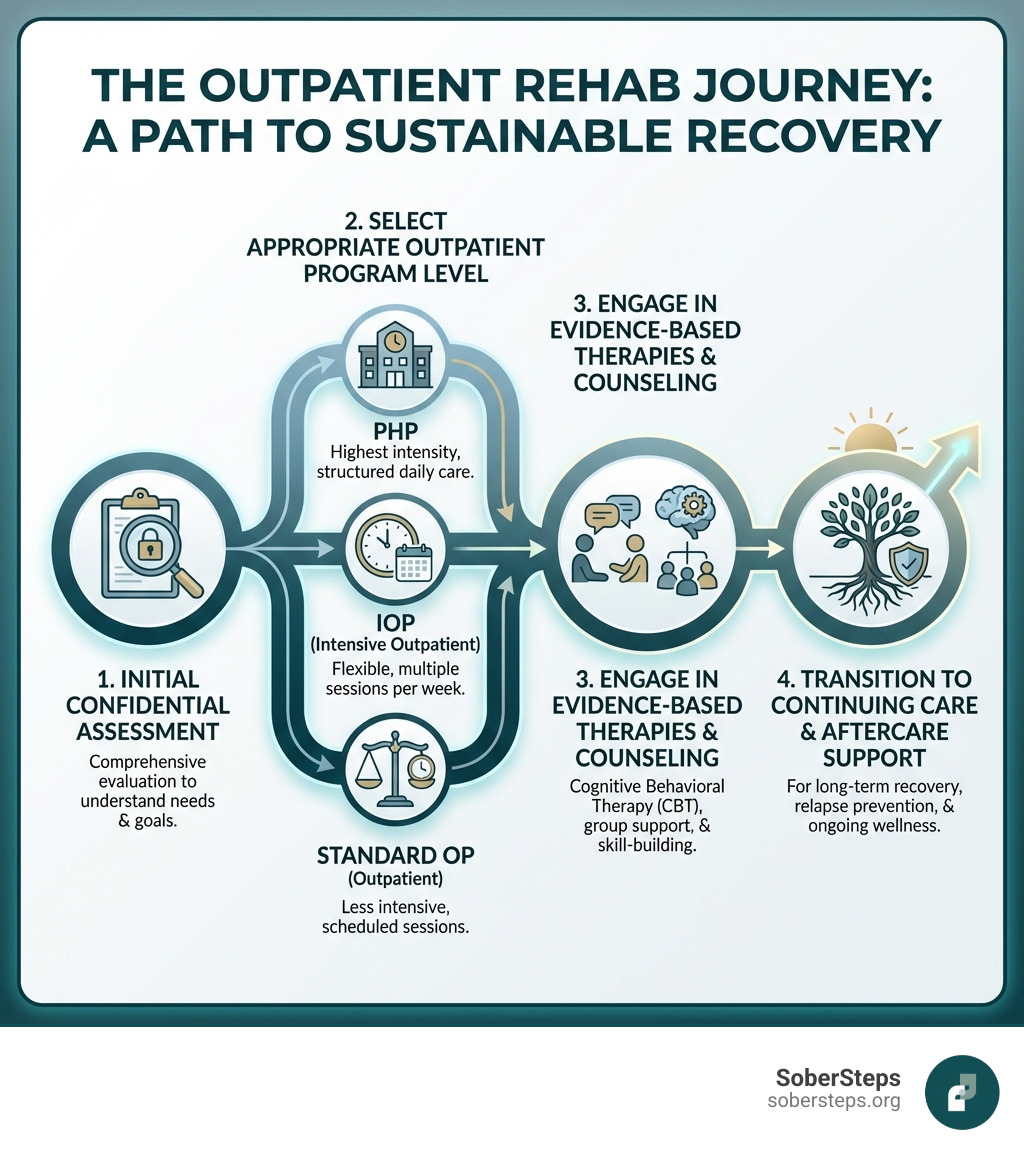
The path typically begins with a comprehensive assessment to determine the right level of care for your unique situation. From there, you’ll engage in individual and group therapy, learn relapse prevention skills, and build a support network—all while maintaining the routines and relationships that matter most to you.
At Sober Steps, we specialize in connecting individuals with confidential outpatient alcohol and drug rehab resources across the United States. Our team has helped thousands of people steer treatment options anonymously, ensuring you find the right support for your recovery journey. We understand that taking the first step can feel daunting, which is why our platform prioritizes your privacy and provides clear, actionable information.
When we consider treatment for substance use disorders, two primary categories emerge: inpatient and outpatient rehab. While both are dedicated to helping individuals achieve lasting recovery, they differ significantly in structure, intensity, and how they integrate into daily life. Understanding these differences is crucial for making an informed decision about which path is right for you.
Outpatient rehab allows you to live at home or in a sober living environment while attending scheduled treatment sessions. It’s often suited for individuals who do not require 24/7 medical supervision and have a stable, supportive home environment. Treatment sessions can include individual and group therapy, educational programs, and other therapeutic activities. The goal is to provide comprehensive care that fits around your existing commitments, allowing you to practice recovery skills in real-world settings.
Inpatient rehab, on the other hand, requires you to live at a dedicated facility for the duration of your treatment. This offers a highly structured and supervised environment, providing 24-hour medical and emotional support. Inpatient programs are often recommended for those with severe addictions, a history of relapse, or co-occurring mental health conditions that require constant monitoring. The immersive nature of inpatient care removes individuals from daily triggers and allows them to focus entirely on their recovery.
Here’s a quick look at how these two approaches compare:
| Feature | Outpatient Rehab | Inpatient Rehab |
|---|---|---|
| Living Arrangement | Lives at home or in sober living | Lives at the treatment facility |
| Level of Supervision | Scheduled sessions; returns home after treatment | 24/7 medical and clinical supervision |
| Treatment Intensity | Varies (PHP, IOP, Standard OP); flexible schedule | Highly structured; full-time, immersive treatment |
| Cost | Generally lower | Generally higher |
| Flexibility | High; allows continuation of work, school, family life | Low; requires taking time away from daily responsibilities |
| Ideal Candidate | Mild to moderate SUD, stable home, strong support system | Severe SUD, high relapse risk, co-occurring disorders, unstable home |
We often recommend outpatient care for those who have a strong motivation to recover, a supportive home environment, and whose addiction is not so severe that it necessitates constant medical oversight. However, for individuals needing detoxification or intensive medical monitoring, inpatient treatment may be the safer initial step.
Outpatient alcohol and drug rehab is far from a one-size-fits-all solution. Instead, it offers a spectrum of care, allowing us to tailor treatment intensity to your specific needs. This tiered approach, often referred to as “stepping down” treatment, allows individuals to transition from higher levels of care (like inpatient programs) to less intensive outpatient options as they progress in their recovery, or to start at a level that matches their current situation. The beauty of this system is its flexibility and focus on individualized plans, ensuring you receive the right amount of support at every stage.

Often considered the most intensive form of outpatient care, Partial Hospitalization Programs (PHPs) are designed for individuals who need a high level of support but can safely return home or to a sober living environment in the evenings. We sometimes refer to these as “day treatment” programs because they require a significant time commitment—typically at least 20 hours per week, often 5-7 days a week for several hours each day.
PHPs provide a structured daily routine filled with therapy, education, and support. They can serve as a direct step-down from inpatient treatment or as an initial primary treatment for individuals with severe substance use disorders who do not require 24/7 medical supervision. The principles of effective addiction treatment, such as individualized care and evidence-based therapies, are central to PHP programs, providing a robust foundation for recovery.
Intensive Outpatient Programs (IOPs) strike a balance between structure and flexibility. They are less time-intensive than PHPs but still offer a significant level of support. Typically, IOPs involve 9 to 20 hours of treatment sessions per week. A key benefit is that these sessions are often scheduled in the evenings or during the day, making it possible for you to continue with work, school, or family responsibilities.
IOPs often place a strong emphasis on group therapy, allowing you to connect with peers facing similar challenges, share experiences, and build a supportive community. This level of care is excellent for reintegrating into the community while maintaining consistent therapeutic engagement. Research indicates that IOPs can lead to abstinence rates ranging from 50% to 70% at follow-up, which is a success rate comparable to outcomes observed in inpatient programs. This speaks volumes about their effectiveness for many individuals.
Standard Outpatient Programs (OPs) represent the least intensive level of outpatient care, typically requiring less than 9 hours of treatment per week. These programs are often used as a form of continuing care after completing a PHP or IOP, or for individuals with mild substance use disorders who need less frequent support.
The focus in standard outpatient care is on relapse prevention, skill reinforcement, and maintaining long-term sobriety. Individual counseling is a common component, allowing for personalized guidance and support. For those who have established a solid foundation in recovery but still benefit from regular check-ins and therapeutic support, OPs provide a flexible and sustainable option.
The digital age has brought exciting advancements to Outpatient Alcohol and Drug Rehab, particularly with the rise of remote and online options. Telehealth services have transformed accessibility, offering virtual therapy sessions and online support groups that can be accessed from the comfort and privacy of your home.
These virtual treatment programs use HIPAA-compliant web and video conferencing platforms to deliver the same evidence-based therapies found in in-person settings. This means you can receive individual counseling, group therapy, and educational sessions without needing to travel to a physical location. For those facing geographical barriers, transportation issues, or simply preferring a higher degree of anonymity and privacy, remote outpatient rehab is a game-changer. It allows us to reach individuals who might otherwise struggle to access traditional in-person care, ensuring that vital support is just a click away.
Effective Outpatient Alcohol and Drug Rehab is built upon a foundation of comprehensive and integrated care. This means addressing not just the substance use itself, but also any underlying mental health conditions (known as co-occurring disorders) and promoting overall well-being. We accept a holistic approach, recognizing that recovery involves healing the whole person—mind, body, and spirit.
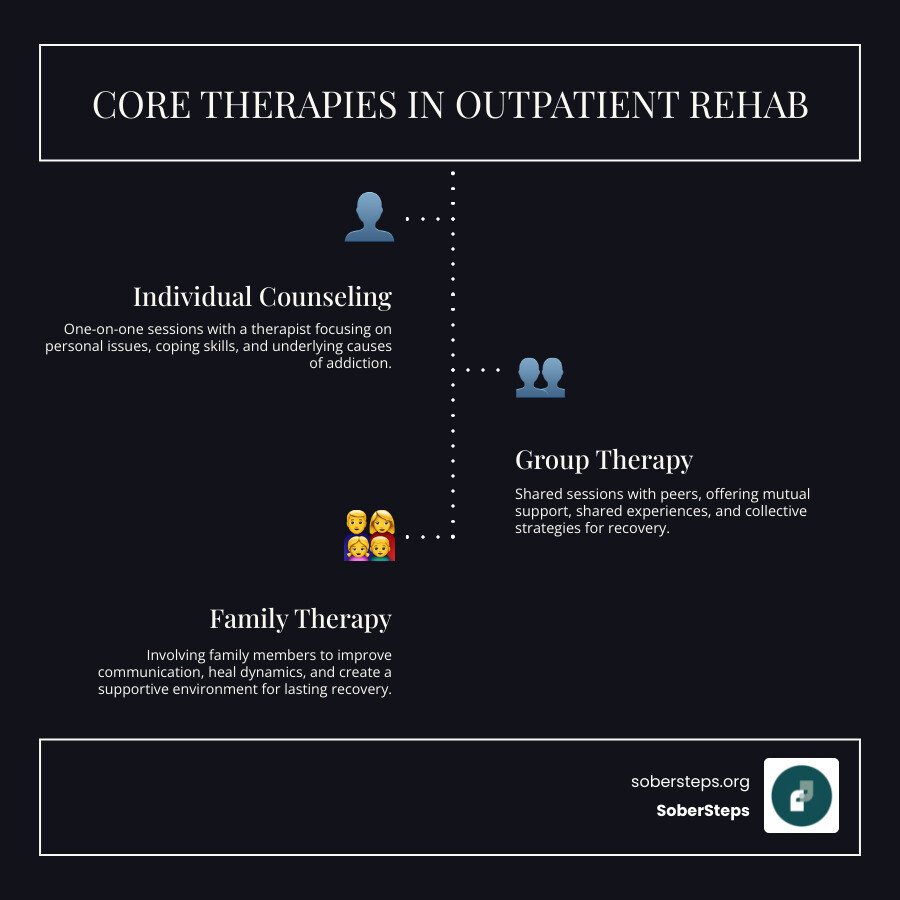
Behavioral therapies are the cornerstone of addiction treatment, offering practical tools and strategies for navigating recovery. These approaches are “evidence-based,” meaning they’ve been rigorously tested and proven effective through scientific research.
These therapies equip you with the skills needed to cope with stress, manage cravings, prevent relapse, and build a fulfilling life in recovery.
For many, combining medication with behavioral therapies significantly improves treatment outcomes. Medication-Assisted Treatment (MAT) involves the use of FDA-approved medications to reduce cravings, manage withdrawal symptoms, and block the euphoric effects of substances. This approach is particularly effective for alcohol and opioid use disorders.
For alcohol use disorder (AUD), common MAT medications include:
MAT is always part of a broader treatment plan that includes counseling and support, reinforcing that it’s a comprehensive approach, not just a pill.
Beyond specific therapies and medications, counseling and peer support form the bedrock of long-term recovery in outpatient settings.
We believe that a strong support network, both professional and peer-based, is essential for navigating the ups and downs of recovery.
Deciding on the right treatment path is a significant step, and it’s perfectly normal to wonder if Outpatient Alcohol and Drug Rehab is the best fit for your unique situation. While we always encourage a professional evaluation to get personalized recommendations, we can explore some key factors to help you with a self-assessment.
Outpatient rehab offers several compelling advantages that make it an attractive option for many individuals:
While the benefits are clear, outpatient rehab isn’t suitable for everyone. It’s most effective for individuals who meet certain criteria:
While outpatient rehab offers numerous advantages, it also comes with potential challenges that might make inpatient care a more appropriate choice for some:
We always recommend consulting with addiction professionals who can conduct a thorough assessment and help you determine the most appropriate level of care based on your unique needs and circumstances.
Once you’ve decided that Outpatient Alcohol and Drug Rehab might be the right path for you, the next step involves navigating the practical considerations of cost, duration, and finding a quality program. Making an informed decision in these areas is just as important as the decision to seek help itself.
We encourage you to ask specific questions when researching potential treatment centers. Here’s a list to guide you:
The duration of outpatient rehab is highly individualized, varying based on the severity of the substance use disorder, your progress, co-occurring issues, and relapse history. While a 1-3 month outpatient rehab treatment can cost between $2,000 and $5,500, the actual length of a program can range from 3 months to over a year for more serious cases. For example, Intensive Outpatient Programs (IOPs) can last anywhere from 2 months to a year, while Partial Hospitalization Programs (PHPs) typically run for at least 3 months.
A key principle in addiction treatment, supported by research, is that longer duration often improves outcomes. Studies suggest that treatment lengths of at least 90 days are associated with better patient outcomes. For many individuals, outpatient rehab can be highly effective, with IOPs showing abstinence rates ranging from 50% to 70% at follow-up, a success rate comparable to outcomes from inpatient programs. This highlights that for the right candidate, outpatient care is not a “lesser” option, but an equally viable and effective path to recovery.
The cost of Outpatient Alcohol and Drug Rehab can vary widely depending on the type of program, its intensity, and the services offered. As mentioned, a 1–3-month outpatient rehab treatment can typically cost between $2,000 and $5,500. More intensive programs will naturally incur higher costs:
These costs are generally significantly lower than inpatient care, which can range from $500-$650 per day.
We understand that cost is a major concern, which is why it’s important to explore your insurance options. Many insurance plans, including those through the Affordable Care Act (ACA), are mandated to cover substance use and mental health services to the same extent as medical needs.
Medicare Part B also covers intensive outpatient program services, general outpatient services for substance use disorder treatment, and partial hospitalization services. If you are eligible for both Medicare and Medicaid, you may have even more comprehensive coverage. We strongly advise you to call your State Medical Assistance (Medicaid) office to find out what other health services may be covered in your state. Additionally, don’t hesitate to contact potential treatment facilities directly to inquire about payment plans, sliding scale fees, or financial assistance programs.
Choosing the right outpatient rehab program is a critical step. We recommend looking for programs that prioritize the following:
For many individuals, outpatient rehab is highly effective. Intensive outpatient programs (IOPs) show abstinence rates from 50% to 70% (U.S. data), which is comparable to inpatient programs. Success depends on the individual’s needs, motivation, and the quality of the program.
Yes, one of the primary benefits of outpatient rehab is its flexibility. Programs, especially IOPs and standard outpatient, often offer evening and weekend sessions to accommodate work, school, and family responsibilities.
The first step is a confidential assessment with an addiction professional. This evaluation will determine the severity of the substance use disorder and help recommend the most appropriate level of care, whether it’s outpatient, inpatient, or detox.
Outpatient alcohol and drug rehab offers a flexible, effective, and affordable path to recovery for many people. By understanding the different levels of care, therapies offered, and what makes a quality program, you can make an empowered choice for yourself or a loved one. Recovery is a personal journey, and finding a program that respects your privacy and meets your unique needs is the most important step. SoberSteps provides a confidential platform to explore your options. Take the first step towards a healthier future by visiting https://sobersteps.org/ or calling our 24/7 helpline at (844) 491-5566 for anonymous, no-obligation assistance.

Struggling? Discover where to find help for drug addiction. SoberSteps guides you from detox to aftercare. Start your recovery now!

Explore Medical Mutual of Ohio drug rehab coverage options. Verify benefits, understand costs, and find treatment today.
Explore behavioral health support options. Understand signs, find care, and access resources for mental wellness. SoberSteps can help.