
Why Online Mental Health Care is Changing Access to Support
Online mental health services have fundamentally changed how people get help. Instead of commuting to an office, you can now connect with licensed professionals from anywhere with an internet connection. This shift is crucial for millions of Americans who face barriers to traditional care, such as cost, location, stigma, or time.
What You Need to Know About Online Mental Health:
- What it is: Virtual therapy and psychiatric care delivered through video, phone, or text messaging.
- Who provides it: Licensed therapists, psychologists, counselors, and psychiatrists.
- What it treats: Depression, anxiety, PTSD, OCD, relationship issues, grief, stress, and substance use concerns.
- Cost range: About $65-$100 per week for most platforms, often cheaper than traditional in-person care.
- Effectiveness: Research shows that online therapy can work as well as face-to-face sessions for many conditions.
- How to start: Complete a brief questionnaire to match with a provider, then schedule sessions that fit your life.
The COVID-19 pandemic accelerated this shift, making resources more accessible and showing that people can get real help from home. Today, leading platforms connect you with providers in days, offer flexible communication, and remove many traditional obstacles to care.
Online mental health services include everything from daily text-based therapy to weekly video sessions with psychiatrists who can prescribe medication. You can find support for mild stress or more serious mental health conditions. Some platforms focus on specific issues like addiction recovery, while others serve everyone from teens to veterans.
At Sober Steps, we help individuals steer the complexities of mental health and substance use recovery with accessible online resources. We know finding the right online mental health support can feel overwhelming, which is why we created this guide to help you find services that work. If you need help, call us confidentially at (844) 491-5566.
What is Online Mental Health Care?
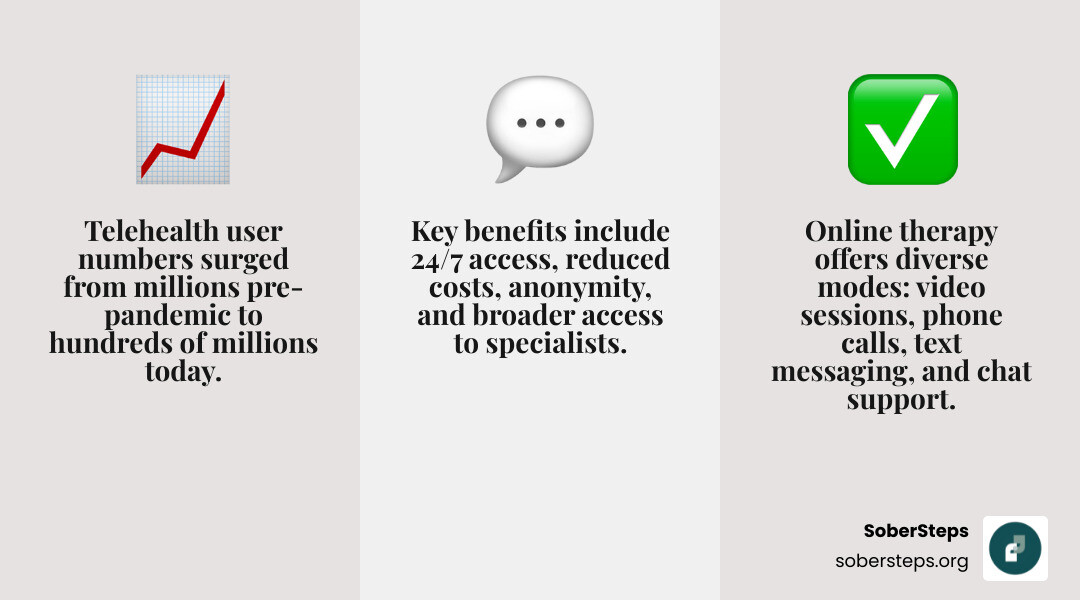
Online mental health care, often called virtual care or telehealth, is an evolution in accessing psychological support. It includes any clinical interaction between patients and providers that occurs via communication technologies. It’s receiving therapy or psychiatric care without visiting a physical office.
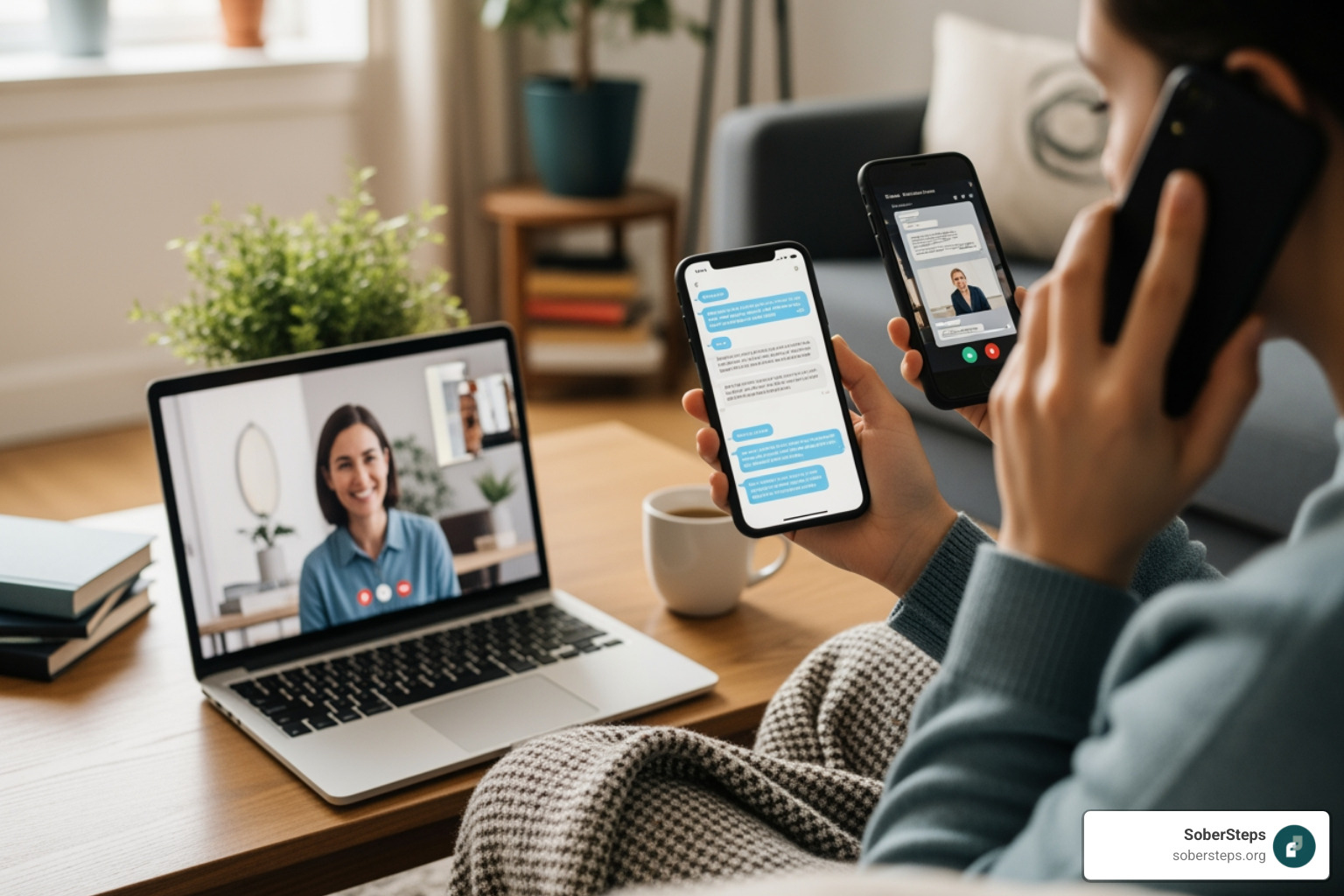
This modern approach uses various technologies to deliver care, including:
- Video Sessions: Similar to a video call, these sessions let you see and hear your therapist in real-time. This helps build rapport and allows for observing non-verbal cues.
- Audio Calls: For those who prefer not to be on camera or have limited bandwidth, audio-only calls are a convenient alternative.
- Text-Based Therapy: Many platforms offer secure messaging or live chat with a therapist. This is ideal for those who prefer writing or need support between scheduled sessions.
How does this differ from traditional therapy? While effective, traditional therapy has logistical challenges like travel, rigid scheduling, and geographic limits. Online mental health care removes many of these barriers, making support more accessible and flexible.
The role of virtual care in the broader mental health system is increasingly vital. It’s a key part of digital health strategies for providing equitable, safe, and effective person-centered care. Research, including a major study from the Yale School of Medicine and the U.S. Department of Veteran Affairs, found online therapy as effective as in-person therapy for many conditions, underscoring its efficacy.
The Pros and Cons of Seeking Help Online
Deciding on online mental health care is a personal choice. Weighing the pros and cons helps you make the best decision for your well-being.
Key Benefits of Online Mental Health Services
Virtual care has opened up many benefits, making mental health support more attainable:
- Best Convenience: Forget commuting. Online therapy lets you connect from home or any private space, a game-changer for busy schedules or those new to therapy.
- Flexible Scheduling: With extended hours and various session types (video, phone, chat), you can fit therapy into your life.
- Cost-Effectiveness: Online services are often more affordable than in-person therapy, which can cost $100-$250 per session. Many online platforms offer subscriptions from $65-$100 per week, reducing costs by eliminating provider overhead and your travel expenses.
- Broader Access to Specialists: Geography is no longer a barrier. You can connect with specialists in your state, which is especially helpful for those in rural areas with fewer local options.
- Increased Privacy and Reduced Stigma: Online platforms offer a discreet way to get help, reducing the intimidation some feel about visiting a therapist’s office. The anonymity can make it easier to discuss sensitive topics, with options for chat or audio-only sessions.
- Objective Support: A trained professional can help you steer challenges, identify unhealthy patterns, and develop healthier habits with objective support and guidance.

Potential Limitations of Virtual Care
Despite the benefits, it’s important to consider the potential drawbacks of online mental health care:
- Internet Connection Dependency: A stable internet connection is essential. Technical glitches can disrupt sessions.
- Not Suitable for Severe Conditions or Crises: Online therapy is not for severe mental health disorders or acute crises. These situations require immediate, in-person medical attention.
- Difficulty Building Rapport for Some: Some people find it harder to build rapport through a screen. Non-verbal cues can be missed, though video helps.
- Distractions at Home: Finding a private, quiet space can be difficult in a busy household, which may impact your focus during sessions.
- Ensuring a Confidential Space: Your physical environment must be private to ensure confidentiality. Find a quiet space where you won’t be overheard.
If you are weighing these pros and cons and want to discuss whether online mental health care is right for you, our team can help. Call SoberSteps at (844) 491-5566 for confidential guidance.
What Can Be Treated with Online Mental Health Support?
A common question is what online mental health services can treat. The answer is that they can help with a wide range of conditions and life challenges.
Here is a list of common issues that can often be effectively addressed through online therapy:
- Anxiety Disorders: Generalized anxiety, social anxiety, panic disorder, and specific phobias.
- Depression: Mild to moderate depression, seasonal affective disorder, and managing chronic symptoms.
- Stress Management: Coping with work-related stress, life transitions, and general feelings of overwhelm.
- Post-Traumatic Stress Disorder (PTSD): Using evidence-based approaches like Cognitive Behavioral Therapy (CBT) and, in some cases, Eye Movement Desensitization and Reprocessing (EMDR) if offered by the therapist.
- Obsessive-Compulsive Disorder (OCD): Many online platforms offer specialized support for OCD, often incorporating Exposure and Response Prevention (ERP).
- Relationship Challenges: Navigating marital issues, family conflicts, and improving communication.
- Grief and Loss: Coping with the death of a loved one, breakups, or job loss.
- Substance Use Issues: Support for reducing substance use, managing cravings, and maintaining sobriety.
- Eating Disorders: Professional help for managing symptoms and developing healthier eating patterns.
- Identifying Unhealthy Behavior Patterns: Learning tools to create healthier habits and improve overall well-being.
- Life Transitions: Guidance through significant life changes like career shifts, parenthood, or aging.
- Trauma or Abuse Recovery: Working through the lasting effects of past traumatic experiences.
Online mental health professionals use evidence-based approaches like Cognitive Behavioral Therapy (CBT), talk therapy, and psychodynamic therapy, tailoring plans to your needs.
However, online services are not for emergencies. If you are in a life-threatening crisis, have severe symptoms, or are having suicidal thoughts, please seek immediate help:
- Call 9-1-1 immediately for urgent medical support.
- Call or text 9-8-8 for the 988 Suicide & Crisis Lifeline. This service provides free and confidential support for people in distress, 24/7, across the United States.
- You can also call the National Helpline at 1-800-662-HELP (4357) for treatment referral and information, or the Disaster Distress Helpline at 1-800-985-5990 for immediate crisis counseling related to disasters.
For non-emergency support with mental health or substance use concerns, SoberSteps offers a confidential, anonymous way to find help. You can call us at (844) 491-5566 to explore your options.
Finding Your Fit: Choosing a Provider and Platform
Starting your online mental health journey means finding the right provider and platform. This can feel daunting, but many services simplify the process.
Most platforms use a matching process. You complete a short questionnaire about your goals and needs, which helps connect you with a suitable licensed provider, often within 48 hours.
Platform usability is important. Accessing support should not add stress. Look for platforms that are simple to steer, with helpful guides to get you started. Therapy should be accessible on any computer, tablet, or smartphone.
Vetting providers and checking credentials is vital. When considering an online mental health provider, ensure they are:
- Licensed Professionals: All reputable platforms require their therapists to be licensed in their respective states, meaning they have completed the necessary education and training.
- Experienced: Many providers have significant experience, often with at least three years and over 1,000 hours of hands-on work.
- Specialized: The matching process helps connect you with a therapist whose specialization aligns with your needs.
If your therapist is not the right fit, most platforms let you switch providers easily. This flexibility helps you find someone you trust.
At SoberSteps, we focus on connecting people with confidential, anonymous support for mental health and substance use concerns. If you are unsure where to start, you can call us at (844) 491-5566 for guidance.
Therapists vs. Psychiatrists in Online Mental Health
Understanding the roles of therapists and psychiatrists is important for your treatment plan.
- Role of a Therapist: Therapists (LPC, LCSW, LMFT, etc.) specialize in talk therapy. They help you understand feelings, identify unhealthy patterns, and develop coping skills. They provide emotional support and guidance but do not prescribe medication.
- Role of a Psychiatrist: Psychiatrists are medical doctors who can diagnose conditions and prescribe or manage medication. Some online platforms connect you with psychiatric providers for evaluations and medication management.
Ideally, these roles complement each other. A therapist provides talk therapy while a psychiatrist manages medication, supporting holistic care.
How to Choose a Suitable Online Provider
Choosing the right online mental health provider is a key step. Consider the following:
- Licensed Professionals and State Certification: Verify your provider is licensed in your state. Reputable platforms provide this information. Licensed professionals meet strict training and ethical standards.
- Specializations: Look for a therapist who specializes in your area of concern, such as anxiety, trauma, or addiction. Matching questionnaires often ask about this.
- Reading Reviews and Testimonials: Reviews and testimonials can offer insights into a therapist’s approach and style, though experiences vary.
- Initial Consultations: Use initial consultations to get a sense of personality fit before committing to sessions.
- Finding the Right Personality Fit: The therapist-client relationship is important. It is okay to switch providers if the first is not a good fit. Most platforms make this easy.
- Be Open and Honest: Honesty is crucial for effective therapy. Be truthful about your experiences and symptoms so your therapist can help you effectively.
Privacy and Security in Online Mental Health
The privacy and security of your health information are essential in online mental health. Reputable platforms use strong measures to protect you.
Key considerations for privacy and security include:
- HIPAA Compliance: Ensure any platform you use is HIPAA-compliant. This U.S. law sets standards to protect your health information.
- Data Encryption: Secure platforms use encryption to protect all communications and data, making them accessible only to you and your therapist.
- Confidentiality Policies: Your therapist is legally bound to confidentiality, with limited exceptions for risk of harm. Review the platform’s specific policies.
- Informed Consent: Before starting, you will agree to an informed consent document outlining terms, privacy policies, and what to expect.
- Secure Platforms: Always use the platform’s dedicated secure portal or app for all communication.
- User Responsibility: You also play a role in privacy. Use a private space for sessions, create strong passwords, and keep your devices secure.
At SoberSteps, we are committed to providing a confidential and anonymous way to explore treatment options. If you need help understanding your choices or want to learn more about secure online care, call us at (844) 491-5566.
Navigating Costs and Accessing Support
Cost can be a major barrier to mental health care, but online mental health services are often a more affordable alternative. Understanding your financial options is important.
Here is a simple cost comparison:
- Traditional In-Person Therapy: Costs typically range from $100 to $250 per session, totaling roughly $400 to $1,000 per month.
- Online Therapy: Subscription-based platforms often range from about $65 to $100 per week ($260 to $400 per month). This usually includes a weekly live session and messaging, making it a more accessible option for many people.
When considering costs, explore these options:
- Insurance Coverage: Check if your health insurance plan offers mental health benefits that extend to virtual care. Some plans may even cover same-day appointments.
- Employee Assistance Programs (EAPs): Your workplace might offer an EAP, which can provide limited free sessions or financial support for therapy costs.
- Flexible Spending Accounts (FSA) and Health Savings Accounts (HSA): You can typically use these funds to pay for online mental health services.
Beyond direct services, valuable resources like The National Institute of Mental Health (NIMH) provide information on mental disorders, statistics, and educational materials. The NIMH conducts research on mental disorders and offers free educational resources.
If you are unsure which type of support is realistic for your budget, SoberSteps can help you understand your options in a confidential, anonymous way. You can call us at (844) 491-5566 to discuss next steps.
Free and Low-Cost Online Mental Health Resources
We recognize professional therapy is not always feasible. Many free and low-cost online resources can offer meaningful starting support, but it is important to understand their limitations.
Here are common types of free and low-cost resources:
- Non-Profit Organizations: Many non-profits offer free mental health information, helplines, and guidance on affordable therapy.
- Peer Support Communities: Online communities provide a space to share experiences and receive support from others with similar challenges, sometimes moderated by trained facilitators.
- Crisis Text Lines: Services like the Crisis Text Line (Text HOME to 741741) offer free, 24/7 mental health support from trained volunteer counselors.
- Government Resources:
- The 988 Suicide & Crisis Lifeline (call or text 988) provides free, confidential support for people in distress, 24/7.
- The National Helpline (1-800-662-HELP (4357)) from SAMHSA offers 24/7 treatment referral and information.
- FindTreatment.gov is a confidential and anonymous resource for finding treatment facilities for mental and substance use disorders.
- The Disaster Distress Helpline (1-800-985-5990) offers immediate crisis counseling related to disasters, 24/7.
- Self-Help Apps: Many free or low-cost apps offer tools for mood tracking, meditation, CBT exercises, and mindfulness. You can find apps designed to help with depression, anxiety, OCD, PTSD, and general well-being.
Limitations of Free Services: These resources offer valuable support but differ from professional therapy. Many free services use trained listeners or volunteers, not licensed therapists. For serious or chronic conditions like bipolar disorder, eating disorders, or substance use disorder, professional therapy with a licensed expert is recommended. Free services can be a starting point but do not replace comprehensive care or emergency treatment.
If you want help sorting through these options or finding more structured care, you can reach out to SoberSteps at (844) 491-5566 for confidential, anonymous guidance.
Frequently Asked Questions about Online Therapy
Here are answers to common questions about online mental health care.
Is online therapy as effective as in-person therapy?
For many conditions like depression and anxiety, research shows online therapy can be as effective as in-person therapy. Studies, including a major one from Yale and the Department of Veteran Affairs, have found comparable outcomes and patient satisfaction. The American Psychological Association also recognizes the promise of telehealth.
What technology do I need for online therapy?
The requirements are minimal. You typically only need:
- A Stable Internet Connection: This helps ensure uninterrupted sessions.
- A Device with a Camera and Microphone: This can be a smartphone, tablet, laptop, or desktop computer.
- A Secure Platform or App: Your provider will guide you to their specific platform.
This ease of access makes online therapy convenient for many people.
How do I know if online therapy is right for me?
Online therapy might be a good fit if:
- You are comfortable with technology such as video calls and messaging.
- You have a private, quiet space for sessions.
- You are dealing with issues like anxiety, depression, stress, or grief.
- You need convenience and a flexible schedule.
- You have limited access to local specialists.
However, online mental health services may not be the right solution if:
- You are in an urgent crisis or emergency.
- You have severe symptoms such as psychosis or active suicidal ideation.
- You require court-ordered therapy that has specific in-person requirements.
- You lack a reliable internet connection or a suitable device.
Therapy can be helpful for anyone looking to improve their quality of life, not just those with a diagnosed condition.
If you are still unsure whether online support is appropriate for you, SoberSteps can help you think through your options in a confidential, anonymous way. Call us at (844) 491-5566 to talk about what might work best in your situation.
Conclusion
The mental health landscape has evolved, with online mental health services playing a major role in accessibility and support. Virtual care offers a convenient, affordable, and discreet alternative to traditional therapy for a wide array of concerns, from anxiety and depression to substance use issues.
While convenient, it is important to understand its limitations for crises and to make sure your care is private and secure. Choosing the right provider means finding a licensed professional who specializes in your needs on a secure, HIPAA-compliant platform.
Online mental health support can make it easier to take the first step toward well-being. At SoberSteps, we provide a confidential and anonymous way to connect with the right support for mental health and substance use concerns.
Do not wait to prioritize your mental health. Call us today at (844) 491-5566 or explore our services to start your journey.