
Your Path to Recovery Starts Here, Regardless of Cost
Free addiction help is available through multiple pathways, even if you have no insurance or money. The cost of treatment stops too many people from getting help, but addiction is a treatable medical condition, and you don’t need to be wealthy to start your recovery journey.
Immediate Resources:
- Sober Steps: 1-844-491-5566 – Free, confidential, 24/7 treatment referrals
- 988 Suicide & Crisis Lifeline: Call or text 988 for immediate mental health crisis support
- State-Funded Programs: Every state provides funds for addiction services for the uninsured.
- Medicaid/Medicare: May cover substance use treatment if you qualify.
- Faith-Based Programs: Organizations like The Salvation Army offer free residential rehabilitation.
- Support Groups: Free peer support through AA, NA, and SMART Recovery.
If you or someone you love needs help now, you can Get Help Now to connect with confidential resources immediately or call our confidential addiction helpline any time.
Free and low-cost addiction treatment exists across the country, funded by government grants, non-profits, and community health centers. At SoberSteps, we’re a compassionate online community dedicated to helping you find free addiction help and support your journey to recovery. We believe recovery should be accessible to everyone.
This guide will walk you through your options, including state-funded care, community programs, and low-cost alternatives. You can find free rehab centers near you, explore treatment options, or contact SoberSteps for personalized guidance anytime.
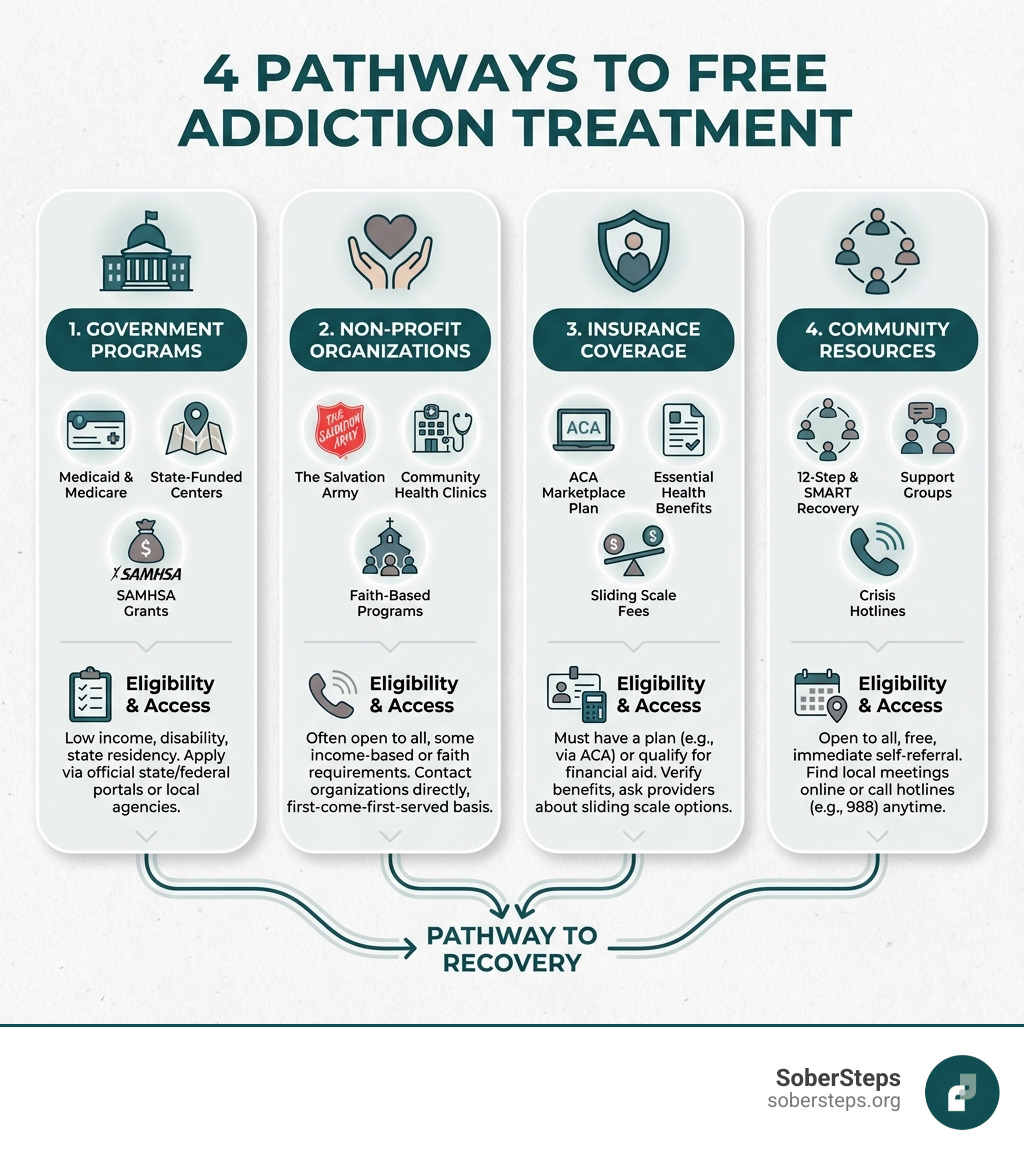
Must-know free addiction help terms and resources:
If you are ready to explore all your options, visit our complete guide to drug treatment programs or get started now.
Understanding the Landscape of Free Addiction Help
Finding free addiction help is possible, as many facilities offer free or low-cost treatment supported by government funding and non-profit organizations. Every state provides funds for addiction services for the uninsured, often through federal grants from the Substance Abuse and Mental Health Services Administration (SAMHSA).
The core of any effective treatment involves several stages, including medically supervised detoxification, individual and group counseling, skill-building, and aftercare planning to support long-term sobriety. You can learn more about how these stages fit together in our drug treatment programs complete guide.
To see real, practical options near you, find treatment options with SoberSteps or reach out through our get help now page. If you’re dealing with specific substances, check our fentanyl addiction help guide for targeted resources.
Inpatient vs. Outpatient Treatment
When exploring free addiction help, you’ll find two main types of care:
- Inpatient Rehab: Also known as residential treatment, this involves living at the facility 24/7, providing a structured, supportive environment. It’s ideal for those with severe addictions or unstable home situations.
- Outpatient Rehab: This allows you to live at home while attending treatment. It’s more flexible and includes Intensive Outpatient Programs (IOP) and Partial Hospitalization Programs (PHP).
To understand which level of care fits your situation and budget, you can compare treatment types and review our detailed treatment options guide. For immediate support while you decide, our confidential addiction helpline is available 24/7.
If you are unsure where to start, you can always contact SoberSteps for one-on-one guidance.
Types of Services Available in Missouri
Missouri offers a range of free addiction help services through the Department of Mental Health (DMH). You can find a guide to these services at https://dmh.mo.gov/behavioral-health/treatment-services.
Common free or low-cost services include:
- Drug and alcohol detox
- Individual, group, and family counseling
- Co-occurring disorder treatment
- Medication-Assisted Treatment (MAT)
- Relapse prevention planning
Missouri often prioritizes groups such as pregnant women and people who inject drugs for faster access to care. For more specific information, you can explore our treatment options guide, use our Missouri rehab locator, or contact us for help narrowing down options. Don’t wait – get help now to start your recovery journey today.
How to Access and Qualify for Free Rehab Services

Navigating the path to free addiction help involves understanding the eligibility criteria. The primary requirement is a demonstrated inability to pay, which usually means providing proof of low income or lack of insurance.
Common Eligibility Requirements:
- Proof of Income: Pay stubs or tax returns to show financial need.
- Proof of Residency: A driver’s license or utility bill to prove you live in the state offering the service.
- Lack of Insurance: Many programs are specifically for the uninsured.
The application process can feel overwhelming, but you do not have to figure it out alone. Our step-by-step guide to applying explains how to gather documents, apply for Medicaid, and contact state-funded programs. For personalized assistance, contact SoberSteps today.
If you need immediate addiction help, call a helpline while you gather your documents, or use our confidential addiction helpline for support. Don’t let paperwork delay your recovery – get help now.
Using Government Programs for Free Addiction Help
Government programs are a cornerstone of free treatment:
- Medicaid: Provides free or low-cost care for low-income individuals. The Affordable Care Act (ACA) requires Medicaid to cover substance use disorder treatment.
- Medicare: Offers coverage for addiction treatment for those 65 or older, or with certain disabilities.
- State-Funded Grants: States use federal SAMHSA grants to fund treatment for the uninsured. Contact your state’s behavioral health agency to find programs.
You can learn more about these options in our comprehensive guide to paying for treatment, and then find free rehab centers near you that accept Medicaid, Medicare, or state funding. For affordable alternatives, explore our affordable mental health care guide.
National and State-Level Helplines
These free, confidential helplines can provide immediate support and referrals:
- SAMHSA National Helpline: 1-800-662-HELP (4357)
- 988 Suicide & Crisis Lifeline: Call or text 988
- Missouri DMH Resources: Find local programs in the DMH directory.
If you prefer to start online, you can access our confidential addiction helpline or review our anonymous hotline mental health guide for more options. For comprehensive treatment information, visit our drug treatment programs complete guide.
When you are ready, take the next step and get help now so cost does not delay your recovery. Every day matters – contact us for personalized support.
Exploring Different Types of Free and Low-Cost Treatment Programs
Beyond government-funded initiatives, a rich mix of organizations and community efforts contribute significantly to providing free addiction help. These programs often fill gaps, offer specialized care, and provide crucial support systems.
- Non-profit Organizations: Many non-profits are dedicated to offering free or low-cost addiction treatment. The Salvation Army, for instance, runs numerous no-cost rehab centers. Their programs often include residential services, counseling, and life-skills development.
- Community Health Clinics: These clinics often receive federal funding and offer services on a sliding-scale fee basis, meaning the cost is adjusted to your income.
- University Programs: Some universities with medical schools operate treatment centers that may offer free or reduced-cost services.
To explore more local support options, visit our treatment options ultimate guide. You can also find free rehab centers near you using our locator or review our drug treatment programs complete guide to understand which program type fits your needs.
If you feel stuck choosing between these options, you can contact SoberSteps for personalized help and talk through what is available in your area. Don’t wait – get help now to start your recovery journey.
Faith-Based and Community Support Groups
For many, free addiction help also comes in the form of faith-based programs and community support groups. These avenues often provide peer support and a sense of belonging that is crucial for long-term recovery.
- Faith-Based Programs: Organizations like The Salvation Army offer residential programs that integrate spiritual well-being. Other faith-based facilities also provide recovery services, often blending peer support with religious motivation.
- 12-Step Programs: Groups like Alcoholics Anonymous (AA) and Narcotics Anonymous (NA) are globally recognized for providing free peer support through a structured, 12-step model.
- SMART Recovery: For those who prefer a science-based approach, SMART Recovery (Self-Management and Recovery Training) offers free mutual-aid meetings.
These groups are invaluable complements to professional treatment. To learn more about how support groups fit into a broader recovery plan, visit our treatment options guide, then use our free rehab centers locator to find meetings and programs near you. For immediate support, access our confidential helpline.
Finding Free Addiction Help for Veterans
The U.S. Department of Veterans Affairs (VA) offers comprehensive substance use disorder programs for eligible veterans. If your healthcare is covered by the VA, you can access addiction services through their substance abuse program. For immediate support, the Veterans Crisis Line is available by calling 988 and pressing 1.
For custom guidance, you can review our treatment options ultimate guide and then contact SoberSteps if you need help understanding which benefits or programs you may qualify for. Veterans dealing with specific substances can find targeted help in our fentanyl addiction help guide.
Where to Find a List of Free Rehab Centers in Missouri
For residents of Missouri, several resources can guide your search:
- Missouri Department of Mental Health (DMH) Directory: The DMH provides a comprehensive directory of adult substance use treatment programs.
- SAMHSA’s National Treatment Locator: This confidential resource helps find treatment anywhere in the U.S., including Missouri.
- SoberSteps Missouri Rehab Locator: Our platform can help you find centers in Missouri that match your needs.
When you use these tools, filter for “no-cost,” “free,” “sliding scale,” or “Medicaid” to narrow your options. If you want help interpreting listings or waitlists, contact us for personalized help or head to get help now to take your next step today. For comprehensive information about treatment programs, visit our drug treatment programs complete guide.
Weighing Your Options: Free vs. Private Rehab and Alternative Financing
When considering free addiction help, it’s helpful to understand how it compares to private options and what to do if free services aren’t the right fit or immediately available. Cost should never stop someone from getting the help they need.
Free rehab centers are an important resource, making treatment accessible to everyone. However, due to high demand, they often have long waiting lists and may offer more basic accommodations and amenities than private facilities. Private rehabs, while costly, typically offer immediate admission, a lower staff-to-patient ratio for more individualized care, and a wider range of specialized therapies. The best choice depends on your individual needs, urgency, and financial situation.
If you are trying to decide between free and private programs, you can start with our guide on how to pay for addiction treatment and our affordable mental health care guide, then find rehab centers near you that match your budget.
Pros and Cons of Choosing a Free Rehab Center
Pros: The most significant advantage is that they are free, making treatment accessible to anyone. They also offer diverse peer groups and often use proven, evidence-based treatment methods.
Cons: The main drawbacks are often long waiting lists, basic facilities, and potentially less individualized attention compared to private centers.
To see whether a no-cost program aligns with your situation, you can review Is free rehab right for you? and talk it through with someone on our confidential helpline.
What If You Don’t Qualify?
If you don’t qualify for free rehab or need help immediately, don’t lose hope. Many facilities offer financial assistance options:
- Sliding Scale Fees: Costs are adjusted based on your income. You can learn what counts as income on Healthcare.gov.
- Payment Plans: Ask about paying for treatment in installments.
- Rehab Scholarships & Grants: Some facilities and non-profits offer financial aid.
- Private Insurance: The Affordable Care Act requires most insurance plans to cover addiction treatment.
To explore these alternatives step by step, see our how to pay for addiction treatment guide and affordable mental health care options. If you feel overwhelmed sorting through costs and coverage, you can contact SoberSteps for alternatives or get help now so money does not delay treatment.
Understanding the Landscape of Free Addiction Help
Finding free addiction help might seem intimidating, but the resources are out there. Many drug rehab facilities offer free or low-cost addiction treatment, and understanding the landscape is your first step. These services are often supported by government funding, non-profit organizations, and community efforts, making them accessible to those who need them most.
Every state in the United States provides funds for addiction services for the uninsured, and these state-funded programs are a crucial part of the safety net for individuals seeking recovery. Additionally, federal grants from the Substance Abuse and Mental Health Services Administration (SAMHSA) are allocated to states to cover addiction prevention and treatment costs. This funding is especially vital in addressing public health crises, such as the opioid epidemic, by increasing access to treatment and reducing overdose-related deaths.
The core of any effective treatment, whether free or paid, lies in the rehabilitation process. This typically involves several stages:
- Detoxification: Safely withdrawing from substances under medical supervision.
- Counseling: Individual, group, and sometimes family counseling to address root causes and build coping skills.
- Skill-Building and Education: Life skills, relapse prevention strategies, and education about addiction as a disease.
- Aftercare Planning: Support for long-term recovery, including support groups, sober living, and ongoing therapy.
To understand how these pieces fit together, you can learn about the stages of recovery and find treatment options with SoberSteps custom to your needs.
Inpatient vs. Outpatient Treatment
When exploring free addiction help, you’ll often encounter two primary categories of treatment: inpatient and outpatient. Both offer valuable paths to recovery, but they cater to different needs and life circumstances.
- Inpatient Rehab: Also known as residential treatment, this is the most intensive form of care. Individuals reside at the rehab facility 24/7 in a structured, substance-free environment.
- Outpatient Rehab: This option allows individuals to live at home or in a sober living facility while attending treatment sessions. It includes:
- Intensive Outpatient Programs (IOP)
- Partial Hospitalization Programs (PHP)
The choice between inpatient and outpatient often depends on the severity of the addiction, support system, and financial considerations. Many free and low-cost programs offer both options. To compare levels of care, visit our drug treatment programs complete guide and treatment options guide.
If you are unsure which to choose, you can contact SoberSteps or go to get help now for individualized support.
Types of Services Available in Missouri
Missouri offers a range of free addiction help services designed to meet diverse needs. The Missouri Department of Mental Health (DMH) is a key resource, providing oversight and directories for various programs. You can find a comprehensive guide to Missouri’s treatment services directly from the DMH: https://dmh.mo.gov/behavioral-health/treatment-services.
Free addiction recovery services in Missouri can include:
- Drug and alcohol detox
- Individual therapy
- Group counseling
- Family counseling
- Co-occurring disorder treatment
- Medication-Assisted Treatment (MAT)
- Relapse prevention planning
Missouri often prioritizes certain populations for substance use treatment, such as pregnant women and individuals who use IV drugs. For more specific information on resources within the state, you can explore Missouri resources, use our Missouri rehab locator, or contact SoberSteps for help finding a program that fits your situation.
How to Access and Qualify for Free Rehab Services
Navigating the path to free addiction help involves understanding how to access these services and what criteria you might need to meet. The process may include paperwork and phone calls, but it is worth it, and you do not have to do it alone.
The primary requirement for most free or low-cost rehab programs is a demonstrated inability to pay for treatment. This typically means you’ll need to show proof of limited income or lack of insurance.
Common eligibility requirements include:
- Proof of Income: Documentation such as pay stubs, tax returns, or benefit statements.
- Proof of Residency: A driver’s license, utility bill, or other official documents.
- Lack of Insurance: Many free programs are designed for the uninsured or underinsured.
- Specific Demographics: Some programs prioritize pregnant women, veterans, adolescents, or people who inject drugs.
The application process usually involves an initial assessment and providing documentation. For a detailed walkthrough, see our step-by-step guide to applying. You can also explore our affordable mental health care guide for additional resources.
If you need immediate addiction help, reach out to a helpline right away or use our confidential addiction helpline while you gather your information. Don’t let the process overwhelm you – contact SoberSteps for personalized assistance.
Using Government Programs for Free Addiction Help
Government programs are a cornerstone of free addiction help in the United States.
- Medicaid Coverage: A primary avenue for free drug and alcohol treatment or mental health care for low-income individuals. Substance use disorder treatment is an essential health benefit under the Affordable Care Act.
- Medicare Benefits: For individuals aged 65 or older, or those with certain disabilities, Medicare can provide coverage for addiction treatment.
- Affordable Care Act (ACA) Mandates: All Marketplace plans must cover mental health and substance use disorder services as essential health benefits. Learn more at https://www.hhs.gov/healthcare/about-the-aca/index.html.
- State-Funded Grants: States receive federal grants from SAMHSA to fund addiction prevention and treatment.
To understand which of these apply to you and how to apply, review our comprehensive guide to paying for treatment, then find free rehab centers near you that accept your coverage. For a complete overview of available programs, visit our drug treatment programs complete guide.
National and State-Level Helplines
When you’re seeking free addiction help, sometimes the most crucial first step is reaching out and talking to someone. National and state-level helplines offer confidential support, information, and treatment referrals.
- SAMHSA National Helpline (1-800-662-HELP (4357))
- 988 Suicide & Crisis Lifeline: Call or text 988; visit https://988lifeline.org/
- Missouri DMH Resources: Local programs directory: https://dmh.mo.gov/media/pdf/directory-adult-substance-use-treatment-programs
These helplines are an excellent starting point for anyone feeling overwhelmed or unsure where to turn. For more confidential options, access our confidential addiction helpline and read our anonymous hotline guide. If you’re dealing with specific substances like fentanyl, check our fentanyl addiction help guide.
When you are ready to move from information to action, visit get help now and take your first concrete step toward recovery. Every moment counts – contact us today for immediate support.
Exploring Different Types of Free and Low-Cost Treatment Programs
Beyond government-funded initiatives, a rich mix of organizations and community efforts contribute significantly to providing free addiction help. These programs often fill gaps, offer specialized care, and provide crucial support systems.
- Non-profit Organizations: Many non-profits are dedicated to offering free or low-cost addiction treatment. The Salvation Army, for instance, runs more no-cost rehab centers than many other groups in the United States. Their programs often include intensive residential and outpatient services, counseling, work therapy, and life-skills development.
- Community Health Clinics: These clinics often receive federal funding and offer a range of healthcare services, including substance abuse treatment, on a sliding-scale fee basis.
- University Programs: Some universities with medical schools or psychology departments operate treatment centers that may offer free or reduced-cost services.
These diverse options show that free addiction help is not one-size-fits-all. To explore more local support options, visit our treatment options ultimate guide, and find free rehab centers near you using our locator. For comprehensive program information, check our drug treatment programs complete guide.
If you need help comparing these choices, contact SoberSteps or go directly to get help now. Don’t wait another day – recovery starts with one call.
Faith-Based and Community Support Groups
For many, free addiction help also comes through faith-based programs and community support groups.
- Faith-Based Programs: Organizations like The Salvation Army offer work-therapy programs that integrate physical, emotional, and spiritual well-being.
- 12-Step Programs: Alcoholics Anonymous (AA), Narcotics Anonymous (NA), and Cocaine Anonymous (CA) provide free peer support based on the 12 Steps.
- SMART Recovery: A science-based mutual-aid program using cognitive behavioral tools.
These groups complement professional medical treatment by providing ongoing peer support. To understand how to use support groups alongside rehab, visit our treatment options guide and then search for nearby meetings through our free rehab centers locator. For immediate assistance, access our confidential helpline.
Finding Free Addiction Help for Veterans
The U.S. Department of Veterans Affairs (VA) offers comprehensive substance use disorder programs for eligible veterans, active military personnel, and their families.
- VA Benefits: Access detox, inpatient and outpatient treatment, counseling, and aftercare through the VA.
- Community Care Programs: May allow treatment with approved non-VA providers if VA capacity is limited.
- Veterans Crisis Line: Call 988 and press 1, or text 838255.
For more on navigating these resources, visit our treatment options ultimate guide and contact SoberSteps if you want help understanding your options. Veterans struggling with opioid addiction can find specialized help in our fentanyl addiction help guide.
Where to Find a List of Free Rehab Centers in Missouri
For residents of Missouri, several resources can guide your search for free addiction help:
- Missouri Department of Mental Health (DMH) Directory: https://dmh.mo.gov/media/pdf/directory-adult-substance-use-treatment-programs
- SAMHSA’s National Treatment Locator (FindTreatment.gov): https://findtreatment.samhsa.gov/locator
- SoberSteps Missouri Rehab Locator: Find centers in Missouri that match your needs.
Use filters such as “no-cost,” “free,” “sliding scale,” or “Medicaid/Medicare accepted” to refine your search. If you want help reviewing options or handling waitlists, you can contact us for personalized help or head to get help now. For affordable alternatives, explore our affordable mental health care guide.
Weighing Your Options: Free vs. Private Rehab and Alternative Financing
When considering free addiction help, it’s useful to understand how it compares to private options, and what to do if free services aren’t the right fit or immediately available. Cost should never stop someone from getting the help they need.
Here’s a simplified comparison of free versus private rehab centers:
- Free Rehab Centers: No cost or very low cost; may have waitlists; usually basic facilities; often rely on state funding or non-profits; typically offer standard evidence-based treatment.
- Private Rehab Centers: Higher cost; usually shorter or no waitlists; more amenities; often more individualized care and specialty programs.
To dive deeper into these differences and explore payment strategies, see how to pay for addiction treatment and our affordable mental health care options. You can also find free rehab centers near you to compare real programs side by side.
Pros and Cons of Choosing a Free Rehab Center
Pros:
- No cost or very low cost
- Accessibility for people without insurance
- Diverse peer groups
- Evidence-based care in many programs
Cons:
- Long waiting lists in some areas
- More basic facilities and amenities
- Fewer highly specialized therapies than many private centers
To decide whether free rehab fits your needs, review Is free rehab right for you? and talk with someone via our confidential addiction helpline.
What If You Don’t Qualify?
If you don’t qualify for free rehab or need help before a spot opens, there are still options:
- Sliding Scale Fees: Costs adjusted based on income. See what counts as income at Healthcare.gov.
- Payment Plans: Many centers allow installment payments.
- Rehab Scholarships & Grants: Offered by some facilities and non-profits.
- Private Insurance: Most plans must cover addiction treatment under the Affordable Care Act.
You can explore these alternatives in depth in our how to pay for addiction treatment guide and affordable mental health care guide. If you need help sorting through costs, coverage, and waitlists, contact SoberSteps for alternatives or get help now so you can move forward without delay.