
Why Finding the Right Rehab Centre Matters for Your Recovery Journey
Rehab centres are professional facilities providing structured care for individuals struggling with drug and alcohol addiction. If you’re searching for treatment, here’s what you need to know:
Quick Guide to Rehab Centres:
- Types of Care: Medical detox (3-7 days), residential/inpatient (28+ days), intensive outpatient (3-6 months), and sober living homes.
- What They Offer: Medical supervision, evidence-based therapies (CBT, DBT), group counseling, and aftercare planning.
- Key Credentials: Look for Joint Commission or CARF accreditation and state licensing.
- Insurance Coverage: Most health insurance plans cover addiction treatment. We can help you verify your benefits.
- Cost Range: Varies from publicly funded options to luxury private facilities.
Choosing a rehab centre can feel overwhelming. With thousands of options across the U.S., you might wonder where to start. How do you know which facility is right for you or your loved one?
The truth is, there’s no one-size-fits-all approach to recovery. The best rehab meets your specific needs, whether that’s treating co-occurring mental health disorders like depression, finding a faith-based program, or locating a facility near family. Since about 50% of people with substance use disorders have a dual diagnosis, finding comprehensive care is crucial.
Perhaps you’re struggling to control your alcohol consumption, or your use of drugs and prescription medications is causing problems at work or home. Whatever your situation, professional help is available, and recovery is possible.
At Sober Steps, we are a compassionate online community dedicated to helping you steer the complex landscape of rehab centres. Our platform offers comprehensive resources to help you make informed decisions about your treatment options.
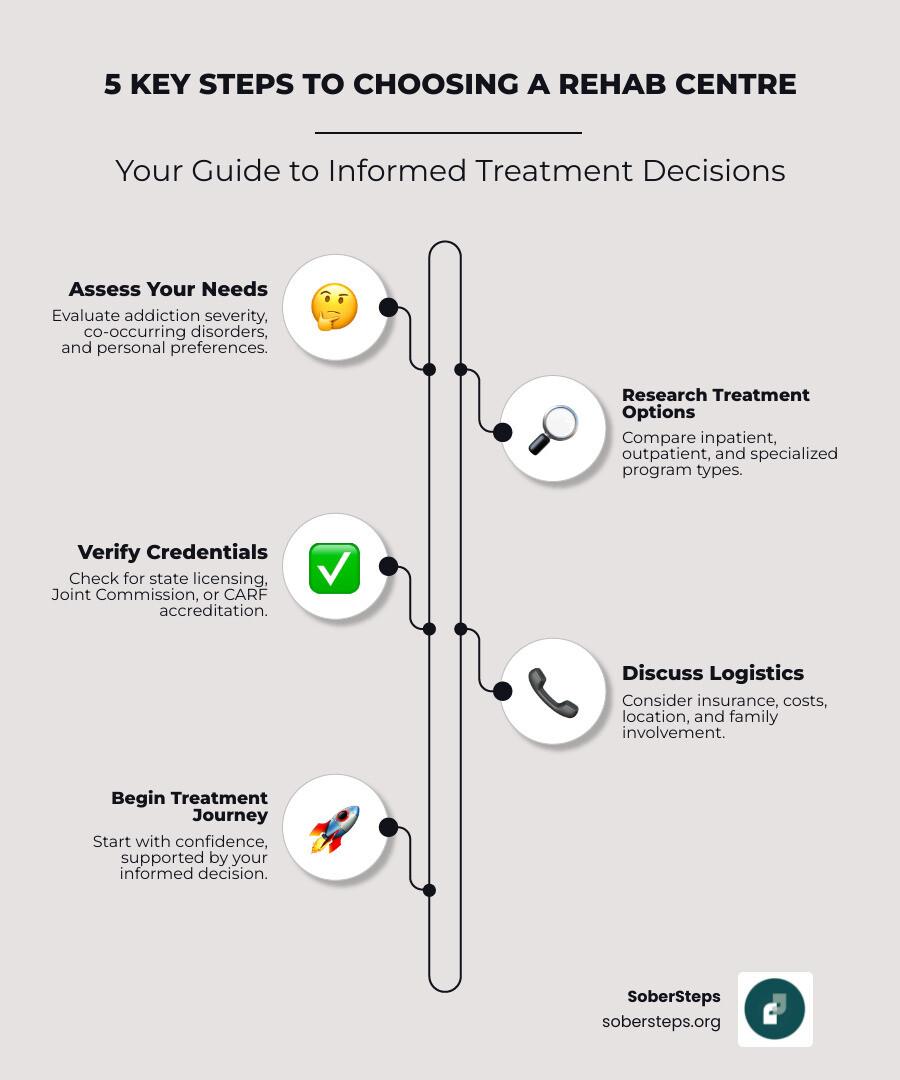
This guide will walk you through everything you need to know to make a confident choice. We’ll explain the different levels of care, help you verify credentials, discuss costs, and show you how to recognize when professional treatment is needed. You don’t have to make this decision alone.
Start exploring treatment options near you or call our confidential helpline to speak with someone who can answer your questions right now.
Important rehab centres terms:
Understanding the Different Levels of Addiction Care
Addiction treatment is not a single process but a “continuum of care” designed to meet varying needs. At SoberSteps, our goal is to help you find the right fit for your unique journey.
Medical Detoxification: The First Safe Step
For many, recovery begins with medical detoxification, or “detox.” This medically supervised process helps you safely manage withdrawal symptoms when you stop using drugs or alcohol. Detoxing from substances like alcohol or benzodiazepines can be dangerous without professional oversight, making this a critical first step.
During detox, medical professionals monitor your vital signs and provide medications to ensure your safety. This phase typically lasts 3 to 7 days, depending on the substance and severity of dependence. It prepares your body and mind for the therapeutic work ahead. If you need immediate stabilization, explore our resources on detox services.
Inpatient/Residential Rehab: Immersive 24/7 Support
After detox, many individuals transition to inpatient or residential rehab centres. This level of care offers a structured environment where you live at the facility 24/7, away from daily triggers. It is ideal for those who need to immerse themselves fully in recovery.
In residential rehab, you’ll receive intensive therapy, counseling, and 24/7 support to build a strong foundation for sobriety. Programs typically last 28 days or more, with 30, 60, or 90-day options available. This immersive experience creates a strong peer community, letting you focus entirely on healing. If this sounds right for you, find residential treatment options that can provide the 24/7 support you need.
Outpatient Programs: Flexibility for Daily Life
For those with less severe addictions or significant work and family responsibilities, outpatient programs offer an effective alternative. These programs allow you to live at home while attending scheduled treatment sessions.
There are various forms of outpatient care:
- Intensive Outpatient Programs (IOPs): Involve several hours of therapy a few days a week, often lasting 3 to 6 months.
- Partial Hospitalization Programs (PHPs): Also called “day treatment,” PHPs offer more hours of care per week than IOPs, without the overnight stay.
Outpatient rehab centres provide the flexibility to integrate recovery into your daily life, making it a sustainable path forward. If this sounds like the right fit, explore outpatient programs that can support your journey.
Aftercare and Sober Living: Sustaining Long-Term Recovery
Completing a primary treatment program is a huge achievement, but the journey requires ongoing support. This is where aftercare and sober living come in.
- Sober Living Homes: These are structured, substance-free homes that bridge the gap between intensive treatment and independent living, offering peer accountability.
- Aftercare Programs: These include continued therapy, support groups (like AA or NA), and relapse prevention strategies. Most residential programs provide aftercare group sessions for six months to one year post-treatment.
Aftercare is crucial for preventing relapse and building a resilient life in recovery. Our team at SoberSteps can help you learn about aftercare support to fortify your recovery journey.
Key Factors for Comparing and Choosing Rehab Centres
Choosing the right rehab centre is a critical decision. It’s like finding an experienced guide for a challenging journey. This section will help you compare facilities effectively.
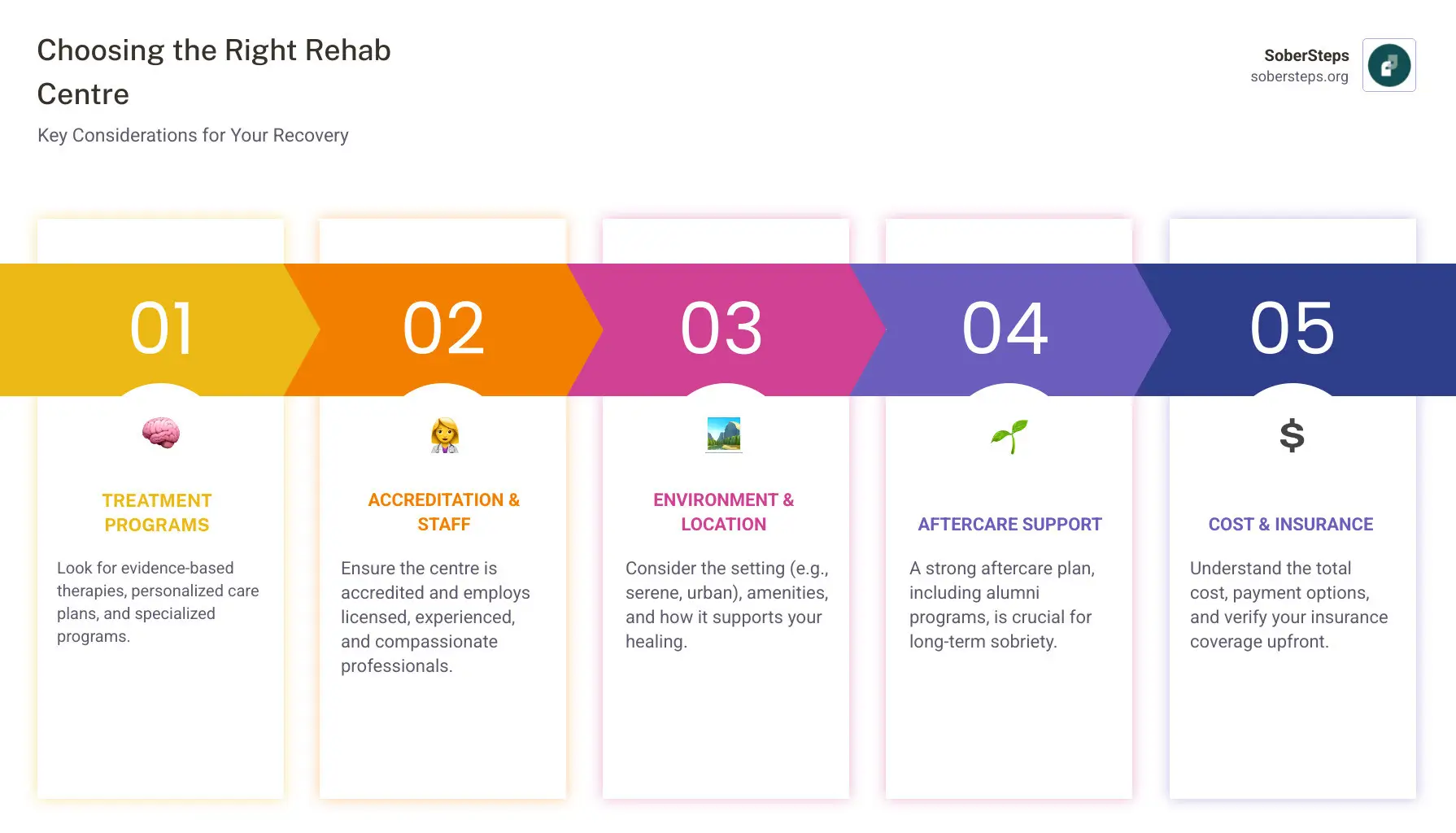
Verifying the Quality and Accreditation of Rehab Centres
Quality among rehab centres varies, so verifying credentials is non-negotiable. Reputable facilities demonstrate their commitment to high standards through accreditation and licensing.
Key credentials to look for include:
- The Joint Commission (JCAHO): A national organization that accredits healthcare facilities for meeting high standards of quality and safety.
- CARF (Commission on Accreditation of Rehabilitation Facilities): A nonprofit that accredits addiction services for quality, effectiveness, and person-centered care.
- State Licensing: All rehab centres must be licensed by their state to meet basic health and safety standards.
- LegitScript Certification: Verifies that a provider complies with applicable laws and regulations.
Always ask prospective rehab centres about their accreditations. You can often check a facility’s accreditation status online. This ensures you’re choosing a safe, reputable environment.
Treatment Philosophies and Therapies
The therapeutic approaches at a rehab centre are central to its effectiveness. We advocate for evidence-based therapies supported by scientific research.
Common effective therapies include:
- Cognitive Behavioral Therapy (CBT): Helps identify and change problematic thought patterns and behaviors related to substance use.
- Dialectical Behavior Therapy (DBT): Teaches skills in mindfulness, distress tolerance, and emotion regulation.
- Motivational Interviewing (MI): A client-centered approach that fosters internal motivation for change.
Many rehab centres also integrate holistic approaches like yoga, meditation, art therapy, and nutritional counseling to treat the whole person. Additionally, facilities may use 12-Step facilitation (like AA/NA) or other peer-support models like SMART Recovery, which focuses on self-empowerment tools. You can learn about SMART Recovery principles to see if it aligns with your values. The best rehab centres offer diverse therapies to create a personalized plan.
Specialized Programs Offered by Top Rehab Centres
Effective treatment often requires a program custom to specific needs. Many rehab centres offer specialized tracks for more targeted care.
Consider if one of these programs would be beneficial:
- Gender-Specific Programs: Men’s or women’s rehab can provide a more comfortable environment for sharing.
- Executive Tracks: Offer privacy and flexibility for professionals needing to maintain some work responsibilities.
- Veterans Programs: Address the unique experiences and traumas faced by military veterans, often including PTSD treatment.
- LGBTQ+ Affirming Care: Provide a safe, inclusive space that addresses the specific needs of the LGBTQ+ community.
- Faith-Based Options: Integrate religious principles (e.g., Christian) into their therapeutic models.
- Dual Diagnosis Treatment: This is vital, as 50% of people with substance use disorders also have co-occurring mental health disorders like anxiety or depression. Effective rehab centres offer integrated treatment for both conditions. Understanding dual diagnosis is crucial for comprehensive care.
Facility Environment and Amenities
The physical environment of a rehab centre can play a significant role in healing. While clinical excellence is key, a comfortable setting aids recovery.
Consider these aspects:
- Setting: Some find peace in rural, secluded environments, while others prefer urban locations. A peaceful setting can reduce distractions and foster introspection.
- Luxury vs. Standard: Options range from basic, comfortable settings to luxury rehab centres with amenities like private rooms, gourmet meals, and fitness centers.
- Nutrition and Fitness: Look for facilities that prioritize healthy meals and offer access to gyms, yoga, or outdoor activities to support physical and mental health.
The ideal environment is one where you feel safe, comfortable, and able to focus on your recovery.
Navigating the Logistics: Cost, Insurance, and Family Support
Once you know what type of rehab centre you need, it’s time to address the practical details. Understanding costs, insurance, and family support is a crucial step in removing barriers to treatment.
Understanding Treatment Costs and Payment Options
The cost of addiction treatment varies based on factors like the level of care (inpatient is more expensive than outpatient), duration, location, and amenities. While the numbers can seem daunting, treatment is an investment in your future.
Many rehab centres offer various payment options:
- Financing and Payment Plans: Facilities often work with patients to create manageable payment schedules.
- Sliding Scales: Some programs adjust costs based on your income.
- Grants and Scholarships: Non-profits and some rehab centres offer financial aid. You can explore options for recovery funding here.
- Publicly Funded Programs: State-funded programs offer affordable options, though waitlists may exist.
Don’t let perceived cost stop you from seeking help. Our team can help you explore all available options.
The Role of Insurance in Covering Rehab
The good news is that the Affordable Care Act (ACA) considers addiction treatment an essential health benefit. This means most health insurance plans cover drug rehab treatment, making it more accessible. However, coverage varies by policy.
Here’s what you need to know:
- Verifying Your Benefits: This is the most important step. Our team can help you understand what your policy covers, including co-pays, deductibles, and out-of-pocket maximums.
- In-Network vs. Out-of-Network: In-network providers are contracted with your insurance company, resulting in lower costs. Out-of-network providers may be covered at a higher cost.
- PPO and HMO Plans: PPO plans offer more flexibility in choosing providers, while HMO plans usually require you to stay in-network.
- Medicaid and Medicare Coverage: These government programs can cover addiction treatment for eligible individuals.
Let SoberSteps help you steer the complexities of insurance. Verify your insurance coverage for rehab now to find affordable care.
Support Systems for Families and Loved Ones
Addiction is often called a “family disease” because its impact extends to loved ones. Many rehab centres recognize this and integrate family support into their programs.
This support can include:
- Family Therapy Sessions: Helps heal relationships, improve communication, and educate family members about addiction.
- Educational Workshops: Provide families with a deeper understanding of recovery and how to support their loved one without enabling.
- Support Groups: Programs like Al-Anon and Nar-Anon are designed for friends and family of those with an addiction. They offer a safe space to find community and learn coping strategies. Find support for families of alcoholics through their resources.
Involving loved ones in recovery creates a stronger support system and fosters healing for the entire family.
Recognizing the Need for Professional Help
Acknowledging that professional help is needed is a sign of courage, not weakness. It’s often the hardest but most important step.

Signs and Symptoms of Drug and Alcohol Addiction
Addiction affects physical health, behavior, and psychological well-being. If you or a loved one recognize several of the following signs, it may be time to consider a rehab centre:
- Loss of Control: Inability to limit substance use.
- Cravings: Intense urges for the substance.
- Increased Tolerance: Needing more of the substance to get the same effect.
- Withdrawal Symptoms: Physical or psychological discomfort when stopping use (e.g., shaking, anxiety, nausea).
- Neglecting Responsibilities: Failing to meet work, school, or home obligations.
- Continued Use Despite Harm: Using even when it causes or worsens physical or psychological problems.
- Sacrificing Activities: Giving up important social or recreational activities for substance use.
- Hiding Use: Being secretive or lying about the extent of use.
- Financial or Legal Problems: Money or legal issues related to substance use.
- Changes in Appearance: Neglecting personal hygiene or other physical changes.
If these signs resonate, please know that you’re not alone, and help is available. Call our confidential helpline to discuss your options.
Long-Term Consequences of Untreated Addiction
Untreated addiction is a progressive disease with devastating long-term consequences. Ignoring the problem makes recovery more challenging over time.
The potential long-term effects include:
- Physical Health Decline: Liver damage, heart disease, and neurological damage.
- Mental Health Deterioration: Worsening anxiety, depression, and increased suicide risk.
- Damaged Relationships: Strained family ties and social isolation.
- Financial Instability: Job loss, debt, and homelessness.
- Legal Problems: Arrests and incarceration.
Seeking help from a rehab centre is about reclaiming your life and preventing these severe consequences.
How to Help a Loved One
Watching a loved one struggle with addiction is heartbreaking. It’s natural to want to help, but it can be challenging to know how. SoberSteps offers guidance on helping a loved one and resources for family support.
Here are some compassionate approaches:
- Express Concern with Compassion: Approach your loved one with love and concern, not judgment. Focus on specific behaviors and their impact.
- Avoid Enabling Behaviors: Enabling, such as making excuses or providing money for substance use, can inadvertently prolong the addiction.
- Set Healthy Boundaries: Establish clear boundaries to protect your well-being and encourage your loved one to take responsibility.
- Consider a Professional Interventionist: If your loved one is resistant to help, an interventionist can guide a structured conversation to encourage treatment.
- Offer Support for Treatment: Once they are open to help, offer practical support, like researching rehab centres or simply being a compassionate, non-judgmental listener.
Frequently Asked Questions about Rehab Centres
We often hear common questions from individuals and families considering addiction treatment. Here are some concise answers to help clarify what to expect.
What is a typical day like in a residential rehab facility?
A typical day at a residential rehab centre is structured to promote healing. Mornings often start with meditation or yoga, followed by a day of individual and group therapy sessions and educational workshops on topics like relapse prevention. Nutritious meals support physical recovery. Evenings may include support group meetings like AA/NA or quiet reflection, with a set bedtime to establish healthy routines. This structure provides stability and accountability, which are vital for early recovery.
How long does rehab last?
The duration of treatment at a rehab centre is highly individualized. It depends on the severity of the addiction, the substance used, and any co-occurring disorders.
- Detox: Typically lasts 3 to 7 days.
- Residential/Inpatient Rehab: Common program lengths are 28, 30, 60, or 90 days, though longer stays may be necessary for some.
- Outpatient Programs: Can last 3 to 6 months or more.
- Aftercare: Support often continues for six months to one year or longer.
The most effective treatment is one that is custom to your specific clinical needs and allows you to build a strong foundation for long-term recovery.
Will I lose my job if I go to rehab?
Worrying about your job is a common barrier to seeking treatment. Fortunately, federal laws in the United States offer significant job protection for individuals seeking help for a substance use disorder.
- Family and Medical Leave Act (FMLA): If you are an eligible employee, FMLA allows you to take up to 12 weeks of unpaid, job-protected leave for medical reasons, including addiction treatment.
- Americans with Disabilities Act (ADA): The ADA protects individuals in recovery from workplace discrimination and requires employers to provide reasonable accommodations, which can include time off for treatment.
- Confidentiality: Your medical information, including treatment, is protected under HIPAA and other privacy laws.
It’s wise to speak with your HR department to understand your rights and options for leave. Many employers are supportive, recognizing that a healthy employee is a productive one. Our team can help you find resources to steer these conversations.
Conclusion
Starting on the journey to recovery is a brave and life-changing decision. Choosing the right rehab centre is a critical step, but it doesn’t have to be an overwhelming one. By understanding the different levels of care, verifying credentials, exploring diverse therapeutic approaches, and addressing practical logistics like cost and insurance, you can make an informed choice that sets you up for success.
The best rehab centre is one that meets your unique needs, offering personalized care that addresses your specific challenges and goals. Hope and healing are not just possibilities; they are within reach.
SoberSteps is an independent platform dedicated to helping you explore treatment and recovery options with confidence. Our confidential 24/7 helpline connects callers to trusted treatment providers who can answer your questions and guide you toward the right path.
Take the first step toward recovery today – your future self will thank you.