
Why Finding the Right Mental Health Clinic Matters
A mental health clinic is a healthcare facility providing professional treatment for conditions like depression, anxiety, PTSD, and substance use disorders. If you’re searching for help, here’s what you need to know:
Quick Steps to Find Mental Health Support:
- For immediate crisis support: Call or text 988 (Suicide & Crisis Lifeline) or call 911
- Find local clinics: Use FindTreatment.gov or dial 2-1-1 for local referrals
- Check your insurance: Contact your provider for a list of in-network mental health clinics
- Explore payment options: Many clinics offer sliding scale fees, and Medicaid covers mental health services
- Veterans: Call the Veterans Crisis Line at 988 and press 1, or visit your local VA facility
While millions of Americans seek help for mental health or substance use concerns each year, many struggle to find support because they don’t know where to start. The stigma surrounding mental health can make it harder to reach out—but people feel alone when they shouldn’t have to.
The good news? Mental health treatment works, and finding the right clinic is easier than you might think. Whether you need therapy, medication management, or help with substance use, there’s a clinic designed to meet your specific needs.
At Sober Steps, we’ve helped thousands of individuals find the path to recovery by connecting them with trusted mental health clinics. Our team understands that taking the first step is overwhelming, which is why we’re here to guide you. You can reach our confidential helpline anytime at (844) 491-5566.
Explore more about mental health clinic or call (844) 491-5566 for help:
Understanding the Different Types of Mental Health Services
Finding the right mental health clinic begins with understanding the spectrum of services available. Mental health care isn’t one-size-fits-all; it’s a diverse field with different levels of intensity designed to meet a wide range of needs.

From weekly therapy to more intensive daily programs, the continuum of care ensures individuals can find support custom to their situation.
- Outpatient Clinics: These are the most common type of mental health clinic, offering services like individual therapy, group therapy, and medication management on a scheduled basis. Patients live at home and visit the clinic for appointments, making this option ideal for managing stable conditions or seeking ongoing support.
- Intensive Outpatient Programs (IOP): IOPs provide a higher level of care than traditional outpatient services. They typically involve several hours of therapy and group sessions multiple days a week, allowing individuals to live at home while receiving more structured support.
- Partial Hospitalization Programs (PHP): Also known as day treatment, PHPs are more intensive than IOPs. Patients attend treatment for most of the day, usually five days a week, but return home in the evenings. This provides a structured environment for those with more severe symptoms who need consistent support to prevent hospitalization.
- Specialized Clinics: Many clinics focus on specific conditions (like depression or anxiety), populations (like youth or veterans), or treatment types. These clinics ensure care is not only effective but also relevant to the individual’s unique experiences.
- Community Health Centers: In many states, Local Mental Health Authorities (LMHAs) or Local Behavioral Health Authorities (LBHAs) serve as crucial community mental health centers. They are contracted by the state to deliver a range of mental health services to residents in specific geographic areas.
What Services Do Clinics Offer?
When you step into a mental health clinic, you’ll find a diverse array of services. The exact offerings vary, but clinics generally provide:
- Individual Therapy: One-on-one sessions with a therapist to discuss concerns, develop coping strategies, and work through personal challenges.
- Group Therapy: Sessions where individuals with similar experiences share, learn from each other, and practice new skills in a supportive environment.
- Family Counseling: Helps improve communication, resolve conflicts, and build a stronger support system within the family unit.
- Medication Management: Psychiatrists or other qualified providers can prescribe and monitor psychiatric medications as part of a comprehensive treatment plan.
- Psychiatric Evaluations: Comprehensive assessments to help diagnose mental health conditions and inform the most suitable treatment plan.
- Substance Use Treatment: Many clinics integrate substance use services, as about half of people with a substance use disorder also experience a serious mental illness. This includes treatment for alcohol, benzodiazepines, and other drug addictions.
- Case Management: This service helps coordinate your care by connecting you with various resources, appointments, and support services.
- Skills Training: Clinics often provide training in areas like stress management, social skills, and independent living to improve daily functioning.
Choosing the Right Level of Care
Deciding on the right level of care is a crucial step. Here’s how to approach it:
- Assessing Your Needs: Consider the severity of your symptoms. Are they manageable with weekly support, or do they significantly impact your daily life and require more intensive intervention?
- Specific Conditions: Certain conditions may benefit from specialized programs, such as those for first-episode psychosis, compulsive gambling, or PTSD.
- Location and Accessibility: Your location and ability to travel will influence your options. Many clinics now offer virtual visits, providing convenience and flexibility.
- Telehealth vs. In-Person: The choice between telehealth and in-person care depends on your preference and needs. Telehealth offers convenience, while in-person sessions provide a more direct therapeutic experience. Some clinics offer a hybrid model.
A preliminary assessment at a mental health clinic will help match you to the best resources, whether it’s an individual appointment, group therapy, or other support.
How to Find a Local Mental Health Clinic
Finding a mental health clinic near you doesn’t have to be a scavenger hunt. There are several excellent pathways to locate the support you need.

- Online Search Tools: FindTreatment.gov is a confidential and anonymous resource from SAMHSA. It allows you to search for treatment facilities for mental health and substance use disorders across the U.S. by location, services, and payment options.
- Community Resources: Dialing 2-1-1 can connect you to a referral line for mental health and substance use services in your area, helping you find local help quickly.
- Primary Care Physician (PCP) Referrals: Your family doctor can be a valuable first point of contact. They often have a network of trusted mental health professionals and can provide referrals.
- Insurance Provider Directories: Your insurance company’s website or customer service line will have a directory of in-network mental health clinics and providers. This is a critical step to minimize out-of-pocket costs.
- University Health Centers: Major universities often have mental health clinics that offer cutting-edge treatments and are staffed by highly qualified professionals.
Using National and State-Level Resources
Beyond local searches, national and state-level resources can guide you to care.
- Public Health Websites: The Substance Abuse and Mental Health Services Administration (SAMHSA) is a key federal agency. Their website offers a wealth of information, including SAMHSA’s National Helpline at 1-800-662-HELP (4357), which provides treatment referrals 24/7.
- State and Local Mental Health Authorities: Most states have a system for delivering mental health services through Local Mental Health Authorities (LMHAs) or Local Behavioral Health Authorities (LBHAs). To find your local authority:
- Visit your state’s health and human services department website.
- Look for a directory or search tool for mental or behavioral health authorities.
- Use your county or ZIP code to find the designated provider for your area.
- Contact their 24/7 referral or crisis line for assistance.
What to Expect from Your First Mental Health Clinic Visit
Stepping into a mental health clinic for the first time can feel uncertain. Here’s what the process usually looks like to help you feel prepared.
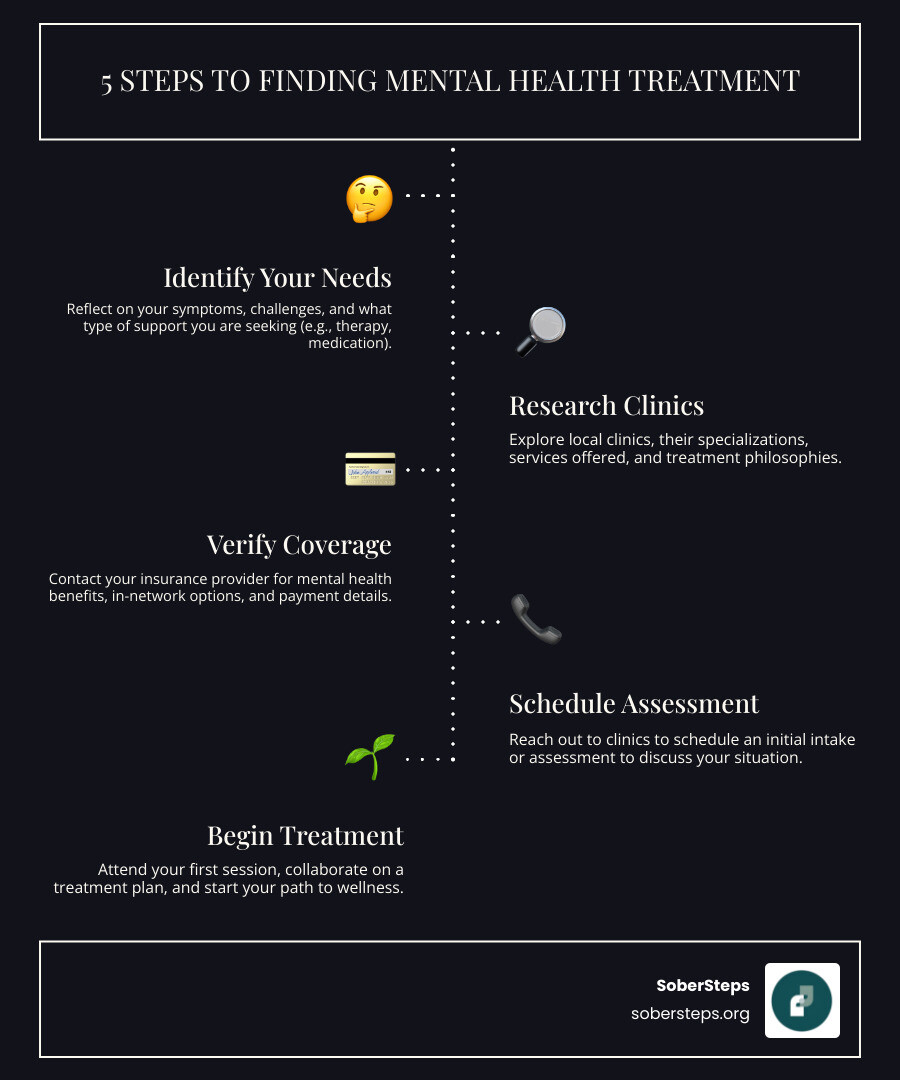
- Intake Process: Your first contact will likely be an intake call or online form where you provide basic information. This helps the clinic determine if they are the right fit for your needs.
- Initial Assessment: You’ll meet with a mental health professional for a comprehensive assessment. They will ask about your symptoms, history, and goals to understand your needs. Be as open as you can; this is a safe space.
- Collaborative Treatment Planning: Based on the assessment, you and your provider will create a personalized treatment plan. This plan outlines your goals and the types of therapy or services that might be beneficial. Your input is essential.
- Asking Questions: This is your opportunity to interview the provider. Ask about their approach, experience, fees, and what to expect from treatment. A good provider will welcome your questions.
- Understanding Patient Rights: Confidentiality is a cornerstone of mental health care. Your conversations are protected by laws like HIPAA. Knowing your rights helps build trust and ensures you feel secure.
Navigating Insurance and Payment for Mental Health Care
The cost of mental health care can be a concern, but there are numerous options to make treatment accessible. Understanding your insurance and other payment avenues is a key step in finding the right mental health clinic.
- Mental Health Parity: The Mental Health Parity and Addiction Equity Act (MHPAEA) is a federal law that prevents most health plans from imposing less favorable benefit limitations on mental health or substance use disorder benefits than on medical/surgical benefits. In simpler terms, your insurance should cover mental health on par with physical health.
- Medicaid’s Role: Medicaid is the single largest payer for mental health services in the United States. If you qualify for Medicaid, it’s a vital resource for accessing care at a mental health clinic.
- Private Insurance Plans: Most private insurance plans cover medically necessary mental health and substance use care. It’s crucial to contact your insurance provider directly to understand your specific benefits, deductibles, co-pays, and which clinics are in-network.
- Sliding Scale Fees: Many mental health clinics and individual practitioners offer services on a sliding scale. This means the cost of treatment is adjusted based on your income, making care more affordable.
- Free and Low-Cost Options: Community mental health centers, often supported by state and federal funding, may provide services at little to no cost for eligible individuals. Non-profit organizations and university training clinics can also be lower-cost options.
Navigating these options can be complex. Resources like FindTreatment.gov can provide information on payment options. For direct assistance, call our team at Sober Steps at (844) 491-5566 for guidance on finding affordable care.
Specialized Support for Veterans and Military Personnel
Serving our country comes with unique challenges that can lead to mental health and substance use concerns. We recognize the importance of specialized, culturally competent care that understands the nuances of military life.
Seeking help for conditions like PTSD, depression, and anxiety is not a sign of weakness; it’s a testament to your strength and resilience.
Finding Veteran-Specific Mental Health Support
Robust systems are in place to support the mental well-being of our Veterans.
- Veteran Health Care Resources: The Department of Veterans Affairs (VA) is a primary provider of mental health care for Veterans. VA medical centers offer comprehensive behavioral health programs with inpatient and outpatient services, telehealth, and therapy for a wide range of conditions.
- Community-Based Veteran Programs: Vet Centers are crucial community-based resources that operate separately from VA medical centers. They offer confidential readjustment counseling, especially for those who served in combat zones or experienced military sexual trauma (MST).
- How to Access Veteran Mental Health Care:
- Enroll: The first step is to enroll for care at a VA facility.
- PCP Referral: Once enrolled, you can request a referral to mental health services through your Primary Care Provider (PCP).
- Walk-in Appointments: For more immediate needs, many VA mental health clinics offer brief walk-in appointments.
- COMPACT Act: This act allows Veterans in an acute suicidal crisis to go to any VA or community health care facility for free emergency care, including inpatient or crisis residential care for up to 30 days and outpatient care for up to 90 days.
- Get help from the Veterans Crisis Line: For immediate support, the Veterans Crisis Line is available 24/7. Dial 988 and press 1, text 838255, or chat online.
Mental Health Resources for Active-Duty Military
The Military Health System (MHS) is dedicated to supporting active-duty service members and their families.
- Military Health Resources: The MHS offers a wealth of resources, emphasizing that mental health conditions can affect anyone and that help is available. On-base mental health clinics provide services like medication management, psychotherapy, and psychological testing.
- TRICARE Coverage Details: TRICARE, the healthcare program for service members and their families, covers medically necessary mental health and substance use care, including both inpatient and outpatient services.
- Family Support Programs: The Family Advocacy Program (FAP) offers critical support, including relationship enrichment, marital and family therapy, and parenting education.
- Military OneSource: This comprehensive support program offers non-medical counseling, financial help, and more. You can reach them at 800-342-9647.
- Substance Abuse Programs: Programs like the Alcohol and Drug Abuse Prevention and Treatment (ADAPT) program provide education, assessments, and counseling for substance use disorders. Referrals can be self-initiated, from a medical provider, or from a commander.
Frequently Asked Questions about Mental Health Clinics
We understand you might have questions when considering a mental health clinic. Here are answers to some of the most common ones.
What’s the difference between a psychiatrist, a psychologist, and a therapist?
These terms represent distinct roles within the mental health field.
- Psychiatrist Roles: A psychiatrist is a medical doctor (MD) who specializes in mental health. They can diagnose conditions, prescribe and manage medication, and provide psychotherapy. They often focus on the biological and neurological aspects of mental illness.
- Psychologist Roles: A psychologist typically holds a doctoral degree (Ph.D. or Psy.D.). They specialize in diagnosing and treating conditions through psychotherapy (talk therapy) and psychological testing. In most states, they cannot prescribe medication.
- Therapist/Counselor Roles: This is a broader term for professionals with master’s degrees, such as Licensed Professional Counselors (LPC), Licensed Marriage and Family Therapists (LMFT), and Licensed Clinical Social Workers (LCSW). They provide psychotherapy and counseling to help individuals develop coping strategies and manage emotional challenges.
- Medication vs. Therapy: Psychiatrists primarily handle medication, while psychologists and therapists focus on talk therapy. Often, the most effective treatment combines both.
Are my conversations at a mental health clinic confidential?
Yes, confidentiality is a cornerstone of mental health care.
- Confidentiality Laws: Your privacy is protected by federal laws like the Health Insurance Portability and Accountability Act (HIPAA), which sets strict standards for protecting sensitive patient information.
- Building Trust with Your Provider: This legal protection is fundamental to building the trust needed for effective therapy, allowing you to be open without fear of exposure.
- Exceptions to Confidentiality: While confidentiality is paramount, there are a few legally mandated exceptions. A provider may be required to break confidentiality if you pose an immediate threat of serious harm to yourself or others, if there is suspected child or elder abuse, or if required by a court order. It’s always a good idea to clarify these exceptions with your provider.
What if I’m in a crisis and need help immediately?
If you or someone you know is in immediate crisis, getting help quickly is the top priority. These resources are available 24/7.
- Emergency Services (911): If there is an immediate danger to life, call 911 or go to the nearest emergency room.
- Crisis Hotlines:
- The 988 Suicide and Crisis Lifeline: Call or text 988 or chat at 988Lifeline.org to connect with a trained crisis counselor.
- Veterans Crisis Line: Veterans can dial 988 and press 1, text 838255, or chat online at https://www.veteranscrisisline.net/.
- SAMHSA’s National Helpline: For treatment referral and information, call 1-800-662-HELP (4357).
- Disaster Distress Helpline: For crisis counseling related to disasters, call 1-800-985-5990.
- Walk-in Crisis Centers: Some communities have walk-in crisis centers or offer urgent appointments at mental health clinics. Check with your local mental health authority for services in your area.
Reaching out during a crisis is a brave and important step. These resources are designed to provide immediate support. For help finding the right ongoing care, call our team at (844) 491-5566.
Conclusion
Navigating mental health care can feel complex, but a wealth of resources and support systems are available to help you find the right mental health clinic. From understanding different levels of care to navigating insurance and finding specialized programs for Veterans, support is within reach.
Seeking help is not a sign of weakness; it’s a profound act of courage. Your journey to wellness is unique, and finding the right clinic is a crucial step. Whether you need therapy, medication management, or substance use treatment, there is a place where you can find understanding and healing.
At Sober Steps, we are committed to being your trusted partner on this journey. We offer confidential, anonymous help for mental health and substance use disorders, connecting you with the right resources because we believe everyone deserves access to quality care.
Take the first step toward healing by exploring specialized treatment options with SoberSteps, or get personalized support and guidance by calling our confidential helpline at (844) 491-5566 today.