Drug Rehab Centers: Everything You Need to Know
Explore comprehensive guide to drug rehab centers. Find types, costs, therapy, and support for your recovery journey today.

Inpatient Drug and Alcohol Rehab: 30 Day, 60 Day, & Long Term programs offer different levels of care designed to meet diverse recovery needs. If you’re trying to understand which program length might work best, here’s what you need to know:
Quick Overview of Program Lengths:
Key Research Finding: According to the National Institute on Drug Abuse (NIDA), treatments lasting less than 60 days may offer “limited effectiveness” in preventing relapse, and programs lasting at least 90 days show higher rates of sustained sobriety.
When someone first considers addiction treatment, one of the most overwhelming questions is: How long will I need to stay? The truth is, there’s no one-size-fits-all answer. Your journey to recovery is as unique as you are.
Research shows that treatment duration significantly impacts long-term recovery success. Your brain needs time to heal—even after three months of sobriety, your brain is still undergoing significant changes. The longer you stay in a supportive environment, the more time you have to develop the coping skills and behavioral changes that will carry you through life.
Choosing between a 30-day, 60-day, or long-term program depends on several factors: the severity of your addiction, whether you have co-occurring mental health conditions, your history with relapse, and the strength of your support system at home. Some people find that a 30-day program provides enough foundation to continue their recovery through outpatient care. Others—especially those with severe addiction or previous unsuccessful treatment attempts—find that 60 or 90+ days gives them the solid footing they need.
At Sober Steps, we understand how confusing it can be to steer treatment options when you’re already feeling overwhelmed. We’ve helped thousands of individuals explore their options for Inpatient Drug and Alcohol Rehab: 30 Day, 60 Day, & Long Term programs, providing confidential guidance to find the right fit for their unique situation. This guide will walk you through everything you need to know about program lengths, what happens during treatment, and how to make the best choice for your recovery journey.
Addiction is a complex disease that alters the chemistry of the brain, causing drastic changes the longer someone uses a substance. Recovery, therefore, is not just about stopping substance use; it’s about allowing the brain to heal, learning new coping mechanisms, and addressing the underlying issues that contributed to the addiction. This is where the duration of treatment becomes profoundly important.
Inpatient drug and alcohol rehab, also known as residential treatment, offers a unique opportunity for recovery. It’s a form of treatment where the patient lives in a residential facility, receiving around-the-clock care from medical and addiction professionals. This structured environment removes individuals from their everyday triggers and distractions, allowing them to focus entirely on their healing journey. The goal is to provide a safe, medically supervised space where patients can accrue sober time and begin the intensive work of recovery.
The National Institute on Drug Abuse (NIDA) emphasizes that “good outcomes are contingent on adequate treatment length.” Research consistently shows that the duration of treatment significantly impacts long-term recovery success. NIDA highlights that treatments lasting less than 60 days may offer “limited effectiveness” in preventing relapse, and shorter programs often don’t allow enough time for the patient to recover fully. This is because psychological healing, behavioral change, and the brain’s recovery process take time. Even after three months of sobriety, the brain is still undergoing significant changes.
For us, understanding these principles is crucial. We know that effective treatment needs to address not only the physical aspects of addiction but also the psychological and emotional components. This deeper engagement is what leads to lasting change and robust relapse prevention skills.
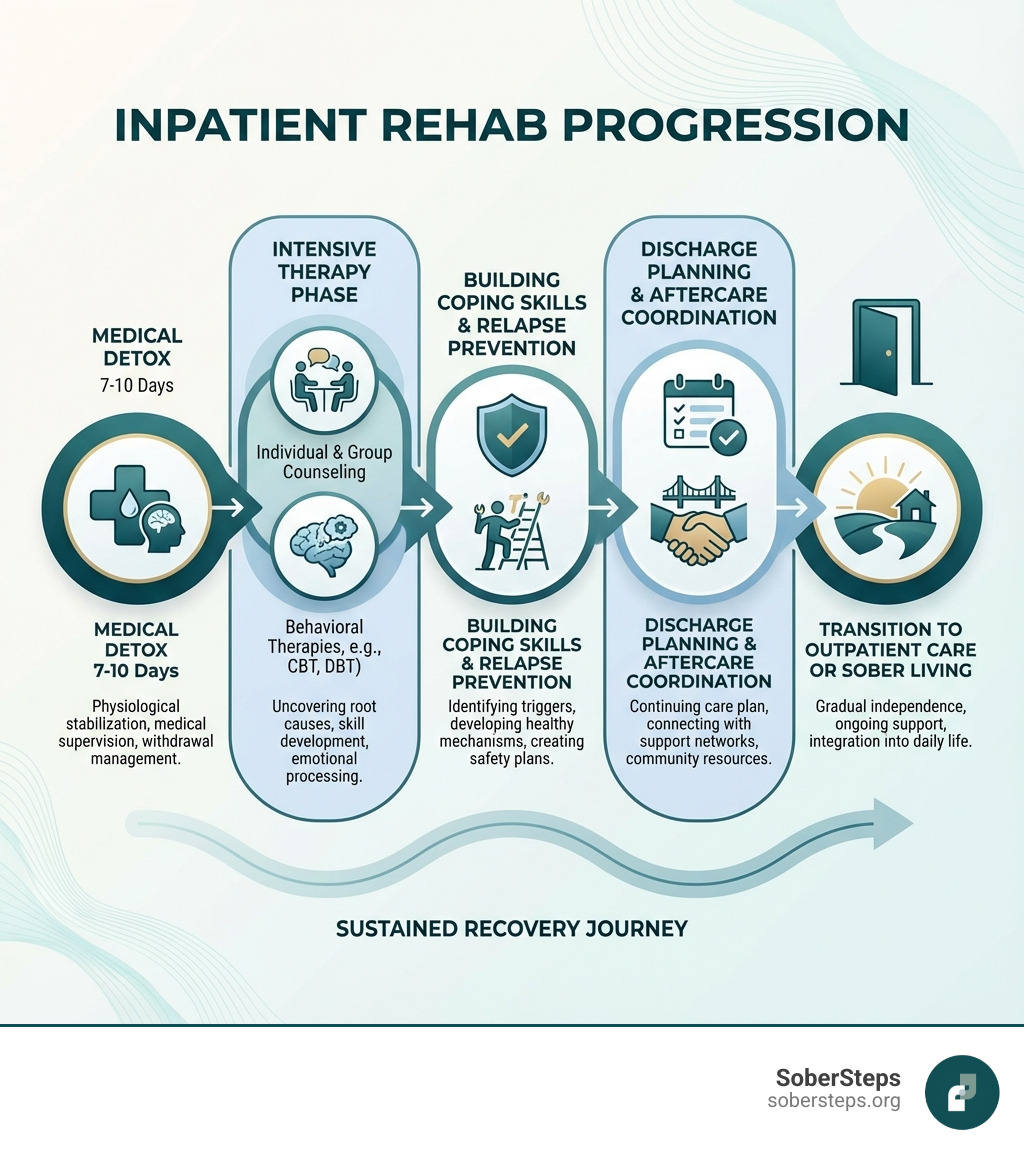
Before the therapeutic work of rehab can truly begin, most individuals require medical detoxification. Detox is the process of safely managing withdrawal symptoms when someone stops using drugs or alcohol. Detox is typically not enough for sustained recovery; it is merely the critical first step. Research shows that detox without continued treatment in an inpatient or outpatient setting is unlikely to be successful in preventing relapse further down the line.
Withdrawal symptoms can range from uncomfortable to life-threatening, depending on the substance and the severity of dependence. For example, alcohol withdrawal can be dangerous, potentially leading to seizures or delirium tremens (DTs), especially after long-term use. Opioid and benzodiazepine withdrawal also present significant challenges. A medically supervised detox ensures that patients are safe and as comfortable as possible through this difficult phase, with medical professionals monitoring their vital signs and administering medications to ease symptoms.
Medical detoxification can last anywhere from a few days to weeks, typically averaging about 7-10 days for acute withdrawal symptoms to subside. Once the body is stabilized, the individual is physically ready to engage in the comprehensive therapeutic work that follows.
The ultimate goal of any inpatient rehab program, regardless of its length, is not only to help someone stop misusing drugs or alcohol but to help them learn the skills necessary to remain in recovery. This involves:
The question of “how long” is central to addiction treatment. While many addiction treatment programs last 30, 60, or 90 days, the duration an individual spends in treatment depends heavily on their individual needs and the severity of their addiction. Factors like the type of substances used, any history of relapse, and the presence of co-occurring mental health disorders all play a significant role in determining the most appropriate length of stay.
Let’s look at how these different program lengths compare:
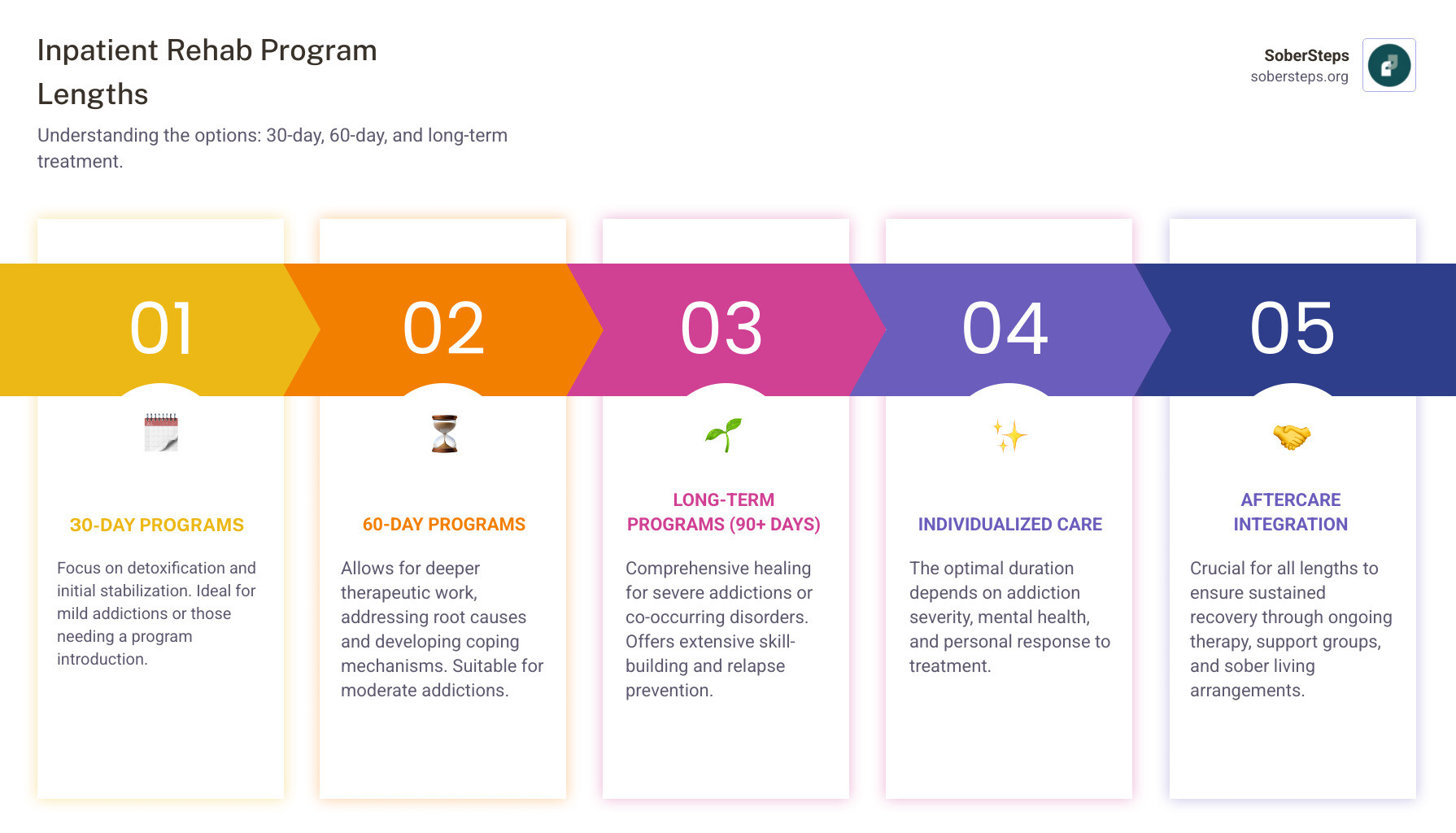
For many individuals, a 30-day inpatient rehab program serves as a critical first step on the path to recovery. It’s a great way to start treatment and is what most people usually set as an initial goal because it’s easier to commit to due to its shorter duration and generally lower cost.
During a 30-day program, the primary focus is often on completing medical detox safely and then introducing you to the fundamentals of addiction treatment. You’ll typically engage in individual and group therapy, participate in support group meetings, and begin to learn basic relapse prevention techniques. Research shows that having robust support systems can significantly impact recovery success, and a 30-day program can help establish those initial connections. While a 30-day program is beneficial, especially for those who can’t commit to longer stays due to work, family, or financial constraints, it’s essential to acknowledge that it may not be long enough to develop the coping skills needed to maintain long-term sobriety. It often focuses primarily on detoxification, which addresses only the physical aspects of addiction, potentially leaving deeper psychological and emotional issues unaddressed.
A 60-day inpatient rehab program offers significantly more time to address both the physical and psychological components of addiction, providing a stronger foundation for lasting recovery. This extended period allows for deeper therapeutic work, giving you more opportunity to engage in behavioral change and address underlying issues.
With 60 days, you have more time to practice new coping skills, build a solid sober support system, and stabilize your mood and behaviors. This duration also allows for effective adjustment of any necessary medications. NIDA highlights that “good outcomes are contingent on adequate treatment length,” and a 60-day program moves closer to that ideal, offering a more complete approach to effective treatment compared to shorter options. This extra time can be crucial for you to truly understand your addictions and triggers on a deeper level through guided therapy, all while living in a supportive, medically supervised environment away from your at-home environmental triggers.
For individuals with more severe addictions, a history of relapse, or co-occurring mental health disorders, long-term inpatient rehab programs of 90 days or more often provide the highest opportunity for sustained recovery. Research consistently shows that programs lasting at least 90 days have the highest success rates. This extended duration allows ample time for the brain to undergo significant changes necessary for recovery; even after three months of sobriety, the brain is still healing.
A 90-day program provides the time needed to solidify new habits, strengthen sobriety skills, and identify potential triggers for relapse in a comprehensive way. It allows you to dig much deeper into the root causes of your substance use disorder, providing a more thorough healing process. For some, long-term rehab can extend to therapeutic communities, where patients typically stay for 6 to 12 months, integrating recovery lessons into daily life through vocational training and positive re-socialization. This significantly reduces the risk of early relapse and helps individuals build a resilient, sober life.
Choosing the right inpatient rehab program is a deeply personal decision, and it’s one of the most important you’ll ever make. It’s not about finding the “best” program in general, but the best program for you. We encourage you to start with a self-assessment and, ideally, a professional evaluation to understand your specific needs.
Here are key factors we believe you should consider when making this choice:
When weighing your options for Inpatient Drug and Alcohol Rehab: 30 Day, 60 Day, & Long Term, consider these critical points:
Many individuals struggling with substance use disorders also experience co-occurring mental health conditions, often referred to as a dual diagnosis. Conditions like anxiety, depression, bipolar disorder, or trauma (PTSD) can significantly complicate addiction and recovery. For example, individuals might use substances to self-medicate symptoms of a mental health disorder, creating a vicious cycle.
Integrated treatment, where both the substance use disorder and the mental health condition are treated simultaneously, is crucial for lasting recovery. When mental health disorders are present, experts often recommend longer inpatient rehab programs. This is because it takes time to stabilize mental health symptoms, understand the interplay between the two conditions, and develop effective coping strategies for both. Addressing one without the other significantly increases the risk of relapse. A longer stay provides the necessary time and specialized care for comprehensive healing.
Understanding the daily structure of an inpatient rehab facility can help explain the process and alleviate anxieties about committing to a program. While schedules vary between facilities, a typical day in Inpatient Drug and Alcohol Rehab: 30 Day, 60 Day, & Long Term is highly structured and purposeful, designed to maximize therapeutic engagement and personal growth.
You can expect your days to be filled with a variety of activities aimed at healing your mind, body, and spirit:
This consistent, supportive environment is designed to minimize downtime, reduce cravings, and help you build healthy routines that will serve as a blueprint for life after rehab.
Once you’ve considered the optimal duration and approach for your recovery, the practicalities of cost and insurance naturally come into play. We understand that these concerns can feel daunting, but viewing treatment as an investment in your health and future can reframe the conversation.
According to the National Center for Drug Abuse Statistics (NCDAS), residential treatment programs can range from $4,008 to $15,524 on average. For longer stays, NCDAS notes that 60-to-90-day programs can range from $12,000 to $60,000, averaging about $36,000 overall. Therapeutic community treatments, which are typically longer, can cost between $20,430 and $44,616. The cost of inpatient rehab varies significantly based on program length, location, amenities, and the specific services offered. While 30-day programs are often viewed as a quick start to recovery and are generally cheaper, longer programs, while more expensive upfront, often lead to better long-term outcomes, potentially saving money and heartache from future relapses.
The good news is that most insurance plans must cover mental health and substance use disorder services as essential health benefits, thanks to federal mandates like the Affordable Care Act (ACA) and the Mental Health Parity and Addiction Equity Act (MHPAEA). This means that for many people, the cost of Inpatient Drug and Alcohol Rehab: 30 Day, 60 Day, & Long Term can be significantly reduced.
Here’s what we recommend for understanding your insurance coverage:
Many addiction treatment centers accept insurance from major providers, and we can help you steer this process to find facilities that work with your plan.
Completing an inpatient rehab program, regardless of its length, is a tremendous achievement, but it’s just the beginning of a lifelong journey. Recovery is a marathon, not a sprint, and what happens after inpatient treatment is just as critical as the treatment itself. Effective discharge planning begins on day one of your program.
Aftercare plans are customized strategies designed to support your ongoing sobriety and help you transition back into daily life. These may include:
The goal of aftercare is to provide continuous support, accountability, and resources to help you sustain your recovery and build a fulfilling, sober life.
The journey to recovery from drug and alcohol addiction is deeply personal, but one truth consistently emerges: the duration of treatment is a key predictor of long-term success. While a 30-day program can provide a crucial initial step, research from NIDA and other organizations strongly suggests that longer durations—especially 90 days or more—offer the highest rates of sustained sobriety. These extended stays allow for comprehensive healing, deeper psychological work, and the development of robust coping mechanisms necessary to steer life’s challenges without returning to substance use.
The “best” program length for Inpatient Drug and Alcohol Rehab: 30 Day, 60 Day, & Long Term is the one that best fits your individual needs. Factors such as the severity of your addiction, the presence of co-occurring mental health disorders, your history of relapse, and your personal circumstances all play a vital role in this decision. We encourage you to be honest with yourself and with treatment professionals about your situation.
We believe that every step towards recovery is a step towards a brighter future. If you or a loved one are struggling with addiction, please know that hope is always available. At SoberSteps, we are dedicated to connecting individuals with the resources they need to find healing and lasting sobriety.
Don’t wait to take that crucial next step. Explore your options and find a rehab center that fits your needs today.

Explore comprehensive guide to drug rehab centers. Find types, costs, therapy, and support for your recovery journey today.
Navigate affordable mental health care. Discover free, low-cost, and sliding scale therapy options for accessible support now.

Unlock recovery! Find a Drug and alcohol treatment scholarship for individuals. Get 7 tips to secure funding and start healing now.