
Why Individual Therapy Is a Critical Path to Addiction Recovery
Individual therapy addiction treatment is a cornerstone of recovery for millions of Americans struggling with substance use. Here’s what you need to know:
What Individual Therapy for Addiction Offers:
- One-on-one counseling with a trained therapist in a completely confidential setting
- Personalized treatment custom to your specific addiction, triggers, and life circumstances
- Evidence-based approaches like Cognitive Behavioral Therapy (CBT), Dialectical Behavior Therapy (DBT), and Motivational Interviewing (MI)
- Deep exploration of underlying causes like trauma, mental health issues, and family history
- Skills training to recognize triggers, manage cravings, and build healthy coping mechanisms
- Flexible scheduling and undivided attention from your therapist
How It Differs from Group Therapy:
Individual therapy provides privacy and personalized focus, while group therapy offers peer support and shared experiences. Many people benefit from both.
The reality is sobering: over 19 million people in the United States struggle with substance use disorders. An estimated 92,000 individuals died from drug overdoses in 2020 alone. If you’re one of the millions feeling isolated and overwhelmed by addiction, you’re not alone—and help is available.
Individual therapy offers something group settings often cannot: a safe, private space where you can explore the deepest roots of your addiction without fear of judgment. Research shows it’s the most used form of treatment for substance use disorders, and for good reason. In these one-on-one sessions, you work directly with a trained therapist who tailors every conversation, every strategy, and every goal specifically to you.
Whether you’re struggling with alcohol, opioids, cocaine, or any other substance, individual therapy helps you understand why you use, what triggers your cravings, and how to build a life without substances. It’s not just about stopping drug use—it’s about healing the underlying wounds that fuel addiction in the first place.
At Sober Steps, we’re dedicated to connecting individuals with the confidential, personalized support they need to overcome addiction. Our team understands the complexities of individual therapy addiction treatment and we’re here to guide you toward the resources that can change your life. If you’re ready to take that first step, call our confidential helpline at (844) 491-5566.
What is Individual Therapy for Addiction?
When we talk about individual therapy, we’re referring to a type of counseling known as psychotherapy or “talk therapy” where a mental health professional works one-on-one with a client. Unlike group therapy, which involves multiple participants, individual therapy provides a dedicated, confidential space for you to explore your thoughts, feelings, and behaviors related to your addiction. These sessions typically last between 45 to 60 minutes and are designed to increase your understanding of your own patterns and improve your overall well-being.
The primary goal of individual therapy for addiction is to help you gain insight into your substance use, identify its underlying causes, and develop healthier coping mechanisms. It’s a custom-custom approach, allowing the therapist to focus solely on your unique needs and experiences. This individualized attention fosters a strong sense of trust and rapport, which is crucial for effective treatment.
How does this differ from other forms of therapy? Let’s take a look:
| Feature | Individual Therapy | Group Therapy | Family Therapy |
|---|---|---|---|
| Format | One-on-one sessions with a therapist | Multiple individuals with one or more therapists | Involves family members, with a therapist |
| Focus | Personalized, in-depth exploration of individual issues | Shared experiences, peer support, social interaction | Family dynamics, communication patterns, systemic issues |
| Privacy | High (confidentiality between client and therapist) | Moderate (shared among group members) | Moderate (shared among family members) |
| Depth of Personal Issues | Allows for deep dives into sensitive personal history | Focuses on general themes, may not dig as deep | Addresses family-related trauma and dynamics |
| Therapeutic Alliance | Strong, direct bond between client and therapist | Shared among group members, therapist facilitates | Alliance with the family unit |
| Benefits | Personalized treatment, privacy, intense analysis, flexibility, self-awareness, communication skills | Peer support, reduced isolation, diverse perspectives, social skill-building, cost-effective | Improved family communication, healing relationships, family support for recovery |
While group therapy offers invaluable peer support and shared experiences, and family therapy addresses systemic issues, individual therapy addiction treatment stands out for its capacity to provide undivided attention and a safe space for deep personal work. This is particularly important when addressing sensitive topics like trauma or deeply ingrained behavioral patterns that you might not feel comfortable sharing in a group setting.
Core Principles and Approaches in Individual Therapy Addiction Treatment
Effective individual therapy addiction treatment relies on evidence-based practices (EBPs) – therapeutic approaches proven through scientific research to be effective. These strategies are personalized to address your specific needs, including any co-occurring mental health disorders, and to help you build robust coping mechanisms. The aim is to dismantle the cycle of addiction by understanding the interplay between your thoughts, feelings, and behaviors.
Many of these approaches have been extensively researched and endorsed by institutions like the Substance Abuse and Mental Health Services Administration (SAMHSA). For instance, scientific research on CBT for SUDs has consistently highlighted its efficacy as both a standalone therapy and part of a comprehensive treatment plan.
Let’s explore some of the most common and effective approaches used in individual therapy for addiction:
Cognitive Behavioral Therapy (CBT)
Cognitive Behavioral Therapy (CBT) is a cornerstone of individual therapy addiction treatment. It operates on the principle that learned behaviors, including substance use, can be unlearned and replaced with healthier ones. Our therapists use CBT to help you:
- Identify triggers: What situations, thoughts, or feelings lead you to crave or use substances? This could be anything from stress at work to certain social settings.
- Change negative thought patterns: Often, addiction is fueled by distorted thinking, such as “I can’t cope without this substance” or “I deserve to use.” CBT helps you challenge these beliefs and replace them with more realistic and positive ones.
- Develop coping skills: Instead of turning to substances, you learn practical strategies to manage stress, anxiety, anger, and other difficult emotions. This includes techniques like relaxation exercises, problem-solving skills, and communication strategies.
- Functional analysis: This involves a detailed examination of your substance use—the antecedents (what happened before), the behavior itself, and the consequences (what happened after). Understanding this cycle is crucial for breaking it.
- Skills training: CBT is a highly individualized training program. It helps you acquire new skills, such as refusal skills, assertiveness, and planning for high-risk situations, to maintain abstinence. The National Institute on Drug Abuse (NIDA) emphasizes that CBT has solid empirical support as a treatment for cocaine abuse and is compatible with other treatments like pharmacotherapy and self-help groups.
Dialectical Behavior Therapy (DBT)
Originally developed for individuals with borderline personality disorder, Dialectical Behavior Therapy (DBT) has proven highly effective in individual therapy addiction treatment, especially for those struggling with intense emotions or co-occurring mental health issues. DBT focuses on four key areas:
- Emotional regulation: Learning to identify, understand, and manage intense emotions without resorting to substance use. This helps prevent emotional distress from becoming a trigger.
- Distress tolerance: Developing the ability to cope with painful emotions and difficult situations without making them worse. This might involve self-soothing techniques or radical acceptance.
- Mindfulness: Cultivating present-moment awareness, helping you observe your thoughts and feelings without judgment and reducing the automatic response to cravings or urges. Mindfulness is a crucial element for drug and alcohol addiction recovery.
- Interpersonal effectiveness: Improving communication skills and learning to steer relationships in a healthy way, setting boundaries, and resolving conflicts. This is particularly helpful for individuals whose substance use has strained relationships with loved ones.
DBT is particularly beneficial for individuals with a dual diagnosis, meaning they struggle with both addiction and another mental health condition like depression, anxiety, or trauma.
Motivational Interviewing (MI)
Motivational Interviewing (MI) is a collaborative, client-centered approach that focuses on strengthening your own motivation for change. It’s especially useful if you’re feeling ambivalent about treatment or unsure about your ability to achieve sobriety. Our therapists use MI to:
- Engage in collaborative conversation: Instead of telling you what to do, the therapist works with you, exploring your thoughts and feelings about change.
- Resolve ambivalence: It’s normal to have mixed feelings about giving up substances. MI helps you explore the pros and cons of both continuing substance use and pursuing recovery, guiding you toward a stronger commitment to change.
- Strengthen motivation: By eliciting and reflecting on your own reasons for change, MI helps you build intrinsic motivation, making your commitment to recovery more resilient.
- Client-centered approach: The focus is always on your perspective, your values, and your goals, empowering you to take ownership of your recovery journey.
- Eliciting change talk: The therapist actively listens for and reinforces any statements you make that express a desire, ability, reason, or need for change. Research indicates that MI is effective in motivating change and has shown larger effect sizes in non-white ethnic minority populations.
MI is not about forcing change but about helping you find and articulate your own reasons for wanting a healthier life.
The Process and Benefits of One-on-One Counseling
Entering individual therapy addiction treatment is a significant step toward healing and self-findy. It’s a journey of uncovering root causes, building a strong therapeutic relationship, developing healthy habits, and fostering profound self-awareness.

Addressing the Root Causes of Addiction
Addiction is rarely just about the substance itself. It’s often a complex issue with deep-seated roots. In individual therapy, we work to explore these underlying factors that contribute to substance use. This includes:
- Trauma exploration: Many individuals use substances to cope with unresolved trauma, whether from childhood abuse, neglect, or other distressing life events. A private, safe setting is crucial for discussing these sensitive experiences.
- Co-occurring mental health issues: Conditions like depression, anxiety disorders, and PTSD often go hand-in-hand with addiction. Individual therapy addiction treatment can address these mental health challenges simultaneously, as they frequently fuel each other. Psychodynamic psychotherapy, for example, can be beneficial for patients with comorbid mental health issues that contribute to ongoing substance use.
- Environmental factors: Stress from work, financial difficulties, social pressures, or an unstable home environment can all be triggers. We help you identify these external stressors and develop strategies to steer them without turning to substances.
- Family history: Understanding your family’s patterns of addiction or mental health issues can provide valuable insight into your own struggles.
- Stress: Substances are often used as a maladaptive coping mechanism for stress. Individual therapy teaches you healthy stress management techniques, such as mindfulness, exercise, or problem-solving skills.
By addressing these core issues, individual therapy helps you build a more stable foundation for lasting recovery, repairing internal and mental structures that may have been underdeveloped or unprotected.
What to Expect in Your First Individual Therapy Addiction Session
Starting individual therapy addiction can feel daunting, but knowing what to expect can ease some of the apprehension. Your first session is primarily about laying the groundwork for a successful therapeutic relationship.
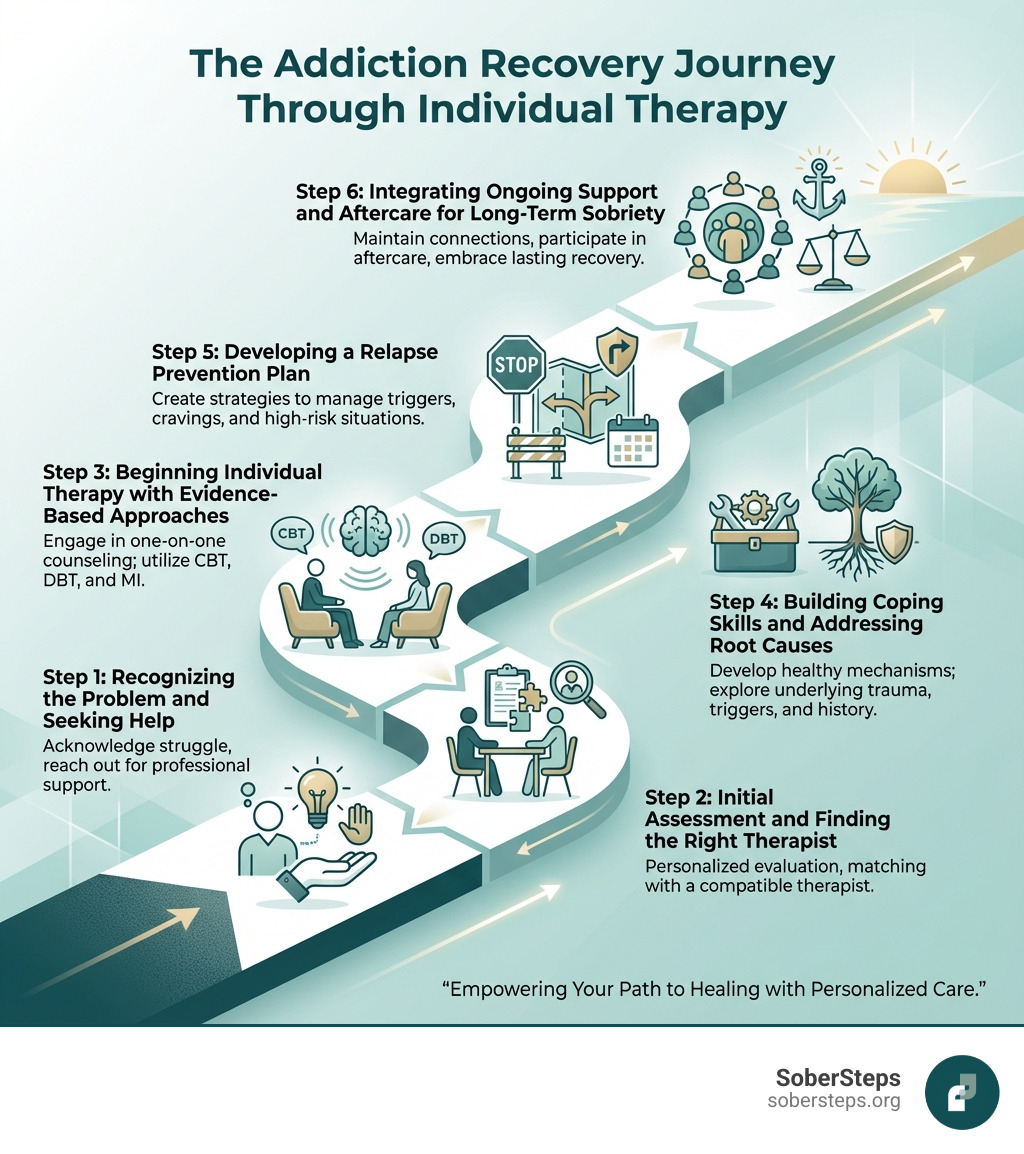
- Initial assessment: Your therapist will gather information about your history with substance use, your overall health, mental health history, and current life situation. This helps them understand your unique needs and develop a personalized treatment plan.
- Building rapport: A significant part of the first few sessions is establishing a comfortable and trusting relationship with your therapist. This therapeutic alliance is critical for your progress.
- Goal setting: You’ll discuss what you hope to achieve through therapy. This could range from achieving abstinence to improving relationships, managing emotions, or addressing past trauma.
- Discussing confidentiality: Your therapist will explain the limits of confidentiality, ensuring you understand that what you share is private, fostering a safe space for honesty and openness.
- Treatment planning: Based on the assessment and your goals, your therapist will outline a proposed treatment plan, including the types of therapeutic approaches they will use.
- Honesty and openness: The more honest you are, the more effective your therapy will be. This is a non-judgmental space dedicated to your healing.
Key Benefits for Your Recovery Journey
The benefits of engaging in individual therapy addiction are numerous and profound, offering a uniquely custom path to recovery:
- Absolute privacy: In one-on-one sessions, you can discuss even the most sensitive and personal details of your addiction and life experiences without fear of judgment from peers, which might be a concern in group settings. This privacy encourages honesty and deeper self-disclosure.
- Customized treatment: Every aspect of your therapy is custom to you. Your therapist can adapt the pace, techniques, and focus of sessions to perfectly match your individual needs, progress, and comfort level.
- Undivided attention: You receive the therapist’s full and exclusive attention. This allows for intense analysis of your specific patterns, triggers, and underlying issues, fostering a deeper understanding of yourself.
- Strong therapeutic alliance: The focused nature of individual therapy allows for the development of a powerful bond of trust and empathy between you and your therapist. This relationship is a cornerstone of effective treatment, providing a consistent source of support and guidance.
- Flexible scheduling: Individual sessions often offer more flexibility in scheduling compared to group programs, making it easier to fit therapy into your life.
- Focused skill-building: You can concentrate on developing specific coping skills, communication strategies, and relapse prevention techniques directly relevant to your challenges, practicing them in a safe environment.
- Increased self-awareness and self-effectiveness: Through focused introspection and guided exploration, you gain a clearer understanding of your motivations, behaviors, and emotional landscape, empowering you to make conscious, healthy choices.
Building a Foundation for Lasting Sobriety
Individual therapy addiction treatment is not just about addressing immediate substance use; it’s about building a robust foundation for relapse prevention and long-term recovery. This often involves integrating individual sessions into a comprehensive care plan, ensuring a seamless continuum of support. Research highlights that optimal healthcare outcomes for substance use disorders (SUDs) require individualized, multidisciplinary care involving various healthcare professionals. Information on multidisciplinary treatment models further underscores the importance of a holistic approach.
The Role of the Therapeutic Alliance
The therapeutic alliance, or the relationship between you and your therapist, is arguably one of the most critical factors in the effectiveness of individual therapy addiction treatment. It’s more than just liking your therapist; it’s a profound connection built on:
- Trust and rapport: Feeling safe enough to be vulnerable and share your deepest struggles.
- Empathy: Knowing your therapist understands and validates your experiences without condoning harmful behaviors.
- Non-judgmental support: Experiencing a space where you are accepted for who you are, flaws and all, which can be incredibly healing.
- Collaborative partnership: Working together with your therapist as a team towards your recovery goals.
Research consistently shows that a strong therapeutic alliance is a key component of a successful therapy intervention. When you feel understood and supported, you are more likely to engage fully in the therapeutic process, adhere to treatment recommendations, and make meaningful progress. This alliance is what allows you to explore difficult emotions and challenge ingrained patterns, knowing you have a dedicated advocate by your side.
Developing Effective Relapse Prevention Strategies
Relapse is a common, though not inevitable, part of the recovery journey. Individual therapy addiction plays a crucial role in equipping you with the tools and strategies to prevent it:
- Identifying high-risk situations: We’ll help you pinpoint specific people, places, emotions, or events that increase your vulnerability to substance use. This could involve creating a detailed “trigger map” of your life.
- Managing cravings: You’ll learn practical techniques to cope with intense cravings, such as distraction, mindfulness, urge surfing, and self-talk, rather than giving in to them.
- Creating a relapse response plan: What will you do if you find yourself in a high-risk situation or experience a slip? Having a pre-determined plan—who to call, what steps to take—can significantly reduce the severity of a potential relapse.
- Healthy coping skills: Beyond just avoiding triggers, you’ll develop a repertoire of positive coping mechanisms for stress, boredom, loneliness, and other challenging emotions. This might include exercise, hobbies, meditation, or connecting with supportive friends.
- Lifestyle changes: Recovery often requires significant adjustments to your daily routine, social circles, and overall lifestyle. Individual therapy guides you in making these changes to support a substance-free life.
Integrating Individual Therapy into a Comprehensive Plan
While incredibly powerful on its own, individual therapy addiction treatment is most effective when integrated into a comprehensive addiction treatment plan. Addiction is a complex disorder affecting multiple aspects of an individual’s life, and a multi-faceted approach ensures all needs are met.
- Working with detox programs: Individual therapy can begin even during medical detoxification, providing emotional support and preparing you for the deeper work ahead.
- Complementing group therapy: Many individuals benefit from both individual and group therapy. Individual sessions can address personal issues too sensitive for a group, while group therapy offers peer support, reduces isolation, and allows for practicing new social skills.
- Medication-Assisted Treatment (MAT): For some, pharmacotherapies (medications) for opioid, alcohol, or nicotine addiction can significantly aid recovery by reducing cravings and withdrawal symptoms. Individual therapy can help you adhere to your medication regimen and process any feelings or challenges related to MAT.
- 12-step programs: For many, participation in 12-step programs like Alcoholics Anonymous (AA) or Narcotics Anonymous (NA) provides invaluable peer support and a spiritual framework for recovery. Individual therapy can help you engage with these programs more effectively and address any concerns or questions you might have.
- Holistic therapies: Incorporating practices like yoga, mindfulness meditation, art therapy, or exercise can complement individual therapy by promoting overall well-being and stress reduction.
A comprehensive plan ensures that you have a robust support system addressing every facet of your recovery journey, from the physical to the psychological and social.
Navigating Challenges and Finding the Right Help
The journey through individual therapy addiction treatment isn’t always linear, and be aware of potential challenges and how to overcome them. Finding the right therapist is paramount to your success.
Potential Limitations of Individual Therapy for Addiction
While individual therapy offers profound benefits, it’s also important to acknowledge its potential limitations:
- Lack of peer perspective: Unlike group therapy, individual sessions don’t offer the opportunity to connect with others who share similar struggles. This can sometimes lead to feelings of isolation or a missed chance to learn from peers’ experiences.
- Cost considerations: Individual therapy can be more expensive than group therapy, especially if sessions are frequent or long-term. However, many insurance plans now cover addiction treatment, including individual therapy, so it’s always worth checking your coverage.
- Can be emotionally intense: Uncovering deep-seated trauma and confronting difficult emotions can be challenging and emotionally draining. While this intensity is often necessary for healing, it requires readiness and commitment.
- Finding a compatible therapist: The success of individual therapy heavily relies on the therapeutic alliance. If you don’t feel a strong connection or trust with your therapist, the process can be less effective. It sometimes takes a few tries to find the right fit, and that’s perfectly okay.
How to Find a Qualified Addiction Therapist
Finding a qualified therapist who specializes in individual therapy addiction treatment is a critical step. Here’s how we recommend you approach it:
- Professional directories: Websites like the American Psychological Association (APA), National Association of Social Workers (NASW), or the American Association for Marriage and Family Therapy (AAMFT) offer searchable databases of licensed professionals.
- Checking credentials: Look for therapists with specific credentials and licenses such as Licensed Clinical Social Worker (LCSW), Licensed Professional Counselor (LPC), or a Ph.D. or Psy.D. in psychology. These indicate rigorous training and ethical standards.
- Specialization in addiction: Ensure the therapist has experience and specialized training in treating substance use disorders. Addiction treatment is a complex field, and a specialist will be familiar with evidence-based approaches like CBT, DBT, and MI.
- Insurance coverage: Contact your insurance provider to understand your mental health benefits. Many plans offer coverage for individual therapy, and some therapists accept various insurance plans.
- Initial consultation: Many therapists offer a brief initial consultation (often free) where you can discuss your needs and assess if they are a good fit for you. Don’t hesitate to ask about their approach to addiction treatment, their experience, and what you can expect.
At Sober Steps, we can help guide you through this process, connecting you with resources and qualified professionals who can provide the confidential, anonymous support you need. Call our confidential helpline at (844) 491-5566.
Conclusion
Individual therapy addiction treatment is a powerful, personalized tool in the journey to recovery. It offers a safe, confidential space to dig into the unique challenges of your addiction, addressing underlying causes, developing essential coping skills, and building a strong foundation for lasting sobriety. Through evidence-based approaches like CBT, DBT, and MI, you’ll gain profound self-awareness and the tools to steer life without substances.
Recovery is a process that requires time, effort, and commitment, but you don’t have to face it alone. Taking the first step toward seeking help is an act of incredible strength. At Sober Steps, we are committed to providing confidential, anonymous help for mental health and substance use disorders, connecting you with the support you deserve.
Find healing today. Reach out to our experienced team at (844) 491-5566 when you are ready to make a change in your life. We are here to help you reclaim your life from addiction.
Find confidential addiction therapy services or call our anonymous helpline at (844) 491-5566.