
Why Immediate Addiction Help Matters More Than Ever
Immediate addiction help is available right now, 24/7. If you or a loved one is struggling, you don’t have to wait.
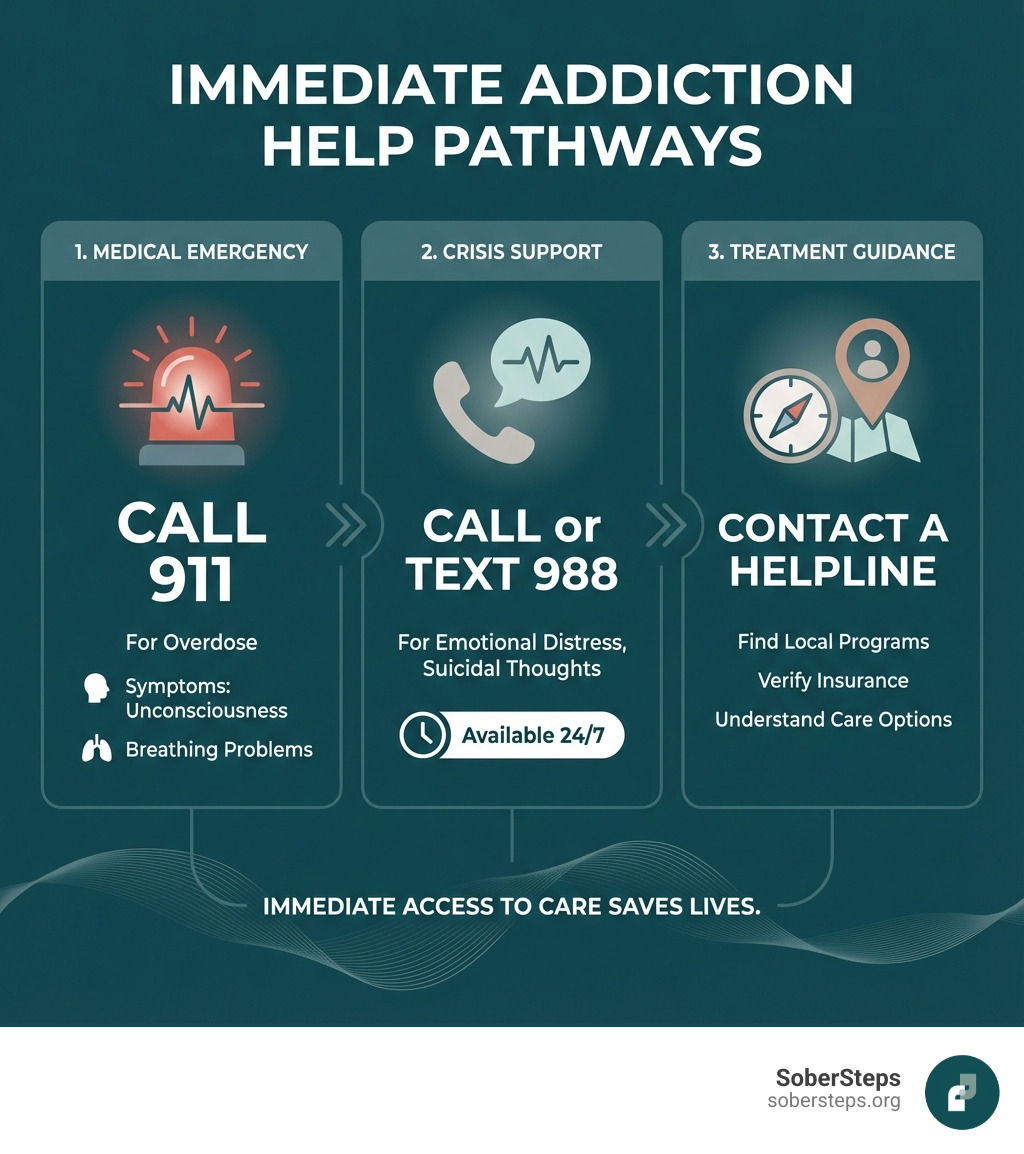
Here are your three fastest options for help:
- Call 911 – For overdose or medical emergency
- Call or Text 988 – For mental health or substance use crisis support
- Contact a treatment helpline – For guidance on finding treatment programs
The opioid epidemic has claimed over 1 million American lives. Behind each statistic is a person and family devastated by addiction. But there is hope. 97% of patients at integrated care facilities would recommend their treatment, and immediate access to care can be the difference between life and death.
Finding help can feel overwhelming due to concerns about cost, trust, or effectiveness. These worries are valid but shouldn’t stop you from reaching out. Treatment works, recovery is possible, and you can access help immediately through crisis hotlines, same-day appointments, and walk-in centers.
At Sober Steps, we connect people with immediate addiction help resources. Our mission is to make finding quality care simple, because every moment counts.
In a Crisis? Your First Three Actions for Immediate Help
When facing an addiction crisis, knowing what to do first is crucial. We’ve streamlined the initial steps into three clear options for immediate addiction help, covering emergencies, emotional support, and long-term recovery guidance.
The statistics are stark: over 1 million Americans have tragically lost their lives to overdose during the opioid epidemic alone. This underscores the importance of acting swiftly. However, there’s also immense hope. Integrated care facilities have a 97% patient recommendation rate, proving effective treatment is available. At SoberSteps, our goal is to connect you to these vital resources. Don’t hesitate to Get Help Now.
1. For a Medical Emergency or Overdose: Call 911
If you suspect an overdose or a substance-related medical emergency, call 911 immediately. This is a matter of life and death. Crisis services are equipped to handle severe situations like respiratory depression, unresponsiveness, or seizures.
When you call, state it’s a medical emergency and you suspect an overdose. Provide your exact location and any known details about the substance. Dispatchers can guide you through first aid, like administering Naloxone (Narcan) if available, which can reverse opioid overdoses. Many states have Good Samaritan laws protecting callers from prosecution. Do not wait for symptoms to worsen. Even if the person seems to stabilize, a professional medical evaluation is essential. If you’re also facing a Mental Health Crisis, know that emergency services are there to help without judgment. After the immediate danger passes, Contact SoberSteps for support to explore the next steps in recovery.
2. For Urgent Emotional Support: Call or Text 988
Sometimes the crisis is an overwhelming wave of emotional distress or suicidal thoughts. In these moments, the 988 Suicide & Crisis Lifeline is an invaluable resource. This national helpline provides free, confidential support 24/7.
By calling or texting 988, you’ll connect with a trained crisis counselor who understands substance use and mental health challenges. It’s a safe space to talk, process feelings, and explore options, not just for suicidal thoughts but for any behavioral health crisis. The service also connects to the Veterans Crisis Line for specialized support. This immediate connection can be a crucial bridge to more structured help. For more on navigating these situations, explore our guide to Confidential Mental Health Support. After stabilizing, we’re here to help you find ongoing treatment. Reach out to SoberSteps for further guidance.
3. For Treatment Guidance: Contact SoberSteps
Once an immediate crisis is managed, or if you’re proactively seeking help, contacting a specialized helpline like ours at SoberSteps is your next best step. Our confidential 24/7 SoberSteps Helpline is designed to guide you through the complexities of addiction treatment.
When you call, you’ll speak with experienced advisors who can help you understand treatment types, discuss costs, and explore insurance coverage. While we connect callers to our network of paid advertiser treatment providers, our primary goal is to provide relevant information and referrals for your unique situation. We’ll ask about your substance use history, co-occurring conditions, and financial situation to identify suitable programs. For more on what to expect, read our Anonymous Hotline Mental Health Guide. This call is free, confidential, and the first step toward taking control. Let us help you Start your recovery journey today.
How to Find Same-Day Treatment and Open-Access Care
When the desire for change strikes, waiting for help is not an option. Same-day treatment and open-access care models are designed to provide immediate addiction help by reducing barriers like long waitlists.

Many behavioral health systems now offer “Same Day and Open Access” services, allowing walk-ins or appointments within 24-48 hours. This approach is critical for capitalizing on a moment of readiness for change. To explore your options, start with our Find Addiction Treatment page or Contact SoberSteps for immediate options custom to your needs.
Finding Local Providers with Immediate Availability
Finding a local provider with immediate openings can be challenging, but resources exist to simplify the search. Government-backed sites like FindTreatment.gov offer a confidential way to locate treatment for mental and substance use disorders. Many states also have their own dedicated resources for “Same Day and Open Access” behavioral health services. Our SoberSteps Treatment Locator is designed to help you steer these options and find rehab that prioritizes immediate availability.
What to Look For in an Immediate Care Provider
When seeking immediate addiction help, look for providers offering an integrated care model. This comprehensive approach combines:
- Physician Services: Evidence-based practices, personalized recovery plans, and medication-assisted treatment (MAT) like Suboxone or Vivitrol.
- Counseling: Individual and group therapy (such as CBT or DBT) to address the psychological roots of addiction.
- Recovery Support Services: Assistance with life factors critical to recovery, like employment, housing, and relapse prevention skills.
A quality provider will follow recognized standards, like ASAM guidelines, and take a patient-centered approach. High patient satisfaction is a strong indicator of quality. To learn more about effective programs, consult our Drug Treatment Programs Complete Guide or learn about SoberSteps services.
Understanding Your Options: Levels of Care for Addiction Treatment
Navigating addiction treatment can feel complex, but understanding the different “levels of care” helps you find the right fit. Treatment is not one-size-fits-all; it’s a personalized path that adapts to your needs.
The first step is a thorough assessment to evaluate your substance use disorder, identify any co-occurring mental health issues, and recommend a custom treatment plan. This ensures you receive the most effective immediate addiction help. For an in-depth look, visit our Levels of Care page or Contact SoberSteps for an assessment.
The First Step: Detoxification and Crisis Services
For many, the first step is detoxification (‘detox’), where the body rids itself of substances. Medically supervised detox is highly recommended to safely manage withdrawal symptoms, which can be uncomfortable or even life-threatening. For example, medications can be used to manage Alcohol Withdrawal or reduce opioid cravings. Detox is not a cure but a vital first step that prepares you for comprehensive treatment. Attempting to detox at home can be dangerous. To find safe, professional help, you can start detox with SoberSteps.
[TABLE] Comparing Inpatient vs. Outpatient Treatment
After detox, the next choice is between inpatient (residential) and outpatient care. Understanding the differences is key to selecting the right immediate addiction help.
| Feature | Inpatient/Residential | Outpatient/PHP/IOP |
|---|---|---|
| Environment | 24/7 structured care in a facility, removed from triggers | Live at home, attend scheduled sessions at a facility or virtually |
| Intensity | High-intensity, immersive, constant medical and therapeutic supervision | Flexible, varying levels of intensity (Partial Hospitalization Programs, Intensive Outpatient Programs, standard Outpatient) |
| Best For | Severe addiction, co-occurring mental health disorders, unstable home environment, individuals needing intensive medical monitoring | Mild to moderate addiction, strong home support system, work/school commitments, step-down care from inpatient |
| Services | Medical supervision (if needed), individual therapy, group therapy, family therapy, educational sessions, holistic activities, peer support | Individual therapy, group therapy, educational sessions, skill-building, medication management, peer support, virtual options |
Inpatient programs offer a highly structured, substance-free environment, ideal for those with severe addictions. Outpatient services offer flexibility, allowing you to live at home while attending treatment. The best choice depends on a professional assessment. We encourage you to learn more about SoberSteps inpatient programs and outpatient options.
A Full Spectrum of Care for Lasting Recovery
Effective recovery involves a full spectrum of care that supports you long-term.
- Inpatient Drug Rehab: 24/7 residential care.
- Partial Hospitalization Programs (PHP): Intensive day treatment.
- Intensive Outpatient Programs (IOP): Flexible, multi-weekly therapy sessions.
- Outpatient Care: Regular therapy appointments to maintain sobriety.
- Sober Living: Supportive, substance-free housing for transitioning back to independent life.
- Aftercare: Ongoing support like alumni programs and support groups to sustain recovery.
The goal is to provide a safety net at every stage. We encourage you to Contact SoberSteps to discuss your options and find the right fit.
Preparing to Get Help: Insurance and What You’ll Need
Taking the step to seek immediate addiction help is brave, and we want to make it as smooth as possible. Concerns about cost are common, but they should not be a barrier. Many resources, including insurance, state funding, and financial assistance programs, can help cover treatment expenses.
Understanding your insurance is a key part of preparing. Most reputable programs accept various plans, including commercial and Medicaid. SAMHSA also provides guidance on paying for treatment. Our goal is to help you steer financial concerns. To learn more, visit our page on How Do I Pay For Addiction Treatment?. When you’re ready, we can help you Verify your insurance with SoberSteps.
How to Verify Your Insurance for Treatment
Verifying your insurance doesn’t have to be a headache. Here’s a simple guide:
- Have Your Insurance Card Ready: It contains your policy number and other key details.
- Call Your Insurance Provider: Use the member services number on your card to ask about your behavioral health benefits for substance use treatment, including deductibles, co-pays, and pre-authorization requirements.
- Use Provider Verification Services: Many treatment centers offer free insurance verification. Their admissions team will contact your provider on your behalf and explain your coverage.
- Understand Plan Types: Coverage varies between commercial plans (like BCBS, Aetna, Cigna) and government programs like Medicaid. Always confirm coverage.
Our team at SoberSteps can simplify this. You can Verify Insurance on our site or read our Mental Health Insurance Complete Guide. Don’t hesitate to Contact SoberSteps for insurance help.
[LIST] of Information to Have Ready When You Call
When you call for immediate addiction help, having this information ready will streamline the process:
- Personal Identification: Full name, date of birth, and contact information.
- Insurance Card Information: Company name, policy number, and group number.
- Brief History of Substance Use: Substances used, duration, and frequency. This is critical for determining the right level of care.
- List of Any Current Medications: Both prescription and over-the-counter.
- Information on Co-occurring Conditions: Any mental or physical health issues, which helps us find programs offering dual diagnosis treatment.
- Emergency Contact Information: Name and phone number of a trusted person.
Having this ready will make your call more productive. Download our intake checklist to make your call easier.
Frequently Asked Questions About Immediate Addiction Help
We know that when you’re seeking immediate addiction help, you have urgent questions. Here are answers to some common inquiries.
What are the very first steps for immediate addiction help?
The first steps depend on the situation’s severity.
- For an overdose or medical emergency: Call 911 immediately.
- For an urgent mental health or substance use crisis: Call or text 988 for 24/7 support from trained counselors.
- For guidance on finding treatment: Contact SoberSteps now through our confidential helpline or use our treatment finder to locate resources.
How can I get help if I don’t have insurance?
Lack of insurance should not stop you from seeking immediate addiction help. Many state-funded programs, non-profits, and community health centers offer free or sliding-scale services based on income. We can help you find these options. Contact SoberSteps for help finding affordable care, or explore our resources on affordable mental health care.
What is the difference between detox and rehab?
Detox and rehab are distinct but sequential phases of treatment.
- Detox (detoxification) is the initial, medically supervised process of managing withdrawal as substances leave the body. It ensures safety and comfort but is not a cure for addiction.
- Rehab (rehabilitation) is the comprehensive treatment that follows detox. It uses therapy and counseling to address the psychological and behavioral roots of addiction, building a foundation for long-term recovery.
To truly overcome addiction, both phases are crucial. You can learn more about the process on our site.
Your Path to Recovery Starts Today
Taking the first step towards recovery is the most powerful action you can take. We’ve seen countless individuals move from despair to hope. Recovery is not just a possibility; it’s a reality, and it can be yours too. You are not alone.
When you reach out for immediate addiction help, you’re embracing a new beginning. Every step forward counts, whether it’s a crisis call or finding a treatment program.
At SoberSteps, we are committed to being your guide. Our resources, from our confidential helpline to our information on Substance Use Support, are designed to empower you. The journey of a thousand miles begins with a single step. Let that step be today.
Don’t let fear hold you back. Your future is waiting. Explore your treatment options now or Contact SoberSteps for immediate help. We are here, ready to help you write your next chapter.