
Why Immediate Support Can Save Your Life
Get help now if you or someone you care about is in crisis. Here are your immediate options:
| If You Need | Contact | When to Use |
|---|---|---|
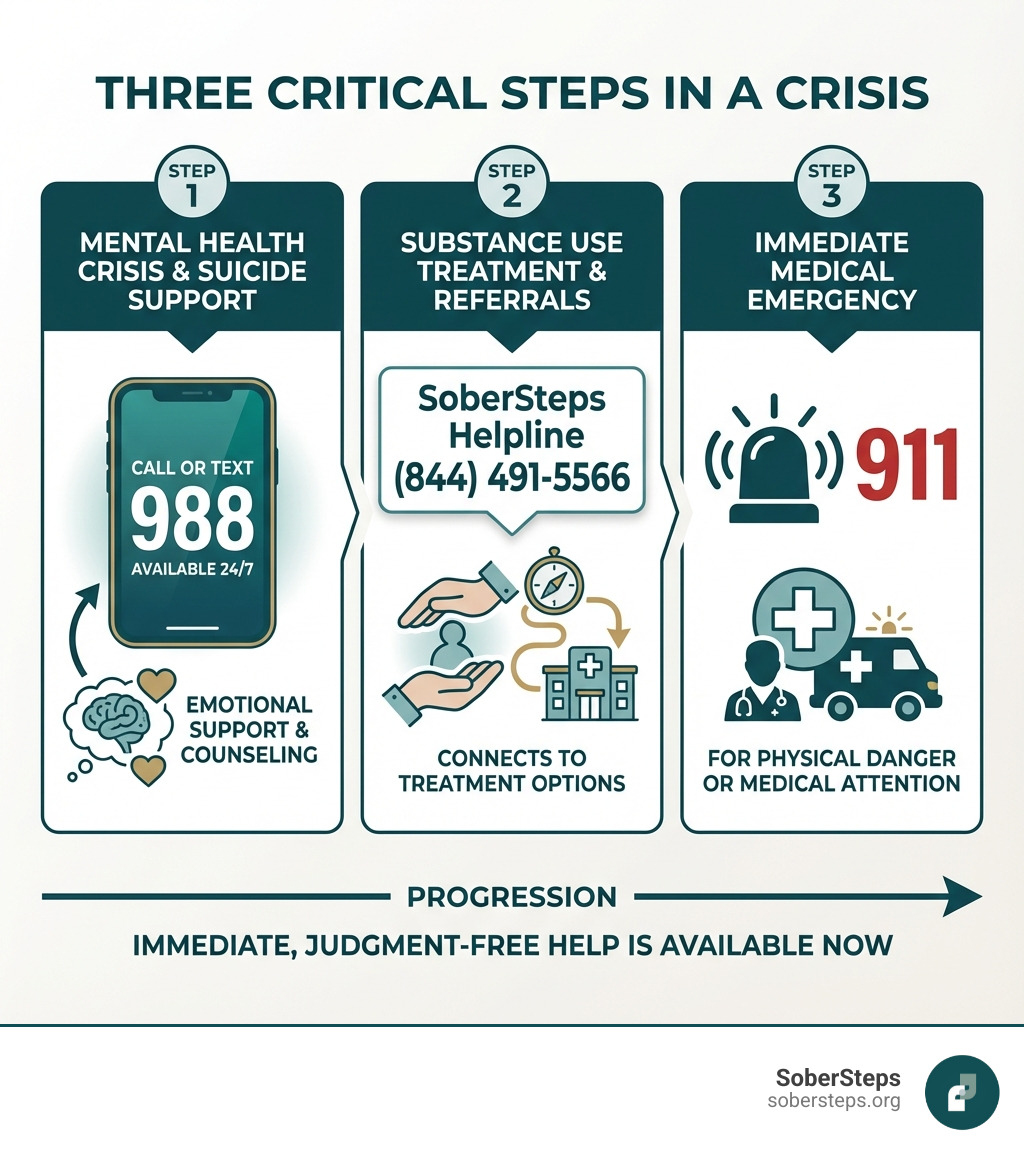
| Mental health crisis or suicidal thoughts | Call or Text 988 | Available 24/7 for emotional support and crisis counseling |
| Substance use support and treatment referrals | Call (844) 491-5566 | SoberSteps helpline connects you to treatment options |
| Immediate medical emergency | Call 911 | Use when someone is in physical danger or needs medical attention |
Millions of Americans struggle with mental health and substance use disorders every day. You are not alone in this fight.
The moment of crisis doesn’t have to define your story. Whether you’re experiencing overwhelming suicidal thoughts, battling intense substance use urges, or watching someone you love spiral into danger, help is available right now. No waiting lists. No appointments. No judgment.
The research is clear: about half of people with substance use disorders also experience serious mental illness. These challenges feed off each other, making it even harder to know where to turn. But here’s the truth that matters most: trained counselors are waiting to help you 24 hours a day, 7 days a week, completely free of charge.
Crisis support has evolved dramatically in recent years. The 988 Suicide & Crisis Lifeline provides immediate emotional support for mental health crises. Organizations like 211 made over 18 million referrals to help and resources in 2024 alone. Treatment locator services help you find facilities near you that match your specific needs and payment options.
At Sober Steps, we understand that seeking help feels overwhelming when you’re in crisis. We’ve dedicated ourselves to providing confidential, supportive resources that connect individuals to the treatment they need to get help now and begin their recovery journey. Our mission is simple: ensure no one faces these challenges alone.
If you are ready to reach out for support, you can call our confidential SoberSteps helpline anytime at (844) 491-5566 to talk through your options and take the first step toward safety and recovery.
The next sections will walk you through exactly what to expect when you reach out for help, how to recognize when a situation is an emergency, and where to find specialized support for your unique situation.
Recognizing the Signs of a Crisis
When a crisis hits, it can feel like a storm brewing, or sometimes, it can strike without warning. Learning to recognize the signs is the first crucial step toward getting the right help.
Common signs of a mental health crisis include:
- Agitation or Restlessness: Inability to settle down, pacing, or extreme irritability.
- Suicidal Talk: Talking about death, wanting to die, or making a plan. Even saying “I don’t care if I die” is a call for help.
- Substance Use Urges: Overwhelming desire to use drugs or alcohol to cope.
- Withdrawal Symptoms: For those with substance use disorders, experiencing withdrawal can be distressing and sometimes life-threatening.
- Changes in Behavior: Sudden isolation, neglecting hygiene, mood swings, increased risk-taking, or loss of interest in activities.
- Isolation: Pulling away from friends, family, and usual social activities.
If you observe these signs in someone you care about, intervene. Create a safe space for them to talk. For guidance on approaching these conversations, you can call our confidential helpline at (844) 491-5566 or visit What to Look For in a crisis.
Differentiating Between Emergency Services and Crisis Hotlines
Understanding the difference between calling 911 and reaching out to a crisis hotline like 988 is vital for getting appropriate help when you get help now.
| Feature | 911 Emergency Services | 988 Suicide & Crisis Lifeline |
|---|---|---|
| Primary Purpose | Immediate physical danger, medical emergencies, crimes. | Emotional support, crisis counseling, suicide prevention. |
| Response | Dispatch of police, paramedics, fire department. | Connection to trained crisis counselors. |
| Confidentiality | Information may be shared with emergency responders. | Free, confidential, and anonymous. |
| Situations for Use | Person has a weapon, actively harming themselves/others, overdose. | Suicidal thoughts, emotional distress, substance use urges. |
| Focus | Immediate safety and physical well-being. | Emotional de-escalation, active listening, safety planning. |
911 is for immediate threats to life or safety. Crisis hotlines like 988 provide confidential emotional support and de-escalation.
What to Expect When You Call a Helpline
Reaching out to a helpline can feel daunting, but the experience is designed to be supportive and non-intimidating.
When you contact a helpline like 988, expect:
- Trained Counselors: Compassionate experts in active listening and crisis intervention.
- Confidential Space: Speak openly without fear of information being shared.
- Non-Judgmental Support: Counselors listen without criticism.
- Safety Assessment: Questions to understand your safety level and immediate risks.
- Collaborative Safety Planning: Work together to identify coping strategies.
- Resource Referrals: Connection to local resources for ongoing support.
- No Obligation to Share: You control what you share and can end the call anytime.
Many helplines are available 24/7. For more details, visit What to expect when you contact the 988 Lifeline.
Your First Step: Immediate Help for Suicide and Substance Use
When you’re in crisis, the most important thing is to get help now. Immediate support options are available 24/7, often free and confidential.

For Suicidal Thoughts or Emotional Distress
If you’re struggling with suicidal thoughts or intense emotional distress:
- 988 Suicide & Crisis Lifeline: Call 988 or Text 988 anytime to connect with a trained crisis counselor. Free and confidential.
- Crisis Text Line: Text HOME to 741741 for free, 24/7 support via text.
- Lifeline Chat: Online communication available through the 988 website.
When contacting a crisis hotline, share:
- Your current state: How you’re feeling
- If you are safe: Whether you’re in immediate danger or have a plan to harm yourself
- What you need: Even if it’s just someone to listen
The “Stop, Drop, and Roll” for Overwhelming Emotions
In moments of intense distress:
-
STOP:
- Stop making important decisions for 48 hours, especially about ending your life.
- Stop using drugs or alcohol.
- Focus on the next 5-20 minutes.
-
DROP:
- Drop your body temperature: Try submerging your face in ice water for 30 seconds, then breathe slowly. Or take a cold shower.
- Go to sleep (without overdosing) for a physiological reset.
-
ROLL:
- Roll towards social support: Connect with someone you trust.
- Use distraction techniques until emotions subside.
For Substance Use Urges and Addiction Support
For substance use struggles:
- SoberSteps 24/7 Helpline: Call (844) 491-5566 for immediate, confidential support and treatment referrals. Our compassionate navigators can guide you through treatment options.
- National Helpline (SAMHSA): Call 1-800-662-HELP (4357) for free treatment referral and information.
- Poison Control: For toxic substance ingestion or overdose guidance, call 1-800-222-1222. For life-threatening emergencies, call 911.
For opioid addiction treatment, Find buprenorphine practitioners for opioid addiction through SAMHSA’s locator, or call SoberSteps at (844) 491-5566 for confidential guidance.
Call SoberSteps at (844) 491-5566 for anonymous guidance and support.
How to Get Help Now: Specialized and Targeted Support
Crisis isn’t one-size-fits-all. Your experiences and identity shape the support you need. Specialized resources offer culturally competent care from communities that understand.
If unsure which resource is right, call the confidential SoberSteps helpline at (844) 491-5566 for guidance.
Support for Veterans
Veterans deserve specialized support when facing mental health or substance use crises. In addition to the resources below, you can call SoberSteps at (844) 491-5566 for confidential help finding veteran-specific treatment.
- Veterans Crisis Line: Confidential support for veterans, service members, National Guard and Reserve members, and their families. Call 988 then Press 1, or Text 838255. Visit Connect with the Veterans Crisis Line.
How to get help now for LGBTQ+ Individuals
The LGBTQ+ community faces unique stressors requiring specialized support.
- SoberSteps Support: We provide confidential support for LGBTQ+ individuals. Call (844) 491-5566 for culturally competent care.
- Trans Lifeline: For transgender individuals, staffed by trans people. Call 1-877-565-8860 (USA).
- The Trevor Project: Crisis intervention for LGBTQ young people via phone, text, and chat.
Resources for Domestic Violence and Sexual Assault
Immediate, confidential support for survivors:
- National Domestic Violence Hotline: 24/7 crisis intervention and safety planning. Call 1-800-799-7233.
- RAINN: National Sexual Assault Hotline. Call 1-800-656-HOPE or visit Access the RAINN Online Hotline.
For both abuse and substance use concerns, call (844) 491-5566 for trauma-informed treatment options.
Help for Youth and Young Adults
Young people need specialized support:
- National Runaway Safeline: 24/7 helpline for runaway youth and families. Call 1-800-RUNAWAY (1-800-786-2929).
- Boys Town National Hotline: 24/7 crisis support for teens and families. Call 1-800-448-3000. Visit Find support for youth at Boys Town.
- Crisis Text Line: Text HOME to 741741.
For age-appropriate programs, call SoberSteps at (844) 491-5566.
Finding Long-Term Treatment and Affordable Care
While immediate crisis support is essential to get help now, true healing requires ongoing treatment. Moving from crisis to sustained well-being is a journey.
Continued care options include:
- Inpatient Treatment: Residential programs with intensive, structured therapy and medical care.
- Outpatient Treatment: Live at home while attending therapy sessions.
- Therapy: Individual or group counseling with licensed professionals.
- Support Groups: Peer-led groups like AA or NA.
Call SoberSteps at (844) 491-5566 to compare options and learn what to expect.
How to Find Free or Low-Cost Treatment
Financial barriers shouldn’t prevent access to treatment:
- SAMHSA’s FindTreatment.gov: Searchable database with payment option filters. Visit Search for treatment facilities near you.
- 211 Network: Call 211 for local services including free or reduced-cost assistance.
- State-Funded Programs: Many states offer publicly funded treatment on sliding scales.
Call SoberSteps at (844) 491-5566 for help sorting through options.
How to get help now with Specialized Treatment Programs
Specialized programs offer targeted care:
- Gender-Specific Rehab: Programs addressing unique challenges by gender. Find More info about female rehab centers or call (844) 491-5566 for personalized recommendations.
- Dual Diagnosis Treatment: Treating both substance use and mental illness concurrently.
- Opioid Treatment Programs: Medication-assisted treatment with counseling. Find Opioid Treatment Programs or call (844) 491-5566 for help.
Call (844) 491-5566 for confidential referrals to specialized programs.
Frequently Asked Questions about Getting Help Now
Are crisis hotlines and text services really confidential?
Yes, services like the 988 Lifeline and Crisis Text Line are designed to be confidential. They aim to provide a safe space without judgment, allowing you to speak openly about your struggles. Your conversations are not recorded or shared with others without your explicit consent. The only exception is if there is an imminent and unmitigable risk of harm to yourself or others, which would necessitate involving emergency services to ensure safety. Even in such rare cases, the primary goal is to help you, not to penalize you.
If you prefer to speak with someone specifically about substance use or treatment options, you can call the confidential SoberSteps helpline at (844) 491-5566. You are not required to give your name or identifying details to receive guidance.
What if I’m outside the United States?
While SoberSteps primarily serves individuals in the United States, we understand that crises don’t respect borders. For our users within the U.S., the resources mentioned throughout this article are readily available. If you are outside the United States, many countries have their own emergency numbers and crisis lines. Resources like the International Association for Suicide Prevention (IASP) and Find a Helpline provide directories of crisis centers around the world. For example, the UK has the Samaritans (116 123) and Canada has Talk Suicide Canada (1-833-456-4566). We encourage you to search for local crisis support in your specific country.
If you are reading this from outside the U.S. but are seeking information about treatment options in the United States, you are still welcome to call SoberSteps at (844) 491-5566 for general guidance.
How can I best support someone else who is in a crisis?
Supporting someone in crisis can feel overwhelming, but your presence and actions can make a profound difference. Here’s how you can best help:
- Listen Without Judgment: Create a safe space for them to talk. Let them know you’re there for them, and listen actively to what they’re saying and how they’re feeling.
- Express Your Concern: Clearly and gently state your worries. “I’m worried about you because you’ve been distant lately,” or “It sounds like you’re going through a lot, and I want to help.”
- Ask Directly About Suicide: Don’t be afraid to ask, “Are you thinking about suicide?” or “Are you having thoughts of harming yourself?” Asking directly won’t plant the idea; it shows you care and creates an opening for them to be honest.
- Do Not Leave Them Alone: If they express suicidal intent or are in immediate danger, do not leave them by themselves. Stay with them or ensure another trusted person is present.
- Remove Lethal Means: If possible and safe to do so, remove any potential means of self-harm from their vicinity (e.g., weapons, medications).
- Help Them Connect with a Crisis Line: Offer to call or text 988 with them, or for them. You can also offer to call the SoberSteps helpline at (844) 491-5566 if their crisis involves substance use.
- Encourage Professional Help: Support them in seeking long-term professional help, whether it’s therapy, a doctor, or a treatment program. Offer to help them research options or even attend an initial appointment if they’re comfortable.
- Prioritize Your Own Safety: While supporting someone, ensure your own safety. If you feel unsafe or overwhelmed, call 911.
You can also call SoberSteps yourself at (844) 491-5566 to talk through how to approach a loved one and learn about treatment options you can share with them.
Your Path to Recovery Starts Today
The journey through crisis to recovery is deeply personal, but you never have to walk it alone. We’ve explored the many ways you can get help now, from immediate crisis hotlines to specialized long-term treatment programs. Help is always available, 24/7, and confidential. Taking that first step, no matter how small, is the most important one you can take towards a healthier, more hopeful future. Recovery is not just a possibility; it’s within reach.
At SoberSteps, we are committed to being a confidential and anonymous healthcare resource for mental health and substance use disorders. We believe that everyone deserves the chance to heal and thrive.
For immediate, confidential help finding the right treatment for you or a loved one, call our 24/7 helpline at (844) 491-5566 or explore our specialized treatment options. Your path to recovery can start with a single call, and you do not have to take that step alone.