
Why Getting Help for Addiction is the Most Important Step You’ll Ever Take
If you’re looking to get help addiction support, here’s what you need to know right now:
Immediate Resources to Get Help for Addiction:
- Call the Sober Steps: 1-844-491-5566 – Free, confidential, 24/7
- Text Your Zip Code: HELP4U (435748) to connect with local help
- Crisis Support: Call or text 988 for mental health emergencies
- Find Treatment: Use FindTreatment.gov or start with SoberSteps
- Support Groups: Access Alcoholics Anonymous, Narcotics Anonymous, or SoberSteps online groups
You are not alone. In 2023, 48.5 million Americans struggled with a substance use disorder. The good news is that recovery is possible for everyone. No matter the substance, help is available right now. Treatment works, and taking this first step is the most courageous part of the journey.
This guide offers clear, actionable steps on getting help for addiction, from recognizing the signs and finding treatment to paying for care and building a lasting support system.
At Sober Steps, we provide comprehensive resources and a compassionate community to support your personal recovery journey. We’re here to help you get help addiction support every step of the way.
Whether you’re seeking help for yourself or a loved one, whether you have insurance or not, whether this is your first attempt at recovery or your tenth—help is available, and it starts today.
Get Help Now with SoberSteps | Contact SoberSteps
Get help addiction further reading:
Recognizing the Signs of a Substance Use Disorder
Recognizing that someone might need help for a substance use disorder (SUD) is the crucial first step. These signs can be physical, behavioral, and psychological, and they often escalate over time. Addiction is a complex disease, not a moral failing, and these signs indicate a need for professional support.
Here are common indicators that someone might be struggling and needs to get help addiction:
- Physical Signs: Noticeable changes can include bloodshot eyes, different pupil sizes, sudden weight changes, poor hygiene, or strange odors. Other signs are tremors, slurred speech, impaired coordination, increased tolerance (needing more of the substance for the same effect), and withdrawal symptoms (nausea, sweating, shaking) when not using.
- Behavioral Signs: Actions can change dramatically. This includes neglecting responsibilities at work, school, or home, leading to poor performance and financial trouble from spending money on substances. A person may become secretive, lie, engage in risky behaviors, or lose interest in hobbies. Relationships often become strained due to arguments and isolation from concerned loved ones.
- Psychological Signs: Look for changes in mental and emotional well-being, such as mood swings, irritability, anxiety, or depression. The person may seem apathetic, hopeless, or become defensive about their substance use. Poor judgment, difficulty concentrating, and memory problems are also common.
Recognizing these signs in yourself or a loved one is a call for help and the first step toward recovery.

We understand that recognizing these signs can be unsettling, but it’s also a powerful moment of clarity that can lead to positive change. For more in-depth information about the complexities of addiction, please visit our page on addiction.
Call to Action: Don’t let these signs go unaddressed. Speak to a SoberSteps Specialist today for confidential guidance, or explore our resources for immediate addiction help.
Where to Get Help for Addiction: Immediate and Confidential Resources
When you’re ready to get help addiction, knowing where to turn for confidential and anonymous resources is paramount. Everyone deserves access to support without fear of judgment. There are numerous pathways to finding the help you need, whether for an immediate crisis or to explore long-term treatment options.
Immediate Crisis Support
For urgent situations, immediate crisis support is available 24/7. It’s vital to know these resources.
- SoberSteps 24/7 Helpline: Our confidential 24/7 helpline connects you to supportive resources and treatment providers, offering a safe first step to get help addiction. Get help now.
- SAMHSA National Helpline: SAMHSA’s National Helpline offers free, confidential, 24/7 treatment referrals and information in English and Spanish. Call 1-800-662-HELP (4357) or text your zip code to HELP4U (435748).
- 988 Suicide & Crisis Lifeline: For mental health emergencies, emotional distress, or suicidal crises, call or text 988 anytime for free, confidential support. Veterans can press 1 to connect to the Veterans Crisis Line.
- Veterans Crisis Line: Veterans and their loved ones can connect with qualified VA responders by calling 988 and pressing 1, chatting online at veteranscrisisline.net, or texting 838255.
- When to Call 911: If someone is experiencing a life-threatening overdose (e.g., unresponsive, not breathing, blue lips), or is an immediate danger to themselves or others, call 911 immediately.
Call to Action: Don’t hesitate to reach out for immediate support. Call the SoberSteps Helpline now for confidential assistance.
How to Find Confidential Resources to Get Help for Addiction
Beyond crisis hotlines, numerous confidential resources exist to help you find the path to recovery.
- SoberSteps Confidential Helpline: Our confidential helpline provides a private space to discuss your needs with compassionate specialists. We can guide you through your options and connect you with treatment providers discreetly. We understand the importance of privacy when you need to get help addiction.
- How to Access SoberSteps Support: Connect with us via live chat, our helpline, or a contact form on our website. We make accessing support easy and seamless. Contact SoberSteps to begin your journey.
- Using SoberSteps Treatment Locator: Our confidential treatment locator helps you find local facilities based on your specific needs. Learn more about how to find rehab with our tools.
- FindTreatment.gov: Operated by SAMHSA, FindTreatment.gov is a confidential, anonymous resource for finding mental health and substance use treatment in the U.S. Search for local inpatient, outpatient, and telehealth options.
Call to Action: Ready to take the next step in finding confidential support? Speak with a Recovery Specialist at SoberSteps to explore your options.
How to Get Help for Addiction Near You
Finding a treatment center close to home can make recovery more accessible.
- Using SoberSteps Online Locator: Our online locator helps you find facilities by location, treatment type, and specialized services, matching you with the best fit for your needs.
- Filtering Search Results: Filter your search on our locator or FindTreatment.gov by:
- Types of Care: Inpatient, outpatient, residential, telehealth, and more.
- Payment Options: Facilities that accept your insurance, offer sliding scale fees, or have other affordable solutions.
- Specific Populations: Programs for veterans, young adults, LGBTQ+ individuals, or those with co-occurring disorders.
Finding a program near you can reduce logistical challenges and help you maintain connections with your support system. Visit our find addiction treatment near you page to start your search.
Call to Action: Don’t delay finding local support. Connect with a Local Specialist through SoberSteps or start your recovery journey by exploring nearby treatment options.
Exploring Your Treatment Options: From Detox to Aftercare
Once you’ve decided to get help addiction, understanding the various treatment options is key to choosing the right path. Treatment is a personalized journey that should incorporate evidence-based practices and patient-centered care.

- Evidence-Based Practices: These are scientifically proven methods for treating SUDs, such as Cognitive Behavioral Therapy (CBT), Motivational Interviewing (MI), and Medication-Assisted Treatment (MAT). We connect you with providers who use these effective approaches.
- Patient-Centered Care: This approach customizes your treatment plan to your unique needs, history, and goals, empowering you in your recovery.
- Levels of Care: Treatment is structured by intensity, from medical detox and residential treatment to various outpatient programs. Each level meets different needs at various stages of recovery.
Our treatment options ultimate guide provides a comprehensive overview, and you can learn more on our levels of care page.
Call to Action: Ready to understand which treatment option is best for you? Explore Your Treatment Options or contact SoberSteps for personalized guidance.
SoberSteps Inpatient vs. Outpatient Programs
Choosing between inpatient and outpatient programs is a major decision when you decide to get help addiction. The right choice depends on the severity of the addiction, your home environment, and your individual needs.
| Feature | SoberSteps Inpatient (Residential) Treatment | SoberSteps Outpatient Treatment |
|---|---|---|
| Environment | Live-in facility, 24/7 supervision and support, removed from triggers. | Live at home, attend scheduled therapy sessions during the day or evening. |
| Intensity | Highly structured, intensive therapy, medical care, and group activities. | Less intensive, allowing for work, school, or family responsibilities. |
| Duration | Typically 30, 60, or 90 days, but can vary based on individual progress. | Varies widely, from several weeks to several months or longer, depending on the program level. |
| Cost | Generally higher due to accommodation, meals, and 24/7 care. | Generally lower, as it doesn’t include living expenses. |
| Support | Constant peer and professional support, focus on building new routines. | Regular access to therapy and support groups, but with more personal responsibility. |
| Ideal For | Severe addictions, co-occurring mental health disorders, unstable home environments, history of relapse. | Mild to moderate addictions, strong home support, ability to manage triggers, work/school commitments. |
- Inpatient Benefits: Inpatient programs offer a structured, 24/7 supportive environment, free from triggers, allowing you to focus entirely on recovery. This immersive setting is ideal for severe addictions or co-occurring mental health issues. Learn more with our inpatient drug rehab resources.
- Outpatient Flexibility: Outpatient programs allow you to live at home and maintain daily responsibilities like work or school while attending scheduled treatment sessions. This is a good option for those with a strong home support system. Explore our outpatient rehab programs for more details.
Call to Action: Not sure which program is right for you? Our specialists can help. Find the Right Program for You by speaking with a SoberSteps advisor.
Medical Detox and Medication-Assisted Treatment (MAT) at SoberSteps
For many, the first step is medical detox, which may be followed by Medication-Assisted Treatment (MAT).
- What is Detox?: Detox is the process of safely clearing substances from the body. For substances like alcohol and opioids, this process can be dangerous without medical supervision.
- Importance of Medical Supervision: Medical detox provides 24/7 monitoring to safely manage withdrawal symptoms with medication and support. Find a detox near me or learn more about our medical detox programs.
- What is MAT?: Medication-Assisted Treatment (MAT) is an evidence-based approach that combines FDA-approved medications with counseling to treat substance use disorders, particularly for opioids and alcohol.
- Medications Used in MAT:
- Buprenorphine: Treats opioid use disorder by reducing cravings and withdrawal. It can be prescribed in an outpatient setting.
- Methadone: Treats opioid use disorder by reducing cravings and blocking the effects of other opioids, usually administered in specialized clinics.
- Naltrexone: Treats opioid and alcohol use disorders by blocking the euphoric effects of opioids and reducing alcohol cravings. It is available in oral or injectable forms.
- Other medications, like Acamprosate and Disulfiram, are also used to treat alcohol use disorder.
MAT is a critical component of a comprehensive treatment plan. Learn more about Medication-Assisted Treatment.
Call to Action: Ensure your detox is safe and effective. Start Detox Safely with guidance from SoberSteps.
Specialized Treatment for Co-Occurring Disorders and Specific Populations
Addiction often co-exists with mental health conditions, and certain populations have unique needs that require specialized care.
- Dual Diagnosis: Treating Addiction and Mental Health: A dual diagnosis, or co-occurring disorder, means having both a substance use disorder and a mental health condition like depression or PTSD. Effective treatment requires an integrated approach that addresses both conditions simultaneously. Learn more on our page about mental health and substance use co-occurring disorders.
- Resources for Veterans: The VA offers comprehensive, evidence-based addiction treatment for veterans, including therapy and medication. Veterans can find local programs or get immediate support via the Veterans Crisis Line (call 988 and press 1).
- Young Adult Programs: These programs use age-appropriate therapies, educational support, and family involvement to address the unique challenges young adults face.
- LGBTQ+ Affirming Care: These programs provide a safe, inclusive environment to address specific challenges within the LGBTQ+ community that may contribute to substance use.
These specialized programs ensure that treatment is holistic and addresses all facets of an individual’s well-being. Explore our Specialized Programs page for more details.
Call to Action: Your unique journey requires unique care. Find Specialized Care that addresses your specific needs through SoberSteps.
Building a Support System for Lasting Recovery
Recovery from addiction is a long-term process, and a strong support system is critical for lasting success. When you get help addiction, you’re not just getting treatment; you’re building a new way of life.
- Peer Support: Connecting with others who have similar experiences provides validation, community, and practical advice.
- Family Involvement: Family therapy and education can heal relationships and equip loved ones to provide healthy support.
- Community: A supportive community of friends, mentors, and healthy activities is vital for long-term sobriety.
Our resources for online addiction recovery support groups can help you find a community that understands.
Call to Action: Don’t walk the path of recovery alone. Join a Support Group today or contact SoberSteps to find the right community for you.
Support Groups for Individuals
Support groups are a cornerstone of recovery, offering a safe space to share experiences, challenges, and triumphs.
- SoberSteps Online Support Groups: We offer flexible and convenient online groups for peer support, accessible from anywhere.
- Peer-Led Meetings: Run by people in recovery, these groups create an environment of empathy and shared understanding.
- Alcoholics Anonymous (A.A.): An international 12-step fellowship for people with a drinking problem. Find meetings at AA.org.
- Narcotics Anonymous (NA): A fellowship for people who want to stop using drugs. Find meetings at NA.org or use our online NA meetings resource.
- SMART Recovery: A self-empowerment-focused program for people with any addiction. Find meetings at meetings.smartrecovery.org.
- Dual Recovery Anonymous (DRA): A 12-step program for individuals with a dual diagnosis, addressing both mental health and substance use disorders.
Call to Action: Find your tribe and strengthen your recovery. Connect with Peers through our online support groups.
How Family and Friends Can Help
Addiction affects the entire family. When a loved one decides to get help addiction, the support from their inner circle is invaluable.
- Support for Loved Ones: It’s crucial for family and friends to get support, too. Several organizations are dedicated to helping them.
- Family Education: Understanding addiction as a disease empowers loved ones to provide more effective support.
- Setting Boundaries: Healthy boundaries are crucial to prevent enabling and promote personal responsibility.
- Encouraging Treatment: Consistently encourage and support your loved one in seeking and continuing treatment.
- Avoiding Enabling: Learn to distinguish between helping and enabling, as enabling behaviors can prolong the addiction.
- Support Groups for Families:
- Al-Anon: Supports friends and family of people with drinking problems. Find meetings at al-anon.org/al-anon-meetings/.
- Alateen: A part of Al-Anon specifically for teens affected by someone’s drinking. Visit al-anon.org/newcomers/teen-corner-alateen/.
- Nar-Anon: Supports those affected by a loved one’s drug use. Find meetings at nar-anon.org/find-a-meeting.
- Community Reinforcement and Family Training (CRAFT): This model teaches families effective strategies to support their loved one. The VA offers an online CRAFT course for families of Veterans.
Family members can find valuable guidance on our Family Support Resources page and learn more about how to help a loved one.
Call to Action: You don’t have to steer this alone. Get Family Support and guidance for helping your loved one on their recovery journey.
Navigating the Costs of Treatment
One of the most common concerns when individuals decide to get help addiction is how to pay for treatment. The good news is that many options are available, from insurance coverage to free and low-cost services.
- Insurance Coverage: Most health insurance plans, including ACA marketplace plans, are required to cover mental health and substance use disorder services.
- Free and Low-Cost Options: Our specialists can help you find affordable care, such as state-funded programs or facilities with sliding scale fees.
- Payment Plans: Many treatment centers offer payment plans to make costs more manageable.
For a comprehensive breakdown, visit our page on how do I pay for addiction treatment?. You can also find resources for affordable mental health care.
Call to Action: Don’t let cost be a barrier to recovery. Verify Your Insurance with us today, or contact SoberSteps for financial guidance to explore all your options.
Using Insurance and Finding Affordable Care
Understanding your insurance benefits and exploring affordable alternatives are crucial steps in securing treatment.
- Verifying Your Benefits: It’s crucial to verify your insurance benefits to understand your coverage. Our team can help you with this process. Visit our verify insurance page for free, confidential assistance.
- In-Network vs. Out-of-Network: In-network providers are contracted with your insurance and usually cost less out-of-pocket. Some plans may still partially cover out-of-network services.
- State-Funded Programs: Many states offer publicly funded treatment for uninsured or underinsured individuals. Our specialists can help you find and steer these options.
- Federally Qualified Health Centers (FQHCs): These community-based centers provide care regardless of ability to pay, often on a sliding scale. Some offer integrated substance use services. We can help you find a health center near you.
- Sliding Scale Fees: Many non-profit centers and therapists adjust their fees based on your income.
- Certified Community Behavioral Health Clinics (CCBHCs): These clinics offer a comprehensive range of services to everyone, regardless of their ability to pay.
Financial concerns should never deter you from seeking help. There are always options to explore when you need to get help addiction.
Call to Action: Let us help you steer the financial landscape of treatment. Get Help with Costs by reaching out to our team at SoberSteps.
Frequently Asked Questions about Getting Help for Addiction
We understand you likely have many questions about taking this life-changing step. Here are answers to some of the most common questions we hear when individuals want to get help addiction.
What is the very first step I should take?
The very first step you should take is acknowledging the problem and reaching out for help. This can be as simple as making a confidential phone call. You’re already doing it by reading this guide! We recommend calling a confidential helpline like the SoberSteps Helpline or using our contact form to discuss your options. These initial conversations are judgment-free and designed to provide you with information and support, helping you understand your next best move.
Call to Action: Don’t wait. Start Your Recovery today by connecting with us.
Can I get help for addiction without insurance?
Yes, absolutely. Lack of insurance should never be a barrier to getting the help you need. SoberSteps can help you explore a variety of options, including state-funded programs, Federally Qualified Health Centers (FQHCs) which provide care regardless of ability to pay, and treatment centers that offer sliding scale fees based on your income. We are committed to helping everyone find accessible care. You can find affordable treatment options on our site or contact us for guidance custom to your specific situation.
How do I choose the right treatment program?
Choosing the right treatment program is a highly individualized process. The “best” program depends on several factors: the specific substance used, the severity and duration of the addiction, any co-occurring mental health disorders, your personal history, your living situation, and your financial resources. We strongly recommend exploring our Treatment Options Ultimate Guide to understand the different types of programs available (inpatient, outpatient, MAT, specialized programs). After reviewing, we encourage you to speak with an admissions specialist at SoberSteps. Our specialists can provide personalized guidance, assess your needs, and help match you with a program that aligns with your unique recovery journey.
Conclusion
Taking the step to get help addiction is one of the bravest and most important decisions you will ever make. As we’ve explored, recovery is a journey, not a destination, and it’s a journey you don’t have to take alone. Millions of Americans face similar challenges, and millions have found their path to a healthier, fulfilling life. Help is not just available; it’s waiting for you.
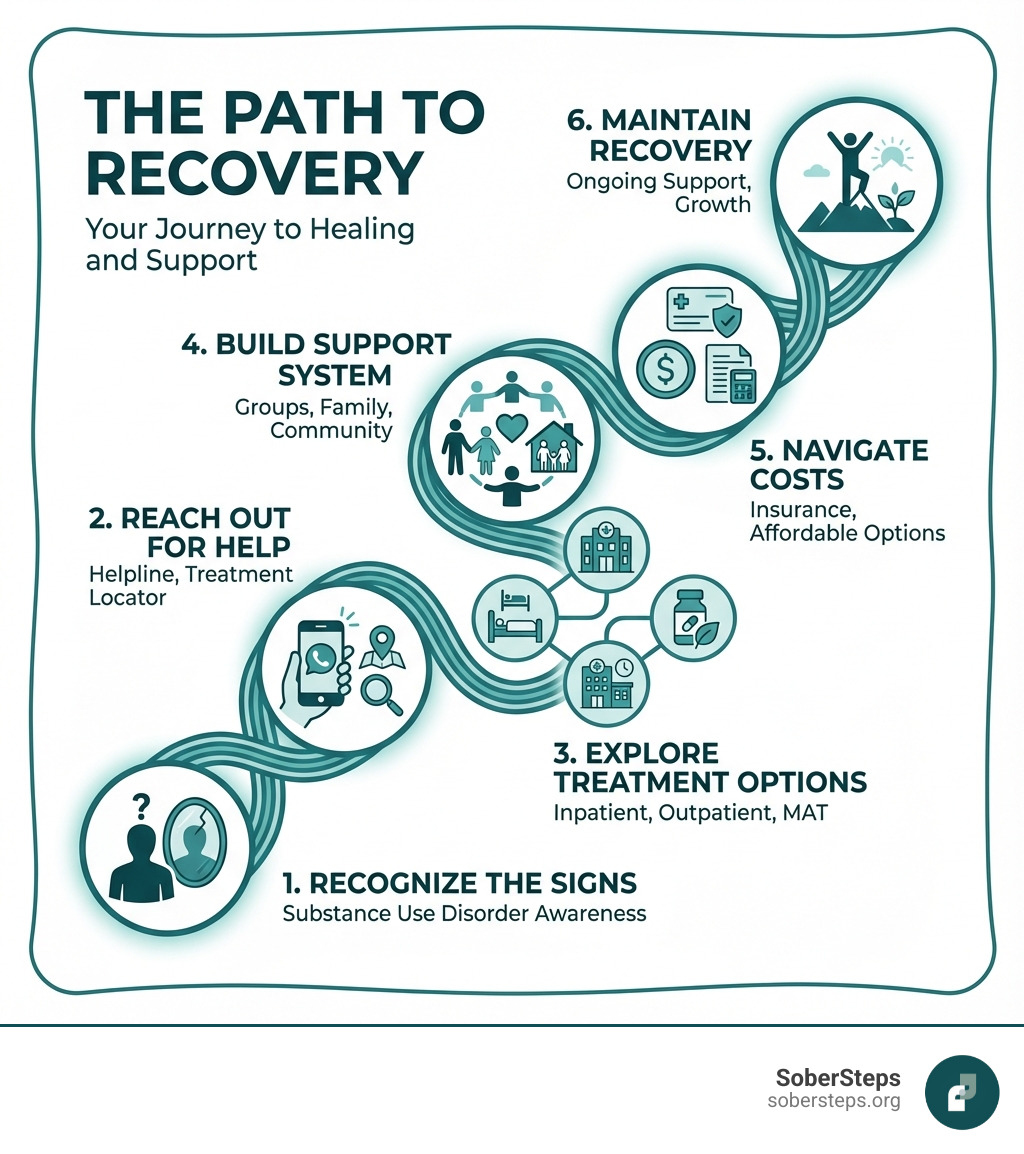
We’ve covered how to recognize the signs of a substance use disorder, where to find immediate and confidential resources, the various types of treatment options from detox to specialized care, how to build a robust support system, and how to steer the costs of treatment. Remember the key resources: SAMHSA’s National Helpline, FindTreatment.gov, the 988 Suicide & Crisis Lifeline, and the diverse network of support groups like AA, NA, and SMART Recovery.
At SoberSteps, we are here to empower you. Our mission is to help you steer your options and connect with a treatment provider that fits your needs, ensuring you have the support and resources necessary for a successful recovery. Your journey to sobriety starts with a single step, and that step can be today. Read inspiring addiction success stories to see what’s possible.
Call to Action: Your new life is waiting. Get Help Now by reaching out to SoberSteps. Contact SoberSteps for personalized support, and let us help you start your recovery with confidence.