Connecting You to Trusted Mental Health and Addiction Treatment.
Trusted Rehab Centers - SoberSteps.org

Understanding Grief and Loss: Their Role in Addiction

Understanding Grief: A Natural Response to Loss

Grief is the emotional suffering you feel when something or someone you love is taken away. It’s a natural response to loss that affects everyone differently, and understanding what grief is can help you steer this difficult journey.

What You Need to Know About Grief:

  • Definition: Grief is the anguish experienced after significant loss, usually the death of a beloved person, but it can also stem from other losses like a job, relationship, health, or a cherished dream.
  • Common Symptoms: You may experience sadness, anger, confusion, anxiety, numbness, guilt, fatigue, sleep problems, appetite changes, and physical aches.
  • It’s Not Linear: Grief doesn’t follow a set timeline or predictable stages—it’s more like a roller coaster with ups and downs.
  • Mourning Helps Healing: While grief is your internal experience, mourning—the external expression through crying, talking, or rituals—is essential for healing.
  • When to Seek Help: If grief feels overwhelming or prevents you from functioning for an extended period, professional support can help. Call (844) 491-5566 for confidential, compassionate care anytime.

Grief can manifest as regret for something lost or remorse for something done. It touches every dimension of our lives—emotional, physical, cognitive, and even spiritual. Research shows that approximately 10% to 15% of people experience severe grief reactions that significantly impact their daily lives, and intense grief can even pose physical health risks by disrupting the immune system and increasing stress-related illnesses.

There is no “right” way to grieve. Your experience is personal and valid, whether you cry every day or find yourself feeling numb. Some people move through their grief in months, while others take years. What matters is allowing yourself to feel what you feel and seeking support when you need it.

At SoberSteps, we understand how deeply grief can affect your mental health and daily life, especially when it intersects with substance use or other challenges. Our team has helped countless individuals steer the complexities of grief through confidential counseling, support groups, and 24/7 crisis support—call us at (844) 491-5566 anytime. In this guide, we’ll walk you through the landscape of grief, the different ways people experience it, and practical strategies for coping and finding support.
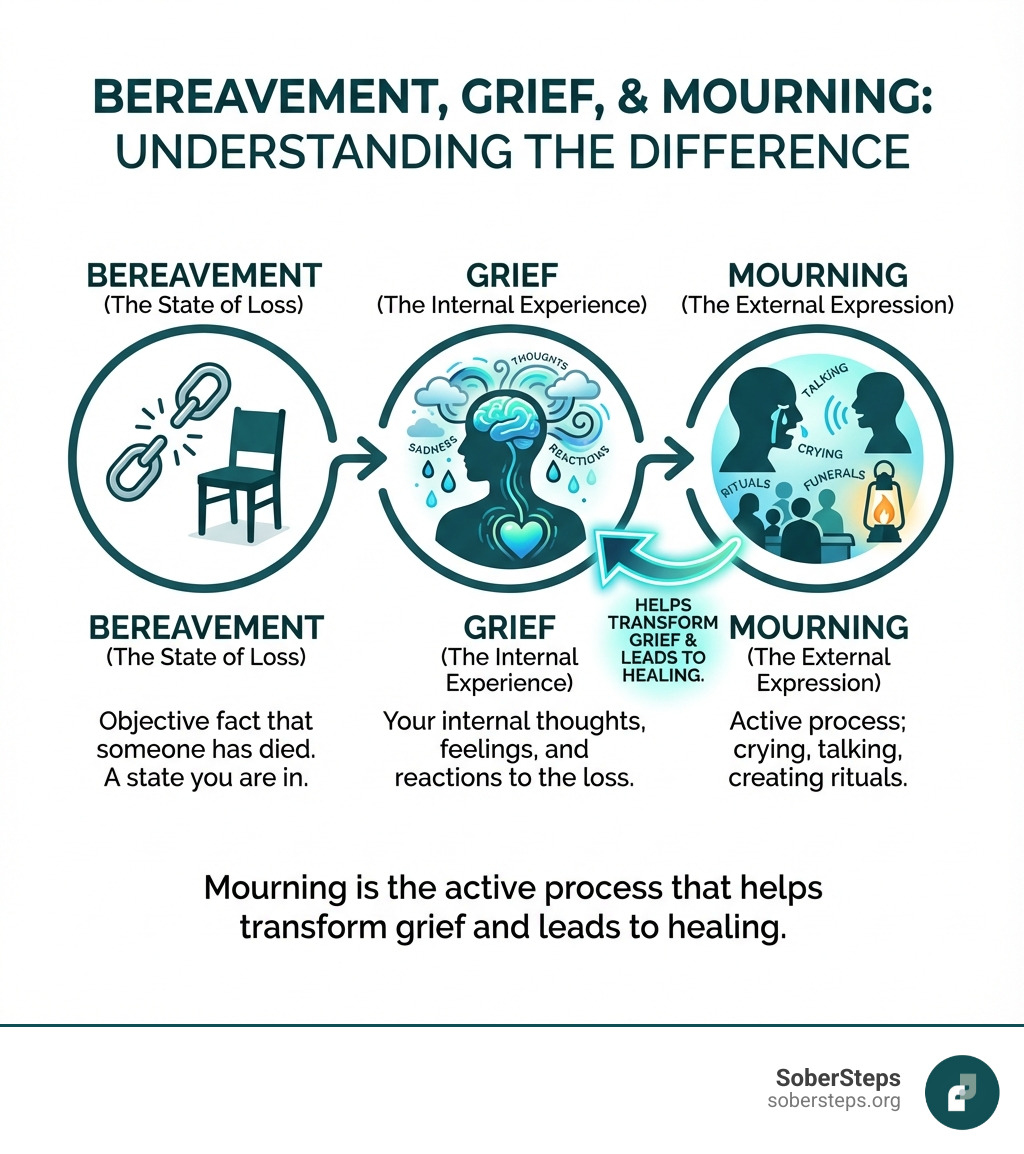
Infographic showing the difference between grief, bereavement, and mourning: Bereavement is the state of loss (the objective fact that someone has died), Grief is the internal experience (your thoughts, feelings, and reactions to the loss), and Mourning is the external expression (crying, talking about the loss, attending funerals, creating rituals). Mourning is the active process that helps transform grief and leads to healing. - Grief infographic

Understanding the Landscape of Grief

When we experience a significant loss, it can feel like our entire world has been turned upside down. This profound experience is grief, a universal human phenomenon that touches us all at some point. But what exactly is it, and how does it manifest?

What is Grief? A Formal Definition

At its core, grief is the anguish experienced after a significant loss, most commonly the death of a beloved person. However, its scope is much broader. The American Psychological Association (APA) defines grief as a response to loss, and it can take many forms. This includes regret for something lost, remorse for something done, or sorrow for a mishap to oneself.

Grief isn’t just an emotion; it’s a multifaceted response that encompasses emotional, physical, cognitive, behavioral, social, cultural, spiritual, political, and philosophical dimensions. It’s the emotional suffering we feel when something or someone we love is taken away, leaving us with a profound sense of emptiness and pain. This painful journey is unique to each individual, shaped by their personality, coping style, life experience, and the significance of the loss.

The Emotional and Physical Symptoms

The impact of grief is holistic, affecting both our minds and bodies. The emotional turmoil can be overwhelming, but it’s often accompanied by a range of physical symptoms that can be just as debilitating.

Emotional symptoms of grief can include:

  • Sadness or Depression: A deep, pervasive sorrow, often accompanied by crying spells.
  • Numbness, Denial, or Disbelief: A protective mechanism that can make the reality of the loss feel distant or unreal, especially in the initial stages.
  • Confusion: Difficulty thinking clearly, concentrating, or making decisions.
  • Anxiety and Panic: Feelings of unease, worry, or fear, sometimes escalating into panic attacks.
  • Anger: Directed at oneself, the deceased, others, or even a higher power.
  • Feeling Overwhelmed: A sense of being unable to cope with daily tasks or emotions.
  • Guilt: Over things said or unsaid, actions taken or not taken.
  • Relief: Surprisingly, relief can be a normal response, particularly if the deceased suffered a long illness or if the relationship was difficult.

Physical symptoms of grief can include:

  • Fatigue: Profound tiredness, even after resting.
  • Sleep Problems: Difficulty falling asleep, staying asleep, or experiencing disturbing dreams.
  • Appetite Changes: Loss of appetite or overeating, leading to weight fluctuations.
  • Aches and Pains: Headaches, muscle tension, chest tightness, or generalized body aches.
  • Lowered Immunity: Making us more susceptible to illness.
  • Nausea: Upset stomach or digestive issues.

Intense grief can have significant health risks. Research from the U.S. indicates that bereavement can raise the risk of heart attack and other stress-related illnesses. The constant stress response can disrupt the immune system, increase inflammation, and even lead to conditions like Takotsubo Cardiomyopathy, often referred to as “broken heart syndrome.” We must be mindful of these risks and prioritize self-care during this challenging time.

Grief vs. Mourning: What’s the Difference?

While the terms grief and mourning are often used interchangeably, they represent distinct aspects of the loss experience. Understanding this difference can help us better steer our healing journey.

Grief is primarily an internal, personal experience. It encompasses all the thoughts, feelings, and physiological reactions that arise in response to a loss. It’s the anguish, the sadness, the anger, the yearning that resides within us. Grief is what we feel on the inside.

Mourning, on the other hand, is the external expression of our internal grief. It’s how we outwardly process and adapt to the loss. Mourning involves the customs, rituals, and behaviors that individuals and cultures use to cope with loss. This can include:

  • Crying and openly expressing sadness.
  • Talking about the person who died and sharing memories.
  • Participating in memorial services, funerals, or other rituals.
  • Wearing specific attire or observing cultural practices.
  • Seeking and accepting support from others.

Mourning is an active process, and it’s through mourning that healing begins. It allows us to acknowledge the reality of the loss and integrate it into our lives. Suppressing mourning, as some societal messages might encourage, can actually hinder the healing process, making the pain last longer or manifest in unhealthy ways.
winding path through different landscapes representing the grief journey - Grief

The journey through grief is rarely a straight line. It’s a winding path, full of unexpected turns, steep climbs, and moments of quiet reflection. Over the years, experts have developed various models to help us understand this complex process, and we’ve also identified different ways grief can manifest.

Common Models for Understanding the Grieving Process

While no single model perfectly captures the individual experience of grief, these frameworks can offer valuable insights and help us normalize our feelings.

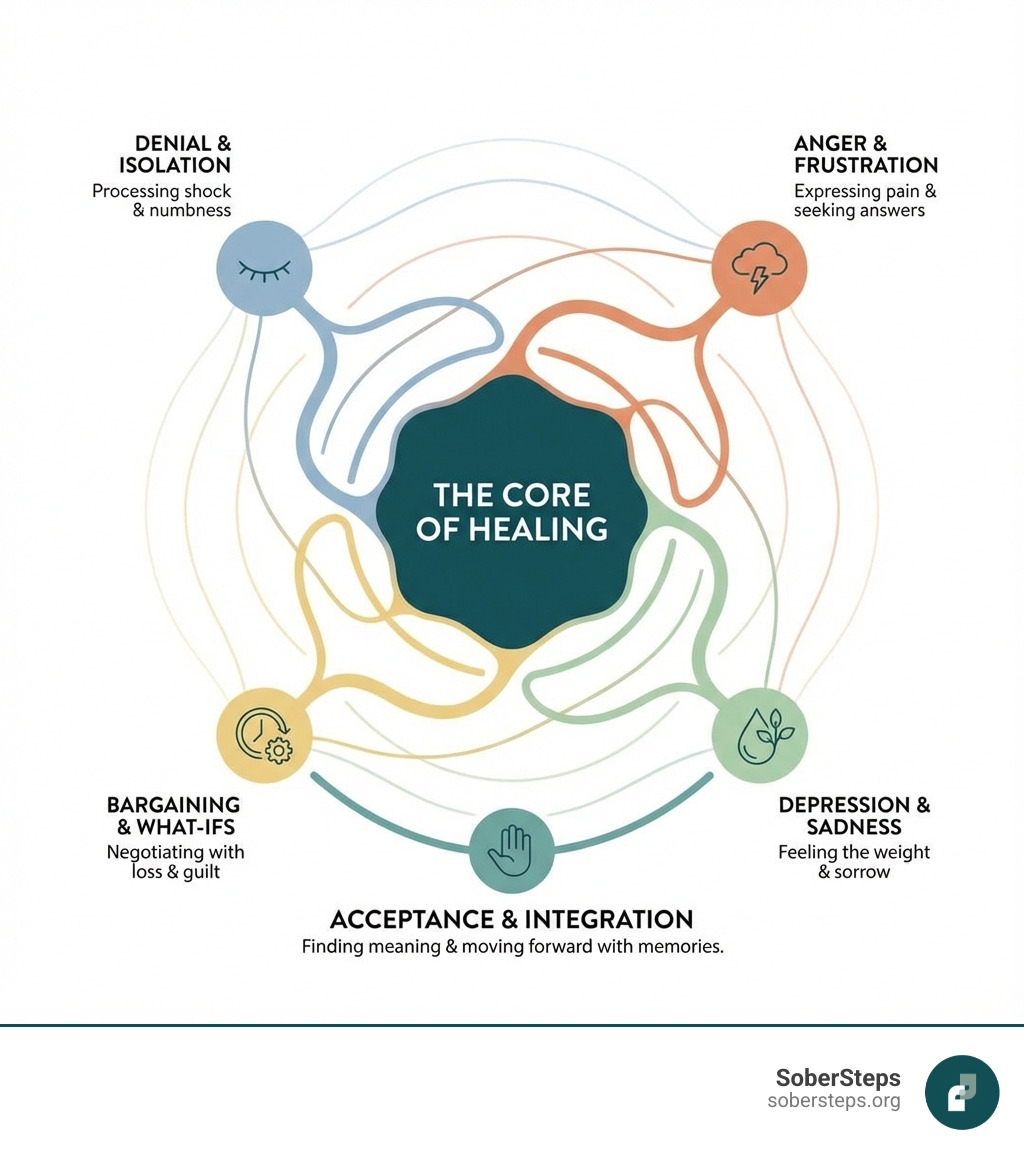
  1. Kübler-Ross Model (The Five Stages of Grief): Introduced by psychiatrist Elisabeth Kübler-Ross in 1969, this is perhaps the most widely known model. It describes five common responses to loss:
    • Denial: A temporary shock or disbelief that acts as a buffer, allowing us to process the reality at our own pace.
    • Anger: Frustration, rage, or resentment directed at the situation, others, or even the deceased.
    • Bargaining: Often involves “if only” statements, a desire to negotiate or plead for a different outcome.
    • Depression: Deep sadness, withdrawal, and a sense of hopelessness as the reality of the loss sets in.
    • Acceptance: Coming to terms with the reality of the loss, not necessarily being “okay” with it, but learning to live with its permanent absence.
    These five stages of grief are not a linear process. We may not experience all of them, nor in any particular order. We might cycle through them, revisit stages, or experience multiple stages simultaneously. They are responses to loss, not prescriptive steps.
  2. Dual-Process Model: This model suggests that grieving individuals oscillate between two types of coping:
    • Loss-oriented activities: Focusing on the loss itself, expressing emotions, and remembering the deceased.
    • Restoration-oriented activities: Engaging in daily life, adapting to changes, and developing new roles or identities. We move back and forth between these two orientations, allowing ourselves to feel the pain while also engaging with the world and rebuilding our lives.
  3. Growing Around Grief: This theory challenges the idea that our grief gets smaller over time. Instead, it suggests that our grief doesn’t shrink, but that we grow around our grief. Our capacity for life, joy, and new experiences expands, making space for our grief to exist without consuming us entirely. This perspective is empowering, as it acknowledges the permanence of loss while emphasizing our ability to adapt and continue living a full life. You can learn more about this perspective from sources like Cruse Bereavement Support.

When Normal Grief Becomes Complicated

For most individuals, grief is a natural process that, while painful, gradually integrates into life over time. However, for a smaller percentage of people, grief can become debilitating and prolonged, a condition known as complicated grief or Prolonged Grief Disorder (PGD).

Complicated grief is characterized by persistent, intense yearning for the deceased and difficulty accepting the death, coupled with an inability to resume daily life. It’s when the pain of loss doesn’t ease over time and significantly interferes with normal functioning. Symptoms can include an intense focus on the loss, pining, difficulty accepting the death, numbness, bitterness, withdrawal, and a profound lack of purpose.

In the U.S., complicated grief affects approximately 2% to 3% of people. Risk factors for developing complicated grief include a sudden or violent death, such as suicide, which can leave survivors particularly vulnerable. For those bereaved by the sudden death of a friend or family member by suicide, they are 65% more likely to attempt suicide themselves. If you or someone you know is struggling with these thoughts, please reach out for immediate help. You are not alone, and support is available. Call SoberSteps at (844) 491-5566 to speak with a compassionate professional.

If you suspect you or a loved one might be experiencing complicated grief, seeking professional help is crucial. Mental health professionals can provide targeted interventions to help process the loss and regain a sense of well-being. You can find further information on complicated grief from reputable sources.

Unseen Losses: Understanding Disenfranchised Grief

Not all losses are openly acknowledged or supported by society. This phenomenon is known as disenfranchised grief, and it occurs when a person experiences a loss that is not socially sanctioned, recognized, or openly mourned. When others don’t understand or validate our pain, it can make the grieving process even more isolating and challenging.

Examples of disenfranchised grief include:

  • Loss of a pet: While deeply impactful, the loss of a beloved animal companion is often minimized by those who don’t understand the depth of the human-animal bond.
  • Job loss or career change: The loss of identity, purpose, and financial stability can be profound, but society often expects a quick “bounce back.”
  • Miscarriage or stillbirth: These losses, though devastating, may not be openly discussed or acknowledged, leaving parents to grieve in silence.
  • Loss of a relationship not recognized by others: This could be an extramarital affair, a same-sex partnership that is not openly acknowledged, or a deep friendship.
  • Loss due to addiction: Families often grieve the person they “lost” to addiction long before their physical death, and society may offer judgment rather than compassion.
  • Loss of a cherished dream or ideal: Such as the inability to have children, the loss of a physical ability, or the failure of a long-held ambition.

When grief is disenfranchised, individuals may lack the social support and rituals that are so crucial for healthy mourning, potentially leading to more complicated grief. It’s important for us to validate all forms of loss, recognizing that pain is pain, regardless of societal acceptance.

Healthy Coping Mechanisms and Finding Support

Navigating grief requires immense strength and self-compassion. While the journey is deeply personal, there are proven strategies and support systems that can help us cope and eventually find a path forward.

The Six Needs of Mourning

According to grief expert Dr. Alan D. Wolfelt, there are six essential needs that mourners must address to facilitate healing. These aren’t stages to be completed, but rather needs that may be revisited and worked through over time. Embracing these needs can transform internal grief into external mourning, which is vital for healing.

  1. Acknowledge the reality of the loss: This involves truly accepting that the death or loss has occurred. It’s not about being “over it,” but recognizing the finality of the situation. This can take time and may involve replaying events, especially in cases of sudden loss.
  2. Accept the pain of the loss: This is perhaps the hardest need, as it means allowing ourselves to feel the deep sorrow, anger, or confusion that accompanies grief. Societal messages often encourage us to suppress pain, but embracing it, in doses we can handle, is crucial for reconciliation.
  3. Remember the person who died: Maintaining a connection with the deceased through memories, stories, and objects is a healthy part of grieving. This concept, known as “continuing bonds,” suggests that we don’t sever ties but rather transform our relationship with the person into one of memory.
  4. Develop a new self-identity: When a significant person is gone, our roles and sense of self inevitably change. We might go from being a “wife” to a “widow,” or a “parent” to a “bereaved parent.” This need involves accepting these changed roles and exploring who we are becoming in the wake of the loss.
  5. Search for meaning: After a profound loss, it’s natural to question life’s purpose, our philosophy, and our spirituality. This search for meaning helps us understand “why” the loss occurred and how we can integrate it into our worldview.
  6. Receive ongoing support from others: We are not meant to grieve alone. Leaning on friends, family, support groups, or professionals provides crucial emotional and practical help. This isn’t a sign of weakness but a healthy necessity for long-term healing.

Practical Strategies for Coping with Grief

Beyond the needs of mourning, there are many practical steps we can take to care for ourselves while grieving:

  • Self-care is paramount: This includes paying attention to your nutrition, ensuring you eat regular, healthy meals, even if you don’t feel like it. Prioritize exercise, even gentle walks, as physical activity can help manage stress and improve mood. Maintain good sleep hygiene by creating a comfortable sleep environment and sticking to a routine, as grief often disrupts sleep.
  • Expressing feelings: Don’t bottle up your emotions. Journaling can be a powerful way to process thoughts and feelings. Engaging in creative arts like painting, music, or writing poetry can also provide an outlet for emotions that are difficult to articulate.
  • Talking to trusted friends: Share your feelings with people who care about you and are willing to listen without judgment. Don’t be afraid to reach out.
  • Continuing bonds: Cherish memories through photo albums, stories, or visiting meaningful places. Creating new rituals, like lighting a candle on an anniversary or engaging in an activity the deceased loved, can help maintain a connection.
  • Finding meaning: David Kessler, a renowned grief expert, proposes a “sixth stage” of grief: finding meaning. This involves remembering loved ones with more love than pain and moving forward in a way that honors them. This could mean volunteering for a cause they believed in, living a life they would be proud of, or using your experience to help others.

There’s no set timetable for grief. Be patient and compassionate with yourself.

Where to Find Help and Support

You don’t have to steer grief alone. There are numerous resources available to provide comfort, guidance, and practical help.

  • Therapy and Counseling: A licensed therapist or grief counselor can provide a safe space to process your emotions, develop coping strategies, and work through complicated grief. SoberSteps offers confidential counseling and support for grief and related mental health challenges. Our experienced professionals understand the nuances of grief and can help you on your healing journey.
  • Support Groups: Connecting with others who have experienced similar losses can be incredibly validating. Support groups, whether peer-led or professionally facilitated, offer a community where you can share experiences, receive empathy, and learn from others’ coping strategies. SoberSteps can connect you with local and online support resources custom to your needs.
  • Helplines: For immediate, confidential help or if you’re feeling overwhelmed, don’t hesitate to reach out. Our team is available 24/7. You are not alone—call (844) 491-5566 for support anytime. Reach out to SoberSteps at (844) 491-5566 for compassionate care.

Frequently Asked Questions about Grief

We understand that you might have many questions about grief and how it impacts your life. Here are some common inquiries we encounter:

Is there a ‘right’ way to grieve?

Absolutely not. There is no single “right” way to grieve. Your grief journey is deeply personal and unique to you, shaped by your relationship with the person or thing lost, your personality, your life experiences, and your cultural background. Some people cry openly, others become withdrawn, some feel anger, and some feel numb. All these reactions are valid. What feels natural and necessary for one person may not for another, and that’s perfectly okay. The most important thing is to allow yourself to feel what you feel and to process your emotions in a way that is healthy for you.

How long does grief last?

This is one of the most common questions, and the answer is: it varies for everyone. There is no set timeline for grief, and it’s not a linear process with a clear end date. We often describe it as being like a roller coaster with ups and downs, rather than a gradual progression toward a fixed endpoint. The intensity of your grief may change over time, becoming less acute but perhaps never fully disappearing. You might find that certain dates, places, or songs trigger waves of intense emotion years after a loss. This is normal. Healing doesn’t mean forgetting; it means finding a way to integrate the loss into your life and carry it forward.

How can I support someone who is grieving?

Supporting someone who is grieving can feel challenging, as we often worry about saying or doing the wrong thing. However, your presence and genuine care are what matter most. Here are some ways you can help:

  • Listen without judgment: Offer a listening ear without trying to “fix” their pain or offer unsolicited advice. Sometimes, just being heard is the most valuable gift.
  • Offer practical help: Grief can make everyday tasks feel impossible. Offer to bring meals, run errands, help with childcare, or assist with household chores. Be specific in your offers rather than saying, “Let me know if you need anything.”
  • Avoid clichés: Phrases like “They’re in a better place” or “Time heals all wounds” can feel dismissive and invalidate their pain. Instead, acknowledge their suffering: “I’m so sorry for your loss,” or “I can only imagine how difficult this is.”
  • Be present for the long haul: The initial outpouring of support often fades after a few weeks or months. True support involves checking in regularly, even long after the funeral, and remembering important dates like anniversaries.
  • Mention the deceased: Don’t shy away from saying the name of the person who died. It shows you remember them and helps the grieving person feel that their loved one is not forgotten.

Conclusion: Finding a Path Forward

Grief is an inevitable part of the human experience, a profound testament to the love and connections we forge in life. While it can feel overwhelming and endless, we want you to know that healing is a process of integration, not forgetting. It’s about learning to live with the absence, finding new meaning, and carrying your cherished memories forward.

We encourage you to be patient and compassionate with yourself throughout this journey. There’s no right or wrong way to grieve, and your path is uniquely yours. Hope for the future is possible, even amidst the pain.

At SoberSteps, we are here to walk alongside you. We provide confidential support for those struggling with grief and related mental health challenges, understanding that these experiences often intersect. You are not alone, call (844) 491-5566 for help; our compassionate team is available 24/7 at (844) 491-5566. Don’t wait to get the support you deserve, call (844) 491-5566 now; help is just a phone call away at (844) 491-5566. We believe in your resilience and your ability to find a path forward.

Explore our levels of care for mental health support and let us help you find the support you need.

Related Articles

Where Do Calls Go?

For anyone seeking help for addiction for themselves or a loved one calls to Sober Steps are completely confidential and available 24/7.

Please note: any treatment center listed on our site that receives calls is a paid advertiser.

  • Calls to a specific treatment center’s listing will be connected directly to that center.

  • Calls to our general helpline will be answered by treatment providers, all of whom are paid advertisers.

By calling the helpline, you agree to our terms and conditions. These calls are free of charge and carry no obligation to enter treatment. Neither Sober Steps nor anyone answering your call receives a commission or fee based on your choice of treatment provider.

If you’d like to explore additional treatment options or connect with a specific rehab center, you can browse our top-rated listings, visit our homepage, or call us at (844) 491-5566. You may also contact us for further assistance.