Dual Diagnosis: Bipolar Disorder and Addiction Treatment
Understanding the Dual Challenge: Bipolar Disorder and Addiction
Bipolar Disorder is a mental illness that causes clear shifts in a person’s mood, energy, activity levels, and concentration. It’s a complex condition that profoundly impacts daily life. People with bipolar disorder experience distinct emotional highs (mania or hypomania) and lows (depression).
Here’s a quick look at what Bipolar Disorder involves:
Extreme Mood Swings: Marked shifts between periods of liftd mood (mania/hypomania) and depressed mood.
Manic/Hypomanic Episodes: Characterized by increased energy, racing thoughts, decreased need for sleep, and sometimes risky behavior.
Depressive Episodes: Involve feelings of intense sadness, hopelessness, loss of interest, fatigue, and difficulty concentrating.
Lifelong Condition: It requires ongoing management, but with proper treatment, a stable and fulfilling life is possible.
Prevalence: About 2.8% of the U.S. population has been diagnosed with bipolar disorder, and 83% of these cases are classified as severe.
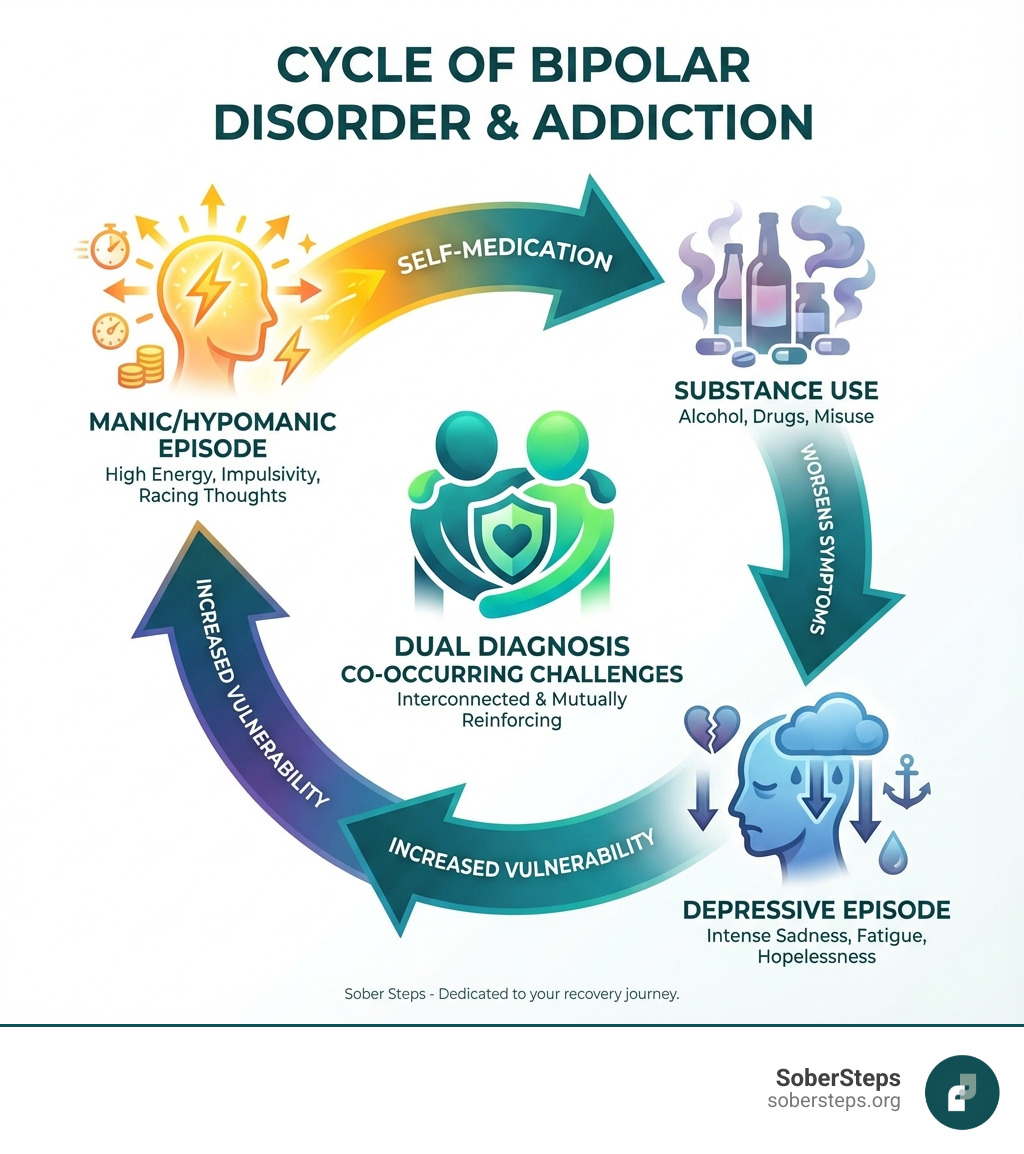
Living with bipolar disorder can be overwhelming. The severe mood swings can disrupt relationships, work, and overall emotional well-being. To make matters more challenging, bipolar disorder often co-occurs with Substance Use Disorder (SUD). This is known as a dual diagnosis. Many individuals may turn to substances, consciously or unconsciously, to self-medicate their intense mood symptoms. This can create a difficult cycle, as substance use can worsen bipolar symptoms and interfere with treatment.
At Sober Steps, we are dedicated to empowering individuals on their journey to recovery from mental health and substance use disorders. Our expertise in Bipolar Disorder and addiction means we understand the complexities of dual diagnosis.
A dual diagnosis, or co-occurring disorder, refers to the presence of both a mental health disorder and a Substance Use Disorder (SUD) at the same time. This isn’t just two separate conditions happening concurrently; they often influence and exacerbate each other, creating a complex web of challenges. For instance, the intense emotional swings of Bipolar Disorder can make someone particularly vulnerable to seeking relief through substances. Imagine trying to calm the racing thoughts of a manic episode or lift the crushing weight of depression – a quick fix might seem incredibly appealing.
This brings us to the self-medication hypothesis: the idea that individuals with mental health conditions use substances to cope with their symptoms. While it might offer temporary relief, it ultimately deepens the problem, leading to dependence and worsening both the mental health condition and the addiction. In the U.S., the prevalence of SUDs among people with Bipolar Disorder is significantly higher than in the general population. Research indicates that treating both conditions simultaneously is crucial for better long-term outcomes. We believe in tackling these challenges head-on, together.
What is Bipolar Disorder?
Bipolar Disorder, formerly known as manic-depressive illness, is a serious mental health condition characterized by significant, often dramatic, shifts in mood, energy, activity levels, and concentration. These shifts are known as mood episodes and are distinctly different from typical mood fluctuations we all experience. We’re talking about more than just a bad day or a burst of excitement; these are profound changes that can interfere significantly with daily life.
The primary features of Bipolar Disorder include:
Manic Episodes: These are periods of abnormally and persistently liftd, expansive, or irritable mood and abnormally and persistently increased activity or energy, lasting at least one week and present most of the day, nearly every day. During a manic episode, individuals might feel wired, full of grand ideas, or incredibly irritable. They might need less sleep, talk rapidly, or engage in risky behaviors without considering the consequences.
Depressive Episodes: These are periods of intense sadness, hopelessness, or a loss of interest or pleasure in nearly all activities, lasting at least two weeks. Symptoms often include fatigue, changes in appetite or sleep patterns, feelings of worthlessness or guilt, difficulty concentrating, and thoughts of self-harm or suicide.
Lifelong Illness:Bipolar Disorder is a chronic condition, meaning it requires ongoing management throughout a person’s life. However, with an effective treatment plan, individuals can lead stable and fulfilling lives.
The relationship between Bipolar Disorder and addiction is a classic “chicken and egg” scenario – it’s tough to tell which came first, and often, they’re both pecking at the same time. What we do know is that these two conditions frequently co-occur, creating a particularly challenging situation. In the U.S., there’s a high prevalence of Substance Use Disorders (SUDs) among individuals with Bipolar Disorder.
Several factors contribute to this strong connection:
Shared Risk Factors: Both Bipolar Disorder and SUDs can have genetic predispositions. If Bipolar Disorder runs in your family, you might also have a higher genetic vulnerability to addiction. Environmental factors like stress and trauma, especially childhood trauma, are also significant risk factors for both conditions.
Brain Chemistry: Both conditions involve dysregulation in brain chemistry, particularly neurotransmitters like dopamine. This shared neurobiology can create a fertile ground for both mood dysregulation and addictive behaviors.
Impulsivity: During manic or hypomanic episodes, individuals with Bipolar Disorder often experience increased impulsivity and poor judgment. This can lead to engaging in risky behaviors, including substance use, which might then escalate into addiction.
Self-Medication: As we touched on earlier, many individuals use drugs or alcohol to try and alleviate the intense and uncomfortable symptoms of Bipolar Disorder. The temporary “high” from a substance might seem to mimic or improve a manic state, while depressants might offer a false sense of calm during a depressive crash.
Worsening Symptoms: Unfortunately, substance use doesn’t solve the problem; it almost always makes it worse. Alcohol and drugs can trigger mood episodes, intensify their severity, interfere with the effectiveness of prescribed medications, and make diagnosis even more difficult. It’s a vicious cycle that can be incredibly hard to break without professional help.
For confidential help and guidance in navigating the complexities of Bipolar Disorder and addiction, we are here for you. Call us today at (844) 491-5566.
Symptoms and Diagnosis in a Dual Diagnosis Context
Understanding the symptoms of Bipolar Disorder is crucial, especially when addiction is also present. The overlapping nature of symptoms can make diagnosis tricky, but recognizing key indicators is the first step toward effective treatment.
Key Symptoms of Bipolar Disorder Episodes
Bipolar Disorder manifests through distinct mood episodes, each with its own set of symptoms. These episodes are not merely shifts in mood; they are profound changes that affect a person’s thoughts, feelings, and behaviors.
Manic Episode Symptoms: During a manic episode, an individual experiences a period of abnormally and persistently liftd, expansive, or irritable mood and abnormally and persistently increased activity or energy, lasting at least one week. Key symptoms often include:
Inflated self-esteem or grandiosity (feeling unusually important or powerful).
Decreased need for sleep (feeling rested after only a few hours).
More talkative than usual or pressure to keep talking.
Flight of ideas or racing thoughts.
Distractibility (attention too easily drawn to unimportant or irrelevant external stimuli).
Increase in goal-directed activity (at work, school, or sexually) or psychomotor agitation.
Excessive involvement in activities that have a high potential for painful consequences (e.g., unrestrained buying sprees, sexual indiscretions, foolish business investments). These symptoms are severe enough to cause marked impairment in social or occupational functioning or to necessitate hospitalization to prevent harm to self or others.
Hypomanic Episode Symptoms: Hypomania is a less severe form of mania, characterized by similar symptoms but to a lesser degree and for a shorter duration, lasting at least four consecutive days. While individuals may feel more energetic, productive, or creative, these episodes do not cause marked impairment in social or occupational functioning and typically do not involve psychotic features. However, don’t let the “less severe” fool you; hypomania can still lead to poor decisions and can often precede a full-blown manic episode or a depressive episode.
Depressive Episode Symptoms: A major depressive episode involves a period of at least two weeks characterized by five or more of the following symptoms, with at least one being depressed mood or loss of interest or pleasure:
Depressed mood most of the day, nearly every day.
Markedly diminished interest or pleasure in all, or almost all, activities.
Significant weight loss or gain, or decrease or increase in appetite.
Insomnia or hypersomnia (sleeping too much).
Psychomotor agitation or retardation (restlessness or slowed movements).
Fatigue or loss of energy.
Feelings of worthlessness or excessive or inappropriate guilt.
Diminished ability to think or concentrate, or indecisiveness.
Recurrent thoughts of death, recurrent suicidal ideation without a specific plan, or a suicide attempt or a specific plan for committing suicide.
Psychotic Symptoms: Some individuals with Bipolar Disorder may experience psychotic symptoms during severe manic or depressive episodes. These can include hallucinations (seeing or hearing things that aren’t there) or delusions (false, fixed beliefs, such as believing they have special powers or are being persecuted).
Catatonic Features: In some cases, individuals experiencing severe episodes of depression or mania may also exhibit catatonic features, which involve unusual motor behaviors. These can range from extreme physical agitation to a complete lack of movement, odd postures, or mimicking others’ speech or movements. Up to 25% of people experiencing episodes of depression or mania also have problems with movement, called catatonic symptoms.
Mixed Features: The DSM-5-TR updated the term “mixed episode” to “mixed features,” which describes when an individual experiences symptoms of both mania/hypomania and depression simultaneously. This can be incredibly distressing, as someone might feel energized and agitated yet also profoundly sad and hopeless at the same time. Imagine feeling euphoric and irritable, yet also having suicidal thoughts; it’s a very painful and confusing state.
Types of Bipolar Disorder
Bipolar Disorder is not a single condition but a spectrum of mood disorders. The Diagnostic and Statistical Manual of Mental Disorders, Fifth Edition (DSM-5), categorizes it into several types based on the severity and pattern of mood episodes.
Bipolar I Disorder: This is the most severe form, defined by the occurrence of at least one manic episode. The manic episode must last at least one week, causing significant impairment in daily functioning, or require hospitalization. Depressive episodes are common but not required for a Bipolar I diagnosis. Psychotic features can occur during manic episodes.
Bipolar II Disorder: This type is characterized by at least one major depressive episode and at least one hypomanic episode, but never a full manic episode. The hypomanic episodes are less severe than manic episodes and typically do not cause significant impairment in functioning or require hospitalization. However, the depressive episodes can be just as severe as in Bipolar I, often leading individuals to seek help during these low periods. Bipolar II is not a “milder” version of Bipolar I; it’s a distinct diagnosis with its own challenges.
Cyclothymic Disorder (Cyclothymia): This is a milder, chronic form of Bipolar Disorder characterized by numerous periods of hypomanic symptoms and numerous periods of depressive symptoms over at least two years (or one year in children and teenagers). These symptoms do not meet the full diagnostic criteria for a hypomanic or major depressive episode. The mood swings are less severe than in Bipolar I or II, but they are persistent and can significantly impact a person’s life and relationships.
Other Specified Bipolar and Related Disorders: This category is used when an individual experiences bipolar symptoms that cause significant distress or impairment but do not precisely fit the criteria for Bipolar I, Bipolar II, or Cyclothymic Disorder. This might include short-duration hypomanic episodes or hypomanic episodes that are triggered by substance use or certain medical conditions.
The Challenge of Diagnosis
Diagnosing Bipolar Disorder, especially when Substance Use Disorder (SUD) is also present, is like trying to solve a puzzle with half the pieces missing and some pieces from another puzzle mixed in. It’s a complex process that requires careful clinical assessment.
Overlapping Symptoms: Many symptoms of Bipolar Disorder can mimic other conditions or be masked by substance use. For example, the impulsivity and risky behaviors seen in manic episodes can also be features of SUD. Similarly, the lethargy and low mood of depression can be consequences of chronic substance use or withdrawal.
Misdiagnosis as Depression: A common diagnostic challenge is when Bipolar Disorder is initially misdiagnosed as major depressive disorder. This often happens because individuals typically seek help during depressive episodes, and hypomanic or manic episodes might be overlooked or minimized by the patient. If antidepressants are prescribed without a mood stabilizer in someone with undiagnosed Bipolar Disorder, it can trigger a manic or hypomanic episode, making the situation worse.
Importance of Clinical Assessment: A thorough clinical assessment is paramount. This involves a detailed interview with the individual, gathering information about their thoughts, feelings, behaviors, and personal and family medical history. Family members and friends can provide invaluable collateral information, offering insights into mood changes that the individual might not recall or fully recognize.
DSM-5 Criteria: Mental health professionals use the specific diagnostic criteria outlined in the DSM-5 to guide their assessment. These criteria provide clear guidelines for the duration, severity, and impact of manic, hypomanic, and depressive episodes.
Screening Tools: Various screening tools and rating scales can help clinicians identify potential bipolar symptoms and differentiate them from other conditions. However, these are aids, not definitive diagnostic tests.
Differentiating from SUD Symptoms: A key part of the diagnostic process in a dual diagnosis context is to carefully differentiate between symptoms caused by Bipolar Disorder and those that are a direct result of substance intoxication or withdrawal. Sometimes, once substance use is stabilized, the underlying mood disorder becomes clearer.
For comprehensive information on the diagnostic process for Bipolar Disorder, we encourage you to review resources like Information on the diagnostic process. We prioritize accurate diagnosis as the foundation for effective integrated treatment.
Integrated Treatment for Bipolar Disorder and Addiction
When facing the dual challenge of Bipolar Disorder and Substance Use Disorder, an integrated treatment approach is not just a good idea; it’s essential. Think of it like this: you wouldn’t treat a broken leg without also addressing the infection that set in. Both conditions are intertwined, and trying to treat one in isolation often leads to relapse in the other.
An integrated care model means that both the mental health disorder and the substance use disorder are treated simultaneously, by the same team of professionals, and in a coordinated manner. This ensures that the treatment for one condition doesn’t inadvertently worsen the other.
Importance of Specialized Programs: Specialized dual diagnosis programs are designed to address the unique complexities of co-occurring disorders. These programs understand how Bipolar Disorder can fuel addiction and how substance use can destabilize mood. They offer therapies and medications custom to manage both simultaneously.
Hospitalization: For individuals experiencing severe manic or depressive episodes, or who are at risk of harm to themselves or others, hospitalization may be necessary for initial stabilization. This provides a safe, structured environment where acute symptoms can be managed, and substance use can be safely detoxified.
Outpatient Treatment: Once stabilized, or for less severe cases, outpatient treatment allows individuals to live at home while attending therapy sessions, medication management appointments, and support groups. This approach helps reintegrate individuals into their daily lives while maintaining a strong support system.
At Sober Steps, we are committed to providing integrated care that addresses the whole person. Call (844) 491-5566 for a confidential assessment to explore how our specialized programs can support your journey to recovery.
Medication Management
Medication is a cornerstone of managing Bipolar Disorder, especially in a dual diagnosis context. These aren’t “happy pills” but tools to stabilize mood and reduce the intensity and frequency of episodes. Finding the right medication regimen can take time and patience, but it’s a vital step towards stability.
Mood Stabilizers: These are the primary medications for Bipolar Disorder.
Lithium: One of the oldest and most effective mood stabilizers, particularly for manic and hypomanic episodes, and for reducing suicide risk. It works by influencing neurotransmitter activity and cellular signaling in the brain. However, it requires regular blood monitoring to ensure therapeutic levels and avoid toxicity.
Anticonvulsants: Medications like valproic acid (Depakote), carbamazepine (Tegretol), and lamotrigine (Lamictal) are also used as mood stabilizers. Valproic acid is effective for acute mania, while lamotrigine is particularly helpful for bipolar depression and maintenance treatment.
Atypical Antipsychotics: Medications such as quetiapine (Seroquel), olanzapine (Zyprexa), risperidone (Risperdal), lurasidone (Latuda), and cariprazine (Vraylar) can be used to treat acute manic, mixed, or depressive episodes in Bipolar Disorder, and sometimes for maintenance. They can help with psychotic symptoms if present.
Antidepressant Considerations: Antidepressants are generally used with caution in Bipolar Disorder. They are never used alone because they can trigger manic or hypomanic episodes (known as “mood switching”). If prescribed, they are always combined with a mood stabilizer or atypical antipsychotic.
Medication for Addiction: When SUD is present, specific medications might be prescribed by licensed professionals at SoberSteps to manage withdrawal symptoms, reduce cravings, or block the effects of substances. These medications are carefully integrated into the overall treatment plan to ensure they complement, rather than conflict with, Bipolar Disorder medications.
Here’s a quick look at some common mood stabilizers and their potential side effects:
| Medication Class | Examples | Common Side Effects
Lithium: As one of the most widely prescribed and studied medications for Bipolar Disorder, lithium is highly effective, especially for acute mania and in preventing mood swings. Its mechanism involves complex actions on various neurotransmitter systems. However, regular monitoring of blood levels is crucial because the range between a therapeutic dose and a toxic dose is narrow. Important fact: anything that lowers the level of sodium in your body, such as switching to a low-sodium diet, heavy sweating, fever, vomiting, or diarrhea may cause a toxic buildup of lithium in your body. Be aware of these conditions and alert your doctor if you’re on lithium and experience them.
Valproate (divalproex sodium): This anticonvulsant is effective for both acute manic episodes and for preventing future episodes. It’s often preferred for rapid cycling Bipolar Disorder.
Carbamazepine: Another anticonvulsant, carbamazepine is used to treat acute manic and mixed episodes and for maintenance treatment.
Lamotrigine: This medication is particularly effective for delaying depressive episodes and is often used in maintenance treatment.
Atypical Antipsychotics: These medications are often used in combination with mood stabilizers to manage acute manic or depressive episodes, especially if psychotic symptoms are present. Examples include quetiapine, olanzapine, risperidone, lurasidone, and cariprazine. They can also be used for maintenance treatment.
Antidepressant Considerations: While antidepressants might seem logical for bipolar depression, they must be used with extreme caution. Prescribing an antidepressant alone for Bipolar Disorder can trigger a manic or hypomanic episode. Therefore, they are almost always prescribed in conjunction with a mood stabilizer or atypical antipsychotic to prevent this “mood switch.”
Medication for Addiction: For the SUD component of a dual diagnosis, licensed professionals at SoberSteps can prescribe medications to manage withdrawal symptoms, reduce cravings, and prevent relapse. These medications are carefully chosen to ensure they work safely alongside Bipolar Disorder treatments.
Effective Psychotherapy Approaches
Medication helps stabilize the brain’s chemistry, but therapy helps you stabilize your life. Psychotherapy, or “talk therapy,” is an indispensable part of integrated treatment for Bipolar Disorder and addiction. It provides tools to understand the illness, cope with symptoms, manage stress, and build healthier behaviors.
Cognitive Behavioral Therapy (CBT): CBT is a highly effective therapy that helps individuals identify and change troubling thoughts and behaviors. For dual diagnosis, CBT can help you recognize triggers for both mood episodes and substance use, develop coping strategies, challenge negative thinking patterns, and improve problem-solving skills. It’s like learning to be your own detective and then your own architect, rebuilding healthier thought processes.
Dialectical Behavior Therapy (DBT): Often used for individuals with intense emotional dysregulation and co-occurring issues like SUD, DBT focuses on teaching skills in four key areas: mindfulness, distress tolerance, emotion regulation, and interpersonal effectiveness. It’s particularly helpful for managing intense mood swings and reducing impulsive behaviors that can lead to substance use.
Family-Focused Therapy: Since Bipolar Disorder and addiction impact the entire family system, this therapy involves loved ones in the treatment process. It provides psychoeducation for family members, improves communication within the family, and helps develop problem-solving strategies to support the individual’s recovery and prevent relapses.
Psychoeducation: This involves teaching individuals and their families about Bipolar Disorder and SUD. Understanding the nature of the illnesses, their symptoms, causes, and treatment options empowers individuals to become active participants in their recovery. Knowledge truly is power when managing chronic conditions.
Interpersonal and Social Rhythm Therapy (IPSRT): This therapy focuses on stabilizing daily routines and interpersonal relationships, which are often disrupted by Bipolar Disorder. By establishing regular sleep-wake cycles, meal times, and social interactions, individuals can reduce the likelihood of triggering mood episodes. It helps to regulate your internal clock, which can get a bit wonky with bipolar.
Get help finding the right therapy that addresses both your Bipolar Disorder and addiction challenges. Call us today at (844) 491-5566 for a confidential discussion about your treatment options.
Long-Term Management and Building a Support System
Living with a dual diagnosis of Bipolar Disorder and addiction is a marathon, not a sprint. Long-term management involves a combination of strategies to maintain stability, prevent relapse, and build a fulfilling life. We’re talking about more than just managing symptoms; we’re talking about thriving.
Lifestyle Strategies for Stability
While medication and therapy are crucial, daily lifestyle choices play a significant role in managing Bipolar Disorder and addiction. These strategies are your secret weapons in maintaining equilibrium.
Routine and Structure: Consistency is a best friend to someone with Bipolar Disorder. Establishing a predictable daily routine for sleep, meals, work, and leisure can help stabilize mood and reduce the risk of episodes.
Sleep Hygiene: Sleep disruptions can be a major trigger for mood episodes. Prioritizing regular sleep patterns, creating a relaxing bedtime routine, and avoiding caffeine or screens before bed are vital. Research shows that behavioral treatment for insomnia can be highly effective in managing sleep problems associated with Bipolar Disorder; for more, see Research on behavioral treatment for insomnia.
Stress Management: Stress is a well-known trigger for both mood episodes and substance cravings. Learning healthy coping mechanisms like mindfulness, meditation, yoga, or deep breathing exercises can make a world of difference.
Healthy Diet: While there isn’t a specific “bipolar diet,” a balanced and nutritious diet supports overall brain health. Avoiding excessive sugar, processed foods, and maintaining hydration can contribute to better mood regulation.
Exercise: Regular physical activity has mood-boosting effects and can help manage stress and improve sleep. Even moderate exercise, like a daily walk, can be incredibly beneficial.
Avoiding Triggers (Alcohol, Drugs): This is non-negotiable for dual diagnosis recovery. Alcohol and recreational drugs can destabilize mood, interfere with medications, and lead to relapse in both conditions. Complete abstinence is generally recommended.
Special Considerations: Bipolar Disorder in Youth
Bipolar Disorder can manifest in children and teenagers, but diagnosing it in younger individuals presents unique challenges. What might seem like typical adolescent moodiness or defiance could, in some cases, be early signs of Bipolar Disorder.
Symptoms in Children vs. Adults: In youth, Bipolar Disorder symptoms can be less episodic and more chronic, often appearing as persistent irritability, severe mood swings, temper tantrums, or aggressive outbursts rather than distinct periods of euphoria. This can make it difficult to differentiate from other childhood disorders.
Irritability: Extreme irritability is a hallmark symptom of mania in children and can be particularly disruptive. This is distinct from typical childhood frustration and is often severe and disproportionate to the situation.
Comorbidity with ADHD:Bipolar Disorder in youth often co-occurs with Attention-Deficit/Hyperactivity Disorder (ADHD), which can further complicate diagnosis. Both conditions share symptoms like hyperactivity, distractibility, and impulsivity. A careful assessment is needed to determine if symptoms are part of ADHD, Bipolar Disorder, or both.
Importance of Early Intervention: Early diagnosis and intervention are critical for improving long-term outcomes. The sooner treatment begins, the better the chances of stabilizing mood, preventing academic and social difficulties, and reducing the risk of substance use in adolescence and adulthood.
Family Support: Given the impact on the entire family, family-focused therapy and psychoeducation are especially important for youth with Bipolar Disorder. Parents and caregivers learn how to support their child, manage challenging behaviors, and maintain a stable home environment.
If you’re concerned about a loved one, particularly a child or teenager, exhibiting symptoms that might suggest Bipolar Disorder or a co-occurring substance use issue, don’t hesitate. Call (844) 491-5566 for guidance and support.
Finding Resources and Support
Navigating Bipolar Disorder and addiction can feel isolating, but you are not alone. A robust support system is a powerful tool in recovery.
SoberSteps Support Services: We offer confidential and anonymous help for mental health and substance use disorders. Our team is equipped to guide you through the complexities of dual diagnosis, connecting you with integrated treatment plans custom to your needs.
Peer Support Specialists: These individuals have lived experience with mental illness and/or addiction and can offer invaluable empathy, encouragement, and practical advice. They serve as mentors and advocates, demonstrating that recovery is possible.
Support Groups: Organizations like NAMI (National Alliance on Mental Illness) and DBSA (Depression and Bipolar Support Alliance) offer local and online support groups where individuals and their families can share experiences, gain insights, and find community. These groups provide a safe space to discuss challenges and celebrate successes.
988 Suicide & Crisis Lifeline: If you or someone you know is struggling or having thoughts of suicide, call or text the 988 Suicide & Crisis Lifeline at 988. This service is available 24/7 in the U.S. In life-threatening situations, always call 911.
Mental Health Services: The Substance Abuse and Mental Health Services Administration (SAMHSA) offers resources to help you locate mental health services in your area. You can find support and locate mental health services at Find mental health services in your area.
Frequently Asked Questions about Bipolar Disorder and Addiction
We often hear similar questions from individuals and families struggling with the dual diagnosis of Bipolar Disorder and addiction. Here are some of the most common ones:
Can addiction cause bipolar disorder?
This is a nuanced question, and the answer is generally “no” in terms of direct causation, but “yes” in terms of influence and worsening.
Shared Vulnerabilities: Addiction doesn’t causeBipolar Disorder, but both conditions share underlying genetic and neurological vulnerabilities. If you have a genetic predisposition for Bipolar Disorder, substance use might act as an environmental trigger, potentially leading to an earlier onset or more severe course of the illness.
Substance-Induced Mood Disorders: It is possible for chronic or heavy substance use to induce mood symptoms that mimic Bipolar Disorder. These are classified as “substance/medication-induced bipolar and related disorder” in the DSM-5. However, these symptoms typically resolve once the substance use stops and the brain chemistry normalizes.
Worsening Pre-existing Conditions: For someone who already has Bipolar Disorder, substance use can profoundly worsen the condition. It can trigger more frequent and severe mood episodes, make medications less effective, increase the risk of psychosis, and complicate overall treatment. So, while it may not cause it, it can certainly throw fuel on the fire.
What is the most effective treatment for dual diagnosis?
The most effective treatment for a dual diagnosis of Bipolar Disorder and addiction is an integrated treatment approach. This means:
Treating Both Conditions Simultaneously: Rather than treating Bipolar Disorder and SUD as separate issues, integrated treatment addresses them as interconnected problems. Both conditions are managed concurrently by the same team or a highly coordinated team of professionals.
Combination of Medication and Psychotherapy: This is the gold standard. Medication helps stabilize mood and manage cravings, while psychotherapy provides coping skills, addresses underlying psychological issues, and helps prevent relapse.
Individualized Care Plan: There’s no one-size-fits-all solution. An effective plan is custom to the individual’s specific symptoms, history, substance(s) used, and personal circumstances.
Long-Term Commitment to Recovery: Dual diagnosis conditions are chronic. Recovery is an ongoing process that requires consistent effort, adherence to treatment plans, and continuous support.
How can I help a loved one with bipolar disorder and addiction?
Helping a loved one steer Bipolar Disorder and addiction can be incredibly challenging, but your support is invaluable.
Educate Yourself: Learn as much as you can about both Bipolar Disorder and the specific substance(s) your loved one is struggling with. Understanding the illnesses helps you respond with empathy rather than frustration.
Encourage Professional Help: Gently but firmly encourage your loved one to seek integrated treatment. Offer to help them find resources, make appointments, or even accompany them to initial consultations.
Offer Support Without Enabling: Provide emotional support, listen without judgment, and express your care. However, avoid enabling behaviors that might inadvertently support their substance use or prevent them from facing the consequences of their actions.
Set Healthy Boundaries: This is crucial for your well-being and for your loved one’s recovery. Clearly communicate what you are and are not willing to do, and stick to those boundaries.
Prioritize Self-Care: Supporting someone with a dual diagnosis can be emotionally draining. Make sure you are taking care of your own mental and physical health. Seek your own support system, whether it’s therapy, family, or a support group for loved ones of individuals with mental illness or addiction.
For guidance, resources, and a confidential conversation about how to best support your loved one, please call us at (844) 491-5566.
Conclusion
The journey of living with Bipolar Disorder and addiction is undoubtedly challenging, but we want to emphasize a powerful truth: recovery is possible. With the right support, the right tools, and a commitment to healing, individuals can achieve stability, manage their symptoms, and build a truly fulfilling life.
We believe in the hope for a stable life, free from the turbulent swings of untreated Bipolar Disorder and the grip of addiction. The key lies in integrated treatment—an approach that recognizes the interconnectedness of these conditions and addresses them simultaneously, with compassion and expertise.
At SoberSteps, we are dedicated to providing confidential and anonymous help for those struggling with mental health and substance use disorders. We understand the complexities of dual diagnosis and are here to guide you toward a path of lasting recovery. Don’t let the fear of judgment or the weight of your challenges keep you from reaching out. Take the first step towards recovery by calling (844) 491-5566 for a no-obligation, confidential consultation. Your journey to a healthier, more stable life begins now.
For anyone seeking help for addiction for themselves or a loved one calls to Sober Steps are completely confidential and available 24/7.
Please note: any treatment center listed on our site that receives calls is a paid advertiser.
Calls to a specific treatment center’s listing will be connected directly to that center.
Calls to our general helpline will be answered by treatment providers, all of whom are paid advertisers.
By calling the helpline, you agree to our terms and conditions. These calls are free of charge and carry no obligation to enter treatment. Neither Sober Steps nor anyone answering your call receives a commission or fee based on your choice of treatment provider.
If you’d like to explore additional treatment options or connect with a specific rehab center, you can browse our top-rated listings, visit our homepage, or call us at (844) 491-5566. You may also contact us for further assistance.