
Why Finding the Right Detox Center Matters for Your Recovery
Detox near me is one of the most important searches you can make when deciding to seek help for substance use. Here’s what you need to know right away:
Quick Guide to Finding Local Detox:
- Call SAMHSA’s National Helpline: 1-800-662-HELP (4357) for free, confidential treatment referrals
- Use Online Directories: Visit FindTreatment.gov or state-specific resources for verified facilities
- Verify Insurance: Contact centers directly to check coverage and availability
- Consider Your Needs: Choose between inpatient (24/7 supervision) or outpatient (flexible scheduling) based on addiction severity
- Get Immediate Help: Call SoberSteps at (844) 491-5566 for confidential guidance
Taking the first step toward recovery is often the hardest part. Over 29 million people in the United States struggle with alcohol use disorder each year, and millions more battle other substance dependencies. The fear of withdrawal is real—in fact, it’s one of the biggest obstacles preventing people from seeking help.
But here’s the truth: professional medical detox can make withdrawal safer, more comfortable, and significantly increase your chances of lasting recovery. Medical detox provides supervised care to manage withdrawal symptoms, reduce health risks, and prepare you for the next phase of treatment. It typically lasts 3 to 10 days depending on the substance and your individual needs.
Whether you’re dealing with alcohol, opioids, benzodiazepines, or other substances, medically supervised detox offers crucial benefits. It reduces the risk of dangerous complications like seizures, provides medications to ease discomfort, and gives you 24/7 support during the most challenging phase of recovery.
Finding a detox center near you is easier than you might think. Options include state-funded programs (often free or low-cost), private facilities with various amenities, and faith-based organizations. Most health insurance plans now cover detox services thanks to the Affordable Care Act, and many centers accept Medicaid or offer payment plans.
This guide will walk you through everything you need to know about detox—from understanding what happens during the process to choosing the right facility for your situation. You’ll learn about different types of programs, what withdrawal symptoms to expect, how to verify insurance coverage, and most importantly, how to take that crucial first step toward a healthier life.
At Sober Steps, we’re dedicated to helping individuals find confidential, anonymous treatment resources for mental health and substance use disorders. We understand how overwhelming it can feel to search for detox near me, which is why we’ve created this comprehensive guide to connect you with the support you deserve.
Your recovery journey is personal, and finding the right detox center is essential to starting it successfully. To explore your options, call our confidential helpline 24/7 at (844) 491-5566.
What is Medical Detox and Why is it Crucial for Recovery?
Medical detox, also known as medically supervised withdrawal, is the process of safely removing drugs or alcohol from the body under the supervision of licensed medical professionals. It’s often the critical first step in the journey toward recovery for individuals struggling with addiction. The goal of medical detox is to help clients manage withdrawal symptoms in a safe, controlled environment while beginning to stabilize both physically and mentally.
When someone develops a physical dependence on a substance, their body adapts to its presence. Suddenly stopping or significantly reducing the substance can trigger a range of uncomfortable and potentially dangerous withdrawal symptoms. Medical detox addresses this by facilitating toxin removal, allowing the body to cleanse itself while minimizing discomfort and health risks. This 24/7 medical care ensures that any complications are promptly managed, making the process as safe and comfortable as possible.
The benefits of professional detox are immense. It significantly increases the chance of successfully completing the initial phase of recovery and prepares an individual for subsequent treatment, such as rehabilitation. Without medical supervision, withdrawal can be not only painful but also life-threatening, especially for certain substances.

The Importance of Medical Supervision
The primary reason medical supervision is crucial during detox is to manage the risks associated with withdrawal. Withdrawal symptoms can range from uncomfortable to severe, and in some cases, deadly.
- Alcohol withdrawal dangers: Suddenly stopping heavy alcohol use can lead to tremors, anxiety, hallucinations, and potentially fatal seizures or delirium tremens (DTs). Medical supervision can provide medications to prevent these severe reactions.
- Benzodiazepine withdrawal dangers: Withdrawal from benzodiazepines (like Xanax or Klonopin) can cause severe anxiety, panic attacks, insomnia, and seizures. A gradual, medically supervised taper is often necessary to safely reduce dependence.
- Opioid withdrawal dangers: While often not life-threatening, opioid withdrawal (from heroin, fentanyl, prescription painkillers) is uncomfortable, characterized by severe muscle aches, nausea, vomiting, diarrhea, and intense cravings. Medical support can significantly alleviate these symptoms.
- Co-occurring disorders: Many individuals entering detox also struggle with co-occurring mental health disorders like depression or anxiety. Medical detox centers are equipped to monitor and manage these conditions, providing integrated care that addresses both substance use and mental health needs simultaneously. Professional oversight ensures a comprehensive approach to healing.
Key Benefits of a Medically Supervised Program
Choosing a medically supervised detox program offers distinct advantages:
- Safety and comfort: Medical professionals can administer medications to ease withdrawal symptoms, making the process less painful and more tolerable. This reduces the risk of dangerous complications during acute withdrawal.
- Reduced medical complications: 24/7 monitoring ensures that any emergent medical issues, such as dehydration, electrolyte imbalances, or seizures, are addressed immediately.
- Emotional and psychological support: The detox period can be emotionally challenging. Medical staff, therapists, and counselors provide crucial emotional support, helping individuals cope with anxiety, depression, and other psychological distress.
- Higher completion rates: The improved safety and comfort of medical detox lead to higher completion rates, setting a stronger foundation for long-term recovery.
- Foundation for long-term recovery: Successfully navigating detox under medical care prepares individuals for the next steps in their recovery journey, making them more receptive to therapy and rehabilitation.
Types of Detox Programs: Finding the Right Fit for You
Finding the right detox near me means understanding that treatment is not one-size-fits-all. Your choice of detox program should be individualized, considering several factors that influence the level of care you need. These factors include the severity and duration of your addiction, your physical and mental health, and the strength of your support system at home.
| Criteria | Inpatient Detox | Outpatient Detox |
|---|---|---|
| Supervision Level | 24/7 medical and clinical supervision | Regular medical check-ups, but not 24/7 |
| Environment | Residential setting, removed from triggers | Living at home, maintaining daily routine |
| Cost | Generally higher due to accommodation and services | Generally lower, more affordable |
| Ideal Candidate | Severe addiction, unstable health, lack of support | Mild to moderate addiction, stable health, strong home support |
| Structure | Highly structured, comprehensive care | Flexible scheduling, less intensive |
Inpatient Detox Programs
Inpatient detox programs provide a residential setting where individuals live at the facility for the duration of their detox. This environment offers 24/7 medical and clinical supervision, ensuring immediate response to any withdrawal complications. It’s often recommended for individuals with:
- Severe substance dependence.
- A history of complicated withdrawal.
- Unstable physical or mental health.
- A lack of a safe and supportive home environment.
Being removed from triggers and stressors in a structured, supportive environment can be incredibly beneficial. It allows individuals to focus solely on their recovery, surrounded by peers and professionals. Many luxury detox centers, for instance, combine this intensive medical care with high-end amenities like private rooms, gourmet meals, and recreational activities to provide a comfortable and healing experience.
Outpatient Detox Programs
Outpatient detox programs allow individuals to live at home while attending regular medical appointments and therapy sessions at a clinic. This option is suitable for those with:
- Mild to moderate addiction.
- A stable home environment and strong support system.
- Good overall physical and mental health.
- The need to maintain daily responsibilities like work or family care.
While offering flexibility, outpatient detox still provides medical oversight to manage withdrawal symptoms. However, it requires a high level of self-discipline and commitment, as individuals are exposed to their usual environment and potential triggers.
Specialized and Other Detox Options
Beyond the traditional inpatient and outpatient models, you might encounter specialized programs:
- Holistic approaches: Many centers integrate holistic therapies like yoga, meditation, acupuncture, and nutritional counseling alongside medical treatment to address the whole person—mind, body, and spirit.
- Faith-based programs: For those seeking spiritual guidance, several faith-based organizations, such as The Salvation Army, offer free or low-cost recovery programs. While not all provide medically supervised detox, they can be a valuable resource for support and spiritual healing.
- Luxury and boutique facilities: Some private centers offer improved amenities, personalized wellness plans, and a low client-to-staff ratio, creating a more private and comfortable experience. These supportive environments aim to make the detox process as serene as possible.
The Detox Process: Managing Withdrawal Symptoms and Medications
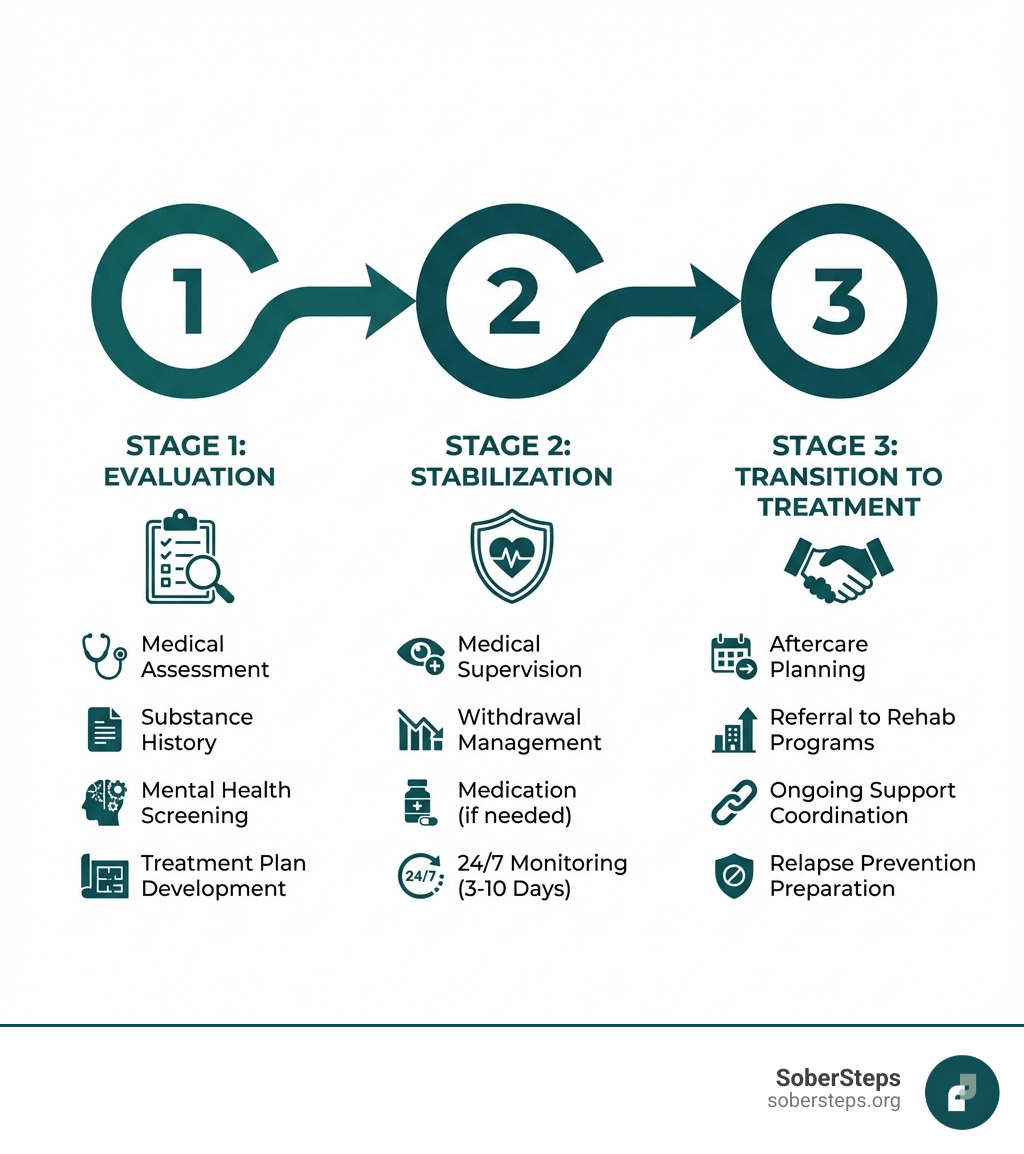
When you enter a detox program, you can expect a structured approach designed to keep you safe and comfortable. The process typically involves three main stages: evaluation, stabilization, and preparing for continued treatment.
The average duration of medical detox ranges from 3 to 10 days, but this isn’t a fixed timeline. Several factors influence how long you’ll need to stay:
- Substance type: Different substances have varying withdrawal timelines and intensities.
- Duration of use: The longer you’ve used a substance, the more entrenched your physical dependence might be.
- Amount of use: Higher dosages often lead to more severe withdrawal.
- Individual health: Your overall physical and mental health, metabolism, and any co-occurring medical conditions can affect the detox timeline.

Common Withdrawal Symptoms by Substance
Understanding the specific withdrawal symptoms for different substances can help you prepare for what to expect during detox:
- Alcohol: Symptoms can appear within hours and include tremors, anxiety, nausea, vomiting, headaches, and profuse sweating. More severe cases can involve hallucinations, seizures, and delirium tremens (DTs), which can be life-threatening.
- Opioids (Heroin, Fentanyl, Prescription Painkillers): Withdrawal often feels like a severe flu, with symptoms such as intense muscle aches, nausea, vomiting, diarrhea, abdominal cramping, sweating, runny nose, watery eyes, and intense cravings.
- Benzodiazepines (Xanax, Klonopin, Valium): These can have prolonged and potentially dangerous withdrawal symptoms, including severe anxiety, panic attacks, insomnia, muscle pain, tremors, and seizures. A slow, medically supervised taper is crucial.
- Stimulants (Cocaine, Methamphetamine): While less physically dangerous than alcohol or benzodiazepine withdrawal, stimulant withdrawal can cause intense psychological symptoms like severe depression, fatigue, increased appetite, agitation, and powerful cravings.
The Role of Medication-Assisted Treatment (MAT)
Medication-Assisted Treatment (MAT) plays a vital role in making detox safer and more manageable. MAT combines FDA-approved medications with counseling and behavioral therapies to provide a “whole-patient” approach.
- Easing withdrawal symptoms: Medications can significantly reduce the severity of physical discomfort during withdrawal. For example, benzodiazepines are often used to manage alcohol withdrawal, and specific medications can alleviate nausea or muscle cramps.
- Reducing cravings: Certain medications can help curb intense cravings, which are a major driver of relapse during and after detox.
- FDA-approved medications:
- Buprenorphine: Used for opioid dependence, it helps reduce withdrawal symptoms and cravings without producing the same “high” as other opioids. Practitioners who provide buprenorphine can be found through resources like SAMHSA’s practitioner locator.
- Methadone: Also used for opioid dependence, it helps stabilize individuals and reduce cravings. Methadone is dispensed through certified Opioid Treatment Programs.
- Naltrexone: Can be used for both opioid and alcohol dependence. It blocks the euphoric and sedative effects of opioids and reduces alcohol cravings.
- Acamprosate and Disulfiram: Primarily used for alcohol dependence to help maintain abstinence or create an aversion to alcohol.
MAT supports recovery by allowing individuals to focus on therapy and developing coping mechanisms rather than being overwhelmed by physical discomfort and cravings.
How to Find a Detox Center Near Me
Searching for “detox near me” is the first step toward a healthier future, and thankfully, there are many resources available to help you.
Using Online Tools to Find a Detox Near Me
Several online platforms and government resources are designed to help you find local treatment options confidentially and anonymously:
- FindTreatment.gov: This is a confidential and anonymous resource from SAMHSA (Substance Abuse and Mental Health Services Administration) that allows you to search for treatment facilities by location, type of treatment, and payment options. Their information is updated annually and new facilities are added monthly.
- State agency resources: Your state’s mental health or substance abuse agency maintains a database of available services, including free detox options. You can find contact information for these agencies through the SAMHSA directory.
- Filtering options: When using online directories, use filters to narrow down your search based on specific needs, such as:
- Type of substance treated (alcohol, opioids, stimulants, etc.)
- Level of care (inpatient, outpatient)
- Payment options (insurance accepted, state-funded, private pay)
- Specialized programs (faith-based, LGBTQ+, veterans)
- Reading facility reviews: While not the only factor, reading reviews from former clients can offer insights into the facility’s environment, staff compassion, and overall effectiveness. Look for consistent themes in positive and negative feedback.
What to Look for When Choosing a Detox Center Near Me
Once you have a list of potential centers, evaluate them carefully. Here’s what to consider:
- Credentials and licensing: Ensure the facility is licensed by the state and holds reputable accreditations. Look for accreditation from organizations like The Joint Commission or CARF (Commission on Accreditation of Rehabilitation Facilities). These indicate high standards of care, safety, and ethical practices.
- Staff qualifications: Inquire about the qualifications of the medical and clinical staff. Look for licensed physicians, registered nurses, certified addiction counselors, and master-level clinicians. A low staff-to-patient ratio often indicates more personalized care.
- Treatment approaches offered: Does the center offer evidence-based therapies like Cognitive Behavioral Therapy (CBT), Dialectical Behavior Therapy (DBT), or Motivational Interviewing? Do they incorporate Medication-Assisted Treatment (MAT) if appropriate for your needs?
- Environment and amenities: Consider whether the environment feels supportive and conducive to healing. Some prefer a more clinical setting, while others thrive in a homelike or luxury environment with amenities like private rooms, fitness centers, or outdoor access. Comfort can play a significant role in your ability to focus on recovery.
- Aftercare planning: A good detox center will emphasize a comprehensive aftercare plan to support your transition to the next stage of recovery and prevent relapse.
Getting Immediate Help
If you or a loved one is experiencing severe withdrawal symptoms, or if there’s an immediate crisis, seeking emergency detox or same-day admission is crucial. Withdrawal from substances like alcohol, sedative-hypnotics, or opioids can be dangerous and even life-threatening without prompt medical intervention.
For immediate, confidential help finding a treatment center that fits your needs, call SoberSteps at (844) 491-5566. We are here to guide you to the resources you need, 24/7.
Understanding the Costs and Payment Options for Detox
The cost of detox can vary significantly, and understanding your payment options is a crucial step in finding the right detox near me. Factors influencing cost include the level of care (inpatient vs. outpatient), the length of your stay, the amenities offered, and the facility’s location.
How Insurance Coverage Works for Detox
Thanks to legislative changes, many Americans have access to addiction treatment coverage:
- Affordable Care Act (ACA) mandate: As of 2014, the Patient Protection and Affordable Care Act requires all health insurance plans sold through the health insurance marketplace, as well as Medicaid, to provide coverage for addiction and substance abuse treatment. This means most health insurance plans cover at least some of the cost of detox services.
- Medicaid coverage: Medicaid provides coverage for addiction and substance abuse treatment, making it a viable option for many individuals with limited income. You can find state-specific resources and directories online that list rehabs accepting Medicaid.
- Private insurance plans: Most private insurance companies also cover detox services. It’s essential to verify your specific benefits, as coverage can vary between plans (e.g., HMO, PPO).
- Verifying your benefits: We recommend contacting the detox center directly or using an online insurance verification tool (many centers offer this) to understand your out-of-pocket expenses.
- In-network vs. out-of-network: Treatment costs can differ significantly depending on whether a facility is in-network or out-of-network with your insurance provider.
State-Funded vs. Private Detox Centers
Understanding the differences between state-funded and private detox centers can help you make an informed decision:
- Funding sources: State-funded rehabs use government money distributed by the state, while private rehabilitation programs are funded by private insurance providers and admission fees.
- Waitlists for state programs: State-funded centers often have waiting lists due to high demand and limited resources. This can be a significant barrier for individuals needing immediate help.
- Eligibility requirements: State-funded programs typically have specific criteria, such as official residency, proof of low income or no insurance, and proof of an immediate need for intervention.
- Amenities differences: Private rehabs often offer a higher level of comfort, more amenities (private rooms, gourmet meals, recreational activities), and a lower staff-to-patient ratio. These factors contribute to the higher cost.
- Quality of care: While private centers may offer more amenities and personalized attention, state-funded programs still provide effective, evidence-based therapies. The key is to find a program that meets your clinical needs, regardless of its funding source.
Other Payment and Low-Cost Options
If insurance coverage is limited or unavailable, other options exist:
- Private pay: Paying out-of-pocket using savings, credit, or personal loans. Some centers may offer discounts for self-pay.
- Sliding scale fees: Some facilities offer fees adjusted based on your income and ability to pay.
- Payment plans: Many private centers are willing to work with you to establish a manageable payment plan.
- Community-based programs: Local community health centers or non-profit organizations may offer free or low-cost detox and treatment services.
The Journey Continues: Next Steps After Detox
Congratulations! Completing detox is a monumental achievement, but it’s crucial to remember that detox is just the first step on the path to lasting recovery. It addresses the physical dependence, but the underlying psychological, emotional, and behavioral aspects of addiction still need to be managed. Without continued treatment, the risk of relapse is high. The next steps focus on building coping skills, addressing root causes, and developing a sustainable recovery plan.
Transitioning to Rehabilitation (Rehab)
After detox, the most common and recommended next step is to transition into a rehabilitation program. This can take several forms, depending on your individual needs:
- Inpatient/Residential rehab: You live at the facility, receiving intensive therapy and support 24/7. This is ideal for those with severe addiction, co-occurring mental health disorders, or a lack of a stable home environment. Programs can range from 14 to 90 days or longer.
- Partial Hospitalization Programs (PHP): Often called “day treatment,” PHP offers intensive therapy and medical monitoring during the day, but you return home or to a sober living facility at night. It’s a step down from inpatient care.
- Intensive Outpatient Programs (IOP): IOPs provide structured therapy sessions several times a week, allowing you to live at home and manage other responsibilities. This is suitable for those with strong support systems and less severe addiction.
- Individual therapy: One-on-one sessions with a therapist help you explore the root causes of your addiction, develop coping mechanisms, and address any co-occurring mental health issues.
- Group therapy: Participating in group sessions provides peer support, reduces feelings of isolation, and allows you to learn from others’ experiences.
Finding Ongoing Support
Long-term recovery requires ongoing support and a commitment to maintaining sobriety.
- Aftercare programs: Many rehab centers offer aftercare planning and programs, which might include continued counseling, support group meetings, and check-ins.
- Peer support groups: Organizations like Alcoholics Anonymous (AA) and Narcotics Anonymous (NA) provide free, community-based support through 12-step programs. There are also non-12-step alternatives available.
- Alumni programs: Many treatment centers have alumni programs that offer a network of support and resources for graduates, fostering a sense of community.
- Mental health resources: Continued support for mental health is vital. The 988 Suicide & Crisis Lifeline offers free and confidential support 24/7 for people in distress. The National Helpline (1-800-662-HELP (4357)) provides treatment referral and information. For crisis counseling related to disasters, the Disaster Distress Helpline (1-800-985-5990) is available 24/7.
Here are some common next steps after detox:
- Enroll in a residential or inpatient rehabilitation program.
- Transition to a Partial Hospitalization Program (PHP) or Intensive Outpatient Program (IOP).
- Begin regular individual and group therapy sessions.
- Join a peer support group like AA or NA.
- Connect with an alumni program from your treatment center.
- Engage in ongoing mental health counseling for co-occurring disorders.
- Develop a relapse prevention plan.
- Participate in sober living arrangements if needed.
- Focus on building healthy lifestyle habits (nutrition, exercise, mindfulness).
- Rebuild relationships with family and friends, potentially through family therapy.
Your Confidential Path to Recovery Starts Now
Taking the first step toward recovery is often the most challenging, but also the most rewarding. We understand that searching for detox near me can feel overwhelming, but you are not alone in this journey. Millions of Americans have successfully steerd detox and gone on to live fulfilling, sober lives. Recovery is not just possible; it’s within your reach.
Professional help is available, and finding the right support system is key. At SoberSteps, we are committed to providing confidential and anonymous resources to help you find the best treatment options for mental health and substance use disorders. Our goal is to connect you with the care you deserve, making the process as clear and supportive as possible.
Don’t let the fear of withdrawal or the uncertainty of where to begin hold you back. Your health, your future, and your peace of mind are worth it. We are here to help you take that crucial first step.
For immediate, confidential help finding a treatment center that fits your needs, call us at (844) 491-5566 or explore options for specialized rehab centers. Your confidential path to recovery starts now.