Unpacking Rehab: Everything You Need to Know About Drug Rehabilitation
Unlock vital drug rehabilitation information. Learn about treatment, therapies, payment, and start your recovery journey with SoberSteps.

Drug and Alcohol Detox: is often the most daunting yet essential first step toward lasting sobriety. If you’re wondering what to expect, here’s what you need to know:
Quick Overview: What to Expect from Detox
| Key Aspect | What You Should Know |
|---|---|
| Timeline | Most detox programs last 3-10 days, with alcohol withdrawal peaking at 24-72 hours |
| Where | 72% detox at home, but medical supervision is safest for heavy or prolonged use |
| Symptoms | Expect anxiety, tremors, nausea, insomnia, and intense cravings |
| Medications | Benzodiazepines for alcohol, buprenorphine/methadone for opioids help manage symptoms |
| After Detox | Treatment programs (3+ months recommended) address psychological aspects of addiction |
| Success Rate | People who seek treatment are 50-75% more likely to achieve lasting recovery |
Detoxification is the process of safely clearing drugs or alcohol from your body while managing withdrawal symptoms. When you’ve been using substances regularly, your brain chemistry changes—it adapts to function with the substance present. When you suddenly stop, your nervous system goes into overdrive, causing withdrawal symptoms that can range from uncomfortable to life-threatening.
This isn’t just physical discomfort. Your brain has been compensating for the presence of alcohol or drugs by adjusting neurotransmitters like GABA (which calms you down) and glutamate (which excites your nervous system). When the substance is removed, this balance is thrown off, leading to the anxiety, tremors, and other symptoms that define withdrawal.
The statistics tell an important story: 2.2 million people received alcohol use treatment in the past year, and those who seek professional help are significantly more likely to succeed in their recovery journey. But many people struggle in silence, unsure where to turn or worried about privacy.
At Sober Steps, we understand that taking the first step requires courage—and confidentiality. We’ve helped countless individuals steer Drug and Alcohol Detox: Timelines, Expectations, & Top Rehab options while protecting their privacy, providing anonymous, reliable resources to find treatment that fits their unique needs. This guide will walk you through everything you need to know to make an informed, safe decision about your detox journey.
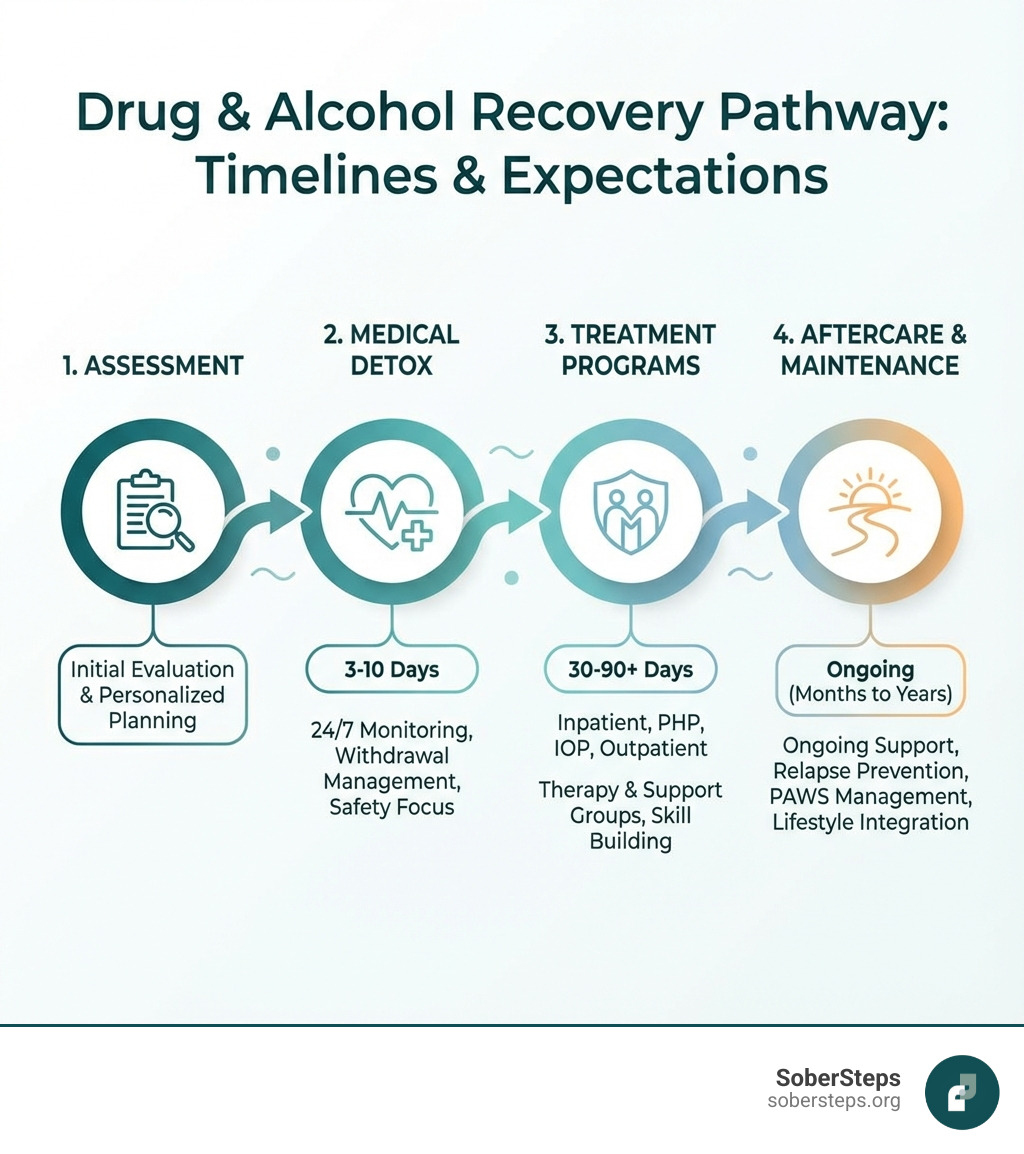
Detoxification, or detox, is the initial and crucial phase in the journey to overcome substance dependence. It’s the process where our bodies rid themselves of drugs or alcohol, and we manage the uncomfortable and sometimes dangerous withdrawal symptoms that arise. While often challenging, detox is a necessary first step because it stabilizes us physically, preparing us for the deeper work of recovery.
Our brains are incredibly adaptable, and with prolonged or heavy substance use, they actually change. Alcohol, for instance, is a central nervous system (CNS) depressant. It improves the activity of GABA, an inhibitory neurotransmitter that calms the brain, and suppresses glutamate, an excitatory neurotransmitter. Over time, our brains compensate for this constant presence of alcohol by reducing natural GABA production and increasing glutamate signaling.
When we suddenly stop drinking, this delicate balance is thrown into disarray. Our brains, now hyper-aroused and lacking their natural calming agents, go into overdrive. This is the neurochemical basis of alcohol withdrawal syndrome, leading to symptoms like anxiety, tremors, and even seizures. This adaptation of the brain to alcohol is a key reason why withdrawal can be so intense and why professional guidance is often essential. You can learn more about how the brain adapts to alcohol.
Withdrawal symptoms can manifest in various ways, affecting both our bodies and minds. Common physical symptoms include:
Psychologically, we might experience:
These symptoms are our body’s way of reacting to the absence of a substance it has become dependent on. Managing them safely and comfortably is the primary goal of detox, paving the way for sustainable recovery.
Understanding the timeline and what to expect during detox can help explain the process and prepare us for the journey ahead. The specifics of detox, including its duration and the intensity of symptoms, vary greatly depending on the substance used, the duration and amount of use, and individual factors.
Alcohol withdrawal is particularly complex due to its potential for severe, life-threatening complications. The severity of symptoms is influenced by several factors, including the amount and frequency of alcohol use, our age, overall health, and any co-occurring medical conditions.
Here’s a general timeline for alcohol detox:
The average alcohol detox process takes between 3 to 7 days. However, for some individuals, particularly those with long-term or heavy use, it can extend up to 14 days. In a recent study, we saw that 95% of people had symptoms that lasted between 2-8 days.
Beyond alcohol, other substances have their own unique detox timelines and symptom profiles:
Regardless of the substance, there are some common expectations during any Drug and Alcohol Detox experience:
When considering Drug and Alcohol Detox one of the most critical decisions is whether to attempt detox at home or seek medically supervised care. While the idea of detoxing in the comfort of our own home might seem appealing, it carries significant risks, especially for certain substances and levels of dependence.
Here’s a comparison to help illustrate the differences:
| Feature | Home Detox | Medical Detox |
|---|---|---|
| Safety | High risk for severe withdrawal, seizures, DTs | High safety, 24/7 medical supervision and intervention |
| Cost | Potentially lower upfront costs | Higher upfront costs, often covered by insurance |
| Medical Support | None or limited | Doctors, nurses, therapists, medications, monitoring |
| Success Rate | Lower for long-term sobriety, high relapse risk | Higher success rates for safe withdrawal and transition to treatment |
| Who It’s For | Very mild dependence, non-life-threatening withdrawals (always consult a doctor) | Moderate to severe dependence, polysubstance use, history of severe withdrawal, co-occurring conditions |
While a recent study found that 72% of people detoxed at home compared to 28% at a rehab facility, we strongly emphasize that this doesn’t mean home detox is always safe or effective. For many substances, particularly alcohol and benzodiazepines, attempting to detox at home without medical supervision can lead to serious complications, including seizures, severe dehydration, and even death. The lack of immediate medical intervention in a home setting can turn a manageable situation into a life-threatening emergency.
Medical detox, on the other hand, provides a safe and structured environment. We receive 24/7 care, ensuring our comfort and safety throughout the withdrawal process. Medical professionals can administer medications to alleviate symptoms, prevent complications, and monitor our physical and mental health. This critical first step sets a stable foundation for the next phases of recovery.
Medical detox can occur in various settings:
One important concept to understand is the Kindling Effect. This refers to the phenomenon where repeated withdrawal episodes can lead to increasingly severe symptoms with each subsequent attempt to quit. Each withdrawal “kindles” the brain’s excitability, making future withdrawals more intense and dangerous. This is another reason why medically supervised detox is paramount, especially for individuals with a history of multiple detox attempts.
Medications play a vital role in making Drug and Alcohol Detox safe and as comfortable as possible. These medications help manage withdrawal symptoms, prevent severe complications, and reduce cravings.
For alcohol withdrawal, the most common and effective medications are benzodiazepines. These sedating medications, such as lorazepam (Ativan), diazepam (Valium), chlordiazepoxide (Librium), and oxazepam (Serax), work by mimicking alcohol’s effect on GABA receptors, thus calming the overactive nervous system. Research on sedating medications confirms their efficacy in preventing seizures and reducing the severity of withdrawal symptoms. Other medications may also be used, including:
For opioid withdrawal, medications like buprenorphine (often combined with naloxone as Suboxone) and methadone are frequently used. These medications are opioids themselves, but they are administered in controlled doses to prevent severe withdrawal symptoms and gradually taper us off the substance. They can significantly reduce discomfort and cravings, allowing us to focus on recovery.
Additionally, various supportive medications may be prescribed to address specific symptoms during detox, such as:
The specific combination and dosage of medications will be custom to our individual needs by medical professionals, ensuring the safest and most effective detox experience.
It’s crucial to understand that detox is just the initial step in the recovery journey, not a cure in itself. While detox addresses the physical dependence and safely clears substances from our bodies, it doesn’t tackle the underlying psychological, behavioral, and social factors that contribute to addiction. Think of it like this: detox cleans up the immediate mess, but treatment helps us understand why the mess was made and how to prevent it from happening again.
The good news is that seeking treatment significantly improves our chances of long-term success. Individuals who seek treatment for alcohol or substance use disorder are 50-75% more likely to succeed in their overall recovery journey. This statistic underscores the profound impact that continued care has on achieving lasting sobriety.

After detox, a range of treatment programs and therapies are available to help us build a strong foundation for recovery. These programs are designed to address the root causes of addiction, equip us with coping skills, and help us steer life without substances.
Levels of care often include:
Therapeutic approaches are diverse and personalized. Some common and effective therapies include:
Support groups are also a cornerstone of long-term recovery. These groups provide peer support, shared experiences, and a sense of community. Options include:
Research consistently shows that longer durations of treatment lead to better outcomes. In fact, most individuals seeking recovery find that at least three months in treatment to get sober and initiate a plan for continued recovery works best for them. This allows ample time to develop new coping mechanisms, address underlying issues, and solidify sobriety skills before facing the complexities of daily life.
After the acute phase of detox, some individuals may experience Post-Acute Withdrawal Syndrome (PAWS). PAWS refers to a cluster of lingering psychological and emotional symptoms that can persist for weeks, months, or even years after the physical symptoms of withdrawal have subsided. It’s a normal part of the brain’s healing process as it continues to adjust to functioning without substances.
Common PAWS symptoms include:
The duration of PAWS varies widely. For some, symptoms might resolve within a few months, while for others, they can wax and wane for a year or longer. Coping strategies for PAWS often involve:
Recognizing PAWS is crucial for preventing relapse, as these lingering symptoms can be frustrating and lead us to believe something is “wrong” or that using again will make us feel better. With proper support and self-care, we can steer PAWS successfully.
Relapse is a common part of the recovery process, but it doesn’t have to be the end of the journey. Developing robust relapse prevention strategies is essential for maintaining long-term sobriety after detox and treatment.
Key strategies include:
We often hear similar questions from individuals exploring Drug and Alcohol Detox options. Here are some of the most common ones:
Detox alone has a low success rate for long-term sobriety because it only addresses the physical aspect of dependence. However, when detox is followed by comprehensive treatment—such as inpatient or outpatient rehab, therapy, and ongoing support groups—success rates increase significantly. Individuals who complete treatment and engage in aftercare are much more likely to achieve lasting recovery. The journey is unique for everyone, but with commitment and the right support, long-term sobriety is absolutely achievable. Many individuals find that at least three months of treatment provides the best foundation for initiating a plan for continued recovery.
Yes, severe alcohol withdrawal can be fatal. The complications, particularly seizures and Delirium Tremens (DTs), pose a serious risk to life. As we’ve discussed, DTs can lead to extreme confusion, high fever, rapid heart rate, and severe hallucinations, with a mortality rate of 1% to 4%. This is precisely why medical supervision during alcohol detox is not just recommended, but often critical, especially for anyone with a history of heavy or prolonged drinking. Medical professionals can monitor symptoms, administer life-saving medications, and intervene immediately if complications arise.
The cost of Drug and Alcohol Detox can be a concern for many, but it’s important to know that help is often more accessible than you might think. Many private insurance plans, as well as government programs like Medicare and Medicaid, offer coverage for detox and addiction treatment. The Affordable Care Act (ACA) mandates that addiction treatment be covered as an essential health benefit, meaning most health insurance plans must provide some level of coverage.
To understand your specific benefits, we recommend contacting your insurance provider directly. They can explain what exactly is covered, including deductibles, co-pays, and any limitations on the length or type of treatment. Additionally, many treatment centers offer financial assistance programs, sliding scale fees, or payment plans. Don’t let financial worries deter you from seeking the help you need; there are resources available to help you steer the costs.
Navigating Drug and Alcohol Detox can feel overwhelming, but we hope this guide has illuminated the path forward. We’ve seen that detox is a critical and manageable first step, one that safely clears our bodies of substances and prepares us for the deeper work of recovery. We’ve explored the varied timelines and expectations for different substances, highlighted the crucial role of medical supervision, and emphasized that detox is just the beginning of a lifelong journey.
Recovery is a marathon, not a sprint, and it requires ongoing commitment, support, and the development of healthy coping mechanisms. But it’s a journey filled with hope, healing, and the promise of a life free from the grip of addiction.
At SoberSteps, we understand that taking this first step also means trusting a resource with your most personal information. That’s why we pride ourselves on being a confidential, anonymous online resource. We connect individuals like you to mental health and substance use disorder treatment options without compromising your privacy. Your journey to a new life begins with a single, courageous step, and we are here to support you every step of the way.
Find a rehab center that respects your privacy and meets your needs.

Unlock vital drug rehabilitation information. Learn about treatment, therapies, payment, and start your recovery journey with SoberSteps.

Discover rehabs that accept insurance. Learn how to use your health plan for addiction treatment and find affordable, quality care today.

Discover how yoga for recovery harmonizes body & mind. Learn benefits, practical tips, and integrate it into your sober journey.