

Why Understanding Addictions Treatment Matters Now
Addictions treatment is a specialized, evidence-based approach to helping individuals overcome substance use disorders through a combination of medical care, behavioral therapies, and ongoing support. If you or someone you love is struggling with addiction, here’s what you need to know:
Quick Overview of Addictions Treatment Options:
- Medication-Assisted Treatment (MAT) – FDA-approved medications (like buprenorphine, methadone, or naltrexone) combined with counseling for opioid, alcohol, or nicotine addiction
- Behavioral Therapies – Proven approaches like Cognitive Behavioral Therapy (CBT) and Dialectical Behavior Therapy (DBT) that help change thinking patterns and build coping skills
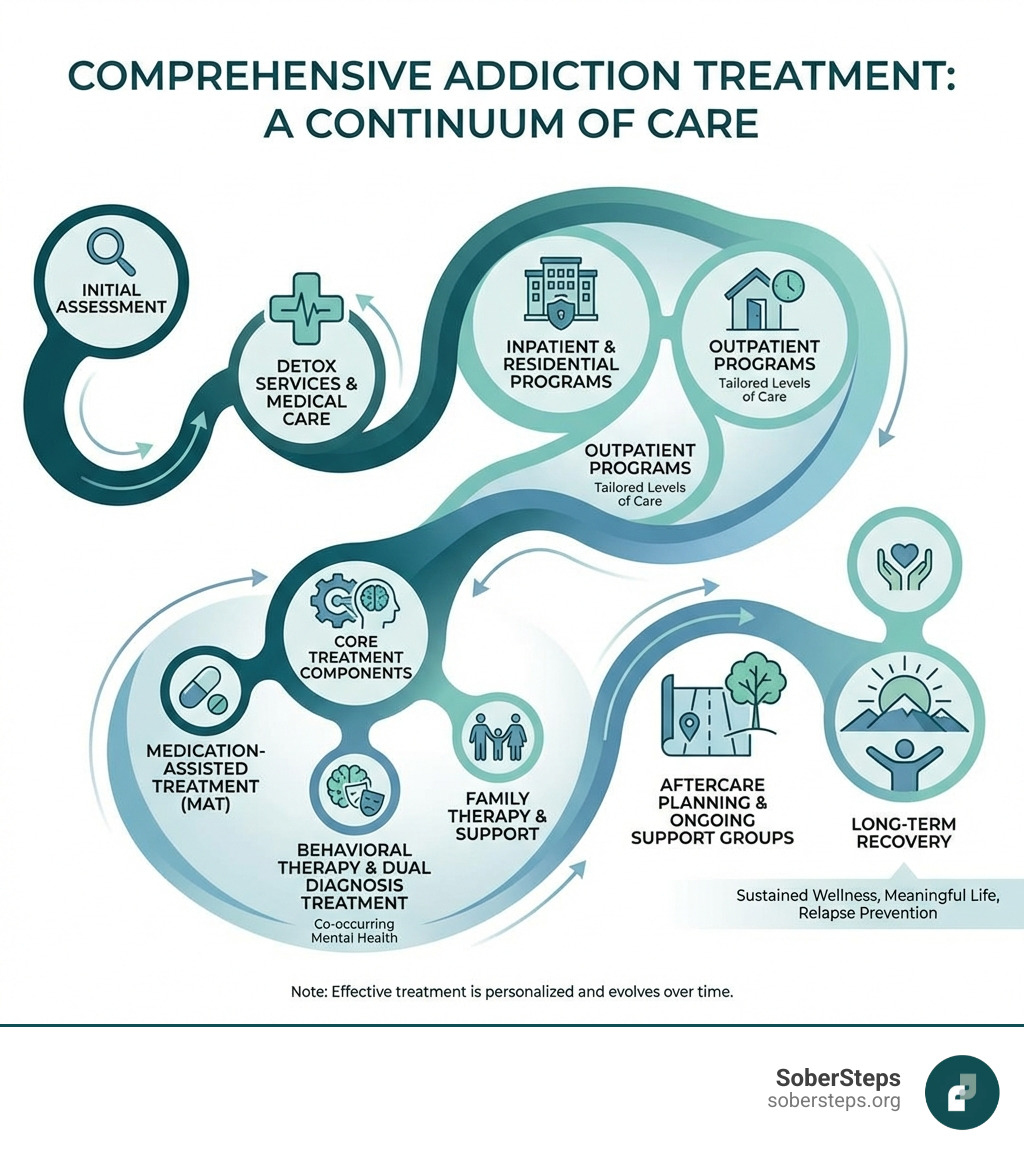
- Levels of Care – From medical detox and inpatient residential programs to outpatient treatment and aftercare support
- Dual Diagnosis Treatment – Integrated care for co-occurring mental health conditions like depression, anxiety, or PTSD
- Duration – Most people need at least 3 months of treatment for meaningful results, with longer durations often yielding better outcomes
The good news? Addiction is a treatable condition. Research shows that when people enter and remain in treatment, they can stop drug use, decrease criminal activity, and improve their lives. In fact, treatment effectiveness rates for addiction are similar to those for other chronic diseases like diabetes and hypertension.
Yet millions of Americans who need help never receive it. In 2022, more than one in six Americans aged 12 or older experienced a substance use disorder, but only a small fraction got treatment at a specialty facility. The reasons vary—stigma, cost concerns, not knowing where to start, or believing that addiction can’t be treated.
This doesn’t have to be your story.
Whether you’re exploring options for yourself or a family member, understanding what effective treatment looks like is the first step toward recovery. Treatment works, relapse doesn’t mean failure, and help is available right now.
At Sober Steps, we’ve supported thousands of individuals and families through the overwhelming process of finding quality addictions treatment, connecting them with evidence-based programs that address both addiction and co-occurring mental health needs. We’re here to walk alongside you as you take these crucial first steps toward recovery.
Get confidential help now or verify your insurance coverage to understand your treatment options.
Glossary for addictions treatment:
Understanding Addiction: A Treatable Brain Condition
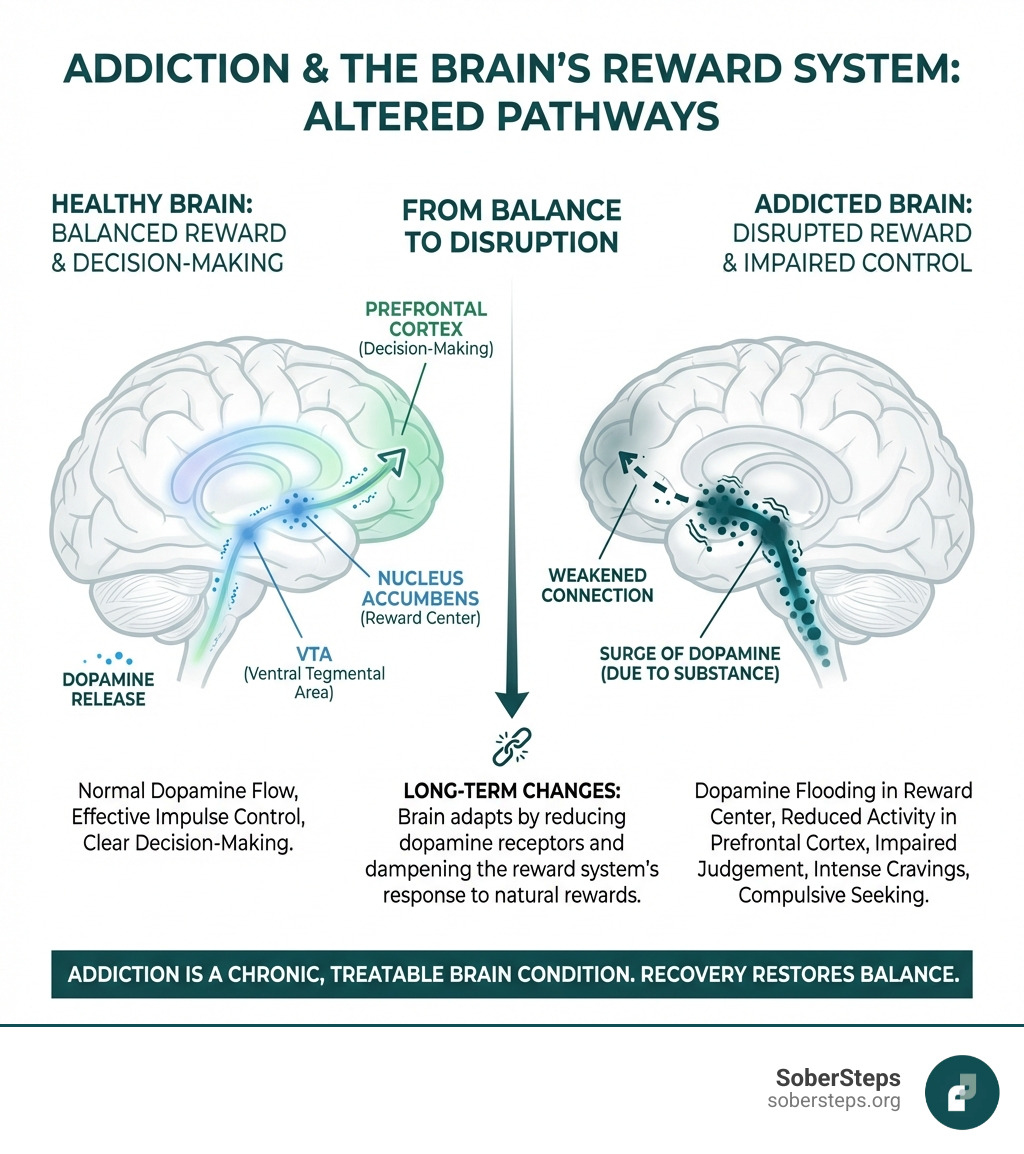
Addiction, or substance use disorder (SUD), is a complex illness characterized by an intense and, at times, uncontrollable craving for a substance. This craving leads to compulsive drug seeking and use, persisting even when devastating consequences arise. It’s not a matter of willpower or moral failing; addiction is recognized as a chronic brain disease that affects the brain’s reward, motivation, learning, memory, and inhibitory control systems.
The good news is that addiction is a treatable disorder. Research-based methods are available to help individuals stop using drugs and resume productive, fulfilling lives in recovery. Many people have found their way to lasting sobriety, and their Addiction Success Stories inspire us all.
Is Addiction a Curable Disease or a Manageable Condition?
While we often hope for a “cure” for illnesses, addiction is best understood as a chronic, manageable condition, much like other common chronic medical illnesses such as heart disease, asthma, or diabetes. Just as these conditions require ongoing management, monitoring, and lifestyle adjustments, so does addiction.
This perspective is crucial because it helps reduce the stigma often associated with addiction. It emphasizes that individuals with SUDs have a legitimate health condition, not a character flaw. There isn’t a one-time fix; instead, recovery involves long-term management strategies, which can include continuous treatment, behavioral therapies, and support systems. Our goal at SoberSteps is to help individuals build a foundation for a Long-Term Recovery: Building a Foundation for a Sober Future.
Does Relapse Mean Treatment Has Failed?
Absolutely not. Relapse is a common, often expected, part of the recovery process for chronic diseases, including addiction. Research shows that relapse rates for drug use are similar to those for other chronic medical illnesses like high blood pressure and asthma. If someone with diabetes eats too much sugar, we don’t say their diabetes treatment failed; we adjust their diet or medication. The same applies to addiction.
If relapse occurs, it doesn’t indicate a personal failure or that treatment was ineffective. Instead, it signals a need to re-evaluate the current treatment plan, make adjustments, or try a different approach. Effective addictions treatment programs are designed with relapse prevention in mind, helping individuals develop the skills to manage triggers and cravings. We believe in continuous support and helping individuals develop Relapse Prevention strategies and learn how to Help with Cravings effectively.
The Core Principles of Effective Addictions Treatment

Effective addictions treatment is guided by several core principles rooted in scientific research. These principles ensure that treatment is comprehensive, individualized, and geared toward long-term success. The National Institute on Drug Abuse (NIDA) outlines these principles, and they form the bedrock of our understanding and approach at SoberSteps. You can explore these in detail through NIDA’s Principles of Drug Addiction Treatment: A Research-Based Guide.
Here are some of the key principles:
- No Single Treatment Is Appropriate for Everyone: Each person’s journey with addiction is unique, influenced by their specific substance of choice, co-occurring conditions, personal history, and cultural background. Therefore, treatment must be individualized.
- Treatment Needs to Be Readily Available: When someone is ready for help, access to treatment should be immediate. Delays can lead to lost opportunities and increased risks.
- Effective Treatment Attends to Multiple Needs: Beyond just stopping drug use, comprehensive treatment addresses an individual’s medical, psychological, social, vocational, and legal problems.
- Remaining in Treatment for an Adequate Period Is Critical: Research indicates that most individuals need at least 3 months in treatment for significant reductions in drug use, and longer durations often yield better outcomes.
- Continuous Assessment and Modification: An individual’s treatment and services plan must be assessed continually and modified as necessary to ensure it remains relevant and effective.
These principles guide the development of comprehensive Addiction Treatment Programs: A Complete Guide.
What Are the Key Components of a Successful Program?
A successful addictions treatment program takes a holistic approach, recognizing that addiction impacts every aspect of a person’s life. The best programs are designed to address the “whole person” – not just the substance use itself, but all the underlying and co-occurring issues. This includes:
- Medical Needs: Addressing any physical health issues, including withdrawal symptoms, chronic illnesses, or infectious diseases.
- Mental Health: Providing integrated treatment for co-occurring mental health disorders like depression, anxiety, or PTSD.
- Social Support: Rebuilding healthy relationships, improving communication skills, and connecting individuals with supportive communities.
- Occupational Needs: Helping individuals develop vocational skills, find employment, and regain stability in their careers.
- Family Needs: Engaging family members in therapy to improve communication and provide support, as addiction often affects the entire family unit.
- Legal Issues: Assisting with any legal challenges that may have arisen due to substance use.
Such comprehensive care is often delivered through various Levels of Care, ensuring that all facets of an individual’s life are supported on their path to recovery. If you’re ready to explore these options, Get Help Addiction is just a call away.
The Importance of Personalized Addictions Treatment Plans
Just as no two people are exactly alike, no two addiction journeys are identical. This is why personalized addictions treatment plans are so vital. A one-size-fits-all approach simply doesn’t work. We believe that treatment settings, interventions, and services must be carefully matched to an individual’s particular problems and needs.
This personalization takes into account:
- The Specific Substance: Different substances require different detox protocols and may respond better to certain medications or therapies.
- Co-occurring Conditions: The presence of mental health disorders or chronic physical ailments necessitates integrated and custom care.
- Patient’s History: Past trauma, family dynamics, and previous treatment experiences all influence the most effective path forward.
- Cultural Background: Treatment should be culturally sensitive and appropriate, respecting an individual’s values and beliefs.
An individualized approach often includes Individual Therapy Addiction to dig into personal triggers and coping mechanisms. To learn more about how we tailor treatment to your unique situation, explore our Treatment Options: Ultimate Guide.
Evidence-Based Treatment Modalities and Therapies
When it comes to addictions treatment, we rely on modalities and therapies that have been rigorously tested and proven effective through scientific research. These evidence-based approaches provide the most reliable path to recovery.
| Treatment Type | Opioid Addiction | Alcohol Addiction | Stimulant/Cannabis Addiction |
|---|---|---|---|
| Medication-Assisted Treatment (MAT) | Buprenorphine, Methadone, Naltrexone (often first-line) | Naltrexone, Acamprosate, Disulfiram (often combined with therapy) | No FDA-approved medications currently available |
| Behavioral Therapies | Essential alongside MAT, e.g., CBT, Contingency Management, Family Therapy | Essential alongside MAT, e.g., CBT, Motivational Improvement Therapy | Primary treatment, e.g., CBT, Contingency Management, The Matrix Model |
What Medications and Devices Are Used in Addictions Treatment?
Medications play a crucial role in addictions treatment for certain substances, helping to manage withdrawal symptoms, reduce cravings, and prevent relapse. These are often most effective when combined with behavioral therapies.
- Medication-Assisted Treatment (MAT): This approach combines medications with counseling and behavioral therapies. It’s particularly vital for opioid and alcohol use disorders.
- Opioid Treatment: For conditions like Opioid addiction (including prescription pain relievers, heroin, or fentanyl), medication is often the first line of treatment.
- Buprenorphine: Reduces cravings and withdrawal symptoms.
- Methadone: Stabilizes individuals and reduces opioid cravings.
- Naltrexone: Blocks the euphoric effects of opioids and alcohol.
- Alcohol Treatment: Medications are also available to help treat Alcohol addiction.
- Naltrexone: Reduces alcohol cravings.
- Acamprosate: Helps manage protracted withdrawal symptoms.
- Disulfiram: Produces unpleasant effects when alcohol is consumed, deterring drinking.
- Nicotine Replacement Therapies (NRTs): Patches, gum, lozenges, inhalers, and nasal sprays can help manage nicotine cravings and withdrawal. Oral medications like bupropion and varenicline are also effective.
For addictions to stimulants (like cocaine or methamphetamine) or cannabis, there are currently no FDA-approved medications. In these cases, behavioral therapies are the primary treatment approach.
How Do Behavioral Therapies Contribute to Recovery?
Behavioral therapies are the cornerstone of most addictions treatment programs. They empower individuals to understand and change the patterns of thinking and behavior that contribute to substance use. These therapies help people:
- Modify Attitudes: Shift perspectives about substance use and recovery.
- Change Behaviors: Replace destructive habits with healthier coping mechanisms.
- Develop Coping Skills: Learn practical strategies to manage triggers, cravings, and high-risk situations.
- Manage Stress: Acquire techniques to deal with life’s pressures without resorting to substance use.
Through various therapeutic approaches, individuals gain insights into their addiction, build resilience, and develop the tools needed for long-term sobriety. To learn more about how therapy can support your journey, visit our Therapy page. Specific therapies like Cognitive Behavioral Therapy and Dialectical Behavior Therapy are particularly effective.
What Are Common Evidence-Based Therapies?
A range of evidence-based behavioral therapies are commonly used in addictions treatment, each offering unique benefits:
- Cognitive Behavioral Therapy (CBT): Helps individuals identify and challenge problematic thoughts and feelings that lead to substance use, teaching them new coping strategies. It’s also excellent for co-occurring conditions like depression and anxiety.
- Dialectical Behavior Therapy (DBT): A form of CBT that focuses on teaching skills in four key areas: mindfulness, distress tolerance, emotion regulation, and interpersonal effectiveness. It’s particularly useful for individuals with intense emotional dysregulation.
- Motivational Improvement Therapy (MET): Helps individuals resolve ambivalence about engaging in treatment and stopping drug use, strengthening their internal motivation for change.
- Family Behavior Therapy (FBT): Involves both the individual and their family members, addressing substance use along with co-occurring problems like conduct disorders and family conflict. It helps improve family dynamics and communication.
- Twelve-Step Facilitation (TSF): Actively engages individuals in 12-step programs like Alcoholics Anonymous (AA) or Narcotics Anonymous (NA), providing social support and a framework for abstinence.
These therapies can be delivered through Individual Therapy or Group Therapy settings, offering different benefits for various stages of recovery.
Navigating the Levels of Care on the Road to Recovery
The path to recovery is rarely linear and often involves different levels of care, each designed to meet specific needs. Understanding these stages is key to a successful journey.
Detoxification vs. Comprehensive Treatment: What’s the Difference?
Detoxification (Detox) is often the critical first step in addictions treatment, especially for substances that cause significant physical withdrawal symptoms. Its primary purpose is to safely manage the acute physical symptoms of withdrawal until the substance is no longer present in the body. This process is typically medically supervised to ensure comfort and safety, preventing potentially dangerous complications.
However, it’s crucial to understand that detox alone is not comprehensive treatment. While it helps individuals get through the initial physical discomfort, it does little to address the psychological, social, and behavioral issues underlying addiction. Without subsequent comprehensive treatment, individuals who only undergo detox are at a high risk of relapse. Medically supervised Detox is a beginning, not an end. For more details on this crucial first step, explore our page on Medical Detox Programs.
Addressing Concurrent Disorders and Mental Health
It is incredibly common for individuals struggling with addiction to also experience co-occurring mental health issues. In fact, research indicates that a majority of people seeking alcohol or drug rehab also suffer from mental health problems. These are often referred to as “dual diagnoses” or “concurrent disorders.” Conditions like Anxiety, Depression, and PTSD frequently co-exist with substance use disorders.
When addiction and mental health issues are intertwined, treating them separately is often ineffective. The best approach is integrated treatment, where both conditions are addressed simultaneously and holistically. This ensures that the mental health symptoms aren’t triggering substance use, and vice versa. Our Dual Diagnosis programs are specifically designed for these complex needs, recognizing the deep connection between Mental Health and Substance Use Co-occurring Disorders.
How Aftercare Programs Support Long-Term Sobriety
Recovery from addiction is a lifelong journey, and initial treatment is just the beginning. Aftercare programs are essential for supporting long-term sobriety and preventing relapse. These programs provide continuing care and support as individuals transition back into their daily lives.
Key components of effective aftercare often include:
- Relapse Prevention Planning: Developing strategies to identify and cope with triggers.
- Support Groups: Participation in peer-led groups like AA, NA, or SMART Recovery provides ongoing encouragement and a sense of community. Our Online Addiction Recovery Support Groups offer flexible options.
- Sober Living Homes: Structured environments that bridge the gap between intensive treatment and independent living.
- Ongoing Counseling: Regular individual or group therapy sessions to continue working on coping skills and address new challenges.
Aftercare ensures that individuals have a robust support system in place, helping them steer the complexities of life without returning to substance use. We emphasize the importance of Aftercare as a continuous process, not just a phase.
Specialized Support and Healing Environments
The environment and the specific type of support received can significantly impact the healing process. We believe in creating spaces and programs that cater to unique needs, fostering comfort, privacy, and specialized care.
Unique Support for Adolescents and Young Adults
Adolescents and young adults face unique challenges in addiction recovery due to their ongoing brain development and specific social pressures. Their brains are still maturing, particularly in areas related to decision-making, judgment, and self-control. This means that addictions treatment programs for this age group must be uniquely custom to their developmental needs.
These programs often emphasize:
- Family Involvement: Active participation from family members or caregivers is a key component, as family dynamics play a significant role in adolescent development and recovery.
- Integrated Systems: Connecting treatment with school, social activities, and peer relationships to build a supportive, drug-free lifestyle.
- Age-Appropriate Therapies: Utilizing behavioral therapies adapted for younger individuals.
- Medication Options: For adolescents aged 16 and over with opioid use disorder, one medication, buprenorphine, is approved and can be a vital part of their treatment plan.
We advocate for programs that address the specific needs of young people, as outlined in the Principles of Adolescent Substance Use Disorder Treatment.
The Role of Family, Environment, and Life Skills
Beyond individual therapy, several factors contribute to a successful recovery journey:
- Family Therapy: Addiction is often considered a family disease, impacting everyone close to the individual. Family therapy can improve communication, heal fractured relationships, and equip family members with strategies to support their loved one’s recovery.
- Building Resilience with Positive Psychology: Recovery isn’t just about stopping substance use; it’s about reinventing oneself as a happier, stronger person. Positive psychology focuses on building strengths, fostering optimism, and developing coping mechanisms to steer life’s challenges.
- Constructive Life Skills: Effective treatment programs help individuals develop essential life skills for successful functioning. This includes everything from stress management and emotional regulation to vocational training and financial literacy.
- Smaller, More Intimate Facilities: Some individuals thrive in smaller, more intimate treatment settings, which can offer highly personal and individualized care, ensuring no one falls through the cracks.
- Comfortable and Private Environments: A serene, private, and comfortable environment can significantly contribute to the healing process. This allows individuals to focus on their recovery without external distractions, promoting reflection and inner peace.
We recognize that a supportive environment, coupled with robust life skills and family involvement, creates a powerful foundation for lasting recovery.
How to Find the Right Addiction Treatment for You
Taking the first step toward seeking help for addictions treatment can feel daunting, but it’s the most courageous decision you can make. Finding help is the first step, and we want you to know that you don’t have to wait. If you or a loved one needs support, please don’t hesitate to reach out. Get Help Now or access Immediate Addiction Help.
Understanding Accreditation and How to Pay for Rehab
When choosing an addictions treatment center, ensure you’re selecting a high-quality, reputable facility. Accreditation standards are a key indicator of quality care. Look for centers accredited by organizations such as:
- The Joint Commission (JCAHO): Evaluates and accredits healthcare organizations and programs in the U.S.
- Commission on Accreditation of Rehabilitation Facilities (CARF): An international, independent, nonprofit accreditor of health and human services.
These accreditations ensure that a facility meets rigorous standards for patient care, safety, and ethical practices.
Understanding how to pay for rehab is another significant concern for many families. Fortunately, there are various options:
- Private Insurance: Many private health insurance plans offer coverage for addictions treatment. We can help you Verify Insurance to understand your benefits.
- Medicaid and Medicare: These government programs provide coverage for substance use disorder treatment for eligible individuals.
- Self-Pay Options: For those without insurance, self-pay is an option, sometimes with sliding scale fees based on income.
- Financing: Some facilities offer payment plans or financing options.
Don’t let financial concerns deter you from seeking help. Explore our guide on How Do I Pay for Addiction Treatment? to understand your options.
Taking the First Step Toward Recovery
Overcoming the fear and acknowledging the problem is the hardest part, but it’s the gateway to healing. We understand the courage it takes to reach out for help. At SoberSteps, we are an independent platform dedicated to helping individuals and families explore addictions treatment and recovery options. We offer a confidential 24/7 helpline that connects callers to vetted, paid advertiser treatment providers. Our goal is to simplify the process of finding quality care that aligns with your specific needs.
The First Step Is The Hardest: How To Begin Addiction Recovery, but it’s a step you don’t have to take alone. We can help you Find The Best Drug Rehab Centers Near Me and guide you through the process. Your journey to a healthier, sober life starts now.