

Understanding Your Path to Recovery from Alcohol Use Disorder
Alcoholism treatment program options are more comprehensive and accessible than ever before. If you’re searching for help, here’s what you need to know:
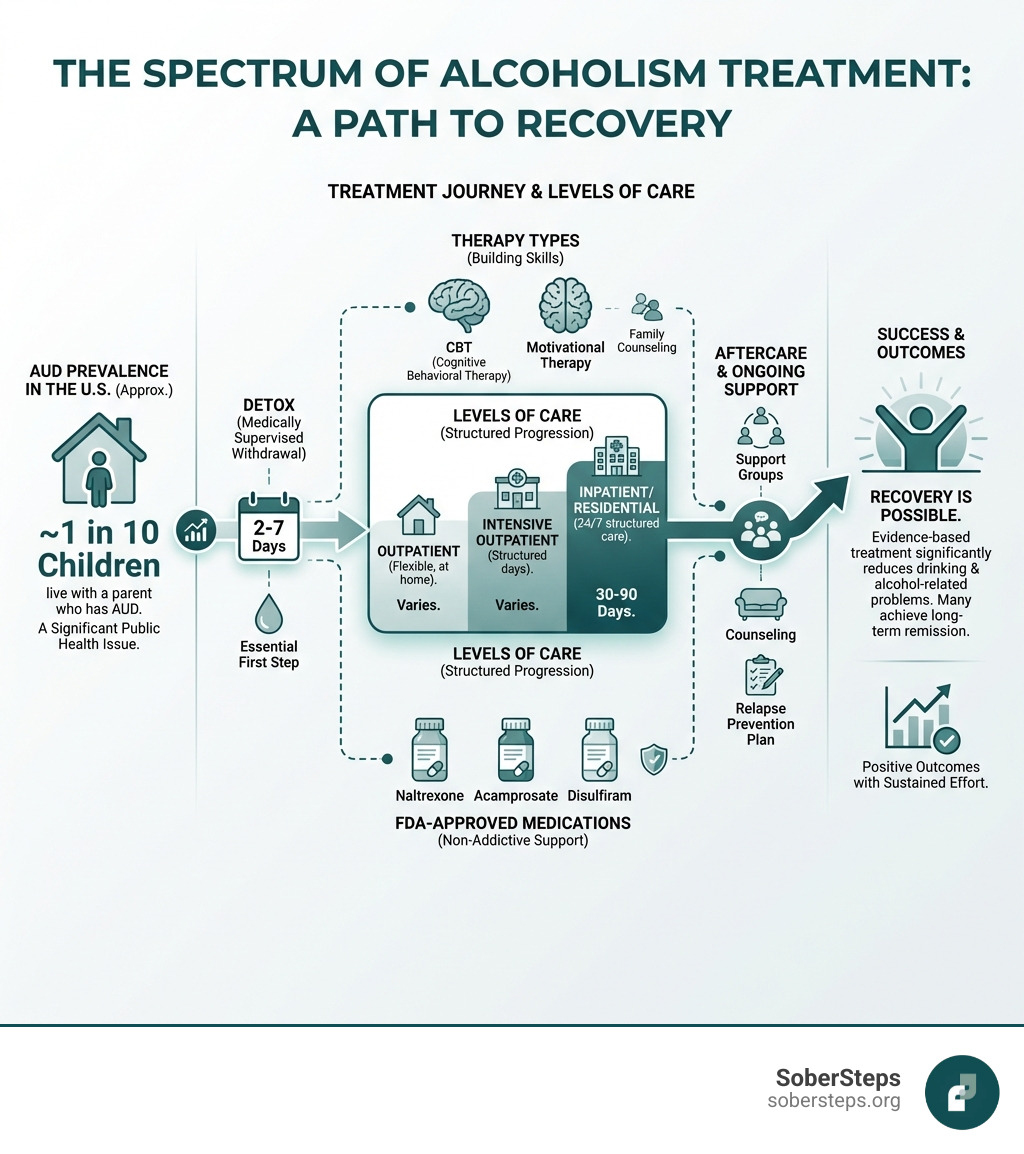
Quick Guide to Alcoholism Treatment Programs:
- Detox: Medically supervised withdrawal (2-7 days)
- Inpatient/Residential: 24/7 care in a structured environment (30-90 days)
- Outpatient Programs: Flexible treatment while living at home (varies)
- Therapy: CBT, motivational therapy, family counseling
- Medication: Naltrexone, Acamprosate, Disulfiram (non-addictive)
- Aftercare: Ongoing support groups and counseling
Alcohol use disorder (AUD) is a major public health issue, with approximately 1 in 10 children living in a home with a parent who has AUD. But here’s the important part: recovery is absolutely possible. Today, you have more treatment choices than ever, from telehealth sessions to intensive inpatient programs. Whether the AUD is mild, moderate, or severe, evidence-based treatment can make a real difference, helping people reduce their drinking and related problems.
At SoberSteps, we are dedicated to supporting you on your recovery journey. We offer comprehensive resources to help you understand and steer every alcoholism treatment program option available, connecting individuals and families with quality care.
If you or a loved one is struggling with alcohol, contact SoberSteps for confidential help right now. Our team is here to guide you through your options and connect you with the right resources.
Recognizing the Need for Help: Signs of Alcohol Use Disorder

Understanding the signs of alcohol use disorder (AUD) is the first step toward finding the right alcoholism treatment program. AUD is a treatable medical condition—not a moral failing—characterized by an inability to control alcohol use despite negative consequences. While terms like ‘alcoholism’ are common, ‘alcohol use disorder’ is the clinical term, covering a spectrum from mild to severe. A diagnosis is made if two or more of the following symptoms are present within a 12-month period.
Here are some diagnostic questions, based on clinical criteria, to help you assess the situation:
- In the past year, have you had times when you ended up drinking more, or longer, than you intended?
- More than once wanted to cut down or stop drinking, or tried to, but couldn’t?
- Spent a lot of time drinking, being sick from drinking, or getting over other aftereffects?
- Wanted a drink so badly you couldn’t think of anything else?
- Found that drinking—or being sick from drinking—often interfered with taking care of your home or family? Or caused job troubles? Or school problems?
- Continued to drink even though it was causing trouble with your family or friends?
- Given up or cut back on activities you found important, interesting, or pleasurable so you could drink?
- More than once gotten into situations while or after drinking that increased your chances of getting hurt?
- Continued to drink even though it was making you feel depressed or anxious or adding to another health problem? Or after having had an alcohol-related memory blackout?
- Needed to drink much more than you once did to get the effect you want? Or found that your usual number of drinks had much less effect than before?
- Found that when the effects of alcohol were wearing off, you had withdrawal symptoms, such as trouble sleeping, shakiness, restlessness, nausea, sweating, a racing heart, a seizure, or sensing things that were not there?
Answering ‘yes’ to two or more questions indicates an AUD. The more ‘yes’ answers, the more severe the disorder and the more urgent the need for help. Recognizing these signs is a difficult but crucial first step. You are not alone. The first step is the hardest: How to begin addiction recovery.
Call to Action: If these questions resonate with you, Take our self-assessment quiz to see if you or someone you care about may need help.
Understanding the Severity
The number of symptoms determines the severity of the AUD, which helps tailor the right alcoholism treatment program:
- Mild AUD: 2-3 symptoms
- Moderate AUD: 4-5 symptoms
- Severe AUD: 6 or more symptoms
Early intervention is key to improving outcomes. For a deeper understanding, visit our guide: Understanding Alcohol Use Disorder.
Co-Occurring Disorders
AUD often co-occurs with other challenges. About half of those with a Substance Use Disorder (including AUD) also have a mental health disorder like depression, anxiety, or PTSD, a condition known as a dual diagnosis. Alcohol is often used to self-medicate these underlying issues. It is crucial to treat both conditions simultaneously for lasting recovery. An integrated alcoholism treatment program will address the whole person, not just the addiction. Find help for co-occurring disorders.
Call to Action: If you suspect you or a loved one are struggling with both alcohol use and mental health concerns, Contact SoberSteps for a confidential assessment to explore integrated treatment options.
Navigating Your Alcoholism Treatment Program: Key Components and Therapies

Starting an alcoholism treatment program is less daunting when you understand its components. Modern treatment uses evidence-based practices delivered by a multidisciplinary team of experts. Because recovery is not one-size-fits-all, personalized care plans are created to address your unique physical, mental, and emotional needs, guiding you toward sobriety. Explore your treatment options.
Medically Supervised Detox
For many, the first step in an alcoholism treatment program is medically supervised detox. Stopping alcohol can cause withdrawal symptoms ranging from uncomfortable (tremors, anxiety) to life-threatening (seizures, delirium tremens). For safety, detox must be medically supervised. A healthcare team monitors vital signs and may administer medications to manage symptoms. Detox typically lasts 2 to 7 days. While mild withdrawal can sometimes be managed on an outpatient basis, severe cases require inpatient care.
Learn about the alcohol withdrawal timeline to understand what to expect.
Call to Action: If you or a loved one needs immediate help with alcohol withdrawal, don’t wait. Speak with a detox specialist now for guidance and support.
The Role of Behavioral Therapies
After detox (or for those who don’t need it), behavioral therapies are the cornerstone of an alcoholism treatment program. Also known as alcohol counseling, these therapies help you change thought patterns, develop coping skills, and address the root causes of alcohol use. You’ll learn to manage stress, identify triggers, and handle high-risk situations. Find the right therapy for you.
Here are some of the most effective behavioral therapies used in AUD treatment:
-
Cognitive-Behavioral Therapy (CBT): This popular therapy helps you identify triggers for heavy drinking. CBT teaches you to manage stress and change the thoughts that lead to drinking, replacing negative patterns with positive ones. More on Cognitive Behavioral Therapy.
-
Motivational Improvement Therapy: This therapy helps you build motivation to change your drinking habits. It’s ideal for those who are ambivalent about quitting, as it helps you explore your personal reasons for change and commit to sobriety.
-
Dialectical Behavior Therapy (DBT): DBT is useful for those with co-occurring disorders or emotional regulation issues. It teaches skills in mindfulness, distress tolerance, and emotional regulation to help you cope with painful feelings and improve relationships. Learn about Dialectical Behavior Therapy.
-
Family & Couples Counseling: Addiction impacts the whole family. This counseling involves loved ones to help repair relationships, improve communication, and build a supportive home environment for recovery.
Call to Action: Ready to explore how therapy can transform your life? Explore therapy options at SoberSteps and find the right fit for you.
Medications in AUD Treatment
Medications are a significant, non-addictive tool in a comprehensive alcoholism treatment program. They help manage AUD like other chronic diseases, reducing cravings and discouraging alcohol use, not replacing one addiction with another. Medications for AUD.
Three medications are approved in the United States to treat AUD:
-
Naltrexone: This medication (pill or injection) reduces the urge to drink and blocks alcohol’s pleasurable effects. If you drink, you won’t feel the ‘high,’ making it easier to stop.
-
Acamprosate: This pill eases post-acute withdrawal symptoms like anxiety and restlessness, making it easier to maintain abstinence after you’ve stopped drinking.
-
Disulfiram: This pill creates an unpleasant physical reaction (nausea, flushing, heart palpitations) if you consume alcohol, acting as a powerful deterrent to maintain abstinence.
Call to Action: Curious if medication-assisted treatment could be a part of your recovery journey? Learn if medication-assisted treatment is right for you by consulting with a healthcare professional.
A Spectrum of Care: Finding the Right Treatment Setting
Choosing the right alcoholism treatment program is a personal decision based on your needs, AUD severity, and life circumstances. Treatment exists on a spectrum of care, allowing for a flexible, step-down approach as you recover. An assessment will determine the best starting point for you. Explore different levels of care.
The American Society of Addiction Medicine (ASAM) defines several levels of care, from outpatient services to intensive inpatient care, ensuring a match for every situation.
Choosing the Right Alcoholism Treatment Program: Inpatient vs. Outpatient
The decision between inpatient and outpatient care is one of the most significant choices you’ll make when selecting an alcoholism treatment program. Both have distinct benefits and are suitable for different stages of recovery and individual needs.
| Feature | Inpatient/Residential Treatment | Outpatient Treatment |
|---|---|---|
| Structure | Highly structured, 24/7 supervision, removed from daily triggers. | Flexible scheduling, allows you to maintain work, school, and family responsibilities. |
| Cost | Generally higher due to accommodation, meals, and constant care. | Generally lower, as it doesn’t include residential costs. |
| Intensity | High intensity, immersive therapy, group sessions, individual counseling, and medical support. | Varies from standard outpatient (weekly sessions) to Intensive Outpatient (IOP) or Partial Hospitalization (PHP) with multiple sessions per week. |
| Ideal Candidate | Individuals with severe AUD, co-occurring mental health issues, unstable home environments, or a history of relapse. Often begins with medical detox. | Individuals with mild to moderate AUD, a stable home environment, strong social support, or those transitioning from inpatient care. Requires self-discipline and commitment. |
| Benefits | Provides a safe, distraction-free environment for healing, comprehensive care, and peer support. | Allows integration of recovery skills into daily life, maintains privacy, and supports ongoing responsibilities. Can be a step-down option from inpatient. |
We offer resources for both types of programs: Find an inpatient program; Explore outpatient options.
Specialized Programs
Within the inpatient and outpatient categories, there are various specialized alcoholism treatment program options:
-
Residential Treatment: These live-in programs provide 24/7 care in a structured, supportive environment away from daily triggers. Lasting 30-90+ days, they offer intensive therapy, education, and recreation. Find a residential rehab center.
-
Partial Hospitalization Programs (PHP): Also known as day treatment, PHP involves intensive therapy for several hours a day, multiple days a week. You return home at night, receiving a high level of care without a residential stay. Learn about PHP.
-
Intensive Outpatient Programs (IOP): IOPs offer structured therapy a few times a week for several hours per session. This flexible option allows you to maintain work or school and is an excellent step-down from more intensive care. Explore IOP options.
-
Telehealth & Online Options: Virtual recovery is now more accessible than ever. Telehealth provides therapy, group meetings, and medical consultations via phone or video, offering a flexible and private alternative for those with busy schedules or in remote areas. Find online recovery support.
Call to Action: The choices can be overwhelming, but we’re here to help you make an informed decision. Contact us to discuss which program is right for you and your unique situation.
Finding and Paying for Quality Treatment
After learning about the types of alcoholism treatment program, the next step is finding and paying for a quality provider. This process can be complex, but we can help. SoberSteps simplifies your search by connecting you with accredited, evidence-based care providers. Get confidential help now.
How to Locate Quality Providers
Finding a quality alcoholism treatment program requires some research, but it’s worth the effort. Here’s how to approach it:
- Primary Care Provider: Your doctor can be a great first step, referring you to addiction specialists.
- Reputable Online Resources: Government resources like the NIAAA Alcohol Treatment Navigator and the SAMHSA National Helpline (1-800-662-HELP) offer confidential information and treatment locators.
- SoberSteps Admissions Team: Our team specializes in connecting you with appropriate treatment providers across the United States, helping you steer your options.
When evaluating providers, ask about their treatment approach (is it evidence-based and personalized?), staff qualifications, how they measure success, and how they handle relapse.
Call to Action: Don’t go through this alone. Speak with our admissions team for guidance on locating quality alcoholism treatment program providers.
How to Pay for an Alcoholism Treatment Program
Cost is a common concern, but many options make an alcoholism treatment program affordable. The most expensive program isn’t always the best.
- Insurance Coverage: Most health insurance plans, including employer-based and ACA marketplace plans, cover addiction treatment thanks to the Mental Health Parity and Addiction Equity Act (MHPAEA). Verify your insurance coverage with us; we can help you understand your benefits.
- Private Pay: This option offers flexibility and often quicker admission.
- Financing Options: Many centers offer payment plans or work with financing companies.
- State-Funded Programs: States offer publicly funded programs for eligible residents, though there may be waitlists.
- Sliding Scale Fees: Some providers adjust fees based on your income.
Don’t let financial concerns prevent you from seeking help. There are always options. Learn about paying for treatment to understand the various avenues available.
Call to Action: Navigating insurance and payment can be complex. Speak with our admissions team about your options – they can help you understand your coverage and explore financial solutions for your alcoholism treatment program.
Life After Treatment: Aftercare and Ongoing Support
Completing an initial alcoholism treatment program is a huge achievement, but recovery is a lifelong journey. Aftercare and ongoing support are crucial for sustaining sobriety. This phase focuses on relapse prevention, healthy habits, and building a strong support network. Build a foundation for long-term recovery.
The Importance of Aftercare
Aftercare is the continued support you receive after a formal alcoholism treatment program. It helps you steer daily life in sobriety and provides a safety net. Effective aftercare includes:
- Continuing Care Plans: Personalized plans developed with your clinical team that outline the next steps in your recovery.
- Sober Living Homes: These homes offer a structured, substance-free environment with peer support, bridging the gap between treatment and independent living. Sober living homes.
- Ongoing Therapy: Continued therapy helps reinforce coping skills and provides emotional support.
- Relapse Prevention Strategies: Learning to identify triggers, manage cravings, and handle high-risk situations is vital for long-term sobriety. Relapse prevention strategies.
Call to Action: Aftercare is vital for sustained sobriety. Connect with aftercare resources through SoberSteps to build your lasting foundation.
Building a Support Network
A strong support network is one of the most powerful tools in long-term recovery. It provides accountability, understanding, and a sense of belonging.
- Mutual-Support Groups: Groups like Alcoholics Anonymous (AA), SMART Recovery, and others offer peer-led meetings to share experiences. Try different groups to find one that fits.
- Peer Support: Connecting with peers reduces isolation and provides encouragement.
- Finding Sober Hobbies and Activities: Replace drinking routines with new, healthy hobbies like sports, arts, or volunteering to build a fulfilling sober life.
Hearing stories of success can be incredibly motivating. Read addiction success stories to inspire your own journey.
How Family and Friends Can Help
Family and friends play a critical role in supporting someone undergoing an alcoholism treatment program. Their understanding and patience can significantly impact recovery.
- Education: Loved ones should learn about AUD to better understand the recovery process.
- Setting Boundaries: Healthy boundaries are essential to prevent enabling and promote accountability.
- Family Therapy: Family therapy can repair relationships, improve communication, and create a supportive home, which studies show increases the chances of staying sober.
- Self-Care: Family and friends must also practice self-care. Groups like Al-Anon and Alateen provide support for those affected by a loved one’s drinking.
A guide to family addiction resources is available to help you steer this journey together.
Call to Action: If you’re a family member or friend seeking guidance, Contact SoberSteps for family support resources to learn how you can best support your loved one and yourself.
Frequently Asked Questions about Alcoholism Treatment
We understand you likely have many questions about alcoholism treatment program options. Here are answers to some common inquiries:
How long does an alcoholism treatment program last?
The length of an alcoholism treatment program varies by individual need and program type. Detox is typically 2-7 days, while residential programs are often 30-90 days. Outpatient programs can last for months. The key is allowing enough time to stabilize and develop coping skills. Long-term aftercare is also crucial. Learn more about program lengths.
Is relapse a sign of failure?
No. Relapse is a common part of recovery from a chronic condition like AUD, not a sign of failure. It’s an opportunity to learn about triggers and adjust your alcoholism treatment program. If a relapse happens, the most important thing is to return to your recovery plan, learn from the experience, and move forward. We offer Help with cravings and other challenges.
Can I be forced into treatment?
Involuntary commitment laws vary by state and are typically used only if a person is a danger to themselves or others. However, voluntary treatment is far more effective. Encouraging a loved one to seek help through compassionate communication or a professional intervention is the preferred approach. For immediate support, explore our Immediate Addiction Help resources.
Call to Action: Still have questions about alcoholism treatment program options? Our team is here to provide clear, compassionate answers. Contact SoberSteps for answers to your questions today.
Your Path to Recovery Starts Today
The journey to recovery from alcohol use disorder is a testament to resilience, courage, and hope. It’s a path that can be challenging but is ultimately profoundly rewarding, leading to a life of health, purpose, and fulfillment. Recovery is a journey, not a destination, and every step forward, no matter how small, is a victory.
If you or a loved one is struggling, please know that hope and healing are achievable. Taking that first step—reaching out for help—is the most crucial decision you can make. At SoberSteps, we believe everyone deserves the chance to live a life free from the grip of addiction. We provide a confidential helpline to connect you with trusted treatment providers and resources across the United States. Our team is dedicated to helping you explore your options, understand the process, and find the right alcoholism treatment program for your unique needs.
Don’t let another day pass in silence. Your new beginning is waiting. Take the first step toward recovery today.
Call to Action: You don’t have to face this alone. Contact SoberSteps now for a confidential assessment and start your recovery journey.