
Why Anonymous Support Can Save Your Life
Anonymous hotline mental health services provide a lifeline when you need support but aren’t ready to share your identity. Here’s what you need to know right now:
Quick Access to Anonymous Mental Health Support:
- Call 988 – National Suicide & Crisis Lifeline (24/7, free, confidential)
- Text HOME to 741741 – Crisis Text Line for immediate text support
- Call (844) 491-5566 – SoberSteps confidential support line
- Chat online – Many hotlines offer web-based anonymous chat
What Makes These Hotlines Anonymous:
- No name required
- Your phone number stays private
- Free to use, no insurance needed
- Available 24/7, every day of the year
- Trained counselors provide judgment-free support
When you’re struggling with overwhelming emotions, anxiety, depression, or substance use, you don’t have to face it alone. Research shows that 80% of people who contact the 988 Lifeline feel less suicidal after the conversation. The beauty of anonymous hotlines is simple: you can reach out without fear of judgment or exposure. You control what you share, and help is just a call, text, or chat away.
At Sober Steps, we connect individuals with confidential support for mental health and substance use challenges. We believe in respecting your privacy while providing the help you need. This guide will walk you through finding and using the right anonymous hotline for your situation. For immediate, confidential guidance, call us anytime at (844) 491-5566.
What is an Anonymous Mental Health Hotline and How Does It Work?
An anonymous hotline mental health service is a free, confidential resource designed to provide immediate support to individuals experiencing emotional distress or mental health crises. Think of it as a safe, judgment-free space available 24/7 via phone call, text message, or online chat. The core purpose is to offer in-the-moment crisis intervention and emotional support, unlike traditional therapy which involves scheduled appointments.
Many hotlines, like the 988 Suicide & Crisis Lifeline, are national services connecting you to local crisis centers. Others, like Crisis Text Line, operate primarily through text. At SoberSteps, our confidential hotline at (844) 491-5566 provides a similar service, offering a safe space to discuss mental health and substance use concerns without fear of judgment.
The Process: From Reaching Out to Finding Relief
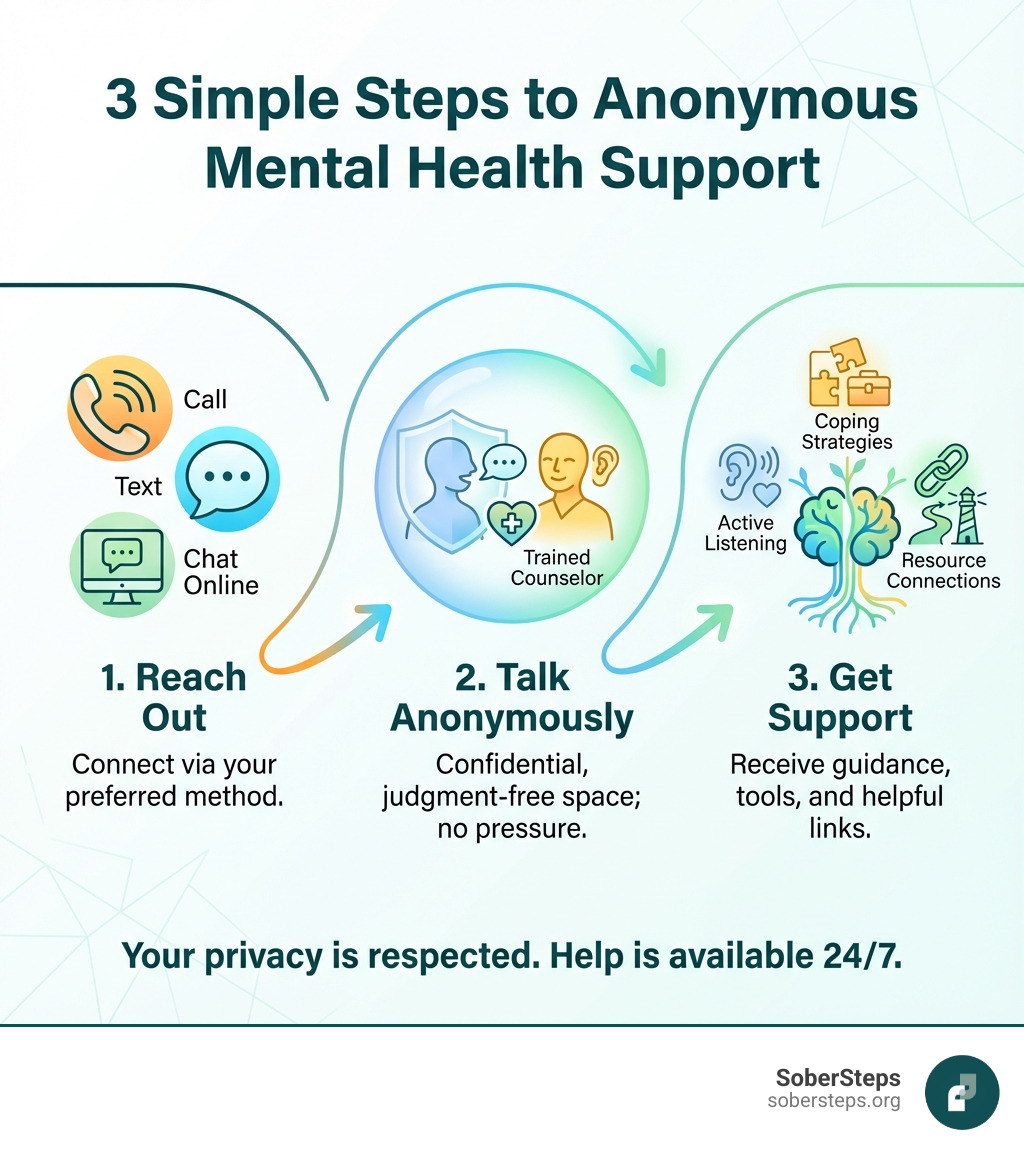
Using an anonymous hotline mental health service is designed to be straightforward. Here’s a general idea of what happens:
- Initial Contact: You initiate contact by calling a toll-free number (like 988), sending a text (like HOME to 741741), or starting an online chat.
- Connection: Your call is often routed by area code to a nearby crisis center. After a potentially short wait, you’ll be connected with a trained crisis counselor or volunteer.
- Support & Problem-Solving: The responder’s primary role is to listen with empathy. In this safe space, you can express your feelings, explore coping strategies, and work on de-escalating the crisis.
- Resource Referral: If appropriate and you’re open to it, the responder might offer referrals to local mental health services or other resources for ongoing help.
This process is built on immediate, non-judgmental support. The goal isn’t to solve all your problems, but to help you feel more stable and empowered.
What to Expect from an Anonymous Hotline Mental Health Conversation
When you connect with an anonymous hotline mental health service, it’s normal to feel nervous. Knowing what to expect can help.

First, expect a judgment-free space. The trained responders are there to listen with empathy, not to criticize. You are in control of the conversation and don’t have to share anything you’re not ready to. There’s no pressure; just talking things out can make a world of difference.
Confidentiality is a cornerstone of these services. Your identity and what you share are protected.
You can expect:
- Empathy and Compassion: A genuine understanding of your feelings.
- Active Listening: Someone who is truly hearing what you say.
- No Pressure: You dictate the pace and depth of the conversation.
- Trained Support: Responders are equipped to help you steer difficult emotions.
The goal is for you to feel heard, understood, and a little bit lighter by the end of the conversation. For confidential support, call SoberSteps at (844) 491-5566.
The Power of Anonymity: Why People Choose Hotlines
The “anonymous” part of anonymous hotline mental health is often the very reason people reach out. With mental health stigma still present, the promise of privacy is a huge relief. It allows you to speak openly without fear of judgment from friends, family, or employers.
This privacy protection means:
- Reduced Stigma: You don’t have to worry about anyone knowing you sought help.
- No Records: There’s no official record of your conversation tied to your personal identity.
- Data Security: Reputable hotlines use robust security to protect your privacy.
- Overcoming Fear of Judgment: Anonymity dismantles the barrier of judgment, allowing for honest communication.
- Accessibility: The service is accessible to everyone, regardless of background or location.
This freedom to speak honestly is often the first step toward seeking further support.
Here’s a quick comparison of anonymous hotlines versus traditional therapy:
| Feature | Anonymous Hotlines (e.g., 988 Lifeline) | Traditional Therapy (e.g., SoberSteps counseling) |
|---|---|---|
| Anonymity | High (No ID required) | Low (Therapist knows identity) |
| Cost | Free | Varies (often paid, may be covered by insurance) |
| Immediacy | Immediate (24/7 access) | Scheduled appointments (may have wait times) |
| Session Structure | Single, in-the-moment support | Ongoing, structured sessions |
| Focus | Crisis intervention, emotional support | Long-term healing, skill-building, diagnosis |
| Records | No identifiable personal records | Confidential medical/therapy records |
How Hotlines Ensure Your Confidentiality
The commitment to confidentiality in anonymous hotline mental health services is what builds trust. Here’s how they ensure your privacy:
- No Name Required: You are never asked for your name.
- Secure Technology: Technology is used to mask phone numbers, and secure platforms protect text and chat conversations.
- Data Privacy: Any data collected is statistical (not personally identifiable) and handled with strict privacy policies.
- Exception for Imminent Danger: In rare cases where there is a belief of imminent danger to yourself or others, responders may involve emergency services to ensure safety. This is a last resort.
- User Trust: The entire system is built on the promise that your conversation is a safe haven.
At SoberSteps, we share this deep commitment to your privacy. You can call us at (844) 491-5566 or learn more about our dedication to keeping your information safe through our [More info about our commitment to privacy](https://sobersteps.org/category/mental-health-insights/).
The Benefits of Immediate, Anonymous Support
The benefits of immediate, anonymous hotline mental health support are profound.
- Stress Reduction: Talking to a non-judgmental listener can significantly reduce stress.
- Suicide Prevention: Hotlines are a critical lifeline. The 988 Lifeline reports 80% of callers feel less suicidal after their conversation.
- Coping Skills: Responders can help you practice relevant coping mechanisms.
- Feeling Heard: Hotlines offer a space where your voice matters and your feelings are validated.
- Validation: A compassionate responder can validate your experiences, helping you understand your feelings are real.
- Empowerment: Hotlines empower you to take the first steps toward managing your mental health.
- Breaking Isolation: Reaching out breaks the cycle of isolation that often accompanies mental health struggles.
For confidential support with mental health or substance use, call SoberSteps at (844) 491-5566.
Finding the Right Anonymous Hotline for Mental Health Support
With many anonymous hotline mental health services available, finding the right one means identifying your needs. Are you in crisis, concerned about substance use, or looking for support custom to your identity?
Here’s a breakdown of different hotline types:
- General Crisis Hotlines: For any mental health crisis or emotional distress. The 988 Suicide & Crisis Lifeline is a prime example.
- Emotional Support Hotlines: For when you just need to talk, even if it’s not a full-blown crisis.
- Substance Use Hotlines: Specialized help for individuals struggling with addiction.
- Demographic-Specific Hotlines: Custom support for groups like veterans, youth, and LGBTQIA+ individuals.
You can always start with a general crisis line, and they can often direct you to more specialized resources.
For Immediate Crisis and Suicidal Thoughts
When you or someone you know is in an immediate mental health crisis, swift action is crucial. In the United States, the primary number to remember is 988. You can call or text 988, or chat online at 988lifeline.org. This service is for any mental health crisis, including substance use, depression, and loneliness.
It’s vital to know when to call 911. If there is an immediate threat to life, such as an overdose in progress or an active suicide attempt requiring medical attention, please call 911 immediately. Mental health hotlines like 988 are for emotional support and crisis intervention when immediate physical danger isn’t present.
At SoberSteps, we offer a confidential support line at (844) 491-5566 where you can discuss your concerns and receive guidance on next steps.
For Specific Demographics
The anonymous hotline mental health landscape offers specialized support for different groups:
- Veterans: The Veterans Crisis Line is for veterans, service members, and their families. Call 988 and press 1, text 838255, or chat online at veteranscrisisline.net.
- Youth and Young Adults: Crisis Text Line (text HOME to 741741) is a discreet option. The Boys Town National Hotline (1-800-448-3000) also offers crisis services for youth.
- LGBTQIA+ Individuals: The Trevor Project offers affirming support for LGBTQ youth.
- Parents and New Mothers: Postpartum Support International (PSI) offers a helpline and resources at postpartum.net.
- Older Adults: The Eldercare Locator (1-800-677-1116) connects older adults to services.
- Survivors of Violence/Abuse: The National Domestic Violence Hotline (TheHotline.org or 800-799-SAFE) and the National Sexual Assault Hotline (RAINN.org or 800-656-HOPE) provide confidential support.
For Substance Use and Addiction
Many individuals seek anonymous hotline mental health support for addiction. The Substance Abuse and Mental Health Services Administration (SAMHSA) operates a National Helpline at 1-800-662-HELP (4357). This 24/7 service provides referrals for individuals and families facing mental and/or substance use disorders. You can also visit findtreatment.gov to locate treatment centers.
When you contact a hotline for substance use, you can discuss your current situation, treatment options, and co-occurring disorders. They can help you find treatment and offer support for relapse prevention.
At SoberSteps, our confidential hotline at (844) 491-5566 is here to offer guidance for both mental health and substance use, helping you find a path toward recovery.
Making the Call: What to Know Before You Reach Out
Reaching out to an anonymous hotline mental health service is a brave step. Knowing what to expect can make the experience more comfortable. Hotlines offer immediate support and crisis intervention, but they are not a substitute for long-term therapy.
Preparing for Your Anonymous Hotline Mental Health Call or Text
A little preparation can help you make the most of your call:
- Find a Private Space: If you can, find a quiet spot where you can speak freely without being interrupted.
- No Need to Rehearse: It’s okay if your thoughts are disorganized. The responder is trained to help you articulate your feelings.
- It’s Okay to Be Nervous: Feeling anxious before reaching out is normal. The person on the other end is prepared for it.
- Think About Your Goal (Optional): Having a vague idea of what you need—whether it’s to vent, find resources, or de-escalate—can be helpful.
- You Can End Anytime: You are in control. If you feel uncomfortable, you can hang up or end the chat without explanation.
- Have a Pen and Paper Handy: You might want to jot down notes or contact information. A glass of water can also be comforting.
The most important thing is simply to reach out. The responders are there to meet you where you are.
Volunteers vs. Professionals: Who Answers the Phone?
The individuals who answer anonymous hotline mental health calls come from diverse backgrounds but share a common goal: to provide compassionate support.
- Trained Volunteers: Many hotlines rely on volunteers who undergo rigorous training in active listening, crisis intervention, and empathy. They are supervised by professionals.
- Crisis Counselors: These individuals often have more extensive training or backgrounds in mental health and may be paid staff members.
- Licensed Professionals: Some services may have licensed therapists, social workers, or other mental health professionals on staff.
- Peer Support Specialists: You might connect with someone who has lived experience with mental health challenges and is trained to support others.
Regardless of their title, every responder operates under a framework of supervision and ongoing training to ensure you receive effective, empathetic support. For confidential support with mental health or substance use, call SoberSteps at (844) 491-5566.
Frequently Asked Questions about Anonymous Hotlines
Are mental health hotlines truly anonymous?
Yes, anonymous hotline mental health services are designed for privacy. You are not required to provide your name or identifying information, and technology is used to protect your identity. The goal is a safe space for you to speak freely. The only exception is in rare cases of imminent danger to yourself or others, where responders may contact emergency services to ensure safety. This is a last resort, and for the vast majority of conversations, your anonymity is fully protected.
What if I’m not in a crisis? Can I still call?
Absolutely! You do not have to be in a full-blown emergency to reach out. Many people contact anonymous hotline mental health services because they’re feeling lonely, overwhelmed, anxious, or just need someone to talk to. You define what a crisis is for you. If something is bothering you enough to consider reaching out, it’s a valid reason to call.
Do I have to pay to use a mental health hotline?
No, reputable anonymous hotline mental health services in the United States, including national lines like 988 and our confidential support line at SoberSteps, are completely free to use. They are funded to ensure that support is accessible to everyone, regardless of financial situation, 24/7. For free, confidential support, call us at (844) 491-5566.
Conclusion: Your First Step Towards Feeling Better is a Call Away
Navigating mental health challenges can feel isolating, but you are never truly alone. Anonymous hotline mental health services stand as a testament to this truth, offering a confidential, judgment-free, and always-available space for support. We’ve explored how these lifelines work, the profound power of anonymity, and how to find the right resource for your specific needs, whether it’s for crisis intervention, substance use support, or simply a compassionate listening ear.
Taking the first step by reaching out to an anonymous hotline can be a pivotal moment in your journey toward mental wellness. It’s a brave act of self-care, acknowledging that you deserve support and connection. Help is available, your anonymity is respected, and you have options.
For confidential and anonymous guidance on your next steps toward mental wellness, call us at (844) 491-5566 or explore our mental health insights.