Why Aftercare Programs Are Crucial for Maintaining Sobriety
Why Recovery Doesn’t End When Treatment Does
Why aftercare programs are crucial for maintaining sobriety becomes clear when you consider the high risk of relapse. Without proper, ongoing support after leaving a treatment facility, many individuals struggle to maintain their recovery. Here’s what makes aftercare essential:
Prevents relapse during the highest-risk period after leaving formal treatment
Reinforces coping skills learned during rehab in real-world situations
Provides ongoing support as you transition back to daily life
Addresses the chronic nature of addiction with continuous care
Builds accountability through regular check-ins and community connections
Treats co-occurring mental health conditions that can trigger relapse
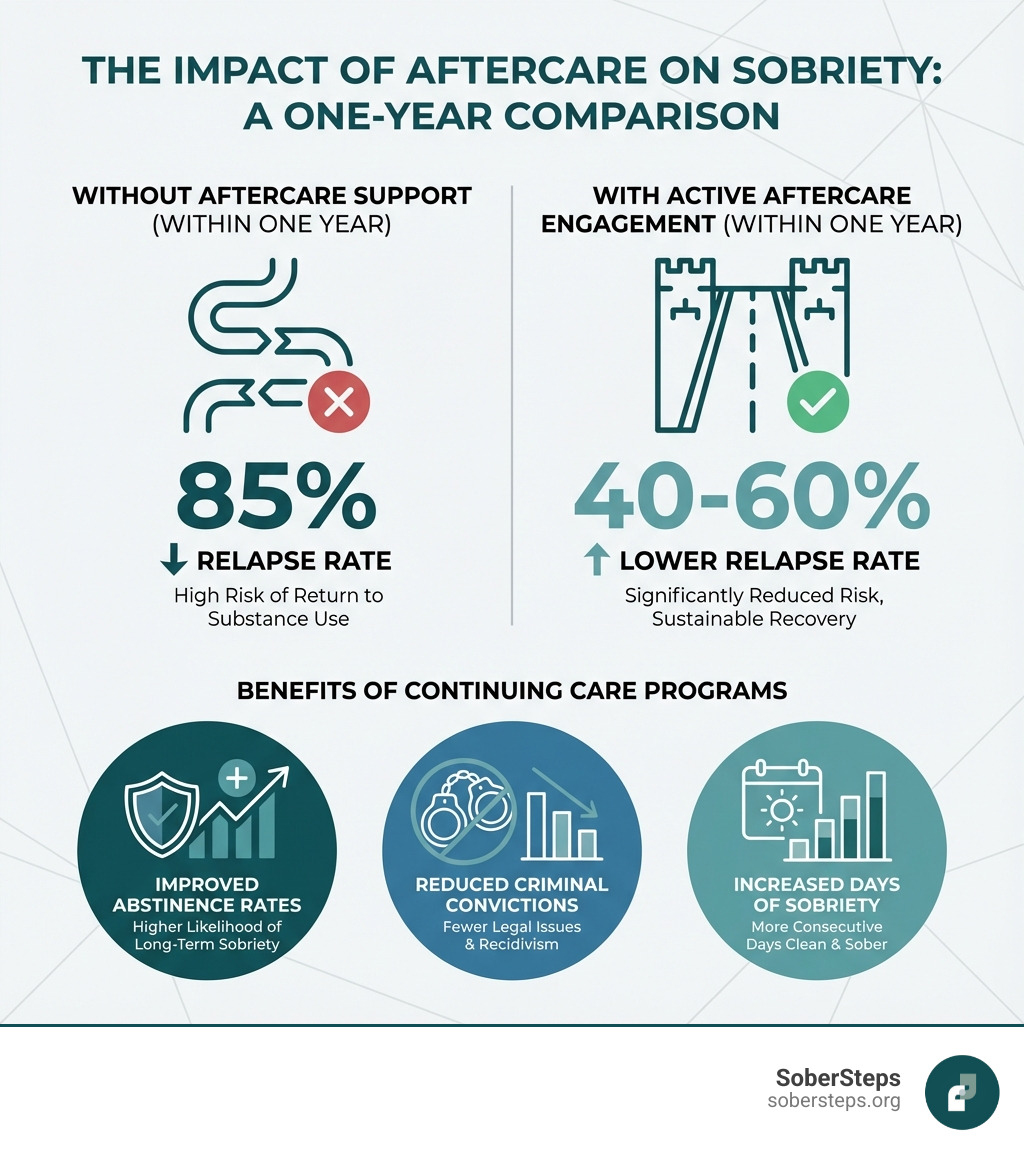
Completing a treatment program is an incredible accomplishment—but it’s just the beginning. The real challenge lies in maintaining sobriety over the long term when you return to your everyday environment, face old triggers, and steer life without the structure of formal treatment. Addiction is a chronic disease with a 40-60% relapse rate, similar to other chronic conditions like diabetes or hypertension that require ongoing management.
Aftercare programs serve as the bridge between the controlled environment of rehab and the reality of independent living. They provide the tools, strategies, and support system you need to apply what you learned in treatment to real-world challenges. Without this continued support, it’s easy to slip back into old patterns of behavior.
At Sober Steps, we understand that why aftercare programs are crucial for maintaining sobriety is a question that can determine your long-term success in recovery. Our team has guided thousands of individuals through every stage of their journey, connecting them with evidence-based aftercare resources custom to their unique needs.
If you’re struggling to steer life after treatment or need help creating a strong aftercare plan, call our confidential 24/7 helpline at (844) 491-5566. Our compassionate specialists can connect you with the right resources and support—anonymously and free of charge.
What Is Addiction Aftercare and Why Is It Essential?
Addiction aftercare, often referred to as “continuing care,” is the ongoing support and resources provided to individuals after they complete an initial phase of addiction treatment, such as detoxification, inpatient rehabilitation, or intensive outpatient programs. It’s designed to help bridge the gap between the structured environment of a treatment facility and the complexities of daily life, ensuring that the gains made during initial treatment are sustained and strengthened.
The importance of aftercare stems from the understanding that addiction is a chronic disease, not a temporary condition that can be “cured” with a single course of treatment. Just like managing diabetes or heart disease requires ongoing lifestyle changes and medical oversight, maintaining sobriety demands continuous attention and support. Studies show that those who actively engage in aftercare are significantly less likely to relapse. This is a critical point, given that between 40% and 60% of people recovering from drug and alcohol addiction experience a relapse at some point. The risk is particularly high in the first few months after leaving rehab, making structured aftercare plans crucial during this period.
Aftercare is essential for several key reasons:
Preventing Relapse: Aftercare programs equip individuals with proactive strategies to identify and manage triggers, stress, and cravings in real-world settings. They reinforce the coping skills learned in rehab, helping them become ingrained habits.
Transitioning to Daily Life: Moving from the controlled environment of rehab back to everyday responsibilities can be overwhelming. Aftercare provides a supportive framework for this transition, helping individuals reintegrate into their communities, find stable housing, employment, and rebuild healthy relationships.
Reinforcing Coping Skills: Aftercare provides continued opportunities to practice and refine the coping mechanisms and healthy habits acquired during initial treatment. Regular therapy, support group meetings, and check-ins help solidify these skills.
Building Resilience: Life inevitably presents challenges. Aftercare programs help individuals develop emotional resilience, allowing them to steer setbacks and difficult emotions without resorting to substance use.
Addressing the Chronic Nature of Addiction: Recognizing addiction as a chronic illness means understanding that recovery is a lifelong journey. Aftercare provides the continuous care necessary for managing this condition over the long term, adapting to evolving needs and circumstances.
Aftercare transforms initial treatment into sustainable recovery. It acts as a vital safety net, providing accountability, community, and expert guidance to help individuals not just avoid relapse, but thrive in their new, sober lives. Without it, the odds of long-term sobriety diminish significantly.
The Core Components: A Look at Different Types of Aftercare Programs
Effective aftercare isn’t a one-size-fits-all solution; it’s a personalized journey custom to individual needs, substance use history, mental health conditions, and social circumstances. The goal is to build a robust support network and provide a continuum of care that evolves with the individual’s recovery. Here are the core components and different types of aftercare programs available in the United States.
Therapy and Counseling: The Foundation of Aftercare
Therapy and counseling are often the bedrock of any successful aftercare plan. They provide a safe space to process emotions, address underlying issues, and develop advanced coping strategies.
Individual Therapy: One-on-one sessions with a therapist allow for deep exploration of personal triggers, past traumas, and co-occurring mental health conditions. Modalities like Cognitive Behavioral Therapy (CBT) help individuals identify and change negative thought patterns, while Dialectical Behavior Therapy (DBT) focuses on emotional regulation and distress tolerance.
Group Therapy: These sessions provide a platform for shared experiences, fostering a sense of community and reducing feelings of isolation. Participants can learn from each other, practice communication skills, and receive constructive feedback in a supportive environment.
Family Counseling: Addiction impacts the entire family system. Family therapy helps rebuild trust, improve communication, and educate loved ones about addiction and recovery. Involving family creates a stronger support system and a more understanding home environment.
Therapy and counseling play a crucial role in aftercare by continuing to address the root causes of addiction, helping individuals manage complex emotions, and building a solid foundation for long-term recovery.
Support Groups: The Power of Peer Connection
Connecting with others who understand the journey of recovery is profoundly empowering. Support groups offer a sense of belonging, shared wisdom, and mutual accountability that is invaluable.
12-Step Programs (AA, NA): Alcoholics Anonymous (AA) and Narcotics Anonymous (NA) are widely recognized peer-led programs that emphasize spiritual principles, mutual support, and working through a set of 12 steps. Research indicates that higher involvement in 12-Step meetings and programs yields better outcomes in sustained recovery. These groups provide a sponsor system, where an experienced member guides a newcomer, offering continuous support and accountability.
Non-12-Step Alternatives (SMART Recovery): For those who prefer a different approach, programs like SMART Recovery (Self-Management And Recovery Training) use cognitive-behavioral techniques to empower individuals to achieve abstinence and lead satisfying lives. Other alternatives include Refuge Recovery (Buddhist-inspired) and Women for Sobriety.
Community and Belonging: These groups combat the isolation often experienced in addiction, fostering a sense of belonging and camaraderie. Sharing struggles and successes with peers creates a powerful support network.
Accountability and Shared Experiences: Regular attendance and participation provide accountability, while hearing others’ stories offers perspective and helps individuals feel less alone.
Sober Living Homes: A Structured Transition
For many, transitioning directly from inpatient rehab to an unsupervised home environment can be challenging. Sober living homes offer a structured, drug-free residential setting that bridges this gap.
Structured Environment: Residents live together in a supportive community, often adhering to house rules, curfews, and mandatory attendance at recovery meetings. This structure provides a stable foundation for early recovery.
Drug-Free Housing: These homes provide an environment free from substances, significantly reducing exposure to triggers and temptations.
Peer Accountability: Living with other individuals in recovery fosters mutual support and accountability. Residents encourage each other to maintain sobriety and adhere to house guidelines.
Life Skills Development: Sober living often encourages residents to find employment, manage finances, perform chores, and develop independent living skills, preparing them for full reintegration into society.
Alumni and Community Programs
Many treatment centers recognize the importance of ongoing connection and offer alumni programs.
Treatment Center Alumni Networks: These programs allow individuals who have completed treatment to stay connected with their former facility and fellow alumni. They often provide continued access to resources and a familiar support system.
Sober Social Events: Alumni programs frequently organize sober social events, outings, and gatherings, offering opportunities for healthy recreation and connection without the presence of substances.
Mentorship Opportunities: Experienced alumni can serve as mentors for newer individuals in recovery, offering guidance, inspiration, and practical advice.
Continued Engagement: These programs foster a sense of continued engagement in the recovery community, reinforcing the commitment to a sober lifestyle and providing a long-term support system.
Why Aftercare Programs Are Crucial for Maintaining Sobriety: A Look at Relapse Prevention
The primary goal of aftercare is to prevent relapse. While initial treatment provides essential tools, aftercare ensures these tools are sharpened and applied effectively in the complexities of everyday life. It’s about building a robust safety net and developing proactive strategies to steer triggers and challenges. For confidential help creating a plan that works for you, call (844) 491-5566.
Developing a Personal Relapse Prevention Strategy
A personalized relapse prevention strategy is a cornerstone of aftercare. It’s a dynamic plan that helps individuals anticipate and respond to high-risk situations.
Identifying Triggers: This involves recognizing the specific people, places, things, emotions, and situations that can provoke cravings or lead to substance use. For example, stress at work, certain social gatherings, or even particular smells can be triggers. Aftercare helps individuals pinpoint these and develop strategies to avoid or manage them.
Developing Healthy Coping Mechanisms: Instead of turning to substances, aftercare teaches and reinforces healthy ways to cope with stress, anger, sadness, or boredom. These might include mindfulness, exercise, creative outlets, or talking to a trusted support person.
Stress Management Techniques: Stress is a major relapse trigger. Aftercare programs often incorporate techniques like meditation, deep breathing exercises, yoga, and time management skills to help individuals effectively manage daily stressors.
Creating a Crisis Plan: This involves outlining specific steps to take if a strong craving or high-risk situation arises. It includes identifying safe contacts, outlining self-soothing techniques, and having a clear path to immediate support.
Emergency Contact List: Having a readily accessible list of trusted individuals—sponsors, therapists, family members, or helpline numbers—is vital for reaching out during vulnerable moments.
The Role of Accountability and Structure
Accountability and structure provide the necessary guardrails for sustained recovery, especially in the early stages when habits are still forming.
Regular Check-ins: Consistent meetings with therapists, counselors, or case managers provide opportunities to discuss progress, address emerging challenges, and adjust the aftercare plan as needed.
Sponsor Relationships: In 12-Step programs, a sponsor offers guidance, support, and a direct line of communication for accountability. They can provide immediate counsel during difficult times.
Scheduled Meetings: Regular attendance at support group meetings (e.g., AA, NA) creates a routine and a commitment to sobriety, offering a consistent source of peer support and shared experience.
Creating a Daily Routine: A structured daily schedule that includes healthy activities, work, and recovery-focused actions minimizes idle time and reduces exposure to triggers.
Goal Setting: Setting clear, achievable short-term and long-term goals—related to personal growth, career, relationships, and recovery—provides direction and motivation.
Monitoring Progress: Regularly reviewing progress with a therapist or sponsor helps individuals stay on track, celebrate successes, and identify areas that need more attention.
Evidence on Why Aftercare Programs Are Crucial for Maintaining Sobriety
The effectiveness of aftercare is well-supported by research. Studies consistently demonstrate that engaging in continuing care significantly improves long-term outcomes for individuals with substance use disorders.
Improved Sobriety Rates: Patients who participate in continuing care show higher rates of abstinence and fewer relapse episodes compared to those who do not.
Longer Duration of Abstinence: Longer duration of continuing care, especially with active engagement efforts, often leads to more consistent positive results and sustained sobriety.
Reduced Legal Issues: Research has shown that individuals receiving telephone-based continuing care, for example, had significantly lower odds of criminal convictions in the years following treatment.
Improved Quality of Life: Beyond mere abstinence, aftercare contributes to a better overall quality of life, including improved mental health, employment stability, and healthier relationships.
Adaptive Treatment: Effective aftercare involves regular assessment and adaptation of treatment based on the patient’s evolving status, ensuring that the support remains relevant and effective over time.
These findings underscore that aftercare is not just an optional add-on but a critical component for changing initial treatment success into a sustainable, fulfilling life in recovery.
Building Your Personal Aftercare Plan
Creating a personal aftercare plan is a collaborative process, ideally initiated during the final stages of initial treatment. It’s a living document that is custom to your needs and evolves over time as your recovery progresses and your circumstances change. For a free, confidential consultation on your aftercare options, call (844) 491-5566 today.
Key Considerations for a Successful Plan
A successful aftercare plan considers every aspect of an individual’s life, recognizing that recovery impacts physical, mental, emotional, and social well-being.
Assessing Individual Needs: This involves a thorough evaluation of your specific challenges, strengths, and recovery goals. What are your unique triggers? Do you have co-occurring mental health conditions? What kind of support do you feel you need most?
Evaluating Home Environment: Is your home environment conducive to sobriety? This includes assessing the presence of substances, the supportiveness of household members, and any potential triggers within your living space. Sober living homes might be a consideration if your home environment is not supportive.
Addressing Practical Needs: Long-term sobriety is significantly bolstered by stability in daily life. Aftercare plans often include strategies for securing stable housing, finding meaningful employment, and managing personal finances. Case managers can be instrumental in connecting individuals with these vital resources.
Involving Supportive Family Members: As mentioned, family involvement is crucial. This might include family therapy, educational programs for loved ones, or simply open communication channels to ensure everyone is on the same page.
Setting Realistic, Measurable Goals: Goals should be specific, measurable, achievable, relevant, and time-bound (SMART). These could range from attending a certain number of support group meetings per week to pursuing educational opportunities or volunteering.
Why Aftercare Programs Are Crucial for Maintaining Sobriety and Addressing Co-occurring Conditions
A significant number of individuals struggling with substance use disorder also have co-occurring mental health conditions, such as anxiety, depression, or PTSD. In fact, according to the 2021 National Survey on Drug Use and Health (NSDUH), 9.2 million adults in the United States had a co-occurring substance use disorder and mental illness. Failing to address these “dual diagnoses” simultaneously can severely jeopardize recovery.
Why aftercare programs are crucial for maintaining sobriety becomes even more apparent when considering co-occurring conditions:
Integrated Treatment Approach: Effective aftercare offers an integrated treatment approach, meaning both the substance use disorder and the mental health condition are treated concurrently. This prevents a situation where improving one condition inadvertently worsens the other, leading to relapse.
Mental Health Support: Aftercare ensures ongoing access to mental health professionals, including therapists and psychiatrists, who can provide specialized care for conditions like anxiety, depression, or trauma.
Medication Management: For many co-occurring conditions, medication plays a vital role. Aftercare plans include regular check-ins for medication management, ensuring prescriptions are appropriate and effective, and monitoring for side effects. Medications for opioid use disorder (e.g., buprenorphine-naloxone) or alcohol use disorder (e.g., naltrexone) may also be continued as part of aftercare.
Holistic Wellness: Aftercare promotes a holistic view of wellness, recognizing that physical health, nutrition, sleep, and spiritual well-being all contribute to mental stability and sustained sobriety.
Managing Anxiety and Depression: Through ongoing therapy and support, individuals learn advanced strategies to manage symptoms of anxiety and depression, reducing the likelihood of self-medicating with substances.
How Long Does Aftercare Last?
There’s no fixed answer to how long aftercare lasts, as it’s highly individualized. However, experts generally recommend active engagement in aftercare for at least one year following initial treatment, and often longer.
Individualized Timeline: The duration of aftercare depends on factors such as the severity and length of the addiction, the presence of co-occurring disorders, the individual’s support system, and their progress in integrating recovery principles into daily life.
Step-Down Levels of Care: Aftercare often involves a “step-down” approach, gradually decreasing the intensity and frequency of structured support over time. This might look like moving from an Intensive Outpatient Program (IOP) to standard outpatient therapy, then to less frequent therapy sessions combined with regular support group attendance.
Long-Term Process: Recovery is a lifelong journey. While intensive aftercare might lessen over time, the principles of aftercare—such as maintaining a support network, practicing coping skills, and engaging in self-care—remain essential indefinitely.
Evolving from Intensive Support to Periodic Check-ins: Initially, aftercare might involve several hours of therapy and meetings weekly. Over time, this might evolve into monthly check-ins with a therapist, regular sponsor contact, and occasional alumni events. The key is adaptability and responsiveness to the individual’s evolving needs.
Frequently Asked Questions about Aftercare Programs
We often hear similar questions from individuals and their loved ones navigating the complexities of post-treatment recovery. Here are some of the most common inquiries about aftercare programs.
How do I find the right aftercare program for me?
Finding the right aftercare program starts with a personalized approach. We recommend beginning by speaking with a treatment professional or counselor who is familiar with your case. They can conduct a thorough assessment of your clinical needs, living situation, and existing support system. This assessment will help determine the best fit for you, whether it’s an Intensive Outpatient Program (IOP), sober living, specific therapy modalities, or a combination of resources. Consider what level of structure you need, your geographical location, and any specific challenges you face, such as co-occurring mental health conditions. For a confidential assessment and guidance, call our 24/7 helpline at (844) 491-5566.
Can my family be involved in my aftercare plan?
Absolutely, and we strongly encourage it! Family involvement is a crucial component of a strong aftercare plan. Addiction affects the entire family system, and recovery is often strengthened when loved ones are educated, supportive, and involved. This involvement can take many forms:
Family Therapy: Sessions with a therapist can help heal damaged relationships, improve communication, and establish healthy boundaries.
Educational Programs: Many aftercare programs offer educational workshops for families to help them understand addiction, the recovery process, and how to best support their loved one.
Open Communication: Encouraging open and honest dialogue within the family helps create an environment of trust and mutual understanding.
Support Groups for Families: Programs like Al-Anon or Nar-Anon provide support for family members, helping them cope with the impact of addiction and learn to support their loved one’s recovery in a healthy way.
Involving family helps to create a supportive and understanding home environment, which significantly lowers the risk of relapse and fosters lasting recovery.
What if I relapse while in an aftercare program?
A relapse does not mean treatment has failed, nor is it a sign of personal failure. Relapse is a common, though challenging, part of the recovery process for many chronic conditions, including addiction. If you experience a relapse while in an aftercare program, it’s a critical time to be honest and reach out to your support network immediately. This includes your therapist, sponsor, support group members, and trusted family or friends.
A relapse often indicates that your current recovery plan needs adjustment. It’s an opportunity to:
Reassess Triggers: What led to the relapse? Were there new or overlooked triggers?
Strengthen Coping Strategies: Do you need new or more intensive coping mechanisms for specific situations?
Adjust Your Plan: Your aftercare plan can and should be modified. This might mean increasing the frequency of therapy sessions, trying a different type of support group, or exploring medication adjustments.
Learn and Grow: Each setback can be a powerful learning experience, providing insights that ultimately strengthen your long-term recovery.
The most important thing is to avoid shame or isolation and instead, lean on the support systems that aftercare programs provide. They are there to help you steer these moments and get back on track.
Take the Next Step in Your Recovery Journey
The journey to sobriety is one of the most courageous paths a person can take. While initial treatment lays the groundwork, why aftercare programs are crucial for maintaining sobriety lies in their ability to transform that foundation into a sustainable, fulfilling life free from the grip of addiction. Aftercare is the vital support system that provides the tools, community, and accountability needed to steer life’s challenges without returning to substance use.
At SoberSteps, we believe that everyone deserves a chance at a healthy, sober life. We provide confidential resources and connections to evidence-based aftercare options to help you build a strong foundation for your future. Don’t leave your long-term success to chance—take the proactive step towards lasting recovery.
Call (844) 491-5566 to speak with a specialist anonymously and confidentially about your aftercare needs. Our compassionate team is available 24/7 to help you understand your options and connect you with the right support.
For anyone seeking help for addiction for themselves or a loved one calls to Sober Steps are completely confidential and available 24/7.
Please note: any treatment center listed on our site that receives calls is a paid advertiser.
Calls to a specific treatment center’s listing will be connected directly to that center.
Calls to our general helpline will be answered by treatment providers, all of whom are paid advertisers.
By calling the helpline, you agree to our terms and conditions. These calls are free of charge and carry no obligation to enter treatment. Neither Sober Steps nor anyone answering your call receives a commission or fee based on your choice of treatment provider.
If you’d like to explore additional treatment options or connect with a specific rehab center, you can browse our top-rated listings, visit our homepage, or call us at (844) 491-5566. You may also contact us for further assistance.