
Why Affordable Mental Health Care Matters Now More Than Ever
Affordable mental health care can be hard to find, but it exists. Here are your main options:
- Publicly funded programs – Free CBT and counseling for eligible residents (e.g., Ontario Structured Psychotherapy Program)
- Sliding-scale therapy – Fees adjusted based on your income, typically $40-$120 per session
- Student therapist services – Supervised sessions starting at $35-$40
- Community mental health centers – Free or low-cost care regardless of insurance
- Support groups – Free peer-led meetings for shared experiences
- Online therapy platforms – Often $45-$90 per week with flexible payment options
- Walk-in clinics – No-appointment counseling sessions at no cost
- Employee Assistance Programs (EAPs) – Free short-term counseling through your employer
Mental health care shouldn’t be a luxury. Yet therapy sessions can cost $150 or more—putting help out of reach for millions who need it.
Here’s the truth: One in five Canadians will experience a mental illness in their lifetime. That’s millions of people who deserve support, not financial stress.
The good news? Affordable options exist. You just need to know where to look.
This guide walks you through every accessible mental health care option available—from free public programs to sliding-scale private therapy. We’ll show you exactly how to find help that fits your budget, whether you’re dealing with depression, anxiety, trauma, or just need someone to talk to.
At Sober Steps, we’ve spent years connecting people to affordable mental health care and substance use treatment. We understand that finding the right support shouldn’t add to your stress, which is why we’ve created this comprehensive resource to guide you toward recovery. For confidential and anonymous help, you can also call our 24/7 helpline at (844) 491-5566.
Understanding the Landscape of Mental Health Costs
The journey to mental well-being often starts with understanding the financial landscape of care. Traditional therapy sessions can be surprisingly expensive, with individual sessions typically ranging from $65 to $250 per hour, and sometimes even higher. For many, this can be a significant barrier, especially for those without insurance or with limited financial resources. We know that the cost of treatment can be a major source of stress, but we’re here to tell you that quality care doesn’t always come with a hefty price tag.
What are sliding-scale and low-cost therapy options?
The good news is that many mental health professionals and organizations are committed to making care accessible. This is where affordable mental health care options like sliding scales, low-cost services, and pro-bono offerings come into play.
-
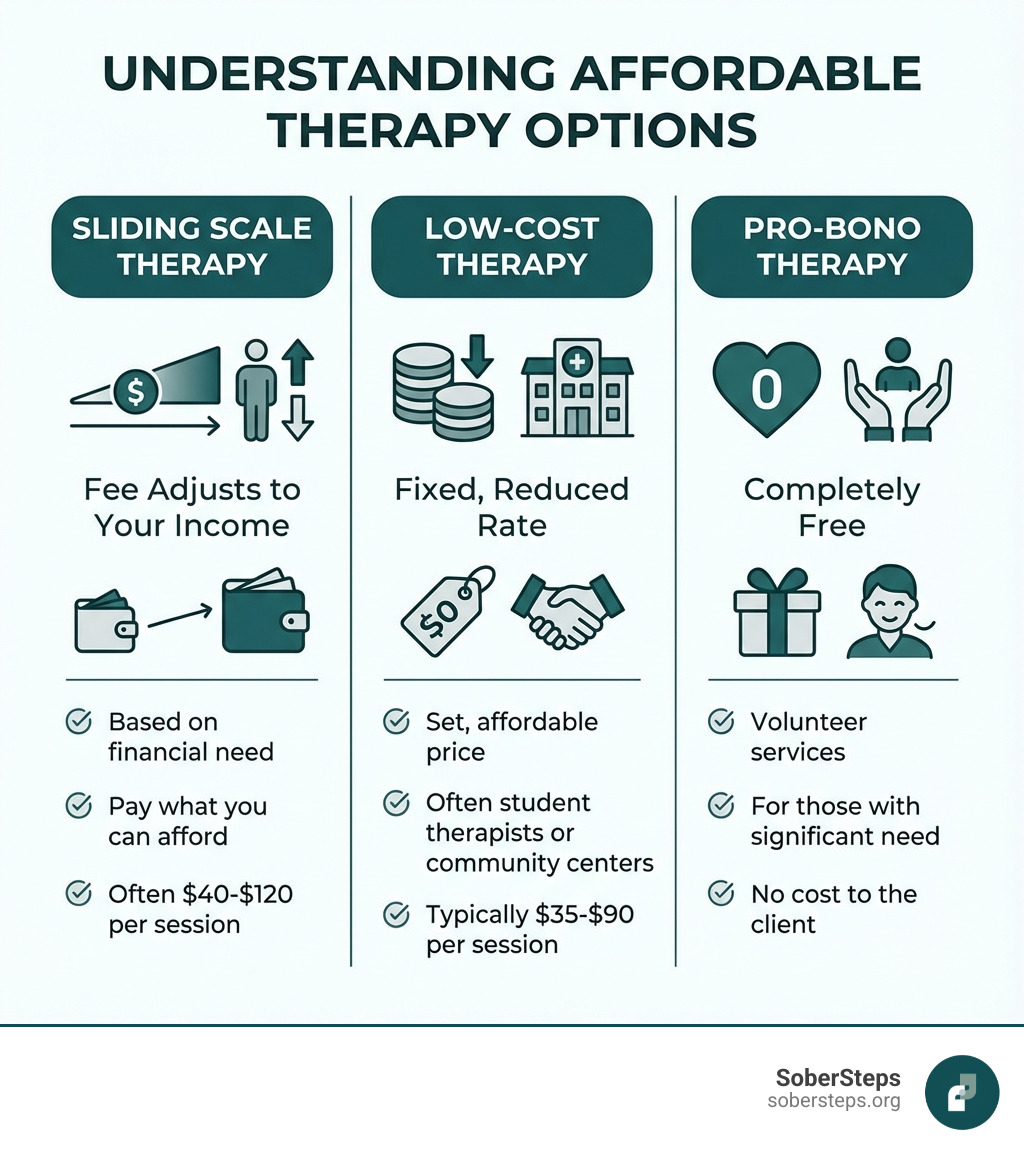
Sliding Scale Therapy: This is a flexible fee structure where the cost of therapy is adjusted based on your income, family size, and overall financial situation. Therapists using a sliding scale might ask for proof of income, like recent pay stubs or tax returns, to determine a fair rate. This means someone earning $30,000 annually might pay significantly less per session than someone earning $120,000, making therapy attainable for more people. Fees for sliding-scale options with fully registered therapists usually range between $80-$120, though some non-profit networks can offer sessions for $30-$60.
-
Low-Cost Options: These services are often provided by therapists-in-training (graduate students) who are working under the close supervision of licensed, experienced clinicians. These sessions are typically more affordable, with rates often starting around $35-$65 per 50-minute session. They offer a fantastic opportunity to receive quality care from emerging professionals who are eager and well-supervised.
-
Pro-Bono & Pay-What-You-Can: While less common, some therapists, particularly student interns or those working with non-profit organizations, may offer pro-bono (free) or “pay-what-you-can” services. These options are usually available to individuals in extreme financial need, sometimes without strict income verification.
Community mental health centers and non-profit organizations also play a crucial role in providing these lower-cost options, often offering services on a sliding scale or at significantly reduced rates. They are great resources for individuals seeking affordable mental health care.
To explore various low-cost and free treatment options, we encourage you to visit the SAMHSA website: Find low-cost treatment options.
What mental health concerns are typically addressed?
Affordable mental health care services, whether publicly funded or low-cost private options, address a wide range of concerns. While specific programs might focus on certain areas, generally, you can find support for:
- Depression, Sadness, & Low Mood: Including persistent feelings of sadness, loss of interest, and changes in sleep or appetite.
- Anxiety: Covering generalized anxiety, social anxiety, panic attacks, health anxiety, and specific phobias.
- Stress & Burnout: Strategies for managing daily stressors, work-related pressure, and emotional exhaustion.
- Trauma: Including post-traumatic stress (PTSD), childhood experiences, and responses to sexual abuse or assault.
- Obsessive-Compulsive Concerns (OCD): Managing intrusive thoughts and repetitive behaviors.
- Relationship Challenges: Support for couples therapy, family conflict, and navigating interpersonal dynamics.
- Grief & Loss: Coping with the death of a loved one or other significant losses.
- Self-Esteem & Confidence: Building a stronger sense of self-worth.
- Life Transitions: Navigating major life changes, uncertainty, and personal growth.
- Emotion Regulation & Anger Management: Developing healthier ways to process and express emotions.
- Substance Use Disorders: Many community mental health centers and specialized programs offer counseling and support for addiction.
This is not an exhaustive list, but it highlights the breadth of issues that can be addressed through accessible mental health services.
Navigating Publicly Funded and Free Programs

Publicly funded programs and community mental health centers (CMHCs) are cornerstones of affordable mental health care in the United States. These resources aim to provide essential mental health services to individuals regardless of their ability to pay, often operating on a sliding scale or offering free services. They are designed to fill critical gaps in care, especially for vulnerable populations.
Who is eligible for publicly funded programs?
Eligibility for publicly funded programs largely depends on several factors, including:
- Residency Requirements: Most programs require you to be a resident of the state or county where the services are offered.
- Income Levels: Many CMHCs and state-funded programs prioritize individuals with low incomes, offering services on a sliding scale or at no cost.
- Insurance Status: While some CMHCs may require you to have private insurance or be on public assistance like Medicaid, many will still provide services to uninsured individuals, adjusting fees based on income.
- Age Restrictions: Programs like Medicaid often have income-based eligibility, while Medicare typically covers individuals aged 65 and older, as well as some younger people with disabilities. Veterans may also qualify for mental health services through the Department of Veterans Affairs (VA) healthcare system.
- Specific Diagnoses: Some programs might be custom to individuals with severe mental illness or co-occurring substance use disorders.
To find federally funded health centers near you, which often provide mental health services on a sliding scale, you can use this resource: Find a federally funded health center. Additionally, the SAMHSA Treatment Locator is an excellent tool for finding low-cost or sliding-scale mental health care, substance abuse, and dual diagnosis facilities across the country. Your state’s behavioral or mental health department can also help you find local programs and resources.
What are the steps to access free services?
Accessing free or low-cost mental health services through publicly funded programs usually involves a few key steps:
- Identify Local Resources: Start by searching for Community Mental Health Centers (CMHCs) or local health departments in your area. Websites like SAMHSA’s FindTreatment.gov are invaluable for this. You can also call 211, a national helpline that connects you to local social services, including mental health support.
- Contact and Inquire: Reach out to the identified centers. Ask about their intake process, eligibility criteria, and whether they offer services on a sliding scale or for free. Don’t be shy about discussing your financial situation upfront.
- Intake and Assessment: You’ll typically undergo an initial intake and assessment process. This helps the center understand your needs and determine your eligibility for specific programs and payment structures. Be prepared to provide documentation of your income or insurance status if asked.
- Referral or Direct Service: Based on the assessment, you might be directly enrolled in services, or referred to another program that better suits your needs.
- Be Prepared for Waitlists: While these services are invaluable, demand can be high. Resources at CMHCs are often stretched thin, which can sometimes lead to wait times. However, the wait is often worth it for the affordable mental health care you receive.
- Free Walk-In Counseling: Some community centers may offer free, walk-in counseling sessions for immediate support, often without requiring an appointment or health card. These are excellent for initial consultations or addressing acute concerns.
Finding Low-Cost Private and Non-Profit Options for Affordable Mental Health Care
Beyond publicly funded programs, a wealth of affordable mental health care options exists within the private and non-profit sectors. These alternatives can often provide more immediate access or specialized care that might not be available through government programs.
The role of charities and non-profit organizations is particularly significant here. Many operate with a mission to make mental health services accessible, often subsidizing costs through donations or grants. Some national non-profit networks, for instance, are dedicated to connecting individuals with mental health professionals who offer therapy at reduced rates, typically between $30-$60 per session.
University psychology clinics and therapist training institutes are another fantastic resource. These clinics often have graduate students, known as therapists-in-training, who provide counseling under the direct supervision of licensed and experienced professionals. This model allows for high-quality care at a significantly lower cost, with sessions often starting around $60, compared to $100 or more for a licensed therapist. It’s a win-win: students gain valuable experience, and clients receive affordable mental health care.

How to find affordable mental health care providers
Finding a therapist who offers reduced rates can feel like a treasure hunt, but with the right strategies, it’s entirely possible:
- Use Online Therapist Directories: Online therapist directories allow you to filter your search by various criteria, including “sliding scale” payments. This is an excellent starting point for identifying private practitioners who are open to adjusting their fees.
- Ask Therapists Directly: Don’t be afraid to ask potential providers about their fee structure. Many therapists recognize the financial burden of care and set aside a certain number of slots for clients who need a reduced rate. You can initiate this conversation during an initial consultation.
- Seek Free Consultations: Some therapists offer a free brief consultation (15-30 minutes). This is a perfect opportunity to discuss your needs, their approach, and, crucially, their fees and any sliding scale options they might have, without any financial commitment.
Here are some questions you can ask a potential therapist about fees, especially when money is tight:
- “Do you offer a sliding scale, and if so, what are your criteria for eligibility?”
- “What is your standard fee, and what is the lowest fee you can offer based on my income?”
- “Are there any payment plans available, or discounts for paying upfront?”
- “Do you offer any pro-bono slots or know of any resources for free therapy?”
- “Can you provide a detailed receipt for insurance reimbursement, even if you are out-of-network?”
The benefits of online therapy platforms
Online therapy has surged in popularity, and for good reason. It offers a highly convenient and often more affordable mental health care option compared to traditional in-person sessions.
- Convenience and Flexibility: Online platforms allow you to connect with a therapist from the comfort of your home, eliminating commute times and fitting sessions into even the busiest schedules. This is a game-changer for many who struggle with time constraints.
- Wider Selection of Therapists: Your choice of therapist isn’t limited by geography. You can access a broader pool of professionals who specialize in your specific concerns, potentially leading to a better match.
- Lower Cost: Virtual therapy is generally more affordable than in-person visits. On average, a virtual therapy session in the U.S. costs between $65 to $129, while in-person therapy usually lands between $100 to $200 per session. Some online services operate on a subscription model, which can be more economical, with costs ranging from $45 – $70 per week.
- Anonymity: For some, the virtual setting can feel less intimidating and offer a protective layer of anonymity, making it easier to open up and express themselves.
- Financial Aid Options: Many online platforms also offer financial aid or tiered pricing structures to make their services even more accessible.
What to expect from affordable mental health care services
When accessing affordable mental health care, whether through low-cost private options or publicly funded programs, here’s what you can generally expect:
- Session Length: Most individual therapy sessions, regardless of cost, typically last 50 minutes. Couples and family sessions might be slightly longer.
- Therapist Qualifications: With low-cost options, you might work with Masters-level student interns. These individuals are supervised by experienced, licensed clinicians (e.g., psychologists, licensed professional counselors, licensed clinical social workers) who oversee their cases and provide guidance. This means you’re still receiving expert-backed care.
- Goal-Oriented Therapy: Many affordable programs, especially publicly funded ones, focus on evidence-based, goal-oriented therapies like Cognitive Behavioral Therapy (CBT). These approaches are designed to provide practical tools and strategies for managing specific concerns within a defined timeframe.
- Short-Term vs. Long-Term Care: Publicly funded services often focus on short-term interventions to address immediate needs or specific problems. While private low-cost options might offer more flexibility for long-term care, it’s always good to clarify the expected duration of treatment with your therapist.
Specialized Support for Diverse and Marginalized Communities
Mental health is deeply intertwined with identity and lived experience. For marginalized communities, accessing care can be compounded by additional barriers, including cultural insensitivity, language differences, and historical mistrust of healthcare systems. Recognizing this, many organizations are dedicated to providing culturally competent and affirming affordable mental health care. These services often operate within anti-racism and anti-oppression frameworks, ensuring that care is not only accessible but also respectful and effective for diverse needs.
Resources for Youth and Seniors
Both youth and seniors face unique mental health challenges and often benefit from specialized support:
- Youth Helplines & Wellness Hubs: For young people, helplines like the national 988 Suicide & Crisis Lifeline offer immediate, confidential support via call or text. Many communities also have youth wellness hubs or school-based counseling programs that provide free or low-cost services custom to the needs of children and adolescents. College students can often access counseling through their university’s health center, sometimes included with tuition.
- Seniors Helplines & Peer Support: Older adults may experience loneliness, isolation, or grief, but specific helplines exist to offer supportive counseling and connection. Peer support lines, available for all ages, offer a confidential space to chat with trained peers or volunteers who understand what you’re going through, helping to combat loneliness and provide a friendly ear.
Culturally-Specific Resources for BIPOC and Newcomers
Culturally specific resources are vital for ensuring that affordable mental health care is both relevant and effective:
- Many community organizations provide mental health support and services delivered through anti-racism and anti-Black racism frameworks. These services are often custom to the experiences of Black, Indigenous, and People of Color (BIPOC) communities.
- For newcomers and refugees, organizations often provide linguistically and culturally relevant mental health services. These can include counseling in multiple languages and support that understands the unique stressors of immigration, displacement, and cultural adjustment. When searching for services, don’t hesitate to ask about language interpretation availability. SAMHSA’s FindTreatment.gov, for instance, offers its website in multiple languages.
Support for 2SLGBTQ+ Individuals and Frontline Workers
Specific communities also have dedicated resources to address their particular mental health needs:
- 2SLGBTQ+ Individuals: Helplines like the Trans Lifeline Hotline (1-877-330-6366) offer peer support for trans and questioning callers. Many local community centers and non-profits provide affirming counseling, support groups, and resources specifically designed for the 2SLGBTQ+ community, helping to address issues related to identity, discrimination, and coming out.
- Frontline Workers: Our frontline workers, including healthcare professionals, often face immense stress and trauma. There are crisis text lines that offer fast, free, and confidential support 24/7 for these essential workers. You can access support by texting FRONTLINES to 741741, connecting you with trained counselors who understand the unique pressures they face.
Immediate Crisis Support and Finding the Right Fit
When mental health challenges become overwhelming, knowing where to turn for immediate support is crucial. It’s important to understand the distinction between a warmline and a crisis line, and when to escalate to emergency services.
- Warmlines are for casual, non-emergency conversations. They connect you with a peer or volunteer trained in mental health who can offer support and a listening ear if you’re feeling lonely, isolated, anxious, or just need to talk. They are not for immediate crises.
- Crisis Lines are for urgent situations, providing immediate support for individuals in distress, often those experiencing suicidal thoughts, severe anxiety, or other mental health emergencies.
When to call 911 or 988:
- Call 911 if you are in an emergency, immediate danger, or medical distress. This includes situations where someone is an imminent threat to themselves or others.
- Call or text 988 if you or someone you know is thinking about suicide. The 988 Suicide & Crisis Lifeline provides free and confidential support 24/7 in the U.S.
Creating a safety plan with a trusted individual or mental health professional can also be a proactive step to manage future crises. This plan typically outlines coping strategies, contacts for support, and steps to take if you feel your mental health is deteriorating.
Where to turn for immediate help
Here is a list of essential crisis resources available nationwide:
- 9-8-8 Suicide & Crisis Lifeline: Call or text 988 for free and confidential support, 24/7.
- SAMHSA’s National Helpline: Call 1-800-662-HELP (4357) for treatment referral and information, available 24/7.
- SAMHSA’s Disaster Distress Helpline: Call 1-800-985-5990 for immediate crisis counseling related to disasters, available 24/7.
- Crisis Text Line: Text HOME to 741741 for free, 24/7 crisis support.
- Local Distress Centers: Many communities have local distress centers or crisis lines that offer immediate emotional and crisis support. You can often find these by searching online for “crisis line [your city/county]” or by calling 211.
- Youth Helplines: For children and young people, dedicated helplines offer confidential professional online, telephone, and text-based counseling.
How to know if a therapist is the right fit for you
Finding the right therapist is a bit like dating – it requires chemistry, trust, and a shared understanding of goals. Even when seeking affordable mental health care, the “fit” is paramount for effective treatment. Here’s how to assess if a therapist is right for you:
- Initial Consultation: Many therapists offer a free introductory call. Use this time to ask questions about their approach, experience, and how they handle your specific concerns. Pay attention to how you feel during the call.
- Feeling Heard and Respected: A good therapist should make you feel understood, validated, and respected. You should feel comfortable sharing your thoughts and feelings without judgment.
- Therapist’s Approach and Specialty: Does their therapeutic approach (e.g., CBT, DBT, psychodynamic) align with what you’re looking for? Do they specialize in concerns similar to yours? For example, if you’re dealing with trauma, you’ll want someone with experience in trauma-informed care.
- Trust Your Gut: Your intuition is a powerful tool. If something feels off, or you don’t feel a sense of connection, it’s okay to continue your search.
- Setting Goals Together: A collaborative therapist will work with you to establish clear, achievable goals for your therapy journey. This ensures you’re both on the same page and working towards what matters most to you.
It’s perfectly acceptable to “shop around” for a therapist until you find someone who feels like the right fit. This initial investment of time can make all the difference in your mental health journey.
Conclusion
Navigating mental health support can feel daunting, especially when concerns about cost weigh heavily on your mind. But as we’ve explored, affordable mental health care is not just a dream—it’s a reality made possible through a diverse range of options, from publicly funded programs and non-profit initiatives to flexible private practices and convenient online platforms.
We’ve seen that understanding the landscape of mental health costs, knowing where to find low-cost and sliding-scale services, and exploring specialized support for diverse communities can empower you to take control of your well-being. Whether it’s through a community mental health center, a university clinic, or a confidential online session, there are paths to healing that fit your budget.
Taking the first step, reaching out, and asking for help is often the hardest part, but it’s also the most crucial. You are not alone in this journey, and there are countless resources dedicated to ensuring you find the support you need.
At SoberSteps, we believe everyone deserves access to quality mental health and substance use treatment. We are committed to helping you find the right path forward, confidentially and anonymously.
For confidential and anonymous help finding the right mental health or substance use support for your needs, visit us online or call our 24/7 helpline at (844) 491-5566.