Aetna Health Insurance for Substance Abuse Treatment (2026)
Navigating Your Path to Recovery with Aetna
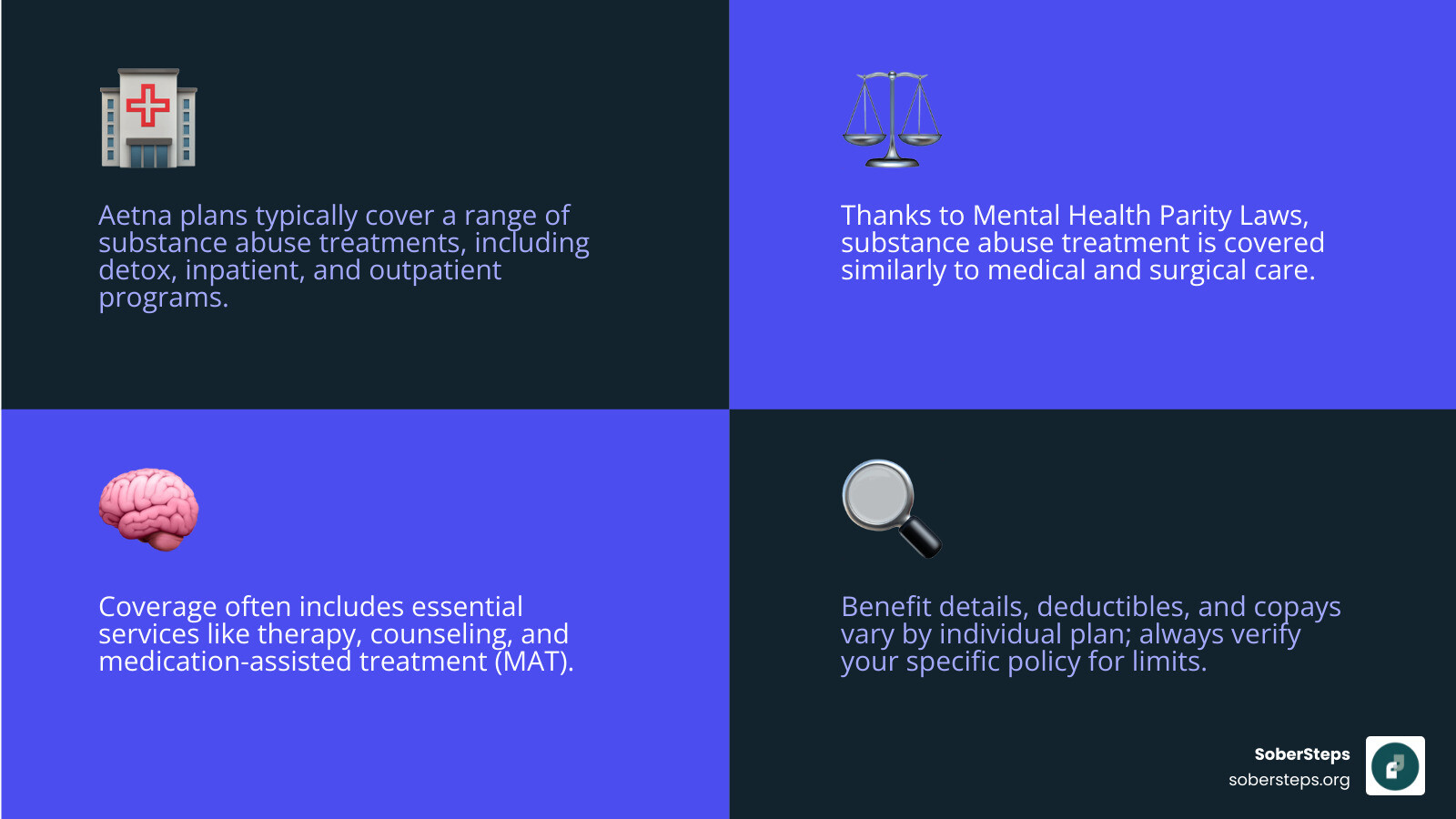
Aetna Health Insurance for Substance Abuse Treatment provides coverage for a wide range of addiction services, from medical detoxification to ongoing aftercare programs. Here’s what you need to know:
Coverage is mandated by law: The Affordable Care Act requires Aetna to cover substance use disorder treatment as an essential health benefit
24/7 support available: Call (844) 491-5566 for confidential help verifying your benefits and finding treatment
Over 21 million Americans struggle with a substance use disorder, yet only 1 in 10 receives the treatment they need. The gap between needing help and getting help can feel overwhelming—especially when you’re trying to understand insurance coverage while dealing with addiction.
The reality is stark: Untreated substance abuse leads to increased illness, hospitalizations, injuries, and premature death. One study estimates substance use cost society $193 billion in 2011. But there’s hope. Aetna’s network includes over 1.2 million healthcare professionals and 5,700 hospitals, all committed to helping you access the care you need.
You don’t have to steer this alone. Whether you’re seeking help for yourself or a loved one, understanding your Aetna coverage is the first step toward recovery. The process might seem complicated, but it doesn’t have to be.
At Sober Steps, we’ve helped thousands of individuals understand their insurance benefits and connect with appropriate treatment for Aetna Health Insurance for Substance Abuse Treatment. Our mission is to break down the barriers that keep people from getting the help they deserve—starting with the confusion around insurance coverage.
If you need immediate guidance, our confidential helpline is available 24/7 at (844) 491-5566. A caring specialist can verify your Aetna benefits, explain your coverage, and help you find a treatment center that fits your needs—all in a single, private call.
Understanding Aetna Health Insurance for Substance Abuse Treatment
Aetna, a leading health insurance provider in the United States, plays a crucial role in making substance abuse treatment accessible. With a history dating back to 1853, Aetna has grown to cover over 39 million people, offering a wide array of health insurance plans including employer-sponsored, Medicare, Medicaid, and individual plans. This extensive reach means that many Americans have access to Aetna Health Insurance for Substance Abuse Treatment.
The good news is that Aetna’s commitment to covering substance use disorder (SUD) treatment is not just a matter of corporate policy, but a legal requirement. The Affordable Care Act (ACA), implemented in 2014, mandates that all health insurance plans must cover ten categories of “Essential Health Benefits,” which include mental health and substance use disorder services. This means that if you have an Aetna plan, your addiction treatment is considered an essential health benefit.
Furthermore, the Mental Health Parity and Addiction Equity Act (MHPAEA) ensures that benefits for mental health and substance use disorders are comparable to those for medical and surgical benefits. In simple terms, Aetna cannot impose stricter limits on SUD treatment than they do for other medical conditions. This legal framework provides a strong foundation for individuals seeking help.
Aetna works with an individual’s needs to find a solution for drug and alcohol abuse. Their approach recognizes that there are no one-size-fits-all plans for drug and alcohol abuse, and treatment should be custom to the individual. This commitment extends to covering various levels of care, from initial detoxification all the way through long-term aftercare programs.
Understanding the different levels of care available is key to navigating your treatment journey. These levels, often guided by the American Society of Addiction Medicine (ASAM) criteria, ensure that individuals receive the appropriate intensity of care based on their specific needs. From medically supervised detox to residential programs and various outpatient options, Aetna aims to provide coverage across the continuum of care.
If you’re unsure about your specific Aetna benefits or how they apply to substance abuse treatment, don’t hesitate to reach out. We can help you steer the complexities of your plan. Call (844) 491-5566 to verify your benefits confidentially and learn more about what your Aetna policy covers.
Types of Substance Abuse Treatments Covered
Aetna’s coverage for substance abuse treatment is comprehensive, encompassing a variety of evidence-based therapies and programs designed to support recovery. Here’s a closer look at the types of treatments typically covered:
Detoxification (Detox): This is often the first step in treatment, especially for individuals dependent on certain substances. Detox involves medically supervised withdrawal from drugs or alcohol to safely manage acute physical symptoms. Aetna generally covers medically necessary detox services, whether in an inpatient or outpatient setting.
Inpatient Rehabilitation: Also known as residential treatment, this level of care involves living at a facility for an extended period (e.g., 30, 60, or 90 days) where you receive intensive, structured therapy and support 24/7. Inpatient rehab is suitable for those who require a highly structured environment to achieve sobriety. Aetna covers a portion, or sometimes all, of the cost for inpatient rehabilitation, depending on your plan and the facility’s network status.
Residential Treatment: Similar to inpatient rehabilitation, residential treatment often provides a slightly less intensive medical focus than a hospital-based inpatient program but still offers a structured living environment with comprehensive therapy. This is a common and effective step after detox.
Partial Hospitalization Programs (PHP): PHPs are a step down from inpatient care but more intensive than traditional outpatient services. Participants attend treatment sessions for several hours a day, multiple days a week, but return home in the evenings. This allows individuals to maintain some aspects of their daily life while receiving significant clinical support. Aetna typically covers PHPs, often requiring pre-certification.
Intensive Outpatient Programs (IOP): IOPs offer flexibility, allowing individuals to live at home or in a sober living environment while attending therapy sessions for a few hours a day, several times a week. This level of care is ideal for those who have a stable home environment and a strong support system. Aetna covers IOPs, though pre-certification might be necessary.
Outpatient Therapy: This includes individual counseling, group therapy, and family therapy sessions on a less frequent basis than IOPs. It’s often used as a step-down from more intensive programs or for individuals with less severe substance use disorders. Aetna generally covers outpatient therapy services.
Aetna’s coverage aligns with established clinical guidelines, such as The ASAM Criteria for addiction treatment, which provides a comprehensive framework for assessing patient needs and determining the appropriate level of care. This ensures that the treatment you receive is evidence-based and custom to your specific situation.
Medication-Assisted Treatment (MAT) and Co-Occurring Disorders
Modern substance abuse treatment often involves a multi-faceted approach, and Aetna recognizes the importance of Medication-Assisted Treatment (MAT) and addressing co-occurring mental health disorders.
What is MAT?: Medication-Assisted Treatment combines prescribed medication with behavioral therapy and counseling. It’s proven to be highly effective, especially for opioid use disorder (OUD) and alcohol use disorder (AUD), by reducing cravings, managing withdrawal symptoms, and preventing relapse. Aetna covers MAT, understanding its critical role in long-term recovery.
Opioid Use Disorder medications: For OUD, Aetna typically covers medications like Buprenorphine (often found in Suboxone), Methadone, and Naltrexone. These medications help normalize brain chemistry, block the euphoric effects of opioids, and reduce cravings.
Alcohol Use Disorder medications: For AUD, Aetna may cover medications such as Disulfiram (Antabuse), Naltrexone, and Acamprosate. These medications can help reduce drinking, prevent relapse, and manage withdrawal symptoms.
Dual diagnosis: It’s common for individuals struggling with substance use to also experience co-occurring mental health conditions like depression, anxiety, PTSD, or bipolar disorder. This is often referred to as a “dual diagnosis.” Aetna understands that these conditions are intertwined and require integrated treatment.
Integrated treatment approach: Aetna’s approach to co-occurring disorders is holistic. They recognize that treating only one condition will likely lead to relapse in the other. Therefore, Aetna plans cover integrated treatment programs that address both mental health and substance use disorders simultaneously. This ensures that all aspects of a person’s well-being are considered and treated.
Aetna’s 360 Behavioral Health Program: This in-network Aetna program exemplifies their holistic approach. It addresses mental health and substance use problems by looking at the bigger picture, including physical and mental health, housing, financial issues, family dynamics, and substance use disorder. This comprehensive program is designed to ensure members’ needs are met across various life domains, providing a full circle of support.
The Financial Side of Recovery: Costs, Copays, and Coverage
Understanding the financial aspects of substance abuse treatment can feel like deciphering a complex puzzle. With Aetna Health Insurance for Substance Abuse Treatment, your out-of-pocket costs will depend on your specific plan type, its structure, and whether you choose in-network or out-of-network providers. We’re here to help you make sense of it all.
Aetna offers a variety of plan types, each with its own set of rules and cost-sharing mechanisms:
HMO (Health Maintenance Organization) Plans: These plans typically require you to choose a primary care physician (PCP) within the Aetna network. Your PCP then refers you to specialists or treatment centers, ensuring coordinated care. HMOs generally have lower monthly premiums and out-of-pocket costs, but offer less flexibility in choosing providers outside the network.
PPO (Preferred Provider Organization) Plans: PPO plans offer more flexibility. You don’t usually need a referral from a PCP to see a specialist or enter a treatment program. While you can see out-of-network providers, your costs will be significantly higher than staying within the Aetna network. PPOs often come with higher monthly premiums than HMOs.
EPO (Exclusive Provider Organization) Plans: Similar to HMOs in that they generally don’t cover out-of-network care except in emergencies, but often don’t require referrals.
POS (Point of Service) Plans: A hybrid of HMO and PPO, offering more flexibility than an HMO but usually requiring a PCP referral for in-network care.
Beyond plan types, Aetna also categorizes plans into “Metal Tiers” under the Affordable Care Act:
Bronze Plans: Cover, on average, 60% of medical expenses. They have the lowest monthly premiums but the highest deductibles.
Silver Plans: Cover, on average, 70% of medical costs. They have moderate premiums and deductibles. Many individuals qualify for cost-sharing reductions with Silver plans.
Gold Plans: Cover, on average, 80% of healthcare costs. They have higher monthly premiums but lower deductibles.
Platinum Plans: Cover up to 90% of medical expenses. These plans have the highest monthly premiums but the lowest deductibles and out-of-pocket maximums.
Regardless of your plan type or metal tier, you’ll encounter these common cost-sharing terms:
Deductibles: The amount you must pay out-of-pocket for covered services before your insurance plan starts to pay. For substance abuse treatment, this can be a significant initial cost.
Copayments (Copays): A fixed amount you pay for a covered health service after you’ve met your deductible. For example, you might have a $30 copay for an outpatient therapy session.
Coinsurance: Your share of the cost for a covered health service, calculated as a percentage (e.g., 20%) of the allowed amount for the service, after you’ve met your deductible. If Aetna covers 80% of a service, you pay the remaining 20% coinsurance.
Out-of-pocket maximums: The most you have to pay for covered services in a plan year. Once you reach this amount, your health plan pays 100% of the costs for covered benefits. This provides a cap on your annual financial responsibility.
For in-network inpatient services, some Aetna plans have 0% coinsurance, meaning Aetna covers 100% of the costs after your deductible. Other plans may require a copay per admission for different services. It’s crucial to understand these details for your specific plan.
To get a clear picture of your potential costs and coverage, we strongly recommend a personalized benefits check. Call (844) 491-5566 for a free, private insurance benefits check with one of our specialists.
In-Network vs. Out-of-Network: A Critical Choice for Your Aetna Health Insurance for Substance Abuse Treatment
When seeking Aetna Health Insurance for Substance Abuse Treatment, one of the most impactful decisions you’ll make regarding cost and quality is whether to choose an in-network or out-of-network provider. This choice can significantly affect your out-of-pocket expenses and the quality assurance of your care.
Cost differences: The financial disparity between in-network and out-of-network providers can be substantial. For in-network services, Aetna has negotiated rates with providers, which means you pay less. For out-of-network providers, Aetna typically pays a lower percentage of the cost, and you are responsible for the difference, which can be considerable. For example, a two-week chemical dependency rehab stay might result in a total out-of-pocket cost of around $1,946 for in-network care, compared to $8,871 for out-of-network care.
Quality screening for in-network providers: A major benefit of choosing an in-network facility is that Aetna has already screened these programs for quality care and adherence to modern principles. Programs not in Aetna’s network may not have been vetted for treatment consistency with current standards of practice. Aetna’s in-network providers are often aligned with evidence-based practices, giving you peace of mind about the quality of care.
Balance billing risks: With out-of-network providers, you face the risk of “balance billing.” This occurs when the provider bills you for the difference between their charge and what Aetna pays. This amount can be thousands of dollars and is an additional cost you wouldn’t incur with an in-network provider.
Finding in-network facilities: Aetna makes it easy to find in-network providers through their online tools. You can use Aetna’s provider search tool to locate treatment centers, therapists, and doctors that are part of your plan’s network. This is a crucial step to minimize your costs.
Out-of-network emergency care: There are exceptions, of course. If you experience a medical emergency while traveling abroad, Aetna may provide in-network coverage for out-of-network providers, provided you can prove the urgency of the situation. However, for planned substance abuse treatment, sticking to in-network providers is almost always the most cost-effective and quality-assured option.
What If Aetna Doesn’t Cover Everything?
Even with comprehensive Aetna Health Insurance for Substance Abuse Treatment, there might be costs that aren’t fully covered, such as deductibles, copays, or services deemed non-essential by your plan. Don’t let this be a barrier to getting the help you need. There are several options available to help manage these expenses:
Payment plans: Many treatment centers understand the financial burden of recovery and offer flexible payment plans. You can often arrange to pay the remaining balance in installments directly to the facility.
Sliding scale fees: Some treatment providers offer services on a sliding scale, meaning the cost is adjusted based on your income and ability to pay. This can make quality care more accessible.
Healthcare financing: Specialized healthcare financing companies offer loans specifically for medical and addiction treatment. These loans often come with manageable interest rates and repayment schedules.
Using savings or personal loans: If you have personal savings, or access to a personal loan from a bank or credit union, these can be options to cover immediate out-of-pocket costs.
Assistance programs: Non-profit organizations and government programs sometimes offer grants or financial assistance for individuals seeking substance abuse treatment. Resources like the Substance Abuse and Mental Health Services Administration (SAMHSA) can provide information on these programs.
Family support: Family members or loved ones may be willing and able to contribute financially to your treatment.
Creative financing: For significant costs, some individuals explore options like reverse mortgages or annuities, though these are more complex and require careful consideration.
Long-term care information: While typically for chronic physical conditions, understanding how to pay for care privately can offer insights into various financial strategies. You can find general information on paying for care privately at sites like Information on paying for care privately.
The investment in recovery is an investment in your future and well-being. Don’t let financial concerns deter you from seeking essential treatment. Explore all available options, and many treatment centers will work with you to find a viable solution.
Your Step-by-Step Guide to Using Aetna for Treatment
Navigating the healthcare system to access substance abuse treatment can feel daunting, but with your Aetna Health Insurance for Substance Abuse Treatment, you have a powerful tool at your disposal. Here’s a step-by-step guide to help you use your Aetna benefits effectively:
Start with Your Primary Care Physician (PCP): Your PCP can be your first point of contact and a valuable ally. They can assess your situation, provide initial guidance, and offer referrals to mental health professionals or addiction specialists. Aetna supports the role of PCPs in substance abuse treatment, especially through initiatives like SBIRT.
Understand the SBIRT Model: Aetna’s approach aligns with Screening, Brief Intervention, and Referral to Treatment (SBIRT), an evidence-based practice. SBIRT helps identify, reduce, and prevent problematic substance use. It’s ideal for primary care settings, allowing healthcare staff to screen and assist people whose drinking or drug use might complicate their health. Your PCP can perform these screenings and, if needed, provide a brief intervention or refer you to specialized treatment.
Finding a Treatment Center: With Aetna, you have access to a vast network of providers. Use Aetna’s online provider search tool (linked earlier) to find in-network facilities that offer the type of treatment you need (detox, inpatient, outpatient, MAT). Consider factors like location, specialized programs, and accreditations.
Verifying Your Coverage: This is a critical step. Before committing to any treatment, you need to confirm what your specific Aetna plan covers, including details on deductibles, copays, coinsurance, and any pre-authorization requirements. You can do this by:
Calling the member services number on the back of your Aetna ID card.
Logging into your Aetna member portal online.
Contacting the admissions team at your chosen treatment center – they can often perform a benefits verification for you.
Calling us directly. We specialize in confidential benefits checks.
Don’t let uncertainty about coverage delay your path to recovery. Get confidential help finding a provider and verifying your benefits by calling (844) 491-5566.
The Pre-Authorization Process for Your Aetna Health Insurance for Substance Abuse Treatment
One crucial aspect of utilizing your Aetna Health Insurance for Substance Abuse Treatment is understanding and navigating the pre-authorization (or pre-certification) process. This step is often required by Aetna for certain services to ensure they meet clinical criteria for coverage and are medically necessary.
What is pre-certification?: Pre-certification is a utilization review process where Aetna evaluates whether a requested service or program meets their clinical guidelines for coverage. It’s a way for the insurance company to confirm that the treatment is appropriate for your condition before you start.
Treatments requiring authorization: In many cases, pre-certification or authorization will be required for more intensive levels of care. These commonly include:
Inpatient admissions: For both medical detox and residential rehabilitation programs.
Residential treatment center admissions: Programs where you live at the facility for an extended period.
Partial hospitalization programs (PHP): Day treatment programs that are more intensive than standard outpatient care.
Intensive outpatient programs (IOP): Structured programs providing several hours of therapy per week.
Outpatient detoxification: Medically supervised detox that allows you to return home each day.
How to get approval: Typically, the treatment facility or your referring physician will handle the pre-authorization process on your behalf. They will submit the necessary clinical information to Aetna for review. It’s essential to ensure this step is completed and approved before you begin treatment to avoid unexpected out-of-pocket costs. Always confirm with both Aetna and the treatment provider that authorization has been granted.
Even if a service is deemed medically necessary, your specific benefit plan will ultimately determine coverage, including any exclusions or limitations. The pre-authorization process is a key administrative step to ensure your benefits are used correctly.
Ongoing Support and Aftercare Resources
Recovery from substance abuse is a lifelong journey, and Aetna Health Insurance for Substance Abuse Treatment extends beyond initial intensive care to support long-term sobriety. Aetna is committed to patient follow-up with their Continuing Care programs, recognizing that ongoing support is vital to preventing relapse.
Continuing Care programs: Aetna’s Continuing Care programs offer support for the “alumni” of various treatment programs. Members often meet weekly and offer mutual support and accountability. These programs are designed to provide a structured transition back into daily life, reinforcing the skills learned in primary treatment.
Alumni support: Many treatment centers also have their own alumni networks, fostering a community of individuals who have successfully completed treatment and can offer peer support.
Peer support specialists: Aetna acknowledges the immense value of peer support. Individuals with a history of substance use can offer unique insights and encouragement. Aetna can help connect you to peer support services, which are invaluable for maintaining momentum in recovery.
Self-help groups: For many, participation in self-help groups forms the cornerstone of long-term recovery. Aetna recognizes the effectiveness of these anonymous, supportive communities:
Alcoholics Anonymous (AA): A worldwide fellowship of men and women who help each other to stay sober.
Aetna’s 24/7 customer service: Throughout your recovery journey, Aetna’s customer service center is a valuable resource. It provides recovery resources anytime, day or night, and can help you find treatment options and counselors nearby. Their toll-free number is listed on your member ID card.
The journey to recovery can be challenging, but you don’t have to walk it alone. Aetna provides resources and support systems to help you maintain sobriety and build a fulfilling life.
Frequently Asked Questions about Aetna and Addiction Treatment
We understand you likely have many questions about how your Aetna plan works for substance abuse treatment. Here, we address some of the most common inquiries.
How do I check my specific Aetna plan’s coverage for rehab?
To get the most accurate and personalized information about your Aetna Health Insurance for Substance Abuse Treatment, we recommend a few key steps:
Call Aetna Member Services: The easiest way is to call the toll-free number printed on the back of your Aetna member ID card. A customer service representative can walk you through your benefits, explain your deductible, copays, coinsurance, and any pre-authorization requirements specific to your plan.
Log into Your Aetna Member Portal: Aetna provides an online portal where you can access your plan documents, view your benefits, track claims, and often use a “Find a Doctor” tool to locate in-network providers. You can log in at the Aetna secure member website.
Contact SoberSteps: For a free, no-obligation benefits check, you can call our confidential helpline at (844) 491-5566. Our specialists are experienced in working with Aetna plans and can help you understand your coverage quickly and discretely, often verifying benefits within minutes. We can also help you understand how your plan covers specific levels of care, like inpatient or outpatient treatment, and connect you with appropriate facilities.
Does Aetna cover treatment for co-occurring mental health disorders like depression or anxiety?
Yes, Aetna plans generally cover treatment for co-occurring mental health disorders, such as depression or anxiety, alongside substance use disorders. This is largely due to the Mental Health Parity and Addiction Equity Act (MHPAEA), which requires that coverage for mental health and substance use disorders be comparable to coverage for other medical conditions.
This means Aetna cannot impose different or more restrictive financial requirements (like higher copays or deductibles) or treatment limitations (like fewer covered days) for mental health or SUD treatment than they do for medical or surgical care. Aetna’s commitment to integrated care, as seen in programs like their 360 Behavioral Health Program, further reinforces their coverage for dual diagnosis treatment.
What is the difference between inpatient and outpatient treatment coverage with Aetna?
The core difference lies in the setting and intensity of care, which in turn affects coverage details with Aetna:
Inpatient Treatment: This is for individuals with severe substance use disorder who require 24/7 medical supervision and a highly structured environment. It involves living at a treatment facility. Aetna’s coverage for inpatient treatment typically includes medical detox and residential rehabilitation. Costs can vary significantly based on your plan’s deductible, copays, and coinsurance for inpatient services. Pre-authorization is almost always required for inpatient admissions. For in-network inpatient services, some Aetna plans have 0% coinsurance after the deductible, while others may require a copay per admission.
Outpatient Treatment: This refers to various levels of care where you live at home while attending treatment sessions. This includes Partial Hospitalization Programs (PHP), Intensive Outpatient Programs (IOP), and traditional outpatient therapy. Outpatient treatment offers more flexibility and is suitable for those with a stable living situation and a strong support system. Aetna covers these outpatient levels of care, but similar to inpatient, costs will depend on your specific plan. PHPs and IOPs often require pre-authorization, while individual therapy sessions might only require a copay.
In both cases, using in-network providers will significantly reduce your out-of-pocket costs. Your specific Aetna plan documents will detail the exact coverage percentages, copays, and deductibles for each level of care.
Take the First Confidential Step Today
Recovery is not just a possibility; it’s within your reach. Understanding your Aetna Health Insurance for Substance Abuse Treatment is often the crucial first step that empowers you to access the care you deserve. We know that the complexities of insurance coverage can feel like an additional burden when you’re already struggling, but don’t let confusion be a barrier to getting help.
At SoberSteps, we believe that everyone deserves confidential, anonymous support on their path to wellness. Our specialists are dedicated to providing clear, compassionate guidance. We can help you understand the nuances of your Aetna plan, verify your benefits, and connect you with trusted, in-network treatment providers that align with your needs.
You don’t have to steer this journey alone. We’re here to simplify the process and ensure you get the most out of your Aetna benefits. Take charge of your health and future.
For anyone seeking help for addiction for themselves or a loved one calls to Sober Steps are completely confidential and available 24/7.
Please note: any treatment center listed on our site that receives calls is a paid advertiser.
Calls to a specific treatment center’s listing will be connected directly to that center.
Calls to our general helpline will be answered by treatment providers, all of whom are paid advertisers.
By calling the helpline, you agree to our terms and conditions. These calls are free of charge and carry no obligation to enter treatment. Neither Sober Steps nor anyone answering your call receives a commission or fee based on your choice of treatment provider.
If you’d like to explore additional treatment options or connect with a specific rehab center, you can browse our top-rated listings, visit our homepage, or call us at (844) 491-5566. You may also contact us for further assistance.