Opioid Use Disorder: Types, Symptoms, Effects, Diagnosis, and Treatment
Understanding the Scope and Impact of Opioid Use Disorder
Opioid Use Disorder is a chronic medical condition characterized by the compulsive use of opioids despite harmful consequences. If you’re seeking to understand this condition, here are the key facts:
What it is: A treatable brain disease involving physical and psychological dependence on opioids (prescription painkillers or illicit drugs like heroin and fentanyl)
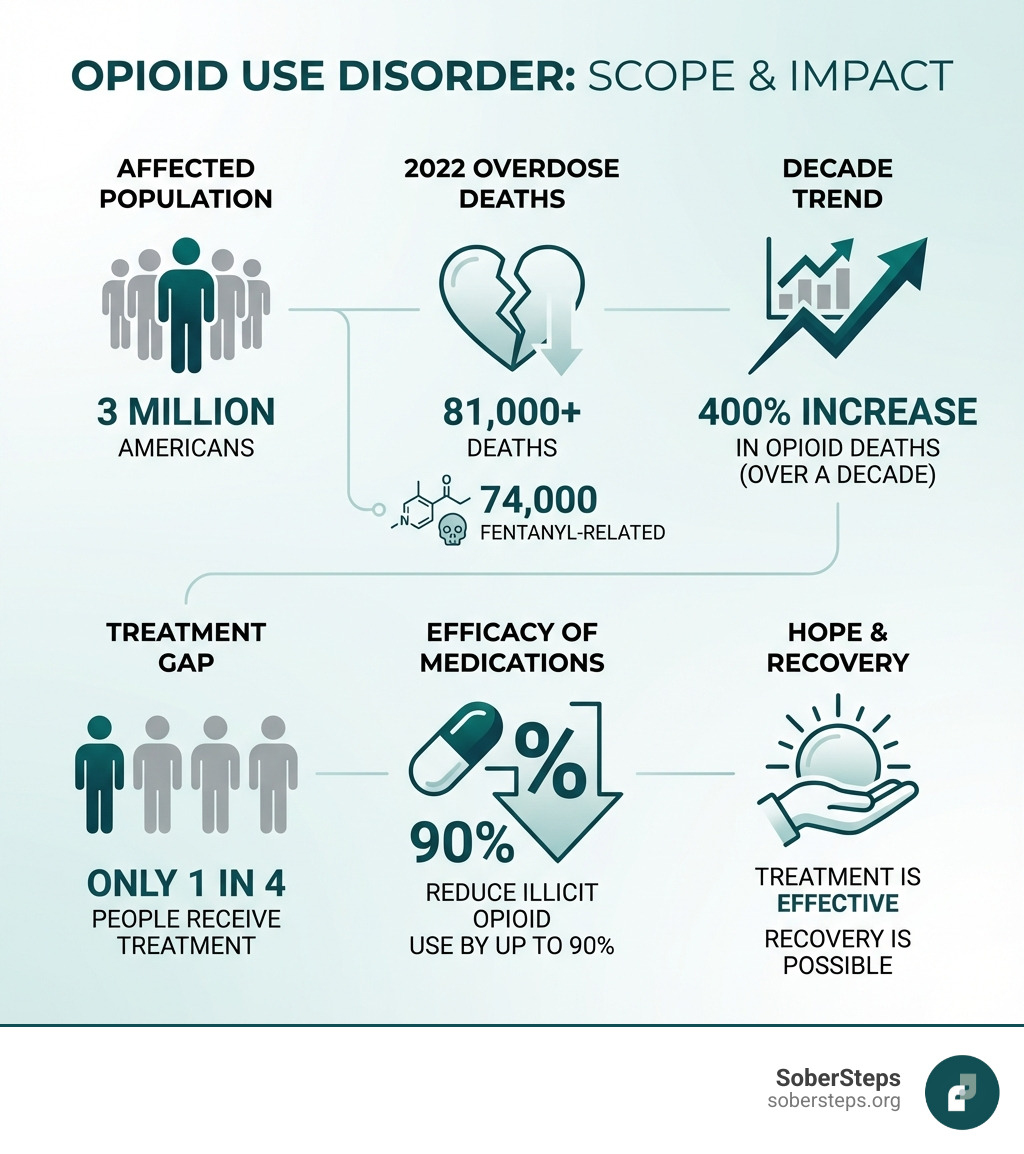
Scale: Over 3 million Americans and 16 million people worldwide meet criteria for OUD
Impact: More than 81,000 Americans died from opioid-related overdoses in 2022, with fentanyl involved in nearly 74,000 of these deaths
Diagnosis: Based on meeting at least 2 of 11 DSM-5 criteria within 12 months
Treatment: Highly effective options exist, including Medications for Opioid Use Disorder (MOUD), counseling, and peer support
Recovery: Possible with proper treatment and support systems
The opioid crisis has been declared a nationwide Public Health Emergency. From 1999 to 2020, more than 800,000 Americans died from drug overdoses, with opioids being the leading cause. What makes this crisis particularly dangerous is the rapid evolution of the drug supply—fentanyl is 50 times more potent than heroin and 100 times more potent than morphine, and it’s increasingly contaminating street drugs.
But here’s the crucial message: OUD is not a moral failing. It’s a chronic disease that changes your brain and body, making it incredibly difficult to stop using opioids without help. The good news? Recovery is absolutely possible with evidence-based treatment.
At Sober Steps, we specialize in connecting individuals struggling with substance use disorders to confidential, compassionate treatment resources that can help them steer their recovery journey. Our mission is to provide clear, actionable information about Opioid Use Disorder and guide you toward the support you need to reclaim your life.
What Is Opioid Use Disorder and What Causes It?
Opioid Use Disorder (OUD) is a complex medical illness characterized by a problematic pattern of opioid use that leads to significant impairment or distress. This can manifest as an overpowering drive to use opioids despite their risks, increased tolerance, or withdrawal symptoms when stopping. It’s a treatable, chronic disease that can affect anyone, regardless of background.
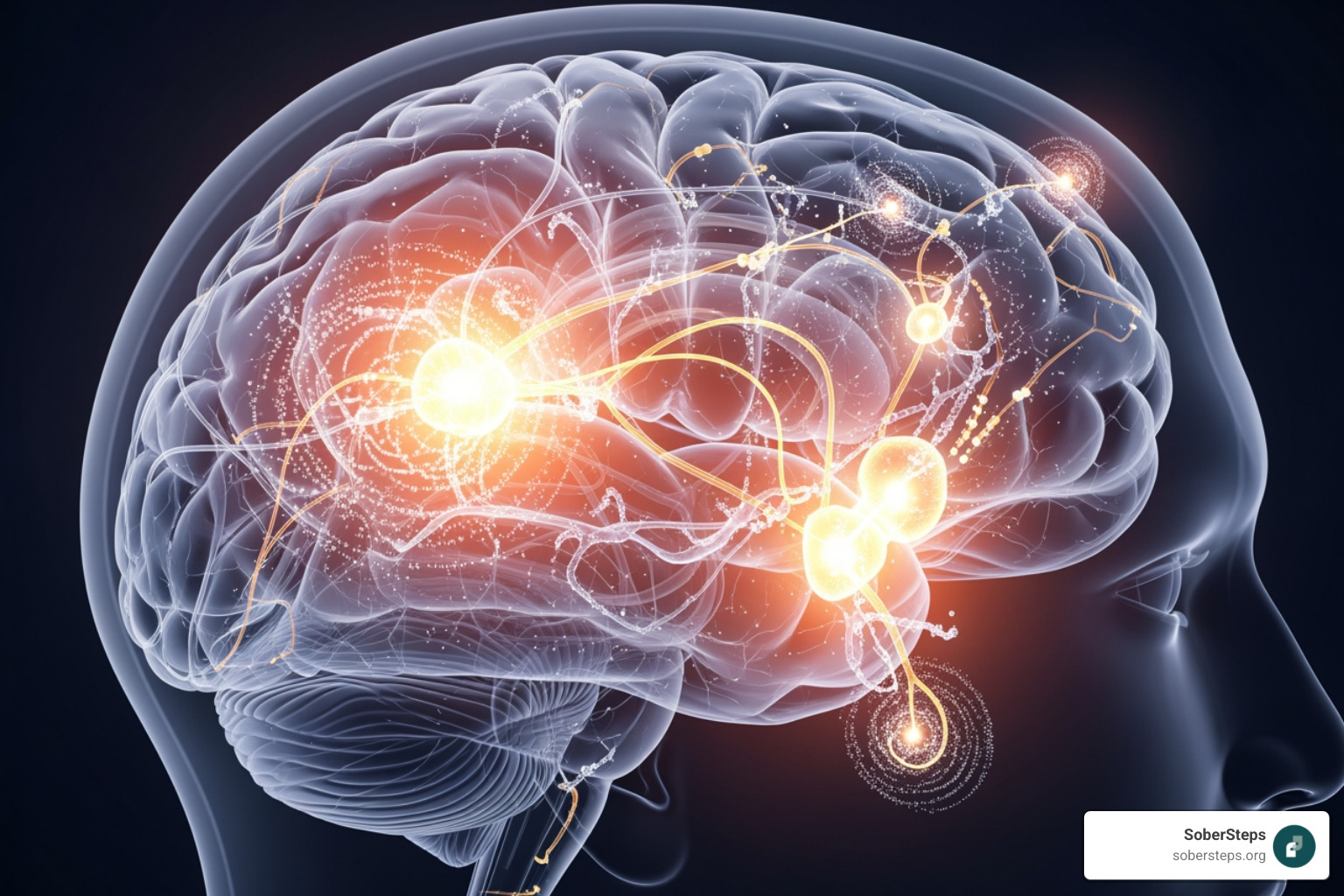
Opioids are a class of drugs that interact with opioid receptors in the brain and body. These receptors control pain, breathing, and intestinal function. When opioids bind to these receptors, they can produce pain relief and, for some, a feeling of euphoria. This rush of pleasure is largely due to the release of dopamine, a neurotransmitter associated with the brain’s reward system. Over time, the brain adapts to the presence of opioids, leading to changes in its chemistry and function. This adaptation can make it challenging to stop using opioids without experiencing uncomfortable withdrawal symptoms or intense cravings.
What causes OUD? It’s often a combination of factors, not a single cause:
Brain Chemistry: The way opioids interact with the brain’s reward system and its natural endorphins plays a significant role. The initial euphoria can diminish over time, leading individuals to take more frequent or higher doses to chase that feeling or avoid withdrawal.
Genetic Predisposition: Research suggests that genetics can influence an individual’s vulnerability to developing OUD. A family history of substance use problems or addiction can increase risk.
Environmental Factors: Exposure to environments where opioid use is prevalent, social pressures, and easy access to opioids can contribute.
Psychological Factors: Untreated mental health conditions, such as depression, anxiety, or PTSD, can increase the risk of OUD. Adverse childhood experiences (ACEs) and trauma are also significant risk factors.
Chronic Pain Management: While most patients who take prescribed opioids for chronic pain do not become addicted, using opioids regularly increases the risk of developing OUD. Up to 50% of patients on chronic opioid therapy may meet the criteria for OUD. It’s important to differentiate between prescribed opioids (like oxycodone, hydrocodone, morphine) and illicit opioids (like heroin and illegally manufactured fentanyl). Illicit opioids, especially those mixed with highly potent fentanyl or other substances like xylazine, pose an extreme risk.
Recognizing the Symptoms of Opioid Use Disorder
Recognizing the signs of Opioid Use Disorder is the first step toward seeking help. The diagnosis of OUD is based on criteria outlined in the Diagnostic and Statistical Manual of Mental Disorders (DSM-5). A person is diagnosed with OUD if they meet at least two of the following 11 criteria within a 12-month period:
Impaired Control:
Taking larger amounts or for a longer period than intended.
Persistent desire or unsuccessful efforts to cut down or control opioid use.
Spending a great deal of time obtaining, using, or recovering from the effects of opioids.
Craving or a strong desire or urge to use opioids.
Social Impairment:
Recurrent opioid use resulting in a failure to fulfill major role obligations at work, school, or home.
Continued opioid use despite having persistent or recurrent social or interpersonal problems caused or exacerbated by the effects of opioids.
Important social, occupational, or recreational activities are given up or reduced because of opioid use.
Risky Use:
Recurrent opioid use in situations in which it is physically hazardous.
Continued opioid use despite knowledge of having a persistent or recurrent physical or psychological problem that is likely to have been caused or exacerbated by opioids.
Pharmacological Criteria:
Tolerance: A need for markedly increased amounts of opioids to achieve intoxication or desired effect, or a markedly diminished effect with continued use of the same amount of an opioid.
Withdrawal: The characteristic opioid withdrawal syndrome, or opioids (or a closely related substance) are taken to relieve or avoid withdrawal symptoms.
Other signs that may develop over time include drowsiness, changes in sleep habits, weight loss, frequent flu-like symptoms, decreased libido, lack of hygiene, isolation, stealing, and new financial difficulties.
Physical Dependence vs. Addiction
It’s crucial to understand the distinction between physical dependence and Opioid Use Disorder (addiction), as they are often confused.
Physical Dependence is a state of physical adaptation where the body gets used to the presence of an opioid. This manifests as:
Tolerance: Needing larger amounts of the opioid to achieve the desired effect.
Withdrawal: Experiencing physical symptoms (like muscle aches, nausea, anxiety) if the opioid is suddenly stopped or reduced.
Physical dependence can occur in anyone taking opioids regularly, even when prescribed and used exactly as directed for pain management. For example, a patient with cancer might be physically dependent on opioids to manage chronic pain, but they are not addicted if they are not compulsively seeking or using the drug outside of medical guidance.
Addiction, or Opioid Use Disorder (OUD), is a chronic brain disease characterized by compulsive drug-seeking and use despite harmful consequences. It involves a psychological component where the drug effects are so reinforcing that control over use becomes difficult. OUD includes physical dependence, but extends beyond it to encompass:
Compulsive Use: An uncontrollable urge to use the opioid.
Psychological Component: A powerful mental preoccupation with obtaining and using the drug.
Lack of Control: Inability to limit use, even when desiring to do so.
Negative Consequences: Continued use despite significant social, occupational, legal, or health problems.
It’s vital to reiterate: OUD is not a moral failing or a lack of willpower. It is a complex medical condition influenced by genetics, environment, and brain changes. Approaching OUD as a disease helps reduce stigma and enables more effective treatment planning. Research on the neurobiology of addiction highlights the profound changes opioids induce in the brain’s reward pathways, making recovery without intervention incredibly challenging.
Here’s a comparison:
Feature
Physical Dependence
Addiction (Opioid Use Disorder)
Definition
Body adapts to opioid presence
Compulsive use despite harm, chronic brain disease
Key Aspects
Tolerance, withdrawal
Craving, loss of control, compulsive seeking, negative consequences
Causes
Regular opioid use (prescribed or illicit)
Complex interplay of genetics, environment, psychology, brain changes
Voluntary Control
May be present (when prescribed)
Impaired or lost
Behavior
Adherence to prescription (if prescribed)
Drug-seeking, continued use despite problems
Moral Judgment
No moral implication
Not a moral failing, but a disease
Occurs With
Many prescribed medications (e.g., antidepressants)
Opioids and other substances of abuse
Requires
Gradual tapering to avoid withdrawal
Comprehensive, long-term treatment
Diagnosing OUD and Understanding Its Complications
Diagnosing Opioid Use Disorder is a comprehensive process, as there isn’t a single definitive test. Instead, healthcare providers rely on a thorough evaluation of an individual’s history, behaviors, and physical state. This typically involves:
Medical History Review: A detailed discussion about opioid use patterns, duration, amounts, and any attempts to reduce or stop use. This also includes inquiring about mental health history, family history of substance use, and any trauma.
Physical Examination: To assess overall health, identify any physical signs of opioid use (e.g., track marks, pupil changes), and rule out other medical conditions.
Drug Screening: Urine drug tests can confirm the presence of opioids in the system. While not diagnostic of OUD alone, they provide objective evidence of use.
Prescription Drug Monitoring Programs (PDMPs): These state-run databases track controlled substance prescriptions, allowing healthcare providers to identify patterns of multiple prescribers or early refill requests, which can indicate misuse.
DSM-5 Criteria: The core of diagnosis involves assessing whether an individual meets at least two of the 11 DSM-5 criteria within a 12-month period, as discussed above.
The severity of OUD is determined by the number of DSM-5 criteria met:
Mild OUD: 2-3 criteria
Moderate OUD: 4-5 criteria
Severe OUD: 6 or more criteria
If left untreated, Opioid Use Disorder can lead to severe and life-threatening complications:
Overdose Risk: This is the most immediate and fatal complication. Opioids depress the central nervous system, slowing breathing to dangerous levels. The increasing presence of highly potent illicit fentanyl makes this risk even greater. In 2022, nearly 110,000 Americans died from drug overdoses, with over 81,000 involving opioids, and nearly 74,000 of these involved fentanyl.
Infectious Diseases: Sharing needles for injecting opioids can transmit blood-borne viruses like HIV and Hepatitis B and C. We encourage participation in harm reduction programs like syringe services programs (SSPs) to reduce these risks.
Legal Issues: Opioid use can lead to arrests, incarceration, and other legal problems, which further complicate recovery and reintegration into society.
Financial Problems: The cost of acquiring opioids, coupled with impaired work performance or job loss, can lead to significant financial distress.
Relationship Strain: OUD often damages relationships with family and friends, leading to isolation and loss of support systems.
Co-occurring Mental Health Conditions: OUD frequently co-occurs with other mental health disorders like depression, anxiety, and PTSD, which can exacerbate the disorder and make treatment more complex.
What is Opioid Withdrawal and How is it Managed?
Opioid withdrawal is the body’s physical and psychological reaction to the absence of opioids after dependence has developed. While rarely life-threatening on its own, it is uncomfortable and often a primary driver for continued opioid use to alleviate symptoms.
Here are common opioid withdrawal symptoms:
Early Symptoms (typically 6-12 hours after last dose for short-acting opioids, 30 hours for long-acting):
Muscle aches and pains
Restlessness and agitation
Anxiety and irritability
Insomnia
Excessive yawning
Runny nose (rhinorrhea)
Tearing eyes (lacrimation)
Sweating
Late Symptoms (typically peak around 24-72 hours):
Abdominal cramping
Nausea and vomiting
Diarrhea
Dilated pupils
Goosebumps (piloerection)
Rapid heartbeat
High blood pressure
Intense opioid cravings
The withdrawal timeline varies depending on the type of opioid used. For short-acting opioids like heroin, symptoms can begin within hours and peak within 1-3 days. For long-acting opioids like methadone, symptoms might not appear for 24-36 hours and can last for several weeks. Symptoms typically increase in severity over 72 hours before beginning to ease.
Medically supervised detoxification is the safest and most effective way to manage opioid withdrawal. During detox, medical professionals monitor symptoms and provide medications to ease discomfort. This can include:
Clonidine: To reduce anxiety, muscle cramps, and sweating.
Loperamide: For diarrhea.
Ondansetron: For nausea and vomiting.
Non-opioid pain relievers: For muscle aches.
It’s crucial to seek professional help for withdrawal management. Attempting to detox alone can be dangerous due to the severity of symptoms and the high risk of relapse, which dramatically increases the chance of overdose because tolerance has decreased. The CDC provides guidelines on withdrawal management to ensure patient safety and comfort.
Comprehensive Treatment for Opioid Use Disorder
We understand that Opioid Use Disorder is a chronic, relapsing condition that requires a comprehensive and individualized approach to treatment. There’s no one-size-fits-all solution; the most effective plans are custom to each person’s unique needs, circumstances, and co-occurring conditions. Our goal at Sober Steps is to help individuals regain their health and social function, counteracting addiction’s powerful effects on the brain and behavior.
A whole-person approach to treatment integrates several key components:
Medication-Assisted Treatment (MAT): This is considered the gold standard for OUD treatment due to its proven effectiveness.
Behavioral Therapies: Counseling helps individuals address the psychological aspects of addiction.
Support Systems: Strong social networks, including family, friends, and peer support, are vital for long-term recovery.
Addressing Co-occurring Conditions: Many individuals with OUD also experience mental health disorders, which must be treated concurrently.
Recovery as a Lifelong Process: OUD is a chronic condition, similar to diabetes or asthma, meaning ongoing care and relapse prevention strategies are essential.
Medications for Opioid Use Disorder (MOUD)
Medications for Opioid Use Disorder (MOUD) are evidence-based treatments that normalize brain chemistry, relieve cravings, prevent withdrawal symptoms, and block the euphoric effects of illicit opioids. Research shows MOUD can reduce the use of illicit opioids by up to 90% and significantly lower the risk of overdose and mortality. These medications do not substitute one addiction for another; they restore balance to brain circuits and enable patients to regain control of their lives.
The U.S. Food and Drug Administration (FDA) has approved three primary medications for OUD:
Methadone:
How it works: Methadone is a full opioid agonist, meaning it fully activates opioid receptors. It’s a very long-lasting opioid that reduces withdrawal symptoms and cravings without causing a euphoric feeling once tolerance is established.
Administration: Methadone can only be provided for OUD through specially monitored outpatient clinics certified by the Substance Abuse and Mental Health Services Administration (SAMHSA).
Benefits: Highly effective for reducing cravings and withdrawal, and for preventing relapse.
Buprenorphine:
How it works: Buprenorphine is a partial opioid agonist. It partially activates opioid receptors but binds very strongly, enabling it to block the effects of other opioids, displace any opioids already in the patient’s body, and eliminate withdrawal symptoms and cravings. Often combined with naloxone (Suboxone) to deter misuse.
Administration: Available as dissolving tablets, cheek films, or extended-release injections. Historically, prescribers needed a special waiver (X-waiver), but the Mainstreaming Addiction Treatment (MAT) Act eliminated this requirement as of December 2022. Now, any DEA-registered practitioner with Schedule III prescribing authority can prescribe buprenorphine for OUD in any clinical setting, if permitted by state law.
Benefits: Can be prescribed in an office setting, offering greater accessibility and integration into primary care. It has a lower risk of overdose compared to full agonists.
Naltrexone:
How it works: Naltrexone is an opioid receptor antagonist, meaning it completely blocks opioid receptors. It reduces cravings by blocking the effects of both naturally produced opioids and illicitly taken opioids, and it prevents any euphoria from opioid use.
Administration: Available as a daily oral tablet or a monthly extended-release intramuscular injection (Vivitrol).
Benefits: Since it blocks opioid effects, it’s a good option for preventing relapse. However, it can only be started after a person has been opioid-free for at least 7-10 days to avoid precipitating severe withdrawal.
Medications are a cornerstone of Opioid Use Disorder treatment, but they are most effective when combined with counseling and behavioral therapies. These therapies address the psychological, social, and environmental factors that contribute to OUD, helping individuals develop healthier coping mechanisms and life skills.
Key behavioral therapies include:
Cognitive Behavioral Therapy (CBT): This structured, goal-oriented therapy helps individuals identify and change negative thought patterns and behaviors that lead to opioid use. It teaches strategies for coping with cravings, managing stress, and preventing relapse. Research on CBT for OUD has shown its effectiveness in improving treatment outcomes.
Contingency Management: This approach uses positive reinforcement (e.g., vouchers or small prizes) to encourage desired behaviors, such as abstinence from opioids, attendance at counseling sessions, or adherence to medication.
Family Therapy: Involving family members in treatment can help improve communication, resolve conflicts, and establish a supportive home environment conducive to recovery. Behavioral family counseling and community reinforcement and family training (CRAFT) are examples that engage loved ones in the recovery process.
Motivational Interviewing: This client-centered approach helps individuals explore and resolve their ambivalence about treatment and behavior change, strengthening their motivation to recover.
These therapies equip individuals with the tools to unlearn negative behaviors, develop effective coping skills, and address any co-occurring mental health conditions that might complicate recovery. A person may need a treatment approach that addresses both mental health and substance use disorders if both conditions are occurring together.
Support Systems and Peer Recovery
Recovery from Opioid Use Disorder is a journey that benefits immensely from strong support systems. No one should have to face this challenge alone. Peer recovery support services are invaluable, offering understanding, encouragement, and practical guidance from individuals who have lived experience with OUD and recovery.
Peer Support Groups: Organizations like Narcotics Anonymous (NA) provide a safe, anonymous space for individuals to share their experiences, challenges, and successes. Participating in self-help programs like NA can play a significant role in OUD treatment by fostering changes in behavior, teaching emotional regulation, and providing a sense of community.
Recovery Communities: These communities offer a network of individuals committed to sobriety, providing mutual aid and a supportive environment.
Peer Support Specialists: These individuals, often in recovery themselves, work alongside clinical teams to provide mentorship, advocacy, and practical support, helping bridge the gap between treatment and real-world recovery.
Building a sober network helps reduce the feelings of isolation and stigma often associated with OUD. Sharing experiences with others who understand the struggles can be incredibly empowering and reinforce the belief that long-term recovery is possible.
Prevention, Prognosis, and Finding Help
The journey with Opioid Use Disorder may be challenging, but with comprehensive treatment, the prognosis for individuals is hopeful. Recovery is not only possible but is achieved by many. However, it’s important to understand that OUD is a chronic condition, and like other chronic diseases, relapse can be a part of the recovery process. This underscores the critical importance of continued care, ongoing support, and flexible treatment plans.
Prevention is key to addressing the opioid crisis. Here are some strategies:
Safe Opioid Prescribing: Healthcare providers are encouraged to follow guidelines for prescribing opioids for acute and chronic pain, considering non-opioid alternatives whenever possible. Patients should have open conversations with their doctors about pain management strategies before starting opioid medications.
Non-Opioid Pain Management: Exploring alternatives like physical therapy, acupuncture, massage, and non-opioid medications for pain can help reduce reliance on opioids.
Proper Drug Disposal: Unused prescription opioids should be disposed of safely to prevent diversion and misuse. Many communities have drug take-back programs, or you can follow FDA guidelines for flushing certain medicines.
Naloxone (Narcan) Availability: Naloxone is a life-saving medication that can rapidly reverse an opioid overdose. We strongly advocate for its widespread availability, often without a prescription. Individuals at risk of overdose, and their loved ones, should carry naloxone and know how to administer it.
Good Samaritan Laws: Many states have Good Samaritan Laws that protect individuals who seek medical help for someone experiencing an overdose from drug possession charges. These laws are crucial for encouraging people to call 911 during an overdose emergency.
How to Find Help for Opioid Use Disorder
If you or a loved one are struggling with Opioid Use Disorder, reaching out for help is the most important step. We know that stigma can be a barrier, but remember, OUD is a medical condition, and treatment is effective.
Here’s how you can find support:
Starting the Conversation: Talk to a trusted healthcare provider, family member, or friend. If you suspect a loved one is struggling, approach them with concern and offer support.
National Helplines: The Substance Abuse and Mental Health Services Administration (SAMHSA) offers a free and confidential, 24/7 National Helpline for treatment referral and information.
Treatment Locators: SAMHSA also provides online treatment locators and directories for various services, including buprenorphine providers and opioid treatment programs. These resources can help you find care in your area.
Insurance Coverage: We encourage you to contact your insurance provider to understand your mental health and addiction treatment coverage. Federal laws, like the Mental Health Parity and Addiction Equity Act, require most health plans to cover mental health and substance use disorder services at the same level as medical/surgical care.
At Sober Steps, we are dedicated to connecting individuals to the resources they need. We encourage you to explore your options and take that vital step toward recovery.
For anyone seeking help for addiction for themselves or a loved one calls to Sober Steps are completely confidential and available 24/7.
Please note: any treatment center listed on our site that receives calls is a paid advertiser.
Calls to a specific treatment center’s listing will be connected directly to that center.
Calls to our general helpline will be answered by treatment providers, all of whom are paid advertisers.
By calling the helpline, you agree to our terms and conditions. These calls are free of charge and carry no obligation to enter treatment. Neither Sober Steps nor anyone answering your call receives a commission or fee based on your choice of treatment provider.
If you’d like to explore additional treatment options or connect with a specific rehab center, you can browse our top-rated listings, visit our homepage, or call us at (844) 491-5566. You may also contact us for further assistance.