Fentanyl Addiction: Symptoms, Overdose, and Treatment Options
The Growing Threat of Fentanyl and What You Need to Know
Fentanyl Addiction is a life-threatening condition that develops when someone continues using this powerful synthetic opioid despite harmful consequences. Here’s what you need to know right now:
What it is: A brain disorder involving physical and psychological dependence on fentanyl, a synthetic opioid 50-100 times more potent than morphine
Key signs: Drowsiness, pinpoint pupils, loss of control over use, failed attempts to quit, withdrawal symptoms when stopping
Main dangers: Extremely high overdose risk (as little as 2mg can be lethal), respiratory depression, death
Treatment: Medication-assisted treatment (methadone, buprenorphine), counseling, behavioral therapy, and comprehensive support
Emergency response: Naloxone can reverse overdoses—call 911 immediately if someone shows signs of overdose
The numbers tell a sobering story. In 2021 alone, 70,601 people died from overdoses primarily involving illicit fentanyl. Synthetic opioids like fentanyl now contribute to nearly 70% of all overdose deaths in the United States. The rate of overdose deaths involving synthetic opioids in 2023 was approximately 22 times the rate in 2013.
What makes fentanyl so dangerous is its extreme potency and how it’s infiltrated the drug supply. Drug dealers often mix it with heroin, cocaine, and methamphetamine—or press it into counterfeit pills that look like legitimate prescription medications. Many people who overdose on fentanyl never intended to take it at all.
But here’s the important truth: recovery is possible. With proper treatment and support, people can and do overcome fentanyl addiction every day.
At Sober Steps, we’ve dedicated ourselves to providing confidential, accessible information about substance use disorders, including fentanyl addiction, connecting individuals with treatment options and resources that can save lives. We understand the fear and overwhelm that comes with addiction, and we’re here to help you find the safe, anonymous support you need.
Understanding Fentanyl and Its Dangers
Fentanyl is a synthetic opioid, meaning it’s entirely man-made in a lab, unlike natural opiates derived from the opium poppy (like morphine) or semi-synthetic opioids (like heroin, which is made from morphine). This distinction is crucial because synthetic opioids, particularly fentanyl, have become the primary driver of overdose deaths in the United States.
What is fentanyl and how does it differ from other opioids?
Fentanyl is a powerful synthetic opioid typically used to treat patients with chronic severe pain or severe pain following surgery. When prescribed by a doctor and dispensed by a legitimate pharmacy, it can be very effective and safe. However, its illicit counterpart is a different story.
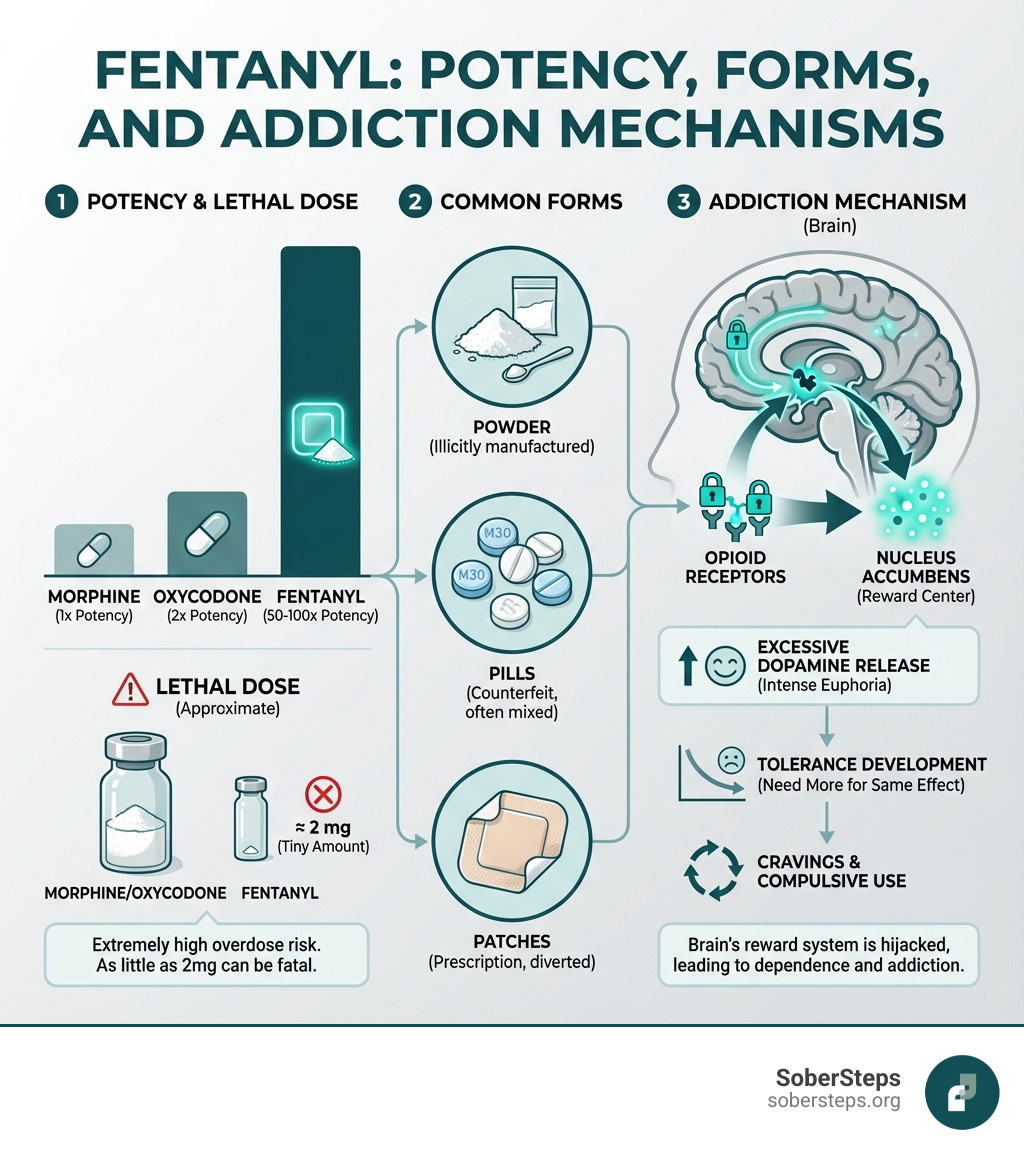
The main difference between fentanyl and other opioids like morphine or oxycodone lies in its extreme potency. Fentanyl is approximately 50 to 100 times more potent than morphine. This means even a tiny amount can have a profound effect. This high potency also translates to a faster onset of action, leading to quick and intense effects, but also a significantly higher risk of overdose.
Here’s a quick comparison:
Opioid
Potency (vs. Morphine)
Onset of Action
Overdose Risk
Morphine
1x
Moderate
Moderate
Oxycodone
~1.5x
Moderate
Moderate
Fentanyl
50-100x
Rapid
Very High
What are the sources of fentanyl?
Fentanyl comes from two primary sources:
Pharmaceutical Fentanyl: This is the legitimate, medical-grade fentanyl prescribed by doctors. It’s often administered as transdermal patches for severe, long-term pain (like cancer pain) or as lozenges. When used as directed, it’s safe and effective. However, even prescribed fentanyl can lead to addiction if misused, such as by taking more than prescribed or altering the form (e.g., smoking a patch).
Illicit Fentanyl: This is illegally manufactured fentanyl (IMF) produced in clandestine labs, often outside the U.S., and then smuggled into the country. It’s distributed through illegal drug markets in various forms, including powder, liquid (nasal sprays, eye drops), or pressed into counterfeit pills. The danger here is that IMF is entirely unregulated, meaning its purity and dosage are unknown, making it incredibly hazardous.
How is fentanyl being mixed with other drugs?
This is where the crisis takes a particularly insidious turn. Drug dealers frequently mix fentanyl with other illicit drugs to increase potency, make them cheaper, more addictive, and more dangerous. This practice is known as polysubstance use, and it significantly lifts the risk of accidental overdose.
Fentanyl is commonly found mixed with:
Heroin: Often added to boost heroin’s effects, users may not know their dose is laced with fentanyl.
Cocaine: Users seeking a stimulant high can unknowingly consume fentanyl, leading to unexpected and deadly opioid overdose.
Methamphetamine: Similar to cocaine, fentanyl can be mixed with meth, surprising users with an opioid effect.
Xylazine: An emerging threat, this non-opioid sedative (an animal tranquilizer) is increasingly found in the illegal drug supply, especially mixed with fentanyl. This combination is particularly dangerous as naloxone may not reverse the respiratory depression caused by xylazine.
Perhaps most alarming is the rise of counterfeit pills. These pills are designed to look like legitimate prescription medications such as oxycodone (often stamped “M30”) or alprazolam (Xanax). Without laboratory testing, it’s impossible to know if these pills contain fentanyl, or how much. Even a small amount, like 2 milligrams, can be lethal. Public awareness campaigns, such as the DEA’s “One Pill Can Kill” initiative, highlight this danger. We’ve even seen “rainbow fentanyl,” brightly colored pills, powders, and blocks that appeal to younger users, disguising the deadly drug.
What are the risks of fentanyl use?
The risks associated with fentanyl use are dire and immediate, primarily due to its extreme potency:
High Overdose Potential: Even in small doses, fentanyl can be deadly. As little as 2 milligrams of fentanyl, equivalent to a few grains of salt, can be considered a potentially lethal dose, depending on a person’s body size, tolerance, and past usage. The DEA found that 42% of pills tested for fentanyl contained at least 2 mg of fentanyl.
Respiratory Depression: Fentanyl profoundly depresses the central nervous system, leading to dangerously slow or stopped breathing. This is the primary cause of death in fentanyl overdoses.
Accidental Exposure: Because fentanyl is odorless, tasteless, and invisible when mixed with other drugs, users often consume it unknowingly. This dramatically increases the risk of accidental overdose for individuals who believe they are taking a different, less potent substance.
Death: The ultimate risk is death. Synthetic opioids like fentanyl contribute to nearly 70% of overdose deaths in the U.S.
The Science of Fentanyl Addiction
Understanding how fentanyl affects the brain is key to comprehending the powerful grip of Fentanyl Addiction. It’s not simply a lack of willpower; it’s a complex brain disorder.
How does fentanyl affect the brain and lead to addiction?
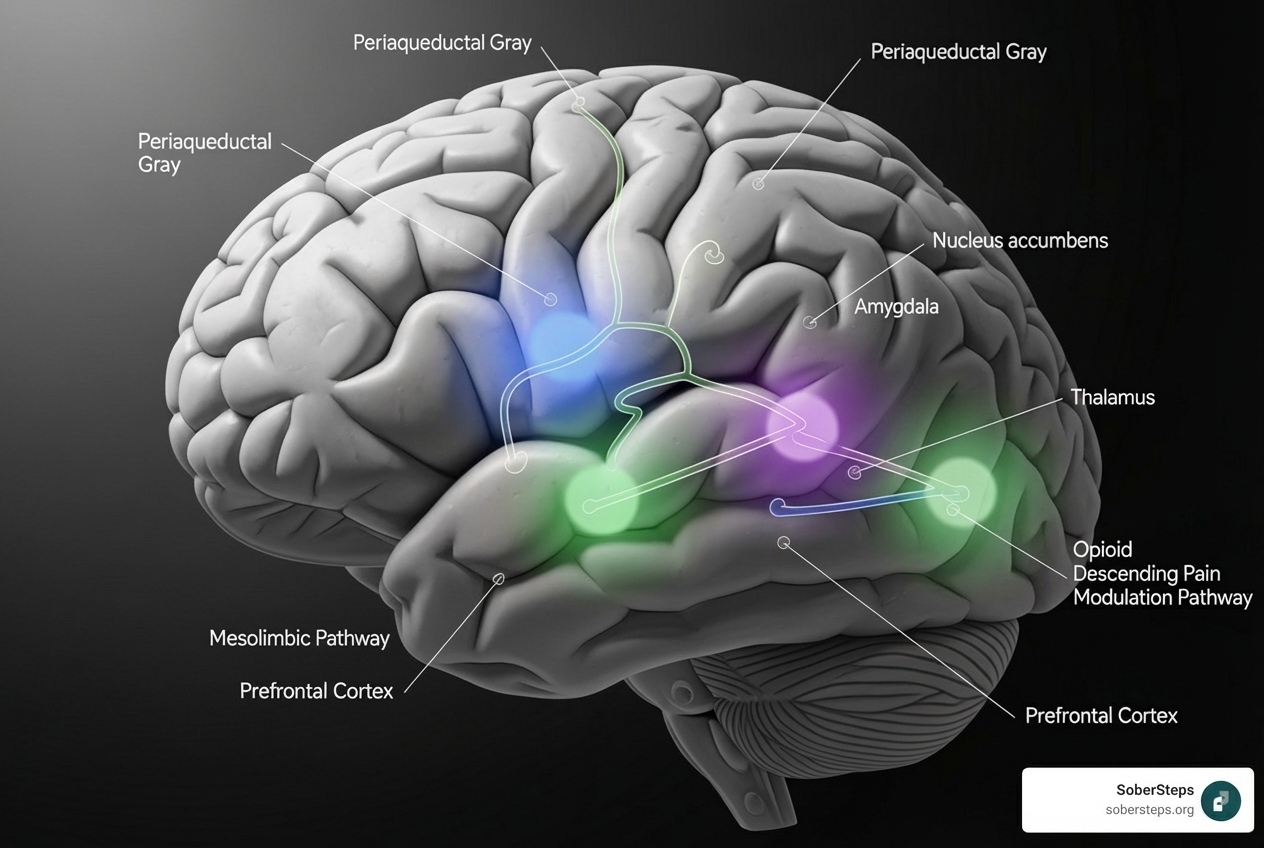
Fentanyl, like all opioids, works by binding to specific proteins in the brain and body called mu-opioid receptors. These receptors are naturally activated by endorphins, the body’s own pain-relieving and pleasure-inducing chemicals.
When fentanyl floods these receptors, it triggers an intense release of dopamine, a neurotransmitter associated with pleasure and reward. This creates a powerful, short-lived sensation of euphoria and well-being. The brain’s reward system, designed to reinforce life-sustaining behaviors, gets hijacked by this artificial surge.
Over time, with repeated exposure, the brain undergoes neuroadaptation. It begins to produce fewer natural endorphins and becomes less responsive to fentanyl’s effects, a phenomenon known as tolerance. This means a person needs higher and higher doses to achieve the same desired effect. Simultaneously, the brain becomes accustomed to fentanyl’s presence, leading to physical dependence. If the drug isn’t present, the body goes into withdrawal.
This creates a vicious cycle: the brain craves the dopamine surge, tolerance demands more fentanyl, and dependence causes agonizing withdrawal symptoms if use stops. This intense craving and the desire to avoid withdrawal drive continued use, even when it causes significant harm, defining Fentanyl Addiction.
What are the signs and symptoms of Fentanyl Addiction?
Recognizing the signs and symptoms of Fentanyl Addiction is crucial for intervention and seeking help. These can be categorized into physical and behavioral indicators:
Physical Signs:
Small, pinpoint pupils: A classic sign of opioid use.
Drowsiness or sedation: Appearing unusually sleepy or “on the nod.”
Shallow or slowed breathing: Respiration may be very slow, irregular, or labored.
Lapses in consciousness: Briefly losing awareness or becoming unresponsive.
Nausea and vomiting: Common side effects.
Constant itching: Opioids can cause histamine release, leading to itching.
Lack of coordination: Difficulty with balance or fine motor skills.
Limpness: Muscles may become relaxed to the point of limpness.
Pale or clammy skin: Skin may feel cool and moist.
Blue lips or fingertips: Indicating a lack of oxygen (hypoxia).
Behavioral Signs:
Using more fentanyl or for longer than intended: Despite intentions, the individual cannot control their use.
Unsuccessful attempts to cut down or quit: Repeated efforts to stop or reduce use fail.
Spending a lot of time obtaining, using, or recovering from fentanyl: The drug becomes a central focus of life.
Strong desire or craving to use fentanyl: An intense urge that can be hard to resist.
Failure to fulfill major role obligations: Neglecting work, school, or family responsibilities.
Continuing to use despite negative consequences: Problems with health, relationships, or legal issues don’t deter use.
Giving up important activities: Hobbies, social events, or recreational activities are abandoned.
Using fentanyl in physically hazardous situations: Such as driving under the influence.
Developing tolerance: Needing more fentanyl to get the same effect.
Experiencing withdrawal symptoms: Feeling sick when fentanyl isn’t used.
“Doctor shopping”: Seeking multiple prescriptions from different doctors.
Financial problems: Due to the cost of purchasing fentanyl.
Social isolation: Withdrawing from friends and family, changing social circles.
Dramatic mood swings: Irritability, anxiety, or depression when not using.
What are the short-term and long-term health effects?
Fentanyl’s effects extend beyond the immediate high, impacting both physical and mental health.
Short-Term Effects:
Euphoria: The intense rush of pleasure.
Pain Relief: Its primary medical purpose.
Sedation: Drowsiness and relaxation.
Dizziness and Confusion: Impaired cognitive function.
Constricted Pupils: Pinpoint pupils are a hallmark.
Nausea, Vomiting, Constipation: Common gastrointestinal issues.
Slowed Breathing: The most dangerous acute effect, leading to overdose.
Long-Term Effects:
Chronic Constipation and Bowel Obstruction: Opioids significantly slow gut motility.
Hypoxia and Brain Damage: Repeated episodes of slowed breathing (hypoxia) can lead to oxygen deprivation to the brain, causing lasting cognitive impairment.
Weakened Immune System: Chronic opioid use can suppress immune function, increasing susceptibility to infections.
Mental Health Disorders: Long-term fentanyl misuse can worsen pre-existing conditions like anxiety and depression, or even induce new mental health challenges.
Cardiovascular Issues: Especially with intravenous use, risks include endocarditis (heart valve infection) and other circulatory problems.
Injection-Related Complications: For those who inject, risks include collapsed veins, skin infections, and transmission of blood-borne diseases like HIV and hepatitis from shared needles.
Nasal Damage: Snorting fentanyl can cause damage to nasal passages and sinuses.
What are the diagnostic criteria for opioid use disorder?
Diagnosing Fentanyl Addiction falls under the broader category of Opioid Use Disorder (OUD). Mental health professionals use the criteria outlined in the American Psychiatric Association’s Diagnostic and Statistical Manual of Mental Disorders, 5th Edition (DSM-5). A person is diagnosed with OUD if they meet two or more of the following 11 criteria within a 12-month period:
Impaired Control:
Fentanyl is often taken in larger amounts or over a longer period than was intended.
There is a persistent desire or unsuccessful efforts to cut down or control fentanyl use.
A great deal of time is spent in activities necessary to obtain fentanyl, use fentanyl, or recover from its effects.
Craving, or a strong desire or urge to use fentanyl.
Social Impairment:
Recurrent fentanyl use resulting in a failure to fulfill major role obligations at work, school, or home.
Continued fentanyl use despite having persistent or recurrent social or interpersonal problems caused or exacerbated by the effects of fentanyl.
Important social, occupational, or recreational activities are given up or reduced because of fentanyl use.
Risky Use:
Recurrent fentanyl use in situations in which it is physically hazardous.
Continued fentanyl use despite knowledge of having a persistent or recurrent physical or psychological problem that is likely to have been caused or exacerbated by fentanyl.
Pharmacological Criteria:
Tolerance: A need for markedly increased amounts of fentanyl to achieve intoxication or desired effect, or a markedly diminished effect with continued use of the same amount of fentanyl. (Note: This criterion is not considered to be met for those taking opioids solely under appropriate medical supervision).
Withdrawal: The characteristic opioid withdrawal syndrome, or fentanyl (or a closely related substance) is taken to relieve or avoid withdrawal symptoms. (Note: This criterion is not considered to be met for those taking opioids solely under appropriate medical supervision).
The severity of the OUD is determined by the number of criteria met:
Mild: 2-3 criteria
Moderate: 4-5 criteria
Severe: 6 or more criteria
The Fentanyl Crisis: Scope, Risks, and Prevention
The rise of fentanyl has transformed the opioid crisis into an even more urgent public health emergency, particularly in the United States.
What is the impact of fentanyl on overdose deaths?
The impact of fentanyl on overdose deaths is staggering. Synthetic opioids, primarily illicitly manufactured fentanyl, are the leading cause of drug overdose deaths in the U.S.
In 2021, 70,601 overdoses in the US were primarily due to illicit fentanyl.
Synthetic opioids like fentanyl contribute to nearly 70% of all overdose deaths.
The rate of overdose deaths involving synthetic opioids in 2023 was approximately 22 times the rate in 2013, highlighting an exponential increase over a decade.
Approximately 69% of all drug overdose deaths in 2023 involved synthetic opioids other than methadone.
This crisis affects all demographics and has become a leading cause of death for certain age groups, tragically cutting short countless lives and devastating families and communities across the nation.
What are the risk factors for Fentanyl Addiction?
While fentanyl’s potency makes anyone who uses it vulnerable, certain factors can increase an individual’s susceptibility to developing Fentanyl Addiction:
History of Substance Use: Individuals with a personal or family history of substance misuse are at a higher risk.
Co-occurring Mental Health Disorders: Conditions like depression, anxiety, PTSD, or other mental health issues can increase vulnerability as individuals may self-medicate.
Genetic Predisposition: Genetics can play a role in how a person’s brain responds to drugs and their likelihood of developing addiction.
Environmental Factors: Living in environments with high drug availability, poverty, unemployment, or a lack of support systems can increase risk.
Trauma: A history of physical, emotional, or sexual abuse can significantly increase the risk of developing substance use disorders.
Social Isolation: Lack of strong social connections and support can make individuals more susceptible.
Age: Younger individuals, particularly teens and young adults (early 20s), may be at higher risk due to developing brains and risk-taking behaviors.
Risky Behavior: A general propensity for risky behaviors can lead to experimentation with illicit drugs.
Heavy Tobacco Use: Studies suggest a correlation between heavy tobacco use and increased risk for opioid use disorder.
Gender-Specific Factors: Women, for instance, may face unique risks due to a higher likelihood of long-term prescription opioid use and higher prescribed doses.
How can addiction and overdose be prevented?
Preventing Fentanyl Addiction and overdose requires a multi-faceted approach involving education, safe practices, and harm reduction strategies:
Education and Awareness: Understanding the dangers of illicit fentanyl, especially its presence in counterfeit pills and other drugs, is paramount. Public health campaigns, like those from the DEA, aim to inform individuals about the risks.
Safe Prescription Practices: For prescribed opioids, it’s crucial to take the lowest dose possible for the shortest time needed, exactly as prescribed. We encourage exploring non-opioid alternatives for pain management whenever possible. Unused medications should be properly disposed of through DEA-approved locations or take-back programs to prevent diversion.
Fentanyl Test Strips: These inexpensive strips can detect the presence of fentanyl in drugs, providing results within minutes. While not foolproof (they may not detect all potent fentanyl analogs), they offer a critical layer of harm reduction.
Harm Reduction Strategies: Beyond testing, harm reduction includes not using alone, carrying naloxone, and knowing the signs of overdose. Resources for harm reduction support and supplies can be found through organizations like SAMHSA SAMHSA’s Harm Reduction.
Community Support: Building strong, supportive communities and addressing underlying social determinants of health can reduce vulnerability to addiction.
What is the role of naloxone in reversing overdoses?
Naloxone is a life-saving medication that acts as an opioid antagonist. This means it quickly reverses the effects of an opioid overdose, particularly respiratory depression, by knocking opioids off the brain’s receptors.
How it Works: Naloxone can restore normal breathing within minutes in a person whose breathing has slowed or stopped due to an opioid overdose.
How to Administer: It’s available as an injectable solution and an easy-to-use nasal spray. Training is often available through local health departments or pharmacies.
Importance of Calling 911: Even after administering naloxone, it is crucial to call 911 immediately. Naloxone’s effects are temporary (typically 30-90 minutes), while fentanyl can remain in the system longer, leading to re-narcanization or a second overdose once the naloxone wears off. Medical professionals can monitor the individual and provide further care.
Higher Doses for Fentanyl: Due to fentanyl’s extreme potency, multiple doses of naloxone or higher doses may be needed to reverse an overdose, though standard doses are often sufficient if administered promptly.
Accessibility: If you or someone you know uses opioids, it is a good idea to have a naloxone kit. Information on obtaining naloxone kits can be found through various community and health resources naloxone kit.
Finding Hope: Treatment for Fentanyl Addiction
While the challenges of Fentanyl Addiction are significant, the good news is that recovery is absolutely possible. Effective treatments are available, offering a path to healing and a life free from the grip of addiction.
What are the available treatment options?
Treatment for Fentanyl Addiction typically involves a comprehensive approach that combines medication with behavioral therapies and supportive care.
Medications for Opioid Use Disorder (MOUD): These are the gold standard for treating OUD, including fentanyl addiction. They work by stabilizing brain chemistry, reducing cravings, and preventing withdrawal symptoms.
Methadone: A full mu-opioid agonist taken daily, often in a clinic setting. It prevents withdrawal and reduces cravings without causing a euphoric high.
Buprenorphine: A partial mu-opioid agonist, often combined with naloxone (Suboxone). It can be prescribed in an outpatient setting and is available in sublingual films, tablets, and extended-release injectable forms. It also reduces cravings and withdrawal symptoms.
Naltrexone: An opioid antagonist available in oral form or as a monthly extended-release injectable (Vivitrol). It blocks the effects of opioids and can prevent relapse, but patients must be opioid-free for 7-10 days before starting to avoid precipitated withdrawal.
Medical Detoxification: This is the process of safely managing acute withdrawal symptoms under medical supervision. It’s often the first step in treatment but is not a standalone treatment for addiction.
Supportive Care: This includes medical monitoring, nutritional support, and addressing any co-occurring physical health issues.
Individualized Treatment Plans: Because addiction affects everyone differently, effective treatment is custom to the individual’s specific needs, incorporating their medical history, co-occurring mental health conditions, and social circumstances.
What therapies are used in recovery?
Behavioral therapies are critical components of a successful recovery journey for Fentanyl Addiction, helping individuals develop coping skills, address underlying issues, and maintain long-term sobriety.
Cognitive-Behavioral Therapy (CBT): Helps individuals identify and change problematic thought patterns and behaviors related to drug use, teaching coping mechanisms for cravings and high-risk situations.
Motivational Interviewing (MI): A client-centered approach that helps individuals explore and resolve ambivalence about change, strengthening their motivation for recovery.
Contingency Management (CM): Provides tangible rewards for positive behaviors, such as drug-free urine tests or adherence to treatment goals, reinforcing sobriety.
Individual Counseling: Provides a safe space for exploring personal issues, trauma, and triggers with a therapist.
Group Therapy: Offers peer support, shared experiences, and a sense of community, reducing feelings of isolation.
Family Therapy: Involves family members in the recovery process, addressing communication issues, setting boundaries, and rebuilding relationships.
Peer Support: Participation in 12-step programs (like Narcotics Anonymous) or other peer-led support groups provides ongoing encouragement and accountability.
What are the unique challenges in treating Fentanyl Addiction?
Treating Fentanyl Addiction presents several unique challenges compared to other opioids, primarily due to its pharmacological properties:
High Potency: Fentanyl’s extreme strength means that individuals often develop very high levels of tolerance and dependence quickly, leading to intense cravings and severe withdrawal symptoms.
Severe and Potentially Prolonged Withdrawal: Fentanyl’s unique pharmacokinetics, including its high lipophilicity (meaning it’s readily stored in fat tissue), can lead to slower clearance from the body. This can result in withdrawal symptoms that are more protracted or “wave-like” compared to other opioids, making medical detoxification more complex.
Precipitated Withdrawal Risk: A significant challenge in initiating buprenorphine treatment for individuals using fentanyl is the risk of precipitated withdrawal. Because fentanyl binds so strongly to opioid receptors, introducing buprenorphine (a partial agonist) too soon can rapidly displace fentanyl, causing sudden and severe withdrawal symptoms. Innovative induction methods, such as the low-dose (Bernese) method, have been developed to mitigate this risk.
Polysubstance Use: The common practice of mixing fentanyl with other drugs (like benzodiazepines or xylazine) complicates treatment, as individuals may have co-occurring addictions and withdrawal syndromes that require careful management.
Need for Custom Treatment Approaches: The unique properties of fentanyl often necessitate adjustments to standard OUD treatment protocols, requiring healthcare providers to be highly knowledgeable and adaptable.
Frequently Asked Questions about Fentanyl
How can you tell if a pill contains fentanyl?
This is a critical question with a straightforward, yet alarming, answer: You cannot tell if a pill contains fentanyl by simply looking at it, smelling it, or tasting it. Fentanyl is odorless, tasteless, and visually indistinguishable when mixed into other substances or pressed into counterfeit pills.
The only way to detect fentanyl is through chemical testing. This means:
If you are taking a prescription medication, ensure it comes from a licensed medical professional and a legitimate pharmacy.
For any illicit pills or powders, the safest assumption is that they may contain fentanyl.
Fentanyl test strips are available and can provide results within minutes, indicating the presence of fentanyl. While not perfect (they might not detect all fentanyl analogs or concentrations), they offer a crucial tool for harm reduction.
Can you get addicted to fentanyl after just one use?
While full-blown Fentanyl Addiction typically develops over time with repeated use, fentanyl’s extreme potency and rapid effect on the brain’s reward system can create powerful cravings and a quick path to dependence. Even a single use can be incredibly dangerous due to the high overdose risk, and the intense euphoria it produces can immediately set the stage for compulsive use. For some individuals, particularly those with pre-existing risk factors, the reinforcing properties of fentanyl are so strong that they can quickly progress to regular use and dependence, making it feel like addiction developed almost instantly.
Is naloxone always effective against fentanyl overdose?
Yes, naloxone is effective in reversing fentanyl overdoses because it is an opioid antagonist that blocks opioid receptors. However, due to fentanyl’s high potency and strong binding affinity, there are nuances:
Multiple Doses: A single dose of naloxone may not be enough. Multiple doses might be required to fully reverse a fentanyl overdose.
Higher Doses: In some cases, higher concentrations of naloxone may be necessary to overcome fentanyl’s effects.
Duration of Action: Naloxone’s effects are temporary. Fentanyl can remain in the body longer than naloxone, meaning an individual can relapse into overdose once the naloxone wears off. It is absolutely critical to call 911 immediately after administering naloxone, even if the person revives.
Other Substances: If fentanyl is mixed with other drugs (like xylazine or benzodiazepines), naloxone will reverse the opioid effects but not the effects of the other substances, which can still cause respiratory depression or other complications.
Conclusion
The crisis of Fentanyl Addiction is one of the most pressing public health challenges of our time, marked by a potent drug, rising overdose deaths, and complex treatment needs. We’ve explored fentanyl’s nature, its deadly differences from other opioids, how it hijacks the brain, and the devastating impact it has on individuals and communities.
Yet, amidst these profound dangers, there is immense hope. Treatment is effective, recovery is achievable, and support is available. With medications like methadone and buprenorphine, combined with therapies such as CBT and motivational interviewing, individuals can reclaim their lives. The journey to recovery is deeply personal, but no one has to walk it alone.
At SoberSteps, we believe in the power of connection and comprehensive care. We are committed to providing confidential resources and connecting you with the support you deserve.
Understanding Rapid Detox: What You Need to Know Before Deciding Rapid detox centers offer a controversial approach to opioid withdrawal that promises to eliminate the worst symptoms in just a few days.
For anyone seeking help for addiction for themselves or a loved one calls to Sober Steps are completely confidential and available 24/7.
Please note: any treatment center listed on our site that receives calls is a paid advertiser.
Calls to a specific treatment center’s listing will be connected directly to that center.
Calls to our general helpline will be answered by treatment providers, all of whom are paid advertisers.
By calling the helpline, you agree to our terms and conditions. These calls are free of charge and carry no obligation to enter treatment. Neither Sober Steps nor anyone answering your call receives a commission or fee based on your choice of treatment provider.
If you’d like to explore additional treatment options or connect with a specific rehab center, you can browse our top-rated listings, visit our homepage, or call us at (844) 491-5566. You may also contact us for further assistance.