How to Pay for Addiction Treatment: A Complete Guide
Discover **How Do I Pay For Addiction Treatment**. Explore insurance, grants, and low-cost options for recovery. Get help now.

Cocaine addiction is a powerful neurological disorder that develops when repeated use of this stimulant drug causes lasting changes in the brain’s reward system.
Quick Facts About Cocaine Addiction:
Cocaine is an intense stimulant that floods the brain with dopamine, creating powerful feelings of euphoria. But this high comes at a steep cost. The drug hijacks your brain’s reward circuits, causing changes in gene expression and nerve cell structure that can persist for months or years. These biological changes drive the intense cravings and high relapse risk that make cocaine addiction so difficult to overcome alone.
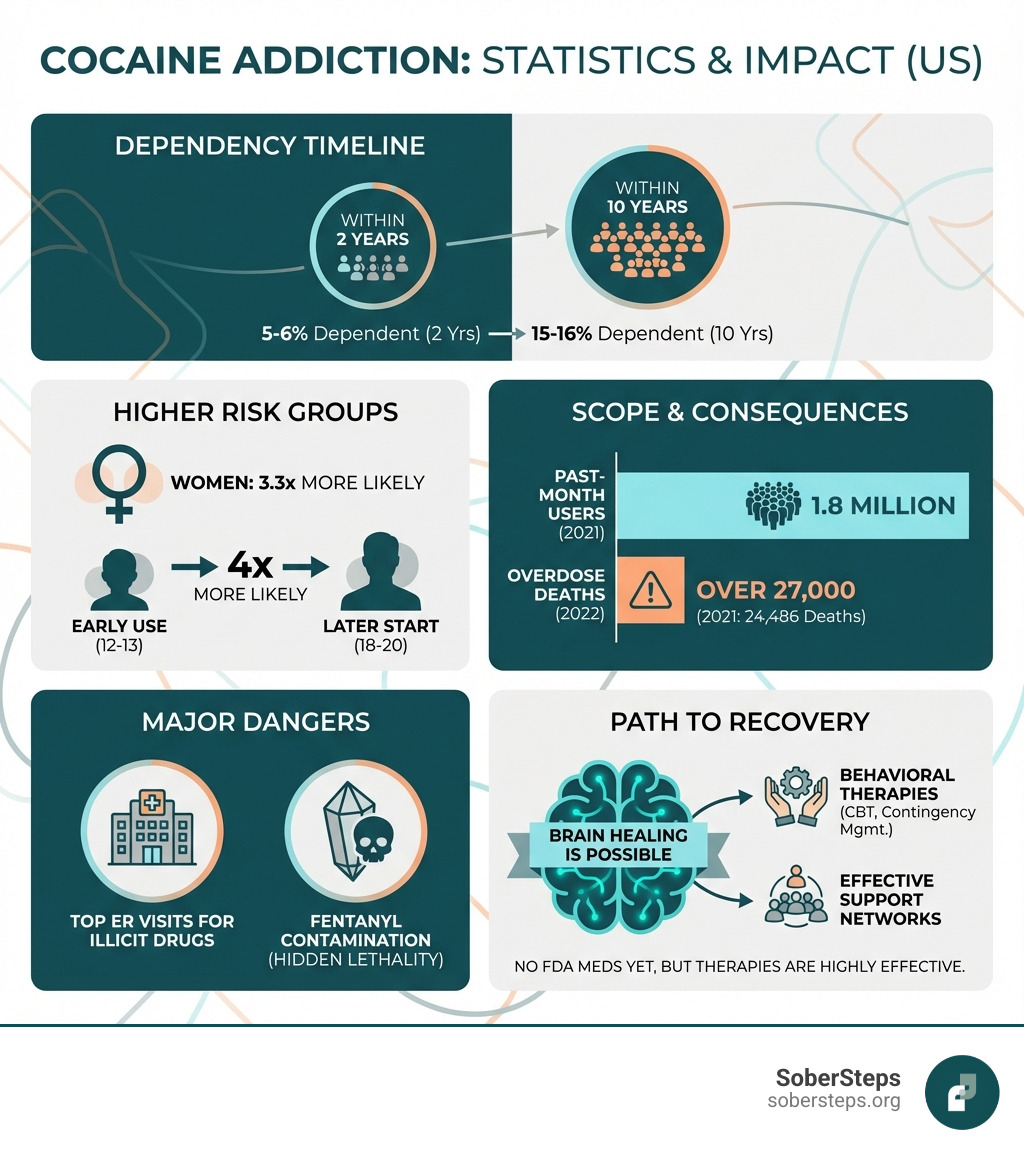
The statistics are sobering. Approximately 1,800 Americans try cocaine for the first time each day. Cocaine-related issues lead to more emergency room visits than any other illegal drug, and tragically, over 27,000 Americans died from cocaine-involved overdoses in 2022. The danger is amplified by the frequent contamination of cocaine with fentanyl, a deadly synthetic opioid.
But there’s hope. While cocaine addiction profoundly changes the brain, these changes aren’t permanent. With proper treatment and support, recovery is possible. Research shows the brain can heal, and countless people have rebuilt their lives after addiction.
At Sober Steps, we’ve helped thousands of individuals steer the path from cocaine addiction to lasting recovery by connecting them with evidence-based treatment programs. We understand that seeking help can feel overwhelming, which is why we provide confidential resources and support every step of the way.
Cocaine is a powerfully addictive stimulant derived from the leaves of the South American coca plant. While coca leaves have been used for centuries for their stimulant effects, the purified chemical form, first isolated in 1860, is far more potent and dangerous.

Cocaine comes in two primary forms:
People use cocaine via several methods, which influences the high’s intensity and duration:
Regardless of the method, cocaine acts as a central nervous system stimulant, profoundly altering brain chemistry.
Cocaine’s power lies in its interaction with the brain’s dopamine system. Dopamine is a key neurotransmitter in the brain’s reward pathway (including the Ventral Tegmental Area and Nucleus Accumbens), which regulates pleasure and motivation. This circuit is naturally activated by enjoyable activities like eating or sex.
Cocaine interferes with the normal reuptake of dopamine. Usually, dopamine is released, sends a signal, and is then reabsorbed. Cocaine blocks this reabsorption, causing a dopamine buildup that over-activates brain cells. This amplified signal creates the intense euphoria and heightened energy users feel.
This artificial flood of dopamine hijacks the brain’s reward system. Over time, the brain adapts to these high dopamine levels, becoming less sensitive to natural rewards and requiring more cocaine to achieve the same effect—a phenomenon known as tolerance.
Beyond the initial dopamine surge, chronic cocaine use alters the brain’s limbic system, which governs pleasure and motivation. It changes gene expression, causing a buildup of a protein called ΔFosB. Researchers believe ΔFosB acts as a “molecular switch” for addiction, driving long-term changes in nerve cell structure.
These long-term changes also involve physical alterations to neurons, causing them to sprout new offshoots. These structural changes reinforce compulsive drug-seeking behavior. This damage means cravings can persist for years, making individuals vulnerable to relapse even after long abstinence. Understanding these mechanisms is crucial for developing effective treatments. For a deeper dive, you can read more about The Neurobiology of Cocaine Addiction.
Cocaine addiction is a complex disease with profound effects on health and well-being. Cocaine use often involves a “binge-crash” cycle: repeated use to maintain a high, followed by a severe crash. This cycle drives dependence, making it incredibly difficult to break free.
Cocaine-related issues are a leading cause of emergency room visits for illicit drugs. The fact that 68% of these cases involve more than one drug highlights the severe dangers of both cocaine and polydrug use.
The effects of cocaine can be devastating, impacting nearly every system in the body.
Short-term effects include:
Long-term effects of cocaine addiction are chronic and can be life-threatening:
For a comprehensive overview, refer to the National Institute on Drug Abuse’s information on Long-term health issues from cocaine use.
Recognizing the signs of cocaine addiction, categorized by the DSM-5 as a “Stimulant Use Disorder,” is the first step toward getting help.
Behavioral Signs:
Physical Signs:
Psychological Signs:
If you observe these signs, professional help is needed to address the cocaine addiction.
Mixing cocaine with other substances significantly escalates health risks and the potential for fatal overdose.
The journey through cocaine addiction is often marked by a challenging cycle of withdrawal and relapse. When a user stops, the brain, now adapted to cocaine, triggers a cascade of unpleasant withdrawal symptoms as it attempts to rebalance.
Cocaine’s physical withdrawal is less acute than for opioids or alcohol, but the psychological symptoms are profoundly distressing and dangerous, making professional support essential. This is also where the potential for relapse becomes most apparent.
Both genetic and environmental risk factors influence a person’s vulnerability to cocaine addiction and relapse. Genetics account for about half of the risk, while factors like stress, trauma, or social environments where drug use is common also play a significant role.
The withdrawal process from cocaine typically occurs in three phases:
The psychological dangers during withdrawal, especially profound depression and suicidal thoughts, are a serious risk. This is why attempting to quit cocaine addiction without professional medical and psychological supervision is highly discouraged.
Overcoming cocaine addiction is a challenging but achievable goal with the right support. At SoberSteps, we understand that each recovery path is unique, and we’re here to help you steer it.
The journey often begins with medical detoxification. While not typically physically life-threatening, cocaine withdrawal can cause severe depression and suicidal thoughts, making a monitored medical detox essential. Detox manages these psychological symptoms, making abstinence more tolerable and reducing relapse risk.
Professional, evidence-based treatment is crucial. Addiction is a chronic disease requiring comprehensive care. Our goal is to connect individuals with treatment programs that offer various levels of care to suit their needs:
Behavioral interventions are the cornerstone of treatment for cocaine addiction, as there are no FDA-approved medications specifically for it.
You can find more information and connect with treatment centers by visiting our resource on More info about rehab centers.
As mentioned, no medications are specifically FDA-approved for cocaine addiction. However, research is ongoing, with drugs like Disulfiram and Modafinil being studied. Physicians may also use supportive medications to manage severe withdrawal symptoms or co-occurring mental health conditions.
This highlights the importance of dual diagnosis: treating co-occurring mental health disorders like ADHD, depression, anxiety, or PTSD alongside addiction. For example, many with ADHD also struggle with cocaine use. Treating both the addiction and the mental health disorder simultaneously is vital for long-term recovery and leads to significantly better outcomes.
Relapse is a common part of recovery, not a failure. Effective relapse prevention is crucial for long-term sobriety.
The stories of peer support workers who have overcome addiction powerfully illustrate that recovery is possible. Their journeys underscore the importance of coping skills and finding purpose in helping others, which can be a powerful motivator for change.
Cocaine addiction can develop remarkably quickly. The risk of dependence is 5-6% within two years of first use, rising to 15-16% within 10 years. Factors influencing this include:
Attempting to recover alone is extremely difficult and dangerous due to severe psychological withdrawal, including depression and suicidal thoughts. Intense cravings and brain changes make sustained abstinence without structured support very challenging.
Professional treatment provides:
Quitting “cold turkey” often leads to relapse; professional guidance is the safest and most effective path to recovery.
Currently, the FDA has not approved any medications specifically to treat cocaine addiction. While research is ongoing for drugs like Disulfiram and Modafinil, they are not yet standard treatments.
However, physicians may prescribe medications to:
For now, behavioral therapies like Cognitive Behavioral Therapy (CBT) and Contingency Management (CM) remain the most effective treatments for cocaine addiction, addressing the learned behaviors and psychological aspects of the disorder.
Cocaine addiction is a formidable challenge, defined by its powerful grip on the brain, severe health consequences, and the difficult cycle of withdrawal and relapse. This guide has explored how cocaine creates persistent cravings, and how dangers like polydrug use and fentanyl contamination make use a perilous gamble.
However, the reality of cocaine addiction is not without hope. Recovery is not just a possibility; it’s a journey that countless individuals successfully start every day. With the right support and evidence-based treatments, the brain can begin to heal, and lives can be rebuilt.
Taking the first step toward a new life is the hardest but most courageous one. At SoberSteps, we understand this journey is overwhelming. We are a dedicated, confidential, anonymous, and compassionate resource for you. We connect individuals across the United States and its territories with the mental health and substance use disorder treatment programs they need to reclaim their lives.
If you or someone you care about is struggling with cocaine addiction, please know that you don’t have to face it alone. Help is available, and a brighter, healthier future is within reach.

Discover **How Do I Pay For Addiction Treatment**. Explore insurance, grants, and low-cost options for recovery. Get help now.
In crisis? Get immediate addiction help now. Call 911, 988, or SoberSteps for urgent support & treatment guidance.

Discover specialized alcohol inpatient treatment centers. Find comprehensive care, detox, and support for lasting sobriety with SoberSteps.