
From Programs to Progress: A Look at Addiction Treatment and Recovery
Explore SoberSteps abuse programs for addiction recovery. Find treatment options, costs, and support to start your healing journey today.
Drugs are chemical substances that change how your body and mind work. Here’s what you need to know:
When taken, a drug enters your bloodstream and travels to the brain, where it can alter your senses, alertness, and decision-making. While some drugs are vital medications, others offer no medical benefit and can cause significant harm.
It’s important to distinguish between a drug and a medication. A medication is a drug used to treat, cure, or prevent illness, while the broader term “drug” includes substances used recreationally or illegally.
At Sober Steps, we help individuals understand substance use and find pathways to recovery. We provide confidential resources and support for anyone struggling with drugs or addiction, because knowledge is the first step toward making informed health decisions.
Not everyone who uses drugs becomes addicted, but factors like biology, genetics, and environment influence the risk. Understanding these can help you recognize warning signs and seek help when needed.
The world of drugs is vast, ranging from life-saving medications to illicit substances. A drug is any chemical that produces a biological effect when administered. It’s crucial to distinguish this from a medication, which is a drug specifically used to treat, cure, prevent, or diagnose a disease. All medications are drugs, but not all drugs are medications. The term “drug” also refers to substances used recreationally or illicitly.
To help you understand this complex landscape, we’ve broken down drugs into several key categories.
Prescription drugs are powerful substances that require a doctor’s order due to their potential risks. The U.S. Food and Drug Administration (FDA) regulates these medications to ensure their safety and efficacy. Many prescription drugs, such as opioids (codeine), sedatives (benzodiazepines), and stimulants (amphetamines), carry a risk for misuse and addiction.
Over-the-counter (OTC) medicines are considered safe for use by the general public without a prescription for common ailments like colds or headaches. However, misusing OTC medicines by taking more than the recommended dose can lead to adverse effects. For instance, the cough suppressant dextromethorphan (DXM) can be misused for its dissociative effects.
This category includes drugs that are heavily regulated or prohibited due to their high potential for abuse and harm. The Drug Enforcement Administration (DEA) classifies these substances into “schedules” based on their medical use and abuse potential.
Common types include:
This growing category of substances blurs traditional lines.
Herbal Supplements: These natural products are marketed for various health benefits, but they are regulated differently from prescription drugs and don’t undergo the same rigorous testing. Their effectiveness and potential interactions can vary, so it’s important to consult a healthcare professional before use.
‘Smart Drugs’ (Nootropics): These substances are claimed to improve cognitive function. Misusing prescription stimulants like methylphenidate (Ritalin) as “smart pills” carries significant risks, including addiction, psychosis, and heart problems.

‘Designer Drugs’: These are synthetic substances created to mimic the effects of illicit drugs while bypassing existing laws. Their unpredictable nature and unknown long-term effects make them particularly dangerous.
Entheogens: Some cultures use hallucinogens like peyote or ayahuasca in spiritual ceremonies to achieve visionary states. While rooted in tradition, their use involves psychoactive effects and potential health risks.
When a drug enters your system, it travels through the bloodstream to the brain. There, drugs interfere with communication between neurons, often by mimicking or altering natural neurotransmitters. Psychoactive drugs target the central nervous system, changing perception, mood, and consciousness.
Many addictive drugs hijack the brain’s reward system, flooding it with dopamine, a neurotransmitter linked to pleasure. This reinforces drug-seeking behavior. While some drugs can dull pain or increase alertness, they also impair judgment and decision-making. Prolonged use can cause functional and physical changes in brain circuits critical for self-control, which is a hallmark of addiction.
A drug’s effect varies based on several factors:
Drug misuse carries significant risks:
For more information on the science of addiction, we encourage you to explore resources like the National Institute on Drug Abuse (NIDA) publication, “Drugs, Brains, and Behavior: The Science of Addiction” Drugs, Brains, and Behavior: The Science of Addiction.
Vaping nicotine is not a safe alternative to smoking. All forms of nicotine are toxic to the cardiovascular system.
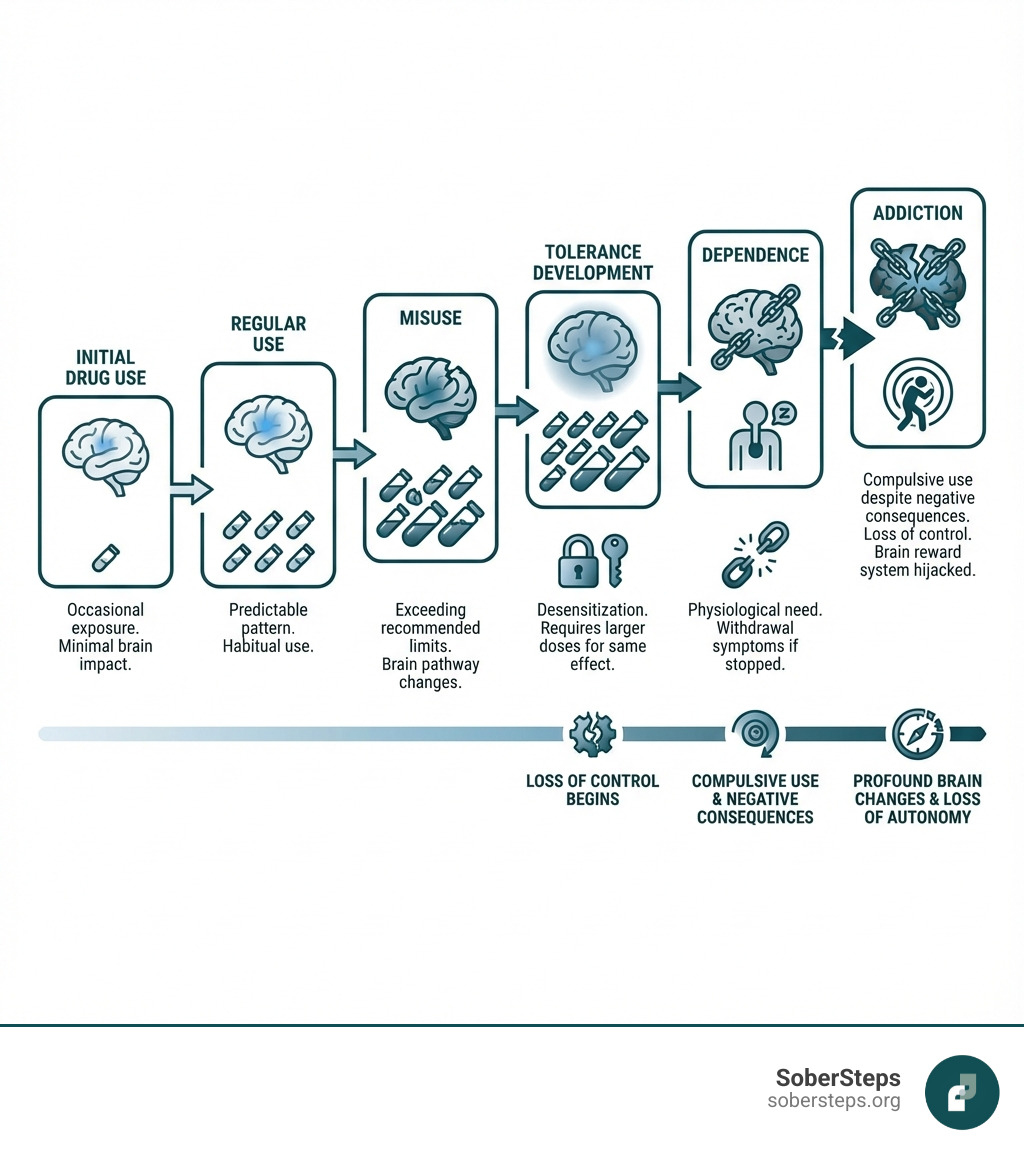
Addiction is a chronic, relapsing brain disorder, not a moral failing. It’s characterized by compulsive drug seeking and use despite negative consequences. It involves changes to brain circuits that manage reward, stress, and self-control. The journey often involves:
Recognizing the signs of addiction is the first step toward getting help. Look for these changes:
If you observe several of these signs, it may indicate a drug problem.
Overcoming addiction requires professional help and a strong support system. Effective treatments are available, and recovery is possible.
The two main types of treatment are:
Combining these approaches is often most effective. Treating co-occurring mental health problems is also crucial for a successful recovery.
If you or a friend may be addicted to drugs, talking to a trusted adult—like a parent, doctor, or school counselor—is a vital first step. They can help guide you toward the help you need.
For those in the United States and its territories, confidential resources are available. Government websites like CDC.gov and SAMHSA.gov offer additional information and support.
At SoberSteps, we provide a confidential and anonymous resource to connect individuals with mental health and substance use disorder treatment. We understand the importance of privacy in your recovery journey. You can start by using our online tool to Find a rehab center near you.
The way societies view and regulate drugs has evolved dramatically over time, influenced by cultural norms, scientific understanding, and political agendas. What might be a sacred plant in one culture could be a strictly prohibited substance in another. Today, we steer a complex web of federal and state laws that define what drugs are legal, what requires a prescription, and what is entirely prohibited.
In the United States, the Controlled Substances Act (CSA) categorizes drugs into five schedules based on their medical use, abuse potential, and dependence liability. The DEA enforces these regulations.
Federal penalties for trafficking vary significantly based on the drug’s schedule and quantity. Beyond controlled substances, the FDA plays a critical role in regulating prescription and over-the-counter medications. For detailed information on drug scheduling, you can visit the United States Drug Enforcement Administration website.
While modern society often associates drugs with misuse and addiction, many substances have rich histories rooted in cultural and spiritual practices. For millennia, various plant-based drugs have been used by indigenous cultures for healing, divination, and connecting with the spiritual field.
These substances, often referred to as entheogens, are typically hallucinogens used to generate profound spiritual experiences. For example:
Even more common substances like alcohol and caffeine have deep cultural roots. Alcohol has been a part of human rituals and social gatherings for thousands of years, while caffeine-containing beverages like coffee and tea are globally accepted social stimulants. These “recreational drugs” are widely used for pleasure rather than medicinal purposes, highlighting the diverse ways humans interact with psychoactive substances.
We often encounter common questions about drugs and addiction. Here, we address some of the most frequent ones to provide clarity.
Absolutely, yes. Prescription drugs, while vital for treating various medical conditions, can be highly addictive. Opioid pain relievers (e.g., oxycodone), benzodiazepines (e.g., Xanax), and stimulants (e.g., Ritalin) carry a significant risk of dependence and addiction, even when taken as prescribed. It’s crucial to take all prescription medications exactly as directed by your healthcare provider and to discuss any concerns about dependence with them.
Helping a loved one struggling with a drug problem can be incredibly challenging. You cannot force someone into recovery, but you can provide support and encourage them to seek professional help:
Understanding drugs and the complexities of addiction is crucial, not just for prevention, but also for fostering empathy and providing effective support. At SoberSteps, we firmly believe that knowledge empowers individuals to make informed decisions and start on a path toward healing.
Recovery from drug addiction is a journey, not a destination. It’s a process that requires courage, persistence, and, most importantly, professional guidance and a strong support system. We know it can be hard to overcome drug addiction alone, and that’s why we emphasize that everyone needs support.
Professional help provides the best chance for long-term success, offering custom behavioral therapies and, when appropriate, pharmacological treatments to address the unique challenges of addiction. At SoberSteps, we are committed to providing confidential and anonymous resources to connect individuals in the U.S. and its territories with the treatment they need.
If you or someone you know is struggling, don’t hesitate. Take the first step. Find a rehab center near you
Explore SoberSteps abuse programs for addiction recovery. Find treatment options, costs, and support to start your healing journey today.
Struggling with OUD? Discover how opioid rehab offers effective treatment, detox, MAT, and support for lasting recovery. Start your journey today!
Discover **How Do I Pay For Addiction Treatment**. Explore insurance, grants, and low-cost options for recovery. Get help now.