What is Drug Rehab? A Comprehensive Guide to Addiction Treatment
Discover drug rehab options, therapies, and costs. Understand addiction, find quality programs, and begin your path to lasting recovery.

Addiction is a chronic brain disease characterized by compulsive substance use or behavior despite harmful consequences. Here’s what you need to know:
If you or a loved one is struggling, you’re not alone. The intense focus on using a substance or behavior can make daily life feel impossible, but help is available.
Addiction is complex, involving brain changes that create intense cravings and make quitting feel nearly impossible. Genetics account for 40-60% of the risk, while environmental factors like trauma and stress also play significant roles.
The good news is that treatment works. Like other chronic conditions, addiction can be managed successfully. At Sober Steps, we provide confidential, compassionate resources to guide you toward treatment options that respect your privacy and meet your unique needs.
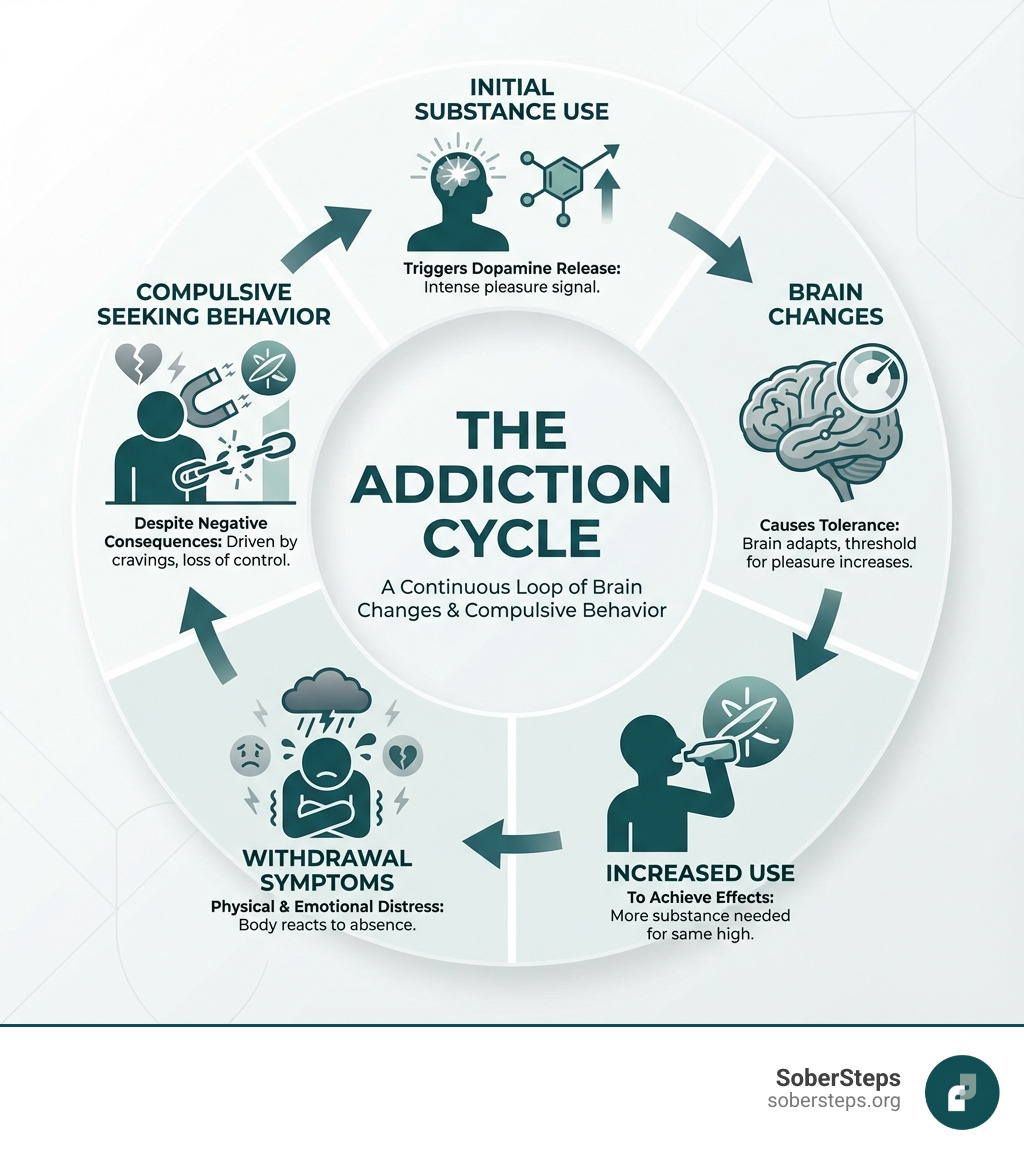
Medical experts define addiction as a chronic brain disease, not a moral failing. It’s characterized by compulsive substance seeking and use despite harmful consequences, all driven by long-lasting changes in the brain.
Our brains have a reward system that releases dopamine, a pleasure chemical, to reinforce life-sustaining activities. Addictive substances hijack this system, flooding the brain with dopamine and creating an intense rush that natural rewards can’t match. This teaches the brain to prioritize the substance above all else.
Over time, the brain adapts, becoming less responsive to natural rewards and causing lasting changes to areas that control judgment, decision-making, and self-control, like the prefrontal cortex. This is why someone with addiction struggles to stop, even when they want to. The initial choice to use a substance becomes a compulsion.
For a deeper dive into how drugs alter brain function, we often refer to the insights from the National Institute on Drug Abuse: The Science of Addiction from NIDA.
Two key results of these brain changes are tolerance and withdrawal. Tolerance means needing more of a substance to get the same effect. Withdrawal involves painful physical and psychological symptoms when use stops, creating a powerful motivation to continue using just to avoid discomfort.
The terms “Substance Use Disorder” (SUD) and addiction are often used interchangeably. The official diagnostic manual, the DSM-5, uses “Substance Use Disorder” to describe a spectrum of problematic substance use, classified as mild, moderate, or severe based on 11 criteria.
Addiction is generally considered the most severe form of SUD, characterized by compulsive use and significant brain changes. While all addiction is a severe SUD, not all SUDs are considered addictions. The medical community also prefers the term “substance misuse” over “substance abuse” to reduce stigma and encourage people to seek help.
Because addiction is a brain disease that rewires the reward system and impairs self-control, it is not a matter of willpower. The intense cravings and compulsive behaviors are symptoms of the disease, not moral failings. Just as you can’t “willpower” your way out of diabetes, addiction requires medical treatment and ongoing management.
Relapse, or a return to substance use, is a common part of recovery for many chronic diseases, including addiction. It is not a sign of failure but an indication that the treatment plan may need to be adjusted. This perspective allows us to approach addiction with compassion and effective medical strategies instead of judgment.
Addiction manifests as either substance or behavioral addictions. While different, they share underlying compulsive pathways.

To recognize problematic patterns, we use the “4 Cs” of addiction:
Substance Addictions (Substance Use Disorders): These involve the compulsive use of psychoactive substances. Common examples include:
Behavioral Addictions: These involve compulsive engagement in an activity. While gambling disorder is the only one formally recognized in the DSM-5, other behaviors can become addictive:
Recognizing the signs of addiction can be challenging, as people often try to hide their struggles. Key indicators include:
Untreated addiction has devastating effects on every part of a person’s life.
The consequences underscore the urgency of seeking effective treatment. The economic cost of addiction in the U.S. exceeds $740 billion annually from healthcare, crime, and lost productivity.
No single factor causes addiction; it’s a complex interplay of genetics, environment, and psychology. Protective factors—like strong family bonds and healthy coping skills—can reduce the risk.
The development of addiction is influenced by a combination of factors:
While addiction can affect anyone, some groups are more vulnerable:
Prevention is key to addressing the addiction crisis. Effective strategies include:
The journey through addiction can feel isolating, but recovery is a reality for millions. There is no one-size-fits-all approach; effective recovery involves personalized plans that address an individual’s unique needs. We provide compassionate, confidential resources to help you find the right support.
We understand that taking the first step can be overwhelming. That’s why we’re here to help you explore your options. You can find confidential resources and support through our SoberSteps confidential helpline and resources.
The first step is recognizing a problem exists and seeking a professional assessment for an accurate diagnosis. This often involves overcoming denial and acknowledging that addiction is a treatable disease. Early intervention improves the chances of long-term recovery. For many, treatment begins with detoxification (detox), a medically supervised process to safely manage withdrawal symptoms. Detox is a critical first step, but it must be followed by further treatment to address the underlying causes of addiction.
Effective treatment is comprehensive and custom to the individual. No single approach works for everyone.
Supporting a loved one with addiction requires patience and empathy.
We often hear common questions about addiction that highlight the need for clear, compassionate information. Let’s address some of these:
The initial decision to use a substance is a choice, but as use continues, addiction becomes a chronic brain disease. Changes in the brain’s reward and self-control circuits impair a person’s ability to stop. The medical consensus is that addiction is a brain disorder, not a moral failing. The compulsive use is a symptom of the disease.
No, addiction cannot be “cured,” but it can be successfully managed, similar to other chronic diseases like diabetes. The goal of treatment is remission, where compulsive use stops and the person can live a fulfilling life. Recovery is a lifelong process that requires ongoing management. Relapse is not a failure but a sign that treatment needs to be adjusted. Long-term recovery is achievable with the right support.
These two terms are often confused.
The key difference is the compulsive, out-of-control behavior that is the hallmark of addiction. A person can be physically dependent without being addicted.
We’ve explored addiction as a complex brain disease, not a moral failing. It’s a medical condition that rewires the brain, impairs judgment, and has profound consequences for health, relationships, and daily life.
However, there is immense hope. Addiction is treatable, and recovery is a reality for millions. Through personalized, evidence-based treatments like therapy, medication, and support groups, individuals can regain control and build fulfilling lives. Prevention, early intervention, and compassionate support are also critical.
Recovery is a continuous journey of growth and resilience. If you or someone you care about is struggling, you are not alone. Sober Steps is committed to providing confidential resources to connect you with the treatment you deserve.
Take the courageous step today. Find a rehab center to start your recovery journey.

Discover drug rehab options, therapies, and costs. Understand addiction, find quality programs, and begin your path to lasting recovery.

Discover integrated dual diagnosis treatment for co-occurring mental health & substance use. Find healing & lasting recovery today.
Struggling with OUD? Discover how opioid rehab offers effective treatment, detox, MAT, and support for lasting recovery. Start your journey today!