

Understanding Your Options for Recovery
Marijuana treatment options are more accessible and effective than many realize. If you or someone you care about is struggling with cannabis use, you’re not alone. In 2020, about 14.2 million Americans had a marijuana use disorder. The good news is that evidence-based treatments can help you regain control.
Primary treatment options include:
- Cognitive Behavioral Therapy (CBT)
- Motivational Interviewing (MI)
- Family-Based Therapies
- Contingency Management
- Support Groups and Aftercare
While no FDA-approved medications specifically treat marijuana addiction, some may help manage withdrawal symptoms. Most treatment combines multiple approaches custom to your unique situation. Recovery is possible, and even short interventions can make a meaningful difference.
At Sober Steps, we understand how overwhelming addiction recovery can feel. Our team has helped thousands find the right marijuana treatment options through our directory of rehab centers and evidence-based resources. We’re here to walk alongside you.
If you or a loved one are struggling, reach out to SoberSteps for support.
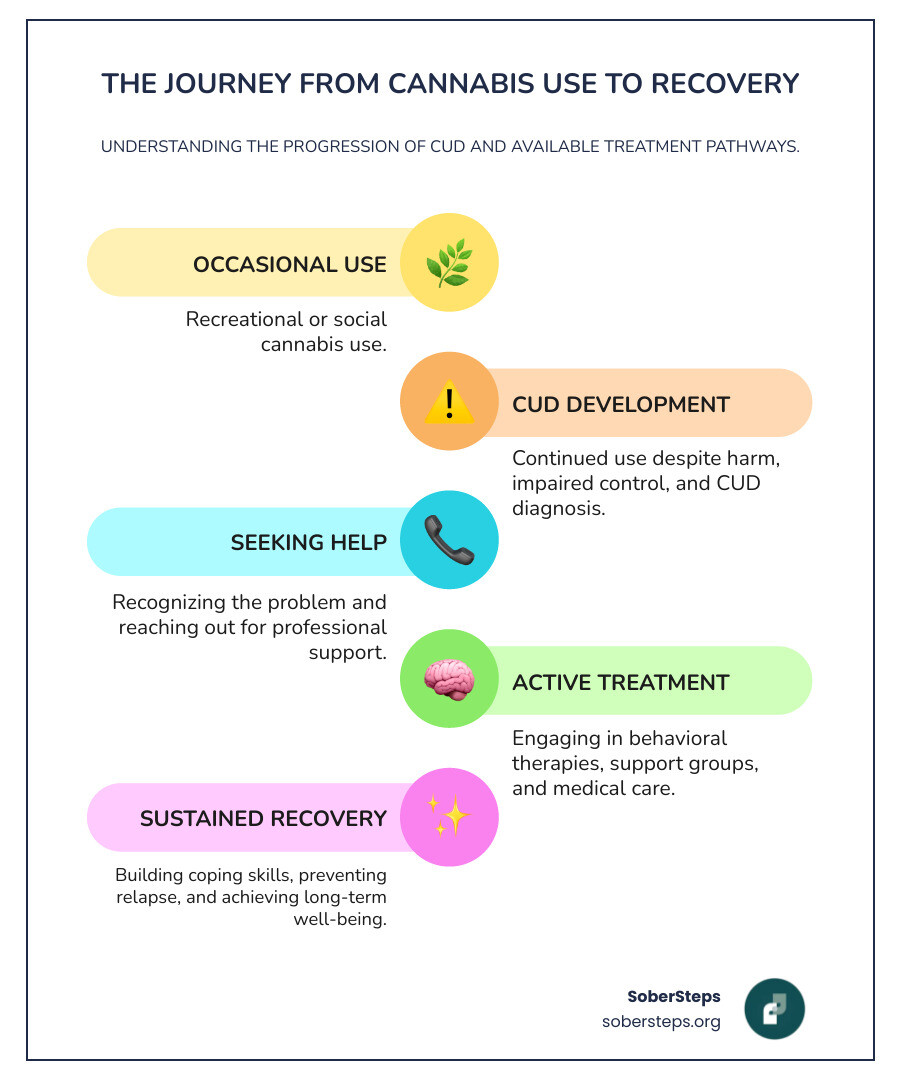
Understanding Cannabis Use Disorder (CUD)
Cannabis Use Disorder (CUD), or marijuana addiction, is a clinical condition where a person continues using cannabis despite it causing significant problems in their life. While often perceived as non-addictive, research confirms its addictive potential. In 2020, 14.2 million people aged 12 or older had CUD. Addiction risk increases for those who start young (17%) or use daily (25-50%).
Recognizing the signs is the first step. Common indicators include:
- Using more often or in larger amounts than intended.
- Unsuccessful attempts to cut down or stop.
- Spending a lot of time getting, using, or recovering from marijuana.
- Neglecting responsibilities at work, school, or home.
- Continuing use despite social or relationship problems.
- Experiencing strong cravings.
- Needing more to get the same effect (tolerance).
- Experiencing withdrawal symptoms when trying to quit.
If these signs are familiar, help is available. Learn more about cannabis addiction.
Take the first step—explore our resources on marijuana addiction.
What Are the Symptoms and Diagnostic Criteria?
Healthcare professionals use the Diagnostic and Statistical Manual of Mental Disorders (DSM-5) to diagnose CUD. A diagnosis requires at least two of eleven specific symptoms within a 12-month period, indicating a problematic pattern of use leading to distress or impairment. These criteria cover impaired control, social impairment, risky use, and pharmacological indicators like tolerance and withdrawal.
The severity of CUD is based on the number of symptoms present:
- Mild: 2-3 symptoms
- Moderate: 4-5 symptoms
- Severe: 6 or more symptoms
If you’re unsure about your relationship with cannabis, our confidential self-assessment quiz can help provide clarity.
What is Cannabis Use Disorder?
Underlying Causes, Risk Factors, and Health Effects
CUD develops from a mix of genetic, biological, and environmental factors. Genetically, some people are more vulnerable. Biologically, THC, the active compound in marijuana, disrupts the brain’s reward system, leading to dependence.
Key Risk Factors:
- Early Use: Starting before age 18 increases the risk of developing CUD by four to seven times.
- High Potency: Today’s marijuana is much stronger, increasing the risk of addiction and adverse effects.
- Frequent Use: Daily or near-daily use dramatically raises the risk.
- Co-occurring Conditions: About half of people with a mental health disorder also experience a substance use disorder (dual diagnosis).
Health Risks:
- Short-Term: Impaired memory and judgment, anxiety, paranoia, and increased heart rate.
- Long-Term: Chronic use can lead to permanent cognitive impairment (especially when starting young), respiratory issues like chronic cough, mental health problems like psychosis and depression, and Cannabinoid Hyperemesis Syndrome (recurrent nausea and vomiting).
The idea that marijuana is harmless is a myth. The consequences can be profound, affecting physical and mental health.
Explore the Risks of Marijuana Use
Marijuana Withdrawal Symptoms
When a regular user stops or cuts back on marijuana, they often experience cannabis withdrawal syndrome. These symptoms can be very uncomfortable and are a major reason for relapse. Symptoms typically appear within a week, peak within 10 days, and last for 10-20 days.
Common withdrawal symptoms include:
- Irritability and anger
- Anxiety and nervousness
- Insomnia and disturbing dreams
- Decreased appetite or weight loss
- Restlessness
- Depressed mood
- Physical discomfort like headaches, stomach pain, and shakiness
If you are struggling with these symptoms, professional help can make a significant difference in managing withdrawal safely.
Find support for withdrawal symptoms at a rehab center near you.
Exploring Your Marijuana Treatment Options
Finding the right path to recovery from Cannabis Use Disorder (CUD) is achievable with effective marijuana treatment options. A personalized approach that combines several strategies yields the best results. The goal is not just to stop using cannabis but to build a healthier life by addressing underlying issues, developing coping skills, and creating a strong support system.

Behavioral and Psychotherapeutic Marijuana Treatment Options
Behavioral therapies are the cornerstone of effective marijuana treatment options. They provide the tools to change your relationship with cannabis by addressing the psychological aspects of addiction.
-
Cognitive Behavioral Therapy (CBT): A highly effective therapy that helps you identify triggers, challenge negative thought patterns, and develop healthy coping skills. Learn more about Cognitive Behavioral Therapy (CBT).
-
Motivational Interviewing (MI): A client-centered approach that helps you resolve ambivalence about quitting and strengthens your own motivation for change.
-
Multidimensional Family Therapy (MDFT): Especially beneficial for adolescents, this therapy involves the family in the treatment process to improve communication and address family dynamics that contribute to substance use. Learn more about family therapy approaches.
-
Contingency Management (CM): An incentive-based approach that provides tangible rewards (vouchers, prizes) for positive behaviors like staying abstinent, reinforcing healthy choices.
These therapies can be delivered in individual or group settings and are proven to reduce cannabis use and improve overall well-being.
Learn more about behavioral therapies for addiction.
Find a therapist near you
Pharmacological Marijuana Treatment Options: What’s Available?
Many people wonder if medication can help treat Cannabis Use Disorder (CUD). Currently, there are no FDA-approved medications specifically for CUD. This makes behavioral therapies the primary treatment approach.
However, some medications may be used “off-label” under medical supervision to help manage specific issues:
- Managing Withdrawal: Medications like gabapentin have shown some effect in reducing withdrawal symptoms, making it easier to abstain.
- Addressing Co-occurring Conditions: Since CUD often co-occurs with depression or anxiety, medications for these conditions may be part of an integrated treatment plan. However, their use must be carefully monitored by a doctor, as some antidepressants can potentially worsen symptoms for individuals with CUD.
The scientific community is actively researching new pharmacological interventions, but for now, behavioral therapies remain the most effective marijuana treatment options.
Explore Medication-Assisted Treatment for Addiction in a broader context.
Speak with a treatment specialist to understand your options.
The Role of Support Groups and Aftercare
Recovery is a long-term journey that continues after initial treatment ends. Support groups and aftercare are vital marijuana treatment options for preventing relapse and ensuring long-term success.
-
Peer Support Programs: Groups like Marijuana Anonymous (MA) and Narcotics Anonymous (NA) provide a safe space to share experiences and build a sober support network with others who understand.
-
Relapse Prevention Planning: A core component of aftercare, this involves working with a therapist to identify triggers, develop coping strategies, and establish healthy routines to maintain sobriety.
-
Continued Care: Long-term success is fostered through ongoing therapy, sober living environments, and engagement in healthy community activities. This continuous support is crucial, as it helps build resilience and a fulfilling life in recovery.
Building a strong support system is one of the most powerful predictors of sustained recovery.
Find a support group near you to connect with others on their recovery journey.
Explore various support groups for recovery and find the right fit for you.
Factors Influencing Treatment Success and Challenges
Recovery from Cannabis Use Disorder (CUD) is a personal journey, and several factors can influence success. Understanding these challenges helps in creating the most effective treatment plan.
One major challenge is the increasing potency of marijuana. Higher THC concentrations can lead to stronger dependence and more difficult withdrawal, increasing relapse risk. Relapse itself is a common part of recovery, not a failure, and it highlights the need for long-term support and effective relapse prevention strategies.
Understand why relapse happens and how to prevent it.
Build your support network with SoberSteps and connect with resources that can help.
How Age and Co-Occurring Conditions Impact Treatment
Effective marijuana treatment options must consider an individual’s age and any co-occurring mental health conditions.
-
Adolescents: Young people are especially vulnerable to CUD due to their developing brains. Early cannabis use can lead to cognitive impairment and a higher risk of severe addiction. For this reason, adolescent treatment often requires specialized approaches like Multidimensional Family Therapy (MDFT), which involves the entire family and has proven highly effective.
-
Dual Diagnosis: CUD frequently co-occurs with mental health conditions like depression and anxiety. This is known as a dual diagnosis. The best outcomes are achieved through integrated treatment, where both the substance use and mental health disorder are addressed simultaneously by a collaborative team of professionals.
Tailoring treatment to these specific needs is crucial for a successful recovery.
Learn more about dual diagnosis treatment and how we can help.
Get help for co-occurring disorders by contacting our helpline today.
Success Rates, Challenges, and the Impact of Legalization
While no treatment is 100% effective, evidence-based marijuana treatment options offer significant hope. Behavioral therapies consistently show the best results.
Success Rates of Different Therapies:
| Therapy Type | Effect on Cannabis Consumption/Abstinence | Notes |
|---|---|---|
| Cognitive Behavioral Therapy (CBT) | Moderate to large effect (d = 0.53–0.9) | Often combined with other techniques. Leads to reduced use, improved psychosocial functioning, and decreased dependence symptoms. |
| Motivational Interviewing (MI) | Significant, moderate effects | Effective even for patients not initially seeking abstinence. Short interventions (1–4 sessions) can yield positive results. |
| Multidimensional Family Therapy (MDFT) | Strong effect (d = 1.27) | Particularly beneficial for younger adolescents with heavy cannabis use and psychiatric comorbidities, showing superiority in treatment adherence and reducing dependence symptoms. |
| Contingency Management (CM) + CBT + MET | Strong effects (d = 0.98 for abstinence) | When combined with CBT and Motivational Improvement Therapy (MET) for adults, it shows strong results in achieving abstinence and reducing use (d = 1.14). |
Challenges and Legalization:
Recovery challenges include high relapse rates and the lack of FDA-approved medications. Furthermore, the state-level legalization of marijuana has led to increased use and CUD rates. It has also lowered the public’s perception of marijuana’s risks, making it harder for some to recognize they have a problem and seek help. This creates a greater need for accessible, effective treatment.
Explore the complex relationship between Marijuana Legalization and Addiction.
Explore your treatment options and find the support you need.
How to Choose the Right CUD Treatment Program
Deciding to seek help for Cannabis Use Disorder (CUD) is a courageous first step. The next is choosing the right program from the many marijuana treatment options available. Effective treatment is individualized, so it’s important to find a program that fits your specific needs, the severity of your CUD, and any co-occurring conditions.
Our confidential helpline is available to guide you through this critical decision. Our advisors can help you understand the different levels of care and connect you with programs that align with your situation.
Call our 24/7 helpline for guidance and support in finding the right treatment program.
Learn more about Choosing a Rehab Program and what to look for.
Key Considerations: Levels of Care, Cost, and Insurance
When evaluating marijuana treatment options, it’s important to understand the levels of care, costs, and insurance coverage.
Levels of Care:
- Inpatient/Residential: 24/7 care in a facility, ideal for severe CUD or those needing a structured environment.
- Partial Hospitalization (PHP): Intensive day treatment with the flexibility to return home at night.
- Intensive Outpatient (IOP): Several hours of therapy per week, allowing you to maintain work or school schedules.
- Outpatient: Weekly therapy sessions, suitable for mild CUD or as a step-down from more intensive care.
Cost and Insurance:
Thanks to the Affordable Care Act (ACA), most health insurance plans must cover addiction treatment. It’s crucial to contact your insurance provider to verify your specific benefits. Many treatment centers offer free insurance verification and may have payment plans or sliding scale fees if you are uninsured.
Don’t let cost be a barrier to getting the help you need.
Find a treatment center that fits your needs and budget.
Learn more about Paying for Rehab and verifying your insurance coverage.
Taking the First Step: How to Find Help
Taking the first step toward recovery can feel daunting, but you don’t have to do it alone. Here’s how to start finding the right marijuana treatment options:
- Talk to a Professional: Your doctor or a therapist can provide an initial assessment and refer you to an addiction specialist.
- Use Online Resources: The federal government offers a confidential and anonymous search tool to find treatment facilities near you at FindTreatment.gov.
- Contact a Confidential Helpline: Helplines offer 24/7 support and information. Our helpline at SoberSteps can connect you with treatment providers who can discuss your options.
- For general support, call the SAMHSA National Helpline at 1-800-662-HELP (4357).
- In a crisis, call or text the 988 Suicide & Crisis Lifeline.
When you connect with a treatment provider, ask about their licensing, the therapies they offer, how they handle dual diagnosis, program duration, and costs. Every conversation is confidential, and asking for help is the first step toward reclaiming your life.
Learn more about How to Get Help for Addiction and what to expect.
Contact SoberSteps for confidential help and let us guide you to the right resources.
Conclusion
Navigating Cannabis Use Disorder (CUD) is challenging, but recovery is achievable with the right marijuana treatment options. We’ve seen that CUD is a real medical condition with significant health risks, but effective, evidence-based treatments are available.
Behavioral therapies like CBT and MI, combined with strong support systems and aftercare planning, form the foundation of successful recovery. While challenges like high-potency cannabis and co-occurring conditions exist, individualized treatment plans can address these complexities.
Choosing the right program is a critical step, and understanding the levels of care and payment options can make the process easier. The most important takeaway is that you don’t have to face this alone. Reaching out for help is a sign of strength.
At SoberSteps, we are dedicated to helping you find the most suitable marijuana treatment options. Our confidential 24/7 helpline and comprehensive resources are here to guide you. Let us connect you with the care you need to start your journey to recovery.
Start Your Recovery Journey today and take control of your future.
Take the first step—contact us today for confidential help and support.