
Understanding the Path to Recovery: Why Drug and Alcohol Rehab Matters
Drug and alcohol rehab is a structured treatment process combining medical care and therapy to help individuals overcome addiction. Over 46 million Americans struggle with a substance use disorder, yet the vast majority never receive treatment. Acknowledging the need for help is a courageous first step toward recovery.
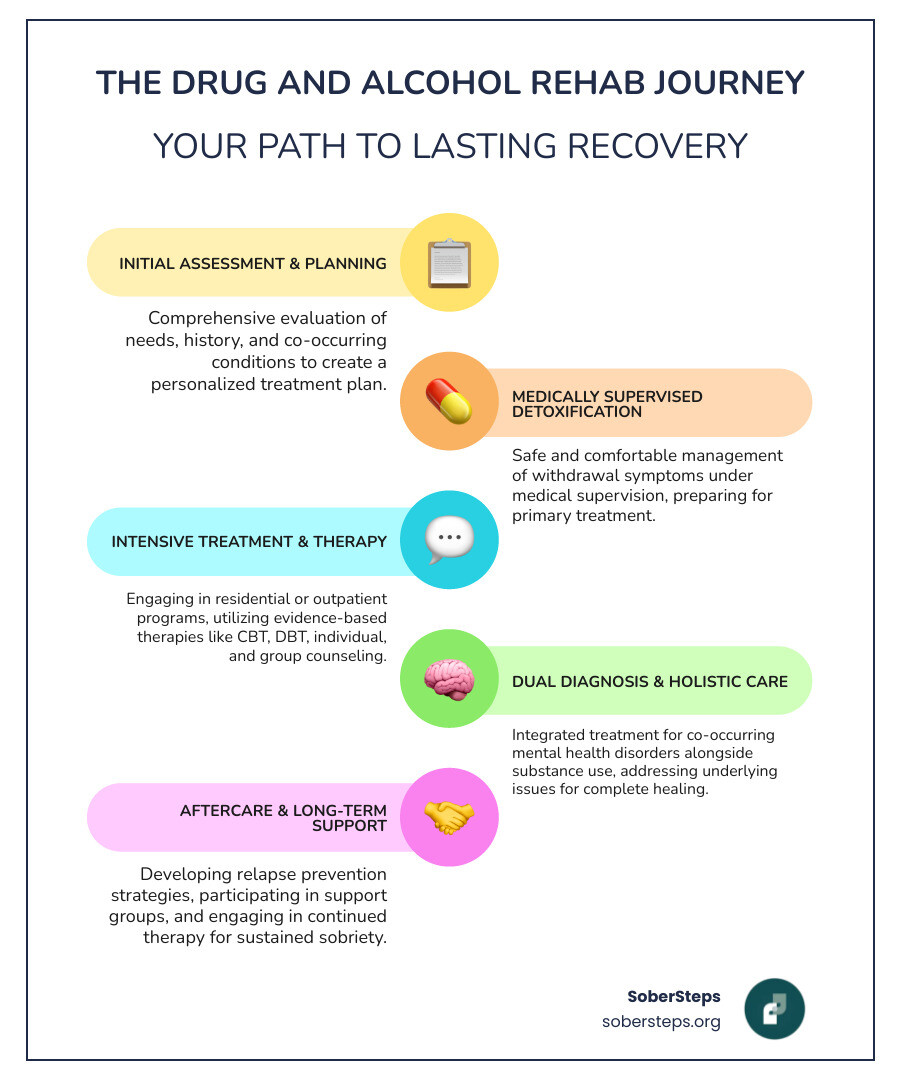
Rehab isn’t one-size-fits-all; it’s a personalized journey to address the root causes of addiction. Treatment centers offer various levels of care to help you build a healthier, sober life. Key components include:
- Detoxification: Medically supervised withdrawal to safely manage symptoms.
- Residential/Inpatient: 24/7 care in a structured facility (typically 30-90 days).
- Outpatient Programs: Flexible treatment while living at home.
- Therapy: Evidence-based approaches like CBT, DBT, and counseling.
- Aftercare: Ongoing support to maintain long-term sobriety.
At Sober Steps, we provide resources and support to help you understand your options. Ready to take the first step? Contact SoberSteps today.
Recognizing the Signs and Symptoms of Addiction
Recognizing the signs of a substance use disorder (SUD) is crucial for seeking help. Common indicators include:
- Inability to stop or control use.
- Experiencing withdrawal symptoms when not using.
- Constant preoccupation with the substance.
- Losing interest in once-enjoyed activities.
- Hiding substance use from loved ones.
- Strained relationships with family and friends.
- Unsuccessful attempts to quit.
These signs can manifest as physical, behavioral, or psychological changes. If you recognize these patterns, it’s a strong signal that professional help from a drug and alcohol rehab program is necessary. For more information, explore our guides on Drug addiction (substance use disorder) and Opioid addiction.
If you recognize these signs, get help now.
The Effects of Substance Abuse on the Brain and Body
Addiction is a chronic disease that physically alters the brain and body. Substances flood the brain’s reward system with dopamine, and over time, the brain adapts, reducing its natural dopamine production. This change impairs judgment and self-control, making it incredibly difficult to quit without support.
Beyond the brain, substance abuse causes significant physical damage:
- Heart: Weakened heart muscle, arrhythmias, and high blood pressure.
- Liver: Fatty liver disease, alcoholic hepatitis, and irreversible cirrhosis.
- Immune System: Weakened defenses, leading to increased susceptibility to illness.
- Other Organs: Damage can extend to the kidneys, lungs, and digestive system.
Substance abuse also frequently co-occurs with or worsens mental health conditions like depression and anxiety. This highlights the need for integrated treatment in a comprehensive drug and alcohol rehab program.
Learn more about how addiction affects you at SoberSteps.
The Core of Drug and Alcohol Rehab: What to Expect
Entering drug and alcohol rehab means stepping into a safe, structured environment focused on healing. The process begins with a comprehensive assessment to create a personalized treatment plan. A core component is establishing healthy routines through a daily schedule of therapeutic activities, which helps build new, positive habits crucial for sustained sobriety.
To learn more, explore our Drug Treatment Programs Complete Guide.
Explore your treatment options with SoberSteps.
The First Step: Medically Supervised Detoxification
Detoxification is the critical first phase of drug and alcohol rehab, where the body is cleared of substances under medical supervision. This process is essential for:
- Safety: Managing potentially dangerous withdrawal symptoms for substances like alcohol, benzodiazepines, and opioids.
- Comfort: Using medications to ease physical and psychological discomfort.
- Preparation: Stabilizing the body and mind to fully engage in therapy.
Detox is not a cure for addiction but a necessary first step that prepares you for the deeper work of recovery. Learn more about the process on our Drug Withdrawal page.
Start your recovery with safe detox. Find help at SoberSteps.
Levels of Care: Finding the Right Intensity for You
Drug and alcohol rehab is offered across a continuum of care to match treatment intensity with individual needs.
- Residential/Inpatient Treatment: 24/7 care in a substance-free facility, ideal for severe addictions or co-occurring disorders.
- Partial Hospitalization Programs (PHP): Structured day treatment (about 6 hours/day) while living at home or in sober living.
- Intensive Outpatient Programs (IOP): A step-down option with fewer hours (about 9 hours/week), allowing for work or school. Learn more about Intensive Outpatient care.
- Standard Outpatient Programs: The least intensive level, suitable for mild SUDs or as ongoing support. See our guide on Outpatient care.
The goal is to provide the right amount of support to foster lasting recovery.
Find your ideal level of care with SoberSteps.
Inpatient vs. Outpatient Rehab: A Detailed Comparison
Choosing between inpatient and outpatient drug and alcohol rehab depends on your specific needs and circumstances.
| Feature | Inpatient (Residential) Rehab | Outpatient Rehab |
|---|---|---|
| Structure | Highly structured, 24/7 supervision. | Flexible scheduling, allows living at home. |
| Environment | Immersive, substance-free therapeutic community. | Exposure to real-world triggers. |
| Intensity | Most intensive, around-the-clock care. | Varies (PHP, IOP, Standard), less intensive. |
| Time Commitment | Full-time residency (30-90 days). | Part-time, allows for external responsibilities. |
| Cost | Generally higher due to accommodation. | Generally lower, no residential costs. |
| Ideal Candidate | Severe addiction, co-occurring disorders, unstable home life. | Mild to moderate addiction, strong support system. |
Residential rehab offers an immersive environment free from distractions, allowing for intensive therapy and consistent medical oversight. This is ideal for building a solid foundation for sobriety. For more details, see our guides on Inpatient Drug Rehab and Outpatient Rehab.
Not sure which is right for you? Contact us for guidance.
A Typical Day in a Drug and Alcohol Rehab Program

A key element of drug and alcohol rehab is a structured daily schedule that promotes healthy routines and minimizes idle time. While programs vary, a typical day includes:
- Morning: Nutritious breakfast, followed by group therapy sessions focused on topics like relapse prevention and coping skills.
- Afternoon: A mix of individual therapy to address personal challenges, educational workshops, and complementary therapies like yoga, art, or exercise.
- Evening: Communal dinner, followed by peer support meetings or guest speakers. The day ends with personal time for reflection and journaling.
This structured environment helps rebuild healthy habits and provides consistent support. For a more in-depth look, visit our page on What to Expect in Rehab.
See what a day in recovery looks like. Explore options at SoberSteps.
Therapeutic Approaches and Specialized Programs
Effective drug and alcohol rehab uses individualized treatment plans built on evidence-based therapies. The goal is to address the addiction and its underlying causes, providing the tools for lasting sobriety. SoberSteps helps you connect with resources that offer a path to genuine healing.
Explore our guide on Substance Abuse Treatment to understand the various methodologies.
Find a unique approach that works for you at SoberSteps.
Common Therapies Used in Addiction Treatment
Drug and alcohol rehab programs integrate various therapies to build a foundation for recovery:
- Cognitive Behavioral Therapy (CBT): Helps identify and change negative thought patterns and behaviors related to substance use.
- Dialectical Behavior Therapy (DBT): Teaches skills in mindfulness, distress tolerance, and emotion regulation.
- Individual Counseling: One-on-one sessions to explore personal issues and trauma. Learn more about Individual Therapy for Addiction.
- Group Therapy: Provides peer support and a sense of community, reducing isolation.
- Family Therapy: Helps heal family dynamics, improve communication, and build a supportive home environment.
- Holistic Approaches: Therapies like yoga, meditation, art, and Equine Therapy that address mind, body, and spirit.
By combining these approaches, rehab programs offer a comprehensive path to recovery. To explore the full range of options, visit our Therapy Options page.
Explore therapy options with SoberSteps.
What is Dual Diagnosis and Why is it Critical?
Dual diagnosis, or co-occurring disorders, is when a person has both a substance use disorder and a mental health disorder, such as anxiety, depression, or PTSD. About half of all people with an SUD have a co-occurring disorder. These conditions often fuel each other, making integrated treatment essential.
Treating only one condition often leads to relapse. Effective drug and alcohol rehab for dual diagnosis addresses both disorders simultaneously through:
- Comprehensive assessment and diagnosis.
- Combined therapies like CBT or DBT.
- Medication management for mental health symptoms.
- A holistic approach to healing the whole person.
This integrated care provides a more effective and sustainable path to health. For more information, visit our pages on Co-Occurring Disorders and Dual Diagnosis for Anxiety.
Learn about dual diagnosis care at SoberSteps.
Specialized Programs for Unique Needs
Many drug and alcohol rehab facilities offer specialized programs custom to the unique challenges of specific populations:
- Veterans Programs: Address trauma, PTSD, and other service-related conditions in a setting that understands military culture.
- LGBTQ+ Affirming Care: Provides a safe, inclusive environment that addresses the specific stressors and stigma faced by the LGBTQ+ community.
- Gender-Specific Treatment: Programs for men or women that allow for focused discussion on gender-related issues without distraction.
- Programs for Professionals: Discreet treatment for executives, healthcare providers, and others, with a focus on managing high-stress careers.
These programs ensure treatment is culturally competent and sensitive to individual experiences, increasing the chances of success. To find treatment options that cater to specific needs, explore our Find Addiction Treatment guide.
See if a specialized program is right for you at SoberSteps.
Navigating the Logistics: How to Find and Pay for Rehab
Taking the step to seek drug and alcohol rehab is courageous, but navigating the logistics can feel overwhelming. Resources are available to simplify this process, so you can focus on what matters most: healing.
If you’re ready to take this vital step, we can help you understand your options. Get Help Now.
Contact SoberSteps today for confidential guidance.
How to Find a Reputable Drug and Alcohol Rehab Center
Finding a quality drug and alcohol rehab center is key to effective treatment. Here’s what to look for:
- Accreditation: Ensure the facility is accredited by The Joint Commission or CARF, which signifies high standards of care.
- Staff Credentials: Inquire about the qualifications of the clinical staff, including doctors and licensed therapists.
- Treatment Philosophy: Look for a center that uses evidence-based therapies and offers a continuum of care from detox to aftercare.
- Specialized Programs: If you have specific needs (e.g., dual diagnosis, veteran care), confirm the facility offers them.
For more guidance, consult our guide on Finding the Best Drug Treatment and Rehab Centers.
Let us help you find the right rehab center.
Using Insurance to Cover Treatment Costs
Cost is a major concern, but many health insurance plans cover drug and alcohol rehab. The Affordable Care Act (ACA) expanded access to these essential health benefits.
Here’s how to steer your insurance:
- Verify Your Benefits: Call the number on your insurance card to understand your coverage, deductibles, and co-pays.
- In-Network vs. Out-of-Network: In-network providers are contracted with your insurance and typically cost less out-of-pocket.
- Let Us Help: Many treatment facilities can verify your insurance for you, simplifying the process.
For an in-depth look at payment options, visit our page on How to Pay for Addiction Treatment and our Mental Health Insurance Guide.
Check your insurance coverage with SoberSteps.
State-Funded and Low-Cost Rehab Options
For those without sufficient insurance, state-funded drug and alcohol rehab programs offer free or low-cost services. Eligibility is often based on income, state residency, and lack of insurance.
These programs are typically funded by state budgets and federal grants from organizations like the Substance Abuse and Mental Health Services Administration (SAMHSA). While they are an invaluable resource, be aware of potential limitations:
- Waitlists: High demand can lead to waiting periods for admission.
- Basic Accommodations: Amenities may be more basic compared to private centers.
- Limited Services: The range of specialized therapies might be narrower.
Despite these limitations, state-funded programs provide a critical lifeline to recovery. You can find more information on our page about Free Rehab Centers.
Explore affordable options with SoberSteps.
Life After Rehab: Building a Foundation for Lasting Recovery
Completing a drug and alcohol rehab program is a monumental achievement, but recovery is a lifelong journey. Building a strong support system and engaging in aftercare are vital for navigating life’s challenges and maintaining sobriety. Relapse can be part of the process, but it is an opportunity to learn and reinforce your commitment to recovery.
Our Relapse Prevention Therapy resources can provide valuable strategies for this journey.
Stay connected with SoberSteps.
The Importance of Aftercare and Support Groups
Aftercare bridges the gap between formal rehab and long-term sobriety. An individualized aftercare plan significantly improves outcomes and may include:
- Step-Down Care: Transitioning to less intensive outpatient programs (IOP, PHP).
- Sober Living Homes: Structured, substance-free residences that offer peer support and accountability.
- Peer Support Groups: Communities of people with shared experiences who offer encouragement and empathy.
- Recovery Alumni Programs: Many rehabs offer alumni programs to help former clients stay connected and supported.
These components are essential for reinforcing coping skills and building a robust support network. Explore our Aftercare page for more information and read inspiring stories on our Addiction Recovery Blogs.
Join a recovery community through SoberSteps.
How to Help a Loved One Struggling with Addiction
Watching a loved one struggle with addiction is painful. It’s crucial to approach the situation with compassion and strategy.
- Talk with Compassion: Choose a calm moment to express your concerns using “I” statements (e.g., “I’m worried about you”).
- Avoid Blame: Addiction is a disease, not a moral failing. Emphasize your care and support.
- Set Healthy Boundaries: Define what you will and will not do (e.g., “I will not provide money for substances, but I will help you find treatment”).
- Educate Yourself: Learn about addiction to better understand what your loved one is facing.
- Seek Support for Yourself: Join support groups for families to gain insight and coping strategies.
You cannot force recovery, but you can create an environment that encourages it. Our Family Support page offers additional guidance.
Get resources for families at SoberSteps.
How is Success in Recovery Measured?
Success in drug and alcohol rehab and recovery is about more than just abstinence. It’s a holistic improvement in quality of life.
Key measures of success include:
- Sustained Abstinence: Remaining free from substance use over time.
- Improved Health: Better physical and mental well-being, including management of co-occurring disorders.
- Mended Relationships: Rebuilding trust and healthy communication with loved ones.
- Life Stability: Securing stable housing, employment, and financial responsibility.
- Personal Growth: Increased self-esteem, a stronger sense of purpose, and better coping skills.
Successful rehab empowers individuals to not just stop using, but to build a joyful and fulfilling life. Read inspiring journeys on our Success Stories page.
Read inspiring recovery stories at SoberSteps.
Frequently Asked Questions about Drug and Alcohol Rehab
How long does drug and alcohol rehab typically last?
The duration of drug and alcohol rehab varies based on individual needs. Common program lengths are 30, 60, or 90 days, but longer-term programs (up to a year or more) are available for those with severe or chronic addiction. The National Institute on Drug Abuse (NIDA) notes that longer treatment durations generally lead to better long-term outcomes. Your clinical team will recommend the appropriate length of stay.
Find the right program length for you at SoberSteps.
What should I bring with me to a residential rehab facility?
Each facility has its own rules, but here is a general guide. Always confirm with your specific facility before packing.
What to Bring:
- Comfortable clothing for 7-10 days.
- Unopened, alcohol-free toiletries.
- ID, insurance card, and a small amount of cash.
- A 30-day supply of prescribed medications in their original bottles.
- A journal or books.
What to Leave at Home:
- Drugs, alcohol, or weapons.
- Products containing alcohol (e.g., mouthwash).
- Valuables or excessive cash.
- Inappropriate clothing (e.g., items with drug-related imagery).
Be prepared for your stay with our packing guide.
Can I lose my job for going to rehab?
Federal laws offer job protection for those seeking drug and alcohol rehab.
- The Family and Medical Leave Act (FMLA) allows eligible employees to take up to 12 weeks of unpaid, job-protected leave for a serious health condition, which includes addiction treatment.
- The Americans with Disabilities Act (ADA) protects individuals recovering from addiction from employment discrimination and may require employers to provide reasonable accommodations, such as time off for rehab.
Your privacy is also protected by strict confidentiality laws. It is often best to speak with your HR department to understand your rights and company policies.
Learn about your rights at SoberSteps.
Take the First Step Towards a New Life Today
The journey from drug and alcohol rehab to lasting recovery is transformative. It requires courage and commitment, but hope and healing are realities for millions of Americans. The most important step is the first one: reaching out for help.
At SoberSteps, we are an independent platform dedicated to helping you find the right path. We connect you with reputable drug and alcohol rehab resources that align with your unique needs, because everyone deserves a chance at a new beginning.
Don’t let fear hold you back from the life you deserve. Recovery starts now.
Ready to begin? Contact SoberSteps now or explore our drug rehab guide.