
Why Holistic Addiction Recovery Offers a Path to Lasting Wellness
Holistic addiction recovery is an approach that treats the whole person—mind, body, and spirit—rather than just the symptoms of substance use. Here’s what you need to know:
Key Elements of Holistic Addiction Recovery:
- Treats the whole person: Addresses physical health, emotional well-being, social connections, spiritual growth, and intellectual development
- Addresses root causes: Focuses on underlying trauma, stress, and emotional imbalances that contribute to addiction
- Complements traditional treatment: Works alongside evidence-based therapies like CBT, DBT, and medication-assisted treatment
- Reduces relapse risk: Builds sustainable coping skills and lifestyle changes for long-term recovery
- Includes diverse therapies: Incorporates yoga, meditation, nutrition, acupuncture, art therapy, and more
Addiction is a chronic brain disorder characterized by compulsive drug-seeking despite harmful consequences. It doesn’t just affect the brain; it impacts a person’s physical health, mental health, relationships, and overall well-being.
While traditional treatments are essential, they often focus on the brain’s reward systems and may not address the broader emotional, social, and spiritual factors that influence recovery. That’s where holistic addiction recovery comes in.
Holistic therapy recognizes addiction as a complex issue affecting the mind, body, and spirit. By treating the whole person, it helps individuals develop the tools to manage their addiction and stay sober. Research shows that combining mindfulness, exercise, and expressive therapies with clinical treatment reduces cravings, strengthens mental health, and lowers relapse risk.
Recovery requires more than sobriety; it demands healing on all levels and finding a deeper purpose. Holistic approaches help you manage cravings, reduce stress, and improve sleep, enhancing your quality of life and making relapse less likely.
At Sober Steps, we understand that recovery is a unique journey. We’re dedicated to supporting you with comprehensive resources on holistic addiction recovery. Our platform connects you with evidence-based information, treatment options, and a supportive community to help you find the right path. Explore our complete guide to treatment programs or get help now to start your journey.
Understanding Holistic Addiction Recovery
Holistic addiction recovery is a philosophy that views addiction as a complex issue impacting every facet of a person’s life. Instead of just treating symptoms, it focuses on the whole individual, aiming to align the mind, body, and spirit. This approach promotes overall well-being while addressing physical symptoms and building coping strategies.
While the National Institute on Drug Abuse (NIDA) defines addiction as a brain disorder, its impact extends far beyond neurology, affecting physical, emotional, social, and spiritual health. Holistic approaches recognize that true healing requires comprehensive care. They focus on exploring and healing underlying causes like trauma, chronic stress, and emotional imbalances that contribute to substance use. Nurturing every part of yourself builds a resilient foundation for lasting sobriety.
How Holistic Care Differs from Traditional Treatment
To appreciate holistic addiction recovery, it’s helpful to see how it complements traditional treatment.
Traditional addiction treatment focuses on stopping substance use and managing withdrawal. It often involves medically supervised detox, behavioral therapies like Cognitive Behavioral Therapy (CBT), and medication-assisted treatment (MAT). These evidence-based methods are crucial for stabilization and address the “what” and “how” of stopping drug use.
In contrast, holistic addiction recovery widens the lens to include the “why” behind the addiction. It recognizes that symptoms often stem from deeper issues. Holistic care explores how mental health, stress, or trauma contribute to substance use, integrating mental, physical, and spiritual health to treat the entire individual.
Here’s a quick look at how these approaches compare:
| Aspect | Traditional Approach | Holistic Approach |
|---|---|---|
| Focus | Symptom reduction, immediate cessation, behavioral change | Whole-person healing, mind-body-spirit alignment, root cause analysis |
| Methods | Medically-assisted detox, CBT, DBT, MAT, individual counseling | Traditional therapies plus yoga, meditation, art, nutrition, acupuncture, spiritual guidance |
| Goal | Abstinence, relapse prevention | Lasting sobriety, improved overall well-being, purpose, self-awareness, resilience |
| View of Person | Patient with a disease/symptoms | Unique individual with interconnected needs and potential for growth |
Complementing Evidence-Based Strategies
Holistic addiction recovery does not replace evidence-based strategies; it improves them. The most effective programs integrate traditional methods with holistic practices, as recommended by the Substance Abuse and Mental Health Services Administration (SAMHSA).
Imagine a synergy of healing: traditional therapies provide structure, while holistic practices nurture the deeper self. For instance, Cognitive Behavioral Therapy can be combined with yoga. While CBT helps challenge negative thoughts, yoga helps manage the physical sensations of stress and cravings. Similarly, medically-assisted detox can be paired with nutritional support and mindfulness to ease withdrawal and promote healing.
This integrated approach creates a truly comprehensive Substance Abuse Treatment plan. It’s especially beneficial for those with a Dual Diagnosis, where addiction and mental health conditions coexist. Treating both simultaneously provides a more robust path to healing. By addressing all factors impacting recovery, we can create personalized treatment plans that foster lasting change. For more information, explore our page on Co-occurring Disorders Treatment.
The Five Pillars of Holistic Healing
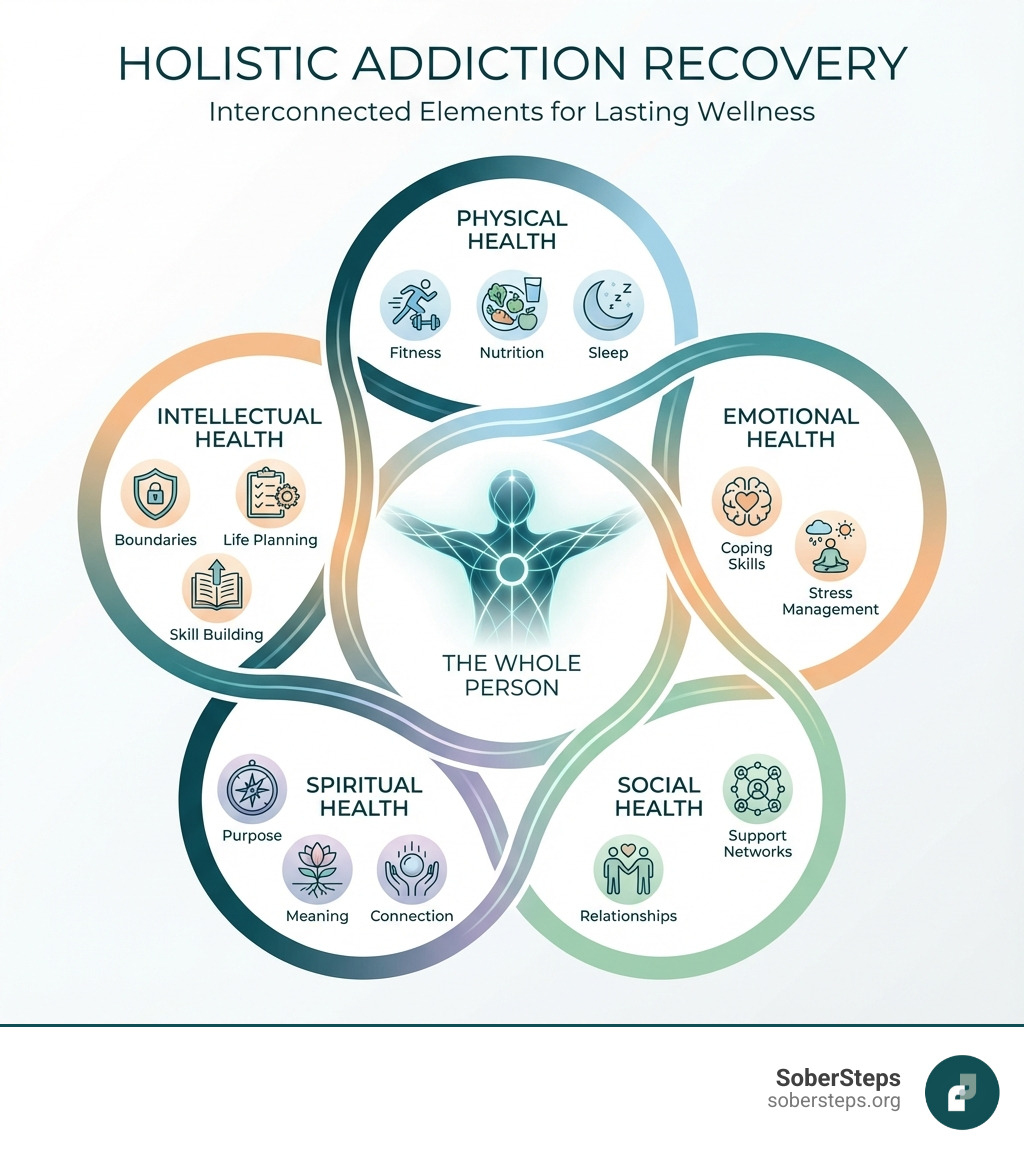
At the heart of holistic addiction recovery lies the understanding that we are complex beings, and true healing must address every dimension of our lives. We often refer to these as the five pillars of holistic health, which are deeply interconnected. When one pillar is out of balance, it can affect the others, creating vulnerabilities that addiction can exploit. By nurturing each of these pillars, we create a strong, balanced foundation for sustainable recovery.

1. Physical Health
Restoring the body is often the first and most tangible step in recovery. Addiction takes a heavy toll on our physical selves, leading to nutritional deficiencies, disrupted sleep patterns, and overall decline. Our focus here is on rebuilding physical strength and vitality.
- Nutritional Therapy: Proper nutrition is vital for mending the body and brain. It helps counteract deficiencies, stabilize mood, and even reduce cravings. We help you learn about healthy eating plans to promote physical wellness and support your body’s natural healing processes.
- Fitness and Exercise: Regular physical activity, whether it’s gentle walks or more vigorous routines, can be a powerful tool. It builds routine, reduces stress, boosts mood, and helps your body release natural feel-good chemicals.
- Healthy Sleep Patterns: Restorative sleep is fundamental for physical and mental repair. We work with you to establish consistent and healthy sleep habits.
- The role of Detox in physical healing: For many, the journey begins with medically supervised detox, which safely manages withdrawal symptoms and sets the stage for physical recovery.
2. Emotional Health
Addiction often serves as a coping mechanism for unprocessed emotions, trauma, and stress. Healing emotionally is about learning new ways to feel, express, and manage your inner world.
- Developing Healthy Coping Mechanisms: We guide you in identifying and practicing constructive ways to deal with stress, anger, sadness, and other challenging emotions without resorting to substances.
- Processing Feelings Safely: Through therapies like Individual Therapy and group sessions, you learn to explore past traumas and emotional imbalances in a supportive environment. This safe space allows for honest self-reflection and healing.
- Stress Reduction Techniques: Mindfulness, meditation, and other mind-body practices are invaluable for calming the nervous system and building emotional resilience.
3. Social Health
Addiction thrives in isolation. Rebuilding and establishing healthy social connections are critical for long-term recovery.
- Building Supportive Relationships: We encourage you to cultivate a sober network of friends, family, and peers who understand and support your recovery journey.
- Sober Networks: Connecting with others in recovery, often through programs like Group Therapy or support groups, provides invaluable camaraderie, accountability, and shared experience.
- Family Therapy: Rebuilding trust and communication with loved ones can be a profound part of the healing process. We often involve family members in therapy sessions to foster understanding and create a supportive home environment.
- Overcoming isolation and loneliness: Addiction can lead to increased isolation and disconnection. Holistic recovery actively works to counter this by fostering a sense of belonging and connection.
4. Spiritual Health
This pillar is not necessarily about religion, but about finding purpose, meaning, and connection beyond oneself. Addiction can leave us feeling empty and disconnected.
- Finding Purpose and Meaning: Through practices like meditation, guided visualization, and self-reflection, individuals can explore their values, passions, and what truly gives their life meaning.
- Connection to Self or a Higher Power: This can involve developing a personal spiritual practice, connecting with nature, or finding a sense of belonging within a community. Studies show that people who have strong spiritual beliefs are healthier, heal faster, and live longer than those without, highlighting the profound impact of fostering hope and a sense of connection.
5. Intellectual Health
This pillar focuses on nurturing your mind, developing life skills, and fostering self-awareness to steer life’s challenges effectively.
- Developing New Skills: This can include vocational training, educational pursuits, or simply learning new hobbies that bring joy and a sense of accomplishment.
- Establishing Healthy Boundaries: Learning to say “no,” protecting your time and energy, and communicating your needs clearly are crucial for maintaining sobriety and healthy relationships.
- Life Planning: Setting realistic goals for your future, whether it’s related to career, housing, or personal development, provides direction and motivation.
- Enhancing Self-Awareness: Understanding your triggers, thought patterns, and emotional responses is key to preventing relapse. Engaging in Experiential Therapy, such as art or wilderness activities, can provide unique insights and opportunities for growth that traditional talk therapy might not.
Common Holistic Therapies in Addiction Treatment
Holistic addiction recovery integrates a wide array of personalized, non-medical methods designed to improve your recovery journey. These therapies work in harmony with traditional treatments to address the whole person. At SoberSteps, we believe in exploring diverse paths to wellness. Explore our therapy options to see the breadth of approaches available to you.

Mind-Body Practices
These therapies focus on the powerful connection between our thoughts, emotions, and physical sensations. They are excellent for stress reduction, emotional regulation, and increasing self-awareness.
- Yoga: Combines physical postures, breathing exercises, and meditation. Studies show that yogic practices promote recovery from and treatment of addiction and can help people feel less stressed.
- Meditation: Practices that train attention and awareness to achieve a mentally clear and emotionally calm and stable state. Mindfulness-based therapies, in particular, have been found to successfully prevent relapse by helping individuals identify potentially triggering scenarios.
- Mindfulness: A state of active, open attention to the present. When you’re mindful, you observe your thoughts and feelings without judgment. This can be incredibly effective for managing cravings and preventing relapse.
- Tai Chi: A gentle form of exercise that involves slow, flowing movements, deep breathing, and meditation. It helps calm the nervous system, reduce stress, and promote emotional balance.
- Mind-body techniques help calm the nervous system, reduce stress, and promote emotional balance. These practices improve focus, mood regulation, and overall mental clarity, which are vital for sustained recovery.
- Breathwork: Conscious, controlled breathing exercises that can rapidly shift your physiological and emotional state, reducing anxiety and promoting relaxation.
Experiential and Creative Therapies
These approaches allow for expression and healing beyond words, tapping into deeper parts of the psyche.
- Art Therapy: Uses visual art-making, drama, dance, and movement to work through past traumas related to addiction and improve physical, mental, and emotional well-being. It’s also used to help individuals find meaning and spiritually recover from addiction.
- Music Therapy: Uses the power of music to address physical, emotional, cognitive, and social needs. It can help process emotions, reduce stress, and improve communication skills.
- Equine Therapy: Involves interactions with horses, which can help individuals develop trust, self-esteem, communication, and problem-solving skills.
- Wilderness Therapy: Uses outdoor expeditions and challenges to build self-reliance, teamwork, and resilience, often in a therapeutic group setting.
- Expressing emotions non-verbally: These therapies provide a safe outlet for emotions that may be difficult to articulate verbally, which is particularly beneficial for those who have experienced trauma.
Body-Based and Nutritional Therapies
These therapies focus on restoring physical health, which is often severely compromised by substance use.
- Acupuncture: A component of traditional Chinese medicine, acupuncture involves inserting needles into strategic points on the body. Acupuncture points are believed to stimulate the central nervous system, releasing chemicals into the muscles, spinal cord, and brain. This can help reduce cravings and unpleasant physical symptoms during detox.
- Massage Therapy: Beyond relaxing tense muscles, one study found that massage therapy can decrease levels of the stress hormone cortisol while increasing serotonin and dopamine levels by 28% and 31% respectively. This can help counteract the dopamine drop experienced in withdrawal.
- Chiropractic Care: Focuses on the alignment of the spine. When neurotransmitters are functioning properly, it’s easier for patients to resist drug cravings, thus improving their chances of long-term recovery.
- Nutritional Counseling: Education and guidance on healthy eating habits. Addiction often leads to poor nutrition, which impacts mood, energy, and overall health. Restoring nutritional balance is key to rebuilding physical health.
The Transformative Benefits of a Holistic Approach
Choosing a holistic addiction recovery path means starting on a journey of profound change. It empowers you to build a new life rich in meaning, connection, and well-being.
Holistic treatment is a powerful, whole-person approach that creates lasting change and leads to sustainable wellness. Explore our complete guide to drug treatment programs to see how these benefits are integrated into a full recovery plan.
Addressing the Root Causes of Addiction
A key benefit of a holistic approach is its focus on addressing the underlying reasons for substance use, which is often a response to deeper pain.
- Healing Trauma: The link between trauma and addiction is well-established. Holistic therapies provide a safe environment to heal past traumatic experiences that are often at the root of addiction.
- Managing Stress and Anxiety: Chronic stress and anxiety are powerful relapse triggers. Holistic practices equip you with effective tools to manage these feelings without substances.
- Addressing co-occurring mental health issues: Many people with addiction also have co-occurring mental health conditions. Holistic care provides integrated treatment, addressing both issues simultaneously for a more stable foundation.
Improving Coping Skills and Reducing Relapse
Holistic approaches excel at equipping individuals with skills to steer life’s challenges without relapsing.
- Improved Self-Awareness: Practices like mindfulness and meditation help you understand your thoughts, feelings, and sensations, which is crucial for identifying triggers.
- Identifying Triggers: By understanding what leads to cravings, you can develop strategies to avoid or manage them effectively.
- Stress Management: Learning effective stress reduction techniques is paramount. Holistic therapies offer a diverse toolkit, from yoga to breathwork, to help you respond to stress in healthy ways.
- Increased Resilience: Holistic practices build mental and emotional fortitude, making you more adaptable and able to bounce back from setbacks.
- Relapse Prevention strategies: These strategies are woven into every aspect of holistic care, focusing on building a life so fulfilling that substances lose their appeal.
- The importance of Aftercare: Holistic practices provide a robust foundation for aftercare programs, ensuring continued support long after formal treatment ends.
Enhancing Overall Well-being and Purpose
Holistic addiction recovery is about more than just abstinence; it’s about thriving.
- Improved Physical Health: By focusing on nutrition, exercise, and sleep, you regain vitality and energy.
- Better Emotional Regulation: You learn to process emotions constructively, leading to greater inner peace.
- Stronger Social Connections: Rebuilding healthy relationships and fostering a supportive community combats isolation.
- Deeper Sense of Meaning: Exploring your values and purpose brings a profound sense of fulfillment.
- Finding Joy in Sobriety: Holistic recovery helps you refind passions and find genuine happiness in a life free from addiction. Don’t just take our word for it—read addiction success stories from individuals who have acceptd this path.
Finding the Right Holistic Recovery Program for You
Starting on a holistic addiction recovery journey is a deeply personal decision, and finding the right program is crucial for your success. We understand that navigating the many options can feel overwhelming, but we’re here to help you every step of the way.
Start with a personal needs assessment. What are your primary concerns? Do you have co-occurring mental health issues? What kind of environment do you thrive in? Your answers will help guide your search. When researching facilities, look for those that explicitly state their commitment to integrating holistic therapies with evidence-based practices.
Here are some key questions to ask providers:
- What types of holistic therapies do you offer, and how are they integrated with traditional treatments?
- What are the credentials and experience of your holistic practitioners?
- How do you personalize treatment plans to individual needs?
- What kind of aftercare planning and support do you provide?
Understanding different Levels of Care—from Inpatient Drug Rehab to Intensive Outpatient and Outpatient programs—is also essential to ensure the program aligns with your needs. For a comprehensive guide on how to find a suitable facility, visit our page on How to Find a Rehab.
What to Look For in a Holistic Center
When evaluating a holistic addiction treatment center, some specific indicators can help you make an informed decision:
- Integration with evidence-based care: The most effective holistic programs don’t replace traditional methods but integrate them. Look for centers that combine therapies like CBT and DBT with holistic modalities.
- Licensed therapists and practitioners: Ensure that all staff, whether traditional therapists or holistic practitioners, are properly licensed and credentialed in their respective fields.
- Personalized treatment plans: Recovery is not one-size-fits-all. A good holistic center will create a custom plan that addresses your unique physical, emotional, social, spiritual, and intellectual needs.
- A focus on aftercare: Long-term recovery hinges on continued support. The center should provide robust aftercare planning, including options for Sober Living and ongoing support.
- A supportive environment: A nurturing and respectful environment is crucial for healing. Observe the atmosphere and ask about the center’s philosophy of care.
How SoberSteps Can Help
We know that navigating your options for holistic addiction recovery can be overwhelming. There are many programs out there, and finding the one that perfectly fits your needs can feel like a daunting task. That’s where SoberSteps comes in.
We provide resources and a confidential 24/7 helpline that connects you with paid advertiser treatment providers who offer comprehensive, integrated care. Our goal is to simplify your search, giving you access to information and support so you can make the best choice for yourself or a loved one. Don’t let the complexity of the search delay your healing. Get Help Now to explore your options and take the first brave step towards a new beginning.
Frequently Asked Questions about Holistic Addiction Recovery
What is the main goal of holistic addiction recovery?
The main goal of holistic addiction recovery is to treat the whole person—mind, body, and spirit—not just the addiction itself. It aims to address the root causes of substance use, heal underlying issues such as trauma and emotional imbalances, and equip individuals with the tools for long-term wellness and a fulfilling life in sobriety. This comprehensive approach fosters self-awareness, builds resilience, and helps individuals find purpose and meaning beyond their addiction.
Is holistic therapy covered by insurance?
Coverage for holistic therapy varies widely. While core clinical services like individual and Group Therapy (which often incorporate holistic principles) are typically covered by many insurance plans, specific holistic modalities like acupuncture, massage therapy, or specialized nutritional counseling may not always be included. Under the Affordable Care Act (ACA), substance abuse treatment must be covered, but the extent of holistic components can differ. It’s essential to verify your insurance with the treatment center directly to understand what is included in your plan and what potential out-of-pocket expenses you might incur.
Can holistic methods work for severe addiction?
Yes, holistic methods can be highly effective for severe addiction, especially when integrated into a comprehensive treatment plan that includes evidence-based practices. For severe addiction, this often means combining holistic therapies with medically supervised inpatient drug rehab and robust aftercare planning. Holistic approaches help address the complex interplay of physical, emotional, and psychological factors contributing to severe addiction, providing a more rounded and sustainable path to recovery. They offer tools to manage cravings, reduce stress, and address underlying issues, making traditional treatments more effective and reducing the likelihood of relapse.
Conclusion: Your Path to Whole-Person Healing
Holistic addiction recovery offers a profound and comprehensive path to lasting wellness. By recognizing that addiction impacts every aspect of your being—mind, body, and spirit—this approach empowers you to heal on all levels. We’ve explored how it differs from traditional methods, not by replacing them, but by complementing and enhancing them, addressing root causes like trauma and emotional imbalances, and building essential coping skills.
The journey through the five pillars of physical, emotional, social, spiritual, and intellectual health, supported by a rich array of holistic therapies, leads to improved well-being, reduced relapse risk, and a deeper sense of purpose. Recovery is indeed a journey, not a destination, and it’s one that leads to a healthier, more balanced, and fulfilling life.
Don’t wait to start your journey to wellness. Take the first step towards reclaiming your life and finding the transformative power of holistic addiction recovery. Contact us today to learn more about your recovery options and find the support you deserve.