Why a Recovery Support System is Essential for Lasting Sobriety
A Recovery support system is your network of people and resources that help you maintain sobriety. It’s the foundation that keeps you steady when recovery gets hard, providing accountability, encouragement, and practical wisdom from those who understand. Recovery doesn’t happen in isolation; it requires a team.
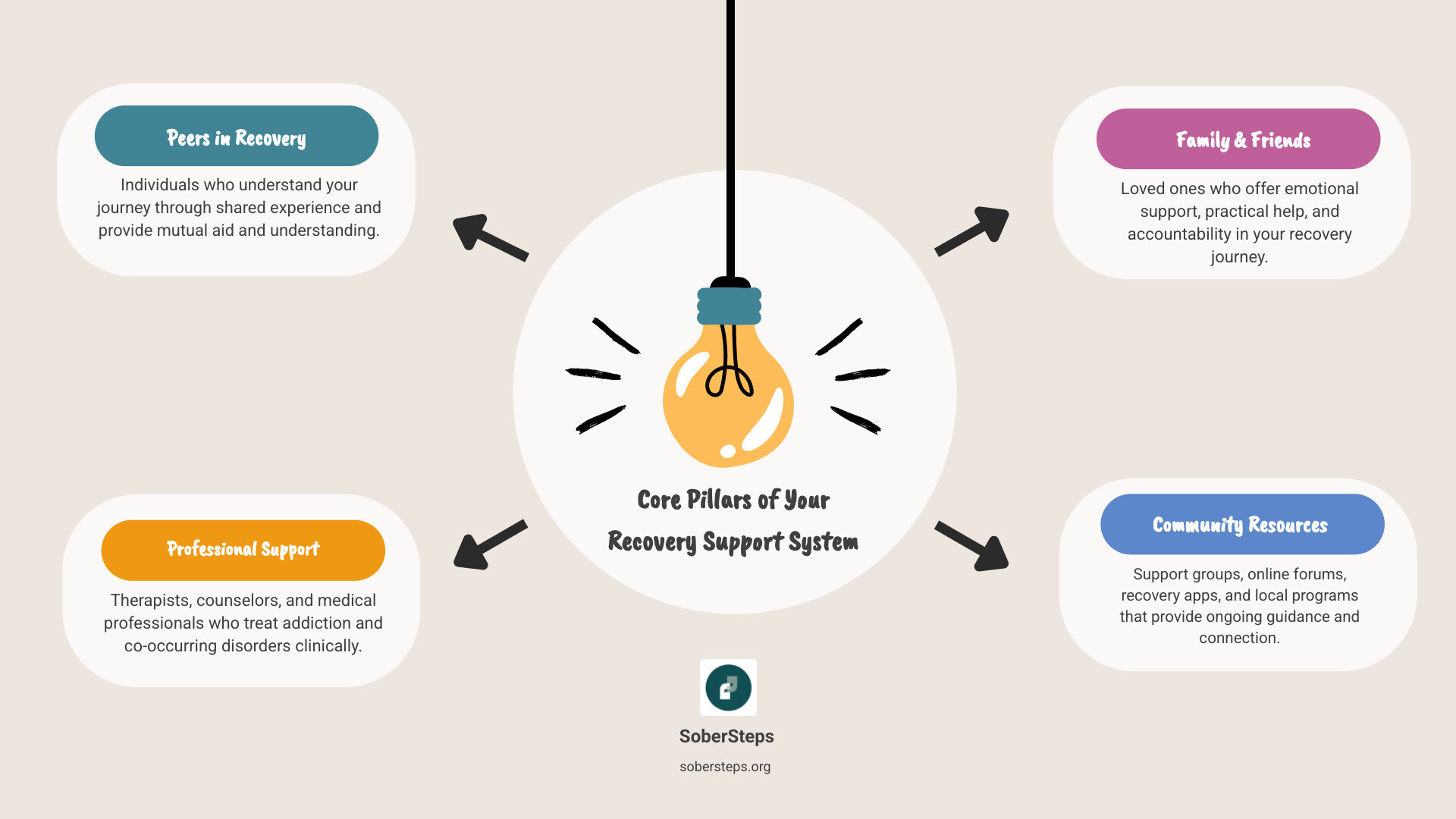
An effective system typically includes:
- Peers in Recovery: People with shared experiences.
- Professional Support: Therapists, counselors, and medical staff.
- Family and Friends: Loved ones providing emotional support.
- Community Resources: Support groups, forums, and recovery programs.
As SAMHSA notes, recovery is a “process of change” toward health and wellness. That process is far more successful with the right people in your corner. This guide will show you how to build your personalized network step by step.
At Sober Steps, we offer a compassionate online community with educational resources, forums, and expert insights on building an effective Recovery support system. Explore our directory of rehab centers and mental health facilities to find the professional support you need.
The Pillars of a Comprehensive Recovery Support System

Think of your Recovery support system as a structure with multiple pillars providing strength. This multi-faceted approach is often called “Recovery Capital”—the total resources you can use to maintain recovery. As research highlights, these support services are vital complements to clinical treatment, focusing on the social factors that influence long-term success. Let’s explore the core components that form your personal support squad.
The Role of Friends and Family
Loved ones are often a powerful, if complex, part of recovery. Their role involves:
- Emotional and Practical Support: Offering encouragement, a safe space for feelings, and practical help like rides to meetings can alleviate daily stressors.
- Rebuilding Trust and Communication: Recovery is an opportunity to mend relationships through honest conversation and consistent action. Family therapy can be an invaluable tool for learning healthier interaction patterns.
- Education and Healthy Boundaries: It’s essential for loved ones to understand addiction as a disease. This helps them offer constructive support rather than engaging in enabling behaviors that can hinder your progress.
If your family is struggling with these dynamics, professional guidance is available. Get Help Now to connect with resources that support both individual and family healing.
Peer Support: The Power of Shared Experience
Connecting with people who understand your journey without explanation is a cornerstone of a strong Recovery support system. It combats isolation and offers unique empathy.
- Peer Support Groups: Groups like Alcoholics Anonymous (AA) and Narcotics Anonymous (NA) provide a community of individuals sharing their experiences, strengths, and hopes. This fosters a sense of belonging.
- 12-Step Programs and Sponsorship: AA and NA offer a structured path to recovery. A sponsor—someone further along in recovery—can provide invaluable one-on-one guidance and accountability.
- Fellowship and Reduced Stigma: The social connection found in peer groups replaces the isolation of addiction. Sharing openly helps dismantle shame and provides hope and practical advice for navigating challenges.
Whether you prefer in-person or virtual meetings, we offer resources like Online NA Meetings to help you find a community. Reading inspiring Addiction Success Stories can also reinforce the power of peer connection.
Professional Support: Your Clinical Cornerstone
While peer and family support are vital, professional guidance provides the clinical expertise to address the complex aspects of addiction.
- Therapy and Counseling: Licensed therapists use evidence-based approaches to help you understand the root causes of addiction, develop coping skills, and process underlying trauma. Individual Therapy can be custom to your unique needs, while Group Therapy offers a structured setting for skill-building.
- Psychiatric Care for Co-occurring Disorders: A psychiatrist can provide medication management for conditions like depression or anxiety that often accompany substance use. Addressing these simultaneously is crucial for long-term sobriety.
Understanding that addiction often co-exists with mental health issues is key. Our approach to Co-occurring Disorders Treatment ensures you receive holistic care. If cost is a concern, we can help you Find Affordable Mental Health Care.
Online Communities and Digital Resources
Digital tools are an indispensable part of any Recovery support system. They offer 24/7 access, flexibility, and a layer of anonymity that can be comforting.
- Benefits of Digital Support: Online platforms make support available anytime, anywhere, which is especially helpful for those in rural areas or with busy schedules. Cravings don’t keep business hours, and immediate connection can be a lifeline.
- Types of Digital Resources: Our Online Addiction Recovery Support Groups provide a safe, moderated space to connect. Recovery apps offer daily check-ins and tools, while virtual meetings and forums host live discussions. You can also explore helpful Addiction Recovery Blogs for information and inspiration.
Actively Building and Integrating Your Support Network

Building a Recovery support system requires a proactive approach. Taking ownership of your recovery means actively seeking out and nurturing the relationships and resources that will sustain you. Don’t wait for a crisis; start building your support squad today. Reach out if you notice red flags like increased cravings, isolation, or high stress.
How to Find and Cultivate Your Support System
Finding your people is the first step. Cultivating those connections means actively engaging with them.
- Professional Programs: Treatment centers and Aftercare programs are excellent starting points, often providing alumni groups and continuing care resources.
- Peer Meetings: Regularly attend meetings (AA, NA, SMART Recovery) to build your network. Try different groups to find a good fit.
- Find a Sponsor: In 12-step programs, a sponsor is a trusted guide. Ask someone who resonates with you.
- Build Sober Friendships: Reconnect with sober friends from your past and actively make new friends who share your commitment to a sober lifestyle.
- Engage in Sober Activities: Volunteering or pursuing hobbies like hiking, art, or music can connect you with like-minded individuals and provide a sense of purpose.
- Consider Sober Living Environments: These homes provide a structured, substance-free environment that can help solidify early recovery.
Practical Strategies for Daily Integration
A support system is for everyday living, not just emergencies. Integrating it into your daily routine makes recovery a natural part of your life.
- Schedule Check-ins: Make it a habit to call or text your sponsor, therapist, or sober friends regularly.
- Attend Meetings Consistently: Treat meetings like important appointments to build routine and reinforce your commitment.
- Create a Crisis Call List: Have a pre-planned list of trusted people to call when you feel overwhelmed.
- Use Technology: Leverage recovery apps for daily affirmations or join group chats with sober friends for encouragement.
- Incorporate Support into Routines: Weave support into your day, whether it’s a morning meditation app, a call to a friend on your commute, or reading recovery literature.
Proactively managing triggers is key. If you’re struggling, we have resources that can Help with Cravings. For immediate, confidential support, call our Anonymous Hotline Mental Health Guide anytime.
Exploring Different Support Models: 12-Step, SMART Recovery, and More
There’s no “one-size-fits-all” solution for a Recovery support system. What works for one person might not resonate with another. The goal is to find the right fit for you—a model that aligns with your beliefs and recovery goals. We encourage you to explore different pathways to find what strengthens your sobriety.
Traditional 12-Step Programs (AA & NA)
The 12-Step model, pioneered by Alcoholics Anonymous (AA) and adapted by Narcotics Anonymous (NA), is the most well-known form of peer support.
- Core Principles: The 12 Steps are guiding principles for recovery that emphasize honest self-appraisal, making amends, and spiritual growth.
- Key Concepts: A fundamental principle is accepting one’s powerlessness over addiction. The concept of a “Higher Power” is central but can be interpreted broadly (e.g., God, nature, the group itself).
- Sponsorship and Fellowship: A sponsor mentors a newcomer through the steps, providing individual support. The meetings themselves offer a powerful sense of community and shared understanding.
- Accessibility: AA and NA meetings are widely available in most communities and online.
What is SMART Recovery? A Self-Empowerment Approach
For those who prefer a non-spiritual, science-based approach, SMART Recovery (Self-Management And Recovery Training) is a compelling alternative.
- Evidence-Informed: Rooted in scientific research, SMART Recovery uses tools from cognitive-behavioral therapy (CBT) to help people recover from any addictive behavior.
- The 4-Point Program®: The approach is structured around four key points: (1) Building and Maintaining Motivation, (2) Coping with Urges, (3) Managing Thoughts, Feelings, and Behaviors, and (4) Living a Balanced Life.
- Focus on Self-Empowerment: A core tenet is that individuals have the power to change. The program emphasizes personal responsibility and self-reliance, with no spiritual requirement.
- Learn more about SMART Recovery and its tools for self-empowerment.
TABLE comparing 12-Step Programs vs. SMART Recovery
This table can help you decide which approach might be a better fit for your Recovery support system.
| Feature | 12-Step Programs (AA/NA) | SMART Recovery |
|---|---|---|
| Philosophy | Spiritual, disease model, powerlessness, surrender | Secular, self-empowerment, addiction as a maladaptive behavior |
| Key Principles | 12 Steps, reliance on a Higher Power, sponsorship, service | 4-Point Program (motivation, urges, thoughts, balanced life), tools from CBT/REBT |
| View on Sobriety | Lifelong abstinence, “recovering addict/alcoholic” | Abstinence as a goal, focus on present and future, “recovering from addiction” |
| Role of a Higher Power | Central to the program, broadly defined | Not part of the program, focus on personal power and rational thinking |
Other Mutual-Help Groups and Resources
Beyond AA/NA and SMART Recovery, a diverse landscape of other groups exists:
- Refuge Recovery: Uses Buddhist principles like meditation and mindfulness.
- Women for Sobriety (WFS): An abstinence-based program for women, focusing on self-esteem and positive affirmations.
- Dual Recovery Anonymous (DRA): A 12-Step program for those with a Dual Diagnosis, addressing both substance use and mental health conditions.
- Faith-Based Groups: Many religious organizations offer recovery groups grounded in their specific faith traditions.
We understand that finding the right group can take time. Our resources can help you explore a wide range of Substance Use Support options.
Nurturing Your Network for Long-Term Success
Building your Recovery support system is just the start; you must nurture it for long-term growth. Sustaining sobriety is an ongoing journey, and your support network is your most valuable tool. Research shows that strong social connections improve mental health, physical well-being, and resilience, making them a cornerstone of sustained recovery.
Maintaining Your Recovery Support System Over Time
Like any relationship, your recovery network requires attention to thrive.
- Be Consistent and Engaged: Regularly attend meetings and check in with your support people. Don’t just show up—participate by sharing and listening.
- Show Gratitude: Acknowledge and appreciate the people who are there for you.
- Celebrate Milestones: Acknowledge recovery anniversaries with your support system to reinforce progress.
- Be a Reliable Peer: Support is a two-way street. Be there for others in your network when they need it. This is essential for Relapse Prevention.
Setting Healthy Boundaries to Prioritize Recovery
Boundaries are not about pushing people away; they are about protecting your sobriety and well-being.
- Why They Are Crucial: Healthy boundaries help you avoid high-risk situations, protect you from negativity, and ensure you have the energy for your recovery.
- Examples of Boundaries: This includes saying no to events where substances are present, limiting contact with unsupportive people, and protecting time for self-care like meetings or therapy.
- Communicate Your Needs: Clearly and kindly articulate your boundaries to friends and family. For example, “I can’t be around drinking right now, so I’ll have to skip the party.”
Setting boundaries is a powerful act of self-care. If you need guidance, our team is here to offer Confidential Mental Health Support.
Giving Back: The Final Step in Recovery
One of the most transformative aspects of recovery is giving back. As the saying goes, “You can’t keep it unless you give it away.”
- The Value of Helping Others: Helping another person reinforces your own sobriety and fosters a sense of purpose and gratitude.
- Ways to Give Back: This can include becoming a sponsor, leading meetings, volunteering for a cause you believe in, or sharing your story to inspire others and reduce stigma.
This act of service completes the recovery cycle, changing you from someone who needed help to someone who can offer it. Learn more About Us and our mission to support individuals on this journey.
Frequently Asked Questions about Building a Support System
We often hear similar questions from individuals starting on or continuing their recovery journey. Here are some common concerns and our expert advice:
What if my family and friends are not supportive?
This is a very common and heartbreaking challenge, but it doesn’t mean your recovery is doomed. Your Recovery support system is about your well-being.
- Focus on your “chosen family”: If biological family or old friends are unsupportive, lean heavily on the connections you make in peer groups, therapy, or new sober friendships. These individuals understand your journey and can offer the empathy you need.
- Seek family therapy: Sometimes, professional intervention can help bridge gaps and educate family members about addiction and healthy support. A therapist can mediate difficult conversations and set healthier interaction patterns.
- Set firm boundaries: As discussed, protecting your recovery sometimes means limiting contact or setting strict boundaries with those who actively undermine your efforts, even if it’s painful. This is an act of self-preservation.
- Use Online Addiction Recovery Support Groups to connect with understanding individuals: The internet provides a vast network of people who “get it.” You can find incredible support and understanding in virtual communities, regardless of what’s happening in your immediate circle.
How do I find a support group if I live in a rural area?
Living in a rural area can present challenges for accessing in-person support, but technology has made recovery more accessible than ever.
- Use online and virtual meetings: The pandemic normalized virtual meetings, and they are now widely available for most support groups, including Online NA Meetings. You can attend meetings from anywhere with an internet connection.
- Use the SAMHSA Treatment Locator to find telehealth and local options: SAMHSA (Substance Abuse and Mental Health Services Administration) offers a national helpline and an online locator tool that can help you find treatment facilities, mental health services, and support groups, including those offering telehealth options in your state.
- Many national organizations offer virtual chapters: Check the websites of major recovery organizations (AA, NA, SMART Recovery, Refuge Recovery, etc.) for their online meeting directories. Many have dedicated virtual communities that are just as robust as their in-person counterparts.
How much does a recovery support system cost?
The cost of building a Recovery support system can vary significantly, but many crucial components are free or low-cost, making recovery accessible to everyone.
- Many components are free:
- AA, NA, SMART Recovery, and other mutual-help groups: These are generally free to attend, relying on voluntary contributions (passing the basket) from members.
- Sponsorship: A sponsor provides their time and experience freely.
- Peer support: The friendships and connections you build with other people in recovery are invaluable and cost nothing.
- Professional therapy has costs, but options exist:
- Insurance: Many insurance plans cover addiction treatment and therapy. We can help you Verify Insurance to understand your benefits.
- Sliding-scale fees: Many therapists and treatment centers offer fees based on your income, making their services more affordable.
- Community mental health centers: These centers often provide low-cost or free services to those who qualify.
- University training clinics: Psychology or counseling departments at universities sometimes offer services at reduced rates through their training programs.
Don’t let perceived costs deter you from seeking help. There are always options available to support your recovery journey. For a deeper dive into financial planning for treatment, explore How Do I Pay For Addiction Treatment?.
Your Next Step Towards a Supported Recovery
We’ve covered a lot of ground, but the core message is simple: recovery is a team sport, and your Recovery support system is your winning team. It’s a multi-faceted network of people, resources, and strategies, each pillar providing strength, accountability, and hope. Building and nurturing this system is an active, ongoing process, but the rewards are immeasurable.
A strong support squad leads not just to sustained sobriety, but to a life rich with purpose, resilience, and genuine connection. It’s about changing isolation into fellowship, fear into courage, and mere existence into thriving.
At SoberSteps, we believe in the power of connection and the potential for lasting recovery. We are an independent platform dedicated to helping individuals and families explore treatment and recovery options in the United States. We offer a confidential 24/7 helpline that connects callers to paid advertiser treatment providers, ready to help you take that crucial next step.
Don’t wait to build your support squad. Call our 24/7 confidential helpline or explore our resources to find the help you deserve. Your ultimate Recovery support system is waiting to be built, and we’re here to help you lay the first brick.
Contact Us today to learn more, or simply Get Help Now and start your journey towards a supported and fulfilling life in recovery.