
Understanding Your Options: Why Finding the Right Alcohol Rehab Center Matters
An alcohol rehab center offers specialized medical care, therapy, and support to help people overcome alcohol use disorder (AUD). If you’re looking for help, understanding your options is the first step.
Quick Comparison of Main Treatment Options:
| Treatment Type | Where You Stay | Intensity | Best For |
|---|---|---|---|
| Inpatient/Residential | Live at facility 24/7 | High – round-the-clock care | Severe AUD, need for medical detox, unstable home environment |
| Intensive Outpatient (IOP) | Live at home | Medium – several hours/day, 3-5 days/week | Moderate AUD, stable living situation, work/family commitments |
| Standard Outpatient | Live at home | Low – 1-2 sessions per week | Mild AUD, strong support system, completed higher level of care |
| Partial Hospitalization (PHP) | Live at home or sober living | High – 5-6 hours/day, 5-7 days/week | Step-down from inpatient, need structured support |
Start your recovery journey with SoberSteps
Alcohol addiction is widespread, with nearly a quarter of adults meeting AUD criteria. Yet, the Substance Abuse and Mental Health Services Administration reports that 94% of them receive no treatment, often because finding help feels overwhelming. The truth is, recovery is possible. Most people with AUD benefit from treatment, significantly reducing their drinking and related problems.
Choosing an alcohol rehab center is a personal decision based on addiction severity, mental health, and life circumstances. Some need 24/7 residential support, while others thrive in flexible outpatient programs.
Why choose SoberSteps for alcohol rehab?
At Sober Steps, we simplify the process. Our expert guidance and comprehensive directory connect you to licensed, accredited facilities offering evidence-based care, helping you find the program that fits your unique needs.
This guide will walk you through everything you need to know, from recognizing the need for help to planning for life after rehab. Explore your treatment options now and take control of your recovery journey today.
Recognizing the Need for Professional Help
Recognizing a problem is the first step. Alcohol use disorder (AUD) is a medical condition, not a moral failing. Understanding the signs is crucial for knowing when to seek help from an alcohol rehab center.
Signs and Symptoms of Alcohol Addiction
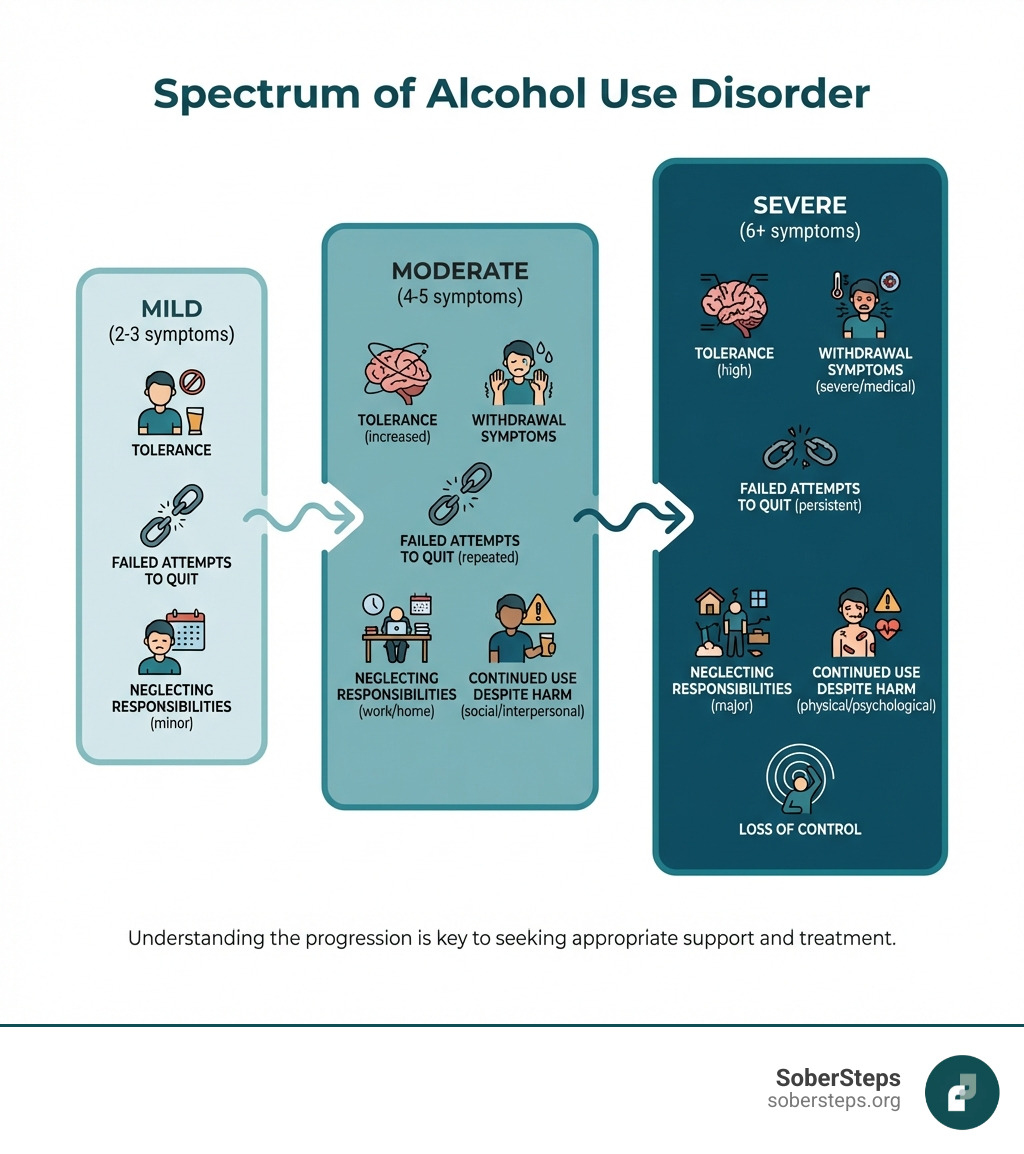
AUD symptoms can be physical, behavioral, or psychological. According to the NIAAA, having two or more of the following signs may indicate AUD. The more signs present, the more severe the problem.
- Physical Signs:
- Increased Tolerance: Needing more alcohol for the same effect.
- Withdrawal Symptoms: Experiencing shakiness, nausea, anxiety, or insomnia when not drinking.
- Health Problems: Worsening physical health, such as liver or heart issues.
- Behavioral Changes:
- Neglecting Responsibilities: Failing to meet work, school, or home obligations.
- Failed Attempts to Quit: Wanting to stop drinking but being unable to.
- Risky Use: Drinking in hazardous situations, like before driving.
- Continued Use Despite Harm: Drinking even when it causes relationship, health, or legal problems.
- Psychological Symptoms:
- Strong Cravings: An intense, persistent urge to drink.
- Loss of Control: Drinking more or for longer than intended.
- Memory Blackouts: Not remembering events that occurred while intoxicated.
Learn more about alcohol addiction signs and remember, you’re not alone.
Take the first step—get a confidential assessment
How Do I Know If I or a Loved One Needs Rehab?
If the signs above are familiar, it’s time to consider professional help. An alcohol rehab center is often necessary when alcohol use negatively impacts daily life. Key indicators include:
- Damaged Relationships: Frequent arguments, broken trust, or isolation from loved ones.
- Poor Performance: Declining productivity at work or school.
- Legal or Financial Trouble: DUIs or financial strain due to drinking.
- Severe Withdrawal: Symptoms like seizures or hallucinations require immediate medical attention and professional detox.

Acknowledging the problem is a brave and powerful step. Our goal at SoberSteps is to provide clarity and support as you make these difficult decisions.
Explore your treatment options now with our guidance.
How SoberSteps can help you decide
Comparing Alcohol Rehab Center Options
Choosing the right alcohol rehab center means comparing programs to find the best fit for your unique situation. At SoberSteps, we help you understand the options.
Inpatient vs. Outpatient Alcohol Rehab
The two main categories of rehab are inpatient and outpatient, offering different levels of care.
| Feature | Inpatient Rehab | Outpatient Rehab |
|---|---|---|
| Structure | Highly structured daily schedule, 24/7 supervision | Flexible schedule, allowing patients to live at home |
| Intensity of Care | Intensive, round-the-clock medical and therapeutic support | Varies from intensive (IOP/PHP) to less frequent sessions |
| Living Situation | Reside at the treatment facility | Live at home, attend sessions at designated times |
| Cost | Generally higher due to accommodation and constant care | Generally lower, as no residential costs are incurred |
| Ideal Candidate | Severe AUD, co-occurring mental health issues, unstable home environment, need for medical detox | Moderate AUD, strong support system, stable home, work/family commitments |
Inpatient (residential) treatment provides a 24/7, substance-free environment. This immersive setting is ideal for those with severe AUD or co-occurring disorders, as it removes external triggers and allows a complete focus on recovery.
Outpatient programs offer flexibility, allowing you to live at home and maintain work or family duties while attending scheduled treatment sessions. This is suitable for those with milder AUD and a stable support system, or as a step-down from inpatient care.
Compare rehab programs to make an informed decision.
Find the right program for you today.
Levels of Care in Addiction Treatment
An effective alcohol rehab center offers a continuum of care, allowing you to move between levels as you progress.
- Medical Detoxification: The first step for many, providing 24/7 medical supervision to safely manage potentially dangerous alcohol withdrawal symptoms.
- Residential Inpatient Programs: Immersive, 24/7 care in a live-in facility, offering structured therapy and support away from daily triggers.
- Partial Hospitalization Programs (PHP): A high level of care with intensive therapy for several hours a day, 5-7 days a week, while you return home or to sober living at night.
- Intensive Outpatient Programs (IOP): A flexible option with fewer hours than PHP (typically 9-15 hours per week), allowing you to balance treatment with work or family life.
- Standard Outpatient: The least intensive level, involving 1-2 weekly therapy sessions. It’s ideal for long-term maintenance or for those with mild AUD.
Learn more about different treatment programs to understand the full spectrum of options.
Find the right level of care for you by contacting us.
Specialized Rehab Programs
Many centers offer specialized programs for specific needs, which can improve treatment effectiveness.
- Dual Diagnosis for Co-Occurring Disorders: About half of people with a substance use disorder also have a mental health disorder like depression or anxiety. Dual diagnosis programs provide integrated treatment that addresses both conditions simultaneously. For more information, refer to the NIMH on co-occurring disorders.
- Gender-Specific Programs: Men-only or women-only programs create a safe space to address gender-specific issues, societal pressures, and trauma.
- Executive Rehab: Designed for professionals, these programs offer privacy and flexibility to manage work responsibilities during treatment.
- Faith-Based Treatment: These programs integrate spiritual principles and practices with traditional therapies for individuals who desire a faith-centered approach.
Explore specialized alcohol rehab programs to see if one aligns with your needs.
Contact SoberSteps for personalized program recommendations and find How SoberSteps personalizes your care.
What Happens Inside an Alcohol Rehab Center?
Understanding the process inside an alcohol rehab center can ease anxiety and explain the experience. Every step is designed to guide you toward lasting recovery.
The Intake Process at an Alcohol Rehab Center
The intake process is a comprehensive evaluation used to create your individualized treatment plan.
- Initial Assessment: Clinical staff evaluate your alcohol use history and overall health to determine the appropriate level of care and need for detox.
- Psychological Evaluation: A mental health professional assesses for co-occurring disorders like depression or anxiety to ensure integrated treatment.
- Medical History Review: A medical team conducts a physical exam and reviews your health history to manage any alcohol-related issues and withdrawal risks.
- Insurance Verification: Our team at SoberSteps can help you steer this step, working with the center to verify benefits and discuss payment options.
- Personalized Treatment Plan Creation: Experts collaborate to develop a custom plan outlining the specific therapies and services you will receive.
The intake process is your opportunity to ask questions and get comfortable with the care team, laying a strong foundation for recovery.
What to expect during intake offers more details.
Start your intake process today by reaching out to us.
Therapies and Treatments Used in Recovery
An alcohol rehab center uses a variety of evidence-based therapies to address the complex nature of addiction.

Common approaches include:
- Individual Counseling: One-on-one sessions to explore personal issues, develop coping skills, and address the root causes of addiction.
- Group Therapy: Peer support sessions that reduce isolation, build communication skills, and provide a sense of community.
- Family Therapy: Involving loved ones to heal relationships, improve communication, and establish a supportive home environment.
- Cognitive Behavioral Therapy (CBT): Helps you identify and change negative thought patterns and behaviors related to alcohol use.
- Dialectical Behavior Therapy (DBT): Teaches skills in mindfulness, emotional regulation, and distress tolerance, often used for co-occurring disorders.
- Motivational Improvement Therapy (MET): A client-centered approach that helps you build and strengthen your internal motivation to change.
These therapies are often combined for a holistic approach. For more on evidence-based treatments, see the National Institute on Drug Abuse (NIDA).
Therapies used in alcohol rehab digs deeper into these methods.
See which therapies are right for you by consulting with our experts.
The Role of Medication in Alcohol Addiction Treatment
Medication-Assisted Treatment (MAT) combines medication with therapy to manage withdrawal and reduce cravings, significantly improving outcomes. SoberSteps connects you with centers offering MAT. Common medications include:
- Naltrexone (Vivitrol): Blocks the rewarding effects of alcohol, reducing cravings.
- Acamprosate (Campral): Helps restore brain chemistry balance, reducing the emotional and physical distress of early sobriety.
- Disulfiram (Antabuse): Creates an unpleasant physical reaction to alcohol, acting as a strong deterrent.
- Withdrawal Management: Medications like benzodiazepines may be used during detox to safely manage severe withdrawal symptoms.
These non-addictive medications are most effective as part of a comprehensive treatment plan.
Medication options in alcohol rehab provides more detailed information.
Ask about medication-assisted treatment to see if it’s right for you.
What is the Typical Length of Stay at an Alcohol Rehab Center?
The length of stay at an alcohol rehab center varies based on individual needs. The National Institute on Drug Abuse (NIDA) notes that longer treatment durations are often linked to better outcomes.
Common program lengths include:
- 30-day programs: Provide a strong foundation for recovery and are a good starting point.
- 60-day programs: Allow for more in-depth therapy and time to practice new coping skills.
- 90-day programs: Often recommended for better long-term success, allowing for significant behavioral change and relapse prevention planning.
- Long-term options: Programs extending beyond 90 days are available for those with severe or chronic addiction.
The right duration is determined by your progress and the recommendations of your treatment team.
How long does rehab last? offers a more in-depth look at program durations.
Find a program that fits your needs with our assistance.
Navigating the Logistics of Rehab and Aftercare
Once you’re ready for treatment, understanding the logistics of an alcohol rehab center is the next step. This includes costs, choosing a facility, and planning for life after rehab.
What is the Cost of Alcohol Rehab and How Can I Pay?
Cost is a common concern, but treatment is an investment in your future. Various payment options are available.
- Private Insurance: Many health plans under the Affordable Care Act (ACA) cover substance use treatment. Coverage varies, so verify your benefits.
- State-Funded Options: State-funded centers, often supported by federal grants from SAMHSA, are available for those with limited resources. Eligibility varies by state.
- Private Pay and Financing: Many centers offer payment plans, sliding scale fees based on income, or connections to third-party financing.
Navigating finances can be overwhelming. The SoberSteps team is here to help clarify your options.
How to pay for alcohol rehab offers more comprehensive details.
Verify your insurance now through our easy-to-use tool.
What to Look for in an Alcohol Rehab Center
Choosing the right alcohol rehab center is critical for success. We recommend prioritizing these key elements:
- Licensing and Accreditation: Ensure the facility is licensed by the state and accredited by a recognized body like The Joint Commission or CARF.
- Staff Credentials: The team should include qualified, licensed doctors, therapists, and counselors.
- Evidence-Based Practices: The center should use scientifically proven therapies like CBT, DBT, and MAT.
- Individualized Treatment Plans: Avoid one-size-fits-all programs. Look for plans custom to your specific needs and goals.
- Aftercare Support: High-quality centers provide robust aftercare planning, connecting you to resources for long-term success.
SoberSteps is committed to connecting you with reputable facilities that meet these standards.
Choosing the right rehab center offers more guidance on this critical decision.
Get help choosing a rehab center by contacting our compassionate team.
Life After Rehab: Aftercare and Relapse Prevention
Completing rehab is the beginning of a lifelong recovery journey. A strong aftercare plan is essential for maintaining sobriety.
Effective aftercare strategies include:
- Sober Living Homes: A structured, substance-free environment to help you transition back into daily life.
- Alumni Programs: Many centers offer alumni networks for ongoing peer support and connection.
- Support Groups: Our partners can connect you with local and online groups for continued encouragement and shared experience.
- Ongoing Therapy: Continuing with a therapist helps reinforce coping skills and manage new challenges.
- Relapse Prevention Plan: A personalized plan to identify triggers and outline coping strategies for difficult situations.
Comprehensive aftercare is non-negotiable for sustained recovery. We ensure you have the resources to thrive long after treatment.
Aftercare and relapse prevention provides further insights.
Connect with aftercare resources through SoberSteps to build your support network.
Frequently Asked Questions about Alcohol Rehab
As you consider an alcohol rehab center, you likely have questions. Here are answers to some common inquiries.
What are the success rates of alcohol rehab programs?
Success in recovery is more than just abstinence; it includes improved quality of life and well-being. Studies show that treatment for AUD is effective for most people. Key factors for success include the length of treatment (90 days or more is often best), individualized care, participation in aftercare, and a strong support system. Setbacks can happen, but they are learning opportunities, not failures. The goal is sustained well-being.
Alcohol rehab success rates offers a deeper dive into what success means in recovery.
Learn how SoberSteps supports your long-term success by connecting you with effective programs.
How can I support a loved one going to rehab?
Supporting a loved one entering an alcohol rehab center is a critical role. Here’s how you can help:
- Offer Non-Judgmental Support: Express your love and concern without blame. Reassure them that seeking help is a sign of strength.
- Participate in Family Therapy: If offered, family therapy can heal relationships and improve communication. Our partner centers often include this.
- Set Healthy Boundaries: Support is crucial, but enabling is not. Healthy boundaries protect you and promote their accountability.
- Get Support for Yourself: Addiction affects the whole family. Seek your own counseling or support groups to cope with the emotional challenges.
Supporting a loved one in rehab provides comprehensive guidance for families.
Get family support resources by reaching out to SoberSteps.
Can I lose my job for going to an alcohol rehab center?
Fear of job loss is a valid concern, but legal protections are in place. The Family and Medical Leave Act (FMLA) may provide up to 12 weeks of unpaid, job-protected leave for medical treatment, including rehab. The Americans with Disabilities Act (ADA) protects qualified individuals in recovery from discrimination and may require employers to provide reasonable accommodations, such as leave for treatment. Your medical information is kept confidential by law. Understanding your rights can provide peace of mind.
Your rights at work during rehab offers more detailed information on employee protections.
Speak with a SoberSteps advisor about your rights for personalized guidance.
Conclusion: Your Path to Recovery Starts Here
The journey to recovery from alcohol use disorder can seem overwhelming, but this guide has hopefully illuminated the path forward. We’ve covered the signs of AUD, the types of alcohol rehab centers, what treatment entails, and the importance of aftercare.
What’s clear is that recovery is possible, and effective treatment is available. The key is finding a program that offers individualized, evidence-based care and a strong continuum of support. Millions have found sobriety, and you can too.
At SoberSteps, we are dedicated to helping you steer your options. Our independent platform connects you with trusted, licensed treatment providers across the United States. Our confidential, 24/7 helpline is always available to offer guidance.
Don’t let uncertainty stop you from taking this vital step. Your path to a healthier, sober life starts now.
Call our 24/7 confidential helpline to find an alcohol rehab center now