

Understanding the Role of an Addiction Recovery Coach
An addiction recovery coach is a non-clinical professional who provides personalized support and guidance for individuals in recovery from substance use disorders. Unlike therapists who diagnose and treat, or sponsors who guide through 12-step programs, recovery coaches focus on practical, strengths-based support to help you steer daily challenges and build a sustainable sober life.
Key Things to Know About Recovery Coaches:
- What they do: Help set recovery goals, develop action plans, connect with resources, and provide accountability.
- Who they are: Often individuals with lived recovery experience, trained in motivational interviewing.
- Where they help: With practical needs like housing, employment, healthcare, and rebuilding relationships.
- How they differ: Non-clinical, action-oriented support focused on the present and future, not past trauma.
- When to use one: At any stage of recovery, from early consideration to long-term maintenance.
- Cost: Typically $35-100/hour; some facilities offer coaching; Medicaid reimbursement is expanding in select states.
The transition from treatment to daily life can be overwhelming. A recovery coach acts as your partner and guide, helping you bridge the gap between formal treatment and ongoing, real-world support. They help you develop the skills and confidence needed for independent sober living.
At Sober Steps, we know that addiction recovery coaches are vital to lasting sobriety. This guide explains how they can support you or your loved one. We are committed to providing clear, reliable information to help you find the right support for your journey.
Explore our comprehensive directory of addiction treatment resources to get started.
What is an Addiction Recovery Coach and What Do They Do?
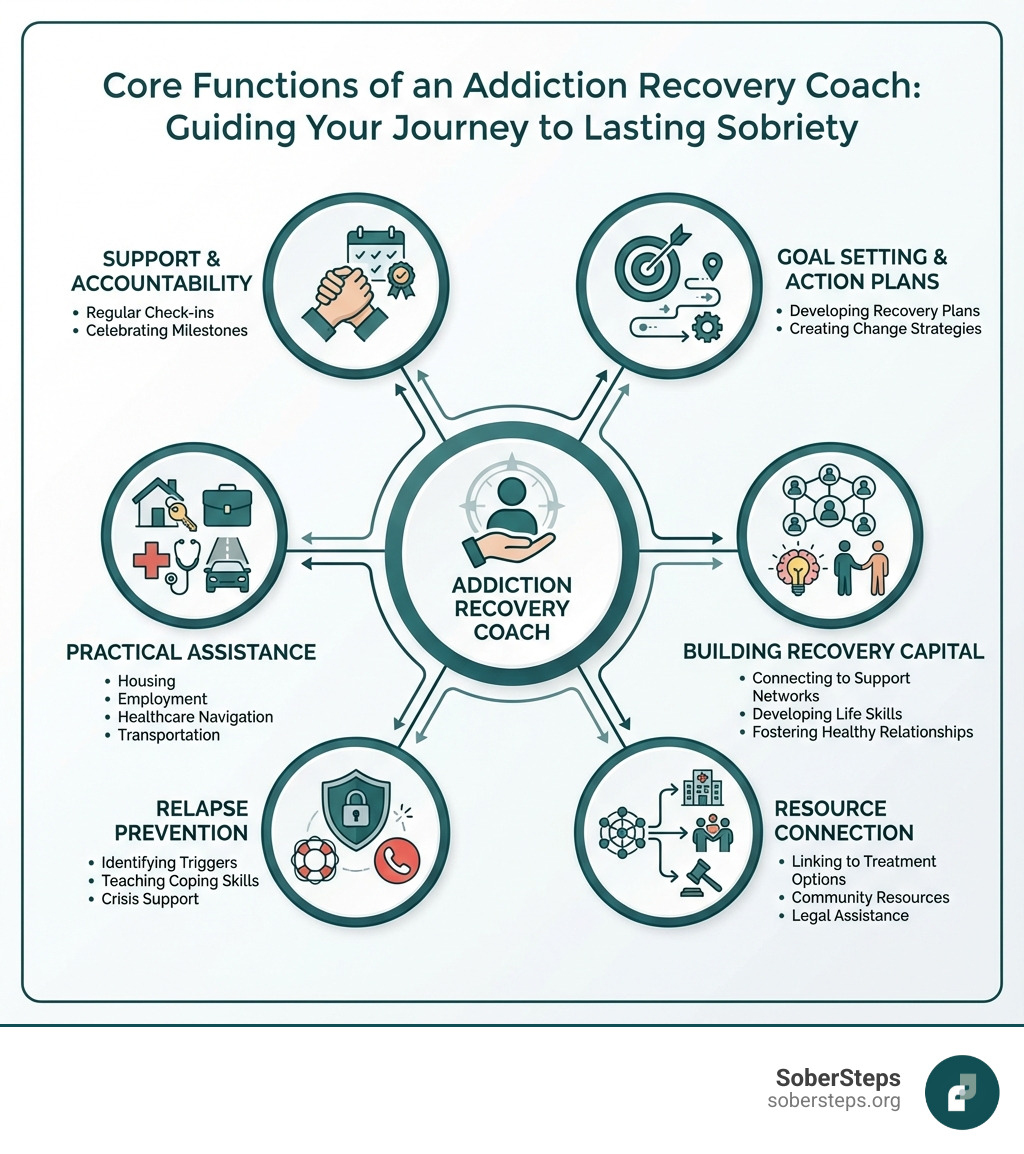
An addiction recovery coach is a non-clinical professional offering guidance and encouragement on the road to recovery. They act as a personal guide to help you map out your journey, anticipate challenges, and celebrate milestones. For those seeking substance use support but unsure of the next step, a recovery coach can be a critical resource.
Often, an addiction recovery coach has lived experience with addiction, allowing them to connect with clients on a deeper, more relatable level. Their approach is strengths-based and action-oriented, focusing on your inherent resources to achieve recovery goals. They empower you to make positive changes in the present to build a brighter future.

The Core Role: A Strengths-Based Partner in Sobriety
An addiction recovery coach is a partner who believes you are the expert on your own life. You set the goals, and your coach helps you figure out how to get there. A coach will assist you in:
- Building Recovery Capital: Accumulating internal and external resources (e.g., self-efficacy, supportive relationships) to sustain long-term recovery.
- Creating a Change Plan: Developing a clear, actionable plan to achieve your goals and build a life you don’t want to escape from.
- Motivational Interviewing: Using techniques to help you find your own motivation for change.
- Navigating Recovery Systems: Helping you access treatment options, support groups, and other services.
- Relapse Prevention: Identifying triggers, developing coping skills, and serving as an accountability partner.
- Celebrating Milestones: Acknowledging your progress to reinforce positive behaviors and build self-esteem.
Read inspiring addiction success stories to see the power of this journey!
Practical Support for Real-Life Challenges
Recovery is about rebuilding a life, and an addiction recovery coach helps you address practical needs that are critical for stability. Coaches can assist with:
- Housing: Finding safe, stable housing, from sober living to independent options.
- Employment: Offering guidance on job searching, resume building, and interview skills.
- Healthcare: Connecting you with physicians and helping you understand treatment options like MAT.
- Legal Issues: Connecting you with legal support and ensuring compliance with court mandates.
- Transportation: Helping arrange transport to appointments or meetings.
- Relationships: Developing strategies to repair trust and foster healthy connections.
- Finances: Assisting with budgeting, credit repair, and financial management.
Addressing these real-world issues is crucial for long-term recovery. A coach can help you integrate various levels of care to meet your needs.
Recovery Coach vs. Therapist vs. Sponsor: Understanding the Differences
In the recovery landscape, it’s easy to confuse the roles of a coach, therapist, and sponsor. While all are vital, their functions, qualifications, and approaches are distinct. Understanding these differences helps you build a comprehensive recovery team.
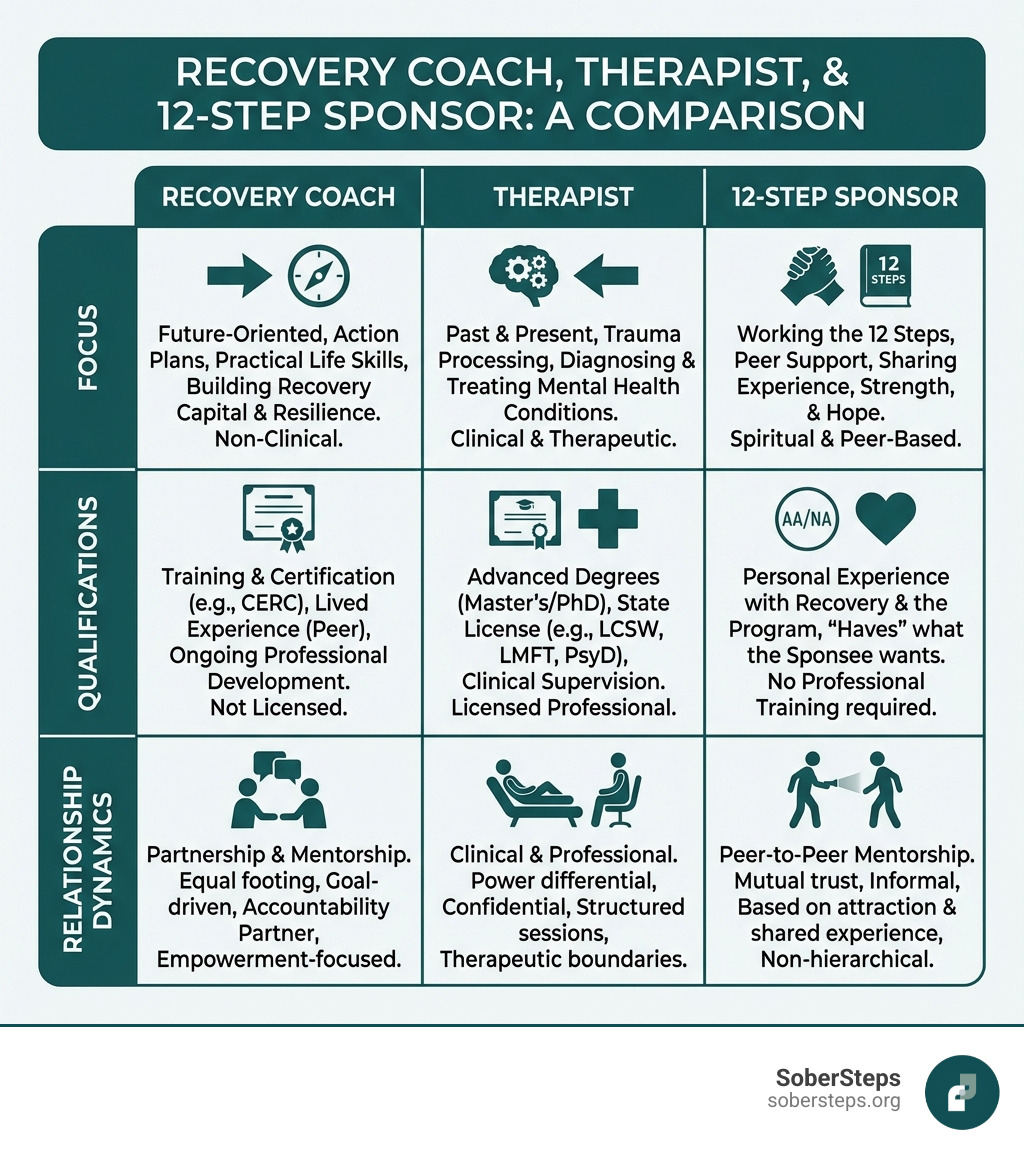
An addiction recovery coach is a key member of a “recovery team,” which may also include doctors, counselors, and therapists. This collaborative model provides holistic support and reduces relapse risk. If you’re seeking individual therapy for addiction, a coach can complement that work beautifully.
The Clinical Role of a Therapist
A therapist is a licensed professional with an advanced degree who operates in a clinical capacity. Their focus is on diagnosing and treating mental health conditions, including substance use disorders and underlying trauma.
Key characteristics of a therapist’s role:
- Diagnosis and Treatment: Qualified to diagnose conditions and treat them using evidence-based methods like CBT or DBT.
- Focus on the Past: Often explores past experiences and trauma to heal underlying psychological issues.
- Licensed and Regulated: Adheres to strict ethical guidelines and is regulated by state licensing boards.
For those with co-occurring conditions, a therapist is the primary professional for co-occurring disorders treatment.
The Peer Role of a Sponsor
A sponsor is a volunteer from a 12-step program like Alcoholics Anonymous (AA) or Narcotics Anonymous (NA). This is a peer-to-peer relationship, not a professional service.
Key aspects of a sponsor’s role:
- 12-Step Focus: Their function is to guide a newcomer through the 12 steps of a specific program.
- Volunteer Basis: They are not paid; their motivation is to help others and support their own recovery.
- Shared Experience: Like coaches, they have lived experience, but their guidance is tied to 12-step traditions.
If you’re interested in this type of peer support, you can find online NA meetings to connect with others.
The Proven Benefits of Working with a Recovery Coach
While the field is relatively new, research shows that working with an addiction recovery coach can significantly improve recovery outcomes. This unique support empowers individuals to not just maintain sobriety, but to thrive. Studies show coaching reduces substance use, improves treatment retention, and improves overall well-being. There is strong evidence suggesting recovery coaching benefits individuals.
Key Advantages for Your Recovery Journey
Partnering with an addiction recovery coach offers impactful benefits:
- Reduced Relapse Rates: Coaches help you identify triggers, develop coping skills, and build a support network to prevent relapse.
- Improved Treatment Retention: They bridge the gap between formal treatment and real life, helping you stay engaged in your recovery.
- Increased Social Support: Coaches connect you with positive social networks and community resources, reducing isolation.
- Greater Life Stability: They provide practical help with essentials like housing and employment, which are foundational to recovery.
- Decreased Criminal Justice Involvement: By promoting positive choices, coaches can help reduce the likelihood of legal issues.
- Improved Quality of Life: Coaching empowers you to build a fulfilling life by improving relationships, finding meaningful work, and achieving personal goals.
The journey to lasting recovery is possible. Get help now and let us connect you with the resources you need.
Exploring the Types of Recovery Coaching
Just as there are many paths to recovery, there are also various types of addiction recovery coaches, each offering specialized support custom to different needs and situations. We understand that one size doesn’t fit all, and finding the right type of coach can significantly improve your recovery experience. If you’re looking to find addiction treatment options, understanding the coaching landscape can help you make informed decisions.
Common Types of Coaches
Here are some of the specialized roles an addiction recovery coach might take on:
- Peer Recovery Coach (PRC): This is perhaps the most common type. PRCs are individuals with lived experience in recovery who use their personal journey to support others. They are non-clinical and focus on providing relatable guidance, motivation, and practical assistance.
- Sober Companion: A sober companion offers a more intensive, often 24/7, level of support. They might live with a client for a period, particularly during the critical transition from an inpatient program back home, providing constant accountability and guidance to prevent relapse.
- Sober Escort: Think of this as specialized travel support. A sober escort accompanies a client during travel—whether across town or across the country—to ensure sobriety during the journey or to facilitate safe transport to a treatment facility or recovery meeting.
- Family Recovery Coach: Addiction impacts the entire family. A family recovery coach works with the family unit, helping them understand addiction, set healthy boundaries, improve communication, and cope with the challenges of a loved one’s recovery journey. They strive to create a calm, objective, non-judgmental environment.
- Virtual or Phone Coach: In our increasingly connected world, remote coaching is a popular and effective option. Virtual or phone coaches provide ongoing support, accountability, and guidance through video calls, phone calls, and email, making recovery support accessible regardless of location. Many treatment centers are embracing this as an aftercare component.
- Legal Support Specialist: For individuals whose addiction has led to legal troubles, a recovery coach specializing in legal support can be invaluable. They work with lawyers, perform client assessments, ensure compliance with court mandates (like drug court), and can even appear in court with the client.
How to Find and Choose the Right Addiction Recovery Coach
Finding the right addiction recovery coach is a personal process, and choose someone with whom you feel a strong connection and trust. We want to empower you with the knowledge to make an informed decision.
Here’s what to consider:
- Referrals: Start by asking for recommendations. Your current treatment providers, therapists, or primary care physician may have a network of trusted coaches. Recovery community organizations (RCOs) can also be excellent sources.
- Online Search: A simple online search for “addiction recovery coach near me” can yield many results. Look for coaches affiliated with reputable organizations or those with strong online reviews.
- Key Qualifications & Certification: While regulations vary, look for coaches who have completed specialized training and certification. Organizations like the CCAR (Connecticut Community for Addiction Recovery) Recovery Coach Academy or CARC (Certified Addiction Recovery Coach) certification are widely recognized in the US. This demonstrates a commitment to professional standards and ethical practice.
- Rapport and Communication Style: Schedule initial consultations with a few potential coaches. This is your chance to assess their communication style, empathy, and whether their approach resonates with you. Do you feel heard? Do you feel motivated?
- Shared Recovery Ideals: Recovery is diverse. Some coaches might align with 12-step philosophies, while others might focus on harm reduction or other pathways. Ensure their approach aligns with your personal values and goals.
- Cost Considerations: Recovery coaches typically charge hourly rates, ranging from $35 to $100 or more, depending on experience and location. Some offer package deals or sliding scales. While generally not covered by insurance (as it’s non-clinical), some Employee Assistance Programs (EAPs) or specific Medicaid plans (in states like New York, Tennessee, Pennsylvania, Maryland, and Massachusetts) may offer reimbursement.
Choosing a coach is a significant step, much like deciding on a treatment program. We also have a guide on how to find the right rehab program that might offer additional insights into making these crucial decisions.
The Path to Becoming a Recovery Coach
For many, the journey through addiction and into recovery ignites a powerful desire to help others. Becoming an addiction recovery coach is a deeply rewarding career path that allows individuals, often with lived experience, to transform their past into a powerful tool for change. We believe it’s one of the most important tools to initiate and maintain long-term recovery.
Training, Certification, and Required Skills
While the field is still evolving, formal training and certification are increasingly becoming standard and often required by employers. This ensures coaches possess the necessary knowledge, skills, and ethical understanding to provide effective support.
Key training and certification pathways in the U.S. include:
- CCAR Recovery Coach Academy (RCA): The CCAR (Connecticut Community for Addiction Recovery) Recovery Coach Academy is a highly respected 30-hour curriculum that has trained over 50,000 people worldwide. It’s considered a leading training program and focuses on the “Art and Science of Recovery Coaching,” emphasizing active listening and asking good questions. You can learn more from the Recovery Coach Academy.
- CARC (Certified Addiction Recovery Coach) Certification: In New York, for example, the NYCB (New York Certification Board) CARC certification requires 60 hours of approved training. This includes foundational courses and electives, covering topics like motivational interviewing, harm reduction, family-supported recovery, and ethics.
- NAADAC Credentials: The National Association for Addiction Professionals (NAADAC) offers webinars and resources that contribute to the professional development of recovery coaches and peer specialists. These resources often focus on expanding competency, ethical understanding, and career pathways. Explore NAADAC webinars for more information.
Beyond specific programs, becoming a skilled addiction recovery coach requires cultivating a set of core competencies:
- Active Listening: The ability to truly hear and understand a client’s experiences, challenges, and aspirations.
- Empathy: Connecting with clients on an emotional level, understanding their perspectives without judgment.
- Motivational Interviewing: Guiding clients to find their own motivation for change, rather than imposing it.
- Strengths-Based Approach: Focusing on a client’s inherent strengths and resources to build confidence and capability.
- Boundary Setting: Maintaining clear professional boundaries to ensure the coaching relationship remains therapeutic and ethical.
The training process can vary, with some comprehensive programs taking approximately 175 hours, including online courses, written and oral exams, and a 60-contact-hour internship.
Career Opportunities and Ethical Responsibilities for an addiction recovery coach
The demand for addiction recovery coaches is growing, creating diverse career opportunities. Compensation varies significantly based on setting and experience:
- Independent Coaches: Can expect to make $35/hour or more, with some professional life recovery coaches billing up to $100/hour, depending on their experience and local rates.
- Facility-Based Coaches: Those working at substance abuse treatment facilities, recovery community organizations (RCOs), or social services agencies often make around $30,000/year, or $12-18/hour.
- Medicaid Reimbursement: A significant development is the expansion of Medicaid reimbursement for recovery coaching. New York has an established plan, and states like Tennessee, Pennsylvania, Maryland, and Massachusetts are formulating similar payment plans, indicating growing recognition and funding for this vital role.
Coaches can work in various environments, from remote positions using chat, video conferencing, and email, to in-person roles in intensive outpatient programs, emergency departments, detox centers, and sober living environments.
With this growing professional recognition comes significant ethical responsibility. An addiction recovery coach must uphold a strong code of ethics, including:
- Confidentiality: Protecting client information to the same degree as medical professionals.
- Professional Boundaries: Clearly defining the scope of the coaching relationship and avoiding dual relationships.
- Cultural Competence: Understanding and respecting diverse cultural backgrounds and their impact on recovery.
- Self-Care: Recognizing the emotional demands of the role and practicing self-care to prevent burnout.
- No Clinical Services: Coaches must clearly understand and adhere to their non-clinical role, never diagnosing or treating addiction or mental health issues.
Frequently Asked Questions about Addiction Recovery Coaches
Here are answers to common questions about working with an addiction recovery coach.
Is working with a recovery coach covered by insurance?
Generally, no. Because addiction recovery coaching is a non-clinical service, most standard health insurance plans do not cover it. However, the landscape is changing:
- Medicaid: Some states, including New York, Tennessee, Pennsylvania, Maryland, and Massachusetts, have started to reimburse for recovery coaching through Medicaid.
- Employee Assistance Programs (EAPs): Your employer’s EAP may offer partial coverage. It’s worth checking with your HR department.
- Private Pay: This is the most common option. Many coaches offer hourly rates, packages, or sliding scales.
Always inquire directly with your insurance provider and potential coach to understand your options.
How long should I work with a recovery coach?
The duration is highly individualized and depends on your goals. There is no set timeline.
- Short-Term Support: Some people use a coach for a few weeks or months during a critical transition, like returning home from treatment.
- Long-Term Maintenance: Others prefer ongoing support for a year or more as they build a new life and work on broader goals.
The relationship is flexible and designed to empower you toward self-sufficiency. It adapts to your evolving journey.
Can a recovery coach help with dual diagnosis?
Yes, an addiction recovery coach can play a vital supportive role for someone with a dual diagnosis, but their scope is non-clinical.
- Support, Not Treatment: A coach helps you implement strategies learned from your clinical team (therapist, psychiatrist). They do not diagnose or treat mental health conditions.
- Team Collaboration: A coach works alongside your clinical providers, helping you manage appointments and integrate treatment plans into daily life.
- Practical Application: They assist in developing action plans and routines that support both your mental health and sobriety goals.
While a coach doesn’t treat the mental health condition, they are an invaluable asset in helping you manage symptoms and build a stable, fulfilling life.
Conclusion
The journey to lasting recovery is deeply personal, often challenging, but undeniably rewarding. In this extensive guide, we’ve explored the profound value that an addiction recovery coach brings to this path. From providing strengths-based, non-clinical support and practical assistance with life’s problems, to offering a unique blend of empathy and accountability, coaches empower individuals to build a foundation for sustained sobriety.
We’ve seen how they differ from therapists and sponsors, each playing a distinct yet complementary role in a comprehensive recovery team. We’ve highlighted the proven benefits—from reduced relapse rates to improved quality of life—and illuminated the various types of coaches available, ensuring that specialized support is within reach. We also understand the commitment involved in becoming a coach, from rigorous training and certification to upholding ethical responsibilities.
At SoberSteps, we believe in empowering you with every tool and resource available. An addiction recovery coach can be a vital part of your recovery ecosystem, helping you steer challenges, celebrate victories, and ultimately, build a life rich in purpose and free from addiction.
Ready to take the next step on your recovery journey? View our complete guide to drug treatment programs to explore all your options and find the support that’s right for you.