Your First Step: An Introduction to 28-Day Rehab
28 day rehabs near me offer a structured, intensive program to help you break free from addiction in a manageable timeframe. Here’s a quick overview:
Finding 28-Day Rehabs Near You
- What it is: A 28-day program is typically an inpatient residential treatment including detox, therapy, and aftercare planning.
- How to find one: Call a confidential helpline at (844) 491-5566, ask your doctor for referrals, or use online search tools.
- What to expect: Medically-supervised detox (if needed), daily individual and group therapy, and discharge planning.
- Cost: More affordable than longer programs, with insurance often covering 28-30 day stays.
- Success rates: 40-60% of people who complete treatment maintain sobriety.
If you’re feeling overwhelmed by addiction, you’re not alone. Month-long rehab programs strike a crucial balance—they’re long enough for robust care but short enough to feel like a possible commitment. As one patient shared: “I felt welcome from the start” and “Staff believed I could change and grow.”
A 28-day program provides an immersive experience in a structured environment, removing you from daily triggers. You’ll spend your days in therapy, group activities, and personal reflection—all designed to help you understand your addiction, develop coping skills, and build a foundation for recovery. These programs treat a wide range of substance use disorders, from alcohol and opioids to stimulants, and many also address co-occurring mental health conditions like depression, anxiety, or PTSD.
At Sober Steps, we’ve helped thousands of individuals find their path to recovery by connecting them with quality treatment resources. We know that searching for 28 day rehabs near me can be daunting, and we provide confidential guidance every step of the way. Call us at (844) 491-5566 for support.
Understanding the 28-Day Rehab Model
When considering addiction treatment, understanding the options can feel overwhelming. We’re here to explain the 28 day rehabs near me model, including its core concepts, who it’s for, and the issues it addresses. This month-long approach is a popular and effective starting point for recovery.
What is a 28-Day Program?
A 28-day program is a structured, intensive plan to help individuals overcome drug and alcohol addictions. Lasting about four weeks, these programs immerse you in a healing environment away from daily stresses and triggers.
The most common form is residential treatment (inpatient rehab), where you live at the facility for the entire program. This provides 24/7 support and a peer community. The structured daily routine balances therapy, group activities, and personal reflection to provide a safe space for detox, healing, and building healthier habits.
However, some facilities offer month-long intensive outpatient programs (IOPs). While you don’t live at the facility, you commit to a rigorous schedule of therapy and support sessions several days a week, allowing you to maintain responsibilities like work or family care.
Whether inpatient or outpatient, the focus is an intensive approach to tackling substance abuse. The dedicated time allows you to detox, clear your head, and adapt to a sober lifestyle, making it easier to think clearly and make good decisions after the program. This fosters self-findy and growth.
28-Day vs. 30-Day Programs: Is There a Difference?
The terms “28-day rehab” and “30-day rehab” are often used interchangeably, as they typically refer to the same type of month-long, intensive treatment. The slight difference in days can be due to billing cycles, insurance preferences, or marketing. For example, a 28-day program might be called a “30-day program” because it’s a more common term.
The key is the commitment to a month of focused recovery. This duration strikes a balance between shorter programs and longer residential stays, making it a good starting point for those hesitant about a long-term commitment or facing financial or logistical challenges.
Insurance companies are often more likely to cover a 30-day program than longer-term options, making them more accessible. Additionally, 30-day programs are generally cheaper than longer ones, offering a significant investment in your health without an extended financial burden.
Types of Addictions Treated

28 day rehabs near me treat a wide array of substance use disorders (SUDs) and often address co-occurring mental health conditions. These programs provide individualized care custom to your specific needs.
Common addictions treated include:
- Alcoholism: Addressing dependency on alcohol.
- Opioid Addiction: Treating dependency on substances like heroin, fentanyl, and prescription painkillers.
- Stimulant Abuse: Helping individuals overcome addiction to drugs like cocaine, methamphetamine, and Adderall.
- Prescription Drug Addiction: Tackling misuse of medications like benzodiazepines (e.g., Xanax) and barbiturates, which can have severe withdrawal symptoms.
- Other Substance Use Disorders: Including marijuana, ecstasy, psychedelics, and synthetic drugs.
- Behavioral Addictions: Some facilities may offer support for issues like gambling, though the primary focus is usually on substance use.
Crucially, many 28 day rehabs near me operate in a dual diagnosis setting, meaning they treat both substance use disorders and co-occurring mental health conditions simultaneously. Addiction rarely exists in isolation, as issues like depression, anxiety, PTSD, or bipolar disorder often fuel it. Addressing these challenges together leads to more comprehensive and lasting recovery.
Recognizing the Signs You Might Need Help
Admitting you need help is often the hardest step. If you’re rationalizing or minimizing your substance use, consider if these clear warning signs apply to you. A 28 day rehab near me could be a crucial step toward regaining control. Addiction can affect anyone.
Consider if you experience any of the following:
- Loss of Control Over Use: You’re unable to cut down or stop using, even when you want to.
- Negative Consequences: Your substance use leads to problems with your health, relationships, finances, or legal standing, yet you continue.
- Relationship Problems: Your substance use causes arguments with loved ones, or you withdraw from concerned friends and family.
- Neglecting Responsibilities: You miss work or school or neglect family duties because of your substance use.
- Withdrawal Symptoms: You experience physical or psychological discomfort (nausea, tremors, anxiety) when you try to stop.
- Increased Tolerance: You need more of the substance to get the same effect.
- Spending Significant Time: A lot of your time is spent obtaining, using, or recovering from substances.
If these signs resonate, it’s a strong indicator that professional help is needed. A licensed professional can provide a formal diagnosis. Seeking help is a courageous act, and a 28-day program offers the structured support needed to break the cycle of addiction. For a confidential assessment, call us at (844) 491-5566.
What to Expect: A Week-by-Week Journey
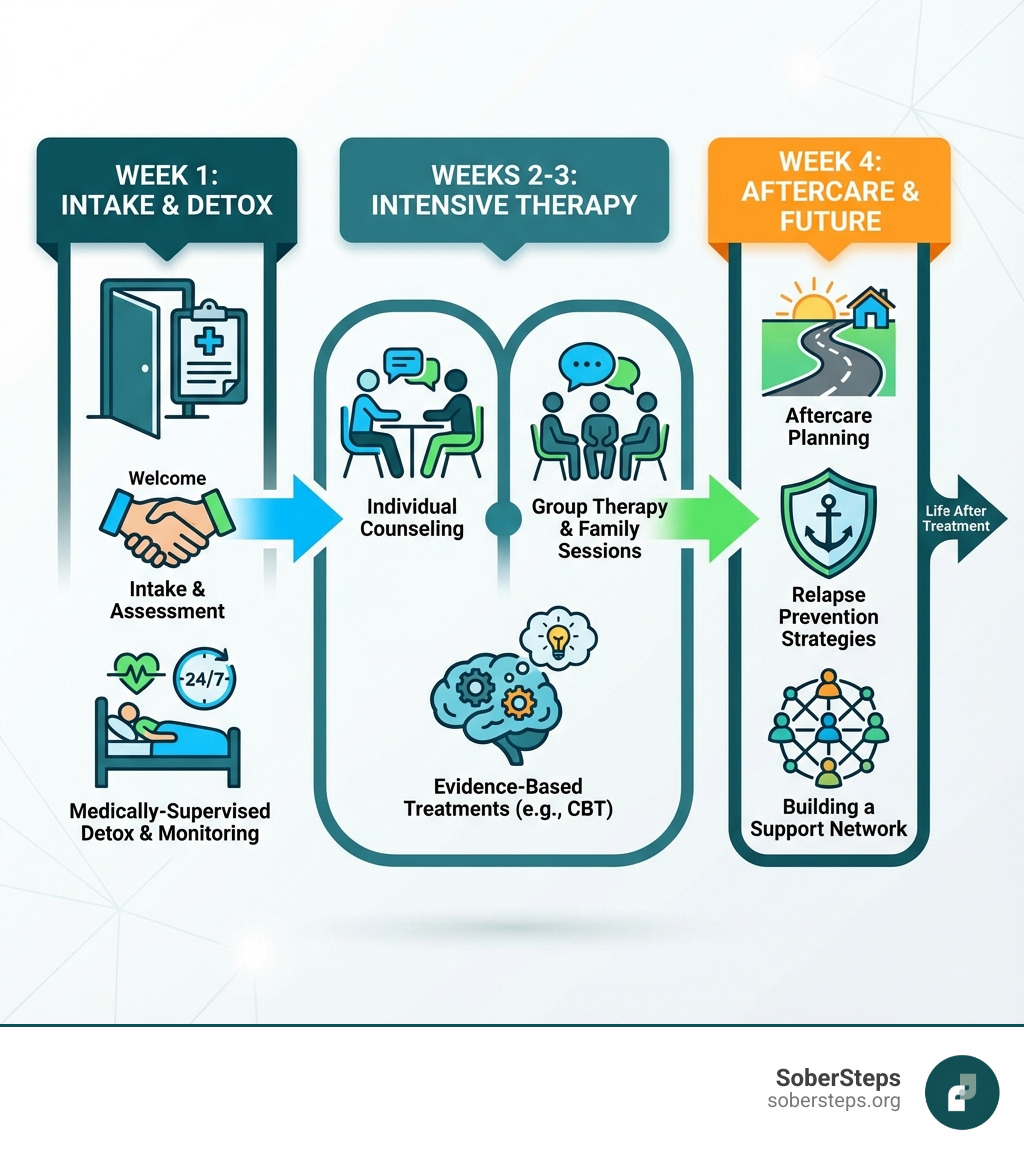
A 28-day rehab program is a journey. While each facility has a unique approach, the typical month-long stay follows a general progression designed to maximize your chances of recovery. Here’s what to expect during these four transformative weeks.
Week 1: Assessment and Detoxification
The first week is challenging but lays the essential groundwork for recovery. It begins with the intake process, where you’ll have a comprehensive medical assessment and psychological evaluation. This helps the treatment team understand your specific needs, the severity of your addiction, and any co-occurring conditions to create a personalized treatment plan.
For many, the initial days involve medically-supervised detox. This is critical for substances like alcohol, benzodiazepines, or opioids, where withdrawal can be severe or even life-threatening. During detox, you’ll receive 24/7 medical care to manage withdrawal symptoms safely and comfortably, often with medication. This controlled environment ensures your safety while removing toxic substances from your body.
Weeks 2-3: Core Therapeutic Work
Once detox is complete, weeks 2 and 3 are dedicated to intensive therapy and education. This is a period of deep self-findy where you’ll learn to understand your addiction, develop coping mechanisms, and heal underlying issues.
You’ll participate in various therapeutic modalities, including:
- Individual Therapy: One-on-one sessions with a licensed therapist provide a private space to explore the roots of your addiction.
- Group Counseling: Sharing experiences with peers fosters a sense of community, reduces isolation, and allows for mutual support.
- Family Therapy: When appropriate, involving family members can help heal relationships, improve communication, and educate loved ones on supporting your recovery.
- Evidence-Based Practices: Quality programs use proven therapies, such as:
- Cognitive-Behavioral Therapy (CBT): Helps identify and change problematic thought patterns and behaviors.
- Motivational Interviewing (MI): Strengthens your motivation for change and addresses ambivalence about abstinence.
- Contingency Management (CM): Reinforces recovery-oriented behaviors with positive rewards.
- Psychoeducation: Workshops provide knowledge about addiction as a disease and strategies for maintaining sobriety.
- Experiential Therapies: Some programs offer creative therapies like art, drama, or equine therapy to help process emotions.
During these weeks, you’ll learn about the biopsychosocial model of addiction and be equipped with practical skills like emotional regulation, stress management, and healthy communication.
Week 4: Aftercare and Transition Planning
In the final week, the focus shifts to preparing you for life after rehab. This is about solidifying your commitment to sobriety and building a robust support system.
Key components include:
- Relapse Prevention Strategies: You’ll learn to identify triggers, develop coping mechanisms for cravings, and create a plan to steer high-risk situations.
- Building a Sober Support Network: Programs facilitate connections to support groups like Alcoholics Anonymous (AA) or Narcotics Anonymous (NA) and alumni networks.
- Aftercare Groups: Many programs offer ongoing aftercare groups (in-person or virtual) for continued support and accountability.
- Discharge Planning: You’ll receive a detailed, individualized plan for your life post-rehab. It may include recommendations for continued therapy, sober living arrangements, and medical follow-ups to ensure a smooth transition.
Aftercare is a vital part of recovery. A 28-day program is a powerful start, but recovery is a lifelong process that benefits from ongoing support. To discuss your aftercare options, call us at (844) 491-5566.
Finding and Choosing 28 Day Rehabs Near Me
Finding the right treatment center is a big decision, but it’s one of the most important steps toward recovery. When searching for 28 day rehabs near me, it’s helpful to know what to look for.
What to Look for in a Quality Program
Not all rehab programs are created equal. To choose a facility that offers the best chance for lasting recovery, consider these factors:
- Accreditation: Look for facilities accredited by reputable organizations like The Joint Commission or CARF (Commission on Accreditation of Rehabilitation Facilities), which signifies high quality and safety standards.
- Licensed Staff: Ensure the team includes qualified medical practitioners, licensed psychologists, and certified addiction counselors.
- Evidence-Based Therapies: A quality program will use research-backed techniques like CBT, MI, and other behavioral therapies.
- Aftercare Support: Inquire about relapse prevention planning, alumni programs, and ongoing support groups.
- Individualized Care: Treatment should never be one-size-fits-all. A good program will create a personalized plan based on a thorough assessment.
- Specialized Programs: If you have specific needs, look for programs that cater to them, such as dual diagnosis treatment, trauma-informed care, or gender-specific options for women.
How to Find 28 day rehabs near me
The search for 28 day rehabs near me can begin in several ways:
- Confidential Helplines: Our confidential helpline at (844) 491-5566 is available 24/7. Our admissions navigators can help you understand your options and find programs custom to your needs.
- Online Directories: Use confidential nationwide rehab search tools to filter programs by location, insurance, and level of care. Our team can help you steer these resources; call us at (844) 491-5566 for assistance.
- Physician Referrals: Your family doctor can be an excellent resource, providing referrals to reputable treatment centers.
- Asking for Help: Talk to trusted friends, family, or mental health professionals who may know of local resources.
- Verifying Program Details: Once you have a few options, call them directly. Ask detailed questions about their facility, methods, and staff to ensure they are a good fit.
Preparing to Call a Rehab Center
Being prepared can make calling a rehab center much smoother. Before you dial, gather the following information:
- Your Personal Details: Full name, date of birth, and contact information.
- Your Substance Use History: Be ready to honestly discuss the substance(s) used, duration of use, and any previous treatment.
- Your Insurance Information: Have your insurance card handy, including your policy number and group ID, to allow for quick verification of benefits.
- Your Medical History: Be prepared to discuss medical conditions, mental health diagnoses, and current medications.
- List of Questions to Ask: Don’t be afraid to ask what’s on your mind. Consider asking about:
- The daily schedule.
- Types of therapy offered.
- The approach to detox.
- Staff qualifications.
- Treatment for co-occurring disorders.
- What the cost includes.
- Aftercare support.
Having this information ready will streamline the admissions process. For help with this step, call us at (844) 491-5566.
Navigating Costs, Insurance, and Success
The practicalities of rehab—especially costs and insurance—can be a source of stress. Understanding these aspects, along with realistic expectations about success, can empower you to make informed decisions.
How Much Does a 28-Day Program Cost?
The cost of a 28 day rehab near me varies widely based on several factors:
- Inpatient vs. Outpatient: Inpatient programs, which include room and board, are more expensive than intensive outpatient programs (IOPs).
- Luxury vs. Standard Facilities: High-end facilities with private rooms and extensive amenities have a higher price tag.
- Location: Costs differ based on the region.
- What’s Included: The total cost typically covers food, room, board, and therapy. Some may include additional holistic therapies or medical care.
While a 28-day program is a significant investment, it’s generally cheaper than longer-term programs. Many facilities, especially non-profits, offer affordable pricing. The cost of rehab is an investment in your future and health.
Using Insurance for Rehab
Thanks to federal parity laws, most health insurance plans must provide coverage for behavioral health that is equivalent to physical health coverage. This means your insurance will likely cover at least a portion of your addiction treatment.
- Coverage Likelihood: Insurance companies are often more likely to cover a 30-day program than longer-term options, making them more accessible.
- In-network vs. Out-of-network: Your out-of-pocket costs will be lower if you choose an in-network facility. Always verify your benefits with your insurance provider or have the rehab’s admissions team do it for you.
- Verifying Benefits: We recommend calling our confidential helpline at (844) 491-5566 to verify your insurance benefits. Our team can help you understand your coverage and find facilities that accept your insurance.
- State-Funded Options: For those without private insurance, many states offer publicly funded or Medicaid-accepted programs. Don’t let cost be a barrier to seeking help.
Understanding Success Rates for 28 day rehabs near me
It’s important to have realistic expectations about success rates for 28 day rehabs near me. The often-cited statistic is that 40-60% of people who attend treatment stay sober after they finish. This highlights that treatment significantly improves outcomes.
Several factors influence success:
- Personal Willingness: Your commitment to change is paramount.
- Aftercare Compliance: Following aftercare recommendations, like attending support groups, drastically improves long-term sobriety.
- Quality of Support System: A strong network of supportive relationships is vital.
- Overall Physical and Mental Health: Addressing co-occurring conditions is crucial.
Most people who remain in treatment stop using substances and improve their ability to function mentally, at work, and in social relationships. A 28-day program is a powerful launchpad, providing the stability and tools for a lifelong journey of recovery. The true measure of success lies in the ongoing commitment to the principles learned.
Frequently Asked Questions about 28-Day Rehab
We know you have questions, and we’re here to provide clear answers about 28 day rehabs near me.
Can I continue working during a 28-day program?
Most residential 28 day rehabs near me are immersive, full-time programs requiring you to take time off work. The goal is to remove you from daily distractions so you can focus on recovery.
If maintaining employment is critical, an intensive outpatient program (IOP) might offer more flexibility, with evening or weekend sessions. It’s also worth exploring the Family and Medical Leave Act (FMLA), which may provide job protection while you seek treatment.
For most inpatient programs, however, you cannot continue working, as the structure is built on uninterrupted engagement in therapy.
What is the role of the 12-Steps in a 28-day program?
The 12-Steps, from Alcoholics Anonymous (AA), play a significant role in many 28 day rehabs near me. While not all programs are exclusively 12-Step based, many integrate its principles.
Here’s how they typically fit in:
- Peer Support: Programs often arrange for clients to attend on-site or local AA/NA meetings, connecting them with a broader recovery community.
- Community Building: The 12-Steps emphasize shared experience and mutual aid, fostering a sense of belonging.
- Complementing Therapy: The spiritual and self-reflective principles of the 12-Steps can complement psychological and behavioral therapies. Mindfulness practices, for example, can deepen engagement with Step work.
- Aftercare Foundation: Introducing the 12-Steps during rehab provides a framework for ongoing support after you complete the program.
For more information, you can explore Understanding the 12 Steps of Alcoholics Anonymous.
What happens if I need more than 28 days?
It’s a common concern. A 28-day program is an excellent foundation, but some individuals need longer treatment, especially with a long history of substance use or complex co-occurring issues. Your recovery journey doesn’t have to end after 28 days.
Common next steps include:
- Step-Down Care: Many transition from an inpatient program to a less intensive level of care, like an Intensive Outpatient Program (IOP) or Partial Hospitalization Program (PHP), for continued support while reintegrating into daily life.
- Extending Treatment: Your clinical team may recommend extending your stay in the residential program (e.g., to 60 or 90 days).
- Sober Living Homes: These provide a structured, substance-free environment with peer support as you transition to independent living.
- Aftercare Planning: Every quality program develops a comprehensive aftercare plan. This roadmap for continued recovery may include ongoing therapy, support groups, and other community resources.
Communication with your treatment team is key. They will assess your progress and help determine the most appropriate next steps. To discuss long-term treatment options, call us at (844) 491-5566.
Take the First Step Towards a New Beginning
The journey to recovery is personal, but you don’t have to walk it alone. A 28-day rehab program offers a powerful foundation, providing the intensive care, therapeutic tools, and supportive environment needed to break free from addiction. It’s a manageable, transformative step toward a healthier, happier future.
The journey starts with a single, courageous action. If you’re ready to explore 28 day rehabs near me and take control of your future, we’re here to help. SoberSteps provides confidential and anonymous assistance, guiding you to the resources that best fit your needs when you call (844) 491-5566.
For immediate, confidential help, call us 24/7 at (844) 491-5566 or explore our resources on specialized rehab centers.