

Why a National Addiction Helpline Can Be Your Lifeline in Crisis
A national addiction helpline is a free, confidential, 24/7 phone service that connects individuals struggling with substance use disorders—and their loved ones—to treatment options, crisis support, and recovery resources. Here’s what you need to know about the SoberSteps National Addiction Helpline:
Key Helpline Information:
- Availability: 24 hours a day, 7 days a week, 365 days a year
- Cost: Completely free to call—no hidden charges
- Confidentiality: Your call is private and anonymous
- Who Can Call: Anyone struggling with addiction, family members, or friends seeking help
- Services Offered: Treatment referrals, crisis intervention, insurance verification, answers to questions about recovery
- No Obligation: You don’t have to commit to treatment just by calling
According to the 2022 National Survey on Drug Use and Health, nearly 49 million Americans meet the criteria for a substance use disorder. That’s almost 1 in 6 people over age 12. Yet only about 1 in 4 people who need treatment actually receive it.
The gap between needing help and getting help is enormous. Many people don’t know where to start. Others fear judgment or can’t afford treatment. Some struggle alone because they believe no one will understand.
Recovery is possible. And it often starts with a single phone call.
A national addiction helpline offers a confidential, pressure-free first step. Whether you’re struggling yourself or worried about someone you love, trained specialists are available around the clock to listen, answer questions, and guide you toward the right resources. You don’t need insurance. You don’t need money. You just need to reach out.
Call to Action: If you or a loved one needs help, call the SoberSteps National Addiction Helpline now for confidential support and guidance.
At Sober Steps, we understand how overwhelming addiction can feel—for individuals and families alike. Our compassionate online community and national addiction helpline provide the resources, support, and expert guidance needed to steer every stage of recovery. We’ve helped thousands of people take their first steps toward sobriety, and we’re here to walk alongside you too.
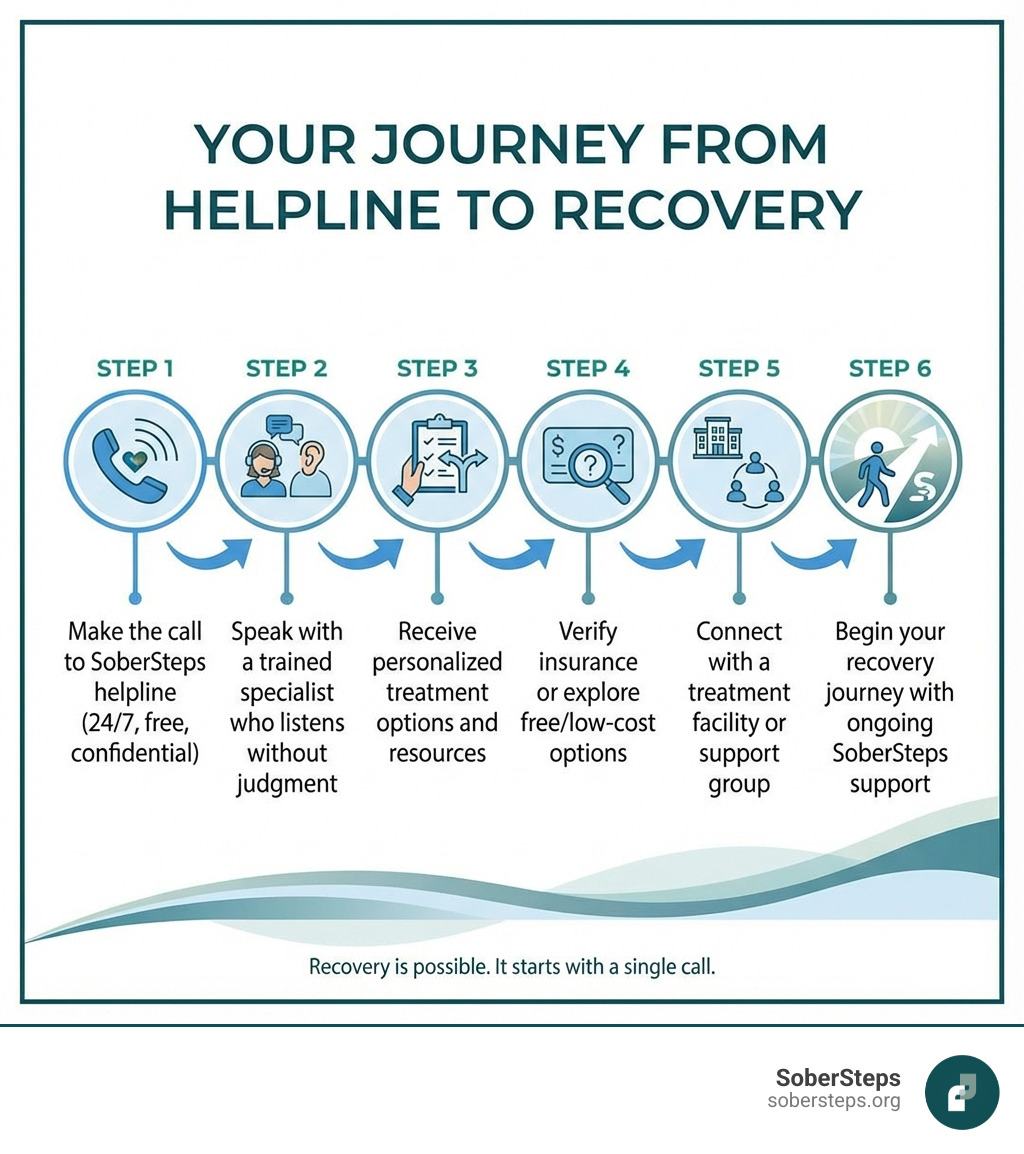
What is a National Addiction Helpline and How Does It Work?
A national addiction helpline serves as a vital first point of contact for anyone impacted by substance use disorder. Think of it as a compass, guiding you through the often-confusing landscape of addiction and recovery. Our helpline, like others, is typically a toll-free telephone service available 24 hours a day, 7 days a week, 365 days a year. This ensures that help is always just a phone call away, regardless of when a crisis might strike or when you simply need information.
The primary function of a national addiction helpline is to offer a free, confidential, and accessible resource for individuals and their loved ones seeking support. When you call, you’re connected with trained specialists who understand the complexities of addiction. They are there to listen without judgment, provide accurate information, and offer guidance custom to your specific situation.
At SoberSteps, our national addiction helpline acts as a comprehensive information resource. We can help you understand the nature of addiction, discuss potential treatment paths, and connect you with appropriate services. This includes everything from initial crisis intervention to referrals for treatment facilities and support groups. We believe that everyone deserves the chance to find recovery, and our helpline is designed to make that first step as easy and supportive as possible. For a deeper dive into how we provide support, explore our Anonymous Hotline Mental Health Guide and learn about our Confidential Mental Health Support.

What Services Do Helplines Offer?
When you reach out to a national addiction helpline, you’re tapping into a network of invaluable services designed to support you or your loved one. Our specialists are equipped to provide immediate support and emotional guidance, helping to de-escalate urgent situations and offer a calm presence during difficult times. We answer a wide range of questions, from basic inquiries about addiction to more complex concerns about treatment efficacy and recovery processes.
Beyond just answering questions, we connect callers to vital resources. This often involves helping you find local programs and facilities that align with your needs. We can also assist with practical matters, such as verifying insurance coverage for treatment, which can be a significant hurdle for many. Our goal is to provide personalized support, ensuring that you feel empowered and informed as you take steps toward recovery. If you are experiencing a Mental Health Crisis alongside substance use issues, our specialists are trained to guide you to appropriate dual-diagnosis resources.
Call to Action: Reach out to our confidential helpline for answers and support—anytime, day or night.
Are Calls to a National Addiction Helpline Free and Confidential?
Absolutely. One of the foundational principles of a national addiction helpline is that calls are both free and confidential. When you call our SoberSteps helpline, you won’t encounter any charges or hidden costs; it’s a toll-free service. This means you don’t need health insurance to make the call, nor do you need to worry about being billed for information or advice.
Your privacy is paramount to us. We understand that discussing addiction can be deeply personal and sensitive. Therefore, all calls are confidential and designed to protect your anonymity. Our specialists adhere to strict privacy protocols, including HIPAA compliance where applicable, ensuring that your conversations and any information you share remain private. There is no obligation to commit to treatment just by calling. We are here to provide information and support, allowing you to explore your options in a pressure-free environment. You can review our Privacy Policy for more details on how we protect your information.
Preparing for Your Call: What to Ask and What to Expect
Making the decision to call a national addiction helpline is a courageous step, and preparing for that call can help you make the most of the conversation. While it’s natural to feel anxious, knowing what to expect can reduce some of that stress. Our aim is to provide comprehensive support, and the more information you’re comfortable sharing, the better we can assist you.
Before you dial, we recommend taking a few moments to gather your thoughts. Jot down any questions or concerns you have. This could include specific questions about addiction, treatment options, costs, or how to help a loved one. Being honest and open with the operator will allow them to provide the most accurate and helpful guidance. Our specialists are there to help, not to judge. They have heard it all before and understand the struggles you or your loved one might be facing. For insights into financial aspects, you might want to consider our guide on How Do I Pay For Addiction Treatment?.

Common Questions to Ask a Helpline Operator
To ensure you get the most out of your call to a national addiction helpline, here are some common questions we encourage you to ask:
- What are the different types of addiction treatment options available for my specific situation (or my loved one’s)?
- How much does addiction treatment typically cost, and what factors influence these costs?
- Does my health insurance plan cover addiction treatment, and what steps do I need to take to verify my benefits? (You can also use our tool to Verify Insurance).
- Are there any free or state-funded addiction treatment options available in my area?
- What are the immediate next steps I should take after this call to pursue treatment or support?
- How can I best help a loved one who is struggling with addiction, and what resources are available for family members?
- What are the signs of overdose for the substance in question, and what should I do if I suspect an overdose?
- Can you explain the difference between inpatient and outpatient treatment, and which might be more suitable?
- What kind of support groups are available locally or online for ongoing recovery?
Don’t hesitate to ask any question that comes to mind, no matter how small it may seem. Our specialists are here to provide clear and comprehensive answers.
Call to Action: Unsure what to ask? Visit our FAQ page or call us for guidance.
Information the Operator May Need
While your call is confidential and you are not obligated to share any information you’re uncomfortable with, providing certain details can significantly help our helpline operators tailor their advice and referrals. Here’s the kind of information that might be helpful:
- Substance of use: What substance(s) is causing concern (e.g., alcohol, opioids, stimulants, cannabis)?
- Duration of use: How long has the substance been used, and how frequently?
- Location (zip code): This is crucial for finding local treatment facilities and resources near you.
- Insurance information: If you have insurance, knowing your provider can help us understand potential coverage for treatment.
- Co-occurring disorders: Are there any mental health concerns like anxiety, depression, or PTSD present alongside the substance use? This is often referred to as a Dual Diagnosis and requires integrated treatment.
- Previous treatment history: Has there been any prior attempt at treatment, and what was the experience like?
- Willingness to get help: Is the individual seeking help willing to engage in treatment? This can impact the types of interventions recommended.
You are in control of what you share. Our specialists will guide you through these questions gently, always respecting your comfort level.
Your Guide to Finding Treatment via a National Addiction Helpline
Once you’ve made that initial call to a national addiction helpline, you’ve opened the door to a world of treatment possibilities. One of the most valuable services we provide at SoberSteps is helping you steer these options to find the best fit. Our specialists excel at treatment matching, understanding that effective recovery often hinges on finding a program that aligns with an individual’s unique needs, circumstances, and preferences.
We can assist with a comprehensive facility search, leveraging our network of trusted providers. Whether you’re looking for an inpatient program, outpatient care, or specific therapeutic approaches, we can help you pinpoint facilities that meet your criteria. Beyond formal treatment centers, we also help locate support groups, which are integral to long-term recovery. Our goal is to offer personalized recommendations, empowering you with choices rather than just a single option. To begin exploring your options, check out our resources on Find Addiction Treatment and How to Find Rehab.
Types of Addiction Treatment Options
Addiction treatment is not a one-size-fits-all solution; it encompasses a spectrum of care designed to address varying levels of need. A national addiction helpline can provide detailed information on these different approaches, helping you understand what might be most effective.
We can guide you through the various Levels of Care, starting with:
- Medical Detox: Often the first step, medically supervised detoxification helps manage withdrawal symptoms safely. Our specialists can help you find an Inpatient Detox Program if needed.
- Inpatient Rehab: Also known as residential treatment, this involves living at a facility 24/7, providing an immersive and structured environment for recovery.
- Outpatient Programs: These allow individuals to live at home while attending therapy and treatment sessions at a facility. This includes Intensive Outpatient Programs (IOPs) and Partial Hospitalization Programs (PHPs).
- Medication-Assisted Treatment (MAT): This approach combines FDA-approved medications with counseling and behavioral therapies, particularly effective for opioid and alcohol use disorders. Learn more about Medication-assisted treatment (MAT).
- Behavioral Therapies: Techniques like Cognitive Behavioral Therapy (CBT) and Dialectical Behavior Therapy (DBT) help individuals identify and change unhealthy thought patterns and behaviors. Explore various forms of Therapy on our site.
Our helpline specialists can discuss these options in detail, helping you understand the benefits and considerations of each, and how they might fit into your recovery journey.
Navigating Treatment Costs and Insurance
One of the biggest concerns for individuals and families seeking help is the cost of addiction treatment. It’s true that costs can vary significantly, ranging from hundreds to tens of thousands of dollars depending on the type and duration of care. For example, medical detox can range from $250 to $800 per day, while residential treatment can cost anywhere from $5,000 to over $80,000.
However, a national addiction helpline like ours is here to help you steer these financial complexities. We can assist you in understanding your Insurance coverage, helping you verify benefits and identify what your plan will cover. Many programs accept various forms of insurance, and our specialists can connect you with facilities that work with your specific provider.
For those without insurance or with limited coverage, we can explore other avenues. This includes identifying state-funded programs, which offer treatment at reduced or no cost, and discussing facilities that offer sliding scale fees based on income. We can also provide information on financing options or help you find Free Rehab Centers Near Me. Our goal is to ensure that financial barriers do not prevent anyone from accessing the life-saving treatment they need.
Call to Action: Let us help you verify your insurance and find affordable treatment options.
Support Beyond the Individual: Helplines for Families and Specific Groups
Addiction doesn’t just affect the individual; it impacts entire families and communities. A national addiction helpline plays a crucial role in extending support beyond the person struggling with substance use, offering resources for loved ones and contributing to the broader effort of reducing the stigma surrounding addiction. We understand that family members often bear a heavy burden, and our specialists are here to provide guidance and a listening ear.
By offering confidential and compassionate support, we help foster open conversations about addiction, which is vital for breaking down societal stigmas. The more people who understand addiction as a treatable disease, rather than a moral failing, the easier it becomes for individuals to seek help. We connect families to community resources and support networks, recognizing that a strong support system is key to long-term recovery for everyone involved. Learn more about how we support families and friends through our Substance Use Support pages and find solace in Online Addiction Recovery Support Groups.
Calling for a Friend or Family Member
Yes, absolutely! A national addiction helpline is not just for individuals struggling directly with substance use. We strongly encourage friends and family members to call on behalf of a loved one. You are often the first to notice the signs of addiction, and your concern can be the catalyst for change.
Our specialists can provide invaluable information on how to help, including recognizing the subtle and overt signs of addiction. We can discuss strategies for approaching your loved one about their substance use, offer guidance on interventions, and provide resources for coping with codependency. It’s a challenging situation, but you don’t have to face it alone. We can connect you with family support groups and provide Resources for Children of Addicted Parents who are navigating their unique challenges.
Call to Action: If you’re worried about someone you love, call our helpline for families for advice and resources.
Specialized Helplines for Different Demographics
While our general national addiction helpline is equipped to assist anyone, we recognize that certain demographics face unique challenges and may benefit from specialized support. Many helplines, including our broader network, offer or can refer to resources custom for specific populations.
For instance, veterans often experience substance use disorders alongside PTSD and other mental health conditions, requiring specialized and trauma-informed care. Youth hotlines address the particular developmental and social factors influencing substance use in younger individuals. Similarly, LGBTQ+ individuals may face stigma and discrimination that impact their mental health and substance use patterns, necessitating affirming and inclusive support.
At SoberSteps, our specialists are trained to understand these diverse needs and provide appropriate guidance. We can connect you with resources that offer specialized support, ensuring that everyone receives care that is culturally competent and responsive to their specific circumstances. Whether you’re dealing with a Mental Health Crisis or need support for a specific substance, our goal is to ensure you feel seen, heard, and supported.
Call to Action: No matter your background, SoberSteps is here for you. Explore our specialized support resources or call now.
Frequently Asked Questions about National Addiction Helplines
What is the difference between SoberSteps’ National Helpline and other hotlines?
Our SoberSteps national addiction helpline offers a distinct approach designed to provide personalized, confidential support and streamlined treatment navigation. While many helplines offer valuable information, our focus is on connecting you directly to SoberSteps’ comprehensive resources and our network of trusted treatment partners.
When you call us, you’re engaging with a service deeply integrated with a platform committed to guiding you through every step of recovery. All the information we provide is free and confidential, and our specialists are dedicated to understanding your specific situation to ensure you receive the most relevant and effective guidance. The ultimate goal of our helpline is to connect you with the right help, whether that’s an immediate crisis intervention, a specific treatment program, or ongoing support resources available through SoberSteps.
How does a national addiction helpline provide immediate crisis support?
A national addiction helpline plays a critical role in providing immediate crisis support by being available 24/7. When you call, you’re connected with trained SoberSteps specialists who are skilled in de-escalation techniques and equipped to handle urgent situations. They can offer a calming presence, listen without judgment, and help you assess the immediate risks.
While a helpline is not a substitute for emergency services (always call 911 in life-threatening emergencies or suspected overdoses), our specialists can provide crucial overdose information, guide you on what to do in such situations, and, if necessary, facilitate an immediate connection to emergency services. For individuals experiencing a Mental Health Crisis alongside substance use, our team can provide initial support and direct you to appropriate dual-diagnosis care. The immediate availability and trained response ensure that help is there when you need it most.
Do I have to commit to treatment if I call a national addiction helpline?
Absolutely not. We want to emphasize that calling a national addiction helpline is never an obligation to commit to treatment. We understand that taking the first step can be daunting, and our helpline is designed to be a pressure-free environment for information gathering and exploring options.
Your call is a chance to learn, ask questions, and understand what recovery might look like, all without any commitment. You are in control of your journey, and our specialists are here to support your exploration, not to push you into a decision. Think of it as a crucial first step in gathering knowledge and understanding the resources available. Your choice to pursue treatment, or any other path, remains entirely yours. For more details on our commitment to your autonomy, you can review our Terms and Conditions.
Call to Action: Still have questions? Contact us or explore our addiction recovery blogs for more information.
Your First Step Towards a New Beginning
Taking action against addiction, whether for yourself or a loved one, is one of the most significant steps you can take. It’s a testament to hope and resilience, and we want you to know that recovery is not only possible but also a journey you don’t have to start on alone. A national addiction helpline serves as your initial point of contact, a compassionate voice waiting to guide you through the complexities of substance use disorder and into a new beginning.
At SoberSteps, we believe that every call represents an opportunity for change, a chance to move from struggle to strength. Our specialists are ready to listen, provide expert advice, and connect you with the resources that can transform lives. We invite you to explore our Addiction Recovery Blogs for inspiring stories and practical advice, but when you’re ready for direct, confidential support, our anonymous mental health hotline is here for you.
Call to Action: Don’t wait—call the SoberSteps National Addiction Helpline now and take your first step toward a healthier, happier life.