
Comprehensive Guide to Alcohol Withdrawal Symptoms & Treatment
Understand Alcohol Withdrawal symptoms, timeline, and life-saving treatments. Don’t detox alone; get expert medical help. Call (844) 491-5566.

Magellan Health is a managed healthcare company and subsidiary of Centene Corporation that provides behavioral health solutions and care management services. Here’s what you need to know about using Magellan Health for addiction treatment:
Key Facts About Magellan Health Coverage:
If you or a loved one is struggling with addiction, understanding how your insurance works can feel overwhelming. The good news is that Magellan Health specializes in behavioral health services, including substance use disorder treatment. However, it’s crucial to understand that Magellan manages the benefits while your actual insurance plan determines what’s covered, how much, and for how long.
At Sober Steps, we’ve helped countless individuals steer the complex world of insurance coverage for addiction treatment, including plans managed by Magellan Health. Our mission is to provide you with clear, actionable information so you can focus on what matters most: recovery.
This guide will walk you through everything you need to know about Magellan Health coverage for drug and alcohol rehab, from verifying your benefits to finding the right treatment center. Learn more about insurance coverage options.
Magellan Health Inc. is an American for-profit managed healthcare company, founded in 1969, and currently a subsidiary of Centene Corporation. With annual revenue reported at US$4.6 billion in FY 2020 and a workforce of over 9,000 employees in 2021 (though other reports indicate around 2,685 employees more recently), Magellan Health is a significant player in the healthcare industry. It ranked 390 on the Fortune 500 in 2021, highlighting its substantial presence.
At its core, Magellan Health acts as a managed care organization. This means they are often the entity that administers the behavioral health benefits for various health plans, employers, states, and federal agencies across the United States. Think of them as the expert navigators who help ensure members receive the right treatment in the right setting at the right time.
However, and this is a crucial point we want to emphasize: while Magellan Health manages these benefits, the ultimate responsibility for what is covered, and to what extent, rests with your specific insurance plan. Your insurance plan dictates the details of your coverage, including copays, deductibles, and out-of-pocket maximums. Magellan Health works within the framework set by your health plan to connect you with care.
This structure allows Magellan Health to offer specialized solutions. For example, Magellan Healthcare focuses on integrating physical and behavioral health to improve lives and empower recovery, while Magellan Federal specifically targets government personnel, military service members, and federal civilian employees and their families with custom wellness and productivity solutions. They also offer solutions for employers, helping them support a healthy, productive, and focused workforce, and collaborate with state agencies to improve care and lower costs in Medicaid and human services programs.
So, while you might see Magellan Health listed on your insurance card for behavioral health services, it’s really a partnership between them and your primary health insurance provider. This partnership is designed to ensure you get access to the specialized care you need. For more detailed information on insurance coverage, we encourage you to visit our dedicated page: More info about insurance coverage.

We cannot stress this enough: your individual insurance plan is the ultimate authority on your coverage. Magellan Health manages the behavioral health benefits, but the specifics—like how much you’ll pay out-of-pocket, what types of services are covered, and for how long—are all detailed in your particular policy.
It’s vital to check your Summary of Benefits and Coverage (SBC). This document, provided by your insurance plan, outlines the key features of your coverage. It will detail your deductible, copayments, coinsurance, and any limits on behavioral health services. While Magellan Health aims to provide comprehensive solutions, their ability to cover your treatment is always tied to the terms of your underlying health plan.
Don’t let the jargon deter you. We know it can be a maze, but understanding these plan details is your superpower when seeking treatment. If you find yourself lost in the insurance lingo, help is available. Find help understanding your plan.
Magellan Health prides itself on being a leader in managing the fastest-growing and most complex areas of health, with a significant emphasis on behavioral health and specialty care. This focus is deeply embedded in their operations, which are fueled by a “clinical-first philosophy” and a commitment to “evidence-based solutions” for quality outcomes. They’ve been recognized for this dedication, even being named to Newsweek’s 2023 List of the “Most Trustworthy Companies in America.”
Their approach is distinctly person-centered, aiming to help individuals live healthier, more vibrant lives. This means they are particularly well-suited to address complex healthcare needs, especially in areas like mental health and substance use disorders. Magellan Health leverages data-driven insights, often from large-scale research, to develop solutions that address these challenges effectively.
For health plans, they tackle pressing behavioral healthcare concerns, from population health management to dealing with serious mental illness. For individuals, this translates into a system designed to support wellbeing, resilience, and recovery. Their commitment extends to increasing awareness about crucial topics like depression and the importance of mental health screening, providing resources for trauma, and offering support during crises. This specialized focus is why many health plans and employers choose Magellan Health to manage their behavioral health benefits.
When it comes to addiction treatment, Magellan Health—through your specific insurance plan—aims to ensure you receive appropriate care. The key phrase here is “medically necessary.” This concept is the cornerstone of insurance coverage for healthcare services, including drug and alcohol rehab. If a licensed medical professional determines that a particular level of care or type of treatment is necessary for your recovery, your plan is more likely to cover it.
The journey to recovery often involves a continuum of care, meaning different levels of support custom to your evolving needs. From initial detoxification to long-term aftercare, there’s a spectrum of services available. We’re here to help you understand what these options are and how your Magellan Health-managed benefits might apply. For a deeper dive into the science behind effective treatment, consider reviewing the Principles of drug addiction treatment: A research-based guide (third edition).
Finding the right path can feel overwhelming, but remember, you don’t have to steer this alone. More info about your treatment options.

Addiction treatment is not a one-size-fits-all solution. It typically involves various levels of care, each designed to meet specific needs during different stages of recovery. Here’s a breakdown of the common levels that your Magellan Health-managed plan may cover, assuming medical necessity:
The specific coverage for each level of care will depend on your individual plan and the medical necessity determined by a healthcare professional.
It’s quite common for individuals struggling with substance use disorder (SUD) to also experience mental health conditions like depression, anxiety, or PTSD. When these two issues occur together, they are known as co-occurring disorders, or dual diagnosis. Addressing both simultaneously is not just beneficial; mental health professionals strongly recommend it for the most positive and lasting outcomes.
Magellan Health, with its deep focus on behavioral health, supports the integrated treatment of co-occurring disorders. This means that treatment centers that provide comprehensive care addressing both your addiction and any underlying mental health conditions are generally viewed favorably for coverage, provided medical necessity is established. Treating these conditions in tandem ensures that one doesn’t undermine the progress made on the other. For more information on this critical aspect of recovery, we recommend learning about substance use and co-occurring mental disorders.
Your individualized treatment plan should reflect this integrated approach, ensuring that all aspects of your well-being are addressed. This holistic perspective is key to sustainable recovery, and we’re here to help you find programs that offer this vital comprehensive care.
Medication-Assisted Treatment (MAT) is an evidence-based approach that combines FDA-approved medications with counseling and behavioral therapies. It’s particularly effective for treating opioid use disorder (OUD) and alcohol use disorder (AUD), helping to reduce cravings, prevent relapse, and normalize body functions. Common medications used in MAT include:
Given Magellan Health’s commitment to evidence-based solutions in behavioral health, MAT is often a covered service under plans they manage. However, just like other forms of treatment, coverage for MAT varies by your specific insurance policy and is contingent upon medical necessity. It’s crucial to discuss the specifics of MAT coverage with your insurance provider to understand any limitations or requirements. Your doctor will need to create a treatment plan that justifies the medical necessity of MAT.
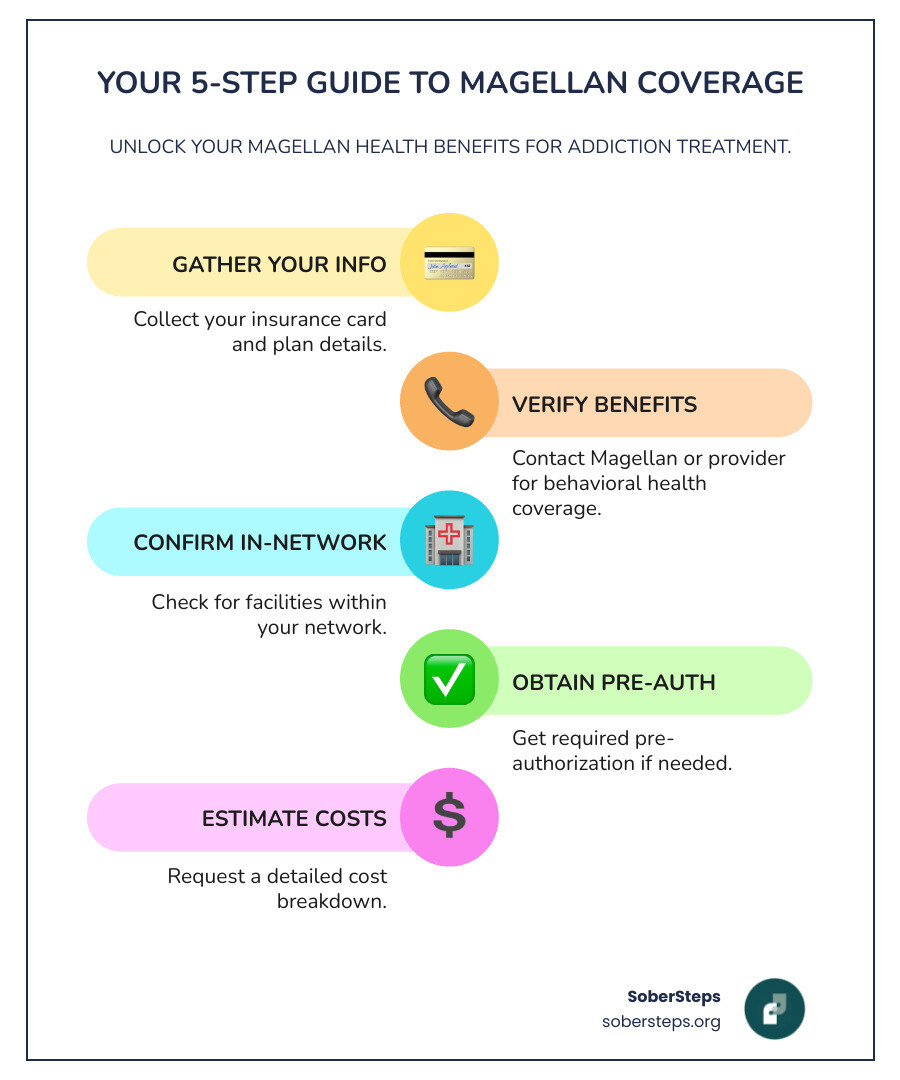
Navigating insurance can feel like trying to solve a Rubik’s Cube blindfolded. But don’t worry, we’re here to shine a light on the process. Verifying your Magellan Health-managed coverage for drug and alcohol rehab is a crucial step that empowers you with knowledge and helps prevent unexpected costs. Here’s our step-by-step guide:
Before you do anything else, collect all your insurance details. This includes your insurance card, policy number, group number, and the customer service phone number for behavioral health benefits. If you have an online patient portal for your health plan, log in and explore your benefits summary. Knowing your plan name is particularly important, as Magellan Health manages benefits for many different plans, and each has its own rules.
This is where the magic (and sometimes the patience) happens. Call the customer service number on your insurance card for behavioral health services. Be prepared to ask specific questions:
You’re calling about your insurance plan’s benefits, which are managed by Magellan Health.
This distinction can significantly impact your out-of-pocket costs. “In-network” providers have a contract with your insurance plan, meaning they’ve agreed to certain rates. “Out-of-network” providers do not have such an agreement, and your plan may cover less, or nothing at all, for their services. We always recommend trying to find an in-network provider to minimize your expenses. You can often use Magellan Health’s provider search tool on their website to find licensed and credentialed professionals who are in your network.
Some levels of care or specific treatments require “pre-authorization” or “pre-certification” from your insurance plan (managed by Magellan Health) before you begin. This means the plan needs to approve the treatment as medically necessary in advance. Your chosen treatment center will typically help you with this process, but it’s good to be aware of it. Without pre-authorization, your coverage could be denied.
Once you’ve identified a potential treatment center and understand your benefits, ask the facility for a detailed cost estimate. This should include everything from daily rates to any potential out-of-pocket expenses, deductibles, and copayments. Compare this with what your insurance representative told you. This step helps avoid any unwelcome financial surprises down the road.
Taking these steps can feel like a lot, but it’s an investment in your peace of mind and your recovery. Don’t hesitate to verify your benefits thoroughly. Verify your insurance benefits now.
We know you’ve got questions, and we’re here to provide clear, straightforward answers. Navigating insurance for addiction treatment can be complex, especially with a managed care organization like Magellan Health involved. Let’s tackle some of the most common inquiries we hear.
Magellan Health’s core strength lies in its profound focus on behavioral health. This means they are inherently structured to support individuals dealing with both addiction (substance use disorder, or SUD) and co-occurring mental health conditions. Their approach emphasizes integrated care models, recognizing that treating these “dual diagnoses” simultaneously leads to better, more sustainable outcomes.
As a managed care organization, Magellan Health provides behavioral health services that can include access to mental health professionals, therapists, and programs specifically designed to address combined challenges. They advocate for a person-centered approach, meaning your treatment plan should be custom to your unique needs, whether that involves therapy for depression alongside addiction recovery, or specialized programs for anxiety and substance use. The Affordable Care Act (ACA) mandates that all marketplace health plans cover essential health benefits, including addiction and mental health care, reinforcing Magellan Health’s ability to offer these comprehensive services. For more details on these essential health benefits, check out essential health benefits & coverage.
This is a frequently asked question, and the answer, unfortunately, isn’t a simple fixed number of days. The duration of your rehab coverage is primarily determined by two factors:
We’ve seen that recovery is a process, not an event, and it typically involves multiple steps. Your Magellan Health-managed benefits are designed to support this journey, but understanding your specific plan’s limitations and how ongoing clinical assessments play a role is vital. It’s not about a fixed number of days, but about continued progress and medical justification.
While it’s generally not a strict “must,” choosing an in-network provider for your addiction treatment is almost always the financially smarter choice. Here’s why:
Before committing to a treatment center, verifying its network status with your Magellan Health-managed plan is absolutely crucial. While some plans offer limited out-of-network benefits, the financial burden is often much greater. We highly recommend utilizing your plan’s network to maximize your benefits and minimize your expenses. Find treatment options that work with your coverage.
Once you’ve steerd the insurance maze and understand your Magellan Health-managed benefits, the next exciting step is finding the right rehab center to begin your recovery journey. This decision is deeply personal, and we want you to feel confident in your choice.
Here’s what we suggest looking for in a rehab facility:
We understand that sorting through countless options can be overwhelming, especially when you or a loved one is in distress. That’s where SoberSteps comes in. We can help you steer your options, compare different facilities, and connect with treatment providers who accept Magellan Health-managed plans. Our confidential helpline connects callers to paid advertiser treatment providers, offering a crucial lifeline when you need it most.
Your path to recovery is unique, and finding the right support is paramount. Don’t let uncertainty hold you back from a healthier, more vibrant life. Start your journey to recovery today.

Understand Alcohol Withdrawal symptoms, timeline, and life-saving treatments. Don’t detox alone; get expert medical help. Call (844) 491-5566.

Ready to get help addiction? Find signs, treatment options, and support with SoberSteps. Start your confidential recovery journey today.

SoberSteps’ guide on how to get into drug rehab. Recognize need, find care, manage admissions & life after. Start recovery now!