Finding a Local Methadone Clinic: Support Near You
Find a methadone clinic near me for OUD recovery. Learn about MAT, benefits, and what to expect. Start your journey today.

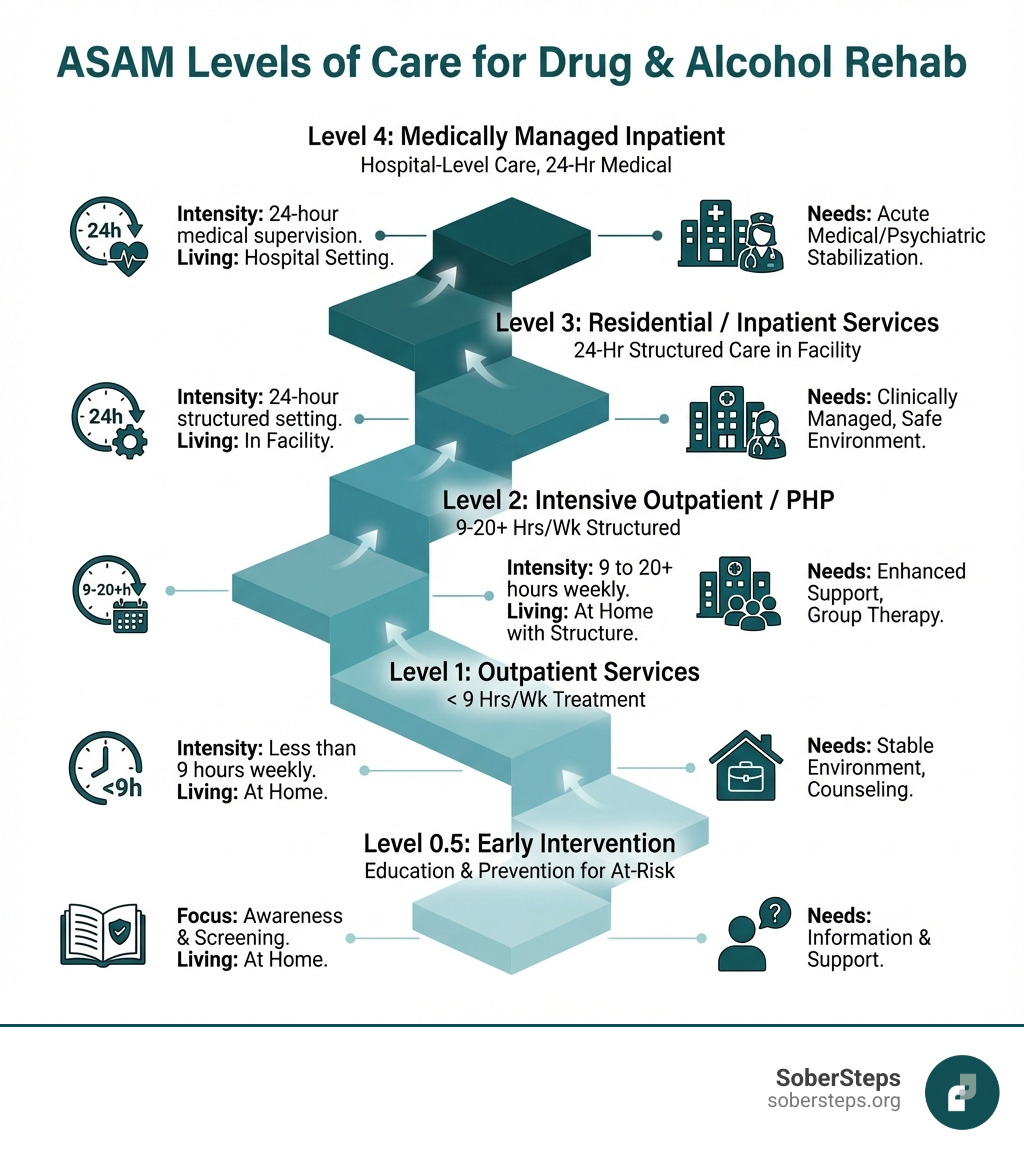
Levels of care for drug and alcohol rehab centers are standardized categories that define the intensity and structure of addiction treatment services. Here’s what you need to know:
The Five Main ASAM Levels:
Entering substance use treatment for the first time can generate anxiety, particularly because there are numerous unknowns. What will treatment be like? Will there be someone to help you 24/7? Which level of care might be a good fit for your unique situation?
Addiction treatment is not one-size-fits-all. The right level of care depends on your medical needs, psychological state, social support, and readiness to change. According to the 2021 National Survey on Drug Use and Health, 4.1 million people aged 12 and older received substance use treatment in the past year.
The American Society of Addiction Medicine (ASAM) created a framework to give providers and individuals a simple way to determine the intensity of treatment needed. This system matches your specific needs with the appropriate level of support—from outpatient counseling to medically supervised inpatient care.
The guiding principle is simple: provide care that is supportive of your needs while being the least restrictive to your everyday life. This means you receive exactly the level of support you need, no more and no less, at each stage of your recovery journey.
At Sober Steps, we’ve guided countless individuals through understanding the levels of care for drug and alcohol rehab centers, helping them find confidential, personalized treatment that matches their unique situation. Our mission is to empower you with the knowledge and resources needed to take those first critical steps toward recovery.
When it comes to addiction treatment, consistency and effectiveness are paramount. That’s where the American Society of Addiction Medicine (ASAM) Criteria come into play. These criteria are the most widely used and comprehensive set of standards for patient placement, continued service, and transfer for individuals struggling with addiction and co-occurring mental health conditions. Think of them as the gold standard, providing a common language and framework for everyone involved in the addiction treatment system.
The ASAM Criteria’s journey began in the 1980s to create unified standards. Before ASAM, care placement was often inconsistent and based on intuition. ASAM introduced an evidence-based process that has evolved over decades, with the 4th edition released in 2023 to continue this commitment.
The primary purpose of the ASAM Criteria is to ensure individuals receive the right treatment, at the right intensity, at the right time. They provide national criteria for outcome-oriented care, shifting from a one-size-fits-all model to a highly individualized one. The ASAM Criteria provide a common language for assessing patient needs, ensuring treatment plans are customized based on evidence and expert consensus.
The ASAM Criteria serve as a vital tool for various stakeholders across the addiction treatment landscape:
Determining the right level of care isn’t a guess; it’s a comprehensive process starting with a multidimensional assessment, often called a biopsychosocial assessment. This assessment takes a holistic view of the individual, looking beyond substance use to understand their unique strengths, weaknesses, and overall life situation.
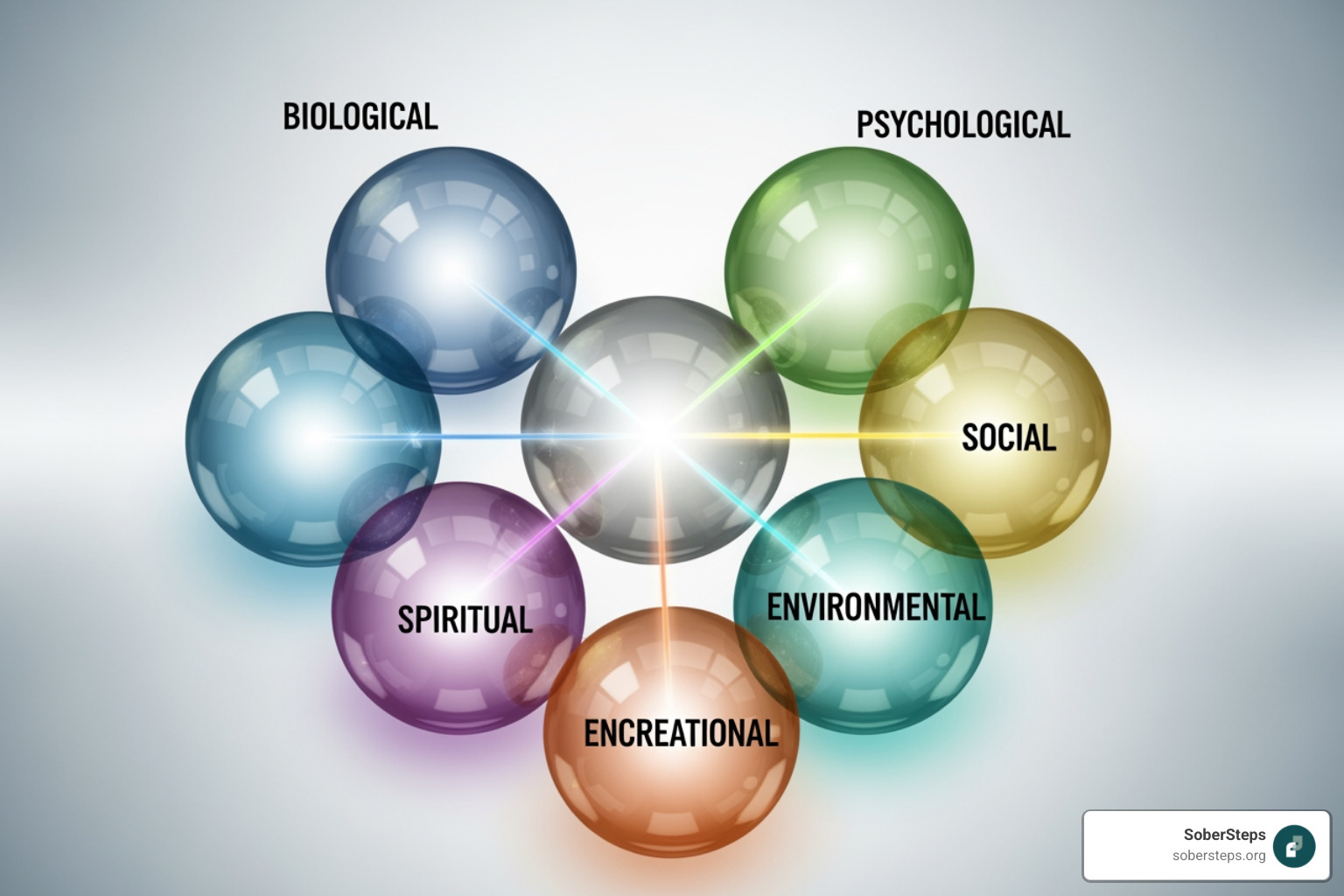
The ASAM Criteria outline six dimensions, or life areas, that clinicians evaluate:
By thoroughly evaluating these six dimensions, clinicians can develop a comprehensive understanding of an individual’s needs and match them to the most appropriate level of care, adhering to the principle of providing the least restrictive yet effective environment.
The ASAM Criteria define a continuum of care – a range of services with varying intensities designed to meet diverse patient needs. This isn’t a rigid ladder but a flexible pathway, allowing individuals to move between levels as their recovery journey progresses. The intensity of services increases with the level number, from early intervention to medically managed inpatient care.
Here’s a comparison of the main ASAM levels of care for drug and alcohol rehab centers:
| ASAM Level | Service Intensity | Hours Per Week | Setting | Typical Patient Profile |
|---|---|---|---|---|
| Level 1 | Outpatient | < 9 hours | Non-residential (home) | Mild SUD, stable living, strong motivation, step-down from higher levels |
| Level 2 | Intensive Outpatient (IOP) / Partial Hospitalization (PHP) | 9-19 hours (IOP); 20+ hours (PHP) | Non-residential (home) | Moderate SUD, co-occurring conditions, need more structure than Level 1, step-down from residential |
| Level 3 | Residential / Inpatient | 24-hour structured care | Live-in facility | Unstable living, need safe environment, high relapse risk, co-occurring conditions, completed detox |
| Level 4 | Medically Managed Intensive Inpatient | 24-hour medical/nursing care | Hospital/Psychiatric facility | Severe SUD, high risk of severe withdrawal, unstable medical/psychiatric conditions, need medical stabilization |
This is the least intensive level of care, focusing on education and resources for individuals who may be at risk for a substance use disorder but do not yet meet diagnostic criteria. They might be misusing substances, but the problem hasn’t fully taken root. Early intervention can help prevent substance use disorders from escalating. Services at this level can include informal counseling, educational groups, or brief interventions designed to raise awareness and encourage healthier choices. It’s about catching potential issues before they become full-blown addiction.
At Level 1, individuals receive structured treatment while continuing to live at home and maintain their daily responsibilities like work or school. This level is suitable for those with mild substance use disorders, individuals with strong support systems, or those stepping down from more intensive programs.
According to ASAM criteria, outpatient treatment is less than 9 hours per week for adults and less than 6 hours per week for adolescents. Treatment often includes individual therapy, group counseling, and educational sessions. It allows for flexibility, making it a popular choice for many, especially if they have a stable and supportive home environment.
Level 2 offers a more structured approach than standard outpatient care, but still allows individuals to live at home. This level is often broken down into two sub-levels:
When an individual’s substance use disorder requires a safe, structured, and supervised environment away from their usual triggers, Level 3 residential or inpatient services become necessary. Patients live at the treatment facility 24 hours a day, receiving intensive clinical management. This level is ideal for those with unstable living environments, a high risk of relapse, or significant co-occurring mental health conditions that require constant support.
Level 3 is further broken down into sub-levels, indicating varying degrees of medical and clinical intensity:
This is the highest and most intensive level of care, typically provided in a hospital or psychiatric facility. Level 4 is reserved for individuals with severe substance use disorders who require 24-hour medical and nursing care due to acute, unstable medical or psychiatric conditions, or a high risk of severe, complicated withdrawal.
At this level, individuals receive constant medical supervision, medication management, and intensive therapeutic interventions to stabilize their condition. It’s often the starting point for those facing life-threatening withdrawal symptoms or severe co-occurring medical or psychiatric emergencies.
Determining the right levels of care for drug and alcohol rehab centers is a personalized process driven by the comprehensive multidimensional assessment. The goal is to match your unique needs to the least restrictive but most effective environment, ensuring a perfect fit for your recovery journey.
Clinicians use the insights gathered from the six ASAM dimensions to guide their placement recommendations. For example, if Dimension 1 (withdrawal potential) shows a high risk of severe medical complications, a higher level of care like Level 3.7 or 4 would be recommended for medical safety. Conversely, if all dimensions indicate stability and strong external support, a lower outpatient level might be appropriate.
This is a collaborative decision. Effective treatment planning involves shared decision-making with you. Your preferences, goals, and willingness to engage are crucial factors. We empower you to be an active participant in your recovery. To get a preliminary idea of what might be suitable, a free brief assessment can help you understand potential levels of care.
One of the most significant considerations in determining the right level of care is the presence of co-occurring disorders, also known as a dual diagnosis. This refers to when an individual struggles with both a substance use disorder and a mental health condition simultaneously. And it’s more common than you might think! Approximately 44% of American adults with addictions also have mental health conditions.
The presence of mental health conditions (Dimension 3) can significantly impact treatment complexity. For instance, someone self-medicating anxiety with alcohol needs integrated treatment for both issues. The ASAM Criteria emphasize “co-occurring capable care,” where programs treat both conditions concurrently. This often requires a higher level of care or specialized programs with psychiatric services.
Each ASAM level of care is defined not just by its intensity, but also by specific service characteristics, staffing requirements, and therapeutic approaches. These elements ensure that the care provided is appropriate and effective for the patients at that level.
These characteristics collectively create a structured environment custom to your needs, ensuring you receive comprehensive care.
Understanding the levels of care for drug and alcohol rehab centers is crucial because addiction treatment is rarely a linear process. It’s more like a winding path, a “continuum of care,” where individuals move between different intensities of support based on their progress and evolving needs.
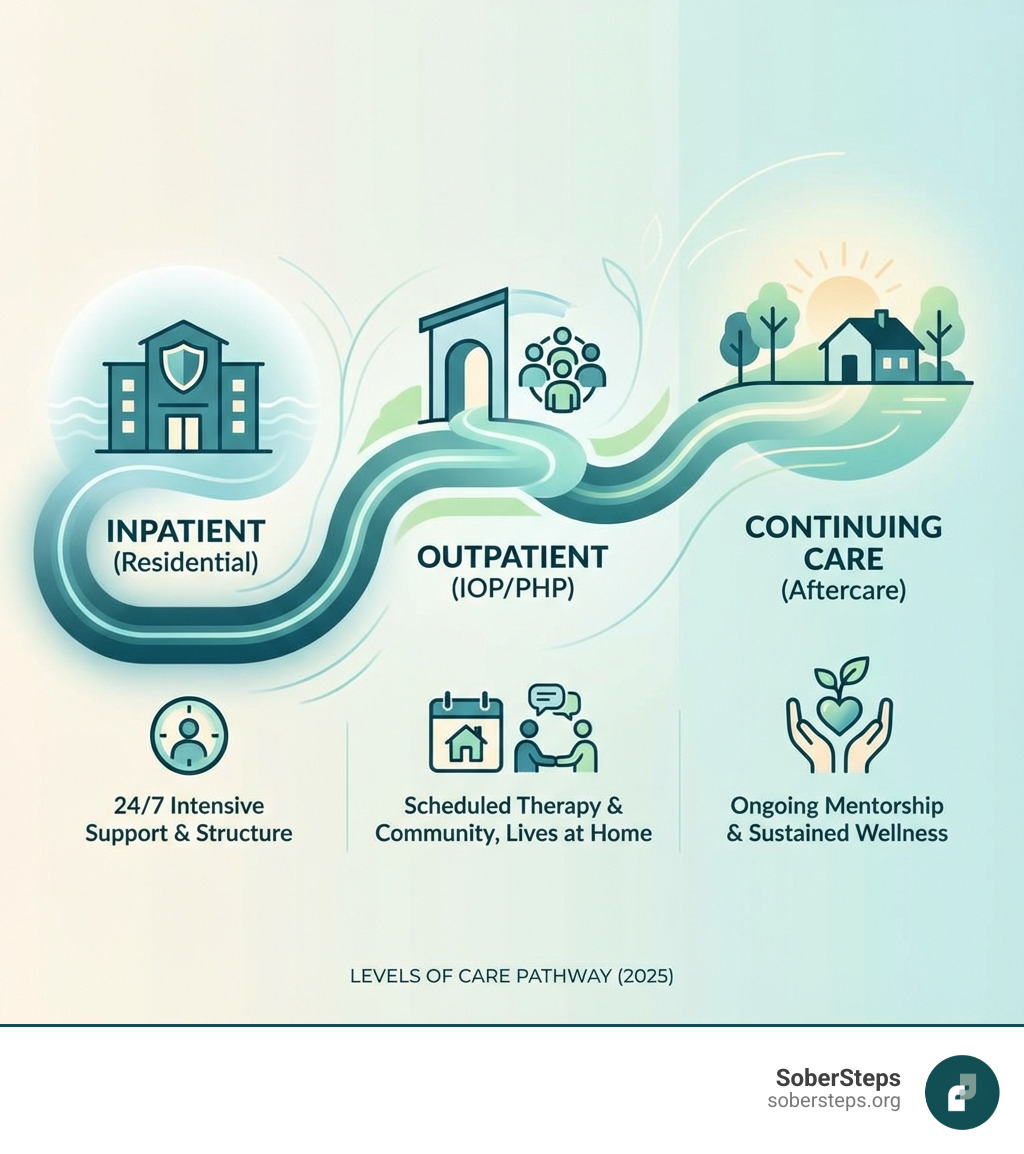
You might start at a higher level, like medically managed detox (Level 4), for acute withdrawal. Once stable, you could “step down” to residential treatment (Level 3) for intensive therapy. As you gain coping skills, you might transition to intensive outpatient (Level 2) or standard outpatient (Level 1) care to reintegrate into daily life with continued support.
If challenges like increased cravings or a relapse arise, you might temporarily “step up” to a more intensive level. This flexibility is a strength of the ASAM framework, which sees recovery as a dynamic process. Regular reassessments guide these transitions, ensuring you’re always in the right setting. This is part of the “continued service criteria” and “transfer and discharge planning” within the ASAM framework.
Successful transitions between care levels are critical for sustained recovery. It involves careful planning of your next steps. As you meet treatment goals, your care team will work with you to prepare for a “step-down.” This includes:
Conversely, if warning signs appear—such as increased substance use, significant mental health decline, or an unsafe living environment—your care team might recommend a “step-up” to a more intensive level. This proactive approach helps prevent minor setbacks from becoming major relapses.
Beyond formal treatment levels, recovery residences (often called sober living homes) play a vital role in the continuum of care. These are safe, supportive, and substance-free housing environments that help bridge the gap between intensive treatment and independent living. They provide a structured setting where individuals can practice recovery skills, build community, and gain independence. The National Alliance for Recovery Residences (NARR) sets national standards to ensure quality and support in these environments.
Additionally, various recovery support services are crucial for long-term sobriety, such as:
These services help individuals build a strong foundation for lasting sobriety, emphasizing that recovery is a lifelong journey, not a destination.
Navigating addiction treatment can bring up many questions. Here are some of the most common ones we encounter regarding the levels of care for drug and alcohol rehab centers:
The duration of each level of care varies. There’s no fixed timeline; treatment length is individualized based on your progress, SUD severity, and unique needs. The goal is to meet clinical milestones and develop skills for sustained recovery, not to complete a set number of days.
For example:
The key is that treatment duration is determined by your clinical needs and progress, not a predetermined calendar. You’ll move along the continuum as you achieve your goals.
In the U.S., parity laws generally require insurance to cover mental health and substance use disorder treatments similarly to other medical care if deemed medically necessary. This means insurance often covers all levels of care for drug and alcohol rehab centers.
However, the specifics of coverage can vary significantly depending on your individual insurance plan, deductible, co-pays, and network restrictions. Many insurers use the ASAM Criteria as the clinical benchmark to evaluate what constitutes medical necessity for coverage. Pre-authorization is often required for more intensive levels of care. It’s crucial to verify your benefits with your insurance provider directly or through the treatment facility’s admissions team as a first step.
Yes. For mild to moderate withdrawal, outpatient treatment can be a safe and effective option. Known as medically monitored outpatient detox, it allows you to manage symptoms under medical supervision while at home.
In fact, research shows that most alcohol treatment programs find over 90% of patients with withdrawal symptoms can be treated as outpatients. However, careful assessment is key. If you have a history of severe withdrawal, significant co-occurring medical or psychiatric conditions, or an unstable home environment, a higher level of care (such as Level 3.7 medically monitored inpatient or Level 4 medically managed intensive inpatient detox) is essential for your safety. Your initial assessment will determine if outpatient detox is appropriate for your specific situation.
Understanding the levels of care for drug and alcohol rehab centers is a powerful first step on the road to recovery. It empowers you to make informed decisions and advocate for the treatment that best suits your unique needs. Your recovery journey is deeply personal, and there’s a continuum of support designed to meet you wherever you are.
At SoberSteps, we understand that finding the right treatment can feel overwhelming. That’s why we provide a confidential, anonymous online resource to connect you with mental health and substance use disorder treatment facilities across the United States and its territories. Our goal is to simplify the search, helping you find a program that aligns with your specific ASAM level of care and personal circumstances. Don’t hesitate to take that courageous first step.
Find a rehab center that meets your needs and begin your journey to a healthier, sober life today.

Find a methadone clinic near me for OUD recovery. Learn about MAT, benefits, and what to expect. Start your journey today.
Explore the real connection between ADHD and substance use. Debunk myths, understand risks, and discover effective treatment for a hopeful future.

Navigate online mental health. Find benefits, choose providers, and get affordable virtual care for anxiety, depression, and more.