Help is Here: Finding the Best Drug Treatment and Rehab Centers for You
Need help? Find drug treatment programs and rehabs. Our guide covers signs, options, and costs to start your recovery journey.

Heroin Addiction is a chronic disease that affects millions of people worldwide, causing devastating consequences for individuals, families, and communities. Here’s what you need to know:
Quick Facts About Heroin Addiction:
Heroin is processed from morphine, a substance extracted from opium poppy plants. As a Schedule I controlled substance in the United States, it has no accepted medical use and carries a high potential for abuse. The drug enters the brain rapidly, producing an intense rush of euphoria followed by dangerous effects including slowed breathing, drowsiness, and clouded mental function.
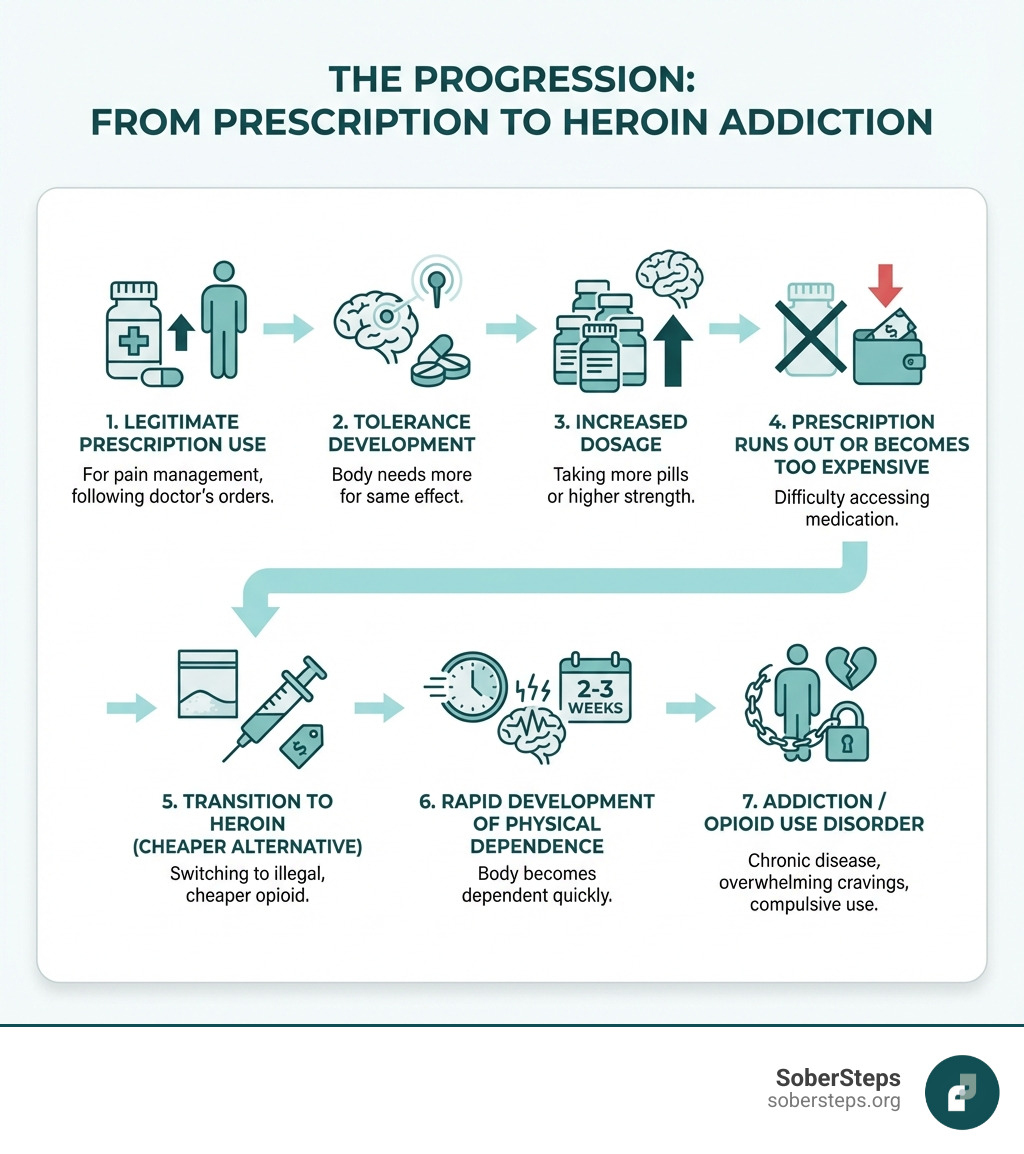
The opioid crisis has evolved significantly in recent years. Many people who struggle with heroin addiction first misused prescription pain relievers like oxycodone or morphine. When these medications became harder to obtain or too expensive, they turned to heroin as a cheaper, more available alternative. This shift has contributed to rising heroin use, particularly among young adults aged 18-25.
The reality is sobering: Someone who uses heroin daily can become physically dependent within just a few weeks. The body develops tolerance quickly, requiring larger and larger doses to achieve the same effect. This dangerous cycle increases the risk of overdose and death, especially now that street heroin is frequently contaminated with fentanyl—a synthetic opioid 100 times more powerful than morphine.
At Sober Steps, we understand the overwhelming challenge of facing heroin addiction and are dedicated to helping individuals find confidential, evidence-based treatment options. Our team has helped countless people steer their recovery journey, providing compassionate guidance every step of the way.
Heroin is an illegal opioid drug made from morphine, a substance from the seed pod of opium poppy plants grown in regions like Mexico, Southeast Asia, and Colombia. Street names include Big H, Chiva, Hell Dust, Horse, Negra, Smack, and Thunder.
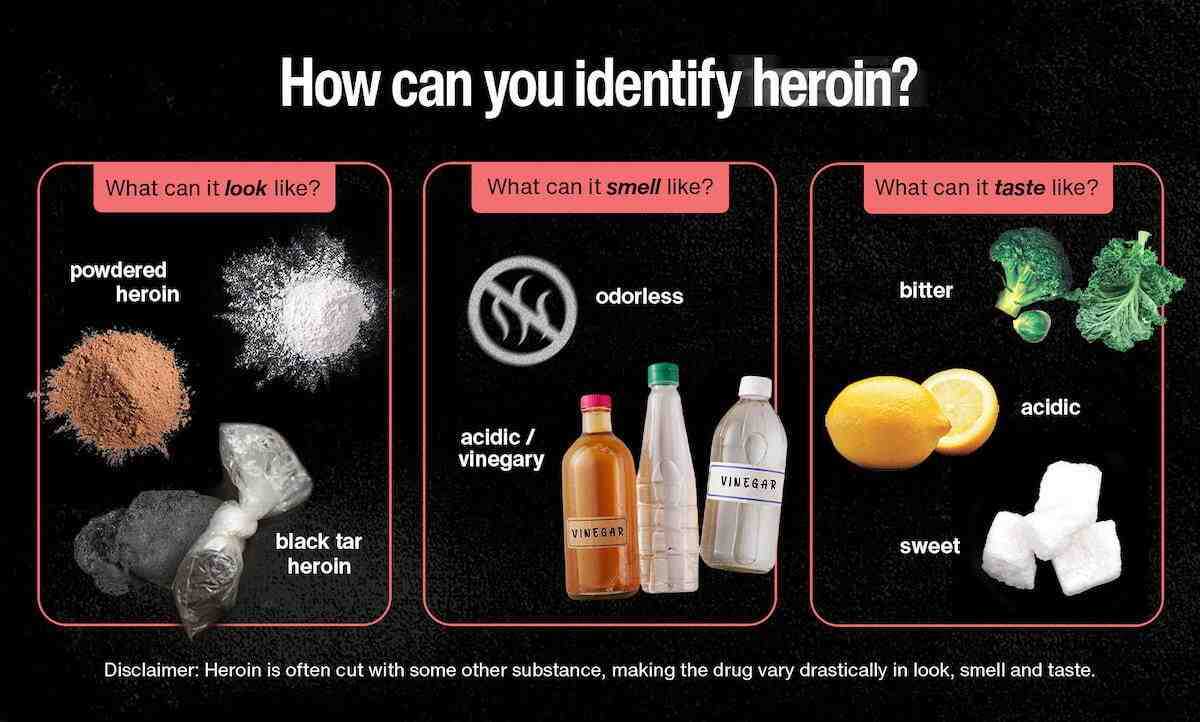
Heroin is typically sold as a white or brownish powder, or as a sticky, tar-like substance called “black tar heroin.” Its color and consistency depend on its origin and processing, with purer forms usually being white.
People use heroin by injecting, snorting, or smoking it (often called “chasing the dragon”). Snorting or smoking can appeal to new users who want to avoid the stigma of injection.
The link between prescription opioid abuse and the rise in Heroin Addiction is a major concern. Many people first misuse prescription pain relievers like oxycodone or morphine. When these become hard to get or too expensive, some turn to heroin as a cheaper alternative. Research shows nearly half of young people who inject heroin first abused prescription opioids, highlighting this dangerous path.
When heroin enters the brain, it binds to opioid receptors, triggering an intense “rush” of pleasure, warm flushing of the skin, dry mouth, and a heavy feeling in the limbs. This euphoria is followed by drowsiness, clouded mental function, and severely slowed breathing, which can be life-threatening. Other short-term effects include nausea, vomiting, severe itching, and problems with attention and memory.
The long-term consequences of chronic heroin use are devastating, impacting nearly every body system. Repeated use alters the brain’s structure and physiology, creating imbalances in decision-making, behavior, and stress responses. These brain changes can take months or years to normalize after stopping the drug.
Medical complications from chronic heroin use include:
For more scientific insights into how heroin affects the brain, you can explore specialized research such as this study: Scientific research on heroin’s effect on brain function.
Heroin Addiction during pregnancy poses severe risks to both mother and child. Heroin crosses the placenta, causing the baby to become physically dependent. After birth, the baby experiences withdrawal, a condition called Neonatal Abstinence Syndrome (NAS).
Symptoms of NAS in newborns can be severe and include:
Babies with NAS often need hospitalization and medical treatment to manage withdrawal. Heroin use during pregnancy can also lead to low birth weight, premature birth, and developmental problems.
Pregnant women with Heroin Addiction must seek immediate medical supervision and treatment. Medications like methadone and buprenorphine, combined with prenatal care, significantly improve outcomes for both mother and infant, reducing NAS severity and improving health.
The path to Heroin Addiction is often rapid, marked by a destructive cycle of tolerance, physical dependence, and psychological cravings.
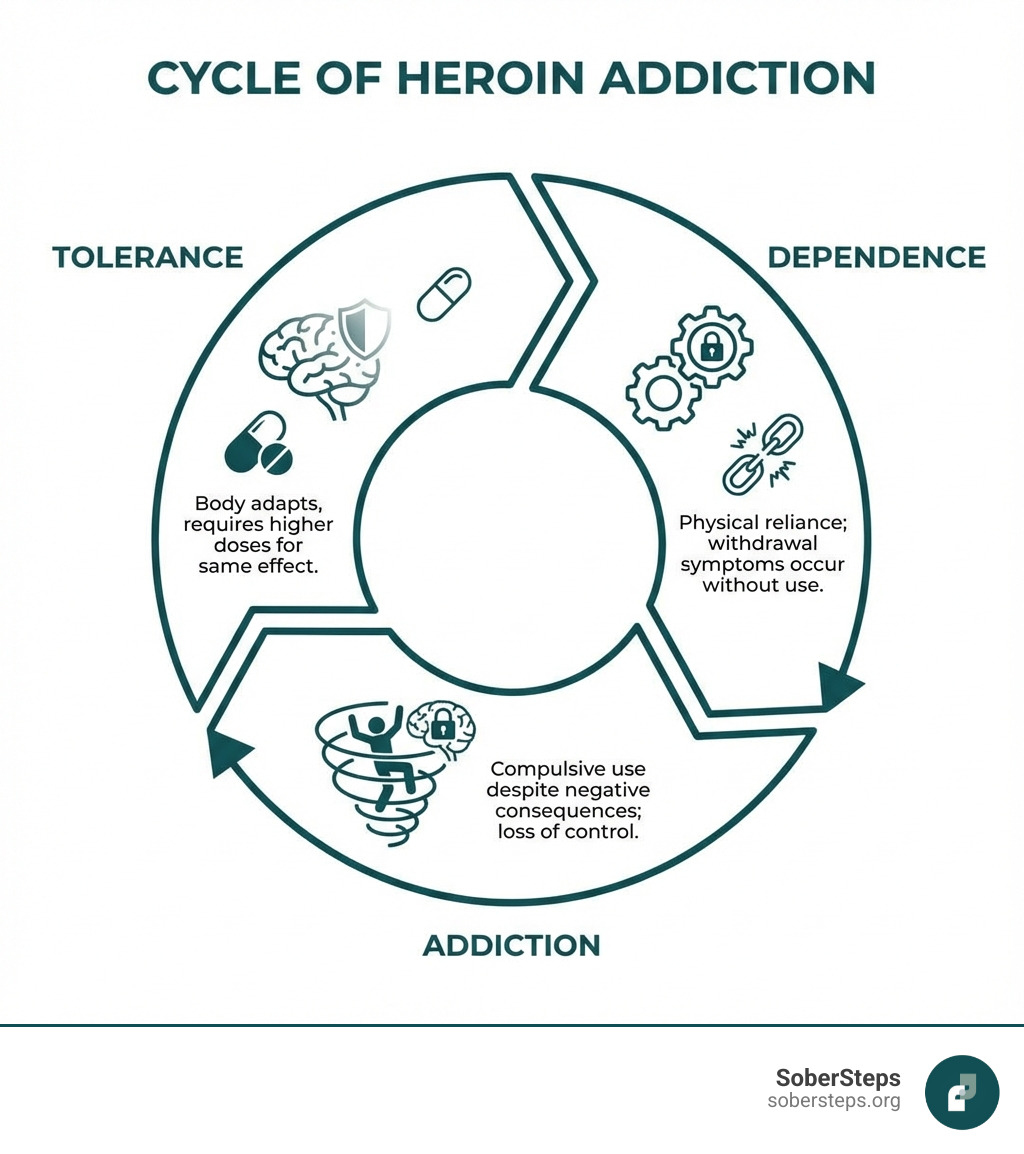
With regular heroin use, the body adapts. This starts with tolerance, requiring larger doses for the same effect. As tolerance builds, physical dependence occurs, leading to severe withdrawal symptoms if the drug is stopped.
Psychological dependence also develops, with an overpowering desire to use heroin despite negative consequences. This combination defines Heroin Addiction, or Opioid Use Disorder (OUD). Addiction can happen fast—within two to three weeks of daily use. OUD is a chronic disease marked by compulsive drug-seeking that diminishes quality of life.
Identifying the signs of Heroin Addiction is crucial for intervention. Symptoms can be behavioral, physical, and psychological.
Here are common signs to watch for:
If you observe several of these signs in yourself or a loved one, it’s a strong indicator that help is needed.
The dangers of heroin use are profound, with overdose being the most critical risk. An overdose can slow or stop breathing, leading to coma or death. Several factors amplify this risk:
The consequences are dire. Nearly 158,000 people in the U.S. died from a heroin overdose between 1999 and 2022. Every use carries a potentially fatal risk.
Understanding heroin withdrawal and how to respond to an overdose can be life-saving.
For someone physically dependent on heroin, withdrawal can start 6 to 12 hours after the last dose. Symptoms are uncomfortable and often described as a severe flu.
The timeline generally progresses as follows:
While rarely fatal for adults, the severe discomfort and cravings make it very hard to stop using alone. Medical supervision during withdrawal is strongly recommended to manage symptoms and prevent relapse.
Naloxone is a critical, life-saving medication for an opioid overdose. Known by the brand name Narcan, it’s an opioid antagonist that rapidly blocks the effects of opioids on the brain, reversing an overdose.
Here’s what you need to know:
Naloxone is a safe, effective emergency tool in combating the opioid crisis.
Recovery from Heroin Addiction is challenging but possible with comprehensive treatment. We view addiction as a chronic disease, like diabetes, requiring ongoing management. Evidence-based approaches combining medication and therapy offer the most effective path to recovery. About 20-30% of patients treated for opioid use disorder achieve long-term abstinence, showing that healing is within reach.
Medication-Assisted Treatment (MAT) is a cornerstone of Heroin Addiction recovery, combining medications with counseling for a “whole-person” approach. The medications reduce cravings, ease withdrawal, and stabilize brain chemistry, helping individuals focus on recovery.
The primary medications used in MAT include:
These are powerful tools that help normalize brain function and allow individuals to regain control. For more in-depth information on MAT, you can refer to resources like this: SAMHSA information on Medication-Assisted Treatment.
Behavioral therapies address the psychological aspects of Heroin Addiction, helping individuals develop coping mechanisms and life skills for sustained recovery.
Common therapies include:
These therapies equip individuals with tools to manage life’s challenges without resorting to heroin.
Strong support systems are vital for long-term success. These networks provide encouragement, accountability, and community, reducing relapse risk.
Key components include:
The link is a well-documented pathway. Many people first misuse powerful prescription pain relievers, leading to tolerance and dependence. Research shows nearly half of young people who inject heroin first abused prescription opioids.
As prescriptions became harder to get or more expensive, many turned to heroin, which is often cheaper and more available. This dangerous transition has significantly fueled the current heroin crisis.
While there is no “cure” that eliminates the disease, Heroin Addiction is a treatable and manageable chronic disease, much like diabetes or asthma. It affects the brain and behavior and requires ongoing management, support, and often medication for long-term recovery.
The goal of treatment is to restore health and well-being, not just achieve abstinence. With comprehensive, evidence-based treatment like MAT and behavioral therapies, individuals can lead fulfilling lives. About 20-30% of patients treated for opioid use disorder achieve long-term abstinence, showing that recovery is an achievable goal.
Heroin’s history is a cautionary tale of a substance with initial medical promise.
This history shows how a substance once seen as a breakthrough became a public health crisis, highlighting the need for effective treatment for Heroin Addiction.
Heroin Addiction is a formidable opponent, but it is not an impossible one. We want you to know that recovery is not just a dream—it’s a tangible reality that countless individuals achieve every day. Addiction is a treatable disease, and just like any other chronic health condition, it responds positively to comprehensive, ongoing care.
Taking the first step can be the hardest, but it’s also the most courageous. If you or a loved one are struggling with Heroin Addiction, reaching out for help is paramount. There is no shame in seeking support; it is a sign of strength and a commitment to a healthier, more fulfilling future.
At Sober Steps, we are here to guide you through this process. We offer a confidential and anonymous online resource designed to connect individuals with mental health and substance use disorder treatment options. Our platform respects your privacy and helps you steer the complex landscape of recovery services. Your well-being is our priority, and we are committed to helping you find the right path to healing.
Don’t let another day pass in the shadow of addiction. Your journey to recovery starts now.

Need help? Find drug treatment programs and rehabs. Our guide covers signs, options, and costs to start your recovery journey.
Discover powerful addiction success stories of triumph & new beginnings. Find hope & take your first step to recovery.
Struggling with OUD? Discover how opioid rehab offers effective treatment, detox, MAT, and support for lasting recovery. Start your journey today!