
Why Addiction Success Stories Matter: Proof That Recovery Is Possible
Addiction success stories are powerful reminders that recovery is not just a possibility—it’s a reality for millions of people. These real-life accounts show individuals who have overcome severe substance use disorders and rebuilt their lives, offering hope to anyone who feels trapped by addiction.
What You’ll Find in These Recovery Stories:
- Turning Points: The critical moments that sparked the decision to seek help, from overdoses to moments of clarity
- Recovery Challenges: How individuals steerd withdrawal, cravings, relapse, and stigma
- Support Systems: The therapies, programs, and communities that made recovery possible
- Life Change: How people rebuilt relationships, careers, and found new purpose
- Messages of Hope: Direct advice from those who’ve walked the path of recovery
Key Fact: Three out of four people who experience addiction eventually recover. Yet only around 10% of those struggling have access to treatment. The stories shared here prove that recovery is achievable, regardless of how long or severe the addiction has been.
These aren’t stories of perfection—they’re stories of real people who faced homelessness, overdoses, legal troubles, and years of pain before finding their path forward. Some struggled for 13 years, others for 30 years. Some relapsed multiple times before finding lasting sobriety. What they all share is the courage to keep trying and the findy that a fulfilling life beyond addiction is possible.
At Sober Steps, we’ve dedicated ourselves to supporting individuals on their journey to recovery, and we’ve witnessed countless addiction success stories that inspire us daily. We created this collection to show you that recovery is not just possible—it’s happening every day, and your story can be next.
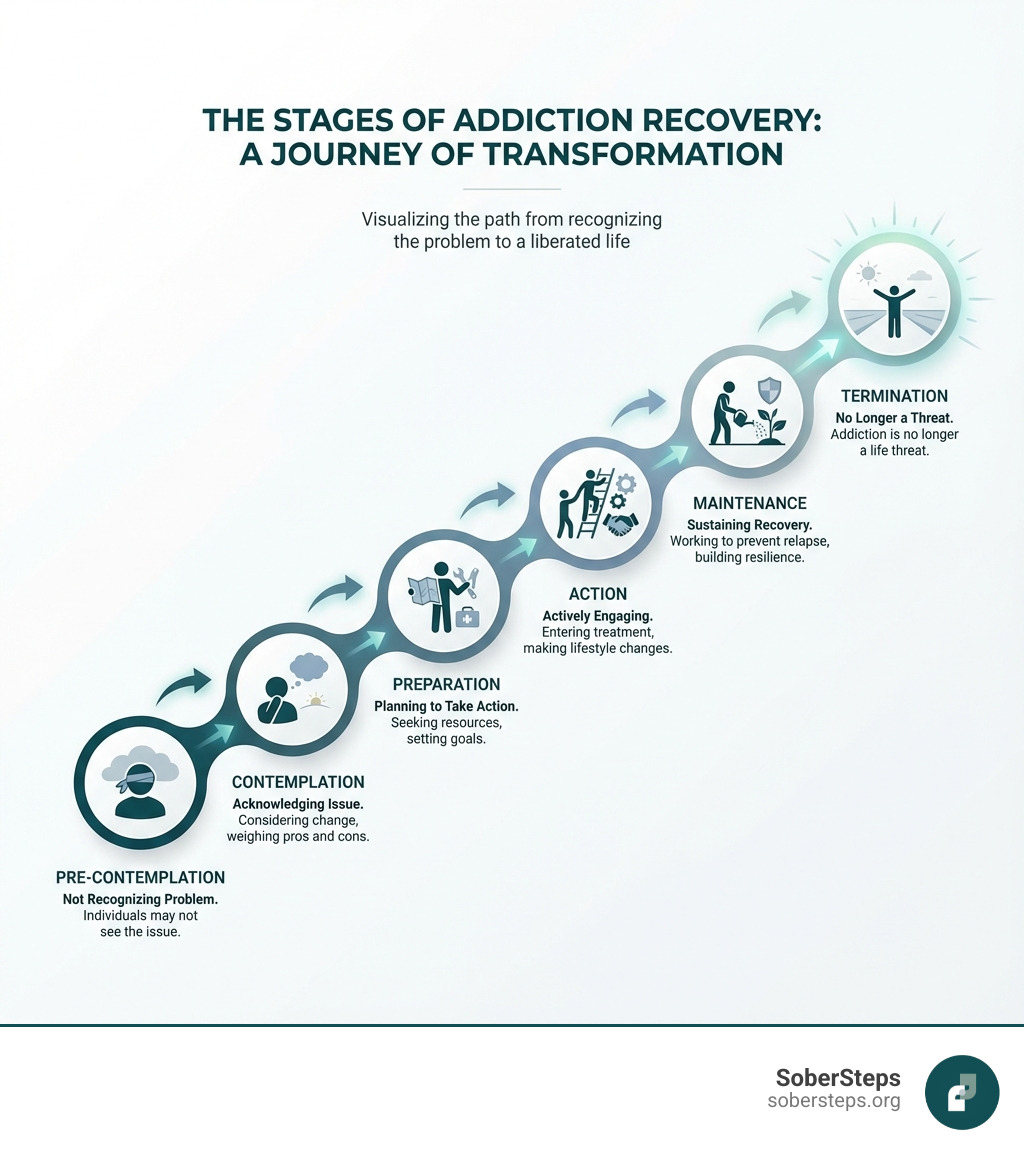
From Rock Bottom to a New Beginning: The Turning Point
Every journey of recovery begins with a moment—or a series of moments—that ignite the desire for change. Often, these are deeply personal and harrowing experiences, what many call “rock bottom.” For some, it’s the culmination of years of struggle; for others, a sudden, terrifying realization. These moments are not just about pain; they are catalysts, forcing individuals to confront their situation and seek a different path.
Consider Adam, who battled opiate use disorder for a decade. He described being “sick without them,” his entire life revolving around the next fix. He made countless attempts to stop on his own, only to hit a wall each time. His rock bottom wasn’t a single event but a prolonged period of despair where he was tired of his addiction and simply wanted to make a change. This internal shift, this exhaustion with the cycle, was his turning point, prompting him to reach out for help.
Michael Standiford’s story involved a 30-year battle with drugs and alcohol, including meth. His rock bottom was punctuated by terrifying experiences, including meth-induced paranoid psychosis, where he saw “shadow people,” and suicidal thoughts. He endured multiple overdoses, one so severe that he needed a ventilator. A pivotal moment for Michael was being shot in the stomach during a robbery. Yet, it was a simple act of compassion—a nurse rubbing his head while he lay with vomit in his hair—that humanized his situation and lowered his blood pressure, serving as a profound turning point towards his eventual “spiritual awakening.”
For Gina, a moment of sheer desperation in Kensington, Philadelphia, became her catalyst. She had endured 11 previous attempts at rehab, fallen 20 feet and broken her back while using, and her family had even prepared for her funeral. Yet, while “hanging out in Kensington in the cold,” she suddenly had a moment of sanity. “It was like my head and heart were suddenly on the same page,” she recalled, realizing, “What are you doing? This isn’t good.” This stark realization, amidst the harsh reality of her addiction, was the spark she needed.
Kristy Ehrlich, who struggled with crystal meth addiction, also experienced a deeply personal rock bottom. Her mother’s blunt advice to “look in the mirror” forced her to confront her reflection and what she had become. For another individual, the realization of hitting rock bottom came from a dehumanizing experience of fighting a rat for leftover food under a freeway overpass. These moments, whether a mother’s words or a struggle for survival, provided the stark clarity needed to begin the journey toward recovery.
Eli, who battled cocaine addiction for 13 years, reached a point where he was severely malnourished, going days without sleep, and experiencing psychosis and hallucinations. His rock bottom was the terrifying realization that he was going to die. Even his mother, in her desperation, threw a bag of Narcan at him, saying, “Hopefully you won’t die.” This stark confrontation with mortality, and the sense that addiction had become his identity, made the prospect of quitting feel like losing a best friend, yet it was precisely this fear that propelled him to seek help.
These stories highlight that the turning point isn’t always glamorous or dramatic; sometimes it’s quiet, a flicker of hope in the darkness. But in every case, it’s a powerful realization that life cannot continue as it has been, marking the critical decision to seek help and begin the arduous, yet rewarding, path of recovery.
The Journey Through Recovery: Challenges and Support Systems
Recovery is rarely a straight line; it’s a complex, winding path filled with unique challenges and requiring a robust network of support. From the physical agony of withdrawal to the persistent mental battles of cravings and societal stigma, individuals in recovery face an uphill climb. Yet, through various treatment modalities and unwavering support, triumph is possible.
One of the most immediate challenges is withdrawal. As Ginny Burton experienced during her six months in jail, detoxing can be incredibly painful and difficult. Beyond the physical discomfort, cravings can linger for years, testing resolve daily. Adam, initially prescribed Suboxone strips, found the taste unpleasant, leading to missed doses and relapse. This highlights how practical challenges can become problems in early recovery.
Societal stigma is another significant obstacle. Tracey Helton Mitchell, a former heroin addict turned PTA mom, spoke candidly about the stigma she faced, with visible track marks and scars serving as constant reminders of her past. This stigma often forces individuals to deal with cravings in isolation, a potentially fatal situation. We understand that addiction is often viewed as self-inflicted, leading to a lack of empathy, despite it being a medical condition.
Relapse, while disheartening, is often a part of the recovery journey, not a sign of failure. Kelly, for instance, experienced a relapse after initially expecting a quick fix from treatment, which ultimately taught her the importance of personal effort and commitment. Brad McLeod estimates he made “30-40 attempts to get sober” before finding lasting recovery. This underscores that persistence and resilience are key.
Thankfully, a variety of treatment and support systems prove most effective.
- Therapy and Counseling: Dialectical Behavior Therapy (DBT) was particularly transformative for Kelly, providing her with critical skills to manage negative thoughts and urges. Eli found profound guidance from a life coach named Roger, whose direct, yet hopeful, words helped him redefine his identity in recovery.
- Support Groups: Programs like Narcotics Anonymous (NA) and Alcoholics Anonymous (AA) offer invaluable peer support. Ginny Burton continues to participate in NA and sponsors women in recovery, emphasizing the importance of being “around people that have common goals.” Patrick, who struggled with alcohol addiction since adolescence, found lasting sobriety through working the steps of AA and helping others in jails.
- Medication-Assisted Treatment (MAT): For Adam, the transition from Suboxone strips to a monthly Sublocade injection was a “180-degree turn,” eliminating cravings and allowing him to focus on healing. MAT programs combine medication with counseling, recognizing addiction as a medical condition requiring comprehensive care.
- Family and Community Support: While family relationships are often strained by addiction, their encouragement can be vital. For Ginny Burton, surrounding herself with supportive individuals who don’t use drugs or alcohol was a strategic choice to maintain sobriety. Community-based interventions, such as San Francisco’s street overdose response teams, provide immediate help and connect individuals to sobering centers and long-term treatment, demonstrating that compassionate care can be a turning point.
- Peer Mentors: Many individuals find immense strength in connecting with others who have walked a similar path. Adam benefited from a peer counselor from a mobile treatment program, who provided regular check-ins and built rapport. Chantel Hernandez-Coleman, after her own recovery, became a peer support specialist, helping others on the streets.
At SoberSteps, we understand that finding the right support is crucial. We offer confidential and anonymous resources to help individuals access the compassionate care and diverse treatment options they need to steer these challenges and build a foundation for lasting recovery. For confidential, anonymous help, call SoberSteps at (844) 491-5566.
Inspiring Addiction Success Stories: Real-Life Changes
The journey from addiction to a new life is often arduous, but these powerful addiction success stories prove that change is not only possible but happening every day.
From Homelessness to Academic Achievement: An Addiction Success Story
The path to addiction can often begin quietly, rooted in early life experiences. For one woman, whose story was shared by NPR, her journey started with a childhood marked by parental divorce and feelings of not fitting in. At just 8 years old, she recalled eating an entire container of icing, seeking comfort. These feelings of being unwanted, unworthy, useless, and ugly later drove her to mask her emotions with substances.
Her experimentation began early, escalating from pot and alcohol to crack, hallucinogens, pills, and eventually IV meth. This spiraled into a devastating period of homelessness, where she lived under a freeway overpass, collecting aluminum cans for money. Her lowest point, her “rock bottom,” was vividly described as fighting a rat for the remnants of a corn dog she’d found in the trash. It was in this moment, a profound dehumanization, that she realized she had crossed every line she had ever drawn for herself.
The turning point came with an arrest, which, ironically, provided the structure she needed to get clean. While in jail, she began the difficult process of detoxing from drugs. After her release, she entered a residential treatment center and later attended a 12-step meeting where a woman’s description of a “spiritual void” resonated deeply, making her feel less alone.
Recovery completely reshaped her life. At 35, she returned to school with the same fierce determination she once applied to her addiction. She graduated from community college and then university magna cum laude with a degree in political science. Her recovery not only led to academic success but also to a new purpose: working with addicted mothers in prison. Her advice to others struggling is to apply that same intense drive they used for addiction to their recovery and personal goals. Her story exemplifies how personal responsibility and self-belief, coupled with community support, can lead to remarkable academic and professional achievements, redefining one’s identity from addict to advocate.
From Family Struggles to Recovery and Advocacy: An Addiction Success Story
Tracey Helton Mitchell’s story is a stark reminder of how quickly addiction can take hold. Her substance use began insidiously, triggered by prescription painkillers given after wisdom teeth removal. She “fell in love with the feeling,” and soon, this led her down a dark path to heroin addiction.
Her addiction quickly spiraled, leading her to homelessness in San Francisco’s notorious Tenderloin district. She described living in rat-infested hotels and the grim reality of injecting heroin into the soles of her feet when other veins collapsed from repeated use. Her rock bottom was a profound state of physical and emotional degradation, where she was emaciated and completely consumed by her addiction.
Getting clean was a harrowing experience. Tracey spent her first months off drugs in San Francisco County Jail, enduring the painful process of detoxing. After jail, she found her way to a sober-living house, a structured environment crucial for her initial recovery. However, the challenges didn’t end with sobriety. She battled depression, PTSD, and anxiety, and faced the enduring societal stigma of being a heroin addict, her track marks and scars a constant reminder of her past.
Today, Tracey’s life is a testament to the power of recovery. She transformed from a homeless heroin addict into a PTA mom, actively involved in her community. She emphasizes that her life is “ordinary and extraordinary at the same time.” She rebuilt her life as a parent, focusing on her children and community involvement. Tracey actively combats stigma by being open about her past, sharing her story to help others. She advocates for harm reduction and overdose prevention, using her lived experience to educate and support those still struggling. Her powerful message is that recovery is possible, and by being open, we can help others find their own path. Her journey demonstrates how a commitment to personal responsibility and community engagement can lead to a sustained, purposeful recovery, fundamentally reshaping one’s identity.
A 30-Year Battle and a Spiritual Awakening
Michael Standiford’s story is a poignant example of how deep-seated childhood trauma can pave the way for addiction. His earliest memories included being left alone in a dark house as a child and harboring resentment towards his baby sister, experiences that fostered a sense of isolation and a need for escape. He began experimenting with drugs at age 13, and what started as an escape escalated into a 30-year battle with drugs and alcohol, including severe meth addiction.
His addiction wreaked havoc on his mental health, leading to meth-induced paranoid psychosis, visions of “shadow people,” and suicidal thoughts. He endured multiple overdoses, one of which required a ventilator to save his life. A particularly harrowing “rock bottom” moment was being shot in the stomach during a robbery while in active addiction. He openly admitted, “Drugs and alcohol became my higher power. They determined when I ate, when I slept, when I worked – if I worked.”
His turning point wasn’t a single event but a profound realization catalyzed by compassionate healthcare. After one of his many emergency room visits, a nurse gently rubbed his head while he was covered in vomit, an act of kindness that profoundly impacted him, lowering his blood pressure and heart rate. This human connection, amidst his desperation, served as a catalyst for a “spiritual awakening” and a conscious decision to make a different choice.
Michael’s recovery involved seeking help from support groups and surrounding himself with like-minded individuals. He attributes his ability to make this change to a personal commitment and the non-judgmental support he received. Now sober for two years, Michael is pursuing a bachelor’s degree in psychology, driven by a powerful new purpose: to help others struggling with similar issues. His advice to those still battling addiction is simple yet profound: “Never give up and don’t lose hope. Always hope!” His story underscores the transformative power of compassionate care, personal resolve, and the ongoing pursuit of self-improvement in recovery.
Life After Addiction: Redefining Sobriety, Identity, and Purpose
Achieving sobriety is a monumental accomplishment, but true recovery extends far beyond mere abstinence. It’s about rebuilding a life, redefining identity, and finding a profound sense of purpose. For those who have walked this path, life after addiction is a testament to resilience and the human spirit’s capacity for growth.
For Ginny Burton, who has been sober for nine years, recovery has meant not only abstaining from drugs but also a complete change of her life and relationships. She graduated from the University of Washington with a degree in political science, an achievement that once seemed impossible. Her relationships with her children have been rebuilt, and she actively participates in Narcotics Anonymous, sponsoring other women. She emphasizes the importance of surrounding herself with “people that have common goals” and intentionally choosing a supportive community. Ginny’s journey highlights how recovery can lead to significant personal responsibility, renewed self-belief, and the pursuit of long-held dreams.
Eli, after a 13-year battle with cocaine, learned to distinguish between sobriety and true recovery. Sobriety, he realized, was simply not using. Recovery, however, was an ongoing process of self-improvement, using the tools gained to become a better person, to heal underlying issues, and to build genuine connections. He described his change from a manipulative, hard-shelled person to someone who can look people in the eye and truly connect. This shift in identity, from being defined by his addiction to embracing a new, authentic self, was profound. Eli’s realization that cocaine “never loved me back” was a critical step in detaching from the substance and finding purpose in honest relationships.
Kristy Ehrlich, who overcame crystal meth addiction, champions the idea of being “recovered” rather than perpetually “in recovery.” This perspective underscores a complete redefinition of self, where the addiction no longer defines one’s identity. Her change, vividly documented through before-and-after photos, shows a new woman who accepts self-love and believes in her capacity for change. She is now married, a mother, and pursuing a degree, demonstrating how personal responsibility and self-belief can lead to a complete overhaul of one’s life.
The role of personal responsibility, community, and self-belief is paramount in sustained recovery. Individuals like Ginny Burton actively choose to engage in activities like hiking, climbing, cycling, and running, finding new, healthy passions that contribute to their well-being. They build supportive communities, whether through formal groups like NA or informal networks of friends with shared goals. And critically, they cultivate self-belief, echoing Kristy Ehrlich’s advice: “If you are out there and struggling please know that you can always move forward and change.”
For those who feel their situation is impossible, these addiction success stories offer a powerful message of hope. They demonstrate that recovery is a continuous process of growth, self-findy, and building a life filled with meaning and purpose. It’s about finding healthy solutions to underlying issues, embracing vulnerability, and connecting with others. Your past does not have to dictate your future.
Frequently Asked Questions about Addiction and Recovery
What is the difference between sobriety and true recovery?
Sobriety is the state of not using substances, a crucial first step. True recovery, however, goes much deeper. It’s an ongoing process of personal growth, healing underlying issues, and developing healthy coping mechanisms to build a fulfilling life. As Eli’s story illustrates, sobriety is merely the absence of drugs, while recovery is the active pursuit of becoming a better person, engaging with life, and forming genuine connections. It involves addressing the root causes of addiction, not just the symptoms.
What are the first steps to getting help for addiction?
The very first step is acknowledging the problem and reaching out for help, even if it feels like a solution to your pain. This can involve talking to a doctor, a therapist, a trusted friend, or calling a confidential helpline to explore treatment options. For Adam, it was calling a mobile treatment van. For Michael Standiford, it was a decision to make a different choice after a moment of compassionate care. For Kristy Ehrlich, it was confronting her reflection in the mirror. Admitting you need help is a courageous act. Resources are available to guide you toward detox, therapy, support groups, and medication-assisted treatment. For confidential guidance, call (844) 491-5566.
Is recovery from long-term addiction really possible?
Yes, absolutely. As the addiction success stories in this article powerfully show, recovery is possible regardless of how long or severe the addiction has been. Michael Standiford battled addiction for 30 years before finding sobriety and pursuing a psychology degree. Eli struggled with cocaine for 13 years. Ginny Burton was a “full-blown crack addict” by 15 and is now nine years sober. While it requires commitment, resilience, and often a strong support system, these real-life changes prove that change is always possible, and a brighter future is achievable.
Your Story of Hope Starts Today
The journeys from addiction to recovery are powerful testaments to human resilience. These addiction success stories show that no matter how dark the past, a brighter future is achievable. The courage to face rock bottom, the perseverance through challenges, and the dedication to rebuilding a life of purpose are truly inspiring.
If you or a loved one is struggling, know that you are not alone and help is available. Your story of triumph can begin now. For confidential, anonymous help, call SoberSteps at (844) 491-5566 or learn more about specialized treatment options to start your journey.