What You Need to Know About Alabama Drug Rehab Centers Right Now
Alabama drug rehab centers offer a wide range of treatment options for people struggling with addiction — and finding the right one is more possible than you might think.
Quick answer — here’s what’s available in Alabama:
- 155 treatment centers across the state
- 30 inpatient and 91 outpatient programs
- 18 detox centers and 5 luxury residential facilities
- 15 free or low-cost programs for those without insurance
- 82% of facilities treat co-occurring mental health disorders
- Programs accept Medicaid (69%), private insurance (63.2%), and cash (87.7%)
Every year, thousands of Alabama families face a moment of crisis. Addiction doesn’t wait, and neither should you. Whether you’re searching for yourself or someone you love, the sheer number of choices can feel paralyzing.
The good news? Alabama’s treatment landscape is broader and more accessible than most people realize. There are faith-based programs, veteran-specific care, free state-funded options, and medically supervised detox — all within the state.
But there are also things most people don’t know before they start looking. Things that could save you time, money, and heartache.
This guide cuts through the noise and gives you the real picture.
1. Most Alabama Drug Rehab Centers are Concentrated in Just Three Counties
If you look at a map of Alabama, you might assume that help is evenly distributed from the Tennessee line down to the Gulf Coast. However, the reality of the “Yellowhammer State” is that treatment options are heavily clustered. Out of the 155 treatment centers currently operating in the state, the vast majority are located in just three counties: Jefferson, Mobile, and Madison.
This geographic clustering means that if you live in Birmingham, Mobile, or Huntsville, you have a wealth of options at your fingertips. But for those in more rural areas, the “treatment desert” is a real challenge. Many residents in the Black Belt or the rural Wiregrass region may find themselves driving hours just to reach a specialized facility.
Because of these rural access gaps, many people choose to look for More info about West Alabama Mental Health Center, which serves as a vital lifeline for those in the western part of the state. Additionally, some Alabamians find that traveling just across the state line—such as to facilities in Mississippi or Georgia—can provide a much-needed “fresh start” away from the people and places associated with their substance use.
Finding Treatment Near Birmingham, Mobile, and Huntsville at Alabama Drug Rehab Centers
If you are located in one of Alabama’s major metro areas, the level of care is often world-class. Urban facilities typically offer a wider range of specialized therapies and more robust staffing.
- Birmingham (Jefferson County): As the state’s largest medical hub, Birmingham offers everything from high-end residential campuses to specialized hospital-based detox.
- Mobile (Mobile County): The coastal region features a mix of long-standing non-profit missions and modern outpatient clinics.
- Huntsville/Madison (Madison County): This area has seen a surge in new, evidence-based facilities that cater to the growing population of North Alabama.
For those unsure where to turn, the Alabama Department of Mental Health acts as the primary state authority. They help coordinate local counseling and community-based services, ensuring that even if you aren’t in a major city, there is a pathway to recovery.
2. Over 80% of Alabama Facilities Treat Co-Occurring Mental Health Disorders
One of the most surprising—and encouraging—statistics about alabama drug rehab centers is their commitment to “Dual Diagnosis.” It is a well-established medical fact that 50% of people with substance use disorders have dual diagnoses, meaning they struggle with a mental health condition like depression, anxiety, or PTSD alongside their addiction.
In Alabama, 82% of rehab programs are equipped to provide integrated care. This means they don’t just treat the “drinking” or the “drug use”—they treat the whole person. If you’re using substances to numb the pain of untreated trauma, treating the addiction without addressing the trauma is like putting a bandage on a broken leg.
Integrated care in Alabama often includes:
- Trauma-informed therapy: Helping patients process past events safely.
- Symptom management: Using medication and behavioral therapy to stabilize mood disorders.
- Holistic healing: Incorporating nutrition, exercise, and mindfulness to rebuild the brain’s natural chemistry.
Specialized Support for Alabama Drug Rehab Centers
Beyond mental health, Alabama rehabs have become increasingly specialized to meet the needs of diverse populations. You aren’t just a number; you are someone with a unique history and unique needs.
- Veterans Programs: Specialized tracks for those who served, focusing on combat-related PTSD and the transition to civilian life.
- Pregnant Individuals & New Mothers: Facilities like Hannah House provide a safe environment for expectant mothers to find recovery while preparing for parenthood.
- Adolescent Care: Programs designed specifically for the developing teenage brain and family dynamics.
- Gender-Specific Treatment: Many people find they can be more vulnerable and honest in an all-male or all-female environment.
Organizations like the National Alliance on Mental Illness (NAMI) Alabama provide additional layers of support and education for families navigating these complex dual-diagnosis journeys.
3. Alabama is a National Leader in Faith-Based Recovery Networks
Alabama is part of the Bible Belt, and that cultural heritage is reflected in its recovery community. For many, spiritual healing is the missing piece of the puzzle. Alabama is home to a massive network of Christian recovery programs that offer a different approach than traditional clinical settings.
The Alabama Association of Christian Recovery Ministries (AACRM) serves as a central resource for these programs, ensuring they share best practices and maintain high standards of care. These programs often rely on a “discipleship” model, where recovery is viewed through the lens of spiritual growth and biblical principles.
Long-Term Discipleship and Spiritual Healing
Unlike a standard 30-day clinical stay, many faith-based options in Alabama, such as the Downtown Rescue Mission recovery programs, are long-term commitments—often lasting 12 months.
These programs focus on:
- Biblical Curriculum: Replacing addictive thought patterns with spiritual truths.
- Work Therapy: Helping residents regain a sense of purpose and responsibility through daily tasks.
- Prison-Release Support: Many faith-based centers, like The Lovelady Center or Canaan Land Ministries, specialize in helping those transitioning out of the justice system.
- Life Skills: Teaching everything from financial literacy to healthy parenting.
While these programs may not always have a doctor on staff 24/7 like a medical detox center, they provide a powerful sense of community and a “new way of life” that has helped thousands of Alabamians achieve lifelong change.
4. You Don’t Always Need Private Insurance for Alabama Drug Rehab Centers
One of the biggest myths that keeps people away from alabama drug rehab centers is the price tag. While luxury “resort-style” rehabs exist, they are only one small part of the picture. Alabama actually has a very high rate of facilities that accept public funding and offer flexible payment options.
Consider these statistics:
- 69% of Alabama facilities accept Medicaid.
- 39.4% accept Medicare.
- 55.5% offer sliding-scale fees (where you pay based on what you earn).
- 56.1% provide low-cost or free programs for those in need.
Navigating the Admissions and Insurance Verification Process
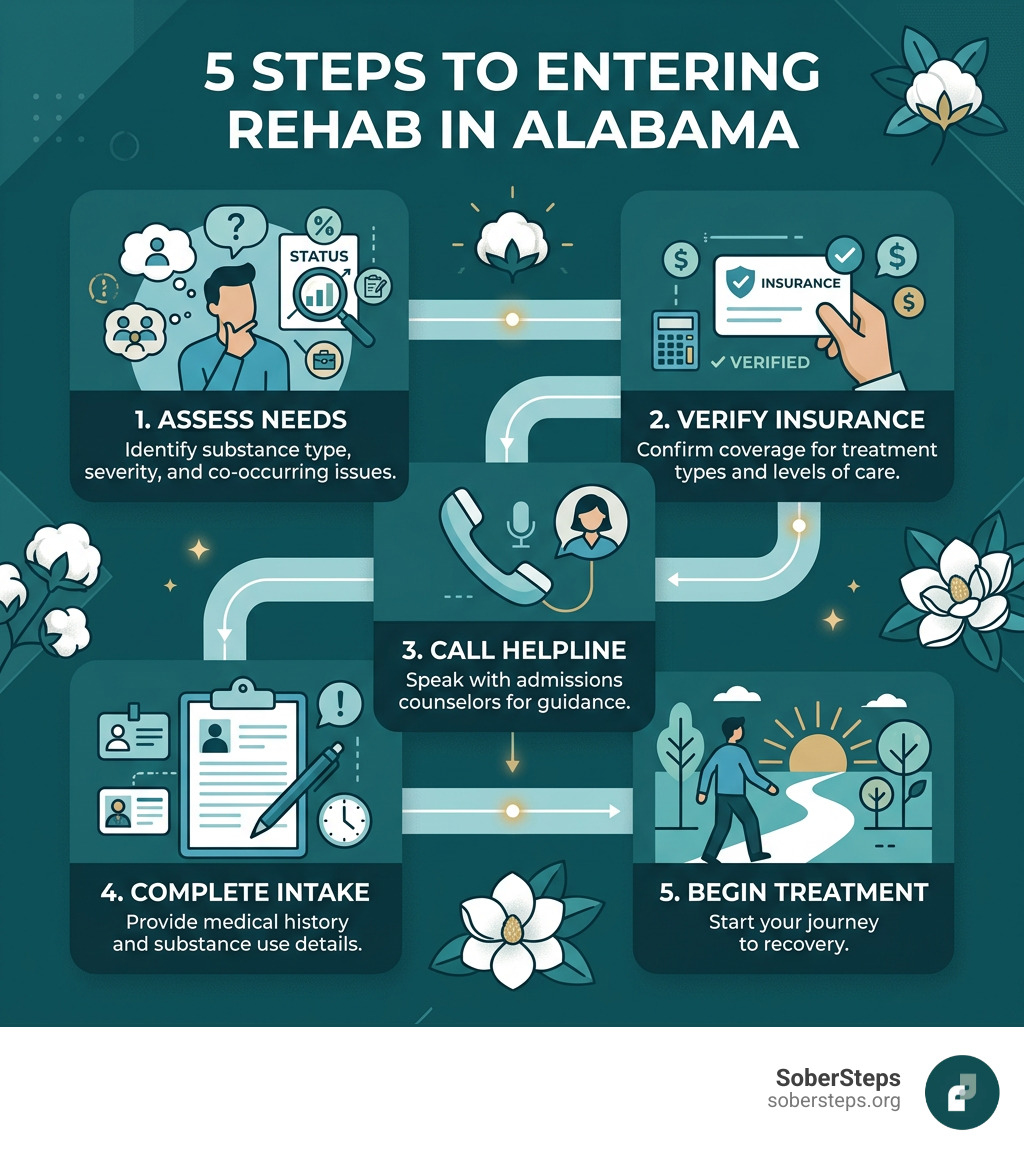
The first step is usually a phone call. When you call a helpline, you’ll speak with a care coordinator who will perform a brief assessment. This is a confidential, judgment-free conversation where you’ll discuss your history, the substances involved, and your financial situation.
The facility will then handle the “heavy lifting” of insurance verification. They will contact your provider to find out exactly what is covered—whether it’s just the detox portion or the full residential stay. For those without any insurance, centers may point you toward state-funded grants or help you apply for a sliding-scale spot. Don’t let a lack of a “Gold-Level” insurance card stop you from making that call.
5. Inpatient Life Often Requires Giving Up Your Cell Phone and Rooming with Others
If you choose a residential alabama drug rehab center, you should prepare for a major lifestyle shift. These facilities are designed to be “therapeutic communities,” which means the environment is strictly controlled to maximize your chances of success.
Two things often “shock” new patients the most:
- The “Blackout” Period: Most inpatient facilities will take your cell phone and laptop upon arrival. Why? Because addiction thrives on isolation and outside triggers. By removing the “noise” of social media and stressful texts from home, you are forced to focus entirely on your own healing.
- Roommates: Unless you are in a high-end luxury facility, you will likely have a roommate. In recovery, “addiction thrives in the dark.” Having a roommate provides built-in accountability and helps prevent the isolation that often leads to relapse. It’s also where many people find their first “sober brother” or “sober sister”—someone who truly understands what they are going through.
Levels of Care: From Detox to Aftercare Support
Recovery isn’t just one “stay” in a building; it’s a continuum. Depending on your needs, you might move through several levels:
- Medical Detox: This is the first 3 to 7 days. It involves 24/7 medical supervision to manage withdrawal symptoms safely. This is especially critical for alcohol and benzodiazepines, where withdrawal can be life-threatening.
- Residential Inpatient: Usually 28 to 35 days (though some programs go longer). You live at the facility and participate in full-time therapy.
- Partial Hospitalization (PHP): You spend the day at the treatment center but may live at home or in a “sober living” house.
- Intensive Outpatient (IOP): This usually lasts 3 to 6 months. You attend meetings a few times a week for several hours, allowing you to return to work or school.
Throughout this process, you’ll likely be introduced to various support philosophies. Some prefer the traditional 12-step model found in Alcoholics Anonymous (AA) resources or Narcotics Anonymous (NA) meetings. Others might prefer SMART Recovery science-based practices, which focus on cognitive-behavioral tools rather than the spiritual focus of the 12 steps.
Frequently Asked Questions about Alabama Rehab
How long do typical rehab programs last in Alabama?
There is no “magic number,” but most intensive programs last about 30 to 35 days. However, clinical research shows that the longer a person stays engaged in some form of treatment (including outpatient), the better their chances of long-term success. Some intensive outpatient programs (IOP) last 3 to 6 months, while faith-based residential programs can last a full year.
Are there free rehab options available in Alabama?
Yes! There are 15 dedicated free treatment programs in Alabama, and over half of all facilities in the state offer some form of financial assistance or sliding-scale fees. The Alabama Department of Mental Health is the best place to start for information on state-funded beds.
What support groups are available for long-term recovery?
The journey doesn’t end when you leave rehab. Alabama has a robust network of aftercare resources. This includes:
- Alumni Groups: Staying connected with the people you met in treatment.
- Dual Diagnosis Anonymous (DDA): Specifically for those with co-occurring disorders.
- Oxford House sober living: Self-run, drug-free houses that provide an affordable way to transition back into society.
Conclusion
Finding the right alabama drug rehab center can feel like a daunting task, but you don’t have to do it alone. Whether you need a high-intensity medical detox in Birmingham, a year-long discipleship program in the Tennessee Valley, or an outpatient clinic in Mobile that accepts Medicaid, the resources are there.
At SoberSteps, we believe that every person’s path to recovery is unique. There is no “one-size-fits-all” solution, but there is a “right-size” solution for you. The most important thing is to stop waiting for the “perfect” time and start looking for the “right” help.
Professional support is just a phone call away. You have the strength to change your life, and Alabama has the community to help you do it.