Your First Step Towards a Healthier Future
Finding an alcohol detox near you is the critical first step toward recovery. If you or a loved one is struggling with alcohol dependence, safe, medically supervised detox is essential for a successful start to sobriety.
Quick Guide: How to Find Alcohol Detox Near You
- Call a 24/7 confidential helpline for immediate guidance.
- Use online treatment directories like SoberSteps to search by location.
- Contact your insurance provider for a list of in-network facilities.
- Ask your doctor for professional recommendations.
- Verify facility credentials, including accreditation and licensed medical staff.
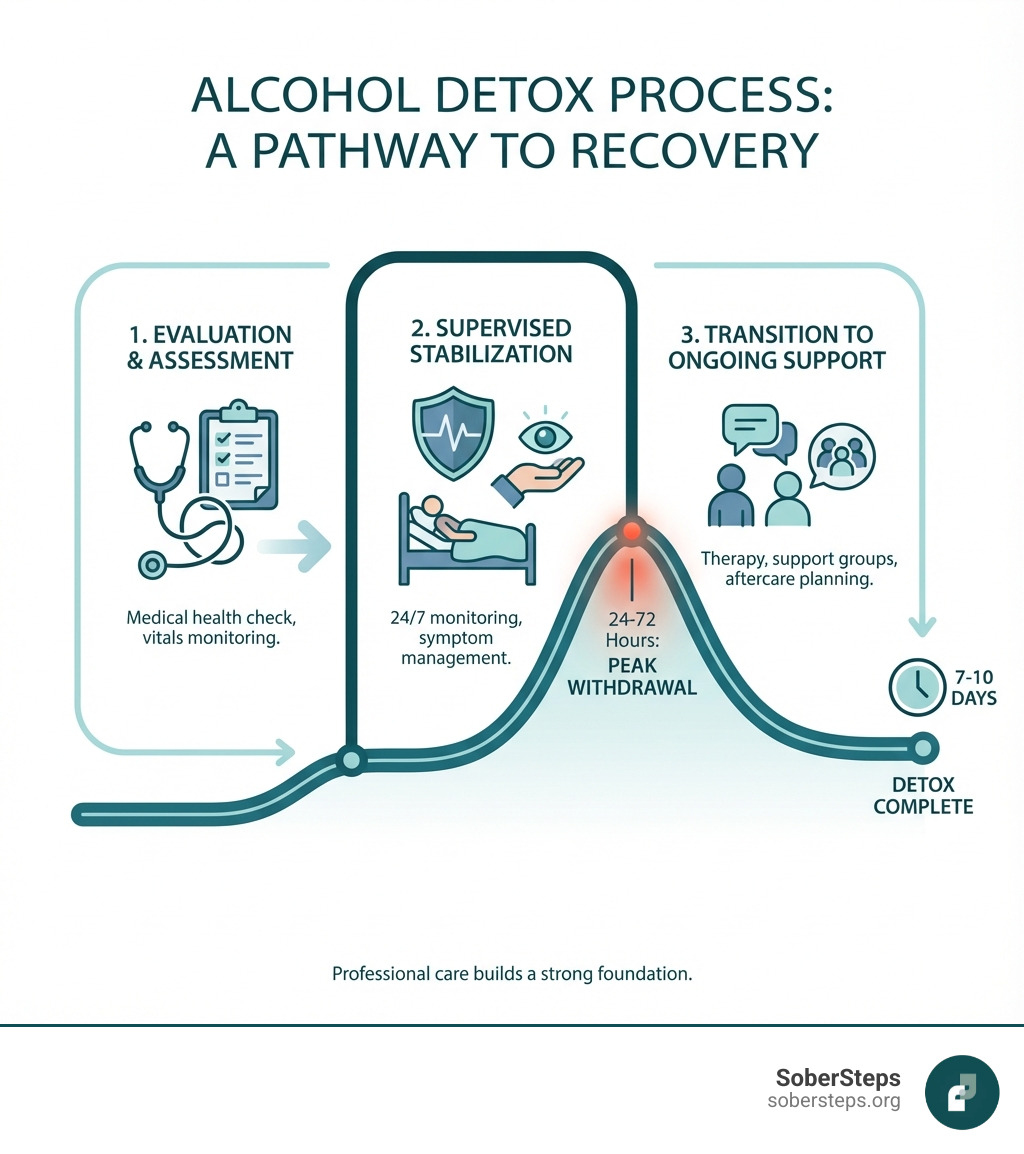
Seeking help takes courage. The reality is that alcohol withdrawal can be dangerous and even life-threatening without medical supervision. Severe symptoms like seizures can occur within 24 to 72 hours of the last drink, which is why professional help is vital.
Medically supervised alcohol detox near you matters. These programs provide 24/7 medical monitoring, medications to ease withdrawal, and a safe environment to begin recovery. The detox process typically lasts 7 to 10 days.
At Sober Steps, we simplify finding quality alcohol detox near you. Our community connects people with accredited centers, providing the resources needed to take that crucial first step.
Call our 24/7 confidential helpline for immediate support and let us help you find the right detox program for your needs.
Learn more about alcohol addiction recovery | Get help now
Understanding Alcohol Detox and Withdrawal
This section explains the critical first phase of recovery: what detox is, what to expect from withdrawal, and why professional help is essential for safety.
What is Alcohol Detoxification and Why is it Crucial?
Alcohol detoxification, or “detox,” is the process of your body clearing itself of alcohol. When you drink heavily, your brain adapts to alcohol’s depressant effects. When you stop, the brain becomes overactive, causing uncomfortable and potentially dangerous withdrawal symptoms. Detox is a medical intervention designed to manage these symptoms safely.
Detox is not addiction treatment itself, but the essential first step that prepares you for ongoing therapy. The primary goal of a professional alcohol detox near you is to guide you through this initial phase under medical supervision, ensuring your safety and laying a strong foundation for long-term recovery.
More info on Alcohol Withdrawal | Speak with a detox specialist now | Alcohol Detox Level of Care
Recognizing the Symptoms of Alcohol Withdrawal
When you stop drinking after heavy use, you will experience withdrawal symptoms ranging from mild to severe. Understanding what to expect can help you decide to seek help.
Common, milder symptoms of alcohol withdrawal include:
- Anxiety and agitation
- Tremors (shaking hands)
- Nausea and vomiting
- Headaches
- Insomnia
- Sweating
For about 10% of people, withdrawal becomes severe, with symptoms including:
- Hallucinations: Seeing, hearing, or feeling things that aren’t there.
- Seizures: Often occur within the first 48 hours after the last drink.
- Delirium Tremens (DTs): The most severe form of withdrawal and a medical emergency. Symptoms include severe confusion, rapid heart rate, and high blood pressure. DTs can be fatal if not treated.
The severity of symptoms depends on your age, drinking habits, and overall health, which is why a professional medical assessment is crucial.
Alcohol Withdrawal Symptoms Treatment Timeline | Contact us for a confidential assessment | Alcohol Detox Near Me
The Typical Alcohol Withdrawal Timeline
The alcohol withdrawal timeline varies, but a general pattern exists. Knowing what to expect helps you understand when to seek medical attention.
- 6-12 hours after last drink: Minor symptoms like anxiety, nausea, and headaches begin.
- 12-24 hours after last drink: Symptoms may intensify, and hallucinations can start.
- 24-48 hours after last drink: This is a critical window with the highest risk of seizures. 24/7 medical monitoring is vital.
- 48-72 hours after last drink: The risk of life-threatening Delirium Tremens (DTs) emerges.
- 4-5 days after symptom onset: Most acute symptoms begin to subside. The full medical detox process usually lasts 7 to 10 days.
This timeline is a general guide. Your experience may differ, especially with a long history of heavy drinking. Our team at SoberSteps can help you find an appropriate alcohol detox near you.
Get Help Now | Find alcohol detox near you | Alcohol Withdrawal Timeline
The Dangers of Detoxing Alone: Understanding the Risks
Attempting to detox from alcohol alone, or going “cold turkey,” is extremely dangerous and can be fatal. Unlike withdrawal from many other substances, alcohol withdrawal can be a medical emergency.
Without medical supervision, you risk severe complications such as:
- Life-threatening seizures
- Delirium Tremens (DTs), which can lead to heart failure
- Severe dehydration from vomiting and sweating
- Cardiovascular issues like strokes or heart attacks
- Accidental injury due to disorientation or tremors
- Relapse to stop the intense discomfort
For these reasons, medical professionals universally recommend detox in a supervised setting, especially for those with a history of heavy drinking or other health conditions. Finding a professional alcohol detox near you is the safest first step.
Find a specialist for addiction and substance use | Call our 24/7 helpline for safe detox options | Alcohol Detox Level of Care
How to Safely Detox and Begin Your Recovery Journey
Learn about the medically supervised detox process, the medications that can help, and the different levels of professional care available.
Medically Supervised Detox: The Safest Path Forward
Medically supervised detox is the gold standard for managing alcohol withdrawal. It provides a structured environment where medical professionals monitor your health and administer medications to ease symptoms, significantly reducing the risks of detoxing alone.
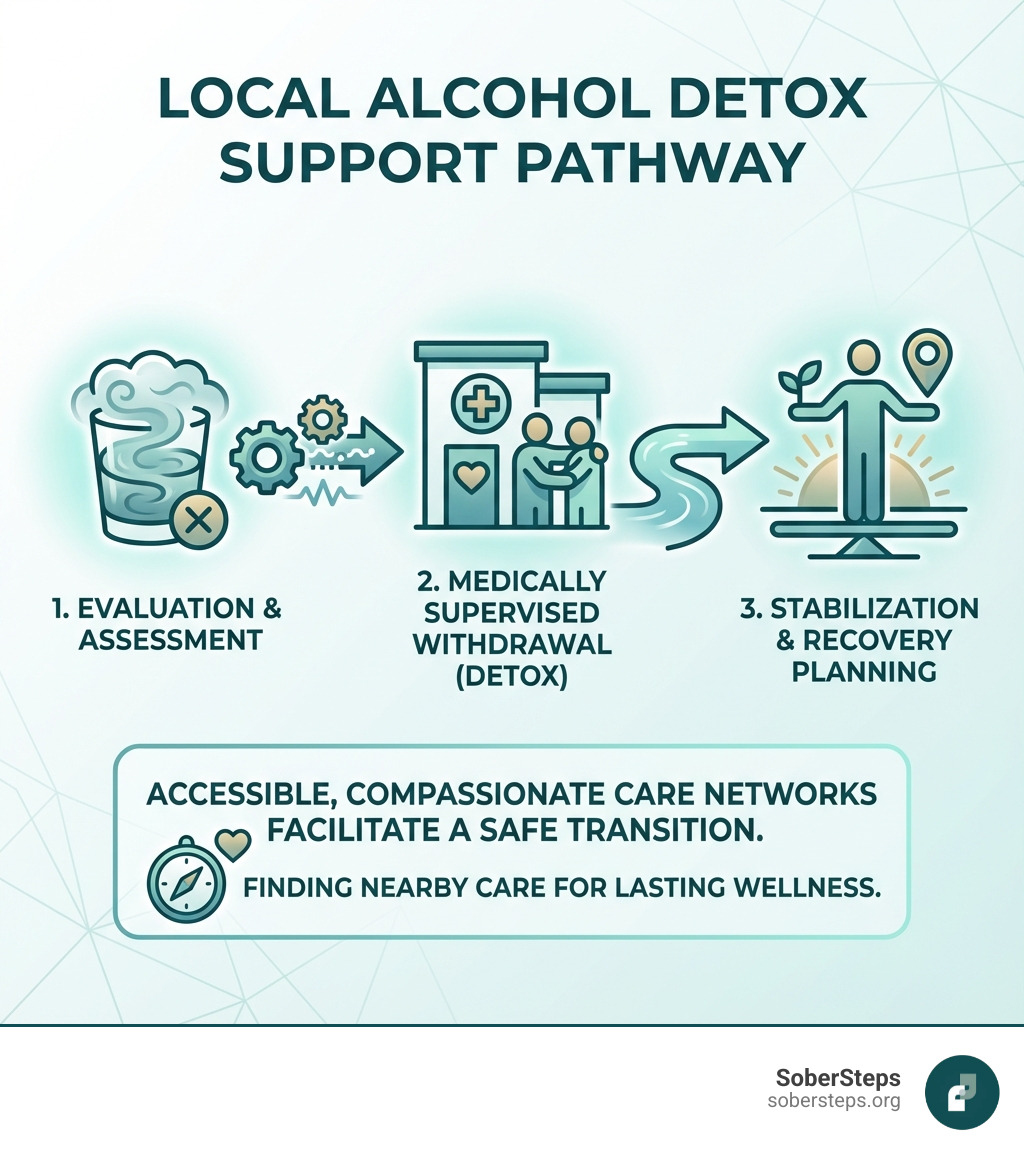
The process involves three main phases:
- Evaluation: A medical team assesses your health and substance use history to create a personalized detox plan.
- Stabilization: You become substance-free under 24/7 medical care. Providers monitor vital signs and use medications to manage symptoms and prevent complications. Nutritional support, like Thiamine (vitamin B1), is often provided.
- Facilitating Treatment Entry: Once you are medically stable, the team helps you prepare for the next stage of recovery by discussing treatment options and making referrals to inpatient or outpatient programs.

A medically supervised detox provides the physical stabilization needed to focus on the psychological aspects of addiction in subsequent treatment.
Learn about the Detox Level of Care | Start your safe detox today | Alcohol Detox Near Me
Medications Used to Manage Withdrawal Symptoms
In a medically supervised alcohol detox near you, medications are crucial for managing symptoms and preventing complications. The primary class of medications used is benzodiazepines.
- Benzodiazepines: Medications like Librium (chlordiazepoxide) and Valium (diazepam) calm the overactive nervous system, prevent seizures, and reduce anxiety. They are typically tapered down over several days.
- Other Medications: Depending on your needs, other medications may be used, including:
- Anticonvulsants to prevent seizures.
- Antipsychotics to manage hallucinations.
- Beta-blockers to help control heart rate and blood pressure.
- Thiamine (Vitamin B1) to prevent Wernicke-Korsakoff syndrome, a serious neurological disorder.
These medications are prescribed and monitored by medical professionals in a detox setting. After detox, other medications like naltrexone or acamprosate may be prescribed to support long-term sobriety.
More on Alcohol Treatment in the United States | Ask about medication-assisted detox | Alcohol Detox Level of Care
Understanding the Different Levels of Care for Detox
When searching for an alcohol detox near you, you’ll find various levels of care designed for different needs.
- Hospital-Based Detox: Offers the highest level of medical care for those with severe dependence, co-occurring medical issues, or a history of severe withdrawal. It provides 24/7 supervision in a hospital setting.
- Standalone Residential Detox Centers: These facilities specialize in detox, providing 24/7 medical monitoring in a comfortable, non-hospital environment. This is a common and effective option.
- Medically-Monitored Outpatient Detox: For those with mild to moderate dependence, this option allows you to live at home while attending daily medical appointments. It requires a strong home support system and is not suitable for those at risk of severe withdrawal.
Choosing the right level of care is a critical decision based on your drinking history, health, and support system. Our team at SoberSteps can help you assess your needs and find an appropriate alcohol detox near you.
Explore all Levels of Care | Find the right level of care for you | Get Help Now
Finding an Alcohol Detox Near You: A Step-by-Step Guide
This guide provides actionable steps to locate and choose the right treatment facility in your area, custom to your specific needs.
How to Find the Right Alcohol Detox Program
Finding the right alcohol detox near you doesn’t have to be overwhelming. Follow these steps to get started:
- Call a confidential helpline: This is the quickest way to get immediate guidance. Our 24/7 helpline at SoberSteps connects you with advisors who can discuss your options.
- Use the SoberSteps online directory: Our platform helps you search for accredited providers by location and services offered.
- Contact your insurance provider: Call your insurance company to understand your benefits and find in-network facilities.
- Ask your doctor for a referral: Your primary care physician can assess your needs and recommend a trusted alcohol detox near you.
- Use government resources: Websites like FindTreatment.gov, from SAMHSA, offer a searchable database of treatment facilities.
At SoberSteps, we streamline this process, acting as your trusted treatment locator to help you find the best fit.
How to Find Rehab | Search for Detox Near Me | Connect with a local detox center now | Alcohol Detox Level of Care
Inpatient vs. Outpatient: Which Alcohol Detox Near Me is Best?
Deciding between inpatient and outpatient detox is a crucial step. Each option caters to different needs.
| Feature | Inpatient Detox | Outpatient Detox |
|---|---|---|
| Level of Care | 24/7 medical supervision and support | Regular medical appointments; return home between sessions |
| Environment | Structured, safe, and alcohol-free facility | Home environment; requires strong support and discipline |
| Ideal Candidate | Severe dependence, high risk of severe withdrawal, co-occurring medical/mental health issues, lack of stable home environment | Mild to moderate dependence, strong home support, no severe medical risks, able to manage daily responsibilities |
| Cost | Generally higher due to round-the-clock care and amenities | Generally lower, as it doesn’t include accommodation and full-time staffing |
Inpatient Benefits:
- Safety: 24/7 medical monitoring for high-risk individuals.
- Structure: Removes you from triggers, allowing focus on detox.
- Support: Access to medical staff and counselors around the clock.
- Transition: Often co-located with rehab, facilitating a smooth transition to ongoing treatment.
Outpatient Benefits:
- Flexibility: Allows you to live at home and maintain responsibilities.
- Lower Cost: Typically more affordable than inpatient care.
- Privacy: Can offer a greater sense of privacy.
The best choice for an alcohol detox near you depends on a thorough assessment of your health and circumstances. We can help you decide which environment will best support your safe detoxification.
Explore Inpatient Detox Programs | Compare Outpatient Detox Options | Find the best fit for your needs | Get Help Now
What to Look for in a Quality Alcohol Detox Near Me
When choosing an alcohol detox near you, look for these signs of a quality program to ensure your safety and success:
- Accreditation and Licensing: Ensure the facility is licensed by the state and accredited by organizations like The Joint Commission or CARF. This signifies high standards for patient care.
- Licensed Medical Staff: The program should have a 24/7 team of licensed medical professionals, including doctors and nurses experienced in managing withdrawal.
- Evidence-Based Therapies: Look for programs that use scientifically validated treatment approaches.
- Individualized Treatment Plans: Your detox plan should be customized to your unique needs, not a one-size-fits-all approach.
- Dual Diagnosis Capabilities: If you have a co-occurring mental health disorder like depression or anxiety, find a program that can treat both conditions simultaneously.
- Focus on Aftercare Planning: A good program helps you transition to the next stage of treatment and develops a robust aftercare plan.
By focusing on these key indicators, you can choose an alcohol detox near you that offers the best start to your recovery.
Find quality Substance Abuse Recovery & Mental Health Treatment | Verify your treatment options with our team | Alcohol Detox Near Me
Life After Detox: The Next Steps in Lasting Recovery
Detox is the beginning, not the end. Find the crucial next steps for building a strong foundation for long-term sobriety.
Why Detox is Only the First Step
Completing detox is a monumental achievement. However, detox only addresses the physical dependence on alcohol. It clears the substance from your body but does not treat the underlying psychological, emotional, and behavioral issues that fuel addiction.
Think of detox as clearing the way to rebuild. Without continued treatment, the risk of relapse is high. Addiction is a complex brain disease, and to achieve lasting sobriety, these deeper issues must be addressed through therapy and ongoing support. Transitioning from an alcohol detox near you into a comprehensive treatment program is essential for long-term success.
Learn about comprehensive Substance Abuse Treatment | Plan your next steps with a recovery advisor | Alcohol Addiction Recovery
Exploring Addiction Treatment Options Post-Detox
After completing an alcohol detox near you, it’s crucial to continue with addiction treatment to build a foundation for sobriety. Options include:
- Inpatient/Residential Rehab: Provides 24/7 structured care in a residential facility, offering an immersive environment away from daily triggers.
- Partial Hospitalization Programs (PHP): Also called “day treatment,” PHPs offer intensive care for several hours a day, five days a week, while you live at home.
- Intensive Outpatient Programs (IOP): IOPs provide structured therapy several times a week, allowing you to maintain work or school responsibilities.
- Support Groups: Programs like Alcoholics Anonymous (AA) offer invaluable peer support, encouragement, and accountability.
- Aftercare Resources: This includes continued therapy, sober living arrangements, and ongoing check-ins to support long-term sobriety.
The best post-detox plan is individualized to your needs. Our team can help you understand these options and connect you with reputable programs.
Find Alcohol Rehab Centers | See all Addiction Treatment Options | Explore your treatment options today | How to Find Rehab
Building a Foundation for Sobriety
After detox and initial treatment, the focus shifts to building a foundation for lasting sobriety through ongoing strategies and support.
- Relapse Prevention Planning: Work with therapists to identify triggers, develop coping mechanisms, and create a plan to handle cravings.
- Aftercare Support: Recovery doesn’t end when a formal program does. Aftercare provides continued support through counseling, alumni programs, and regular check-ins.
- Managing Post-Acute Withdrawal Syndrome (PAWS): Some individuals experience PAWS, with symptoms like mood swings, anxiety, and sleep issues that can last for months. Learning to manage PAWS is essential to prevent relapse.
- Building a Sober Support Network: Surround yourself with positive influences, including family, friends, and peers from support groups like AA. A strong network provides encouragement and accountability.
Building a life free from alcohol is a continuous process. With the right tools and support, you can build a resilient foundation for a fulfilling, sober life.
Call our 24/7 anonymous hotline for guidance on your next steps | Learn about relapse prevention | Get connected to aftercare resources | Alcohol Addiction Recovery
Frequently Asked Questions About Alcohol Detox
We understand you have questions when considering alcohol detox near you. Here are some common ones:
How long does the alcohol detox process take?
The full medical detox process usually lasts 7 to 10 days. The most intense, acute withdrawal symptoms typically peak within 4 to 5 days. The exact timeline varies based on factors like drinking history and overall health.
Alcohol Withdrawal Timeline | Speak to a detox specialist now
Is alcohol detox covered by insurance?
Yes, most insurance plans cover alcohol detox as it is a medical necessity. However, coverage varies by plan, so it’s crucial to verify your specific benefits with your provider. Our team at SoberSteps can help with this process.
Verify your insurance coverage | Check your insurance benefits now
What happens after I complete a detox program?
Detox is the first step. To achieve lasting recovery, transition into a treatment program to address the psychological roots of addiction. Options include:
- Inpatient or Residential Rehab
- Partial Hospitalization (PHP) or Intensive Outpatient (IOP) Programs
- Outpatient Therapy and Counseling
- Support Groups like Alcoholics Anonymous (AA)
Your detox team will help create an aftercare plan to ensure a smooth transition to the next phase of your recovery.
Transitioning to Rehab | Plan your next steps with our team
Conclusion: Your Path to Recovery Starts Today
Taking the first step is the most important one. Medically supervised detox is a safe and effective start to your recovery journey. You don’t have to do this alone; compassionate, professional help is available right now. SoberSteps offers a confidential 24/7 helpline to connect you with treatment providers who can guide you.
Call our anonymous mental health and addiction hotline now to find the help you deserve. | Start your recovery journey today | Alcohol Detox Near Me