The Opioid Crisis: Why Fentanyl Addiction Help is More Critical Than Ever
Fentanyl addiction help is available, and recovery is possible. If you or a loved one is struggling, here are immediate resources:
- Crisis Support: Call or text 988 for the Suicide & Crisis Lifeline.
- Treatment Referrals: Call Sober Steps at 1-844-491-5566 for free, confidential, 24/7 support.
- Find Treatment: Visit FindTreatment.gov to locate facilities near you.
- Overdose Prevention: Carry naloxone (Narcan) to reverse an opioid overdose.
- Treatment Options: Medical detox, rehab, and medication-assisted treatment (MAT) are proven effective.
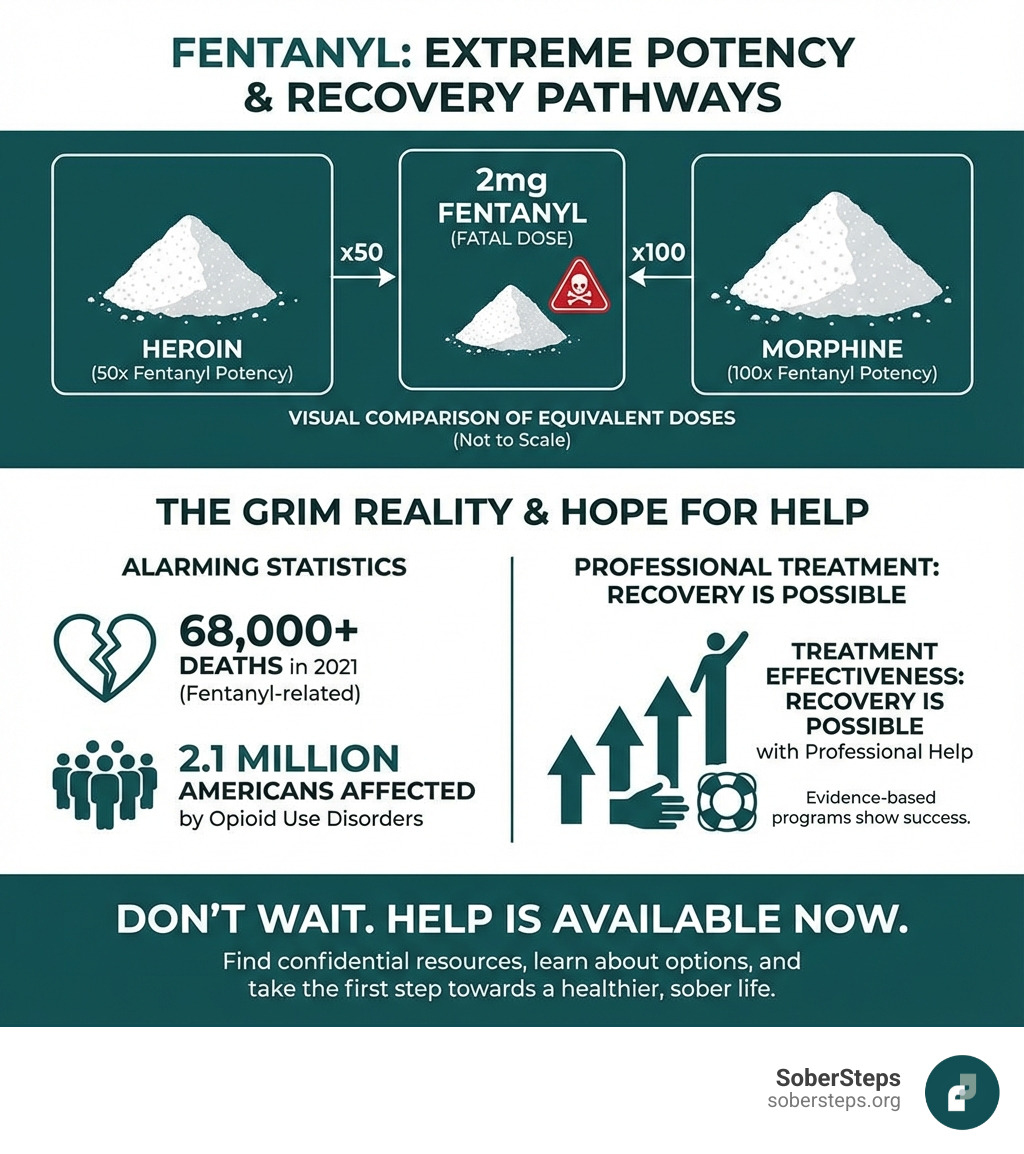
The opioid crisis is driven by fentanyl, a synthetic opioid 50 times more potent than heroin and 100 times stronger than morphine. A mere 2 milligrams can be fatal, leading to over 68,000 deaths in 2021. This drug is increasingly found in the illegal drug supply, often without the user’s knowledge.
Despite these grim statistics, opioid addiction is a treatable disease. Millions of people struggle with opioid use disorders, but evidence-based treatments offer a path back to a fulfilling life. This guide provides clear, actionable information on recognizing the signs of addiction, understanding treatment, and finding quality care.
If you or a loved one is struggling, get help now.
At Sober Steps, we provide comprehensive resources for fentanyl addiction help. Our mission is to connect you with the information and support needed to take meaningful steps toward a sober life. Learn more about why SoberSteps is your trusted resource.
Understanding Fentanyl’s Grip: Dangers, Signs, and Overdose
Fentanyl is a synthetic opioid originally developed for severe pain management. While medically useful, its extreme potency—up to 100 times stronger than morphine—makes it highly dangerous and addictive. The DEA classifies it as a Schedule II drug, acknowledging its high potential for abuse.
Addiction can develop quickly, even with prescribed use. The body builds a tolerance, requiring more of the drug to achieve the same effect, which can spiral into physical dependence. Fentanyl rapidly alters brain chemistry by binding to opioid receptors, creating intense euphoria. This powerful effect motivates continued use, making it incredibly difficult to stop without professional fentanyl addiction help.
Illicitly manufactured fentanyl is an even greater threat. It’s often mixed into other drugs like heroin or cocaine, or pressed into counterfeit pills resembling Xanax or Oxycodone. Users are often unaware they are taking fentanyl, leading to a high risk of accidental overdose. The DEA’s seizure of 80 million fake pills in 2023 highlights this pervasive danger. Understanding these risks is the first step toward effective treatment. Learn more about Fentanyl Addiction and how opioids affect the brain.
Contact SoberSteps for confidential support and let us guide you through your options.
Signs and Symptoms of Fentanyl Addiction
Recognizing the signs of fentanyl addiction is crucial for early intervention. Because the drug is so potent, these signs can appear rapidly.
Physical Signs:
- Drowsiness or “nodding off”
- Constricted (pinpoint) pupils
- Slowed or shallow breathing
- Slurred speech
- Clammy skin
- Unexplained weight loss
Psychological Signs:
- Euphoria followed by apathy
- Impaired memory and concentration
- Anxiety, depression, or irritability
- Mood swings
Behavioral Signs:
- Intense cravings for fentanyl
- Using more than intended or being unable to cut down
- Neglecting responsibilities at work, school, or home
- Withdrawing from friends, family, and hobbies
- “Doctor shopping” for multiple prescriptions
- Financial difficulties or theft
If you see these signs, it’s time to seek help. Our resources on Fentanyl Addiction offer more insight. If you’re trying to help someone, learn How to talk to a loved one about addiction.
The Life-Saving Role of Naloxone
Naloxone (often sold as Narcan) is a life-saving medication that can rapidly reverse an opioid overdose. It works by blocking the effects of opioids on the brain, restoring normal breathing.
An overdose can happen quickly with fentanyl. Key signs include:
- Slowed or stopped breathing
- Pinpoint pupils
- Blue lips or fingernails
- Clammy skin
- Limp body or loss of consciousness
If you suspect an overdose, call 911 immediately and administer naloxone if available. Medical attention is still vital, as naloxone’s effects can wear off before the opioids have left the body. Naloxone is available at many pharmacies without a prescription, and carrying it can save a life. Be prepared. Get overdose prevention tips and learn more about the symptoms of an opioid overdose.
The First Step: Why Professional Detox is Critical
Attempting to stop using fentanyl alone is dangerous. The withdrawal process, or detox, can cause severe symptoms and medical risks. Professional, medically supervised detox is the critical first step in seeking fentanyl addiction help.
Detoxing from fentanyl without medical support carries significant risks:
- Severe Withdrawal: Symptoms like intense nausea, vomiting, muscle cramps, and extreme anxiety can be agonizing and lead to complications like dehydration.
- Medical Complications: Withdrawal can cause dangerous fluctuations in blood pressure and heart rate, especially for those with underlying health conditions.
- High Risk of Relapse and Overdose: The pain of withdrawal often drives people back to using. This is especially dangerous because tolerance may have decreased, increasing the risk of a fatal overdose.
Professional detox provides a safe environment with 24/7 medical monitoring. Staff can administer medications to manage withdrawal symptoms, ensuring safety and comfort. This makes the process more bearable and reduces the risk of relapse. Detox stabilizes the body, laying the groundwork for further treatment. Understanding Drug Withdrawal is key, and we can help you find a detox center near you.
Don’t face withdrawal alone. Find a safe detox program today.
Fentanyl Withdrawal Symptoms and Timeline
Fentanyl withdrawal is a challenging experience with intense physical and psychological symptoms. Knowing what to expect can help you prepare.
Common Symptoms:
- Physical: Severe flu-like symptoms, including nausea, vomiting, diarrhea, muscle cramps, sweating, chills, and insomnia.
- Psychological: Severe anxiety, panic attacks, depression, irritability, and overwhelming cravings.
Typical Timeline:
- Onset (8-10 hours after last use): Mild muscle aches and restlessness begin.
- Peak (36-72 hours after last use): Symptoms and cravings are at their most intense. This is the most difficult phase without medical support.
- Acute Withdrawal (up to a few weeks): Symptoms gradually lessen, though cravings, anxiety, and insomnia may persist.
- Post-Acute Withdrawal Syndrome (PAWS): Some individuals experience lingering psychological symptoms like mood swings and fatigue for months.
Medically supervised detox can manage these symptoms effectively, making recovery more achievable. For more information, read about what to expect during withdrawal.
If you’re concerned about withdrawal, speak to a recovery specialist at SoberSteps for guidance.
Fentanyl Addiction Help: Navigating Your Path to Recovery
After detox, the real work of recovery begins. This phase focuses on addressing the root causes of addiction and building a foundation for long-term sobriety. Effective fentanyl addiction help requires a personalized approach that combines medication with behavioral therapy for the best chance of success. At SoberSteps, we help you explore various Drug Treatment Options and understand the different Levels of Care available.

Explore your treatment options today and learn more about how SoberSteps supports your recovery.
Inpatient vs. Outpatient Programs
Choosing the right level of care is a critical decision. Treatment is generally offered in inpatient (residential) or outpatient settings.
| Feature | Inpatient (Residential) Program | Outpatient Program |
|---|---|---|
| Environment | 24/7 structured, therapeutic environment away from triggers. | Live at home and attend scheduled treatment sessions. |
| Level of Care | Highest level of care with constant medical and clinical monitoring. | Flexible but high level of care. |
| Suitability | Ideal for severe addiction, unstable home environments, or co-occurring disorders. | Suitable for milder addiction with a stable home environment. |
| Benefits | Immersive, distraction-free environment with constant supervision. | Maintains daily life activities and is generally less expensive. |
Inpatient Rehab: This option provides a 24/7 substance-free environment, which is often recommended for severe fentanyl addiction or those with co-occurring mental health issues. It allows individuals to focus entirely on recovery. Our Inpatient Drug Rehab guide offers more details.
Outpatient Programs: These programs allow individuals to live at home while attending therapy. They are a good fit for those with a strong support system and less severe addiction. Options range from intensive programs (PHP/IOP) to standard weekly sessions.
We can help you compare levels of care to make an informed decision. Find the right program for you by reaching out to SoberSteps.
The Role of Medication-Assisted Treatment (MAT)
Medication-Assisted Treatment (MAT) combines FDA-approved medications with therapy to treat opioid use disorders. It is a cornerstone of modern fentanyl addiction help because it normalizes brain chemistry, relieves cravings, and prevents withdrawal symptoms.
The primary medications used in MAT for opioid addiction are:
- Buprenorphine: A partial opioid agonist that reduces cravings and withdrawal without producing a strong high. It can be prescribed in an outpatient setting.
- Methadone: A full opioid agonist that reduces cravings and withdrawal. It is typically dispensed daily in a regulated clinic.
- Naltrexone: An opioid antagonist that blocks the euphoric effects of opioids, helping to prevent relapse. It is available as a daily pill or a monthly injection (Vivitrol).
Combining these medications with therapy is crucial. MAT addresses the physical side of addiction, while therapy provides coping skills for long-term sobriety. Learn more about Medication-Assisted Treatment at SoberSteps.
See if MAT is right for you by speaking with one of our compassionate specialists.
Treating Co-Occurring Disorders: Dual Diagnosis
Many people with a substance use disorder also have a co-occurring mental health condition like depression, anxiety, or PTSD. This is known as a “dual diagnosis.” Fentanyl may be used to self-medicate mental health symptoms, but it ultimately worsens them.
Effective recovery requires integrated treatment that addresses both the addiction and the mental health disorder simultaneously. Treating only one issue often leads to relapse. An integrated plan may include:
- A comprehensive assessment to identify all disorders.
- Medication management for both conditions.
- Integrated therapy to address how the conditions influence each other.
- Developing healthy coping skills for stress and emotional regulation.
At SoberSteps, we understand that healing means treating the whole person. Our resources on Dual Diagnosis can help. Get help for mental health and addiction by exploring our dual diagnosis treatment options.
Sustaining Sobriety: Life After Fentanyl Rehab
Completing rehab is a major milestone, but recovery is a lifelong journey. The period after formal treatment, known as aftercare, is crucial for preventing relapse and sustaining sobriety. It focuses on applying learned skills and building a strong support network.

A comprehensive aftercare plan is a key part of effective fentanyl addiction help. Key elements include:
- Identifying Triggers: Recognizing situations, emotions, or people that provoke the urge to use.
- Developing Coping Skills: Practicing healthy ways to manage stress and cravings. Our guide on Help With Cravings can be beneficial.
- Continued Therapy: Ongoing individual or group therapy reinforces recovery principles and provides accountability.
- Community Engagement: Connecting with a supportive recovery community.
Aftercare services ensure you remain connected to your recovery. The transition from rehab to daily life is challenging, but a robust aftercare plan equips you for long-term success.
Your journey doesn’t end with rehab. Plan your aftercare with SoberSteps to ensure long-term success.
Building a Support System
A strong support system is essential for long-term recovery. This network provides connection, understanding, and accountability.
- Continuing Therapy: Individual and group therapy offer professional guidance and peer support.
- 12-Step Programs: Groups like Narcotics Anonymous (NA) provide a structured, peer-led path to recovery.
- Non-12-Step Support Groups: Alternatives like SMART Recovery offer evidence-based techniques for self-empowerment.
- Online Support Groups: Online Addiction Recovery Support Groups offer flexible and accessible peer connection.
- Sober Living Homes: These transitional residences provide a structured, substance-free environment after inpatient treatment.
- Family Support: Family therapy can help repair relationships and build a supportive home environment. Explore our family support resources.
- Peer Inspiration: Reading addiction success stories can provide hope and motivation.
This multifaceted support system reinforces the lessons of treatment and provides a safety net during difficult times.
Join a support group or read inspiring recovery stories to find connection and motivation.
Supporting a Loved One Through Fentanyl Addiction
Watching a loved one struggle with fentanyl addiction is painful. While you may feel helpless, your support can be a powerful motivator for them to seek fentanyl addiction help. It’s crucial to approach the situation with compassion and clear boundaries.
Here’s how you can help:
- Approach with Care: Talk in a calm, private setting. Express your concerns using “I” statements (e.g., “I’m worried about you”) to avoid blame.
- Educate Yourself: Learn about fentanyl addiction to better understand what your loved one is experiencing.
- Avoid Enabling: Do not shield your loved one from the consequences of their actions, such as giving them money for drugs or making excuses for them.
- Set Boundaries: Establish firm boundaries to protect your well-being. For example, refuse to provide money for drugs but offer to help find treatment.
- Encourage Professional Help: Emphasize that addiction is a treatable disease and offer to help them research options or make calls.
- Prioritize Self-Care: Supporting someone with an addiction is draining. Seek your own support through therapy or groups like Al-Anon or Nar-Anon.
You cannot force someone into recovery, but you can create an environment that encourages it. For more guidance, explore our family support resources.
You don’t have to do this alone. Get family support now and find resources to help.
Steps to Take if You or a Loved One Needs Fentanyl Addiction Help
Taking the first step toward recovery can feel overwhelming, but it’s a courageous decision. Here is a clear plan to guide you:
- Acknowledge the Problem: Accept that professional help is necessary to overcome this chronic disease.
- Research Treatment: Familiarize yourself with different levels of care (detox, inpatient, outpatient). Our guide on How to Find Rehab is a great starting point.
- Verify Insurance: Contact your insurance provider to understand your coverage for addiction treatment. We can help you check your insurance coverage.
- Contact Providers: Reach out to treatment centers to discuss their programs and experience with fentanyl addiction.
- Consider an Intervention: If your loved one is resistant, a professionally guided intervention can be an effective way to motivate them.
- Use National Resources: Call SAMHSA’s National Helpline at 1-800-662-HELP (4357) or use the online locator at FindTreatment.gov.
- Plan for Aftercare: Before treatment ends, work with the team to create a plan for ongoing support to ensure lasting recovery.
Taking these steps begins the journey toward a life free from fentanyl addiction.
You are not alone. Start your recovery journey now and let us help you find the right path.
Where to Find Fentanyl Addiction Help and Resources
Finding the right fentanyl addiction help requires knowing where to look. Numerous organizations and helplines are dedicated to assisting individuals and families affected by substance use disorders.
Here are some key resources we recommend:
- SoberSteps Confidential Helpline: Our confidential 24/7 helpline can help you explore treatment and recovery options. This is a great starting point for personalized guidance.
- SAMHSA’s National Helpline: Call 1-800-662-HELP (4357) for a 24-hour, free, and confidential treatment referral and information service. Visit www.samhsa.gov/find-help/national-helpline.
- FindTreatment.gov: A confidential and anonymous source for individuals seeking treatment facilities for substance use and mental health concerns. Visit findtreatment.samhsa.gov.
- 988 Suicide & Crisis Lifeline: If you or someone you know is in emotional distress or suicidal crisis, call or text 988 anytime. Visit 988lifeline.org.
- Opioid Treatment Program Directory: SAMHSA’s directory of accredited programs that offer medication-assisted treatment (MAT). Visit dpt2.samhsa.gov/treatment/.
- Buprenorphine Practitioner Locator: Find practitioners authorized to provide buprenorphine for opioid addiction. Visit www.samhsa.gov/medication-assisted-treatment/practitioner-program-data/treatment-practitioner-locator.
- DEA Recovery Resources: The DEA offers a page with various recovery resources at www.dea.gov/recovery-resources.
We understand that navigating these resources can be daunting. Our goal at SoberSteps is to simplify this process for you. For a more extensive list of options, please refer to our comprehensive resource list.
Don’t wait another moment to find the support you need. Contact SoberSteps for confidential help and take the next step toward recovery.
Conclusion
The journey away from fentanyl addiction is challenging, but hope and healing are possible. This powerful opioid has caused immense harm, but effective fentanyl addiction help is available. We’ve seen that recovery is achievable through professional detox, personalized treatment like inpatient or outpatient care, Medication-Assisted Treatment (MAT), and strong aftercare support.
Taking the first step is the most courageous part of the journey, but you do not have to do it alone. At SoberSteps, we are an independent resource committed to providing the guidance and connections you need to explore your options and find a path to recovery.
Explore our complete guide to drug treatment programs to find the right fit for you.
If you’re ready to take that step, contact SoberSteps for confidential help or get started with treatment today. Your new beginning awaits.