Your First Step Towards Recovery is Free and Private
A confidential addiction helpline is a free, 24/7 telephone service that provides anonymous support, information, and treatment referrals for individuals and families affected by substance use disorders. Here’s what you need to know:
- Completely Free: No cost to call, no insurance required
- Anonymous: No identifying details required
- 24/7 Availability: Support whenever you need it
- Trained Advisors: Compassionate professionals who understand addiction
- Treatment Connections: Referrals to local rehab centers and resources
- Family Support: Guidance for loved ones seeking help
Nearly 49 million Americans meet the criteria for a substance use disorder. Yet according to SAMHSA’s National Helpline data, only about 1 in 4 people who need help actually receive it.
The gap between needing help and getting it often comes down to not knowing where to start. Many people feel overwhelmed by stigma, confused about treatment options, or worried about privacy. That’s where a confidential addiction helpline becomes your lifeline.
Making that first call can feel scary. You might worry about judgment, cost, or what comes next. But helplines exist specifically to meet you where you are—with no pressure, no judgment, and complete privacy.
The good news? Recovery is possible, and it starts with a single confidential conversation.
If you are ready to explore your options, you can also review our guides on finding addiction treatment and substance use support.
Ready to talk? Contact SoberSteps 24/7 Helpline for confidential support.
At SoberSteps, we understand the journey to recovery because we’ve walked alongside thousands seeking help through our confidential addiction helpline. Our mission is to provide a welcoming space where you can connect and find encouragement to take meaningful steps toward a healthier life.
Learn how SoberSteps can help you.
What is a Confidential Addiction Helpline and How Can It Help?
When addiction takes hold, it affects every aspect of life. We know that addiction is a complex medical condition, not a moral failing. It’s a disease that changes brain function, making it incredibly difficult to stop using substances despite negative consequences.
A confidential addiction helpline serves as a vital first point of contact for anyone impacted by substance use disorders. These helplines offer immediate, compassionate support, acting as a bridge to recovery. Available 24/7, our trained advisors—often individuals with personal recovery experience—provide emotional support, answer questions, and connect callers to appropriate resources and treatment options.
Whether you’re concerned about yourself or a loved one, calling offers a safe space to explore options without pressure. It’s a chance to gain clarity and understand the path to recovery.
Explore our guides on finding addiction treatment and our anonymous hotline mental health guide.
Find substance abuse help through SoberSteps and learn about our confidential process.
Take the first step—get help now.
What makes a confidential addiction helpline the best first step?
The journey to recovery can feel isolating, but a confidential addiction helpline breaks down those walls. It offers immediate access to support during moments of crisis or when resolve is strongest. Unlike talking to friends who might not understand, helpline advisors are trained to listen without judgment. They provide free information, helping clarify treatment options and understand addiction’s nature.
For many, denial is a significant barrier. A helpline provides neutral ground to explore feelings and recognize the reality of the situation. It’s an opportunity to talk openly about substance use and its impact.
Review our resources on substance use support to learn how recovery can involve your entire support system.
More info about Substance Use Support.
See how SoberSteps supports you.
Contact us for confidential help.
How does a confidential addiction helpline ensure my privacy?
Confidentiality and anonymity are cornerstones of a trustworthy confidential addiction helpline. When you reach out, we understand the importance of feeling safe. Our policies ensure your personal information stays private. You don’t need to provide identifying details to receive support.
Our communication channels use encryption to protect any information you share. Helpline advisors are not law enforcement and won’t share your information without permission. Treatment records are protected by federal regulations like HIPAA.
Explore our privacy policy to understand how your data is handled.
Read about your privacy rights.
Learn more about confidentiality.
If you have questions about staying anonymous, contact us to ask about confidential calling options.
When Should I Call and What Should I Expect?

Knowing when to call a confidential addiction helpline can be challenging. We often hear from people who are unsure if their situation warrants a call, or if they should wait until things get “worse.” Our advice? If you’re even considering making a call, it’s the right time. You don’t need to be in a full-blown crisis to reach out. Calling can be a proactive step to prevent escalation, or a desperate plea for help when you feel you’ve hit rock bottom.
It’s also perfectly acceptable to call on behalf of a loved one. Many concerned friends and family members reach out to our helplines for guidance on how to support someone struggling with addiction, how to stage an intervention, or simply to understand the disease better. The helpline is a resource for everyone affected, not just the individual using substances.
When you call, you should expect a compassionate, non-judgmental conversation with a trained advisor. They will ask some questions to understand your situation better, but you are in control of what you share. The purpose of the call is to provide information, support, and referrals—not to pressure you into treatment. There is absolutely no obligation to start treatment after calling. It’s simply an opportunity to explore your options and gather information.
To prepare, you might find it helpful to read through our guide on what to expect and our resource on substance use support so that you feel more confident when you pick up the phone.
More info on handling a Mental Health Crisis.
Unsure if you need help? Take our self-assessment.
Reach out to SoberSteps anytime.
Or, if you are ready to speak to someone now, you can get help immediately through our confidential helpline.
What are the signs I might need to call a substance abuse hotline?
Recognizing the signs that you or a loved one might need to call a substance abuse hotline is a critical step toward recovery. We often minimize or rationalize these signs, but being honest with ourselves is key. Consider these indicators:
- Neglecting responsibilities: Are work, school, or family obligations consistently being missed or performed poorly due to substance use?
- Failed attempts to quit: Have you or your loved one tried to cut down or stop using substances multiple times without success?
- Cravings: Do intense urges to use substances consume thoughts and actions?
- Increased tolerance: Is more of the substance needed to achieve the same effect?
- Withdrawal symptoms: Do uncomfortable physical or psychological symptoms appear when substance use is stopped or reduced (e.g., nausea, tremors, anxiety, irritability)?
- Relationship problems: Is substance use causing significant conflict or strain with family, friends, or partners?
- Financial strain: Are resources being diverted from essentials to fund substance use, leading to debt or instability?
- Legal issues: Have arrests or legal troubles occurred as a result of substance use?
If you answered yes to any of these, it’s a strong indicator that a conversation with a confidential addiction helpline could be beneficial. These signs suggest that substance abuse is developing into dependence and addiction, a progressive disease that worsens if left untreated.
You can learn more about these warning signs and related mental health concerns in our guides on substance use support and mental health crisis support.
Recognize the signs—get support now.
Read more about warning signs.
What information should I be prepared to share?
When you call a confidential addiction helpline, the advisor’s goal is to provide the most relevant and helpful information for your unique situation. To do this effectively, they will likely ask some questions. While you are never obligated to share anything you’re uncomfortable with, being prepared to discuss the following can help us guide you better:
- Substances used: What substances are being used (e.g., alcohol, opioids, marijuana, stimulants) and how?
- Duration and frequency of use: How long has substance use been an issue, and how often does it occur?
- Co-occurring mental health conditions: Are there any existing mental health diagnoses like depression, anxiety, or PTSD? Many people with substance use disorder also have co-existing psychiatric diseases.
- Insurance information (optional): If you’re seeking treatment options, knowing if you have health insurance and what type can help us identify covered programs. However, you do not need insurance to call or receive information.
- Location (for local referrals): Providing your zip code allows us to connect you with treatment centers and resources in your area.
- Previous treatment history: Have you or your loved one sought treatment before? What worked or didn’t work?
- Your goals for recovery: What are you hoping to achieve by calling? Are you looking for detox, inpatient rehab, outpatient support, or something else?
Our advisors are here to help, not to judge. The more openly you can share, the more custom and effective the guidance we can provide.
If you want to review these questions ahead of time, see our detailed overview of what to expect during your first call and our resource on finding addiction treatment.
Prepare for your call.
See our guide to your first call.
Finding Affordable Treatment and Support After the Call

One of the biggest concerns at our confidential addiction helpline is treatment cost. We understand that navigating options, especially on a budget, can seem overwhelming. The good news is that helplines connect you with budget-friendly options that fit your financial situation.
We help you explore various avenues for affordable care, including state-funded programs that provide treatment at little to no cost for those uninsured or underinsured. Many treatment centers offer sliding scale fees based on income, payment plans, or accept various forms of health insurance. Our advisors assist with insurance verification, helping you understand what your policy covers.
Even without insurance, we guide you to resources offering financial assistance, grants, or community health initiatives. Financial barriers shouldn’t prevent anyone from accessing help.
Explore our guide to finding addiction treatment.
Find Addiction Treatment; Anonymous Hotline Mental Health Guide.
Explore affordable treatment options.
Contact SoberSteps for financial guidance.
If unsure which level of care fits your budget and needs, get help now to discuss options in real time.
What types of addiction treatment can a helpline connect me with?
A confidential addiction helpline is your gateway to understanding available addiction treatments. We connect you with information and referrals for various levels of care:
- Medical Detox: Medically supervised detox manages withdrawal symptoms safely, crucial for alcohol and opioids
- Inpatient/Residential Rehab: 24/7 care in a structured environment, removing triggers
- Outpatient Programs (OP/IOP): Therapy and support while living at home
- Medication-Assisted Treatment (MAT): Combining medication with counseling for opioid and alcohol disorders
- Dual Diagnosis Treatment: Integrated treatment for co-occurring mental health conditions
- Behavioral Therapies (CBT, DBT): CBT changes negative thought patterns; DBT focuses on emotional regulation
- Aftercare Planning: Ongoing therapy, support groups, and sober living to prevent relapse
We’ll help you understand which options might be best, considering addiction severity, co-occurring disorders, and personal preferences.
Visit our page to find addiction treatment that fits your needs.
Find the right program for you.
To discuss this directly, get help now through our helpline and have an advisor walk you through each level of care.
Are there specific helplines and support groups available?
Yes, beyond our general confidential addiction helpline, many specialized resources cater to diverse needs:
- SoberSteps Peer Support Groups: Online and in-person groups fostering community
- Family Support Resources: Online meetings and educational materials for loved ones
- Veteran-Specific Resources: Trauma-informed support for PTSD and substance use
- LGBTQ+ Support: Inclusive programs respecting unique experiences
- Teen and Young Adult Support: Age-specific resources with peer support
- Mutual Support Groups: From 12-step communities to alternatives focusing on skills-building
This extensive network ensures help is available for everyone, regardless of specific needs or background.
Browse options in our sections on online addiction recovery support groups.
Frequently Asked Questions about Addiction Helplines
We understand you might have many questions about reaching out for help. It’s common to feel uncertain, which is why we’ve compiled answers to frequently asked questions about confidential addiction helplines. Our goal is to explain the process and build trust, making it easier to take that crucial first step towards recovery.
Contact us with your questions.
Is it really free to call an addiction hotline?
Yes, absolutely! Calling a confidential addiction helpline is completely free. You won’t incur any costs for the call itself, and the information provided by our advisors is also free. You don’t need health insurance to call, as these helplines are supported to ensure accessibility for everyone.
While the call and information are free, actual addiction treatment programs do have associated costs. However, our helplines specialize in helping you steer these costs. We connect you with treatment providers that accept your insurance, discuss state-funded programs, or explore options like sliding-scale fees for those without insurance.
Learn more about budgeting for treatment in our guides on finding addiction treatment.
Call now for free, confidential help.
See how SoberSteps can help you afford treatment.
What should I do if I’m calling for a friend or family member?
Calling a confidential addiction helpline on behalf of a loved one is a compassionate act. Seeing someone struggle can be incredibly painful and confusing. Here’s how to prepare:
- Gather information: Having a general understanding of their substance use and overall well-being helps advisors provide relevant guidance
- Learn about addiction: Understanding the disease and how it affects relationships can be empowering
- Ask for intervention guidance: If your loved one is in denial, the helpline can offer advice or connect you with intervention specialists
- Find support for yourself: Supporting someone with addiction can be emotionally draining. Helplines connect you with resources like family support groups
Our advisors are experienced in talking with concerned loved ones. They help you understand signs of misuse, discuss treatment options, and provide strategies for encouraging your loved one to seek help.
See our pages on online addiction recovery support groups.
Explore Online Addiction Recovery Support Groups.
Contact SoberSteps for family support.
What are the next steps if I decide to pursue treatment?
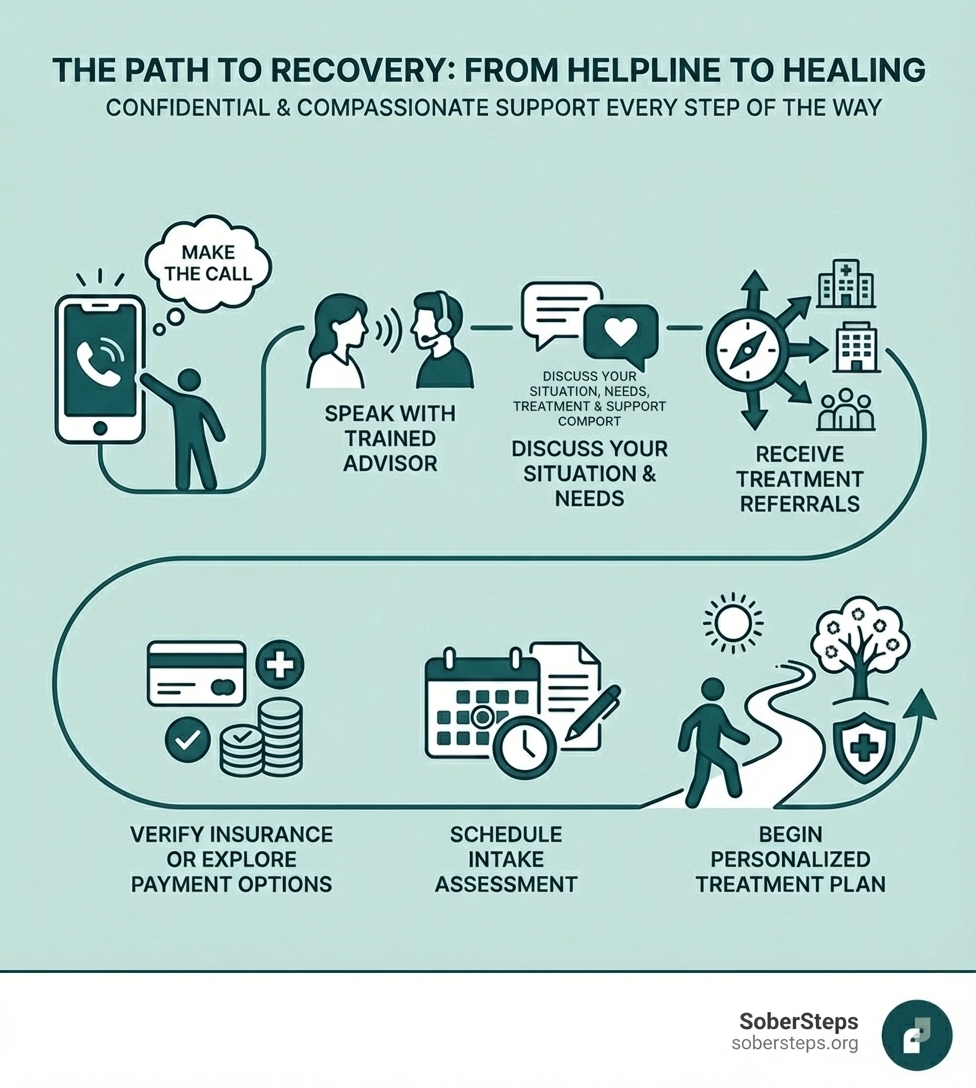
Deciding to pursue treatment after calling a confidential addiction helpline is monumental. While the helpline doesn’t provide treatment, we facilitate the connection to appropriate care. Here’s what happens next:
- Verification of benefits: If you have insurance, the treatment center verifies benefits and explains coverage
- Intake assessment: Complete a detailed assessment with the chosen facility to create a personalized treatment plan
- Arranging admission: The center helps coordinate your arrival, including travel if necessary
- Medical evaluation: Upon admission, undergo comprehensive medical and psychiatric evaluation
- Beginning treatment: Start your journey through a personalized plan, which may include detox, therapy, and medication-assisted treatment
Every step supports your path to lasting recovery. Our helpline makes this complex process simpler.
Conclusion: Take the Confidential Step Towards a New Life
We’ve covered a lot of ground, but the core message remains simple: recovery from addiction is not just a possibility—it’s a reality for millions of Americans. You are not alone in this fight, and the first, most powerful step you can take is a free, confidential call to a confidential addiction helpline.
Whether you’re questioning your own habits, desperately seeking help for a loved one, or ready to commit to a new life, our confidential addiction helpline at SoberSteps is available 24/7 to connect you with the support and treatment options you deserve. We understand the fear, the uncertainty, and the hope that comes with this journey. Let us be your trusted guide.
If you would like to read more before calling, you can review our FAQ, explore what to expect, and browse our resources to learn about treatment types, costs, and family support.
Don’t let stigma or confusion hold you back any longer. Take control of your future today. A new life, free from the grip of addiction, truly starts with one brave conversation.
Call SoberSteps now—your new life starts here.
Explore all SoberSteps resources.
If you are supporting someone else, you may also find it helpful to visit our family support and online addiction recovery support groups pages so you can get the care you need while they heal.