

Taking the First Step Away from the Storm
Addiction crisis lines are free, confidential helplines available 24/7 to provide immediate support, information, and referrals for individuals struggling with substance use or their loved ones. Here’s how to access help right now:
| What You Need | How to Access |
|---|---|
| SoberSteps Support | Contact our 24/7 helpline |
| Treatment Referrals | Our crisis line connects you to local treatment options |
| Cost | Completely free and confidential |
Nearly 49 million Americans meet the criteria for a substance use disorder, according to recent data. If you’re one of them—or if someone you love is—you’re not alone in feeling overwhelmed. The path from active addiction to recovery can seem impossibly complex, especially in a crisis.
But here’s what you need to know: help is available right now, and it starts with a single phone call.
An addiction crisis line connects you with trained specialists who understand what you’re going through. These helplines offer immediate emotional support, answer questions about addiction, explain treatment options, and connect you to resources in your area. They’re staffed 24/7, completely confidential, and free to use. You don’t need insurance to call, and you won’t face judgment or legal consequences for reaching out.
The statistics show a troubling gap: only about 1 in 4 people who need treatment actually receive it. Many don’t know where to start, while others feel too ashamed or scared to ask for help. Crisis lines exist to bridge that gap—to be the first step when everything else feels impossible.
At Sober Steps, we’ve helped thousands of individuals and families steer the journey from crisis to recovery through our compassionate support services and comprehensive addiction crisis line resources. We understand that making that first call takes courage, and we’re here to walk alongside you every step of the way.
Whether you’re calling for yourself or a loved one, whether you’re ready to enter treatment today or just exploring your options, crisis lines provide a safe space to start. They can help you understand what treatment looks like, how to verify your insurance, and what to expect from different levels of care.
Contact SoberSteps for immediate support — our specialists are standing by to help you find hope and begin your recovery journey.
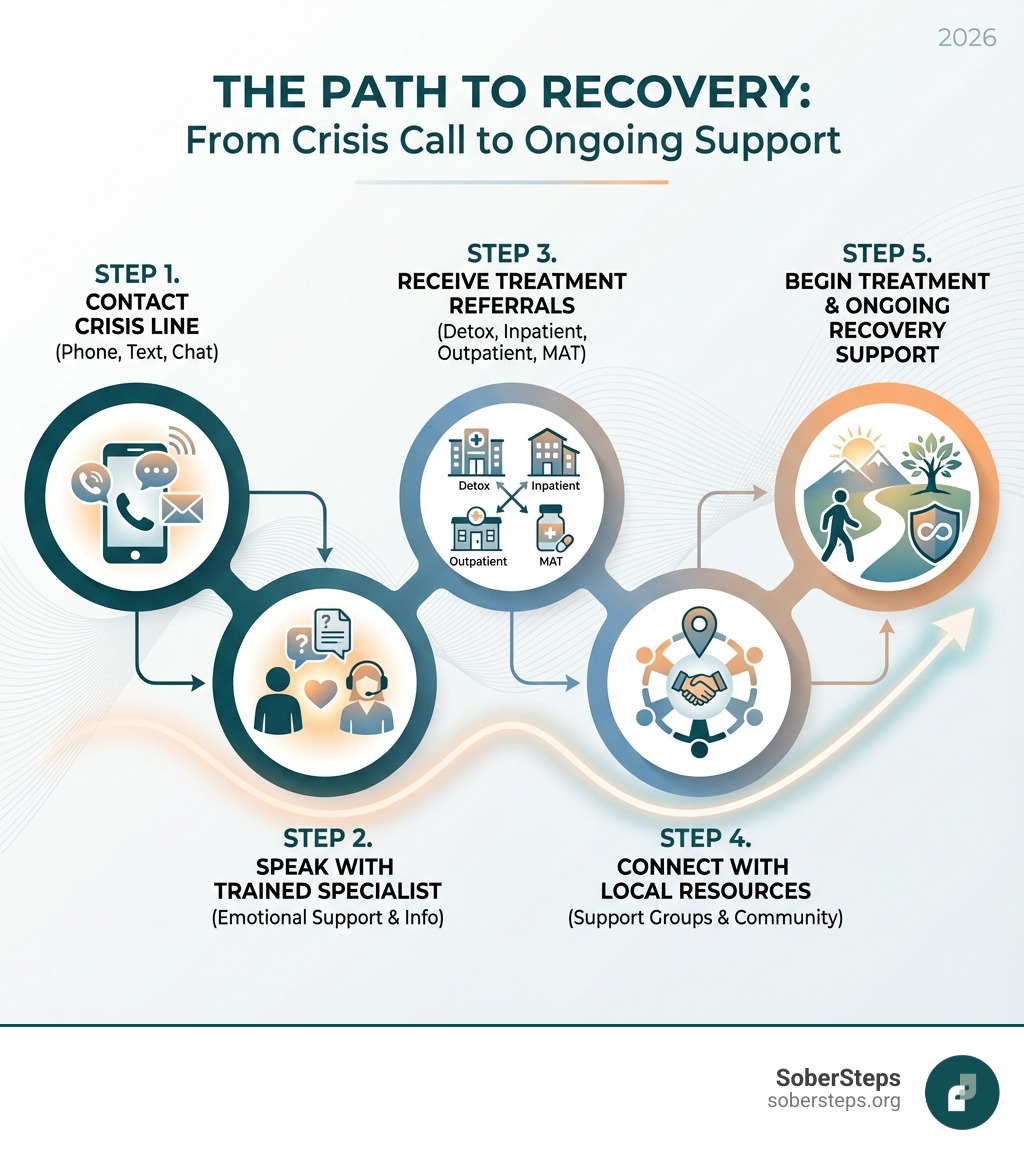
What Is an Addiction Crisis Line and How Can It Help?

An addiction crisis line is a dedicated, toll-free, and confidential helpline designed to provide immediate assistance to individuals struggling with substance misuse, as well as their concerned family and friends. These lines are typically available 24/7, offering a crucial lifeline. Unlike a general helpline, an addiction crisis line focuses on providing direct, crisis-oriented support and connecting callers to actionable resources.
An addiction crisis line’s primary goal is to offer immediate emotional support, de-escalate crises, and guide individuals toward recovery. The benefits are immense compared to navigating the complex treatment world alone. In a crisis, clarity is scarce; these lines provide a clear, compassionate path forward, cutting through confusion and fear.
Reach out to SoberSteps now to experience this supportive guidance firsthand.
What Services Do Crisis Lines Offer?
Addiction crisis lines are comprehensive resources offering a range of vital services. When you connect with a specialist through a service like SoberSteps, you can expect:
- Immediate Emotional Support: A non-judgmental space to share your struggles and receive compassionate listening and reassurance.
- Safety Planning: Guidance on how to stay safe, especially if you’re experiencing severe withdrawal, thoughts of self-harm, or are in an unsafe environment.
- Information on Addiction: Specialists can provide resourceful information about various forms of addiction, including alcoholism, drug addiction, and co-occurring mental health issues.
- Referrals to Treatment Options: Perhaps the most crucial service, crisis lines connect you to reputable addiction treatment centers and programs custom to your needs. This includes identifying appropriate levels of care such as medical detox, inpatient rehab, and outpatient programs.
- Connecting to Local Resources: They can help you find local support groups, community services, and other recovery resources in your area.
- Guidance for Families: If you’re calling on behalf of a loved one, specialists can offer advice on how to help them and steer the challenges of supporting someone with an addiction.
These services are designed to address both the immediate crisis and lay the groundwork for long-term recovery. Start your recovery journey with the support of a caring professional.
What to Expect from an Addiction Crisis Line Specialist
When you call an addiction crisis line, you’ll connect with a trained professional—like a counselor or peer support specialist—who specializes in substance use issues. Our SoberSteps specialists are equipped to provide a supportive and informative experience.
Here’s what you can generally expect:
- Non-Judgmental Listening: You’ll be met with empathy and understanding, not criticism. The specialist’s role is to listen to your situation without judgment.
- Confidential Conversation: Your call is private. Addiction crisis lines are strictly confidential, meaning your information will not be shared without your explicit consent. This privacy protects you and encourages open communication.
- Information Gathering: The specialist will ask questions to understand your situation, such as your location (to find local resources), the substance involved, and other health concerns. This helps them provide the most relevant support.
- Resourceful Guidance: Based on your conversation, they will offer valuable information about addiction, mental health, and potential next steps. They can explain different therapy options and how they might fit into a treatment plan.
- Actionable Next Steps: You’ll receive concrete suggestions for treatment, support groups, or local services, ensuring you know what to do next.
There’s no obligation to commit to treatment just because you call. The conversation is about exploring your options and getting the support you need. Speak with a SoberSteps specialist today to take that crucial first step.
When and How to Access an Addiction Helpline

Knowing when to reach out to an addiction crisis line can be challenging. However, recognizing the need for help is the first step towards recovery. We encourage you to call if you are unsure whether you have a substance use disorder or if you are concerned about casual use developing into addiction.
Here are some key indicators that it might be time to pick up the phone:
- Increased Substance Use: Using more frequently, in larger amounts, or for longer than intended.
- Neglecting Responsibilities: Work, school, or family obligations are missed or performed poorly due to substance use.
- Withdrawal Symptoms: Experiencing physical or psychological discomfort when trying to stop using.
- Failed Attempts to Quit: You’ve tried to stop or reduce use multiple times without success.
- Relationship Problems: Substance use is causing significant conflict with family, friends, or partners.
- Financial or Legal Issues: Money or legal troubles arise due to substance use.
- Overdose Risk: Concerns about potential overdose, especially with potent substances.
- Worsening Mental Health: Experiencing increased anxiety, depression, or suicidal thoughts linked to substance use. Many individuals experience a dual diagnosis, where mental health and substance use disorders co-occur.
- Feeling Hopeless or Out of Control: A pervasive sense that you can’t manage your substance use or your life.
If any of these signs resonate, don’t hesitate. An addiction crisis line is there to provide support without judgment. Call our confidential helpline now.
Signs You or a Loved One Should Call
Let’s dive deeper into specific signs that signal a need to contact an addiction crisis line. These represent a significant impact on an individual’s life and well-being.
- Loss of Control: Inability to limit substance use, despite intentions to do so.
- Tolerance and Withdrawal: Needing more of the substance for the same effect or experiencing symptoms when not using.
- Time and Energy Spent: A significant amount of time is spent obtaining, using, or recovering from the substance.
- Continued Use Despite Harm: Continuing to use even when it causes physical, psychological, or social harm.
- Isolation: Withdrawing from social activities and loved ones.
- Secretive Behavior: Hiding or lying about substance use.
- Risky Behaviors: Engaging in dangerous activities under the influence or to acquire substances.
- Emotional Changes: Increased irritability, mood swings, anxiety, or depression.
These signs indicate that professional help is needed. Early intervention can prevent further harm and improve the chances of successful recovery. For insights into preventing a return to old patterns, explore more on relapse prevention.
Get help for yourself or a loved one—our specialists are ready to listen.
How to Contact an Addiction Crisis Line
Accessing an addiction crisis line is designed to be as straightforward as possible. We understand that taking this step can be daunting, so we offer multiple ways to connect.
Here are the common methods for contacting an addiction crisis line:
- Calling by Phone: This is the most traditional and often the quickest way to receive immediate support. Our SoberSteps 24/7 Helpline is available via phone for confidential assistance.
- Sending a Text Message: For those who prefer not to speak aloud or are in a situation where calling isn’t feasible, many crisis lines offer text support. This method provides a discreet way to communicate with a specialist.
- Using Online Chat Services: Some organizations provide online chat portals on their websites, allowing for real-time text-based conversations with trained advisors.
No matter which method you choose, the goal is to connect you with compassionate, knowledgeable support. Connect with SoberSteps now to explore your options.
How to Prepare for a Call to an Addiction Crisis Line
While you don’t need to prepare extensively to call an addiction crisis line—the most important thing is simply to call—a little preparation can help you make the most of the conversation.
Here are some tips:
- Find a Private Space: If possible, find a quiet area where you can speak openly without interruption.
- Be Ready to Be Honest: The more honest you are, the better the specialist can assist you. These conversations are confidential and non-judgmental.
- Write Down Questions: It’s common to feel overwhelmed. Jotting down questions beforehand can ensure you get the information you need. Ask anything, such as “How do I know if my family member needs treatment?” or “Will my health insurance cover treatment?”
- Have Basic Information Ready (If Applicable): Details about the substance(s) involved, duration of use, and any health concerns can help the specialist provide custom advice. They may ask for your zip code to find local resources.
- Understand There’s No Obligation: You are not committing to anything by calling. The call is for information and support. Our specialists can even help you verify your insurance coverage to understand your financial options.
Taking these small steps can empower you to have a more productive conversation. Prepare and call SoberSteps today—we are here to guide you.
Finding the Right Help: Types of Helplines and Treatment Connections
Once you’ve made the courageous decision to reach out, an addiction crisis line becomes your guide in navigating the vast landscape of recovery options. The specialists are experts at connecting callers to help, understanding that finding the right treatment is crucial for long-term success. They serve as a bridge, translating your immediate needs into actionable referrals. We believe everyone deserves access to accurate, unbiased information, and our goal is to connect you with the resources that best fit your unique situation. For a comprehensive overview, explore our complete guide to drug treatment programs.
Find the right treatment for you with our expert assistance.
National, State, and Specialized Helplines
The world of addiction crisis lines is diverse, with resources available at national, state, and specialized levels. While all aim to provide support, their focus can vary. SoberSteps helps connect you to these various resources, ensuring you find the most appropriate support.
| Helpline Type | Description | Examples (SoberSteps Connection) |
|---|---|---|
| National Helplines | Broad reach, offering general information, support, and referrals across the United States. | SoberSteps 24/7 National Helpline |
| State-Specific Resources | Focused on resources available within a particular state, providing more localized treatment options. | SoberSteps can connect you to state-specific resources. |
| Specialized Lines | Designed for specific populations or substance types, offering custom support. | SoberSteps can connect veterans, youth, or those with specific needs like Opioid addiction help to specialized resources. |
For example, there are specialized resources for veterans and their families, offering confidential support 24/7. Similarly, there are specific resources dedicated to addressing the opioid crisis. SoberSteps is committed to ensuring you find the right specialized support, whether it’s for opioid addiction help or other specific needs.
See all SoberSteps helplines to find the comprehensive support available.
From Helpline to Healing: Connecting to Treatment and Support Groups
One of the most powerful services an addiction crisis line provides is the seamless connection from initial contact to tangible healing resources. After assessing your situation, specialists can guide you toward various forms of addiction treatment and crucial support networks.
This process often involves referrals to:
- Detox Facilities: For individuals needing to safely manage withdrawal symptoms under medical supervision.
- Inpatient Rehab Programs: Offering structured, 24/7 care in a residential setting.
- Outpatient Programs: Providing treatment while allowing individuals to live at home, including Partial Hospitalization Programs (PHPs) and Intensive Outpatient Programs (IOPs).
- Medication-Assisted Treatment (MAT): Combining medications with counseling to treat substance use disorders. SoberSteps can help you find MAT options.
- Support Groups: Crisis lines play a vital role in connecting people to peer-led support groups like Alcoholics Anonymous (A.A.), Narcotics Anonymous (NA), and SMART Recovery, as well as groups for family members. These groups offer ongoing support and a sense of community crucial for long-term recovery.
Our specialists can also help you use national databases and tools to locate treatment facilities, including those offering medication-assisted treatment, and help you choose from different programs.
These connections are not just about finding a place; they’re about finding the right fit for an individualized treatment plan. Start your healing process by letting us help you find these essential resources.
Support for Families and Friends
Addiction is a family disease, affecting not just the individual but everyone around them. If you’re a family member or friend of someone struggling with addiction, an addiction crisis line is an invaluable resource for you too. We understand the immense pain, frustration, and helplessness you might feel.
Our specialists can provide guidance on:
- How to Help: Learning effective strategies to support your loved one without enabling their addiction.
- Setting Boundaries: Understanding the importance of healthy boundaries for both your well-being and your loved one’s recovery.
- The Importance of Self-Care: Addiction can be emotionally draining for caregivers. Crisis lines can help you recognize the need for your own support.
- Intervention Strategies: Advice on how to approach your loved one about their addiction, including information on staging an intervention if necessary.
- Understanding Codependency: Learning about codependent behaviors and how to foster healthier relationships.
- Connecting to Family Support Groups: Referrals to groups like Al-Anon or Nar-Anon, which offer support specifically for those affected by a loved one’s addiction.
You can call an addiction crisis line to get information for yourself or on behalf of a friend or family member. This includes learning about signs of misuse and understanding options for getting them help. Our specialists can also direct you to helpful literature and resources, which emphasize that you are not alone and provide guidance on how to cope and encourage recovery.
Get family support now—we are here to empower you.
Frequently Asked Questions about Addiction Helplines
Are addiction crisis lines truly confidential and free?
Yes, absolutely. This is a cornerstone of the service provided by reputable addiction crisis lines, including those connected through SoberSteps.
- Confidentiality: All conversations with our specialists are private and secure. There’s no risk of your information being shared with unauthorized parties. This strict privacy policy creates a safe space where you can speak openly without fear of judgment. You can read our privacy policy for more details.
- Free to Use: Calling an addiction crisis line incurs no cost to you. These are toll-free services, and the information and support provided are completely free. You do not need health insurance to call. While any subsequent treatment you pursue might involve costs, the initial call to a crisis line is always free.
The goal is to remove barriers to seeking help, and ensuring confidentiality and zero cost is paramount to that mission.
What if the person I’m calling about refuses help?
It’s heartbreaking when a loved one with an addiction is unwilling to accept help. An addiction crisis line is still incredibly beneficial in this situation. Our specialists can offer:
- SoberSteps Guidance: We can provide strategies on how to approach your loved one, communicate your concerns effectively, and express support without enabling their substance use.
- Intervention Strategies: Advisors can discuss different intervention methods, helping you understand how to stage a constructive conversation that encourages treatment.
- Support for the Caller: Dealing with a loved one’s addiction is emotionally taxing. The crisis line can offer emotional support for you, helping you cope with the stress.
- Codependency Resources: Specialists can provide information on codependency, helping you identify and address unhealthy patterns that might inadvertently perpetuate the addiction.
- Importance of Planting a Seed: Even if your loved one refuses help initially, your call can equip you with knowledge to “plant a seed” that may grow into a willingness to seek help later. Your informed support can be a powerful catalyst.
You’re not alone. Learn about group therapy options for families and individuals, which can also provide a supportive community. Speak with a SoberSteps counselor for personalized advice on navigating this difficult situation.
What is the difference between SoberSteps helplines and other resources?
The landscape of addiction resources is confusing. Understanding the distinctions between helplines is key to getting reliable, unbiased information.
While many helplines are valuable, some are run by for-profit treatment centers that may bias referrals toward their own facilities or paid partners.
SoberSteps operates as an independent platform, connecting callers to a network of paid advertiser treatment providers. Our commitment is to transparency and helping you find the right fit.
- Focusing on Personalized Support: Our specialists take the time to understand your unique situation before offering guidance, ensuring referrals are relevant to your needs, location, and financial situation.
- How to Identify Legitimate Lines: We educate callers on what to look for in a trustworthy resource, emphasizing non-judgmental, confidential, and free services.
- Avoiding Scams: We help you steer away from potentially predatory services that might prioritize profit over patient care.
- Transparency: We aim to provide comprehensive information about various treatment options and levels of care, empowering you to make an informed decision.
The difference lies in our dedication to guiding you through a complex system with clarity and care, ensuring you feel supported and informed. Learn more about SoberSteps and our mission.
Conclusion: Your Path to Recovery Starts with a Single Call
In the midst of the storm of addiction, a lifeline is always available. Addiction crisis lines are more than just phone numbers; they are gateways to hope, understanding, and tangible help. We’ve seen countless individuals and families find their way to recovery, and it often begins with the courageous act of reaching out.
Overcoming the fear and stigma of addiction is challenging, but these confidential, free, and non-judgmental services are designed to make that first step easier. The power of connecting with a specialist, a supportive community, and effective treatment is immense. Recovery is not just a possibility; it’s a reality that begins with action.
At SoberSteps, we are here to guide you through every stage of this journey. Our specialists are ready to listen, provide information, and connect you to the resources you need, whether it’s for immediate crisis intervention, exploring treatment centers now, or finding ongoing support.
Don’t let another day pass in silence or struggle. Your path to recovery starts with a single call.
Call our 24/7 helpline for a confidential assessment and let us help you find the peace and healing you deserve. Take your first step with SoberSteps today.