Why Finding Free Rehab Centers Near Me Feels Impossible (But Isn’t)
Free rehab centers near me are available, but finding them requires knowing where to look. Here’s how to access them quickly:
Fast Track to Free Rehab:
- Call SoberSteps.org: 1-844-491-5566 for immediate referrals to free or low-cost treatment.
- Use FindTreatment.gov: Search by location and filter for “free” or “sliding scale” payment options.
- Contact your state’s behavioral health agency: Most states fund public addiction treatment centers.
- Check Medicaid eligibility: The Affordable Care Act requires coverage for substance use disorder treatment.
- Reach out to non-profit organizations: 45% of facilities offer free or minimal payment treatment.
Who Typically Qualifies:
- Individuals without insurance or income
- State residents meeting income thresholds
- Priority populations (e.g., pregnant women, IV drug users)
- Veterans through VA benefits
If you’re searching for treatment but worried about cost, you’re not alone. Addiction treatment can be expensive, but cost should never be a barrier to recovery. Millions of Americans access free or low-cost addiction treatment every year through government programs, non-profits, and faith-based services.
The challenge isn’t that free rehab doesn’t exist; it’s that the system is confusing. Most people don’t know where to start.
At Sober Steps, we help people steer the complex landscape of free rehab centers near me. We connect them with government-funded programs, non-profits, and affordable options that fit their situation. Our mission is to ensure everyone seeking recovery has access to the resources they need, regardless of their financial circumstances.
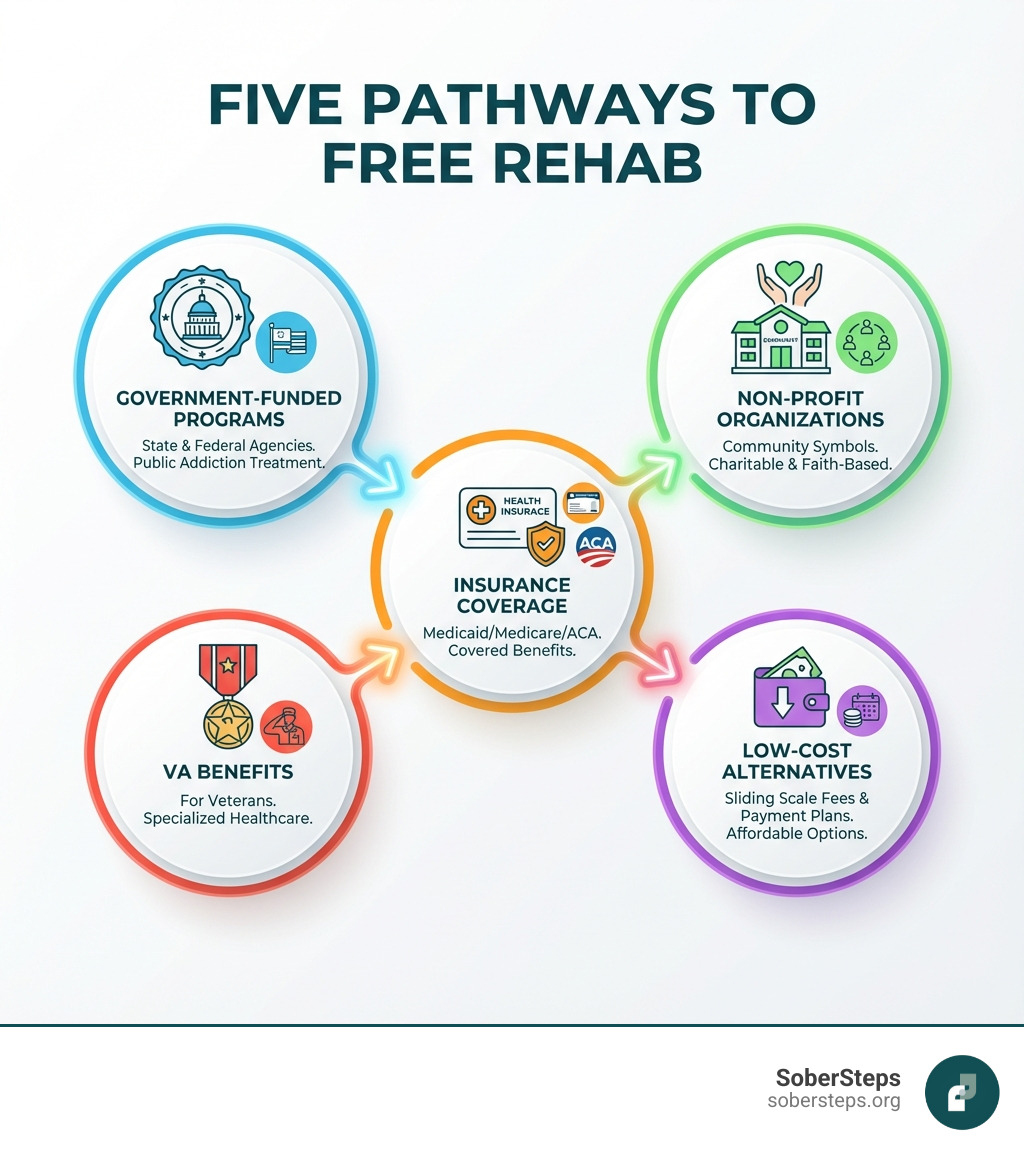
This guide shares five proven strategies to find free addiction treatment, from government resources to community programs and insurance benefits.
Find more about free rehab centers near me:
- female rehab centers
- find addiction treatment
Hack 1: Leverage Government-Funded Programs and Resources
Finding free rehab centers near me often starts with government-funded programs. These are vital public health initiatives designed to ensure everyone can access life-saving addiction treatment, regardless of their economic situation. Think of it as your tax dollars providing essential services when you need them most.
Government-funded programs typically fall into a few categories:
- State-funded rehabs: Many states operate public treatment centers or contract with private facilities. These programs have specific eligibility criteria but are a fantastic resource for those with limited means.
- Federal grants: The Substance Abuse and Mental Health Services Administration (SAMHSA) provides grants to expand access to treatment, often supporting facilities that offer free or low-cost services.
- Public mental health services: These broader services often include addiction treatment as part of a comprehensive approach to behavioral health, usually administered at the state or county level.
- Block grants: Federal block grants are allocated to states, which then distribute the funds to local providers and community-based treatment centers.
These programs are crucial because they break down financial barriers for the uninsured and underinsured, making recovery a possibility for more people.
How to find government-funded free rehab centers near me
Navigating government resources can feel daunting, but these steps will help you pinpoint free rehab centers near me:
- National Helplines: The quickest way to start is by calling a national helpline. The SAMHSA National Helpline at 1-800-662-HELP (4357) offers confidential, 24/7 treatment referral and information. For immediate crisis support, the 988 Suicide & Crisis Lifeline is also available 24/7 by calling or texting 988.
- Online Directories: FindTreatment.gov is a comprehensive online resource from SAMHSA. You can search for facilities by location and filter by payment options, including “free” or “sliding fee scale.” The site is regularly updated and even has helpful video tutorials.
- State Behavioral Health Agency Websites: A quick search for your state’s “Department of Mental Health and Substance Abuse” or “Behavioral Health Services” will lead you to their official website. These sites list state-funded programs, eligibility criteria, and application processes.
- County Health Departments: Your local county health department can provide information on local programs, including those with financial assistance or free services.
When applying, be prepared to provide proof of residency, income verification (programs are often for low-income individuals), and lack of insurance documentation.
What to expect from the admission process
The admission process for government-funded free rehab centers near me is structured. Here’s what to expect:
- Initial Contact and Screening: The process begins with a call or inquiry where you’ll provide basic personal, substance use, and health information to see if the facility’s services match your needs.
- Clinical Assessment: Next is a thorough clinical assessment, including interviews and medical evaluations, to create a personalized treatment plan and determine the appropriate level of care.
- Eligibility Verification: This is the paperwork stage. You’ll need to provide documentation to prove citizenship or legal residency, state residency, and financial status (income, lack of insurance).
- Potential Waitlists: Due to high demand, many free rehab centers have waitlists. Don’t be discouraged. Get on multiple lists if possible and explore interim support like outpatient counseling or support groups.
- Priority Populations: Government programs often prioritize certain groups, such as pregnant women, IV drug users, or those with dependent children. If you fall into one of these categories, you might have quicker access.
While the process can be detailed, it ensures resources go to those who need them most. A bit of patience can open the door to invaluable treatment.
Hack 2: Explore Non-Profit and Community-Based Organizations
Beyond government programs, a vast network of non-profit and community groups plays a heroic role in providing free rehab centers near me. Fueled by donations, endowments, and a commitment to their communities, these organizations represent the heart of grassroots recovery efforts.
The role of non-profit organizations in free rehab
Non-profits are critical in making addiction treatment accessible. Here’s why they’re so important:

- Mission-driven care: Unlike for-profit centers, non-profits are driven by their mission to serve, not by profit. This often translates to a focus on person-centered care, regardless of a client’s ability to pay.
- Scholarships and financial aid: Many non-profits offer direct financial assistance or scholarships to individuals who cannot afford treatment, sometimes acting as a bridge to care at private facilities.
- Serving specific populations: Non-profits frequently specialize in serving underserved populations, such as veterans, homeless individuals, or LGBTQ+ communities, tailoring services to unique cultural needs.
- A major source of free treatment: Our research shows that 45% of surveyed facilities provide free or minimal payment treatment. A large portion of these are non-profits, highlighting their crucial role in accessible care.
- Broader community initiatives: Non-profits often lead initiatives beyond direct treatment, such as harm reduction services (e.g., naloxone distribution) or job and housing support for those in recovery.
How community-based programs differ from other free options
Community-based and faith-based programs offer unique and effective approaches to recovery:
- Local support integration: These programs are deeply embedded in their communities, offering a sense of belonging and ongoing support that extends beyond treatment, including resources like housing and employment assistance.
- Peer support and 12-Step models: Many programs incorporate 12-Step philosophies (like AA and NA) and strong peer support networks, emphasizing shared experience and mutual accountability.
- Moral and ethical guidance: Faith-based programs, like those run by The Salvation Army, often integrate spiritual guidance with treatment. SAMHSA recognizes their effectiveness in providing a framework for moral and ethical living. They often provide robust residential programs that combine addiction services with life skills and work training.
- Community service: Some long-term residential programs may include community service or work therapy, helping individuals rebuild self-esteem and vocational skills.
- Open to all: While faith-based, many of these organizations welcome individuals from all backgrounds. It’s always wise to inquire about their specific approach to ensure it aligns with your personal beliefs.
If you’re looking for free rehab centers near me with a strong sense of community, exploring non-profit and faith-based organizations is a powerful hack.
Hack 3: Open up Your Insurance and Mandated Coverage Benefits
“I don’t have insurance, so I can’t get help.” This is a common misconception. Many people don’t realize their health insurance—or plans they qualify for—can cover most, if not all, of their treatment costs. Landmark legislation now classifies addiction treatment as an essential health benefit. We encourage everyone to review their insurance documents or call their provider directly.
Does Medicaid or Medicare cover addiction treatment?
Yes, Medicaid and Medicare absolutely cover addiction treatment!
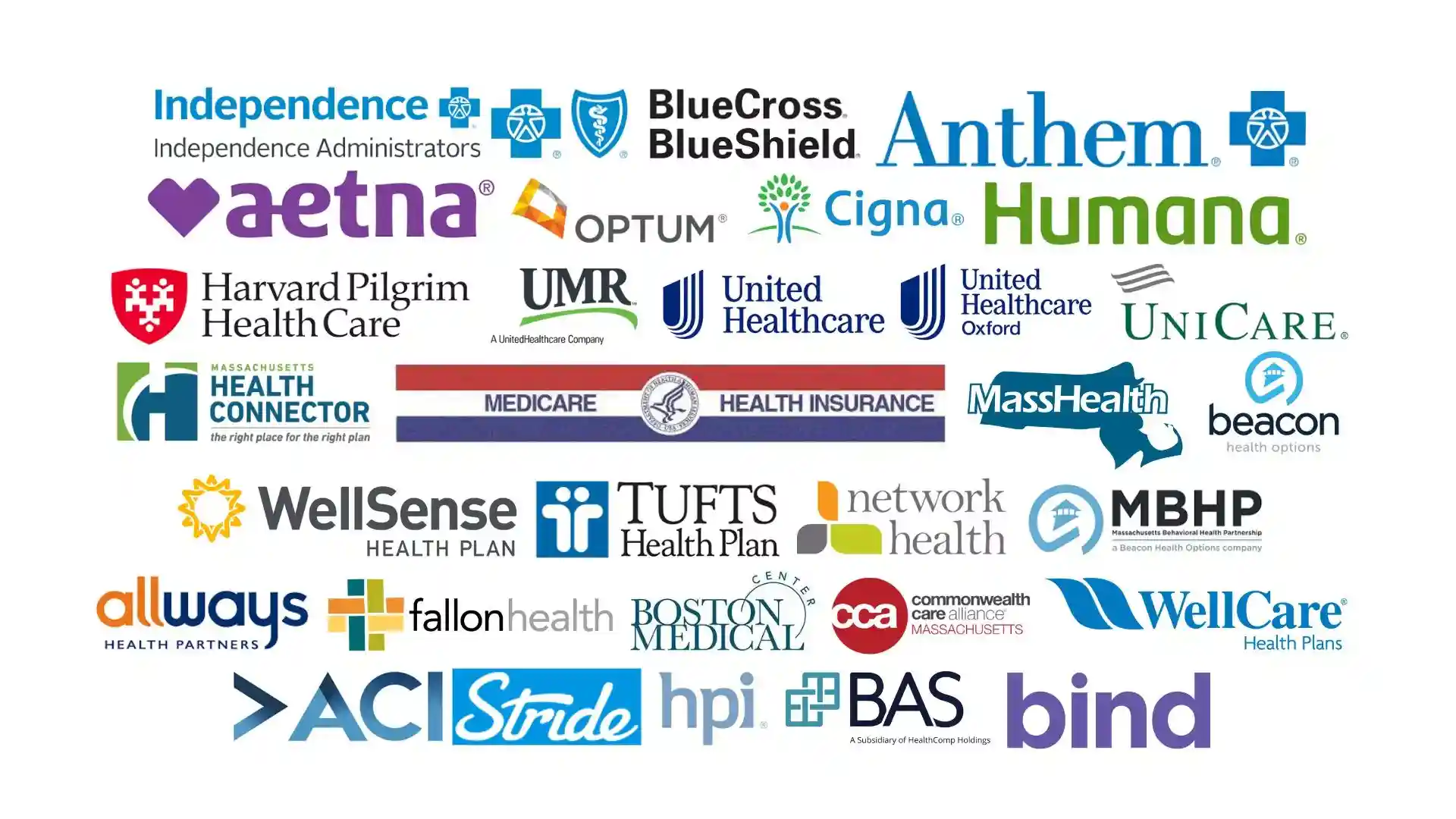
- Medicaid: This program provides healthcare to low-income individuals. Thanks to the Affordable Care Act (ACA), substance use disorder (SUD) treatment is an essential health benefit. This means all Marketplace and Medicaid expansion plans must cover it. State eligibility and coverage amounts vary, and you might have a co-payment. It’s crucial to check that a rehab center accepts Medicaid.
- Medicare: This federal program for people 65 or older, and younger people with certain disabilities, also covers addiction treatment, including inpatient, outpatient, and mental health services.
If you’re looking for free rehab centers near me and meet the income requirements for Medicaid, this is a major pathway to affordable care. We can help you verify your eligibility and find facilities that accept these programs.
How to use the Affordable Care Act (ACA) for rehab
The Affordable Care Act (ACA), or Obamacare, revolutionized healthcare coverage for addiction and mental health treatment.
- Essential Health Benefits: The ACA mandates that all Marketplace and most individual/small group plans cover SUD and mental health services as one of 10 essential health benefits.
- No Pre-existing Conditions: The ACA prevents insurance companies from denying coverage or charging more for pre-existing conditions, including addiction.
- Mental Health Parity: The ACA reinforces laws ensuring that coverage for mental health and SUD services is comparable to coverage for medical care.
- Finding a Navigator: If you’re uninsured, you can enroll in a Marketplace plan during open enrollment or a special enrollment period. Navigators are available to help you understand your options and sign up.
By understanding your rights under the ACA and exploring Medicaid/Medicare, you can open up significant coverage for treatment, often making it feel like you’ve found free rehab centers near me because the financial burden is so dramatically reduced.
Hack 4: Find Low-Cost Alternatives If You Don’t Qualify for Free Rehab
If you don’t qualify for free services or lack coverage, don’t give up. Many paths to affordable treatment exist. Recovery is a journey, and creative problem-solving can help you find the right entry point. Just because something isn’t completely free doesn’t mean it’s out of reach. There are multiple avenues to make treatment financially feasible.
How to find low-cost or sliding scale free rehab centers near me
If free options are elusive, low-cost alternatives with sliding fee scales are your next best option, designed to meet you where you are financially:
- Sliding Fee Scale: The cost of treatment is adjusted based on your income. Our research indicates that a significant 58% of facilities offer a sliding fee scale, allowing you to pay what you can realistically afford.
- Payment Plans: Many treatment centers, even private ones, are willing to work with you on a payment plan, breaking the total cost into manageable monthly installments.
- Rehab Scholarships: Some facilities or non-profits offer scholarships that can cover a portion or all of treatment costs. This often requires an application but is well worth the effort.
- Telehealth and Online Programs: These options are often more affordable than traditional in-person treatment and can provide crucial support at a lower price point.
When searching for free rehab centers near me, expand your search to include “sliding scale” or “low-cost” options. Many of these facilities still provide high-quality, evidence-based care.
Are there free inpatient rehab options available?
Yes, free inpatient rehab options are available, but with some caveats.
- Limited Access and High Demand: Free inpatient rehab, where you live at the facility 24/7, is in very high demand and often has long waitlists.
- State-Funded Facilities: Many states operate residential treatment centers that offer free or very low-cost inpatient care, especially for priority populations.
- Non-Profit Residential Programs: Certain non-profits and faith-based groups (like The Salvation Army) run free or low-cost residential programs, which are often long-term and may involve work therapy.
- Combining Options for Coverage: If a fully free inpatient option isn’t available, explore combining resources. For example, Medicaid can cover inpatient treatment at accepting facilities, effectively making it “free” for you. Scholarships from non-profits could also cover the cost.
Finding a free inpatient slot might require persistence, but it is possible. Be proactive, explore all avenues, and don’t be afraid to ask for help navigating the options.
Frequently Asked Questions about Free Rehab
We know you have questions, and we’re here to provide clear answers about free rehab centers near me.
What services are typically included in free rehab programs?
You might wonder if “free” means “less comprehensive.” Not at all. While amenities may be simpler than in luxury facilities, free rehabs provide essential, evidence-based care to help you achieve recovery.
Typically, you can expect:
- Medical Detox: Medically supervised detoxification to safely manage withdrawal. Many free rehabs have partnerships or referrals for this service.
- Inpatient (Residential) Care: Living at the facility for structured, supportive 24/7 care.
- Outpatient Programs: Includes Partial Hospitalization (PHP) and Intensive Outpatient (IOP), allowing you to live at home while attending treatment.
- Individual Counseling: One-on-one therapy to address underlying issues and develop coping skills.
- Group Therapy: Sessions that provide vital peer support and shared experiences.
- Educational Classes: Education on addiction, relapse prevention, and life skills.
- Medication-Assisted Treatment (MAT): For opioid and alcohol use disorders, many programs integrate FDA-approved medications with counseling. SAMHSA provides resources to find practitioners offering buprenorphine and opioid treatment programs.
- Aftercare Planning: Developing a plan for continued support after treatment, including referrals to support groups or sober living.
How long do free rehab programs typically last?
The duration of free rehab centers near me varies based on individual needs, program type, and funding. There isn’t a one-size-fits-all answer.
- Short-Term Programs: Many residential programs last around 30 days for intensive initial stabilization.
- Medium-Term Programs: Some programs extend to 60 or 90 days, which is beneficial for more severe addictions or co-occurring disorders.
- Long-Term Residential: Certain non-profit and faith-based programs offer longer stays, sometimes up to a year, often with vocational training.
- Outpatient Flexibility: Outpatient programs offer flexible durations, with treatment intensity decreasing as you progress.
The best duration aligns with clinical recommendations and your personal recovery journey.
Can veterans use VA benefits to pay for rehab?
Yes, eligible veterans can use VA benefits to pay for addiction treatment. The U.S. Department of Veterans Affairs (VA) provides comprehensive healthcare, including substance abuse treatment, to qualifying veterans.
Here’s what you need to know:
- VA Healthcare System: The VA operates an extensive network of facilities offering a range of addiction treatment services, from residential to outpatient care.
- Community Care Network: If services aren’t available at a VA facility, veterans may access treatment from approved non-VA providers through the Community Care Network.
- Co-Occurring Disorders: VA programs are often designed to address addiction alongside service-related conditions like PTSD with specialized care.
- Eligibility: To access VA benefits, you must be an eligible veteran. Contact your local VA facility or a state resource like the Florida Department of Veterans Affairs (similar departments exist nationwide) to understand eligibility and enrollment.
If you are a veteran seeking free rehab centers near me, the VA is an invaluable resource.
Your Path to Recovery Starts With a Single, Confidential Step
Finding free rehab centers near me can feel daunting, but as we’ve explored, the resources are out there. Recovery is a necessity, not a luxury, and cost should never be a barrier. We firmly believe that everyone deserves a chance at a healthier, sober life.
Taking the first step requires immense courage, but you don’t have to do it alone.
At Sober Steps, we are committed to providing confidential, anonymous help for mental health and substance use disorders. Our platform connects you with the resources you need, empowering you to make informed decisions about your treatment journey.
If you’re ready to take that courageous first step, or if you simply need someone to talk to about your options, we’re here for you. Help is available 24/7.
Find a female-focused rehab center today and start your journey towards a brighter future.
Call us at (844) 491-5566 for confidential assistance.