

Understanding Your Path to Recovery
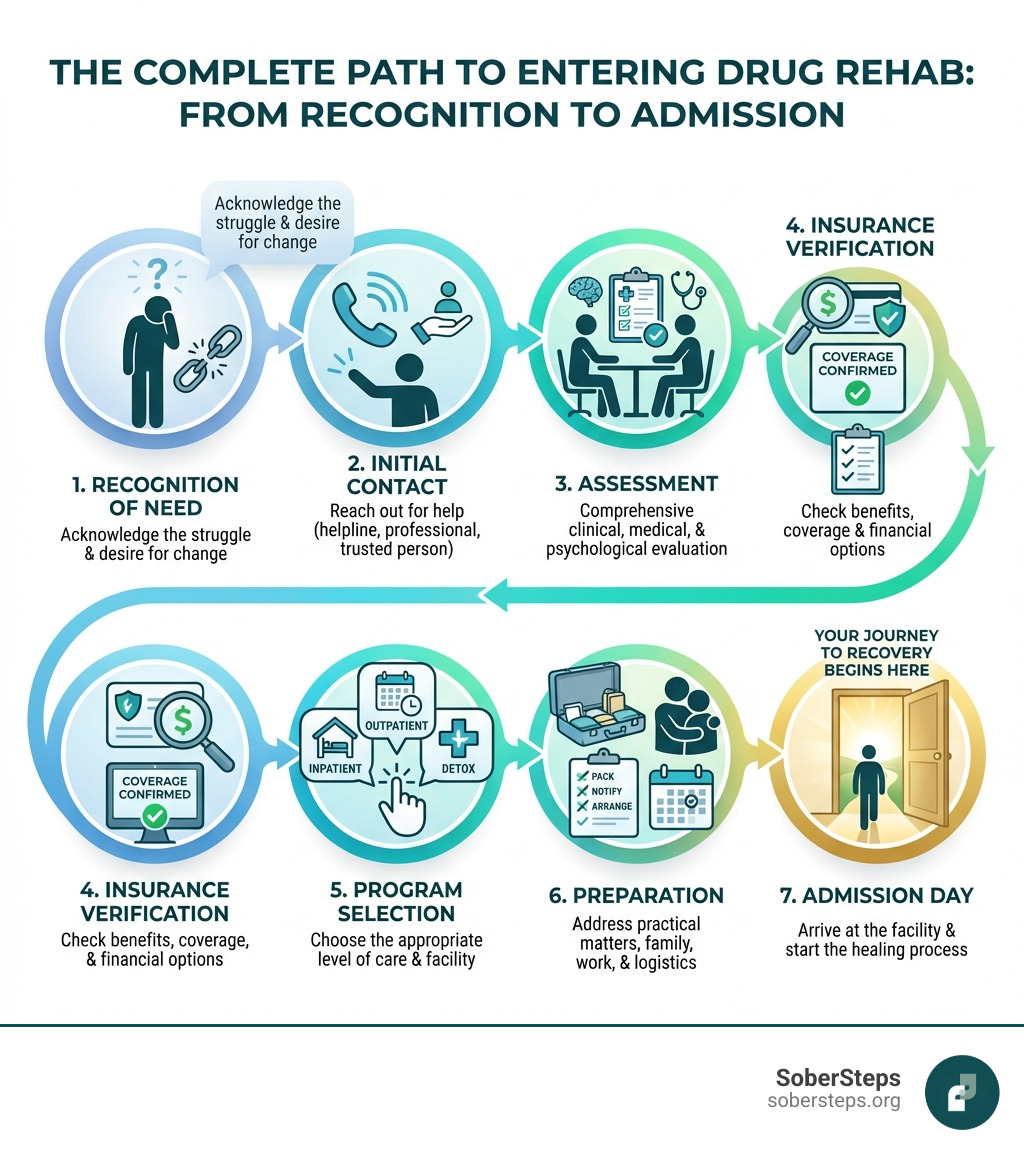
How to get into drug rehab begins with recognizing the need for help. While the path forward can feel overwhelming, it doesn’t have to be. Here’s a quick overview of the essential steps:
- Recognize the need for professional treatment
- Choose the right program type (detox, inpatient, outpatient, etc.)
- Steer the admissions process (assessment, insurance verification, intake)
- Address practical concerns (work, family, finances)
- Prepare for treatment and plan for aftercare
The good news is that substance use disorder is treatable, and recovery is possible. According to SAMHSA, millions of people receive substance use treatment each year. The journey starts with the decision to seek help. Understanding the process can reduce anxiety and empower you to move forward with confidence.
At SoberSteps, we guide individuals and families through how to get into drug rehab. Our compassionate team offers confidential guidance and connects people to quality treatment, understanding that every recovery journey is unique.
If you or a loved one is struggling with addiction, don’t wait. Contact SoberSteps’ confidential helpline today for immediate support and guidance. Help is available 24/7, and taking this first step could save a life.
Relevant articles related to how to get into drug rehab:
Step 1: Recognizing the Need and Taking the First Step

Deciding to seek help for drug addiction is the most crucial step toward recovery. It means confronting a difficult problem, but this initial decision is often the hardest part. Addiction is a complex disease affecting the brain and behavior; it is not a moral failing but a health issue that requires professional help. SoberSteps is here to explain the process and highlight the benefits of treatment.
Call to Action: Take the first step now—reach out for help.
Signs You or a Loved One Needs Rehab
Recognizing the signs of addiction can be difficult, as they manifest differently in each person. A crisis, health scare, or relationship breakdown can often be a turning point. Here are common signs that indicate a need for professional help:
- Behavioral Changes: Increased secrecy, avoiding responsibilities, lying about substance use, social withdrawal, or borrowing money.
- Physical Signs: Vary by substance. May include smelling of alcohol, hyperactivity from stimulants, or poor personal hygiene.
- Psychological Symptoms: Mood swings, irritability, anxiety, depression, or paranoia.
- Neglecting Responsibilities: Failure to meet obligations at work, school, or home.
- Relationship Problems: Arguments, mistrust, and isolation from loved ones.
- Financial Issues: Unexplained financial difficulties or spending excessively on substances.
These signs suggest that substance use has become unmanageable and professional intervention is necessary.
How to Support a Resistant Loved One
It’s difficult when a loved one refuses help. While the decision is ultimately theirs, your support can be pivotal. Here’s how to approach a resistant loved one about getting into drug rehab:
- Choose a Private Setting: Speak openly in a calm, distraction-free environment.
- Express Concern with “I” Statements: Focus on how their addiction affects you (e.g., “I feel worried…”) rather than making accusations.
- Listen Without Judgment: Hear their fears and concerns without arguing or shaming them.
- Offer Support, Not Enabling: Clarify that you support their recovery but will not enable their substance use by setting firm boundaries.
- Be Patient: Change may take multiple conversations. Keep communication open.
- Consider Professional Guidance: An interventionist can facilitate difficult conversations and help your loved one recognize the need for treatment.
The goal is to help them realize there is a problem and that you are there for them on their path to recovery.
The Benefits of Attending Drug Rehab
Understanding the benefits of rehab can be highly motivating. It’s not just about stopping substance use; it’s about building a foundation for a sober life. Key benefits include:
- Safe Environment: A secure, substance-free setting away from triggers and negative influences.
- Medical Supervision: Medical detox ensures a safe and comfortable withdrawal process, which is crucial for certain substances.
- Peer Support: Connecting with others in recovery reduces isolation and fosters mutual encouragement.
- Learning Coping Skills: Treatment provides healthy coping mechanisms to manage stress, cravings, and triggers.
- Therapy and Counseling: Individual, group, and family therapy address the root causes of addiction and co-occurring disorders.
- Structure and Routine: A structured schedule helps re-establish healthy habits and discipline.
- Holistic Healing: Many programs address the mind, body, and spirit through nutrition, exercise, and mindfulness.
These comprehensive benefits offered through SoberSteps’ network provide the best chance for sustainable recovery.
Call to Action: See how SoberSteps can help you or your loved one start a new chapter.
Step 2: Finding the Right Treatment Path

Addiction treatment is not one-size-fits-all. The right path to recovery depends on individual needs. SoberSteps helps you steer the various treatment options to find the program that’s best for you.
Call to Action: Explore your treatment options with SoberSteps.
Types of Drug Rehab Programs
Understanding the different types of drug rehab programs is essential when considering how to get into drug rehab. These programs offer a continuum of care for varying levels of addiction.
- Medical Detox Programs: Often the first step, providing a medically supervised environment to safely withdraw from substances like alcohol, benzodiazepines, and opioids.
- Inpatient Drug Rehab / Residential Treatment: Requires living at the facility (typically 30-90+ days) for immersive, 24/7 care. Ideal for severe addiction or those needing a structured environment.
- Inpatient Drug Rehab
- Residential Treatment (offered through SoberSteps’ network)
- Partial Hospitalization Programs (PHP): A step down from inpatient care. Clients attend intensive therapy for several hours a day but live at home or in sober living.
- Partial Hospitalization Programs (PHP) (available via SoberSteps partners)
- Intensive Outpatient Programs (IOP): Less time-intensive than PHP, allowing clients to manage work or family responsibilities while receiving structured therapy.
- Intensive Outpatient Programs (IOP) (find through SoberSteps)
- Standard Outpatient Programs (OP): The least intensive option, with weekly therapy sessions. Best for mild SUDs or as a step-down from higher levels of care.
- Standard Outpatient Programs (OP) (SoberSteps can connect you)
- Sober Living Homes: Transitional, substance-free residences that offer peer support and structure for those in early recovery.
- Sober Living (SoberSteps can refer you)
To help you visualize the differences, here’s a quick comparison:
| Feature | Inpatient Rehab (Residential) | Outpatient Rehab (PHP, IOP, OP) |
|---|---|---|
| Duration | Typically 30, 60, or 90 days, sometimes longer. | Varies widely; PHPs are most intensive, OPs can be ongoing. |
| Intensity | High. 24/7 structured environment, daily therapy, medical supervision. | Moderate to low. Attends sessions for several hours/days per week, lives at home. |
| Cost | Generally higher due to accommodation, meals, and intensive care. | Generally lower, as it doesn’t include residential costs. |
| Ideal Candidate | Severe addiction, unstable home environment, co-occurring mental health issues, need for removal from triggers, relapse history. | Mild to moderate addiction, stable home environment, strong support system, need to maintain work/school/family commitments, step-down from inpatient. |
Factors to Consider When Choosing a Center
Choosing the right rehab center is a critical decision. When exploring how to get into drug rehab, consider these factors:
- Accreditations: Look for facilities accredited by The Joint Commission or CARF, which signifies high standards of care.
- Evidence-Based Therapies: Ensure the center uses proven methods like Cognitive Behavioral Therapy (CBT) and Dialectical Behavior Therapy (DBT).
- Staff Credentials: The team should include licensed medical doctors, therapists, and counselors.
- Location: Decide between a local center for family involvement or an out-of-state facility to get away from triggers.
- Cost and Payment Options: Understand the total cost, insurance coverage, and other payment options.
- Specialized Programs: Consider if you need specialized care for Dual Diagnosis, gender-specific issues, or particular substances like Opioid Rehab.
Our vetted partners at SoberSteps offer a wide range of these specialized programs and therapies.
Finding a Program
Finding the right rehab program can feel overwhelming, but you don’t have to do it alone. SoberSteps simplifies this process.
We offer:
- Confidential Helpline: Our 24/7 helpline connects you with compassionate advisors who can listen, answer questions, and guide you through your options.
- Online Directory and Treatment Matching Service: Use our extensive network of trusted treatment providers to find a center that meets your clinical, financial, and personal needs.
Call to Action: Let SoberSteps help you find the right program.
Step 3: How to Get Into Drug Rehab: The Practicalities
After choosing a program, the next step is handling the practical side of admission. This includes the admissions process, payment, and preparing for your stay. SoberSteps can guide you through each stage.
Call to Action: Start your admissions process today.
The Typical Admissions Process
While the exact process varies, here’s a general overview of how to get into drug rehab:
- Initial Call: Your first contact with an admissions navigator to discuss your situation and learn about the program.
- Pre-Intake Assessment: A detailed assessment of your substance use history and medical/mental health to determine the right level of care.
- Insurance Verification: The admissions team will verify your insurance benefits and explain any out-of-pocket costs.
- Payment Options Discussion: If needed, the team will discuss self-pay, payment plans, or other financial options.
- Travel Arrangements: Assistance with coordinating travel to the facility.
- Admission Day: Finalizing paperwork, undergoing a medical evaluation, and settling in.
Our SoberSteps advisors can help coordinate these steps, making the process as seamless as possible.
How to Get Into Drug Rehab Using Insurance
The cost of rehab is a major concern, but expanded insurance coverage makes treatment more accessible.
- Affordable Care Act (ACA): The ACA classifies addiction treatment as an essential health benefit, meaning most marketplace plans must provide coverage.
- Medicaid and Medicare: These government-funded programs offer low or no-cost treatment. Eligibility varies by state and other factors.
- Private Insurance: Most private plans cover substance abuse treatment, but the extent varies. Contact your provider to understand your benefits, including in-network vs. out-of-network coverage, deductibles, and co-pays.
SoberSteps can help you verify your insurance and find an in-network provider.
How to Get Into Drug Rehab with Limited Funds
Lack of funds should not stop you from getting help. Here are options for how to get into drug rehab with no money:
- State-Funded Programs: Government-funded rehabs are available, though they may have waitlists. SoberSteps can help you find them.
- Non-Profit Organizations: Many non-profits and charities offer free or low-cost treatment.
- Sliding Scale Fees: Some centers adjust costs based on your income.
- Rehab Scholarships and Grants: Organizations and facilities may offer financial aid to cover treatment costs.
- Payment Plans: Many facilities offer flexible plans to pay for treatment over time.
- SAMHSA Resources: The Substance Abuse and Mental Health Services Administration (SAMHSA) offers a National Helpline and a directory to find affordable care.
Don’t let financial concerns deter you. The cost of avoiding rehab far outweighs the investment in recovery.
Preparing for Your Stay
Preparing for rehab helps you focus on healing. This involves tying up loose ends in your personal and professional life.
- Work Obligations: You may be protected by the Family and Medical Leave Act (FMLA), which provides up to 12 weeks of unpaid, job-protected leave for medical reasons, including addiction treatment.
- Family Arrangements: Arrange care for children, pets, or other dependents.
- Financial and Legal Matters: Set up automatic bill payments and inform your attorney if you have legal proceedings.
- What to Pack: Most rehabs provide a packing list. Focus on essentials.
Here’s a general list of essential items to pack for rehab:
- Comfortable Clothes: Pack season-appropriate, comfortable clothing. Avoid clothing with inappropriate graphics.
- Toiletries: Bring basic, unsealed toiletries. Avoid products containing alcohol.
- Important Documents: Bring your ID, insurance card, and any relevant medical records.
- Medications: Bring any prescribed medications in their original, clearly labeled bottles.
- Journal and Pen: A journal can be a powerful tool for self-reflection.
- Reading Material: A few books or a notebook for personal reflection.
- Small Amount of Cash: For incidentals, if permitted.
- Appropriate Footwear: Comfortable shoes, slippers, and athletic shoes.
Leave valuables, electronics, and other prohibited items at home.
Call to Action: Get ready for your recovery journey—see our packing checklist.
Step 4: Life During and After Rehab
Entering rehab is the first step. The real work of lasting change happens during treatment and in long-term recovery. SoberSteps supports you throughout this entire journey.
Call to Action: Discover how SoberSteps supports you after rehab.
What Happens During Treatment?
Once admitted, your time in rehab will be structured for comprehensive healing. Most programs include:
- Detoxification: If needed, your stay begins with medically supervised detox to safely manage withdrawal symptoms.
- Individual Therapy: One-on-one sessions to explore the root causes of addiction and develop coping strategies.
- Group Therapy: Group sessions provide community, reduce isolation, and allow you to learn from peers.
- Family Therapy: Integrated family sessions help heal relationships and build a strong support system.
- Educational Workshops: Learn about the science of addiction, relapse prevention, and stress management.
- Holistic Activities: Activities like yoga, meditation, and art therapy support overall well-being.
- Aftercare Planning: A key part of treatment is creating a plan for continued support after you leave.
This multi-faceted approach, available through SoberSteps’ network, addresses the physical, psychological, and social aspects of addiction.
Support for Families
Addiction is a family disease, and family support is vital for recovery. SoberSteps can connect your loved ones to resources, including:
- Family Therapy Sessions: Helps families understand addiction, process emotions, and learn to provide healthy support.
- Educational Programs: Workshops for families on addiction, recovery, and communication.
- Support Groups: Groups like Al-Anon and Nar-Anon provide a safe space for family members to share experiences and find support.
- CRAFT (Community Reinforcement and Family Training): An approach that teaches families how to encourage their loved one into treatment while improving their own well-being.
SoberSteps offers a wealth of Family resources to help you steer this process.
Preventing Relapse and Maintaining Sobriety
Recovery is a lifelong journey. Preventing relapse requires ongoing effort and a solid plan.
- Identifying Relapse Triggers: Learn to recognize the people, places, and emotions that provoke cravings.
- Developing Coping Strategies: Use healthy techniques learned in rehab, like deep breathing, to manage stress and cravings.
- Building a Support Network: A strong network of family, friends, and peers in recovery is essential.
- Aftercare Programs: Continue with therapy, sober living, or case management to transition back to daily life.
- Support Groups: Participate in groups like Alcoholics Anonymous (AA), Narcotics Anonymous (NA), or alternatives like SMART Recovery for ongoing accountability and encouragement.
- Healthy Lifestyle: Good nutrition, regular exercise, and adequate sleep are crucial for mental and emotional stability.
SoberSteps offers ongoing support and resources to help you build a strong foundation for long-term recovery.
Call to Action: Stay connected—join our online support community.
Frequently Asked Questions about Entering Rehab
How long is a typical rehab program?
The length of a rehab program varies widely depending on individual needs, the severity of the addiction, and the type of program. Common durations include 30, 60, or 90 days. However, some individuals may benefit from longer stays, particularly in residential programs, or a combination of different levels of care over several months. Research consistently shows that longer treatment durations are associated with better long-term outcomes. SoberSteps recommends a full continuum of care, adapting to what works best for each person.
Can I lose my job for going to rehab?
Generally, no. In the United States, several federal laws protect your employment rights when seeking addiction treatment:
- Family and Medical Leave Act (FMLA): This act allows eligible employees to take up to 12 weeks of unpaid, job-protected leave for medical reasons, including addiction treatment. Your job, or an equivalent position, must be held for you upon your return.
- Americans with Disabilities Act (ADA): While current illegal drug use is not protected, individuals in recovery from addiction (or those who have successfully completed treatment) are often protected under the ADA as having a disability. This means employers cannot discriminate against them and must provide reasonable accommodations.
It’s advisable to communicate with your employer about your need for medical leave, leveraging these legal protections. SoberSteps can provide guidance on understanding your rights.
Can I be forced to go to rehab?
In most cases, treatment is most effective when it is voluntary, as personal commitment is a key factor in recovery. However, there are specific circumstances where an individual might be compelled to enter rehab:
- Court-Ordered Treatment: As part of a legal sentence or diversion program for drug-related offenses, a court may mandate participation in a rehab program instead of or in addition to incarceration.
- Involuntary Commitment Laws (Marchman Act, Kendra’s Law, etc.): Some states have laws that allow family members or legal guardians to petition a court for involuntary commitment to addiction treatment if the individual is deemed a danger to themselves or others due to their substance use. These laws vary significantly by state.
While a loved one cannot typically “force” an adult into treatment without legal intervention, professional interventions can often persuade a resistant individual to seek help voluntarily. SoberSteps can help you understand the options available in your state.
Conclusion
The journey to recovery from drug addiction is one of the most challenging, yet ultimately rewarding, paths an individual can undertake. We’ve walked through the essential steps: from recognizing the critical need for help and understanding the multitude of benefits rehab offers, to navigating the diverse treatment options, managing the practicalities of admission and payment, and preparing for a sober life during and after treatment.
Taking the first step—acknowledging the problem and reaching out for help—is the most important one. You are not alone in this. Addiction is a treatable disease, and with the right support, recovery is not just possible, but achievable.
SoberSteps is committed to being your trusted guide through this process. Our confidential helpline is available 24/7 to help you explore your options, answer your questions, and connect you with a treatment provider that fits your unique needs. We believe in your potential for a healthier, happier future.
Call to Action: Ready to take the next step? Learn more about your drug rehab options.
Call to Action: Contact SoberSteps now for confidential help.